-
-
ChatBot
-
Alerts and Risks
-
Summary
-
Landing Page
-
PYME's Health
-
Inspiration
Our inspiration came directly from the Banorte challenge and the core problem it identified: today's financial tools are failing SME owners. We know from the challenge that data is "scattered and difficult to interpret" and that SME owners lack "clarity to decide".
The market is full of "passive dashboards" that are "reactive, not proactive". They tell you about a problem after it has already impacted your cash flow. Our user persona—the busy, non-financial founder—doesn't need another complex chart. They need an advisor.
Our inspiration was to build that advisor. We wanted to create a "proactive" solution that "thinks and recommends" , moving beyond data visualization to provide "concrete actions".
What it does
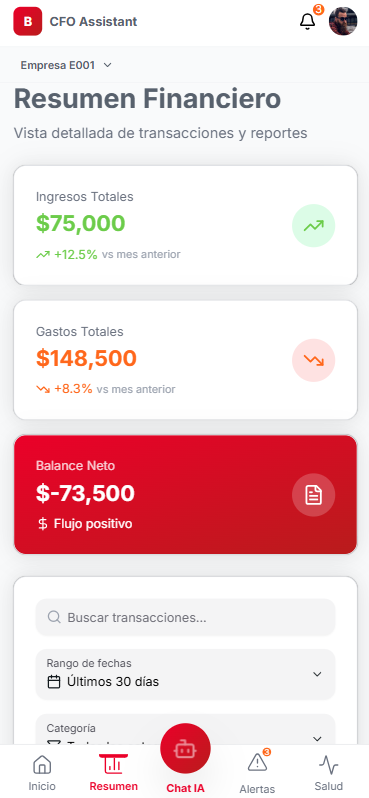
AegisFin is a proactive financial co-pilot for SME owners, built on the Model Context Protocol (MCP) architecture. It transforms scattered financial data into clear, actionable advice.
It operates on three key functions:
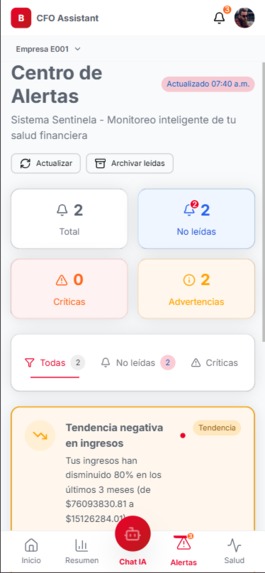
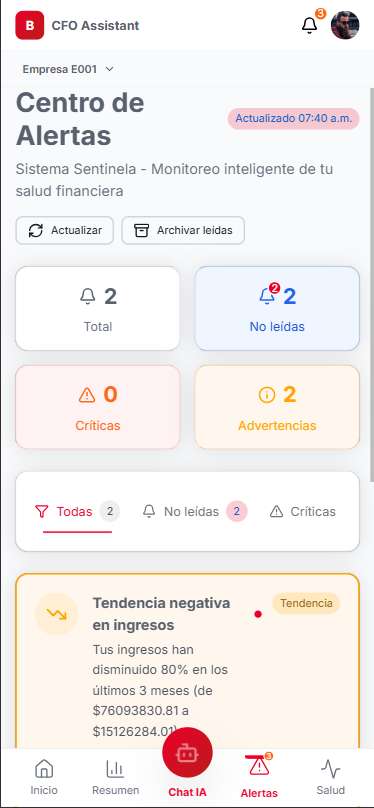
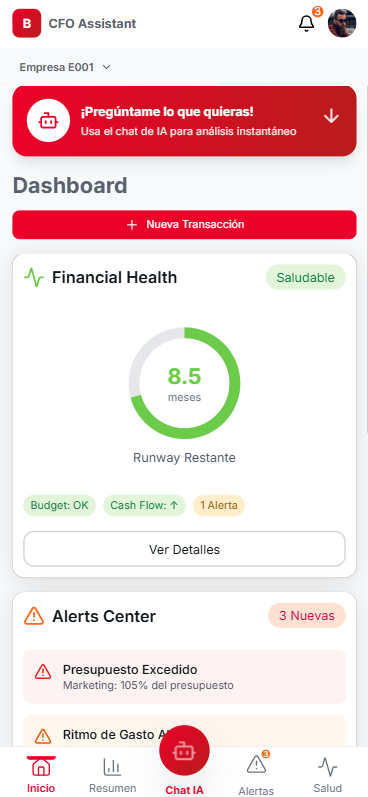
The "Centinela" (Proactive Sentinel): This is our proactive warning system. The MCP server constantly monitors cash flow in the background. When it "anticipates scenarios and risks" —like an impending overdraft or a critical bill payment—it doesn't wait to be asked. It immediately alerts the owner via a Twilio WhatsApp message and a direct ElevenLabs voice call for high-urgency threats. This fundamentally shifts the user from "reactive to proactive".
The "Risk-Grader" (What-If Simulator): This is our implementation of the "Simulador Financiero 'What-If'". The owner can ask in plain language, "Can I afford to hire a new salesperson for $50k?" The MCP "executes complex calculations" , simulates the impact on their budget and cash flow, and replies with a simple, actionable "Risk Score Card" (e.g., "Viability: 3/10 - High Risk"). This provides immediate "clarity to decide".
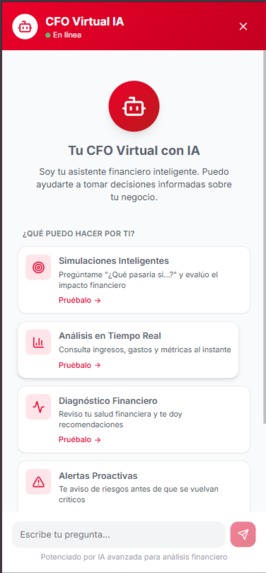
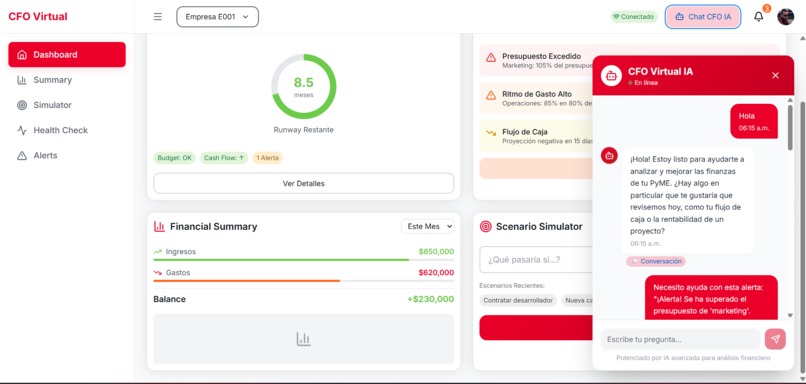
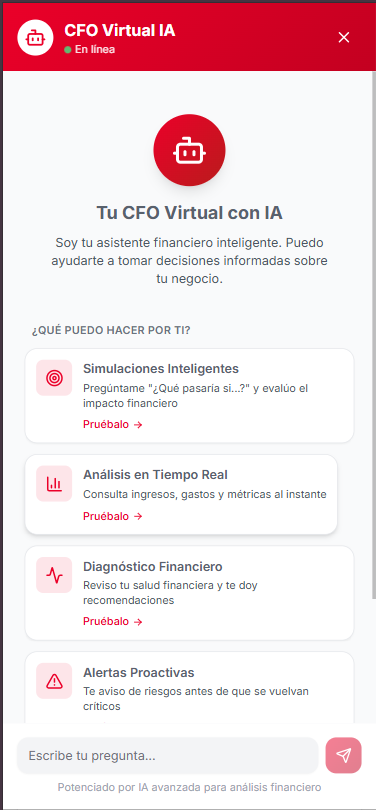
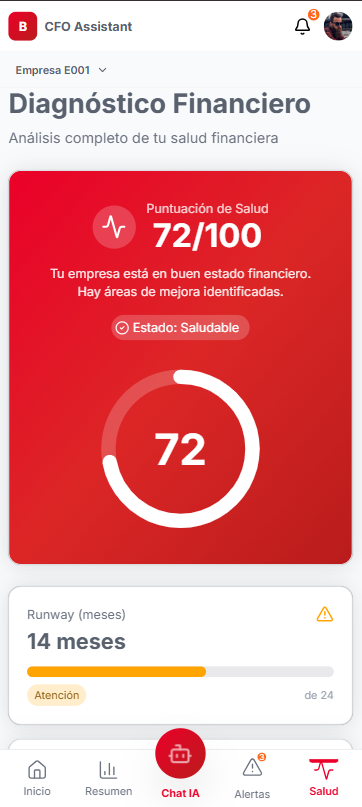
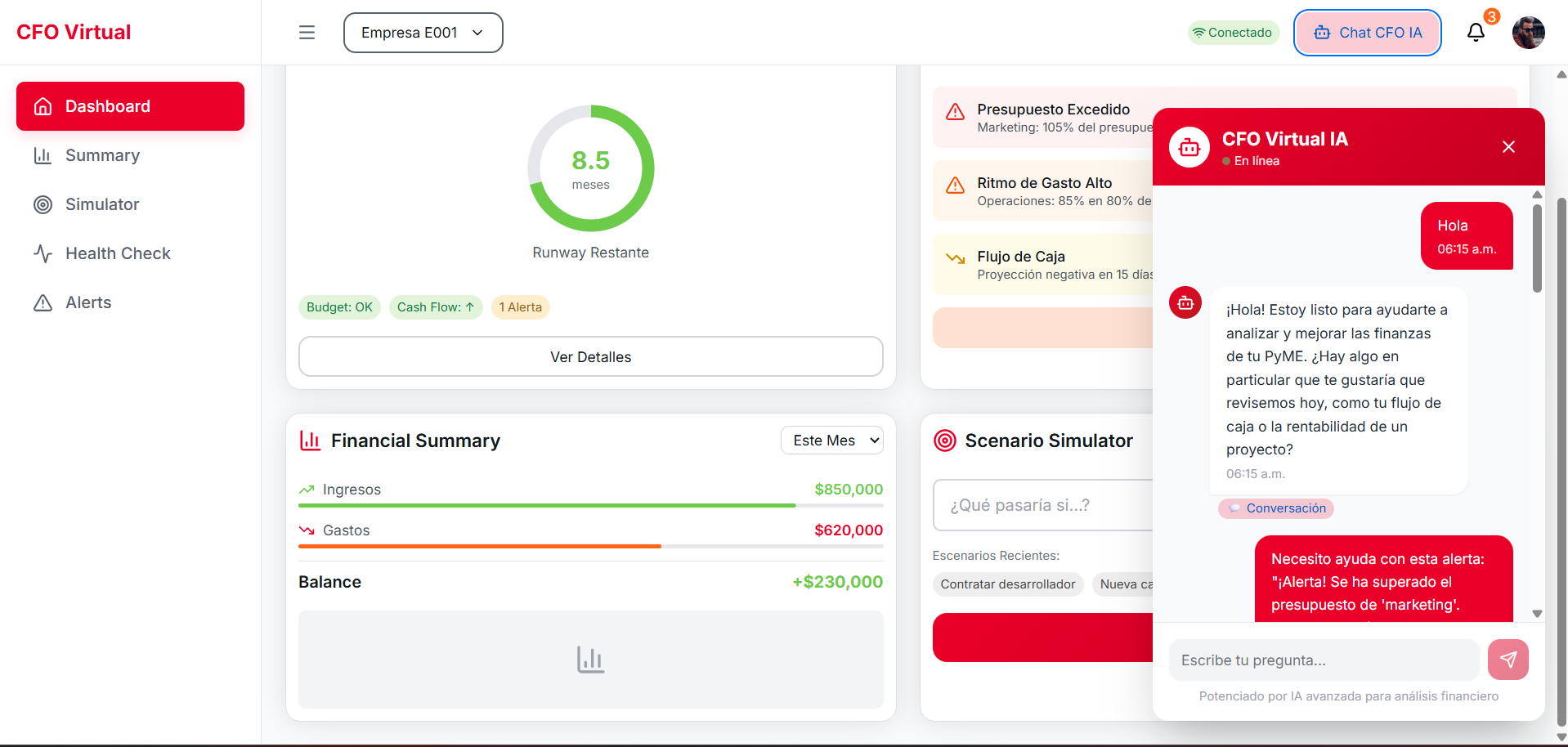
The "Analista" (Conversational Analyst): This is our "Asistente Financiero con IA". The user can "converse" with their finances (e.g., "What was our biggest expense category last month?"). We enhanced this with a "Business Health Meter" for an instant snapshot and predictive analysis to "generate recommendations" on how to improve their financial standing.
How we built it
Our solution is a fully integrated system with the MCP acting as the "brain of the solution".
Frontend: We used React and Tailwind CSS to build a clean, responsive, and "intuitive interface" focused on a conversational chat experience.
Backend (MCP Server): The core is a NodeJS server written in TypeScript. This server isn't just a simple API; it's the Model Context Protocol (MCP). It "acts as a bridge" between our AI model, our database, and external tools. It runs the "what-if" simulations , analyzes financial data, and formats responses.
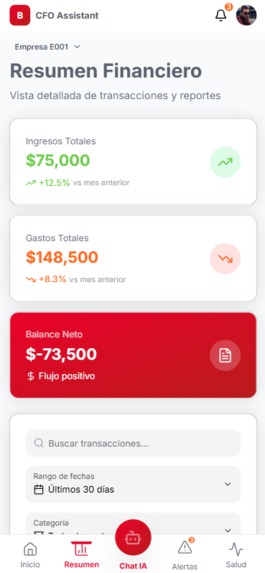
Database: We used MySQL to store and manage the company's real financial data, such as transactions, budgets, and projections.
AI & Intelligence: We integrated the Gemini API as our LLM. The MCP feeds it "real-time" , specific financial context from the MySQL database to ensure every answer is "personalized" and avoids the "generic AI responses" trap.
Proactive Alerts: We integrated two key APIs:
Twilio API: To send critical, proactive WhatsApp alerts from the "Centinela."
ElevenLabs API: To generate natural-sounding voice calls for high-urgency alerts, making them impossible to ignore.
Other Technologies: We utilized JavaScript, HTML/CSS, and Cloudinary for core web functionalities and asset management.
Challenges we ran into
The 24-Hour Constraint: Designing, building, and testing a full-stack solution with this level of integration was a race against the "limited time".
Avoiding Generic AI: A key risk identified by the challenge is "Generic AI responses". Our biggest challenge was engineering the prompts and the MCP data pipeline to ensure Gemini's answers were always deeply "contextual" and based on the user's actual numbers.
True Proactivity: Implementing the "Centinela" was far more complex than a simple chatbot. We had to build a persistent, background monitoring service within our NodeJS MCP that could analyze data and trigger the Twilio/ElevenLabs alerts, all while maintaining "real-time" performance.
Full-Stack Integration: Making React, NodeJS, MySQL, Gemini, Twilio, and ElevenLabs all "talk" to each other seamlessly required a "mandatory integration between frontend and backend" and very clear API contracts from the start.
Accomplishments that we're proud of
The Proactive "Centinela": We are incredibly proud of the proactive alerts. By integrating Twilio and ElevenLabs, we directly solved the challenge of being "reactive". We built a system that "anticipates scenarios and risks" and actively helps the owner, which feels like a true "copilot".
The "Risk-Grader" Scorecard: This is our favorite feature. It's the perfect answer to the SME owner's need for "clarity". It transforms a complex "what-if" simulation into a simple, "actionable" score, which is exactly what our non-expert user needs.
A True MCP Implementation: We didn't just build a "visualization" tool. We successfully built an "intelligent server" that "executes complex calculations" , "applies logic" , and serves as the "brain" for a truly smart solution.
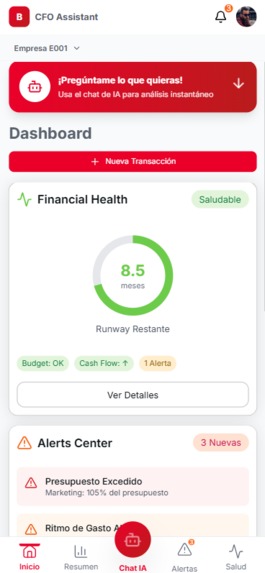
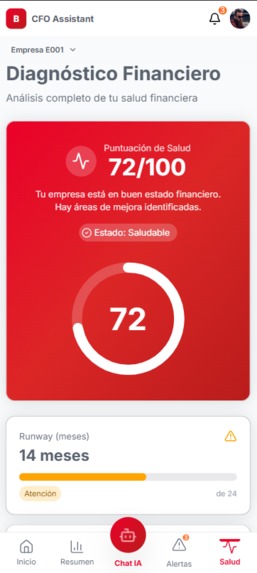
The "Business Health Meter": The "Analista's" health meter gives the user an instant, understandable KPI, turning "data into concrete actions" and recommendations.
What we learned
Context is Everything: An LLM is a tool. The real power comes from the MCP's ability to "process and analyze data in a centralized way" and feed it to the AI. This "contextual IA" is the difference between a gimmick and a game-changing tool.
Proactivity Defines Value: The most valuable interaction is the one the user doesn't have to initiate. "Anticipation" and proactive alerts are what truly "transform the user experience" and build trust.
Simplicity is the Goal: The goal of a complex financial tool should be simplicity. We learned that transforming "complex calculations" into a simple "Risk Score" is far more impactful for a busy owner than a detailed "passive dashboard".
The MCP as an Orchestrator: The "Model Context Protocol" is a powerful concept. We learned to think of our backend not just as an API, but as an intelligent orchestrator that "acts as a bridge" between data (MySQL), models (Gemini), and external tools (Twilio, ElevenLabs).
What's next for AegisFin
Deeper Data Integration: Connect directly to bank APIs and accounting software (like QuickBooks) to "integrate all financial information" automatically, eliminating any need for manual data input.
Enhanced Predictive "Analista": Improve our "what-if" and predictive models to "project future financial scenarios" with even greater accuracy, moving from 30-day warnings to 90-day strategic forecasts.
Automated Actions: Evolve from "recommendations" to automated actions. Allow the user to approve MCP-suggested actions directly from the chat, such as, "You have a $1,000 surplus. Would you like me to move this to your savings account?"
Scale to all PyMEs: Refine the architecture to make AegisFin a scalable, multi-tenant solution that can be "applicable to different profiles" , empowering thousands of SME owners to "improve their financial decision making".
Built With
- css
- elevenlabs
- html
- javascript
- mcp
- mysql
- node.js
- react
- tailwind
- twilio
- typescript


Log in or sign up for Devpost to join the conversation.