AegisCare — Clinical Medication Safety & Inpatient Operations
About the project
AegisCare is a clinical AI assistant built to attack one of healthcare's oldest and most dangerous problems: medication errors at the bedside. Even with electronic health records everywhere, wrong-drug and wrong-patient administration events still happen — often because nurses are juggling a dozen patients, alert fatigue drowns out the warnings that matter, and critical allergy or interaction data lives in a chart nobody has time to re-check under pressure.
Inspiration The "five rights" of medication administration (right patient, drug, dose, route, time) are drilled into every clinician, but the tools meant to enforce them are often clunky, slow, or disconnected from real-time clinical context. We wanted to see what happens when you put an AI clinical agent directly into that workflow — not to replace nursing judgment, but to catch the split-second mistakes before they reach the patient.
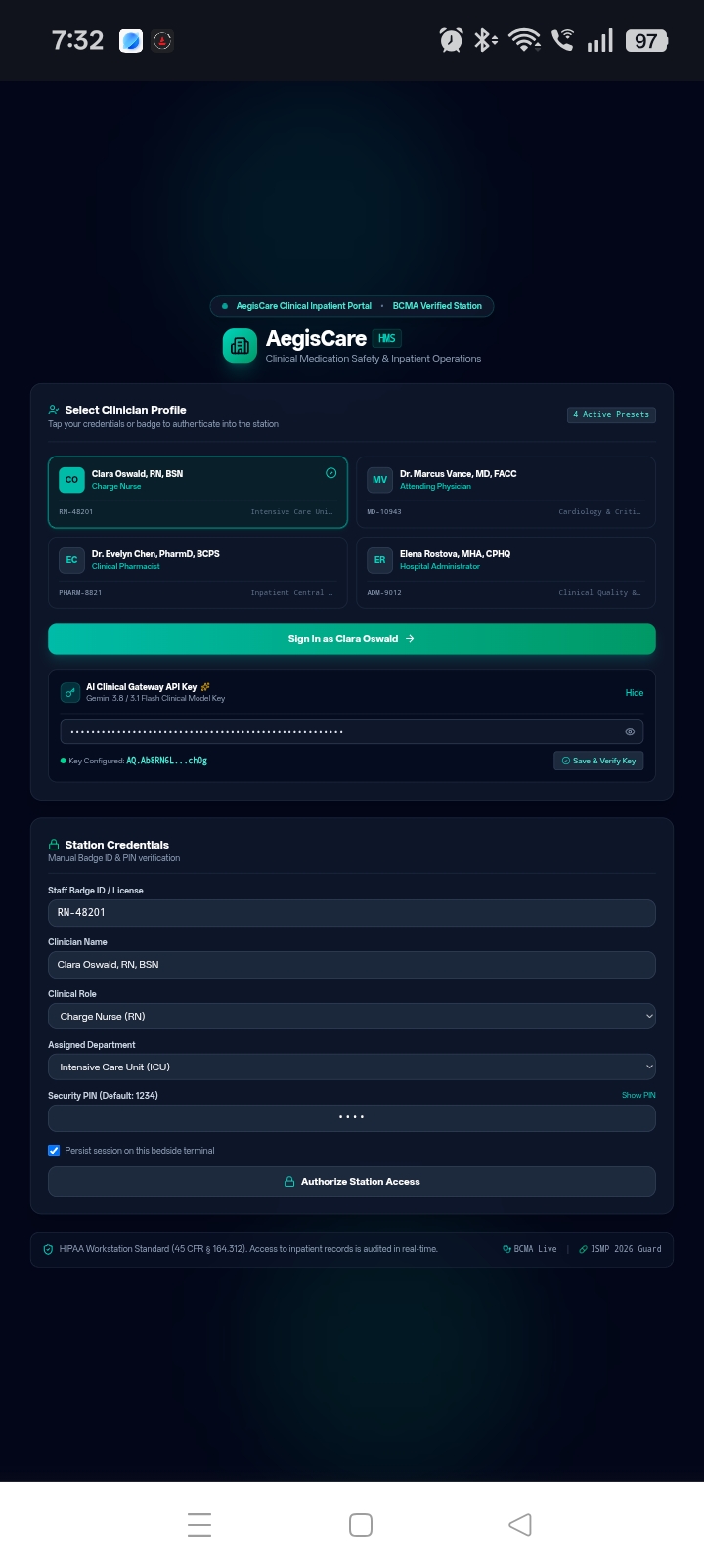
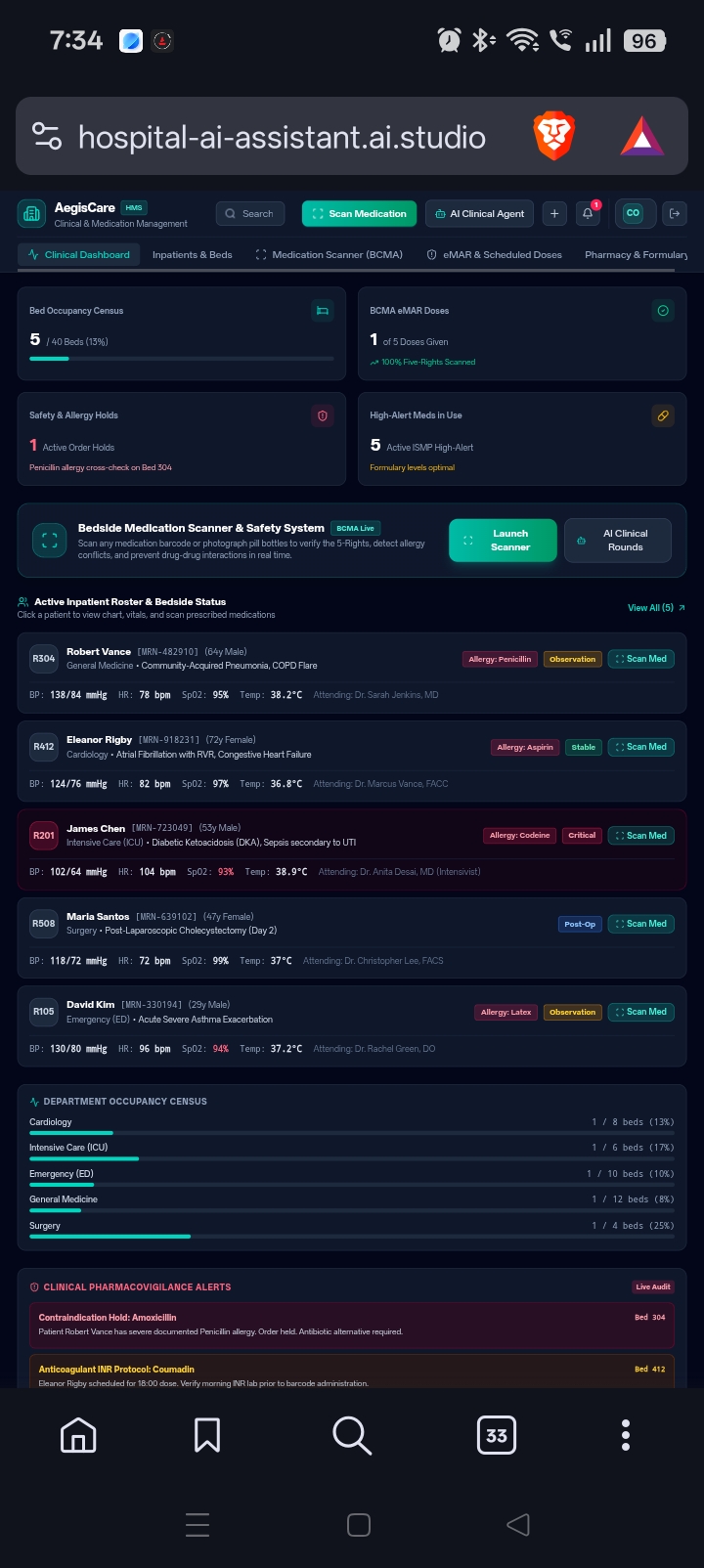
What it does AegisCare gives charge nurses and physicians a live clinical dashboard covering bed occupancy, active eMAR (electronic medication administration record) doses, and safety holds across a unit. Its core feature is a Bedside Medication Scanner (BCMA) — scan a barcode or photograph a pill bottle, and the AI Clinical Agent cross-checks it in real time against the patient's allergy profile, active orders, and known drug-drug interactions. High-risk cases surface as pharmacovigilance alerts, like a contraindication hold on an amoxicillin order for a patient with a documented penicillin allergy, or an anticoagulant protocol flag prompting an INR check before a scheduled Coumadin dose. Role-based sign-in (charge nurse, attending physician, clinical pharmacist, administrator) keeps access aligned with HIPAA workstation standards, and every scan is logged for audit.
How we built it The interface is designed around clinical speed: the dashboard leads with the numbers a charge nurse needs in the first five seconds of a shift — occupancy, doses given, active holds, high-alert meds in use — before drilling into individual patient rosters with live vitals. The AI Clinical Agent runs on a configurable model key, letting the care team swap in the clinical-grade model appropriate for their formulary and compliance needs.
Challenges Balancing alert visibility against alert fatigue was the hardest design problem — too many warnings and clinicians start ignoring them, too few and you miss the one that matters. We leaned on color-coded severity (critical, observation, stable) and surfaced only active, unresolved holds by default.
What's next Closing the loop with pharmacy formulary data in real time, expanding the AI Clinical Agent to support rounding summaries, and adding predictive risk scoring for patients trending toward a safety event.


Log in or sign up for Devpost to join the conversation.