
Inspiration
We kept running into the same reality: third-party onboarding for vendors and clients takes weeks, lives in email/PDF chaos, and every team (security, privacy, fraud, legal) sees a different slice of the truth. Many “AI onboarding” solutions assume you can remove humans overnight. That’s not safe or realistic.
Veritas exists to fix that gap: keep humans in control, while giving them instant, structured, explainable signals instead of detective work.
How we built it
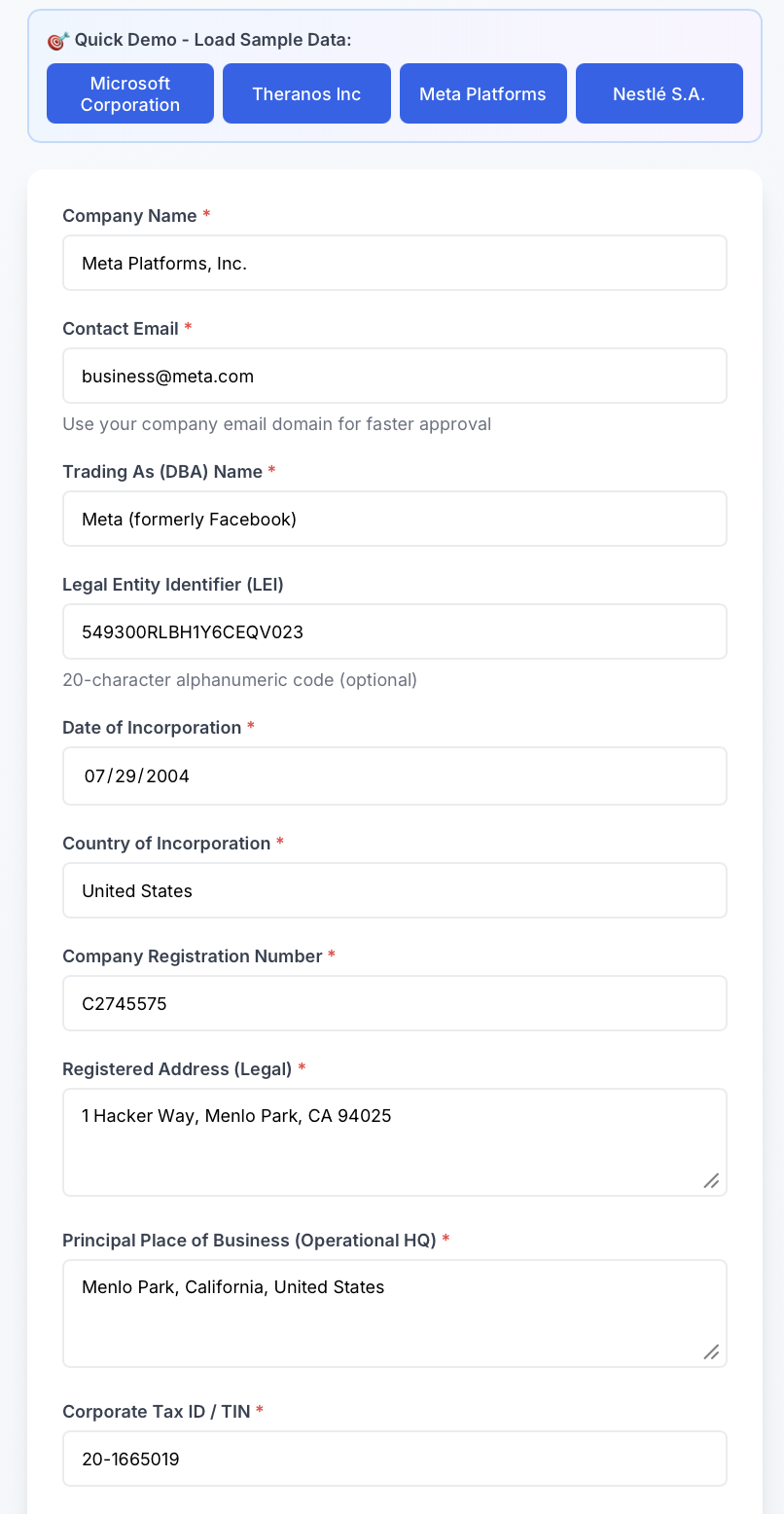
- Dynamic Portal: Profile-aware onboarding form that adapts to third-party type, data sensitivity, and region, emitting clean structured data.
- Workflow Orchestrator (FastAPI): Validates input, classifies risk profile, and fans out checks to multiple engines in parallel.
- Modular Engines:
- Security Baseline (IAM, MFA, encryption, logging, network)
- Privacy / PII detection and masking
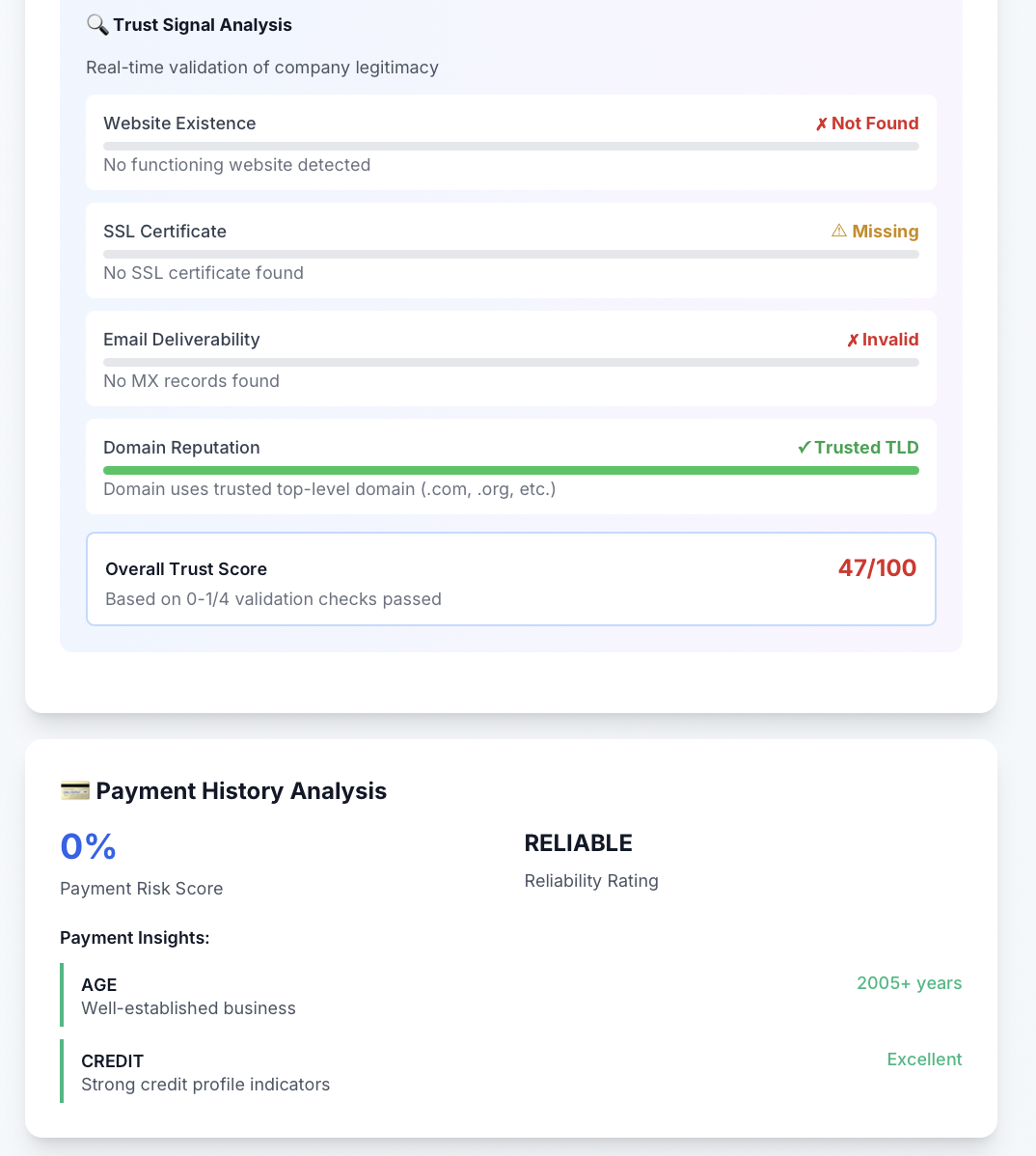
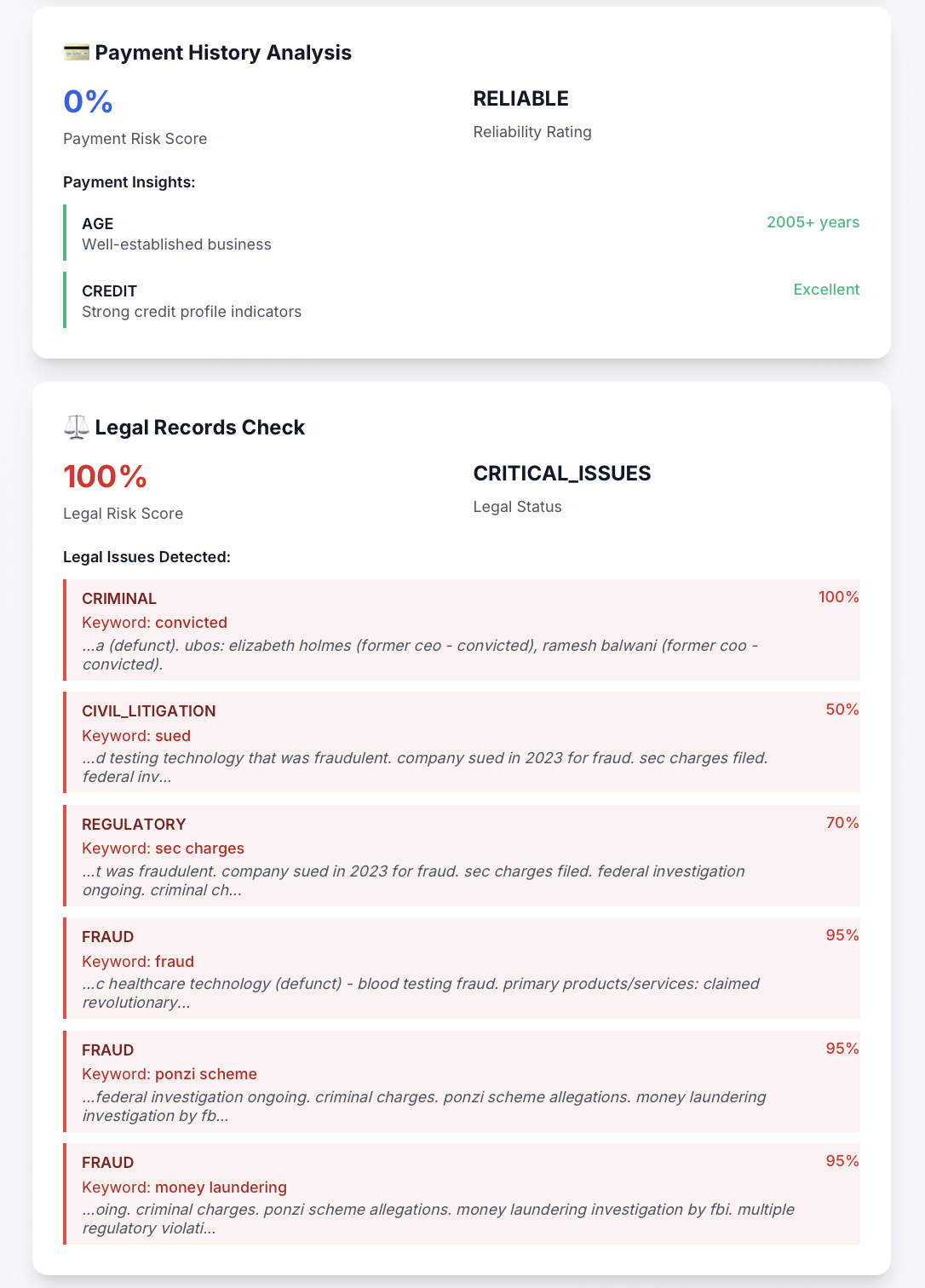
- Fraud & Integrity (domain, bank, identity consistency)
- Behavioral anomalies
- Consistency vs documentation
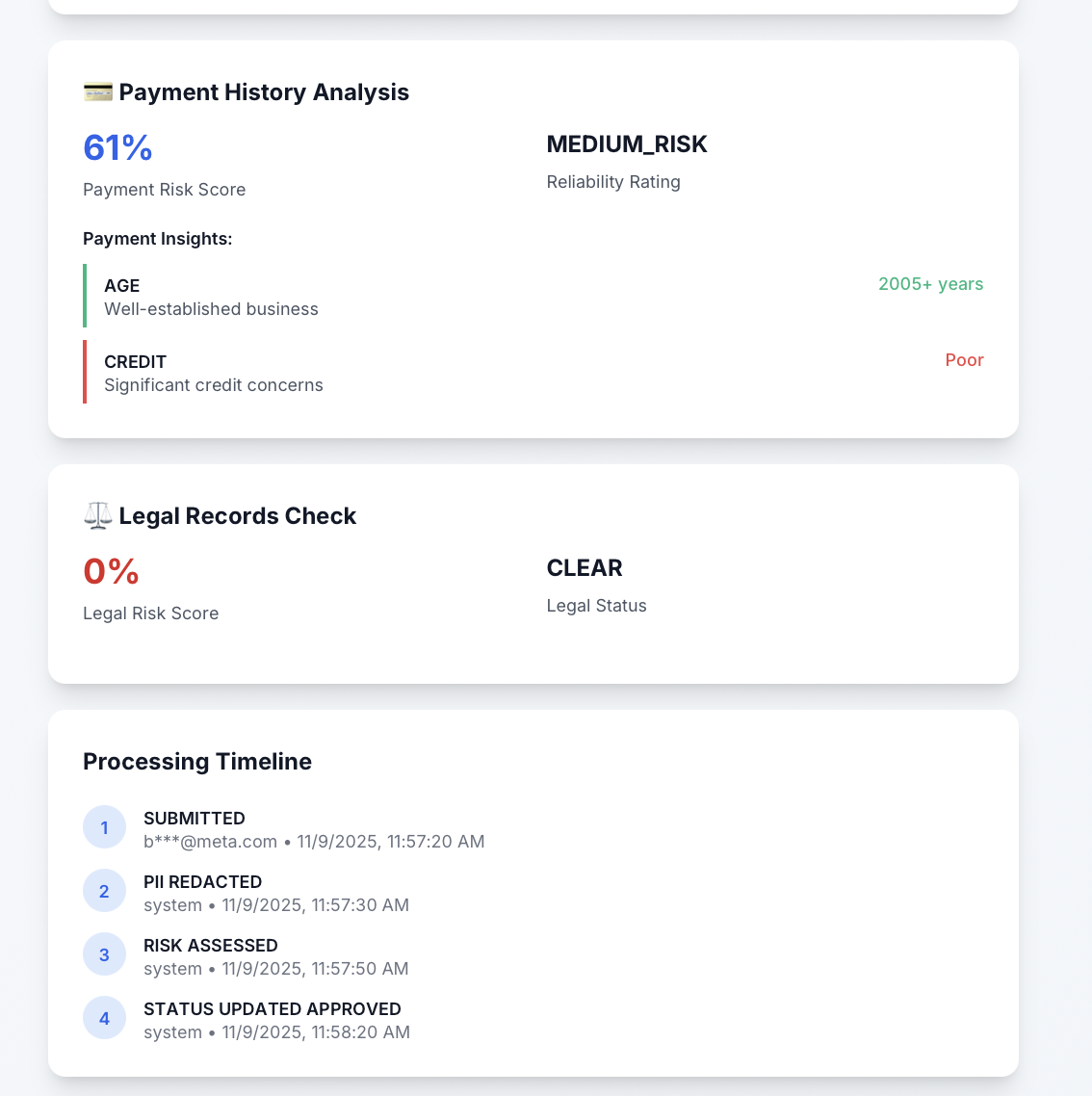
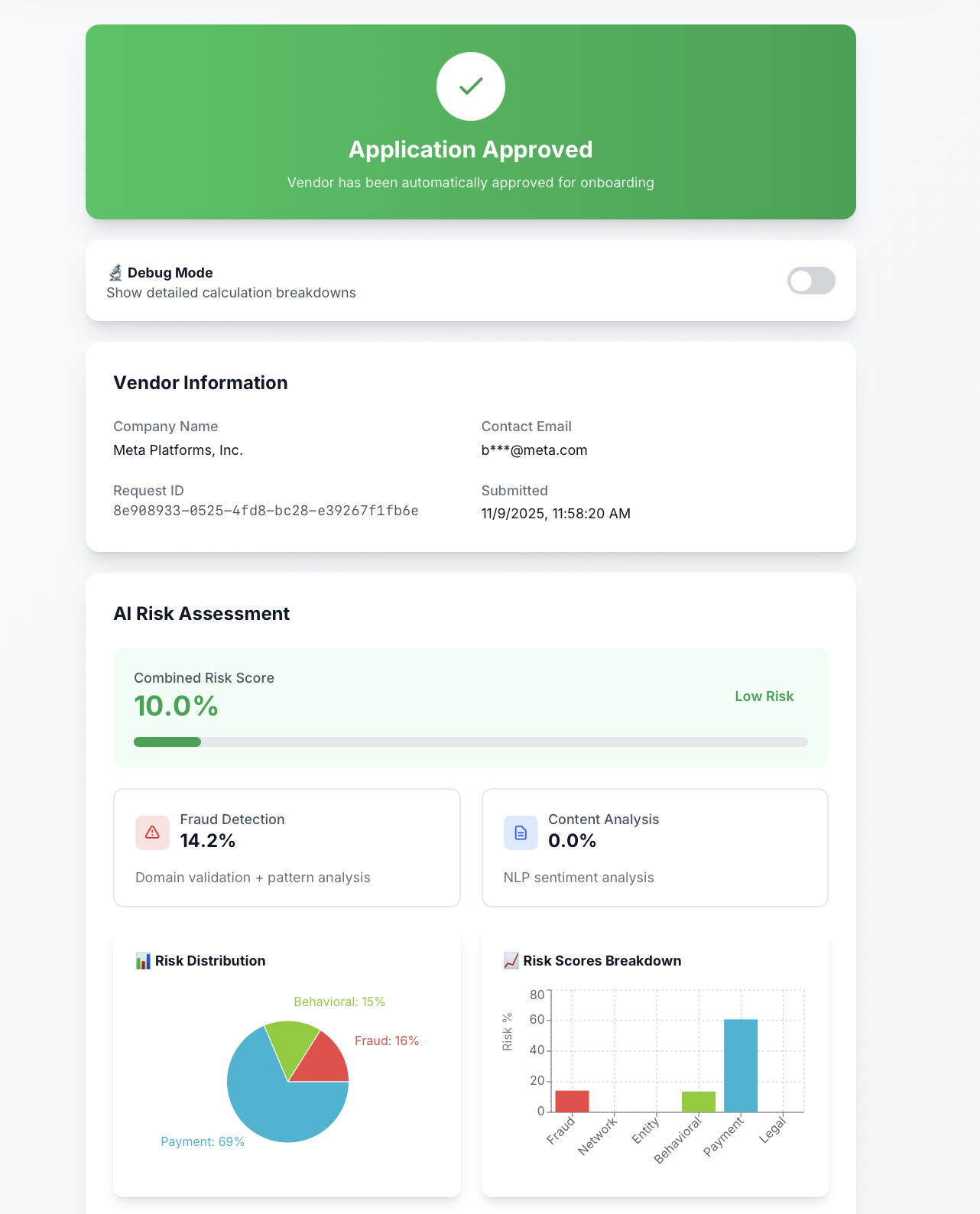
- Explainable Scoring: Each engine returns its own score, reasons, and confidence, combined into a clear overall recommendation.
- Dashboard: Single view for Approve / Review / Block with evidence, plus audit trails and basic metrics.
Challenges we faced
- Designing signals that feel realistic and defensible within a hackathon timeframe.
- Keeping humans firmly in the loop while still showing clear automation value.
- Making outputs explainable without overwhelming reviewers.
- Modeling enterprise-style flows (tickets, approvals, baselines) credibly in a demo environment.
What we learned
- Governance-grade AI must be transparent, modular, and reviewable, not a single black-box score.
- Encoding policy (baseline controls, routing, thresholds) as logic is as important as any model.
- Good reviewer UX (clear reasons, layered detail) is critical for real adoption.
- You can meaningfully speed up onboarding without trying to replace human judgment.
Built With
- amazon-web-services
- auth
- buckets
- cognito
- jwt
- mfa
- nextjs
- python
- react
- typescript


Log in or sign up for Devpost to join the conversation.