-
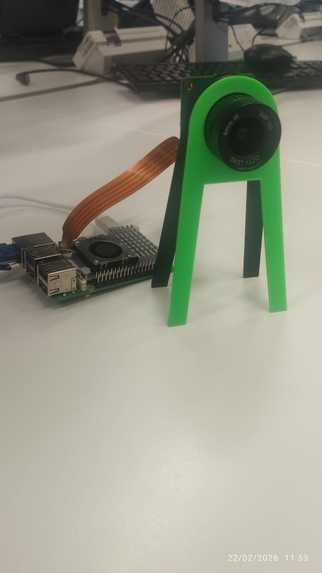
Pi plus cam
-
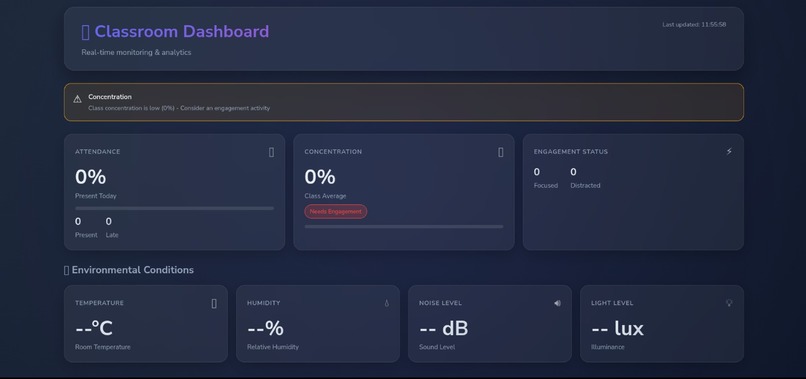
dashboard
-
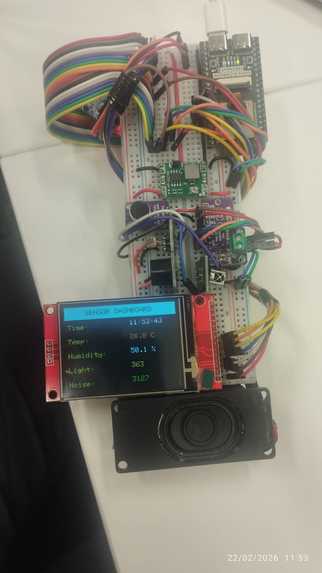
monitor system
AegisAI Classroom - Project Story
Inspiration
Traditional classroom management relies on manual attendance and subjective engagement assessment. Teachers constantly juggle between delivering content and monitoring dozens of students. We envisioned an intelligent system that could autonomously track attendance, measure concentration, and adapt in real-time - freeing educators to focus on what matters: teaching.
What it does
AegisAI Classroom is a multi-modal AI monitoring system that transforms any classroom into an intelligent learning environment:
- Automatic Attendance: Face recognition with InsightFace (0.40 threshold) logs students the moment they arrive - no roll call needed
- Live Concentration Tracking: Head pose estimation monitors engagement by detecting when students look away (yaw, pitch tolerance)
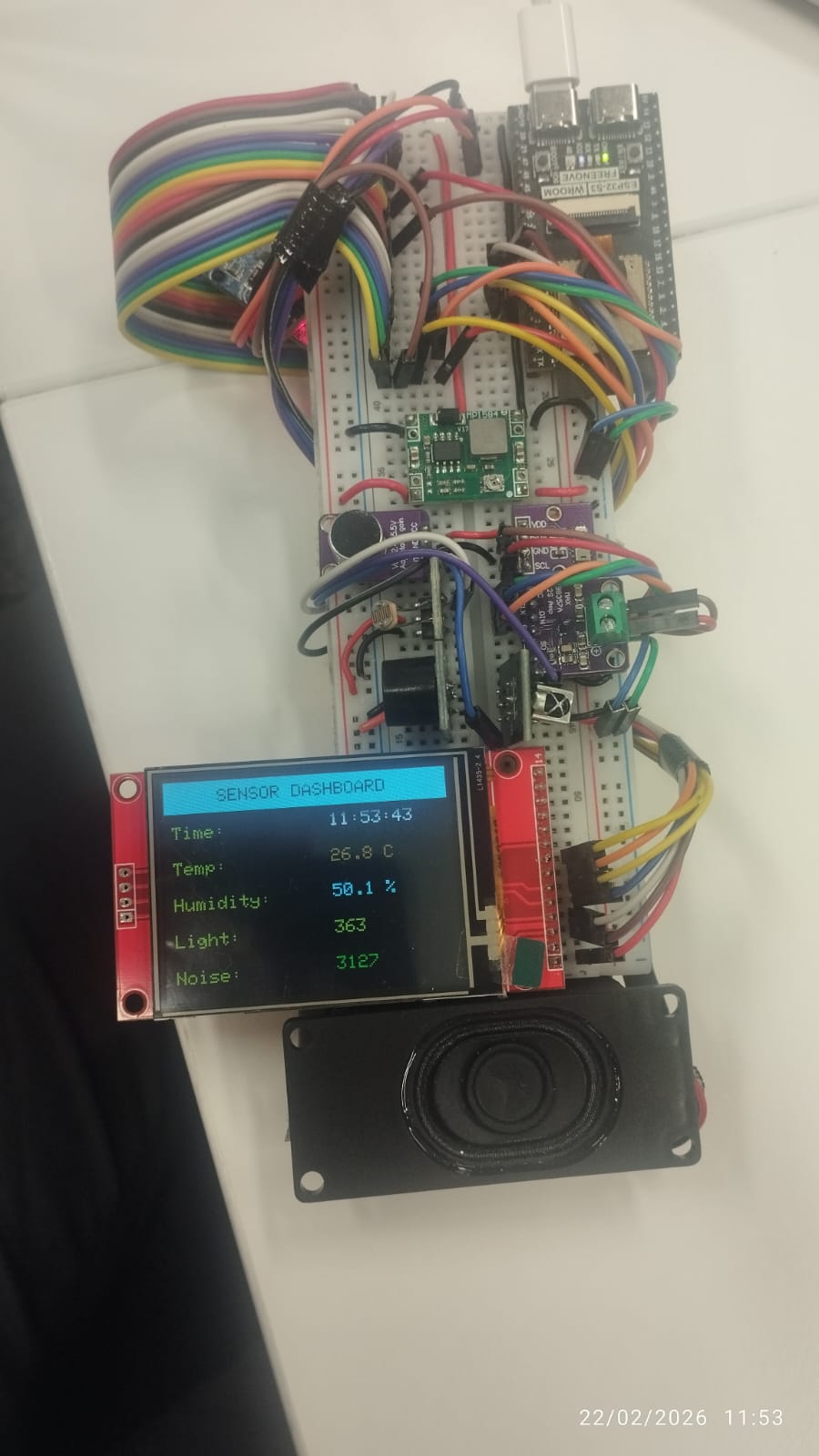
- Environmental Intelligence: ESP32 sensors measure temperature, humidity, light, and noise levels - correlating physical comfort with learning outcomes
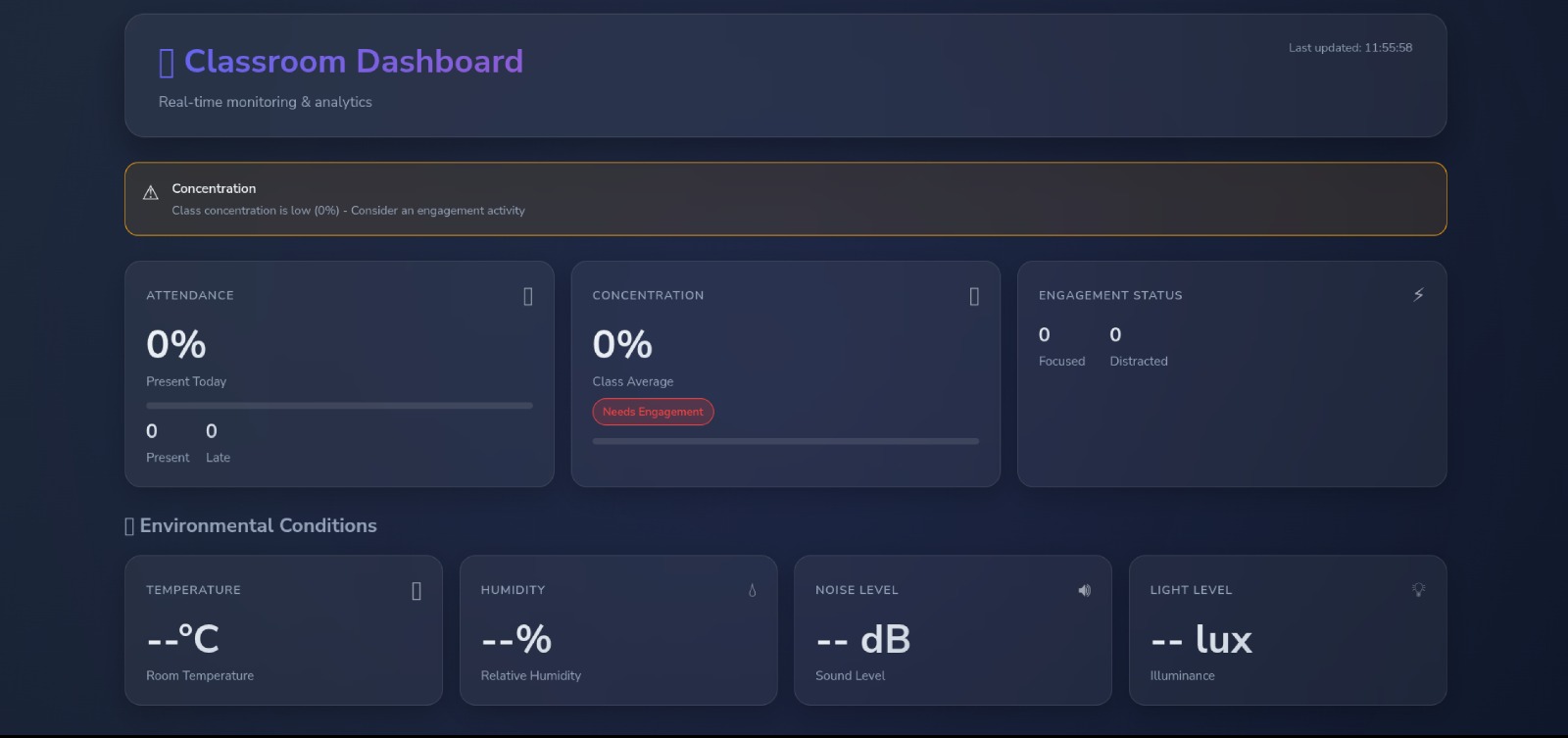
- Real-time Dashboard: Glassmorphism UI displays attendance rates, concentration metrics, and environmental data updating every 2 seconds
- Adaptive Engagement: When class concentration drops below 40%, the system automatically triggers interactive quizzes to re-engage students - Whiteboard OCR: Automatically captures and digitizes board notes using EasyOCR
How we built it
Hardware Stack:
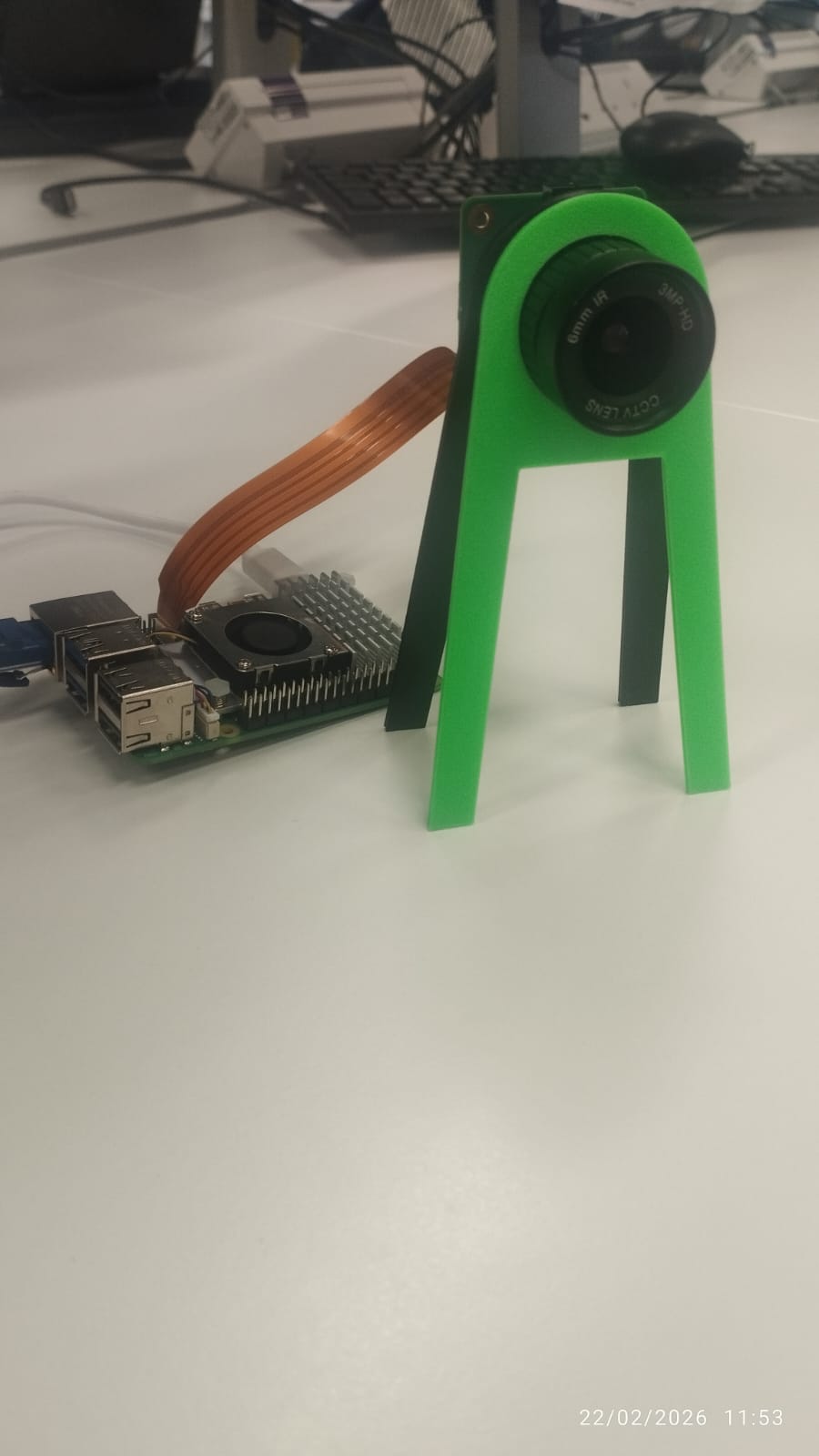
- Raspberry Pi 5 (4GB) with IMX477 camera module (640x480 @ 30fps)
- ESP32 with AHT20 (temperature/humidity), BMP280 (pressure), LDR (light), analog microphone (noise)
- Custom sensor dashboard with TFT display and I2S audio alerts
Software Architecture:
- Vision Pipeline: InsightFace buffalo_l model for ArcFace embeddings, MediaPipe for pose estimation
- Backend: Python with Flask serving REST APIs, CSV-based logging for persistence
- Frontend: Modern dashboard with glassmorphism design, auto-refreshing stats via AJAX
- IoT Integration: ESP32 posts sensor data every ~1-2 seconds via HTTP POST to Pi
- AI Features: Google Gemini API for quiz generation (with fallback when quota exceeded)
Key Implementation Details:
- Face recognition at 0.40 similarity threshold balances accuracy vs false positives
- 30-second attendance window ensures real-time presence tracking
- Concentration uses raw pose angles (fixed double-degree conversion bug)
- Dashboard caches stats for 0.5s to reduce disk I/O
Challenges we ran into
Network Topology Hell: ESP32 on WiFi, Pi on Ethernet - spent hours debugging -1 POST errors before realizing they couldn't see each other. Solution: Connected Pi to iPhone WiFi hotspot.
CSV Format Chaos: Dashboard showed stale data because attendance logging used lowercase "on-time" but parser expected uppercase. Fixed with
.lower()comparisons.Time Window Tuning: Initially used all-time attendance data (students from hours ago still showed "present"). Narrowed to 5 minutes, then 30 seconds for real-time accuracy.
Accomplishments that we're proud of
- Zero Manual Intervention: System runs fully autonomously - just point the camera and go
- Real-time Everything: Sub-second face recognition, 2-second dashboard updates, immediate sensor sync
- Production-Ready UI: Not a wireframe - actual glassmorphism design that looks professional
- Hardware-Software Integration: ESP32 WiFi Pi Dashboard Browser - entire IoT pipeline working
- Robust Error Handling: Survived WiFi drops, sensor failures, API quota exhaustion, and Git disasters
- Scalable Architecture: CSV logs + caching means system handles hours of data without lag
What we learned
Technical:
- InsightFace buffalo_l offers excellent speed/accuracy tradeoff for real-time face recognition
- Pose estimation requires careful coordinate system understanding (degrees vs radians vs pixels)
- Time-windowed data drastically improves "liveness" perception in dashboards
- HTTP POST loops without delays can still bottleneck on network latency
Practical:
- Network topology matters MORE than code - wrong network = doesn't work, period
- Git hygiene isn't optional - one wrong commit can expose secrets to the world
- User testing reveals invisible bugs (why does it show 3 people when there's only 1?)
- Documentation-driven development keeps complex systems maintainable
Meta:
- Multi-modal sensing (vision + environmental) provides richer context than vision alone
- Real-time feedback loops (concentration quiz) create adaptive learning environments
- Edge computing (Pi + ESP32) beats cloud for privacy-sensitive education data
What's next for AegisAI Classroom
Immediate Roadmap:
- Mobile App: React Native companion for teachers to view stats on smartphones
- Smart Alerts: Push notifications when concentration drops, absent students, or environmental issues
- Analytics Dashboard: Historical trends - which times/days have best engagement?
- Individual Tracking: Per-student concentration timelines and personalized interventions
Future Vision:
- Predictive AI: Machine learning to predict disengagement before it happens
- Multi-Room Support: Scale to entire schools with centralized monitoring
- Learning Outcomes Correlation: Link engagement metrics to exam performance
- Privacy Mode: On-device processing with encrypted storage for GDPR/FERPA compliance
- Lecture Recording: Auto-start recording when concentration is high, tag important moments
- Climate Auto-Adjust: API integration with smart HVAC systems for optimal learning conditions
The Ultimate Goal: Transform classrooms from passive spaces into intelligent learning ecosystems that adapt to students' needs in real-time, giving teachers superpowers to create better educational experiences.
Built with: Raspberry Pi, ESP32, Python, Flask, InsightFace, MediaPipe, Arduino, Love, and Too Much Coffee ☕
Built With
- arduino
- esp32
- insightface
- python
- raspberry-pi

Log in or sign up for Devpost to join the conversation.