Inspiration
The USS Abraham Lincoln left San Diego in November 2025 and did not head home until late August 2026, nearly nine months later, after its deployment was extended twice beyond the planned seven. By the final stretch, reporting described a mental health crisis severe enough that some sailors reportedly tried to jump overboard, alongside food shortages and water contamination. Lawmakers demanded an investigation into conditions aboard.
The hardest part is that this is no longer an outlier. U.S. carrier strike group deployments have averaged eight and a half months since October 2023, and analysts now describe extensions beyond the seven-month plan as the norm. High operational tempo is compressing years of physiological stress, chronic stress, sleep loss, circadian disruption from rotating watches, poor air quality in sealed spaces, into back-to-back deployments with little recovery in between.
The longevity field has spent years chasing lifespan. The real goal is healthspan: staying healthy for more of the life you have. We wanted to bring that to the people living through this tempo, who are usually locked out of it, because on many platforms you cannot wear a fitness tracker and there are strict no-data-sharing policies. The standard wearable-plus-cloud wellness app is a non-starter. That constraint became our design brief.
What it does
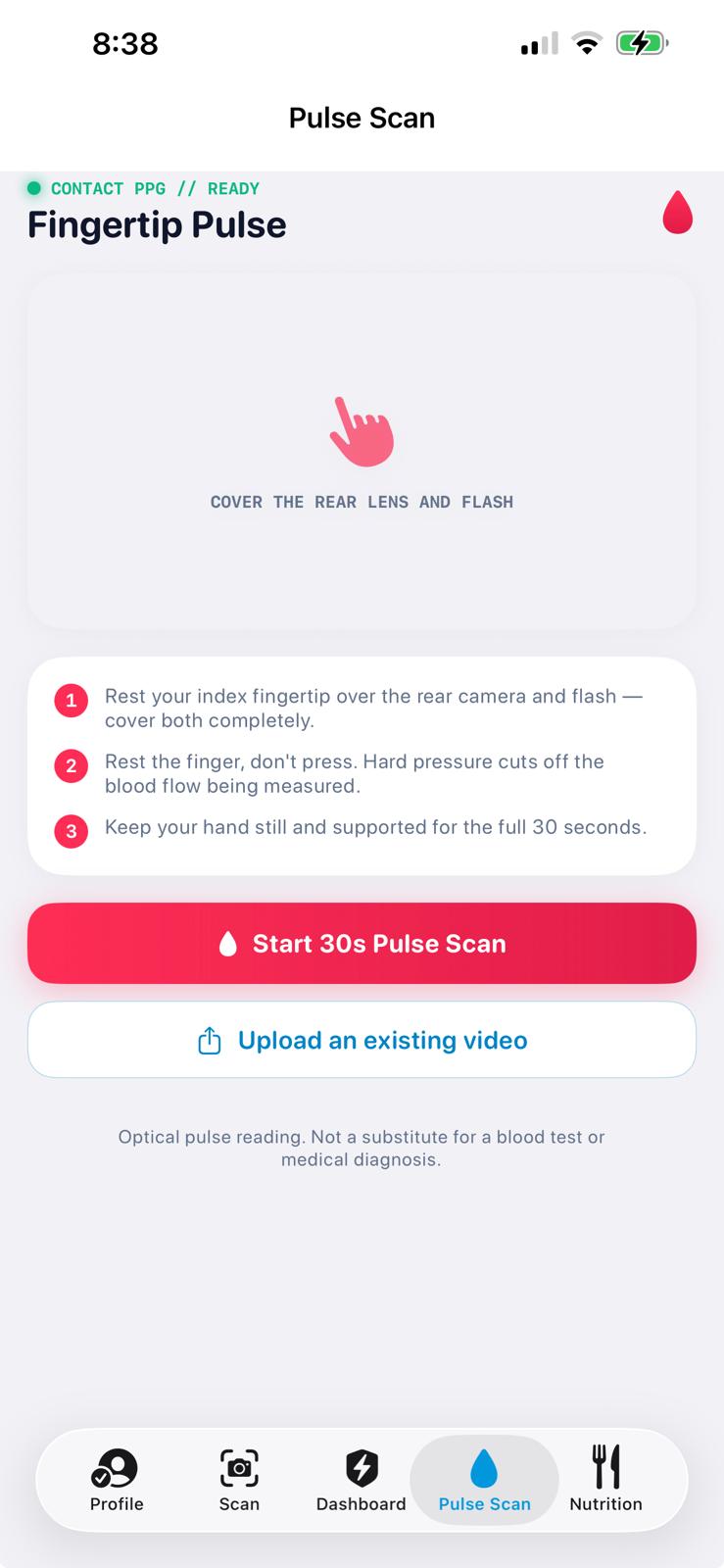
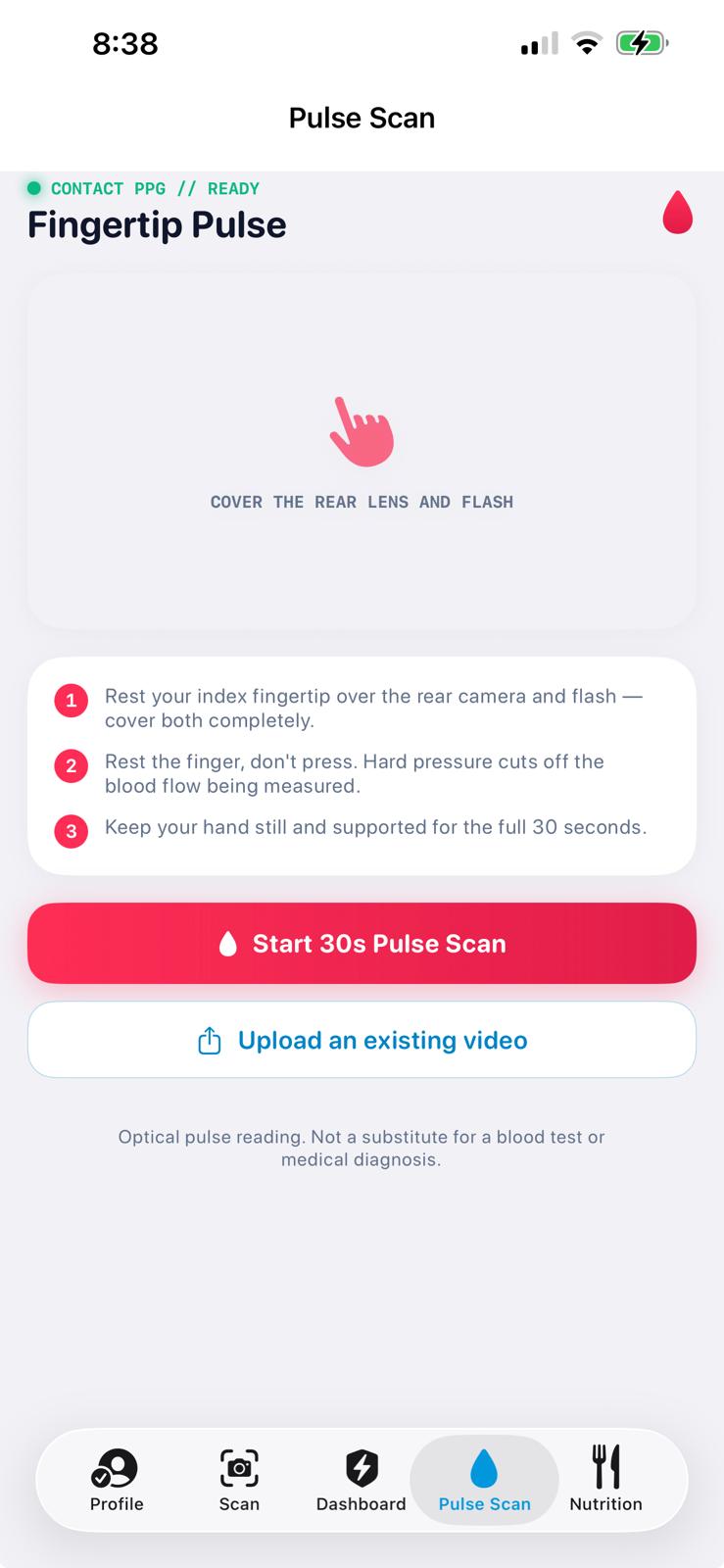
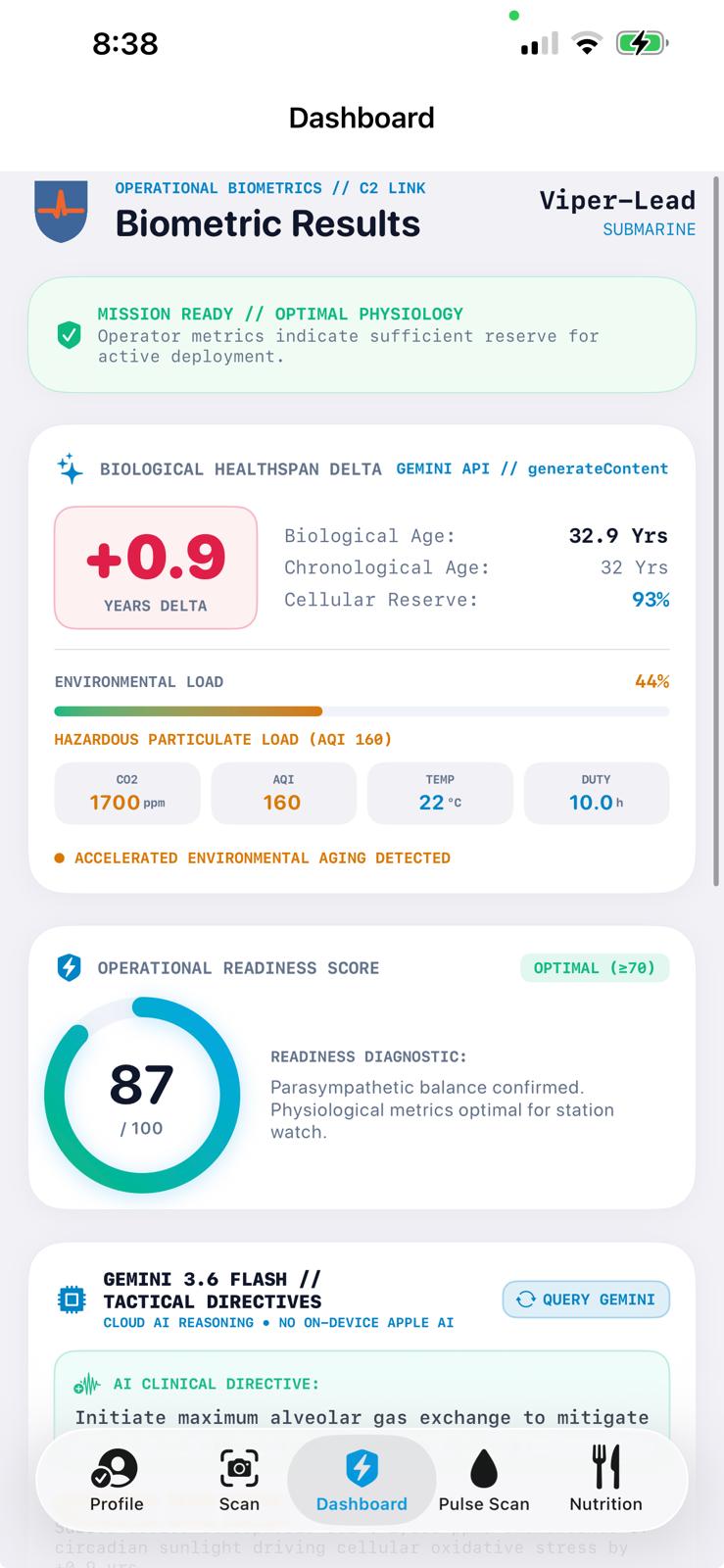
AEGIS is a self-contained, on-device AI that turns a standard camera into a healthspan and readiness sensor for crews who cannot wear trackers or share data.
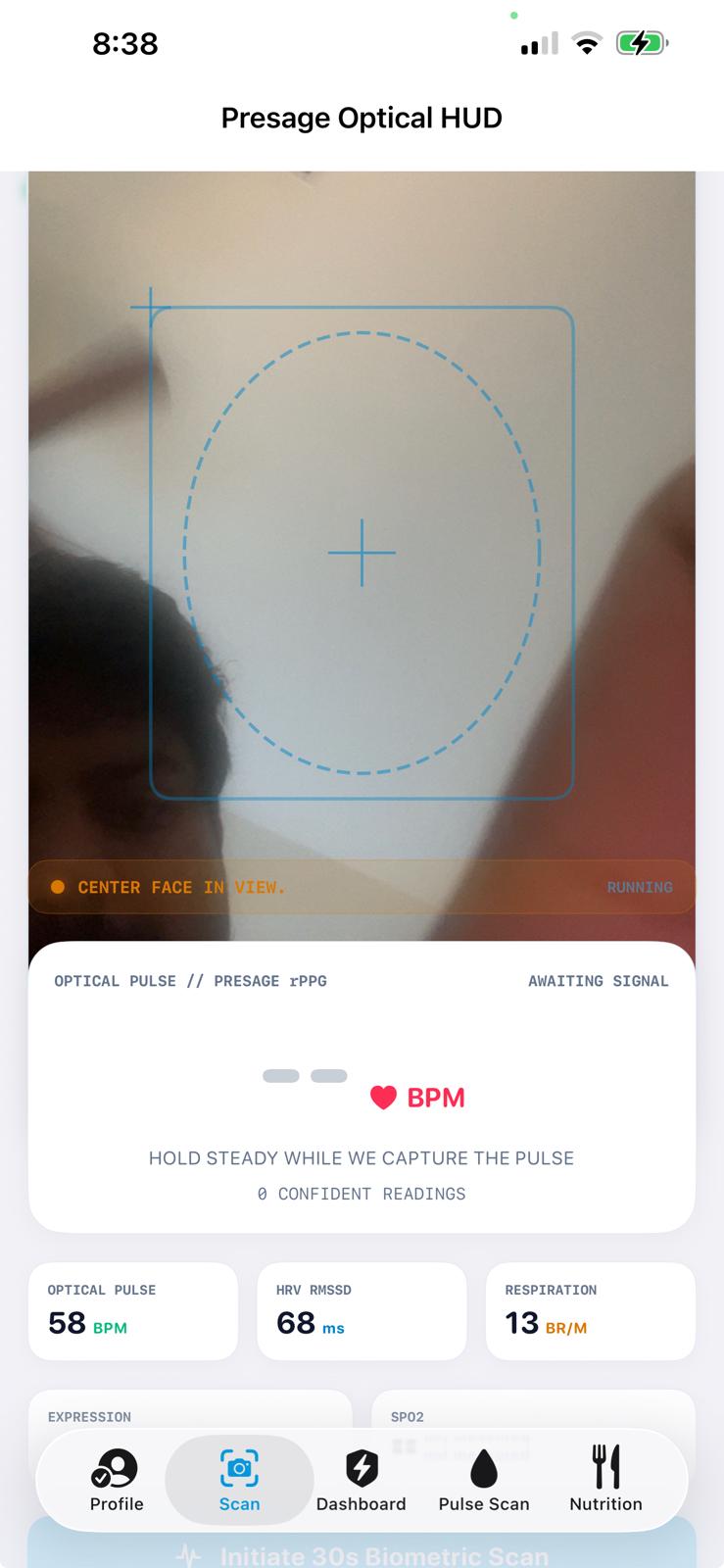
- Contactless vitals. A ~15-second camera check-in at watch turnover reads real heart rate, breathing rate, and HRV, plus facial affect, using camera-based rPPG. No wearable required.
- Pace of Aging score. We compute a transparent biological aging estimate, borrowing the DunedinPACE framing (1.0 = aging one biological year per calendar year; 1.3 = aging 30% faster). Six inputs each map to a named hallmark of aging: HRV (autonomic load), breathing and stress (inflammaging), affect (stress-linked telomere attrition), sleep debt, watch-rotation irregularity (circadian disruption), and air quality.
- On-device AI guidance. Apple's Foundation Models framework generates tailored interventions entirely on the device. Each recommendation is framed as "this pulls your pace from 1.28 toward 1.0," closing the loop from science to action.
- Intervention proof loop. The app detects elevated stress, prescribes a 60-second breathing protocol, and re-scans so you watch your own numbers improve.
- Two-level rollup with a privacy wall. Individual raw biometrics never leave the device. Only an anonymized readiness and morale figure rolls up to a command dashboard, so leadership sees crew readiness trends, not a named sailor's HRV.
- Adapts to the deployment. Where wearables are permitted, it pulls Apple Watch data via HealthKit or multi-vendor data via Terra. Different platform, different sensors, same app.
How we built it
- Swift 6 and SwiftUI, one shared core package (AegisCore) with two app targets: Aegis Crew (iOS, uses the iPhone camera) and Aegis Command (macOS dashboard).
- Presage SDK for camera-based rPPG vitals: heart rate, breathing rate, HRV, and facial expression.
- Apple Foundation Models framework for the on-device LLM that generates and explains recommendations, with a deterministic rules-based fallback for devices without Apple Intelligence.
- A deterministic scoring engine in pure Swift for the Pace of Aging math, kept separate from the LLM so the number is consistent and testable. The AI explains the score; it never computes it.
- HealthKit and Terra API as an optional adaptive data layer.
- Swift Charts for the pace dial and command trends, and SwiftData for local-only persistence, reinforcing the no-data-leaves-device story.
Challenges we ran into
- The core tension. "No data sharing" versus a command dashboard and a cloud wearable aggregator looked contradictory. We resolved it by making no-sharing the default and the problem being solved, treating wearable data as an opt-in adaptive layer, and making the command rollup aggregate and anonymized by design.
- Being honest about the science. We lean on clinical validation for the vitals, but the Pace of Aging is our own composite estimate. Keeping that line clean, so we inform without overclaiming, shaped the whole UI.
- On-device constraints. Running the LLM locally means handling device availability and latency gracefully instead of assuming a server.
- Camera vitals in the real world. rPPG needs decent lighting and a still face, so we designed the check-in flow around that rather than fighting it.
Accomplishments that we're proud of
- A working, self-contained readiness tool that respects a real constraint most wellness apps ignore: no wearables, no data leaving the device.
- A live intervention proof loop. In under two minutes, a user watches a 60-second breathing exercise measurably move their own vitals and their pace score.
- A privacy architecture that lets command see crew readiness without ever exposing an individual's raw biometrics, which is what makes it deployable in a real chain of command.
- Grounding every part of the score in a named mechanism of aging, so the number is explainable rather than a black box.
What we learned
- How chronic deployment stress connects to the biology of aging (inflammaging, autonomic load, circadian disruption) and how to turn those mechanisms into signals a person can actually see and act on.
- That a hard real-world constraint, no wearables and no data sharing, is not a limitation to work around but the thing that makes the product worth building.
- That the most convincing longevity demo is not a fixed "biological age" number. It is watching the number respond, live, to a short breathing exercise.
What's next for Aegis
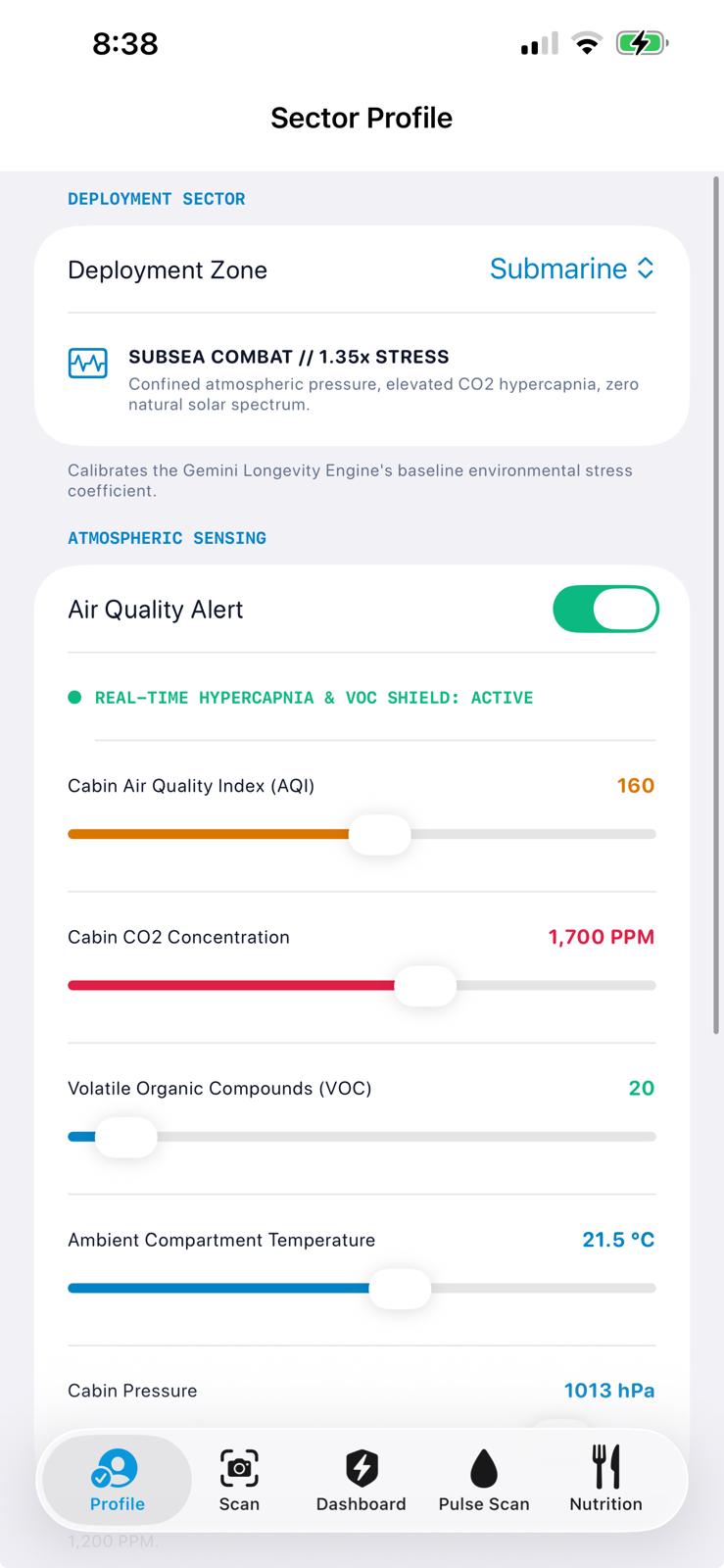
- Real engine-space air-quality sensor integration (CO2, PM2.5, VOC).
- Per-user baseline calibration so the model personalizes over a deployment.
- A pilot with a maritime training program to validate the readiness rollup against real watch schedules.


Log in or sign up for Devpost to join the conversation.