-
-
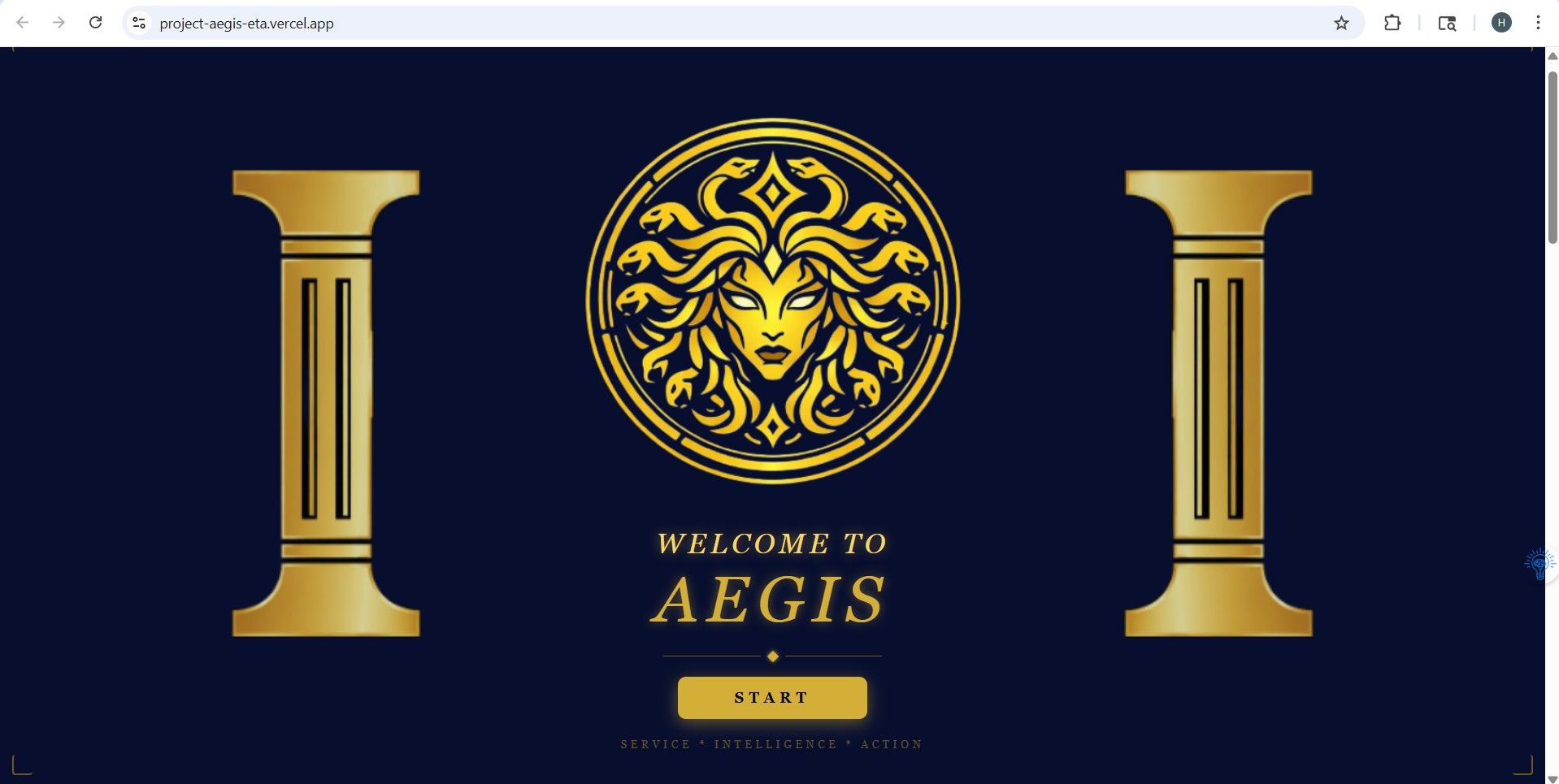
Landing page
-
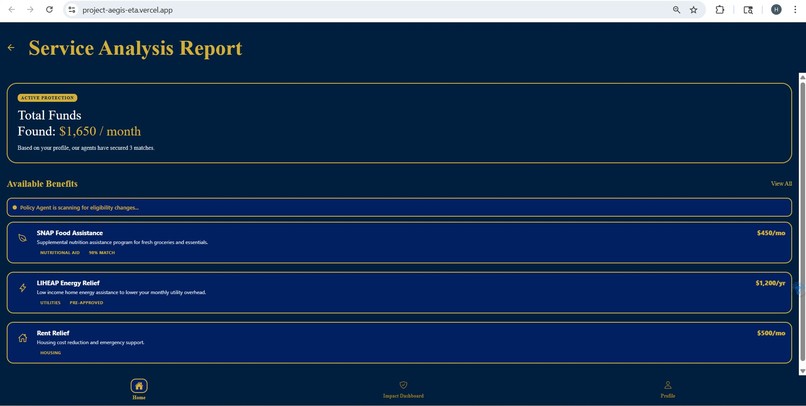
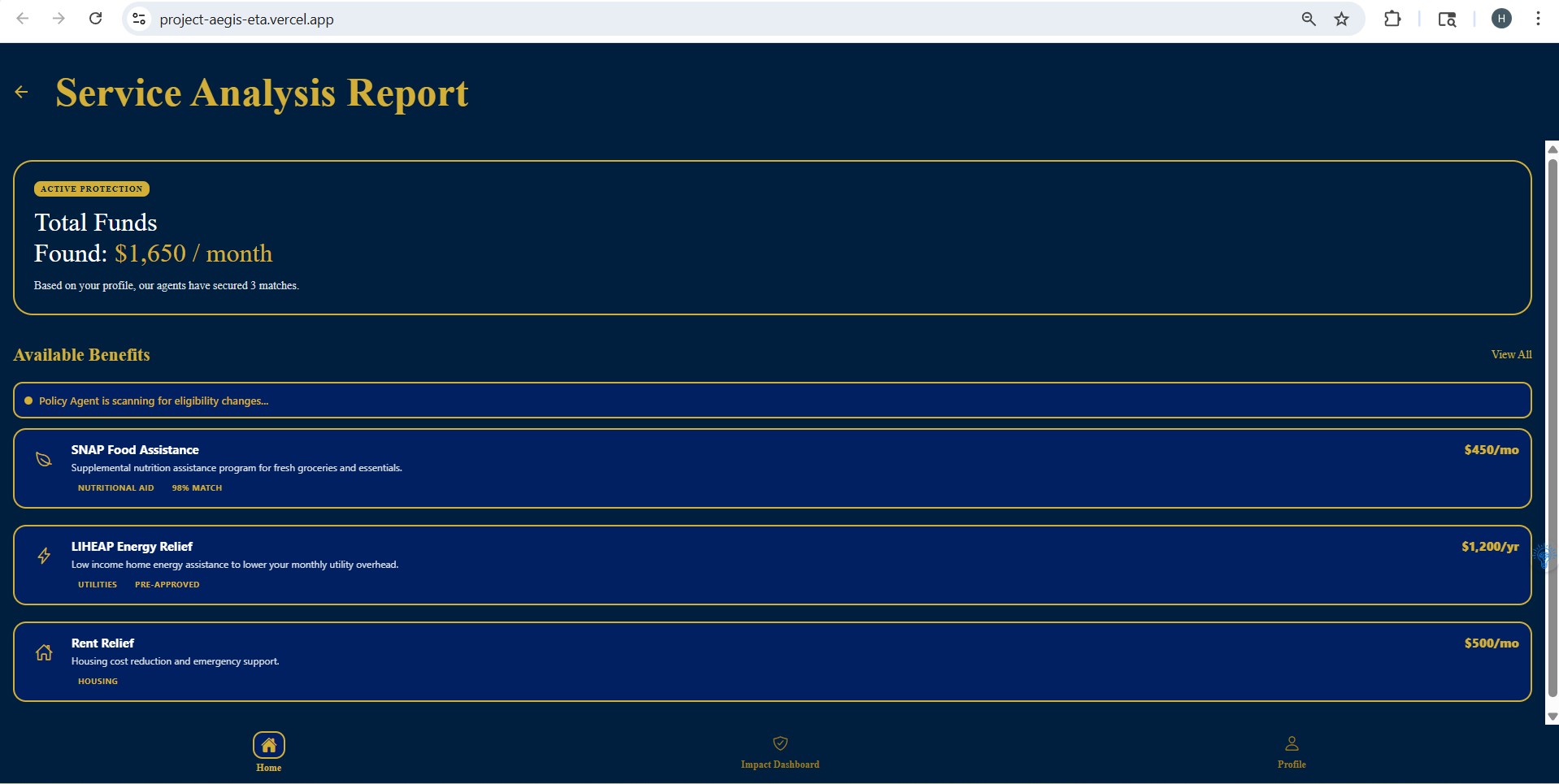
Service Analysis Report
-
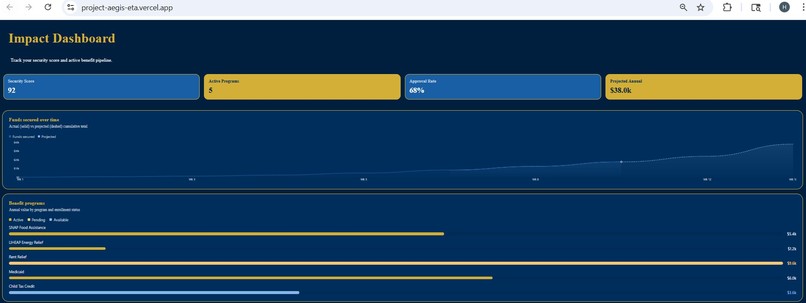
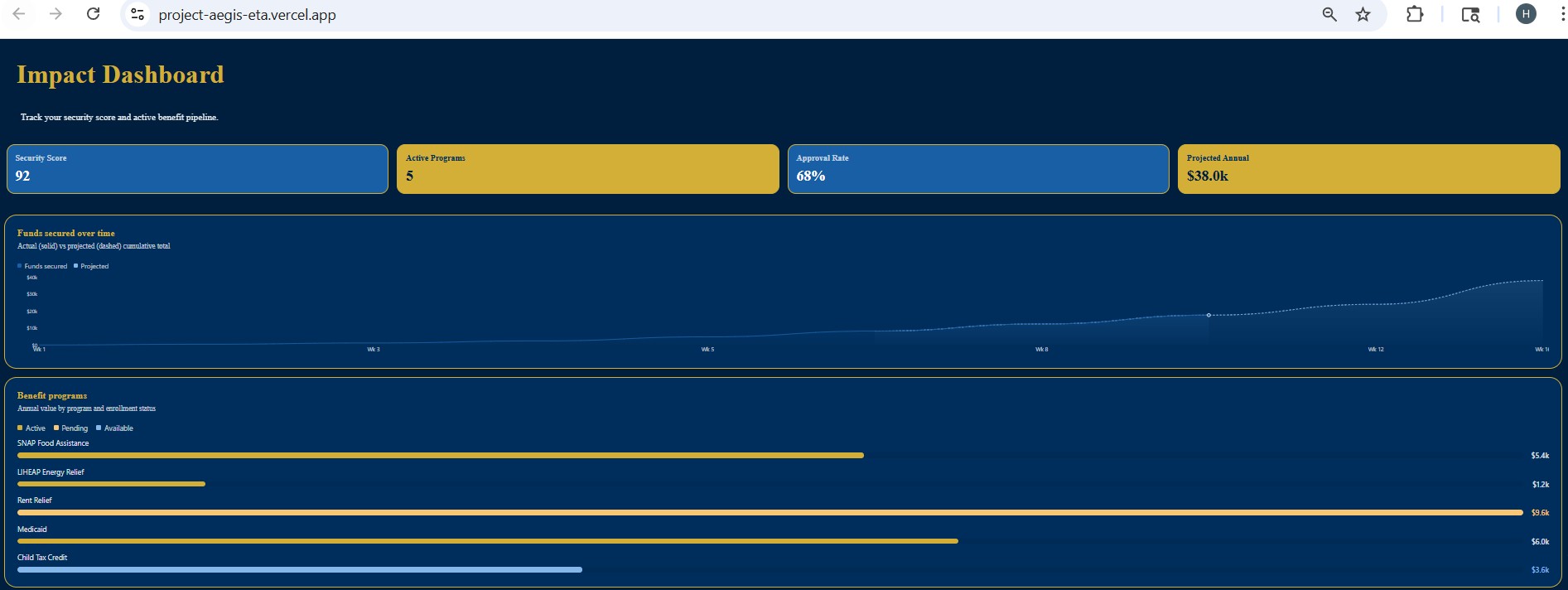
Impact Dashboard
-
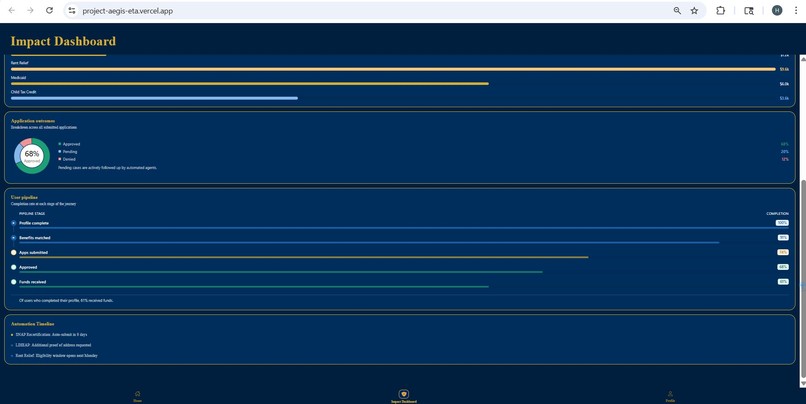
Impact Dashboard pt.2
-
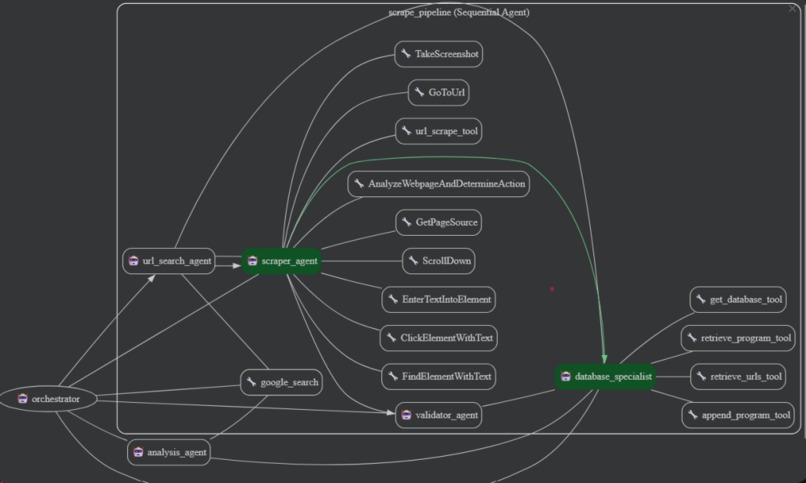
Agent graph
Inspiration
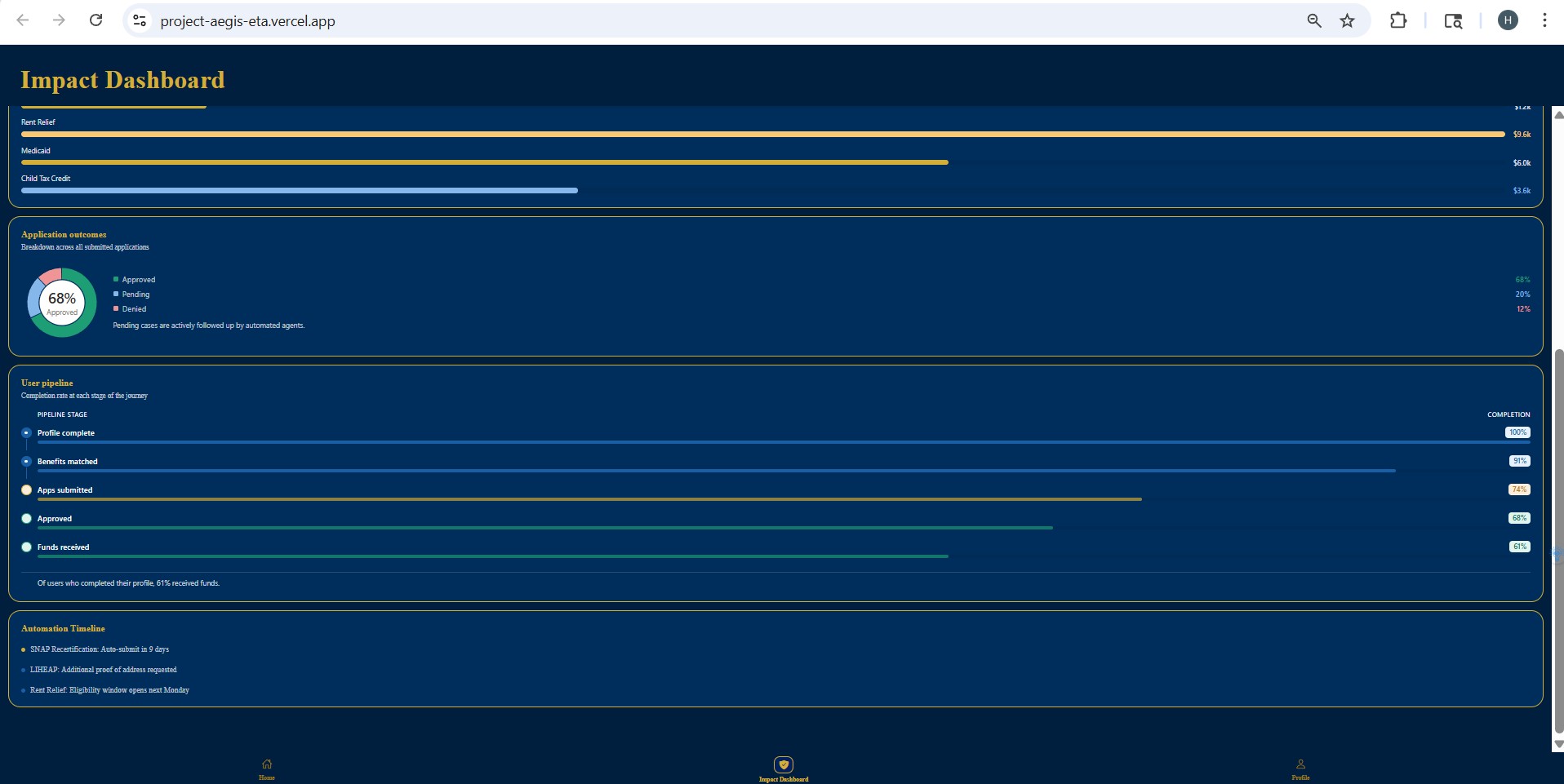
Many government funding programs and aid resources go underutilized because those who are eligible often don’t know where to find them. We wanted to create a solution that makes it easy for users to discover and access the support they need.
What it does
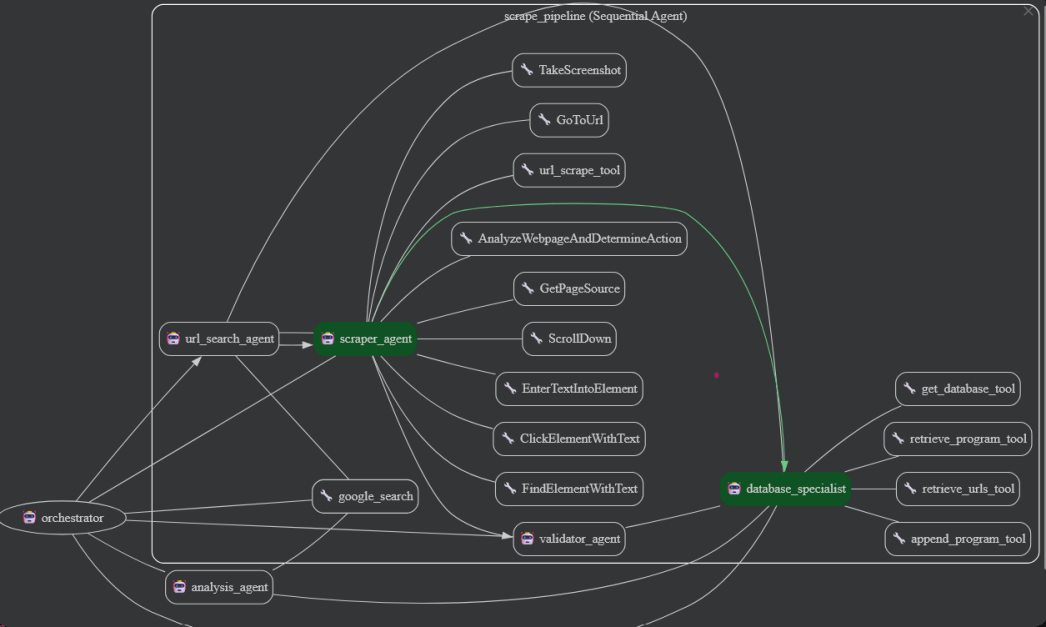
Aegis leverages AI agents, specifically Google ADK A2A interactions, combined with contextual information provided by the user, to search the web and identify government aid service websites. Eligible users can then easily access these resources and apply for aid without spending hours navigating complex government portals.
How we built it
Frontend: The frontend is a cross-platform application built using Expo, React Native, React Native Web, and TypeScript, allowing Aegis to run seamlessly on iOS, Android, and web from a single codebase. We designed a scalable and maintainable architecture with:
- A centralized app entry point (App.tsx)
- Native stack navigation for smooth user flow
- Shared global state management using React Context (appStore.tsx)
- A modular component system (e.g., reusable StatusCard)
- A service layer (api.ts) for clean API communication
Initial UI workflows were generated using Google Stitch and refined in Figma.
Backend: The backend is powered by Python and Google ADK, forming a multi-agent system designed to automate discovery of aid resources. Key features include:
- A modular backend service layer for future API, authentication, and data integrations
- AI agents that scrape and process government aid websites
- A data pipeline built with Beautiful Soup for parsing and extraction
- A SQLite database for storing and organizing results efficiently
- Tooling integrations that allow agents to query, refine, and persist relevant data
This architecture enables Aegis to dynamically collect and update information, ensuring users receive timely and relevant aid opportunities.
Challenges we ran into
We faced difficulties maintaining consistent dependency versions while working with the React Native frontend. Additionally, connecting frontend and backend components introduced Git version control and merge conflicts that required careful coordination to resolve.
Accomplishments that we're proud of
We successfully created a complex, fully functional product in under 24 hours. Despite initial challenges, our team worked seamlessly together to integrate the frontend and backend components.
What we learned
Early-stage ideation is critical. Having multiple well-thought-out ideas allows for flexibility during a hackathon. Committing often and maintaining multiple versions of the project ensures key features are not lost and can be reverted if necessary. Even small details, like font compatibility, can have a significant impact on the overall design and user experience.
What's next for Aegis
Our next step is to build an additional agent that can assist users in completing applications automatically, further streamlining the process and making aid more accessible to those in need. We also plan to productionize the platform by containerizing the entire system with Docker, ensuring consistent environments and eliminating dependency issues across development and deployment.


Log in or sign up for Devpost to join the conversation.