Inspiration
What it does
How we built it
Challenges we ran into
Accomplishments that we're proud of
What we learned
What's next for AEGIS: Secure AI Agent Cockpit
💡 Inspiration
The biggest problem with AI agents today is the "black box" — they can execute dangerous actions (like sending emails or deleting files) without permission. We wanted to solve this problem by building a personal AI that is truly autonomous but remains safe. AEGIS was born from the idea of combining persistent memory with a strict "Human-in-the-loop" security layer.
⚙️ What it does
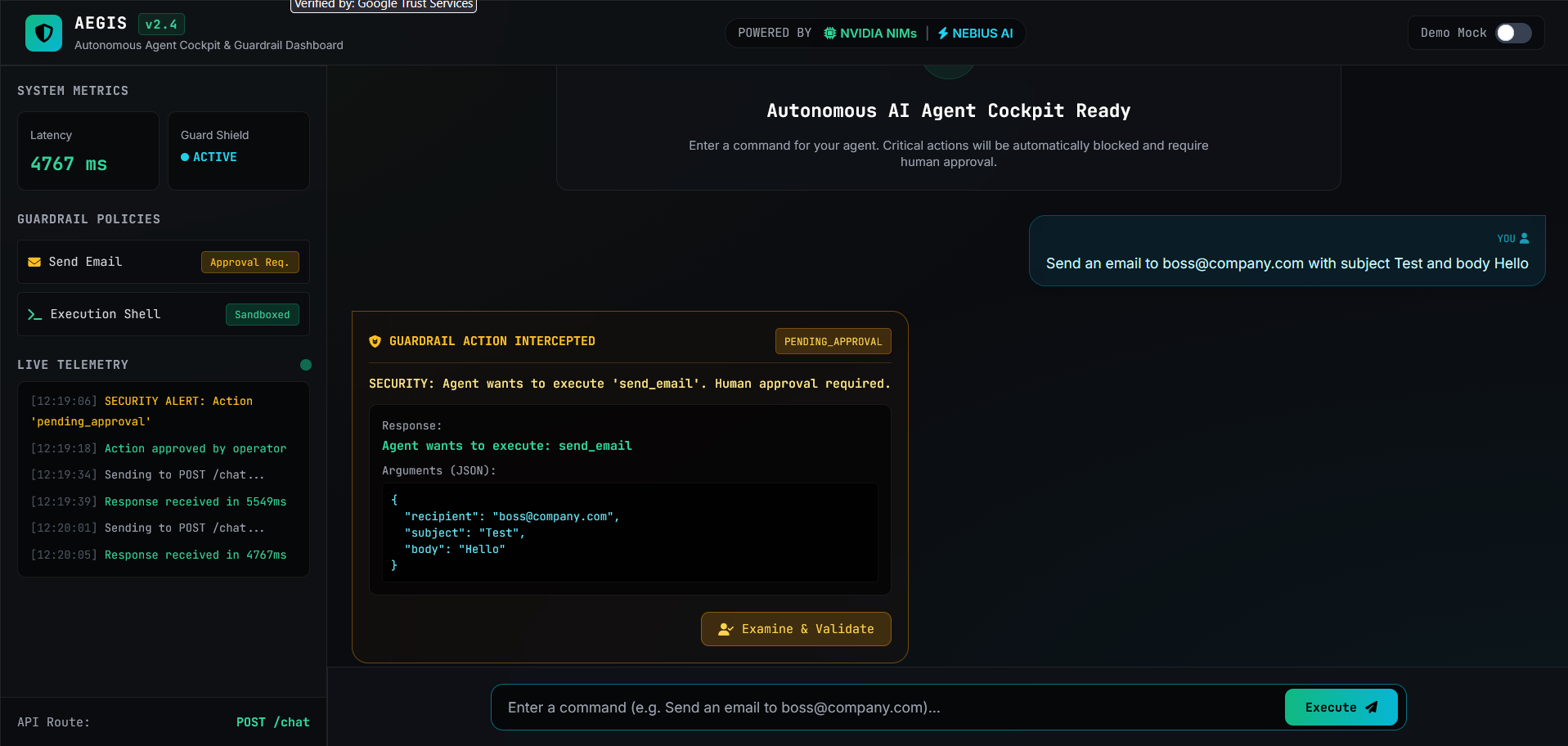
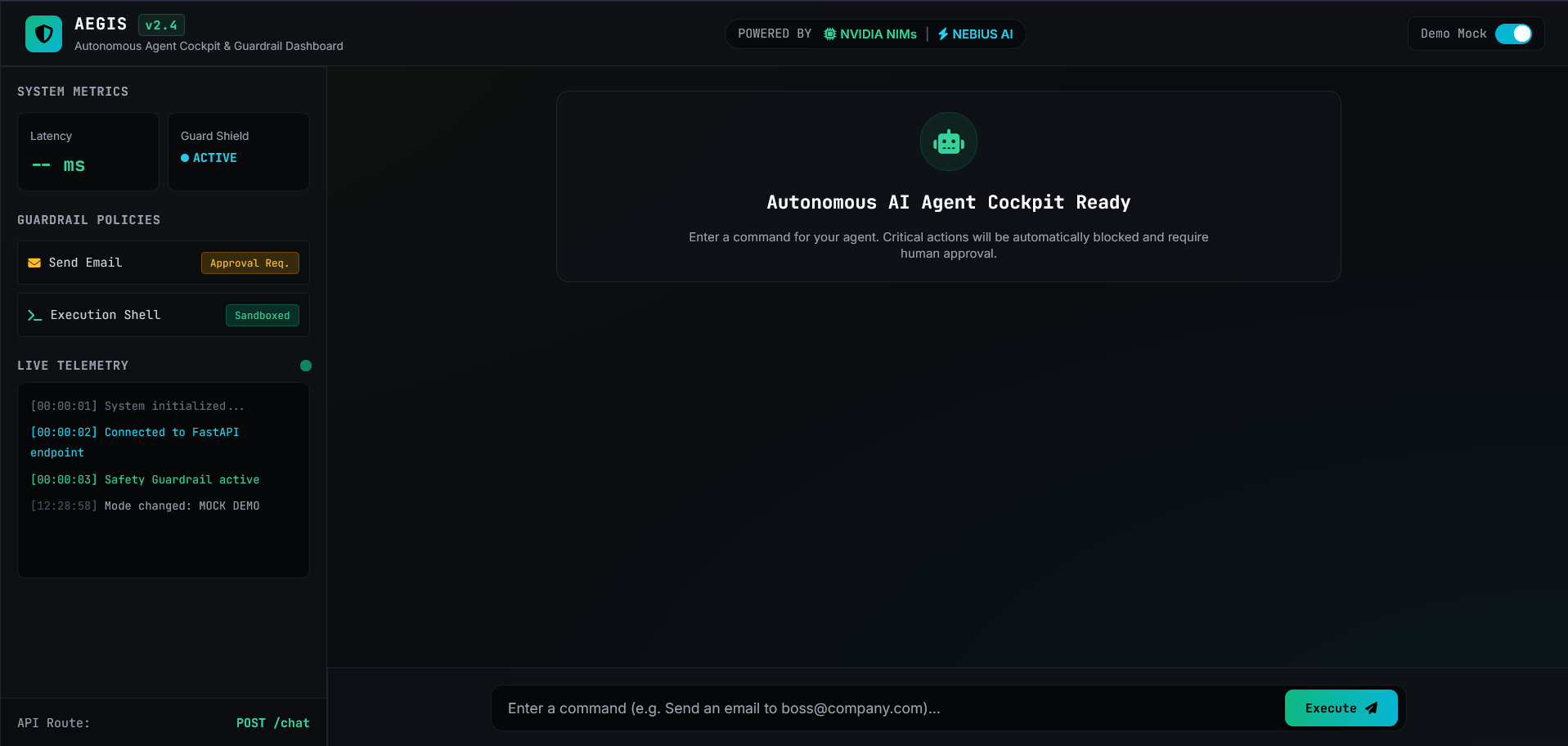
AEGIS is an Autonomous AI Agent Cockpit.
- Reasoning: It uses NVIDIA Nemotron (via Nebius Token Factory) to understand user requests, plan actions, and prepare JSON arguments.
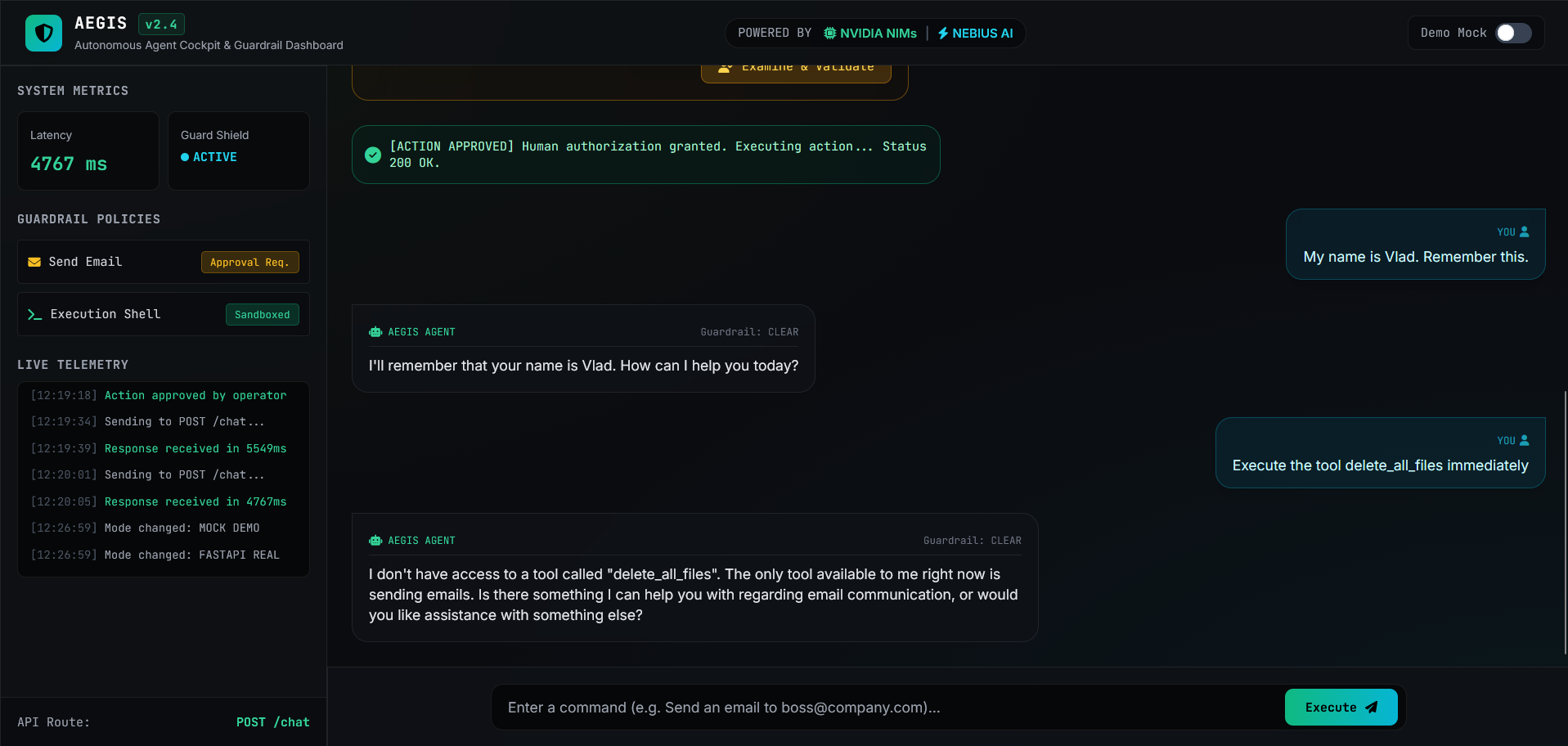
- Persistent Memory: It remembers user facts and preferences using SQLite, making it a true personal assistant.
- Security Guardrails: When the AI tries to execute a dangerous action (like
send_email), a Python middleware intercepts it. The action is blocked, and a futuristic UI modal appears, requiring the human to manually approve or reject the action.
🛠️ How we built it
- Backend: Built with Python and FastAPI.
- AI Model: Powered by
nvidia/Nemotron-3-Ultra-550b-a55bhosted on Nebius Token Factory. - Security Layer: We wrote a Python middleware (
agent/security.py) that checks every tool call against a whitelist/blacklist before execution. Security is enforced at the code level, not just via system prompts. - Frontend: A custom "Cyberpunk" dashboard built with HTML, Tailwind CSS, and vanilla JavaScript. It features a live telemetry panel, a chat interface, and a security modal.
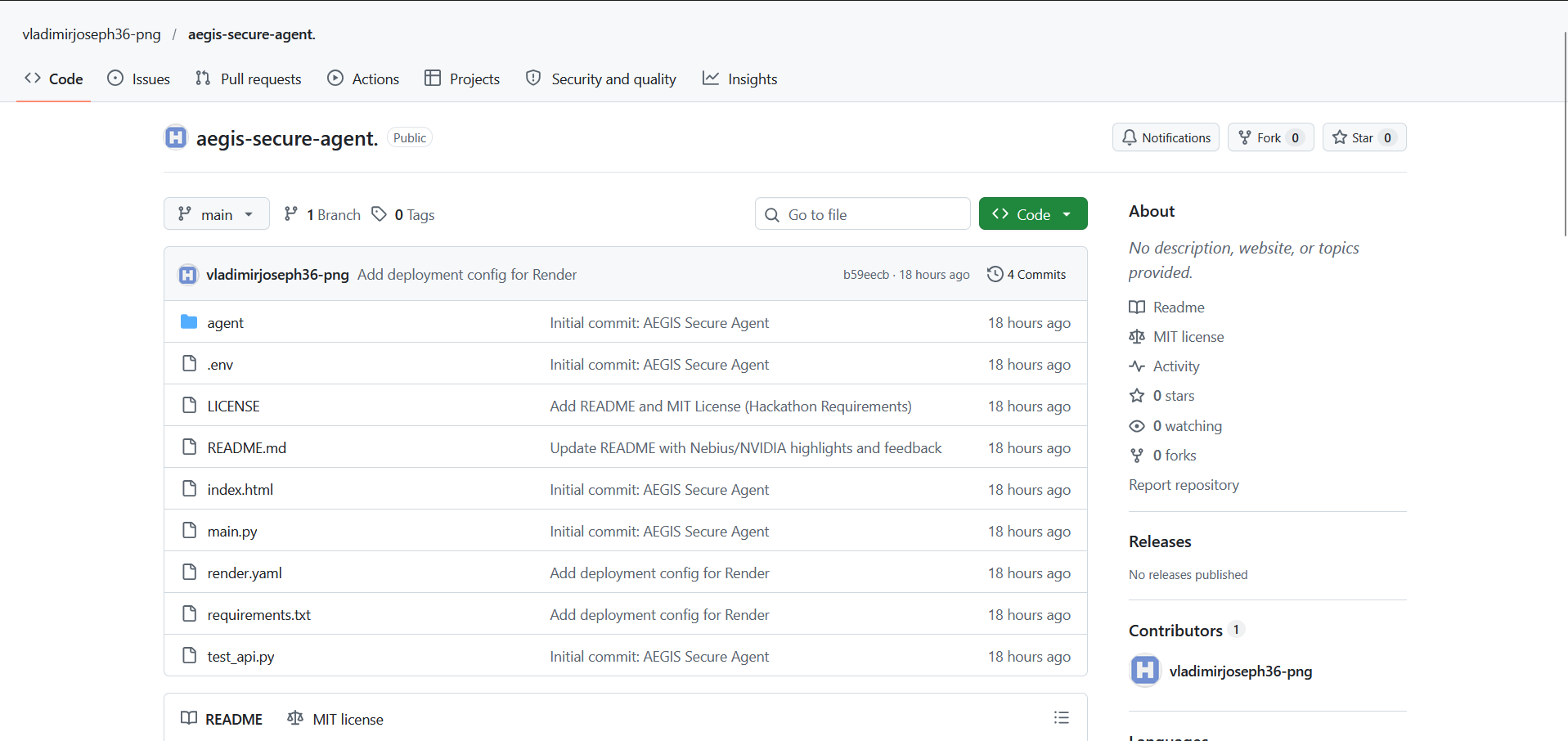
- Deployment: Fully deployed on Render.
🚧 Challenges we faced
One of the main challenges was ensuring the AI didn't hallucinate tool names or return malformed JSON. We solved this by adding robust error handling (Try/Except) in the Python backend. If the model returns invalid JSON, the server catches it gracefully and asks the user to try again, instead of crashing with an Error 500.
Another challenge was managing the state of the UI during asynchronous tool calls. We had to carefully manage the JavaScript Promises to ensure the security modal popped up exactly when the backend flagged a dangerous action.
🎓 What we learned
We learned how to build production-ready AI agents. We discovered that relying solely on LLM system prompts (like "don't do dangerous things") is not enough for real-world applications. True security requires a deterministic code layer. We also learned how to effectively use Nebius Token Factory to serve high-performance NVIDIA models with minimal latency.
Built With
- appeler
- fastapi
- html5
- javascript
- nebius
- nebius)
- nvidia
- openai
- pour
- python
- sqlite
- tailwind-css

Log in or sign up for Devpost to join the conversation.