-
-
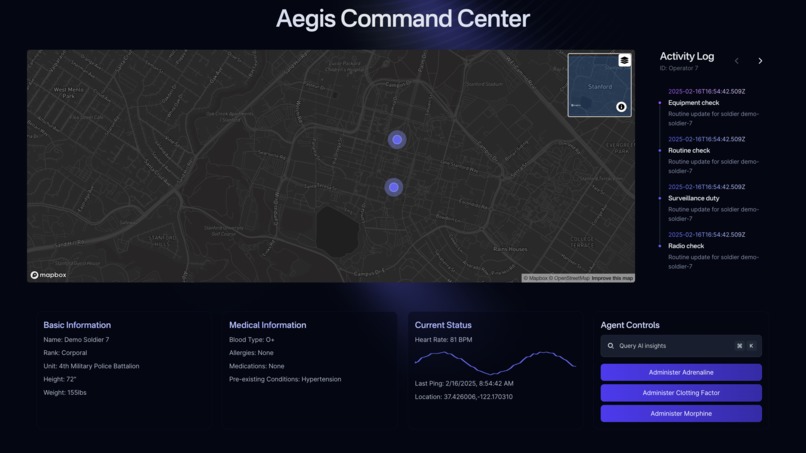
Command Center Interface
-
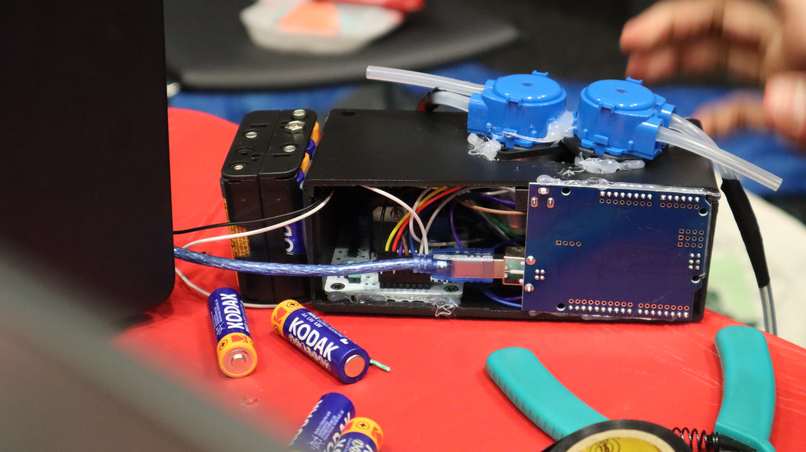
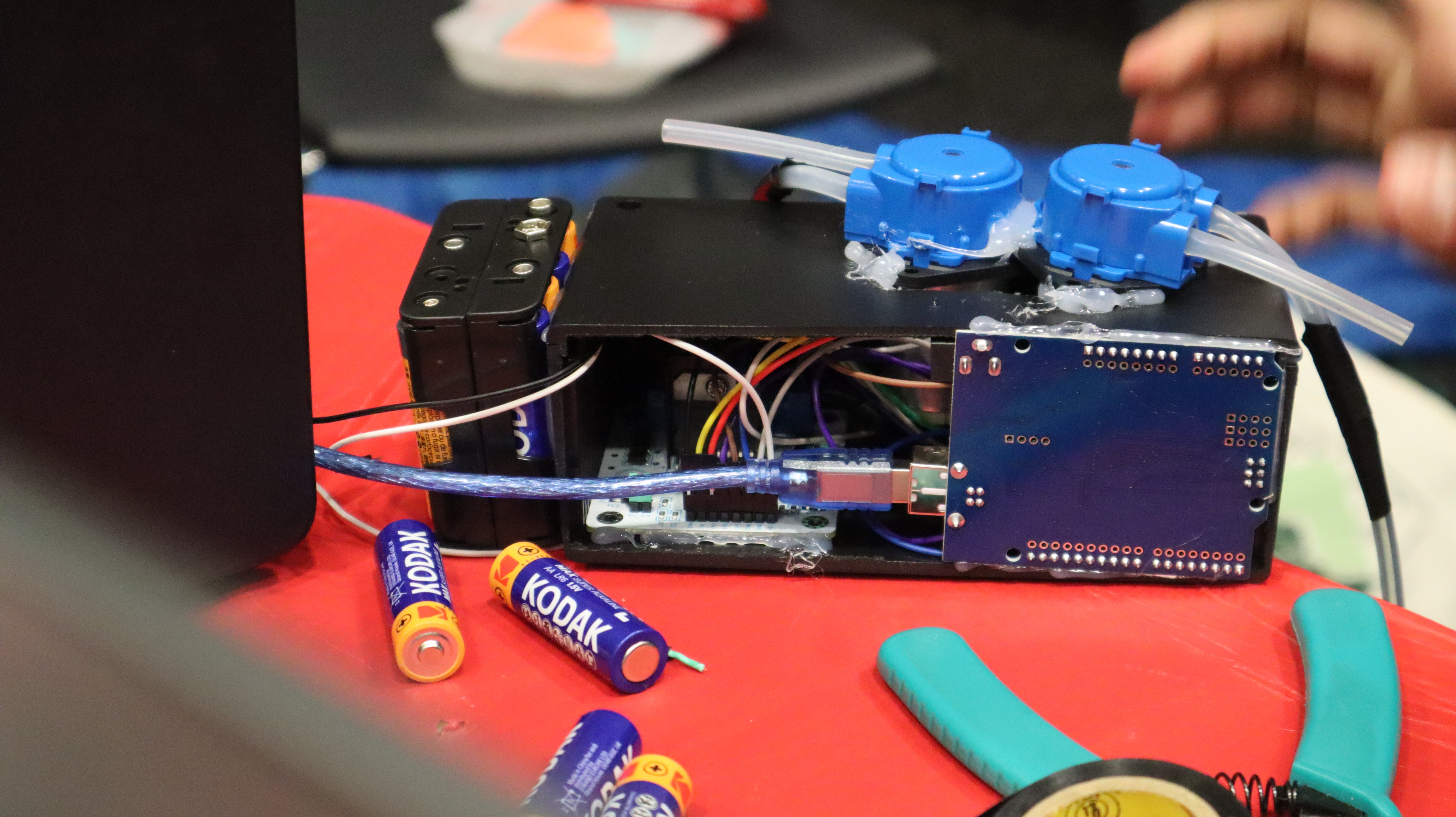
Aegis' peristaltic pump and arduino unit
-
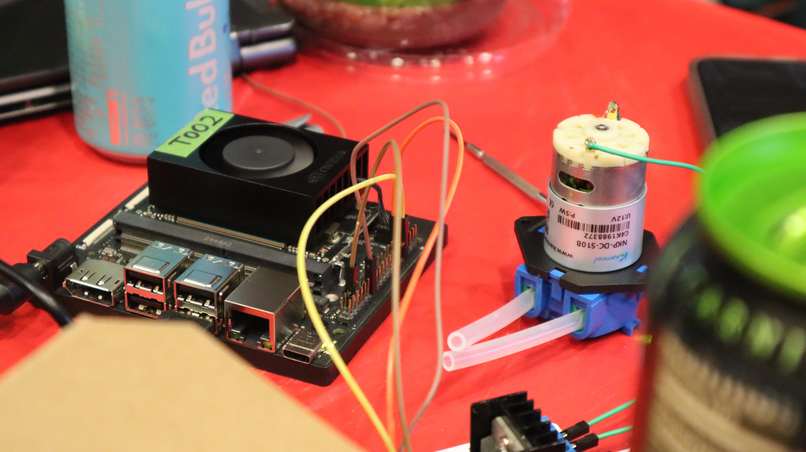
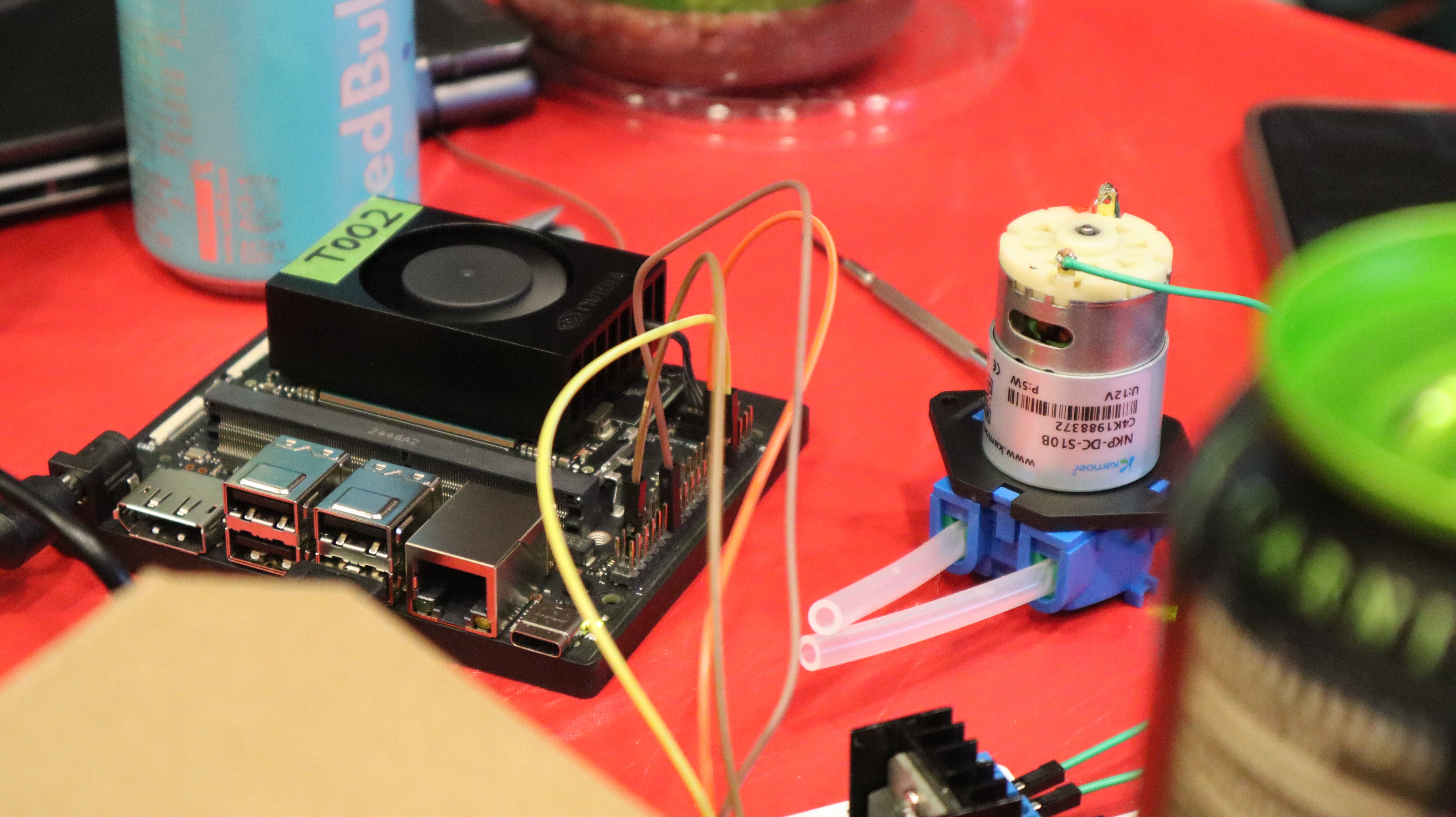
Prototyping Aegis' NVIDIA Jetson Nano with a peristaltic pump
Inspiration
In a world where every second counts, especially in modern combat scenarios and emergency response situations, the golden hour—the critical period following a traumatic injury—often determines survival. According to a study of U.S. military casualties in Afghanistan and Iraq, 87.3% of all injury mortality occurred before reaching a Medical Treatment Facility, with 24.3% of these deaths being potentially survivable. Aegis was born from this realization—in high-stakes environments where every second counts, immediate medical intervention can mean the difference between life and death. While medics and combat lifesavers provide invaluable care, they can't be everywhere at once. We envisioned a future where every soldier and first responder carries their own automated guardian—a system smart enough to begin life-saving interventions in those crucial first moments.
What it does
Aegis is a wearable device that combines biometrics with computer vision to assess trauma and deliver accurate, life-saving medicine. Using an Apple Watch for vital sign monitoring and a camera system for wound analysis, Aegis is able to make informed decisions about medical interventions. Our current prototype features a dual-reservoir system with peristaltic pumps—one that would contain a hemostatic agent for bleeding control and the other with pain medication (such as Morphine).
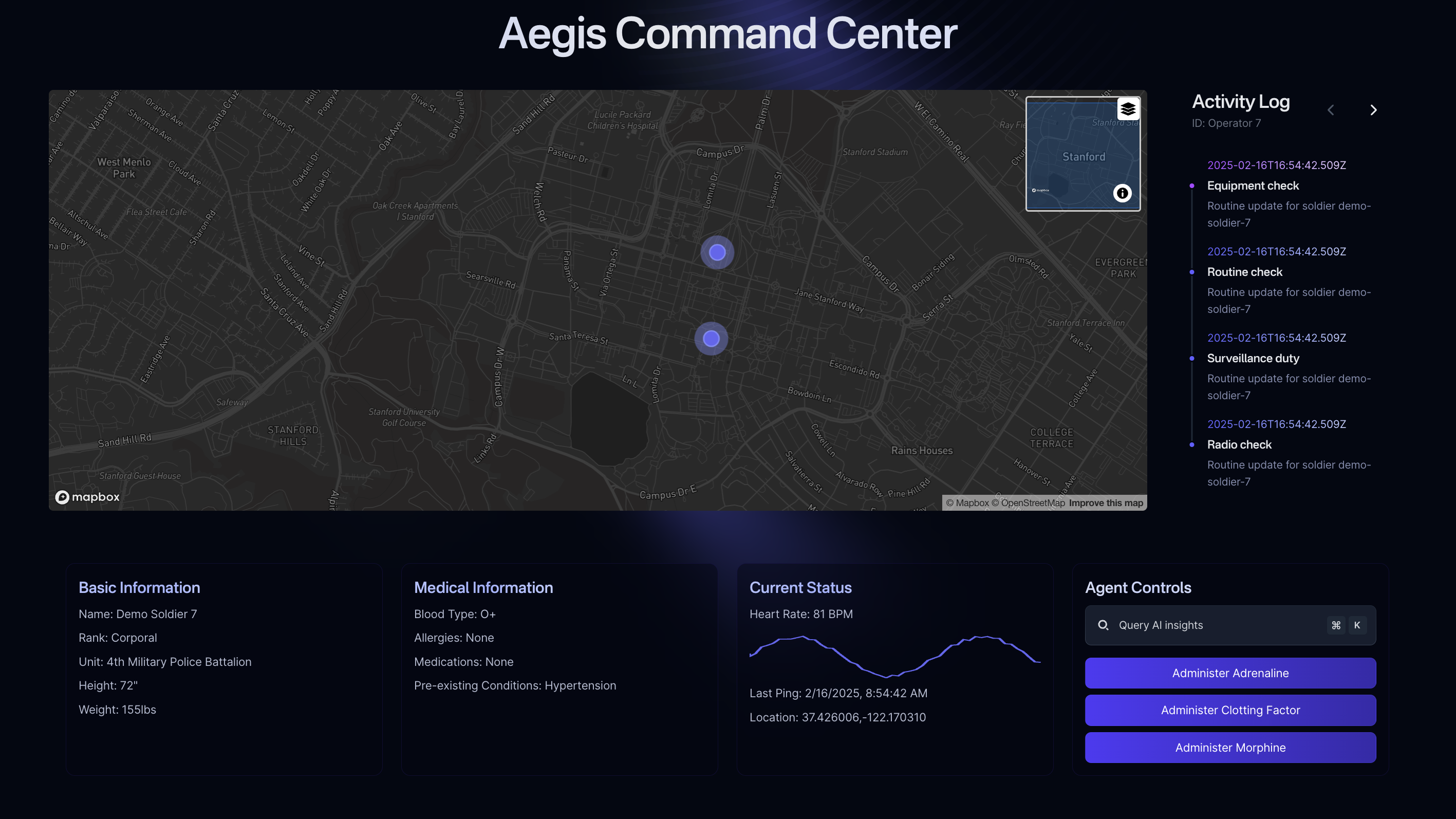
In most cases, users of Aegis would be in areas without an active network connection, which encouraged us to pursue an edge-based solution with the capability to process complex medical data efficiently. What further sets Aegis apart is its centralization through a command and control center, allowing unit leaders to monitor their team's medical status and location in real-time through a detailed UI and natural language queries like "Who is most injured and where are they?"
How we built it
We’ve deployed a biometric processor using an Apple Watch and Terra API in combination with a Vision Language Model—VILA—directly on the Jetson Orin Nano, leveraging edge computing for real-time wound classification without cloud dependency. To reduce redundancy, we created a flask server to keep both models persistently loaded, enabling efficient, low-latency processing while maintaining accuracy in medical image analysis.
Our edge model inputs complex biometric and visual data and outputs a medicinal dosage, which is then passed onto a prototyped delivery system that we've built out using two peristaltic pumps, a motor controller, and an Arduino for precise fluid control. Relevant data, including the dosage amount,
Challenges we ran into
Running a sophisticated Vision Language Model on edge devices proved particularly challenging—we had to balance model performance with the Jetson's limited RAM. Initially, we faced significant latency issues as we were reloading model weights with each inference, which we eventually figured out and optimized.
Hardware integration presented its own set of challenges. As software developers, this was our first time working with circuits, jumper wires, and physical components. We even had a Jetson Nano fry during development, forcing us to get a replacement and swap SSDs. The integration between WatchOS's HealthKit and Terra Streaming API proved more complex than anticipated, limiting our access to certain biometric data. Working with Swift, which was new to our team, had a bit of a learning curve as well, leading us to develop a lightweight iOS app focused solely on data transmission.
Accomplishments that we're proud of
We are incredibly proud to have successfully worked with components we had never touched in the past. To be able to build a hardware prototype and successfully merge biometric sensors, vision technology, and edge AI into one cohesive system was not easy, and we're glad we took on the challenge. We also came up with the idea the day the hackathon started, so we had to order hardware components that would only come in the next day. Being able to successfully build something under such time pressure surpassed any of our expectations!
What we learned
Throughout this project, we learned that combining hardware, software, and people's lives is a very delicate balance, and one that is both extremely important and also requires a lot of care and thought. Also, learning to balance performance with power and size limitations on platforms like the Jetson Nano was quite important—compute and energy are not unlimited.
What's next for Aegis
We envision Aegis revolutionizing care for millions of first responders across the globe, who put their lives on the line for others. Beyond the field of military medicine, Aegis can serve as a personalized shield for firefighters, police officers, and paramedics. For military leaders, our product provides insight into where troops and medics can be most effectively deployed based on congestion of injuries.
Built With
- elevenlabs
- gemini
- jetson-nano
- mistral
- next.js
- supabase
- swift
- terra
- vercel

Log in or sign up for Devpost to join the conversation.