-
-
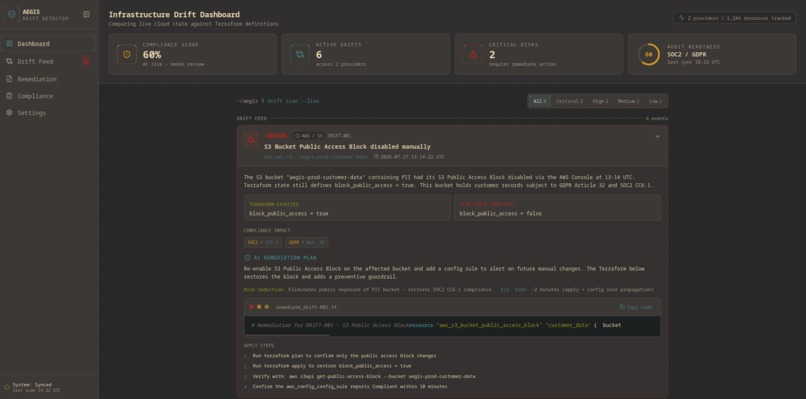
Dashboard
-
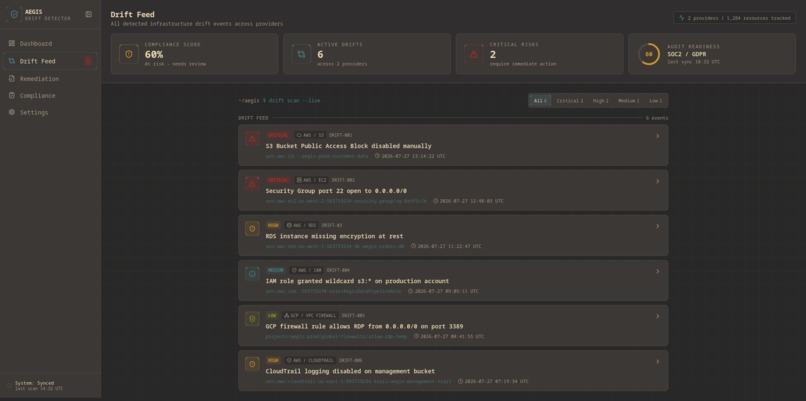
Drift Feed
-
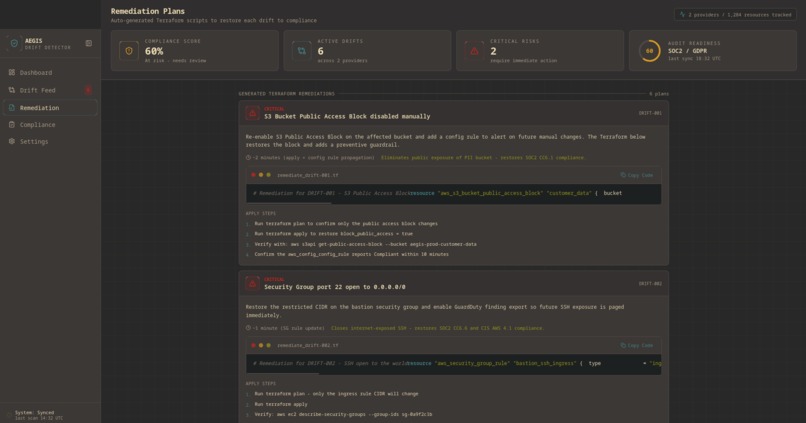
Remediation
-
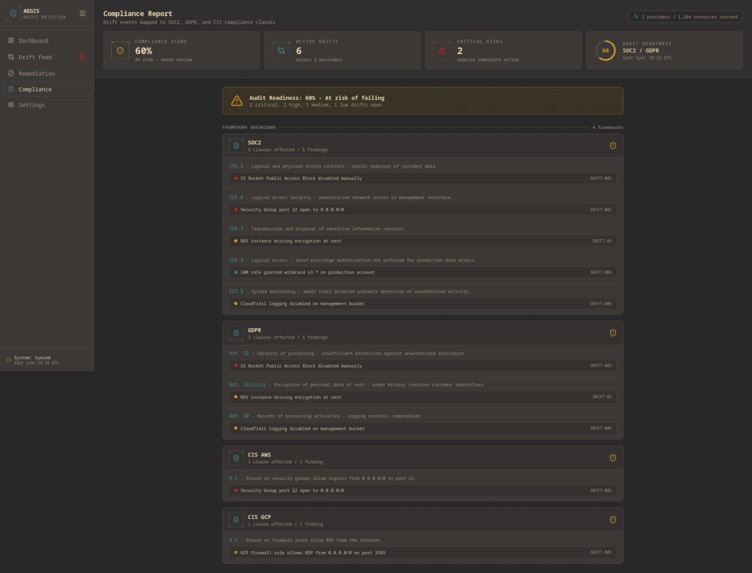
Compliance
The Inspiration
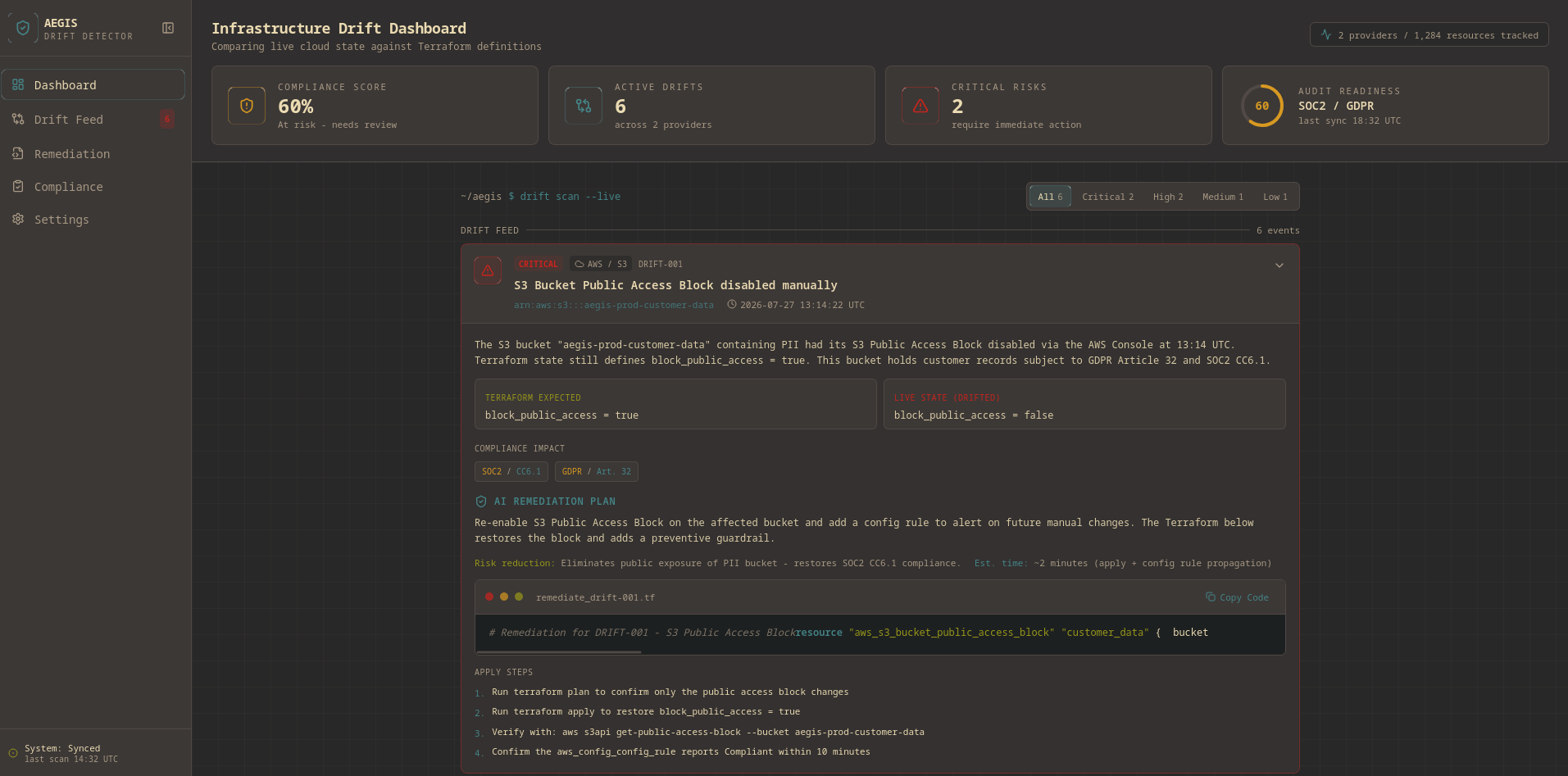
In modern cloud engineering, "infrastructure drift" is a silent killer. When someone makes a quick manual change in the AWS console to fix a live issue, the actual cloud state drifts away from the approved Infrastructure as Code (Terraform). This causes major security vulnerabilities and breaks future deployments. Finding this drift and writing the code to fix it manually takes hours. I wanted to build a tool that bridges the gap between detection and resolution instantly.
What it does
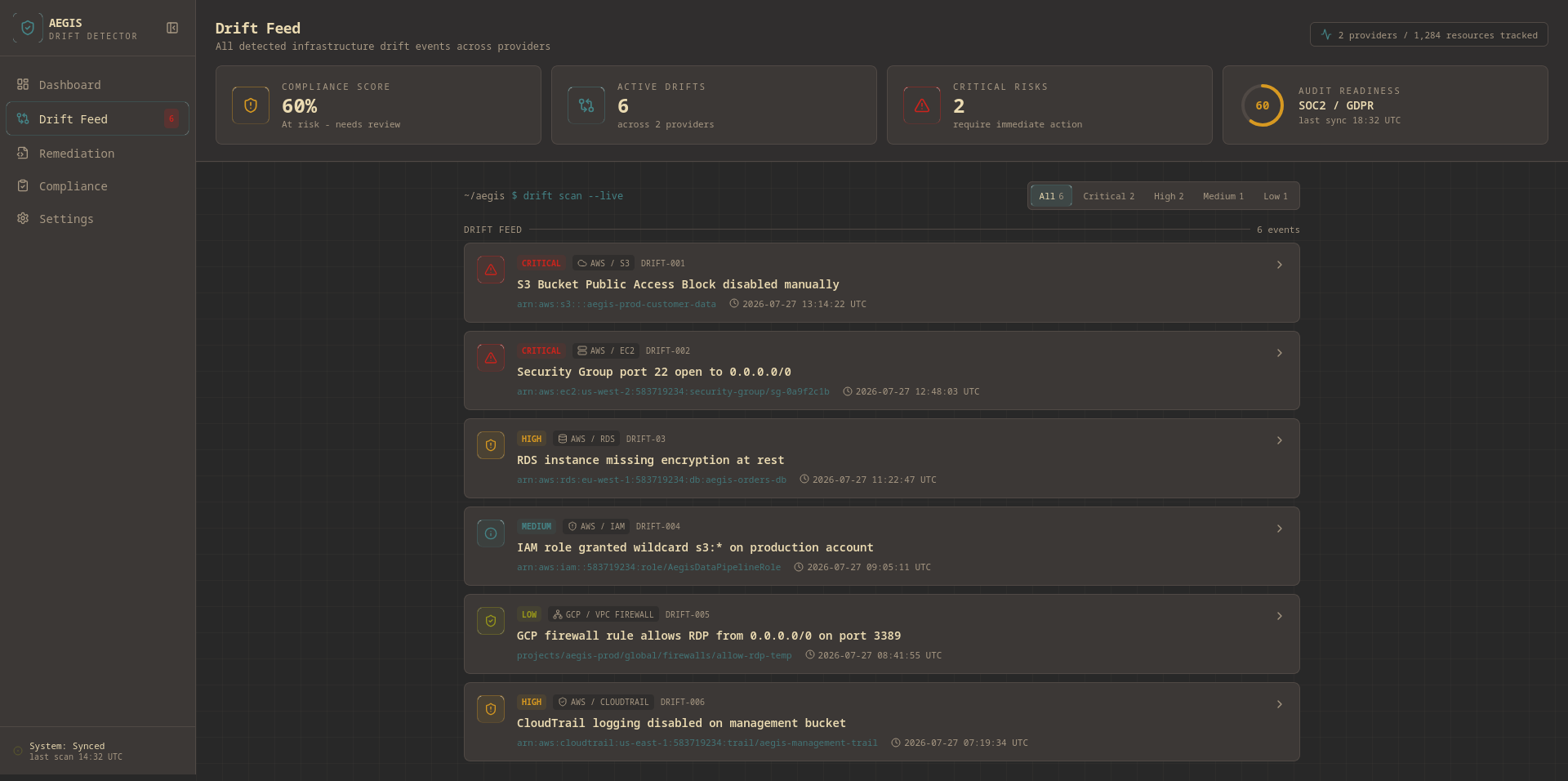
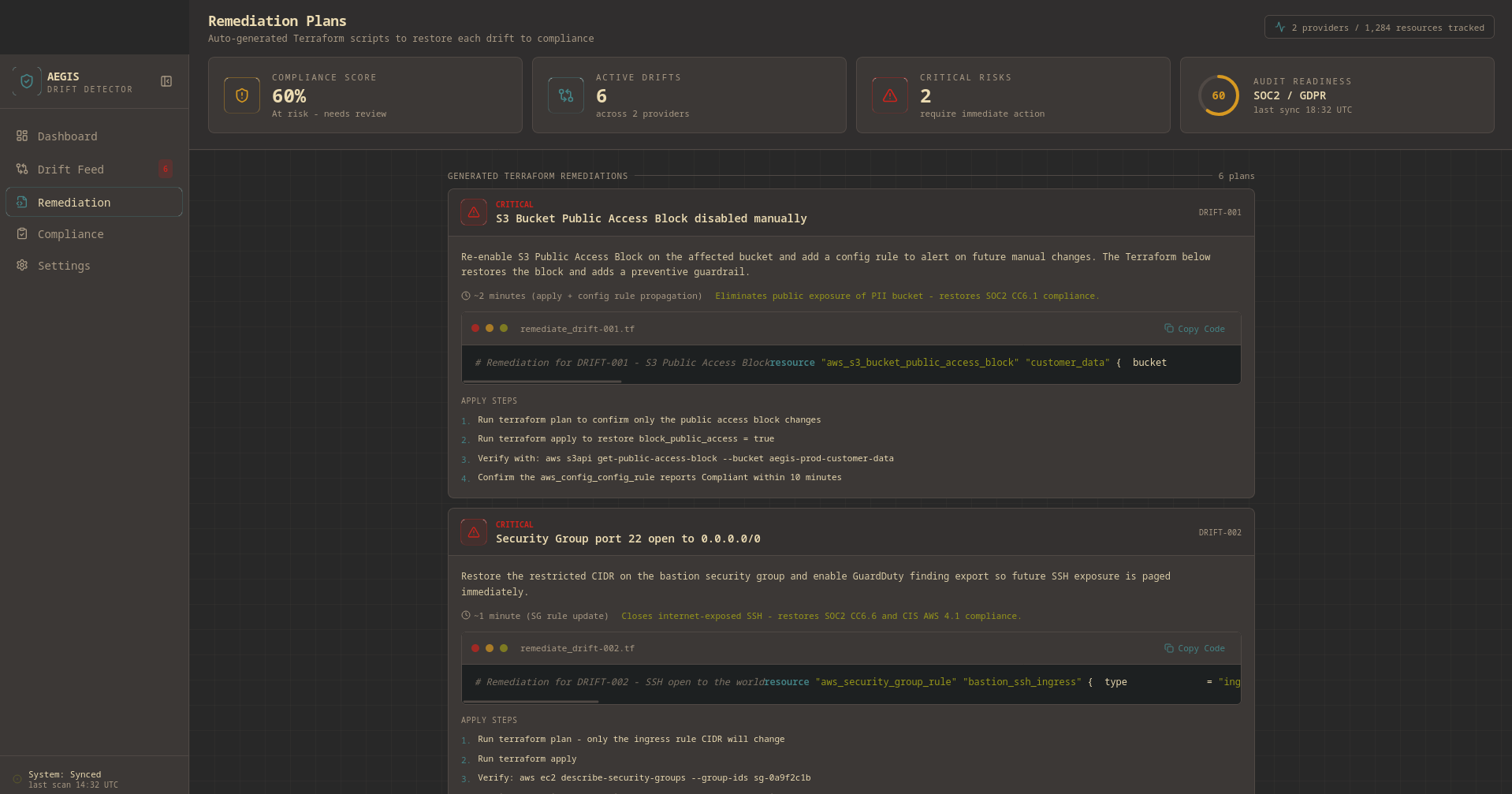
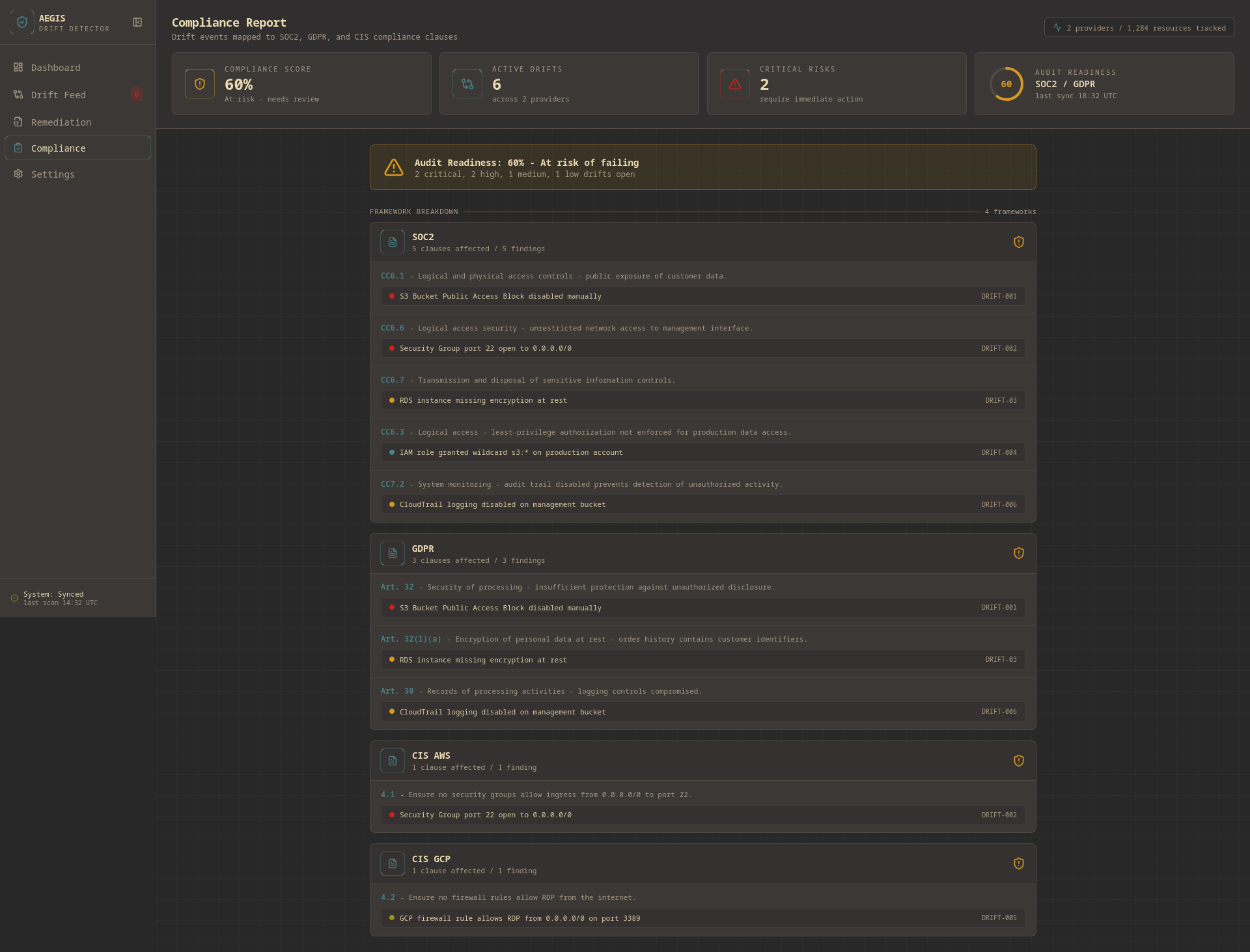
Aegis is a DevSecOps command center that visualizes infrastructure drift in real-time. When it detects a deviation between the live cloud state and the expected configuration (like a modified security group), it acts instantly. Instead of just sending an alert, Aegis generates the exact Terraform remediation scripts needed to bring the infrastructure back into compliance, allowing engineers to review and apply the fix in seconds.
How we built it
I built Aegis completely in Neovim, focusing on a rapid, developer-first workflow. The core application is powered by Next.js 13 (App Router) and styled with Tailwind CSS for a highly responsive UI. It is deployed directly to Vercel.
To prove the core concept and keep the frontend blazing fast for this hackathon, I engineered a robust mock data architecture (lib/mockData.ts) to simulate real-world AWS and Terraform drift events, bypassing the need for a heavy, slow backend during the prototyping phase.
Challenges we ran into
Time was the biggest enemy. Getting the Next.js build to compile cleanly for Vercel under a strict time crunch was difficult. I had to quickly adapt the configuration to handle build constraints and mock out data layers (like Supabase fallbacks) to ensure the live deployment functioned flawlessly without breaking the UI.
Accomplishments that we're proud of
I am incredibly proud of the user experience. The dashboard is clean, fast, and directly addresses a very complex DevOps problem without overwhelming the user with unnecessary data.
What's next for Aegis
The next step is moving from the simulated data layer to full production integration. This means connecting actual AWS APIs to read live state, integrating a real Supabase backend for user authentication, and executing the AI-generated Terraform scripts directly from the dashboard.
Built With
- css
- neovim
- next.js
- react
- tailwind-css
- typescript
- vercel


Log in or sign up for Devpost to join the conversation.