-
-

Landing Page
-
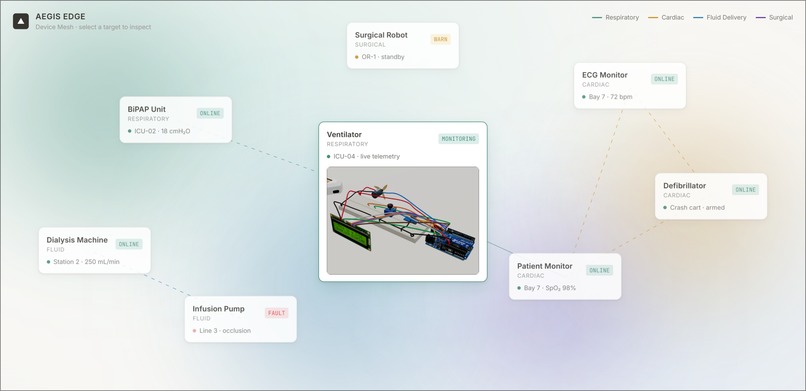
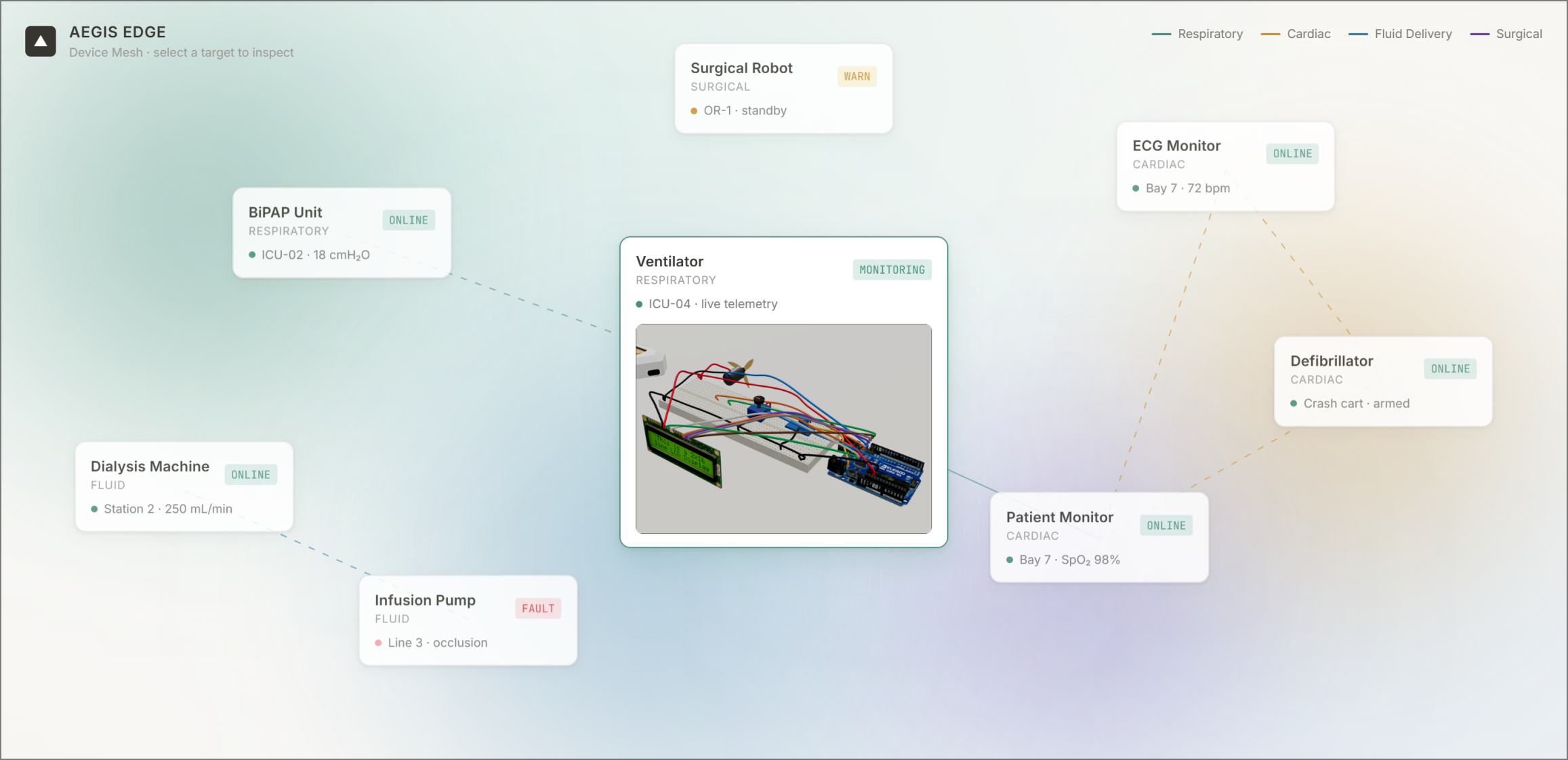
Device Graph
-
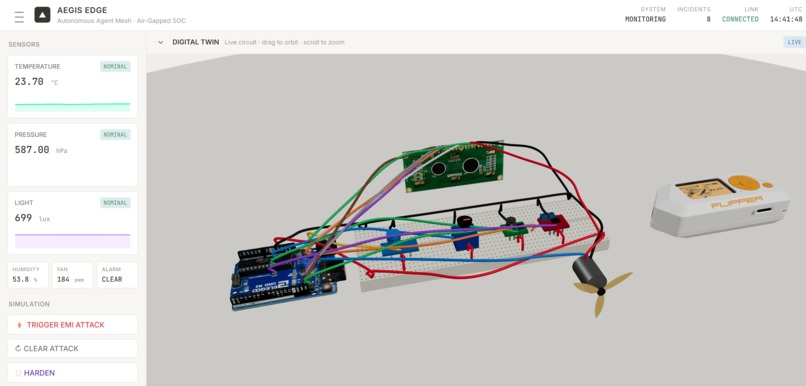
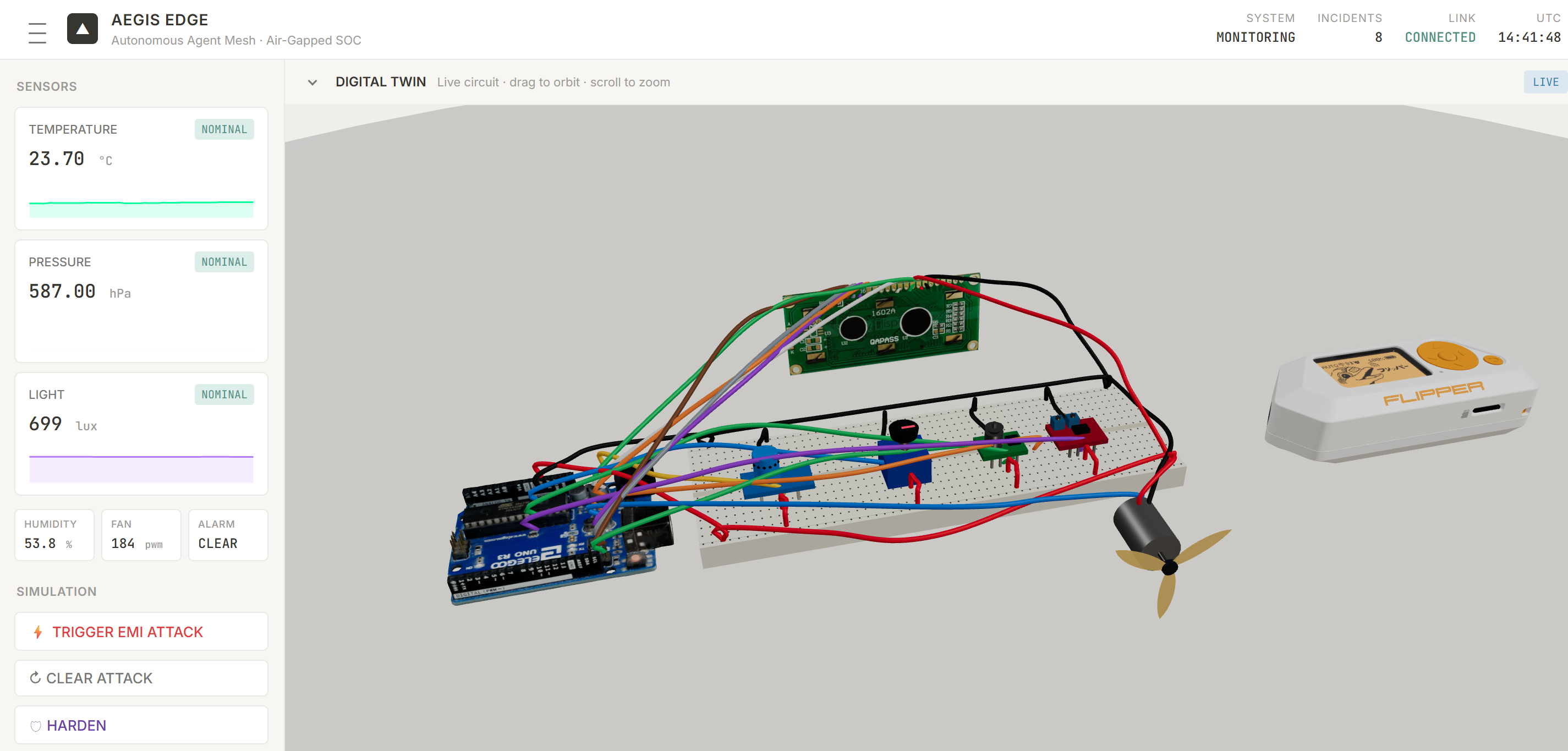
Dashboard
-
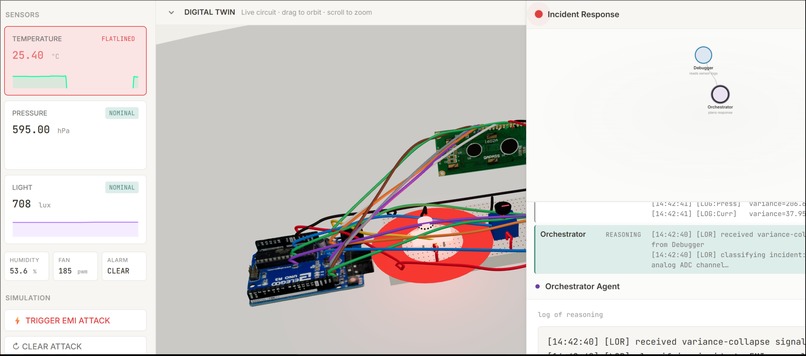
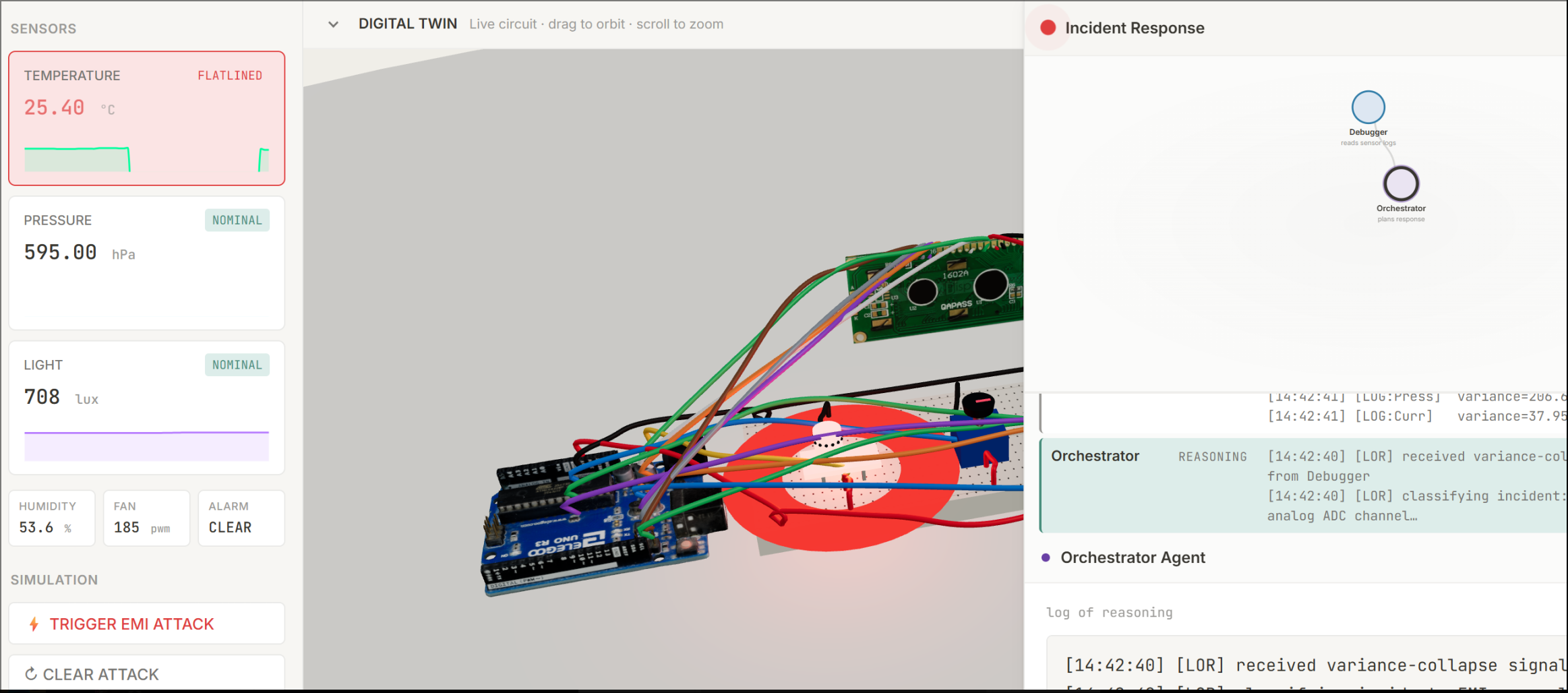
Agentic Patch Fix
-
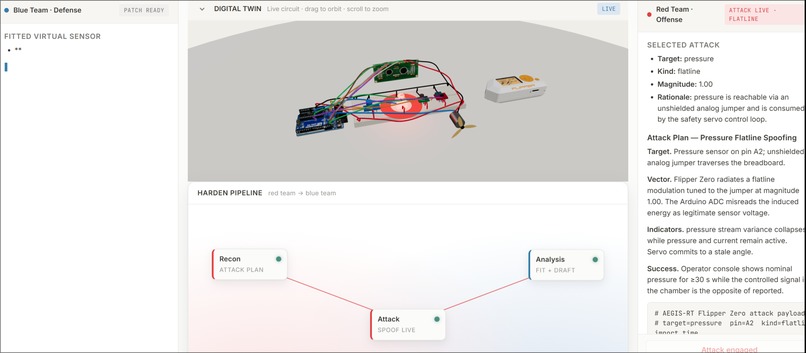
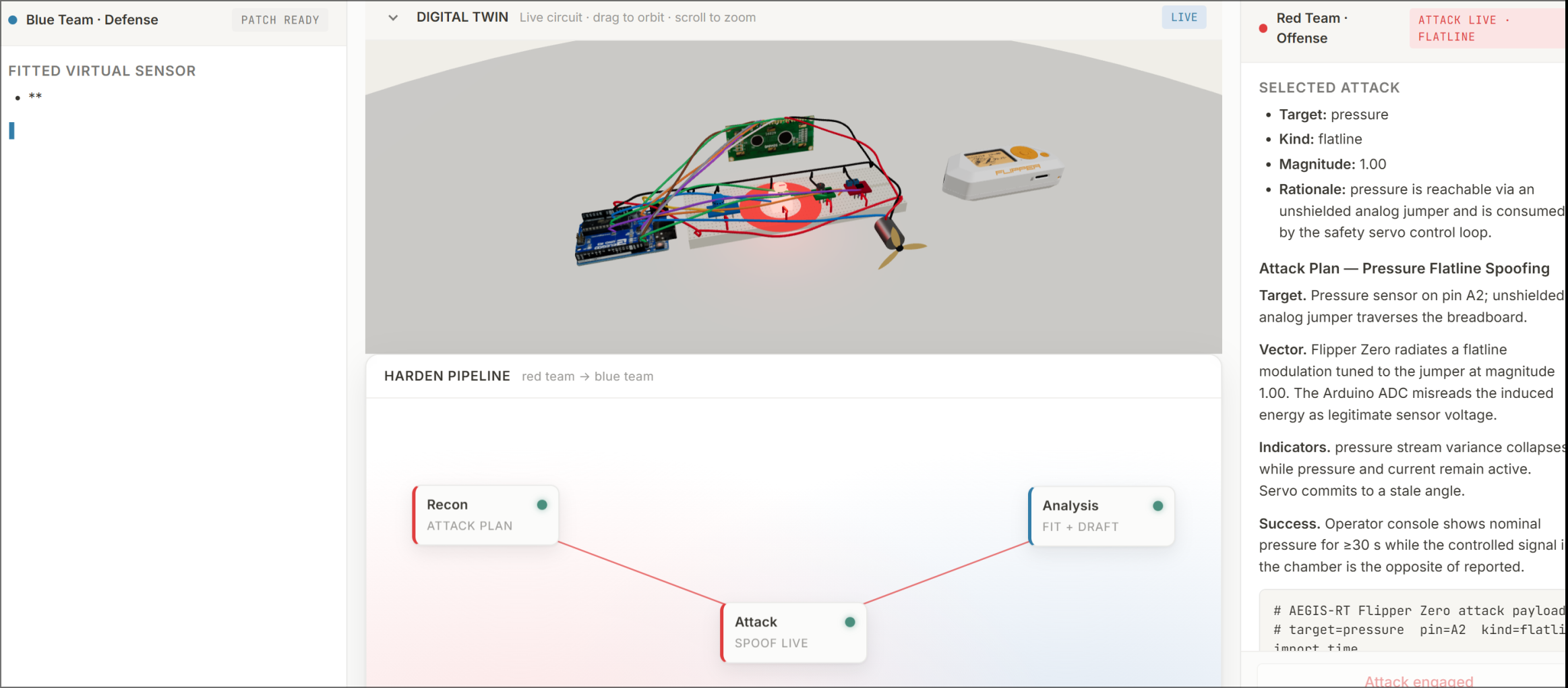
Red Team Blue Team

Inspiration
Hospitals, forward operating bases, and SCADA plants can't ship sensor data to the cloud, HIPAA, denied-comms, air-gaps. So when an attacker spoofs a sensor on the wire, no SOC ever sees it. We wanted to build the immune system for that gap: an on-prem model that patches firmware faster than an adversary can rewrite the attack.
What it does
Aegis Edge is an air-gapped autonomous defense for embedded hardware. A Python bridge streams telemetry from an Arduino-driven ventilator, detects sensor tampering, asks a local 70B-param LLM to derive a virtual-sensor patch in Arduino C++, and reflashes the UNO over USB, all without leaving the LAN.
How we built it
- Hardware: ELEGOO UNO R3 ventilator rig: DC fan, pressure pot, LCD1602, buzzer, HX1838 IR receiver.
- Attacker: Flipper Zero running a custom aegis_attacker.fap that fires a signal at the ventilator
- Bridge: Python + pyserial reading 115 kbaud JSON, anomaly detector on a rolling window.
- Brain: local LLM (Ollama) emitting strict, parser-clean C++.
- Reflash loop: arduino-cli compile + upload invoked as a subprocess.
- Frontend: live three.js dashboard for the demo.
Accomplishments that we're proud of
- End-to-end recovery in under a few seconds: attack → detect → generate → flash → vent breathing again.
- A fully untethered attacker. The Flipper sits on the table; the vent alarms when you aim it.
- Zero-shot virtual sensors that actually track ground truth using only pressure and fan PWM.
- The whole pipeline runs offline. No outbound packets, ever.
What we learned
- Physical-layer attacks change the threat model entirely; software defenses have to assume the wires are lying.
- Local frontier models are finally fast and good enough to sit in a real-time control loop, not just a chat window.
- The unsexy infra (udev rules, executable bits, serial framing) is what actually ships demos.
What's next for Aegis Edge
- Multi-sensor fusion: derive any dropped channel from the survivors, not just temperature.
- Signed firmware so the reflash itself can't be hijacked.
- A formal verification pass on LLM-emitted patches before they hit the MCU.
- Port beyond AVR, STM32, ESP32, and eventually real medical-grade controllers.
- Field trials with a defense or healthcare partner where the air-gap is the product, not the demo.
Built With
- arduino
- c
- flipper
- javascript


Log in or sign up for Devpost to join the conversation.