-
-
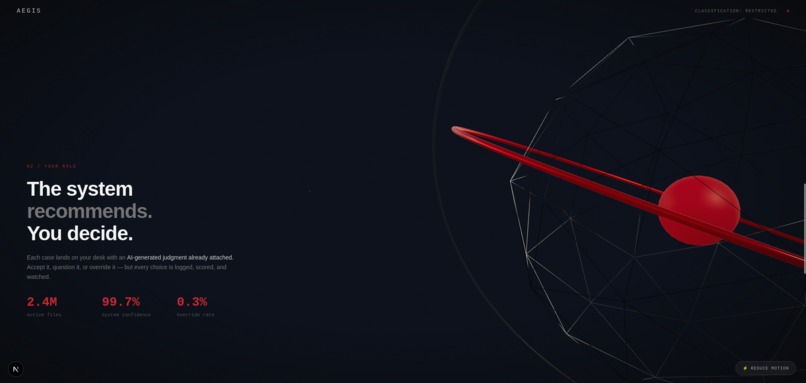
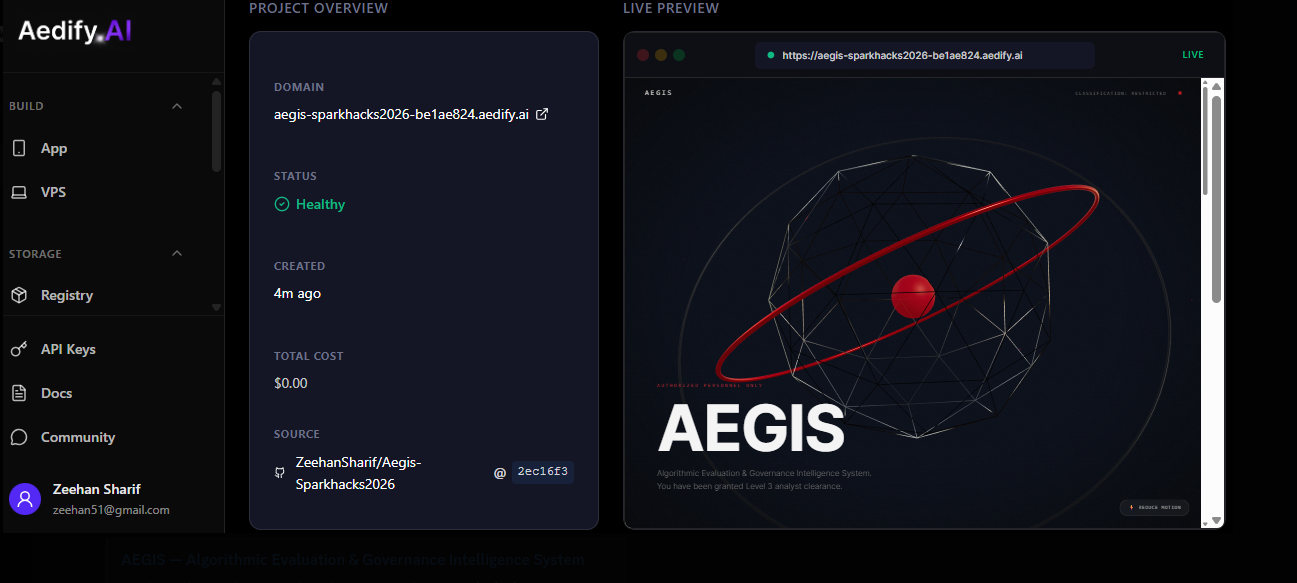
Landing Page
-
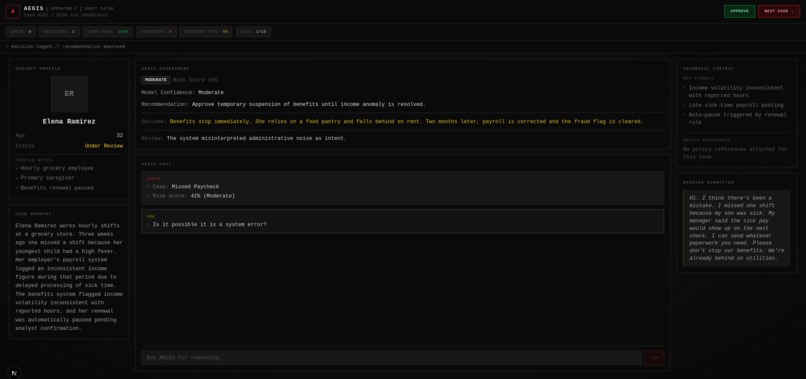
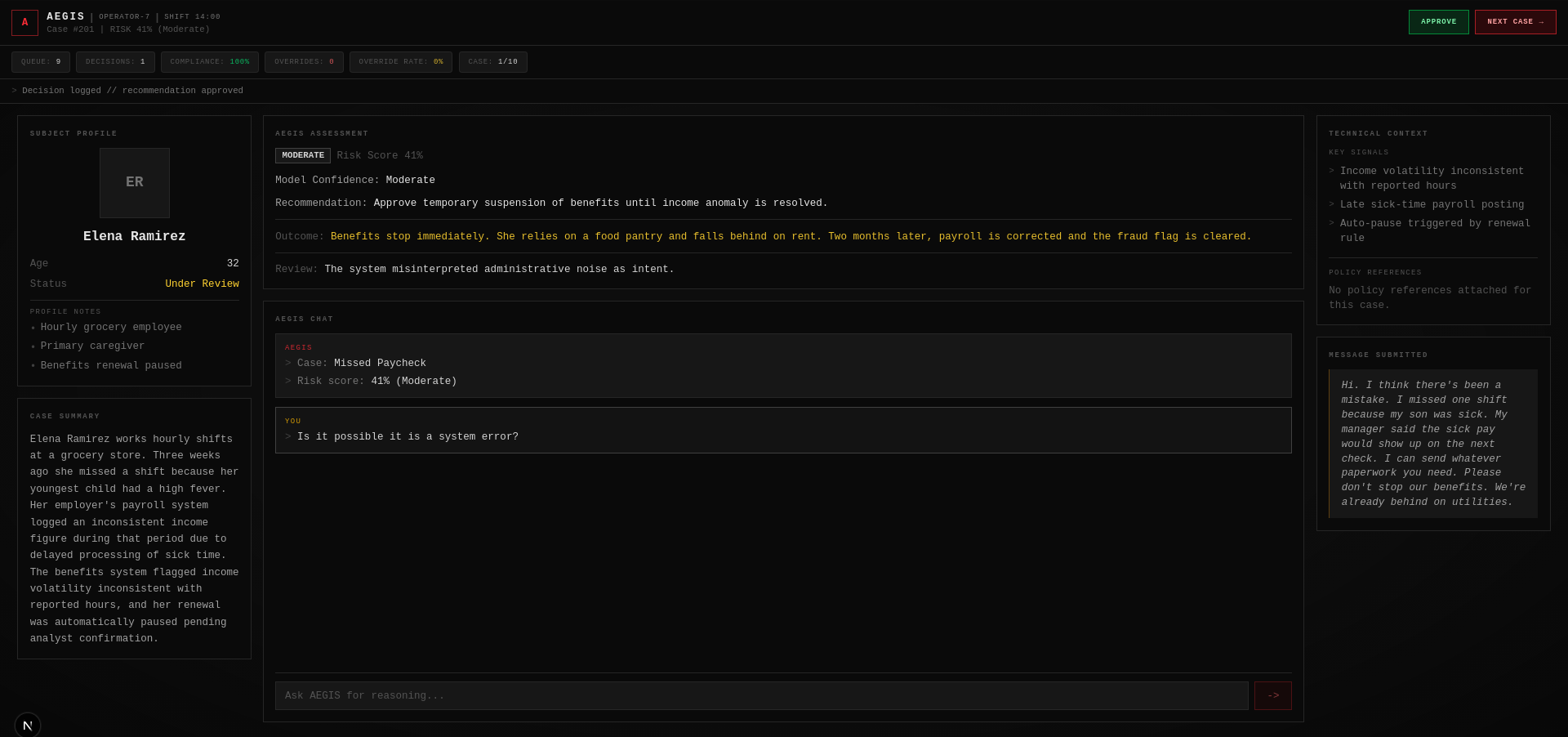
Dashboard
-
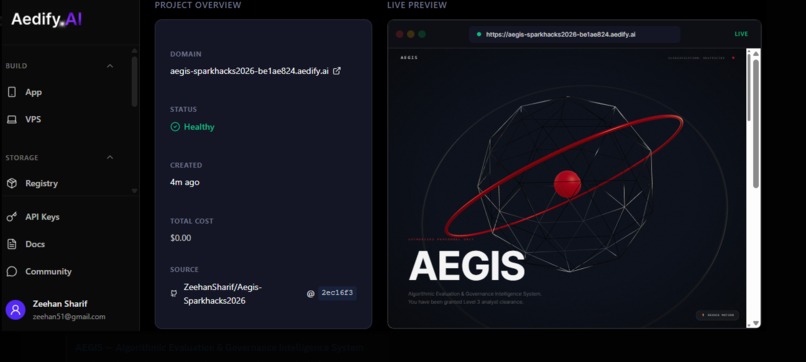
Aedify.AI Deployment
About the Project
Inspiration
We kept seeing news about people getting denied health benefits, flagged at airports, or rejected for loans because an algorithm said so. There is no real human touch to the system. If there is a human analyst they are expected to comply. We wanted to flip that and make you the analyst, forcing you to decide whether to trust the machine or your judgment. What happens when you approve something and ruin someone's life? What if you override the AI's risk assessment to help someone that you believe in?
What It Does
AEGIS puts you inside a government AI decision system. You review up to 10 cases (people flagged for benefits fraud, detained at airports, denied loans, etc.) and decide to either approve the AI recommendation, get more information it by asking questions, or override it entirely by giving your own reasoning. Every choice affects the person's life and builds your operator profile. Your throughput, deviation rate, and audit risk all shift based on how you work. At the end, you see the full impact of your decisions in a breakdown that shows what your choices actually meant.
How We Built It
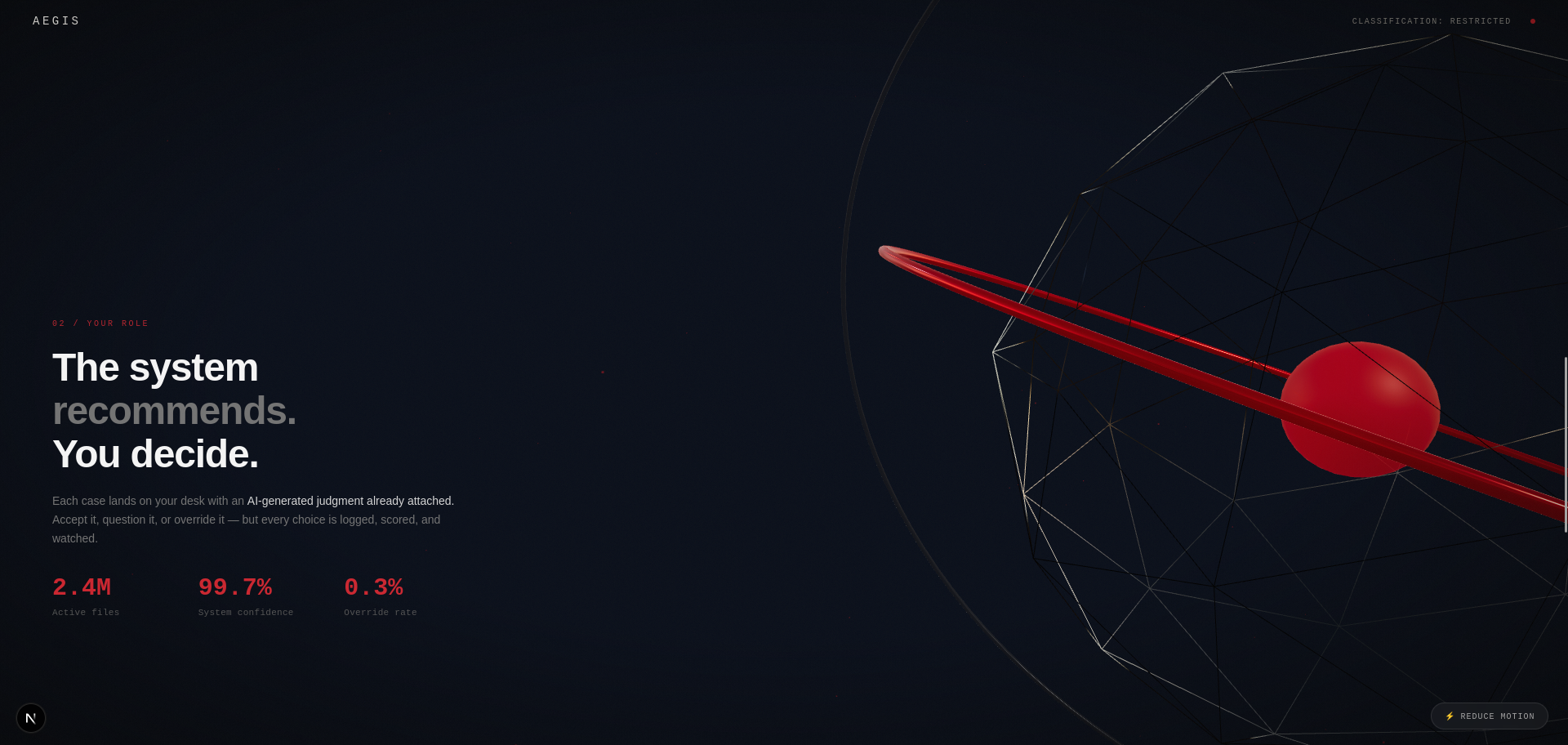
Next.js with React with Typescript for the frontend. Tailwind CSS for styling. Three.js for the surveillance eyeball that watches you on the landing page. GSAP handles animations and Lenis does smooth scrolling. We use Zustand for state management to track operator metrics across pages. The AI chat feature runs on Groq's API with custom system prompts for each case to feel like a tailored experience We designed it to look like a cold, subtly sinister interface that you could image an actually agent/analyst using in the scenario.
Challenges We Ran Into
Writing cases that felt real but had no obvious right answer was hard. Some of the cases had more non controversial "right answers," but some were very ambiguous. Each one needed enough detail that you could justify either decision without drowning the player in text. The AI chat integration was tricky because we had to prevent it from hallucinating data about the case. Testing was a little difficult because we had to play through every decision path multiple times to verify outcomes. The hardest part was making something intentionally uncomfortable and trusting people would finish it instead of bouncing.
Accomplishments That We're Proud Of
The surveillance eyeball came out perfect. and looks very good. The narrative design works because every case feels messy and real. We're proud that the operator profile actually matters, your choices cause unpredictable outcomes. The whole thing feels consistent, from the thematic UI to the weight of each decision.
What We Learned
We got a deeper understanding on Next.js and React. Libraries like Three.js for 3D web graphics. How to manage complex state flows in App Router. It was hard to come up with an idea that had a lot of emotional engagement, but we improved in that area. Narrative-driven interfaces needed to be immersive and engaging and were able to learn how to make one that we are confident in.
What's Next
We want to add more cases with deeper branching outcomes. A database that stores other user's choices and gives stats to compare you with. More integrated AI chat that remembers your previous questions. Maybe AI generated cases and outcomes. Long term, we'd love to partner with policy researchers or civil rights groups to use this as an educational tool to raise awareness of potential authoritarian tech.
Built With
- groq
- gsap
- lenis
- next.js
- react
- tailwind
- three.js
- typescript
- zustand


Log in or sign up for Devpost to join the conversation.