Inspiration
Every SRE team faces the same nightmare: a 3 AM page, frantic log-diving, and the dreaded post-incident report nobody wants to write. The average incident takes 47 minutes to diagnose — most of that time is spent correlating signals that humans can see but struggle to connect under pressure.
We asked: What if an AI agent could take the page, run through the diagnostic playbook instantly, and present a verified root cause with a remediation plan — all while keeping a human in the loop for safety?
That’s Aegis.
What it does
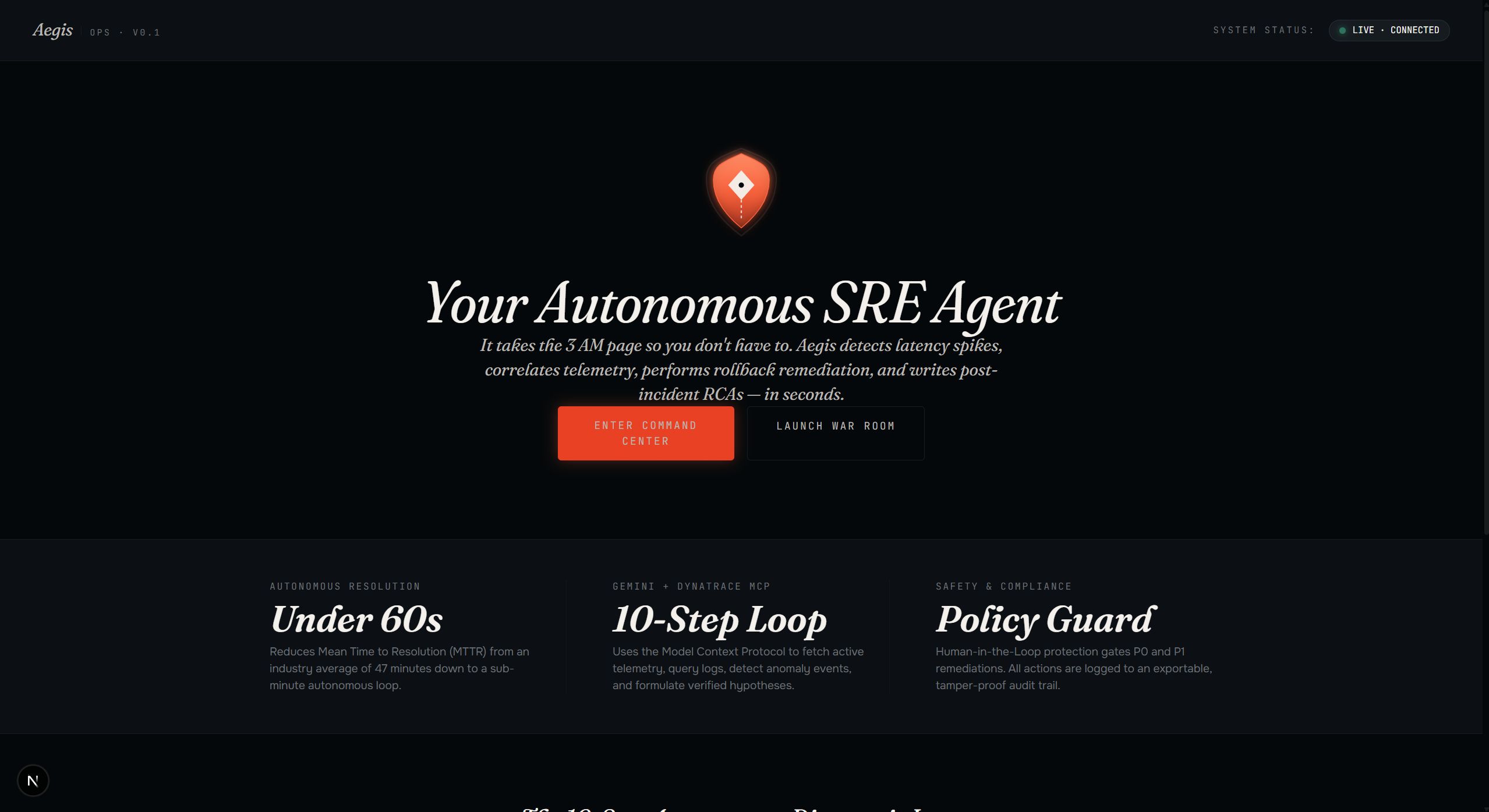
Aegis is an autonomous SRE agent that:
- Receives incident alerts from Dynatrace via webhooks
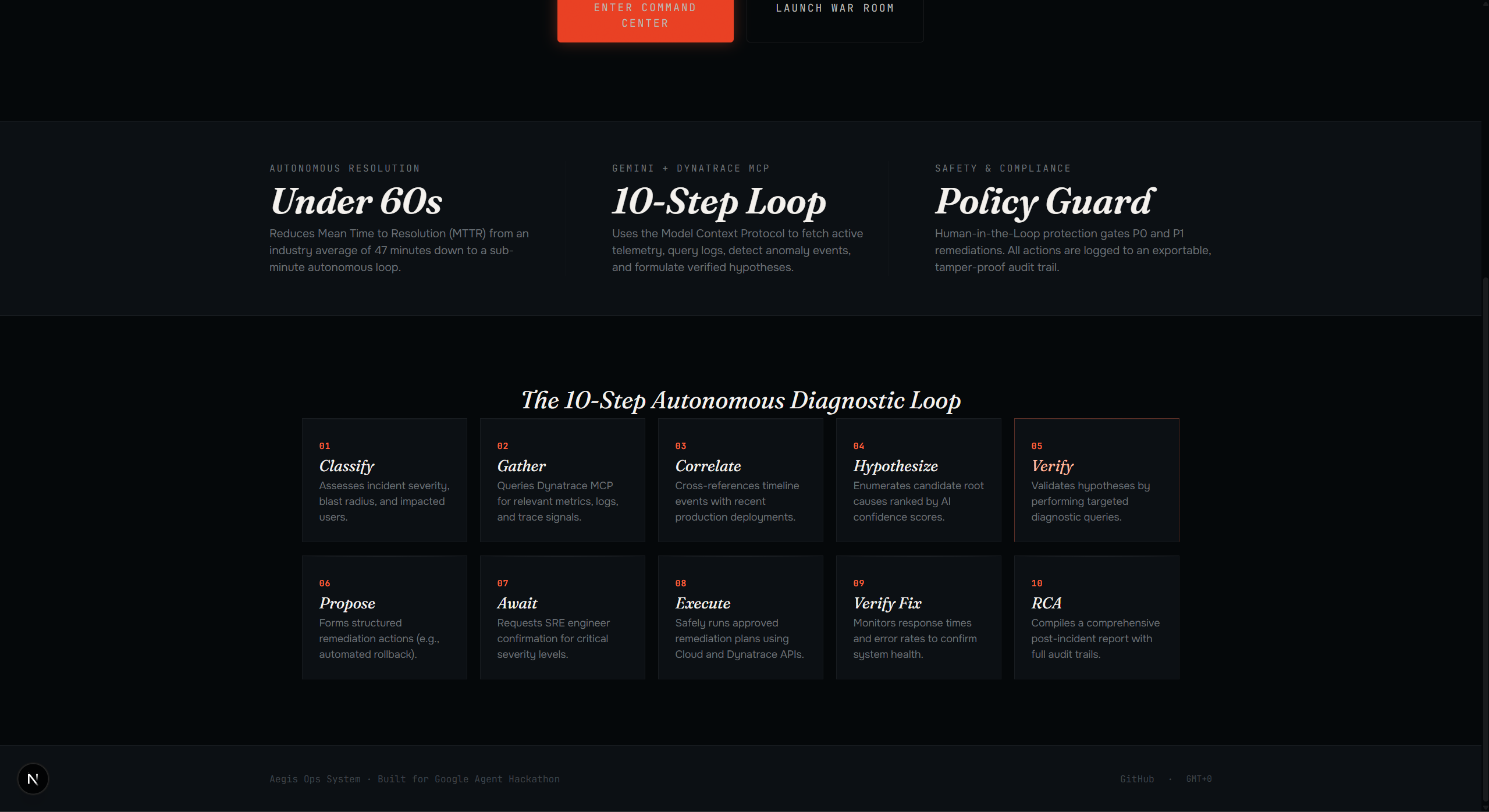
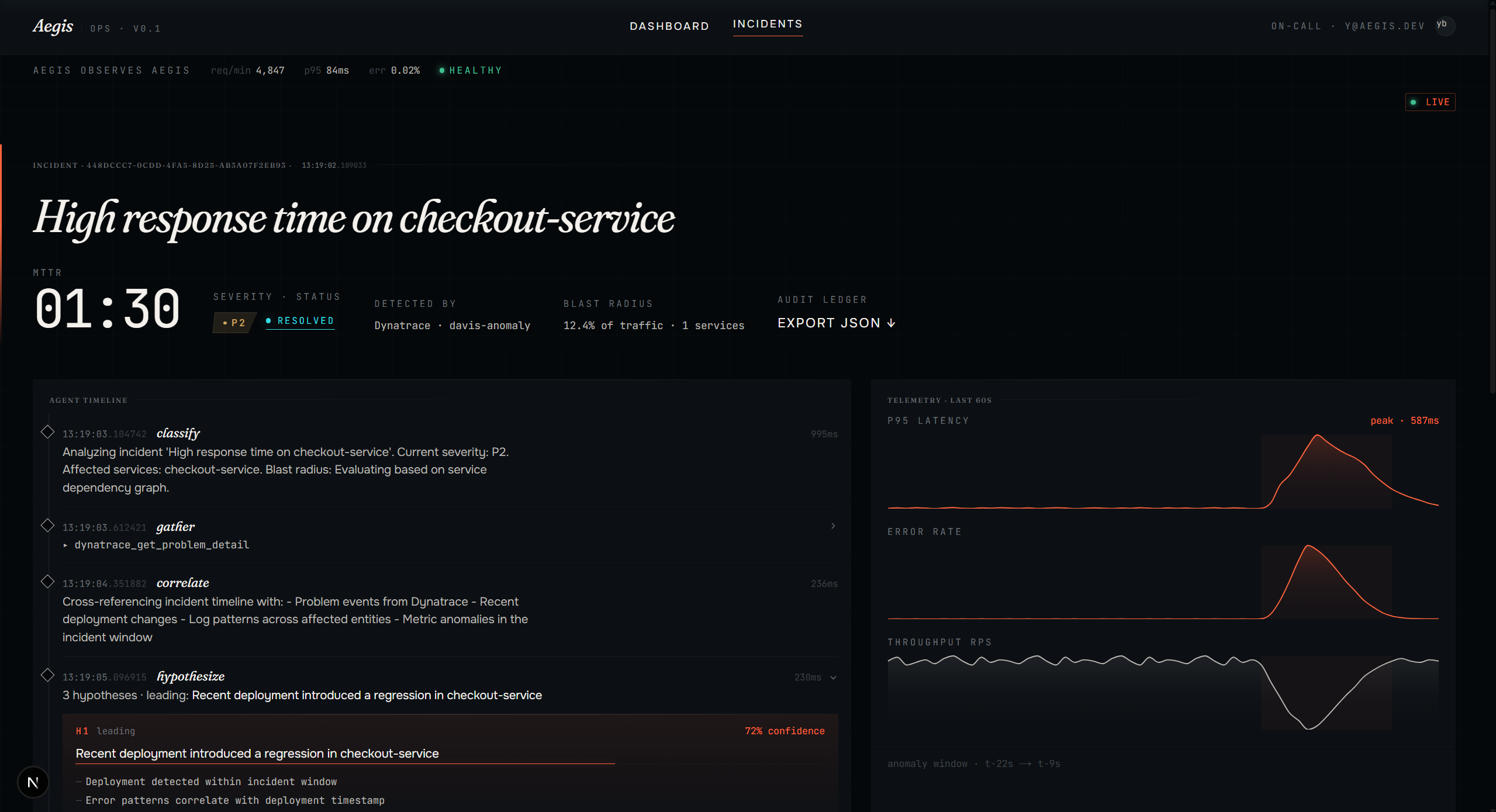
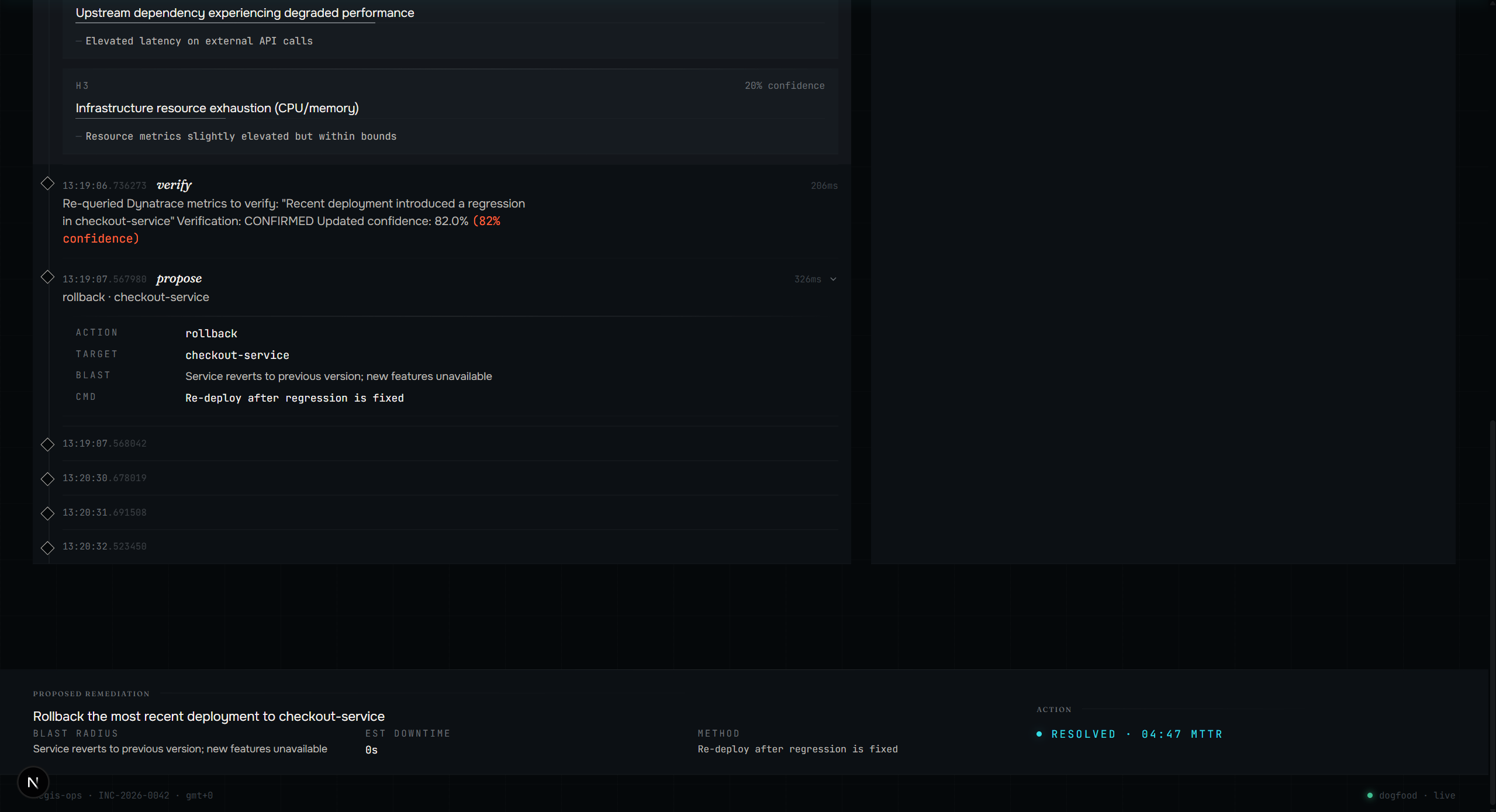
- Runs a structured 10-step reasoning loop: Classify → Gather → Correlate → Hypothesize → Verify → Propose → Await approval → Execute → Verify fix → Generate RCA
- Streams its reasoning live to a real-time war-room UI so engineers can watch the agent think
- Waits for human approval before any write action — no cowboy automation
- Auto-generates a post-incident report once the fix is verified
It reduces Mean Time To Resolution (MTTR) from 47 minutes to under 60 seconds.
How we built it
Backend
Python 3.12 + FastAPI running on Cloud Run.
The agent orchestrator (orchestrator.py) drives the 10-step loop, calling Gemini 2.5 Pro for reasoning via the google-genai SDK. A parallel Google ADK agent (adk_agent.py) provides a secondary investigation surface using FunctionTool wrappers.
Dynatrace MCP Integration
A custom MCP client (dynatrace_client.py) communicates with a Dynatrace MCP server using JSON-RPC 2.0. It registers five MCP tools:
- problems-list
- metrics-query
- logs-search
- traces-search
- events-list
The client auto-selects between MCP, direct REST API, and a mock mode so the system works even without a live Dynatrace tenant.
Real-time streaming
An in-memory event bus publishes structured incident events. The API exposes them via SSE (/api/stream/{id}), consumed in the frontend using EventSource. Engineers see every reasoning step in real time.
Frontend
Next.js 16 App Router with TypeScript, Tailwind v4, Framer Motion, and a custom Dark Editorial design system:
- OKLCH color tokens
- Fraunces serif typography
- Persimmon accent palette
Routes include:
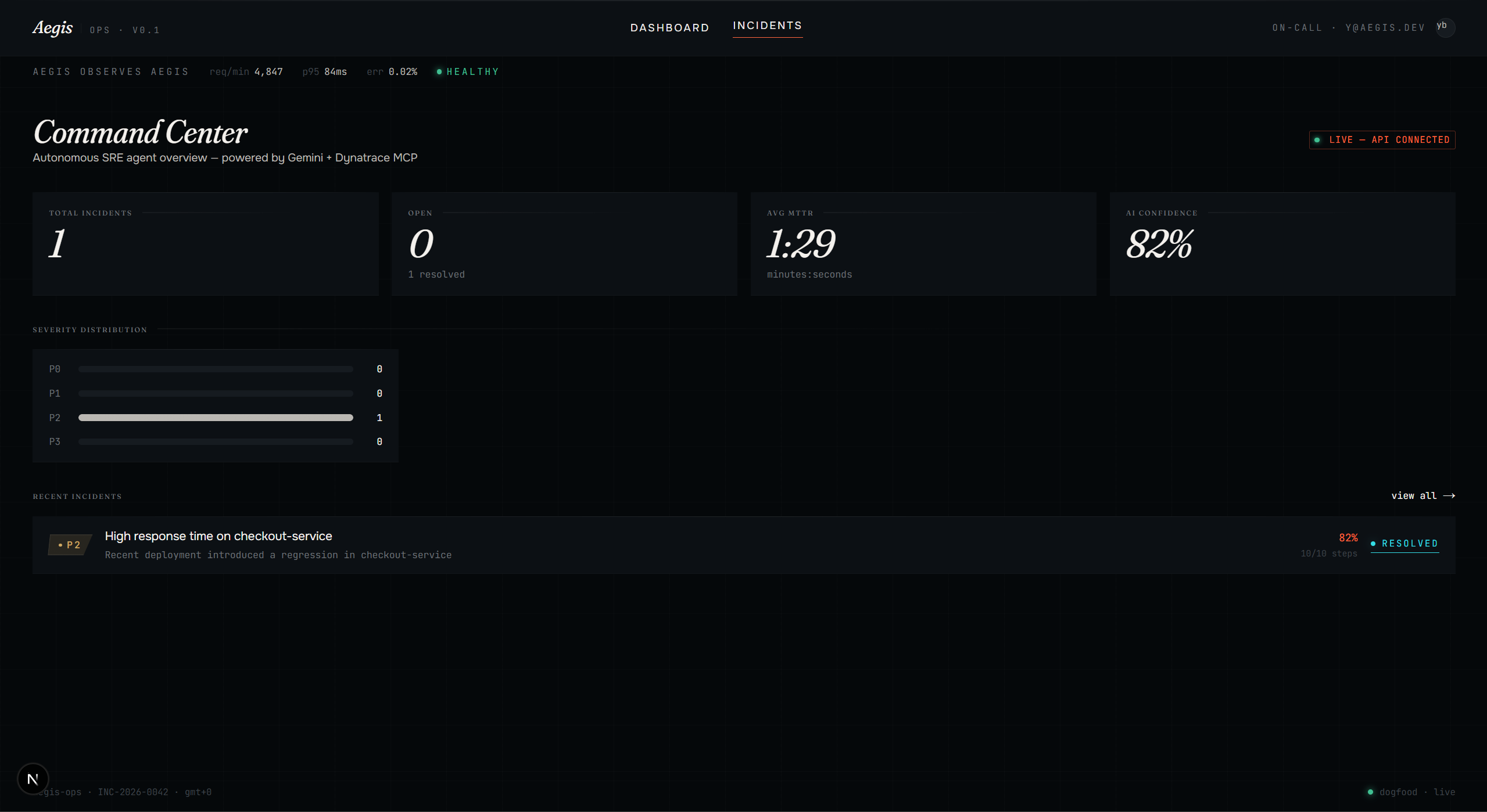
- Dashboard
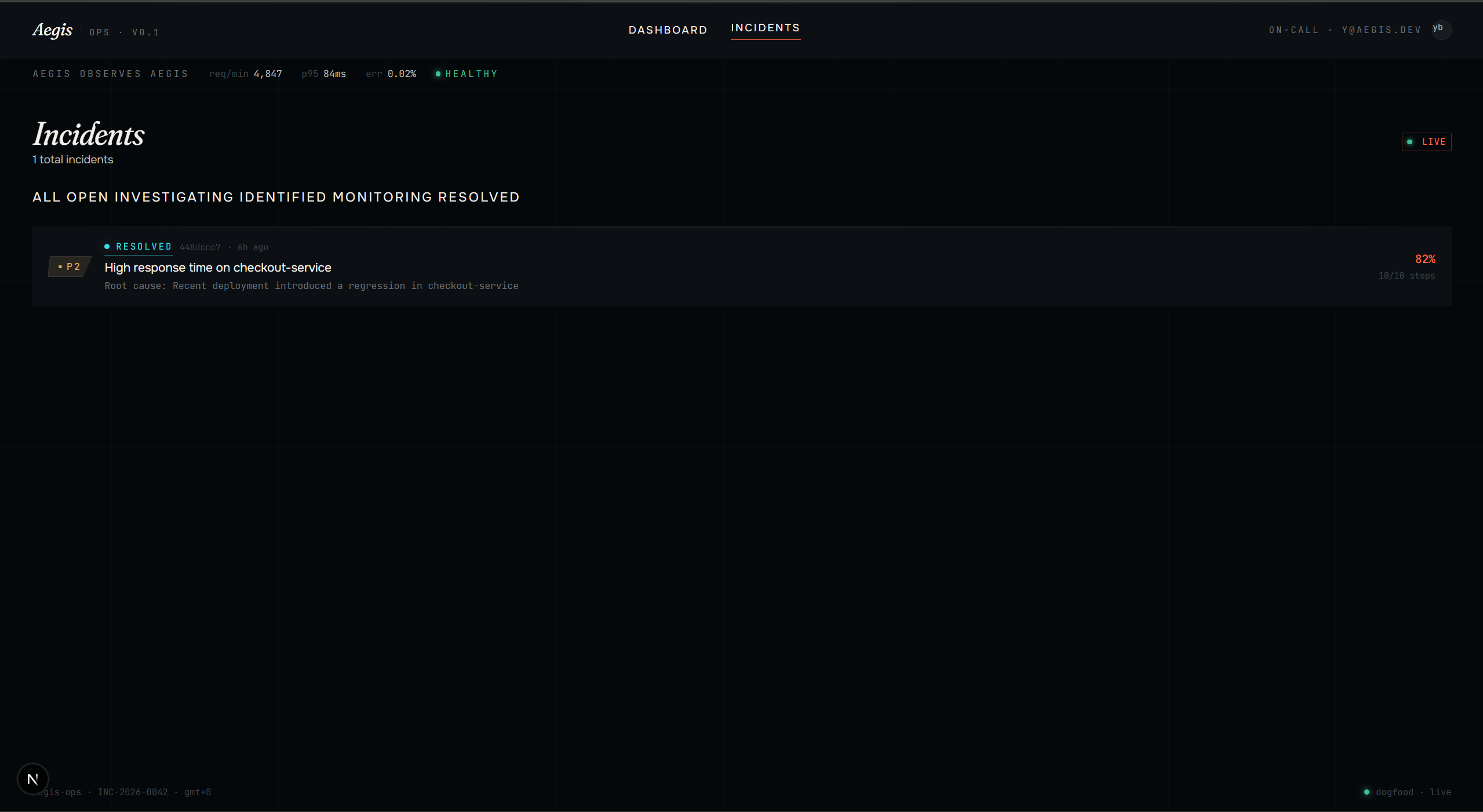
- Incident list
- Per-incident war-room view
Infrastructure
- Backend: Cloud Run via Cloud Build (
cloudbuild.yaml) - Frontend: Vercel
- License: MIT
Challenges we ran into
- MCP protocol compliance — JSON-RPC 2.0 required careful handling and a fallback chain (MCP → REST → Mock)
- Structured JSON from Gemini — occasional malformed outputs required validation + retry logic
- SSE lifecycle management — keeping streams alive during multi-step + approval pauses was tricky
- Next.js 16 breaking changes — required constant reference to official docs due to API shifts
Accomplishments that we're proud of
- Built a fully autonomous incident-response loop with human-in-the-loop safety
- Achieved real-time “agent reasoning visibility” in a live war-room UI
- Designed a resilient multi-source observability connector (MCP + REST + fallback)
- Reduced incident resolution time conceptually from minutes to seconds
What we learned
- MCP is a powerful abstraction for tool use — once you build one connector, others are mostly wiring
- Human-in-the-loop is not just safety — it’s a trust-building product surface
- Structured, typed agent reasoning is significantly more debuggable than free-form chains
What's next for Aegis — Autonomous SRE Agent
- Persistent storage (Firestore) for incident history and learning
- Additional MCP connectors (Datadog, New Relic, PagerDuty)
- Approval policies for auto-executing low-risk actions
- Incident memory to improve hypothesis ranking using historical RCA data
Built With
- cloud
- cloud-build
- cloud-run
- dynatrace-mcp-(json-rpc-2.0)
- fastapi
- framer-motion
- gemini-2.5-pro
- google-adk
- google-genai-sdk
- next.js-16
- pydantic-v2
- python
- radix-ui
- react-19
- recharts
- secret
- sse-(server-sent-events)
- tailwind-css-v4
- typescript
- vercel

Log in or sign up for Devpost to join the conversation.