-
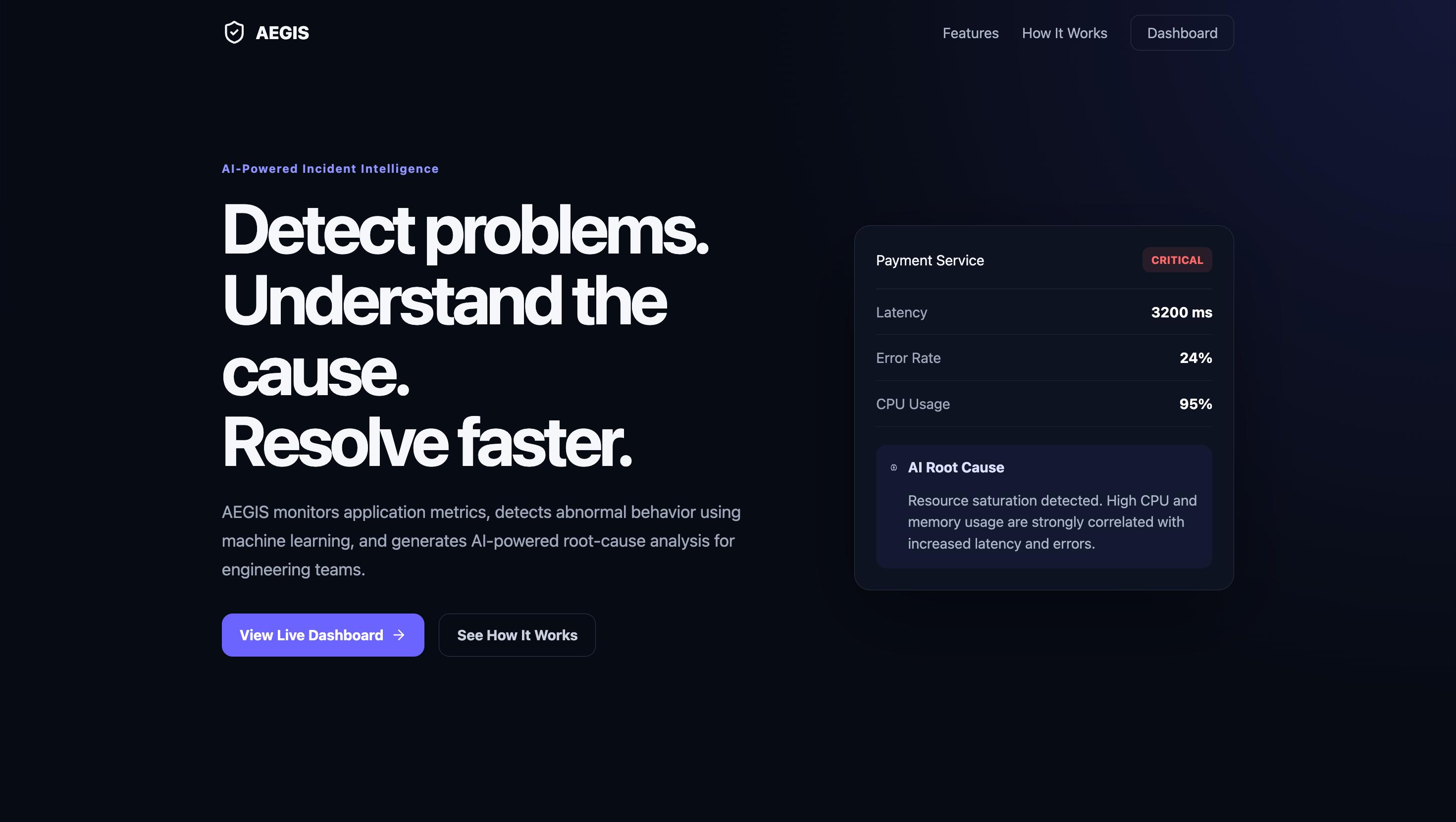
Landing-page
-
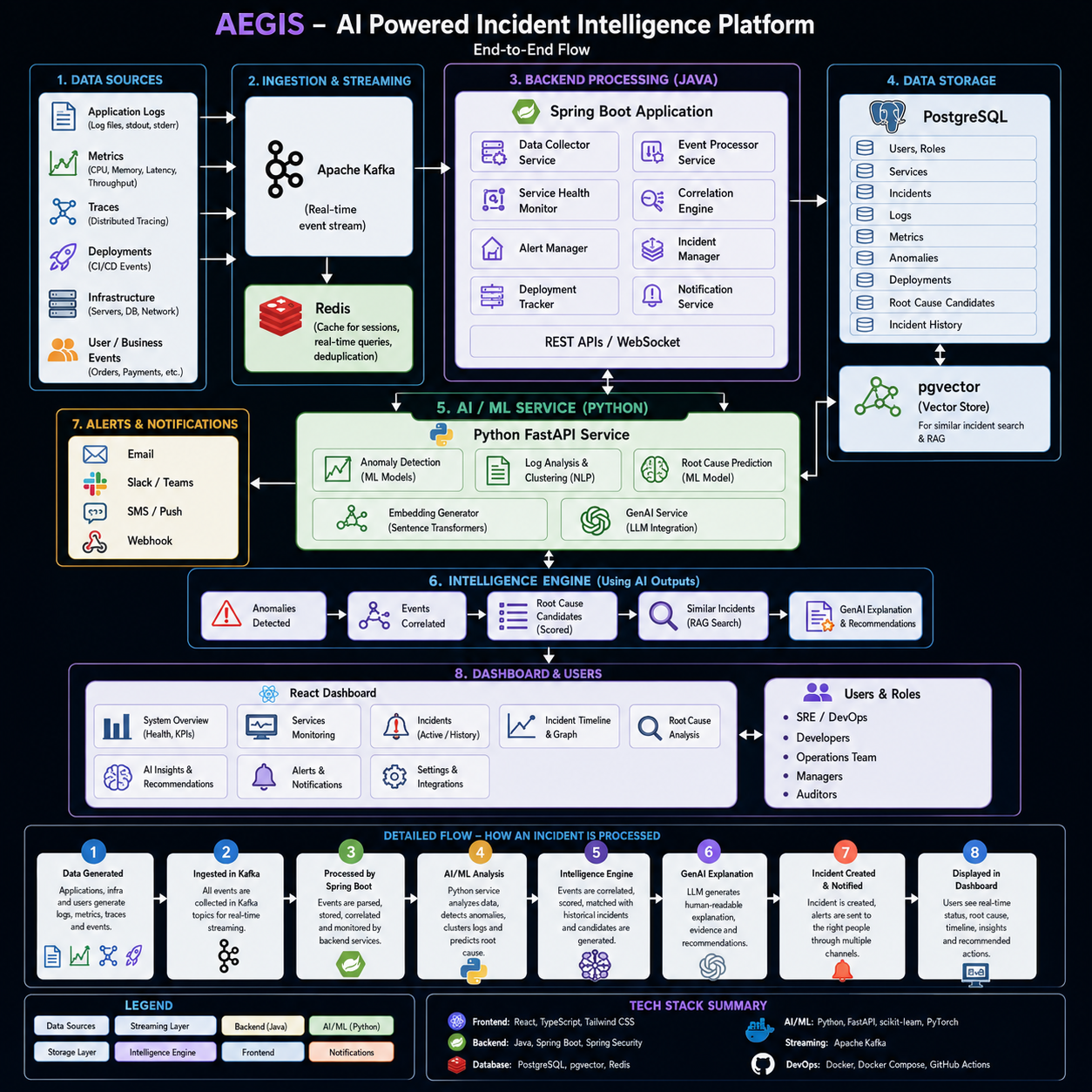
architecture
-
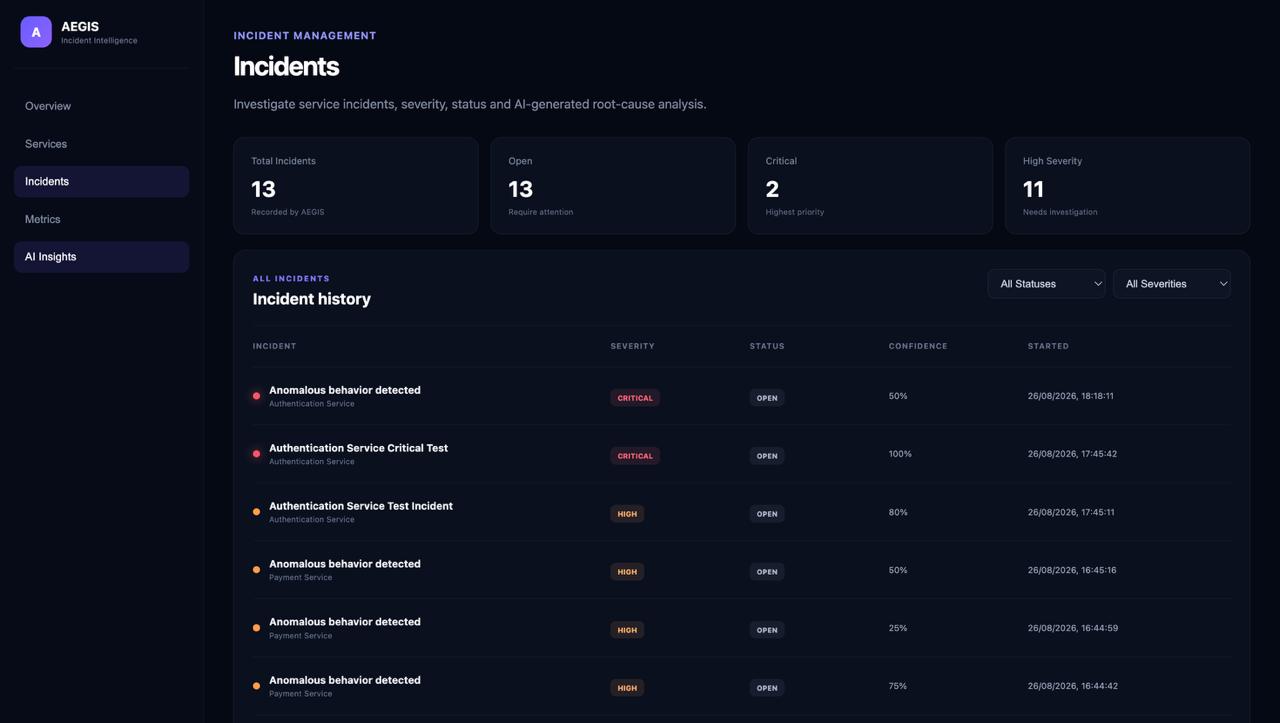
dashboard-ai-incident
-
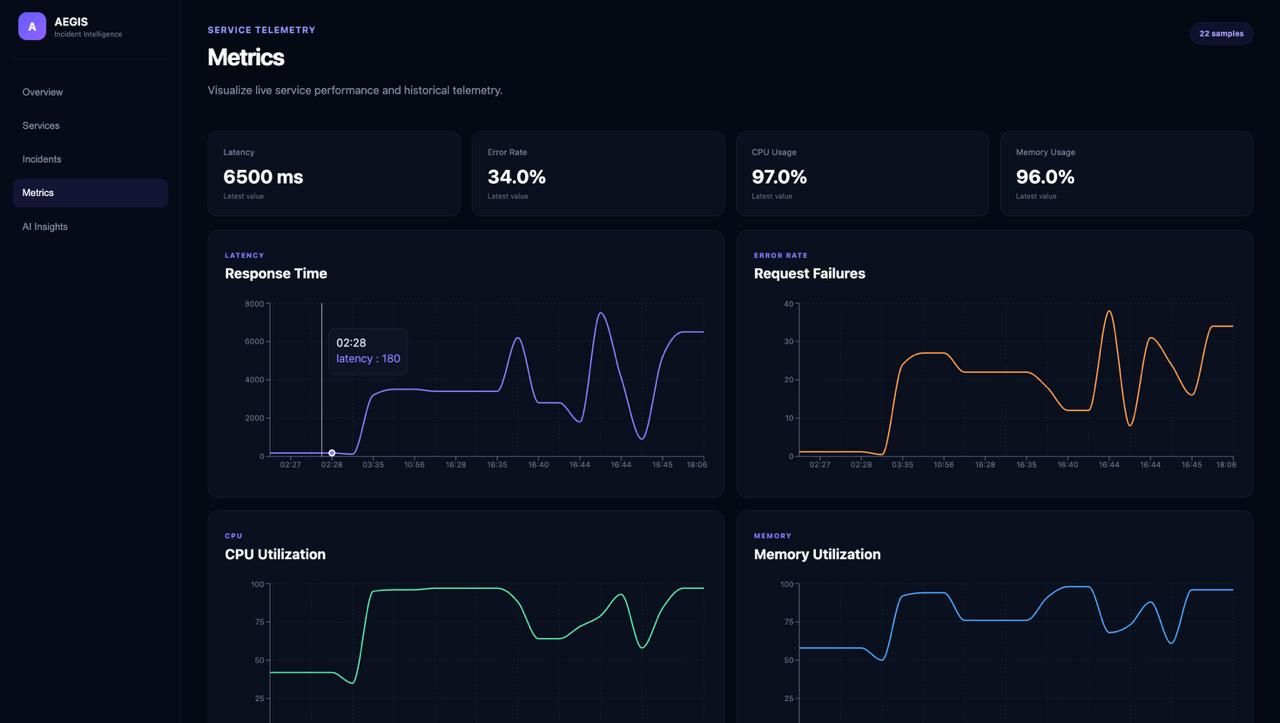
dashboard-metrics
-
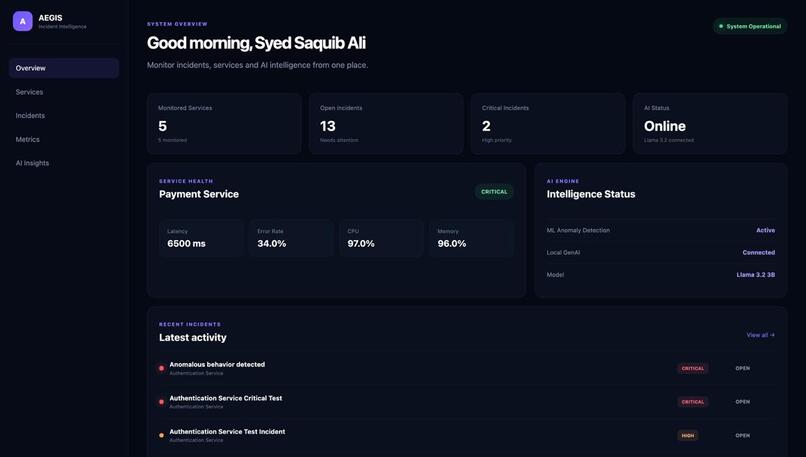
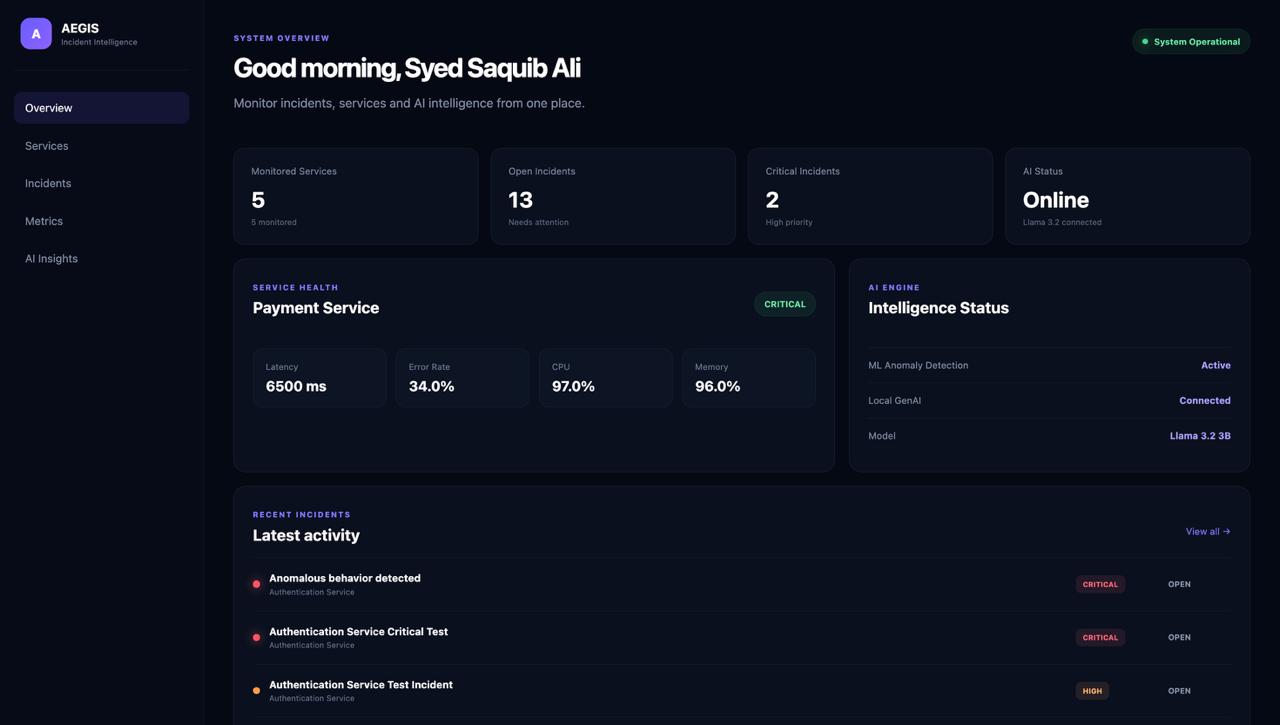
dashboard-overview
AEGIS – AI-Powered Incident Intelligence Platform
Inspiration
Modern applications depend on multiple interconnected microservices. When something goes wrong, identifying the actual cause can be more difficult than detecting the problem itself.
While working with backend systems and REST APIs, I realized how challenging debugging becomes when services interact with each other.
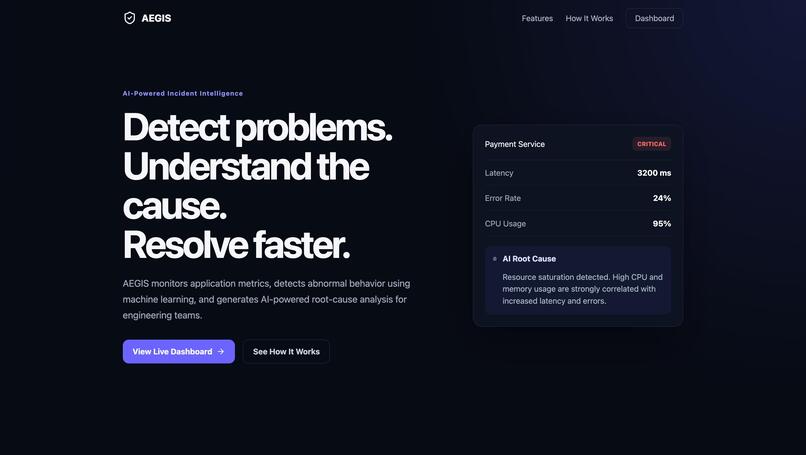
This inspired me to build AEGIS, an AI-powered incident intelligence platform designed to help developers monitor services, detect unusual behavior, and investigate potential causes of system failures.
My goal was to build something practical that combines backend engineering, machine learning, and AI-assisted incident diagnosis.
What It Does
AEGIS helps developers understand the health of their applications and investigate incidents through a centralized monitoring dashboard.
Key features include:
- Microservices monitoring and health tracking
- Machine learning-based anomaly detection
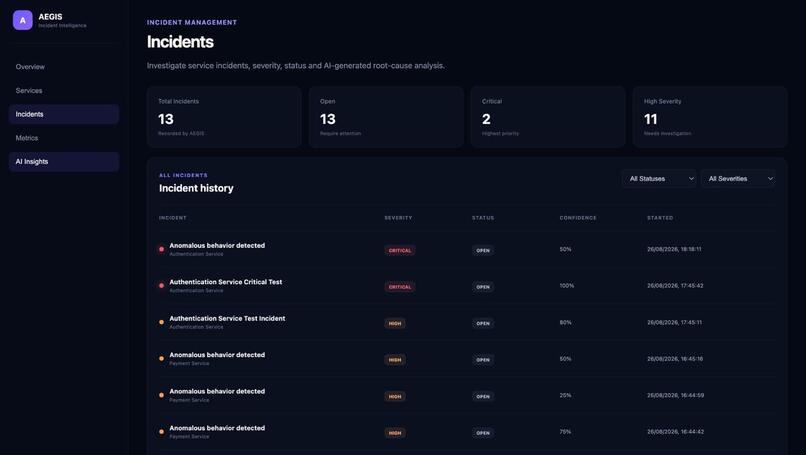
- Automatic incident identification and severity classification
- AI-assisted root-cause analysis
- Incident history and persistent reporting
- Interactive monitoring dashboard
- REST API-based communication between services
Instead of manually examining multiple services, developers can use AEGIS to identify abnormal behavior and receive potential explanations for incidents.
How I Built It
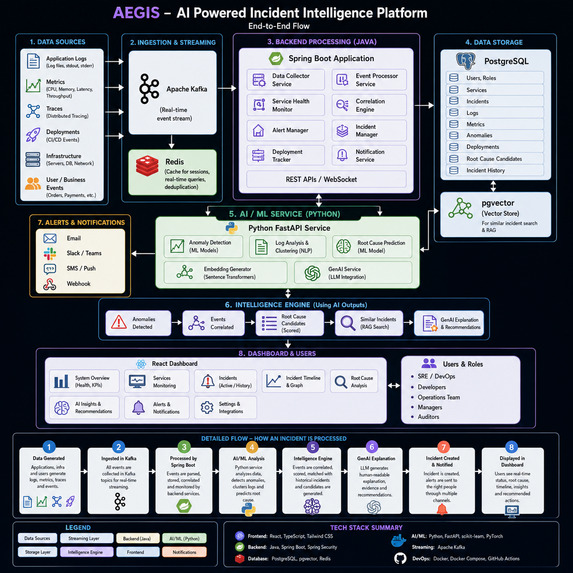
I developed AEGIS using a combination of Java, Python, React, and machine learning technologies.
Backend
The backend uses Java 21 and Spring Boot 3 to manage monitored services, metrics, incidents, and API communication.
I designed REST APIs to support service monitoring, incident management, and integration with the AI analysis service.
Machine Learning
I developed a Python-based FastAPI service using scikit-learn's Isolation Forest algorithm.
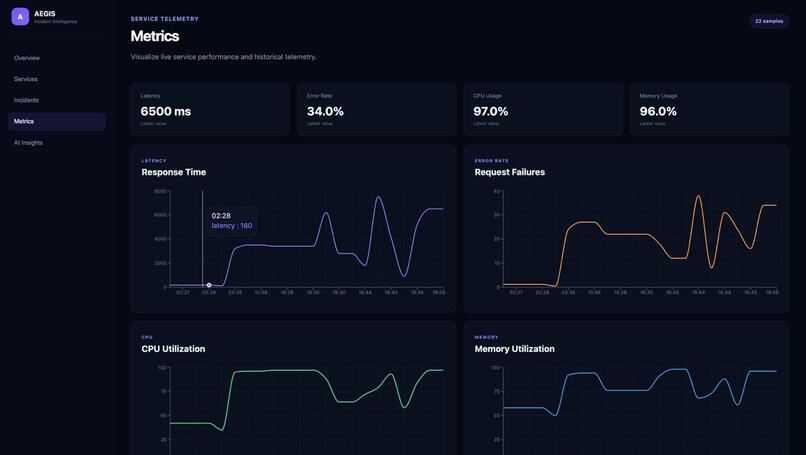
The anomaly detection model analyzes operational metrics, including:
- Response latency
- Error rates
- CPU utilization
- Memory utilization
- Request throughput
This helps identify unusual service behavior that may indicate an incident.
AI-Assisted Root-Cause Analysis
AEGIS includes an AI analysis component that helps explain potential causes of detected incidents.
The system supports local Ollama-based language models for generating root-cause explanations, with heuristic analysis available as a fallback.
Frontend
I built the frontend using React and Vite.
The dashboard provides visibility into monitored services, system metrics, and incident records.
Database and Deployment
PostgreSQL stores service information, operational metrics, and incident history.
The application uses Neon for cloud database hosting, Render for backend deployment, and Vercel for frontend hosting.
Challenges I Faced
One of the biggest challenges was integrating the Java backend with the Python machine learning service.
I needed to ensure that metrics could move reliably between services and that anomaly detection results could be converted into meaningful incidents.
Another challenge was implementing AI-assisted root-cause analysis while keeping the application functional when a local language model was unavailable.
I addressed this by designing a fallback mechanism that provides heuristic explanations when the AI model cannot be accessed.
I also worked through cross-origin communication issues, API integration problems, and cloud deployment configuration.
These challenges helped me strengthen my understanding of distributed systems, debugging, and backend architecture.
Accomplishments
I'm particularly proud of building an end-to-end application that brings together multiple technologies into a working system.
AEGIS combines:
- Java-based backend engineering
- Python machine learning services
- AI-assisted incident diagnosis
- Cloud-hosted PostgreSQL
- React-based monitoring interfaces
- REST API integrations
Building these components and connecting them into a functioning application was an important achievement for me.
What I Learned
This project helped me gain practical experience in designing applications that combine traditional software engineering with machine learning.
I improved my understanding of microservice communication, anomaly detection, incident management, database design, and cloud deployment.
I also learned the importance of building reliable fallback mechanisms when integrating AI capabilities into production-oriented applications.
What's Next
I plan to improve AEGIS by adding:
- More advanced root-cause analysis
- Better correlation between incidents across microservices
- Support for additional monitoring data sources
- Improved AI-generated explanations
- Confidence-aware incident diagnosis
- More detailed incident analytics
I also want to explore integrating the Apertus language model to investigate how open language models can support reliable incident diagnosis, particularly when monitoring information is incomplete.
My long-term goal is to develop AEGIS into a practical AI-assisted observability platform that helps engineering teams diagnose incidents more efficiently.
Built With
- ai
- api
- boot
- fastapi
- forest
- generative
- github
- isolation
- java
- learning
- machine
- maven
- microservices
- neon
- ollama
- postgresql
- postman
- python
- react
- render
- rest
- scikit-learn
- spring
- vercel
- vite

Log in or sign up for Devpost to join the conversation.