-
-
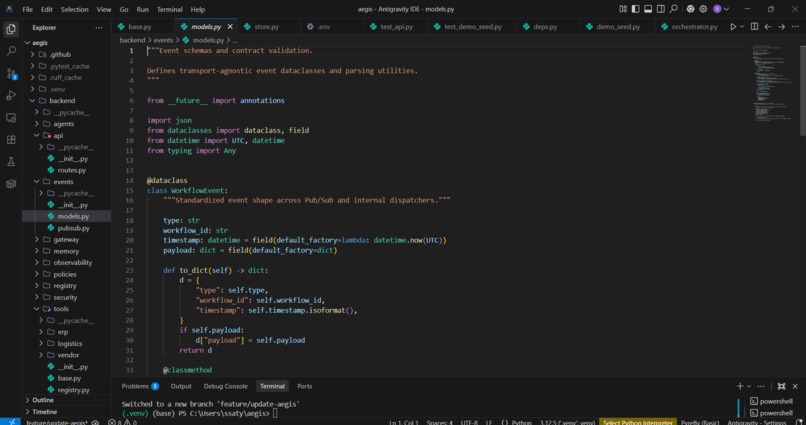
codebase
-
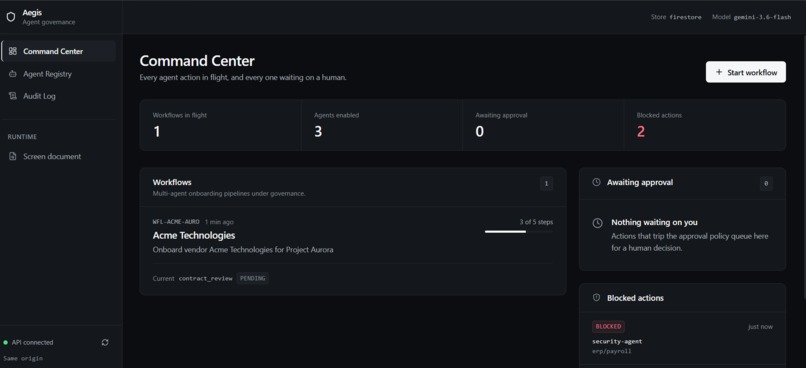
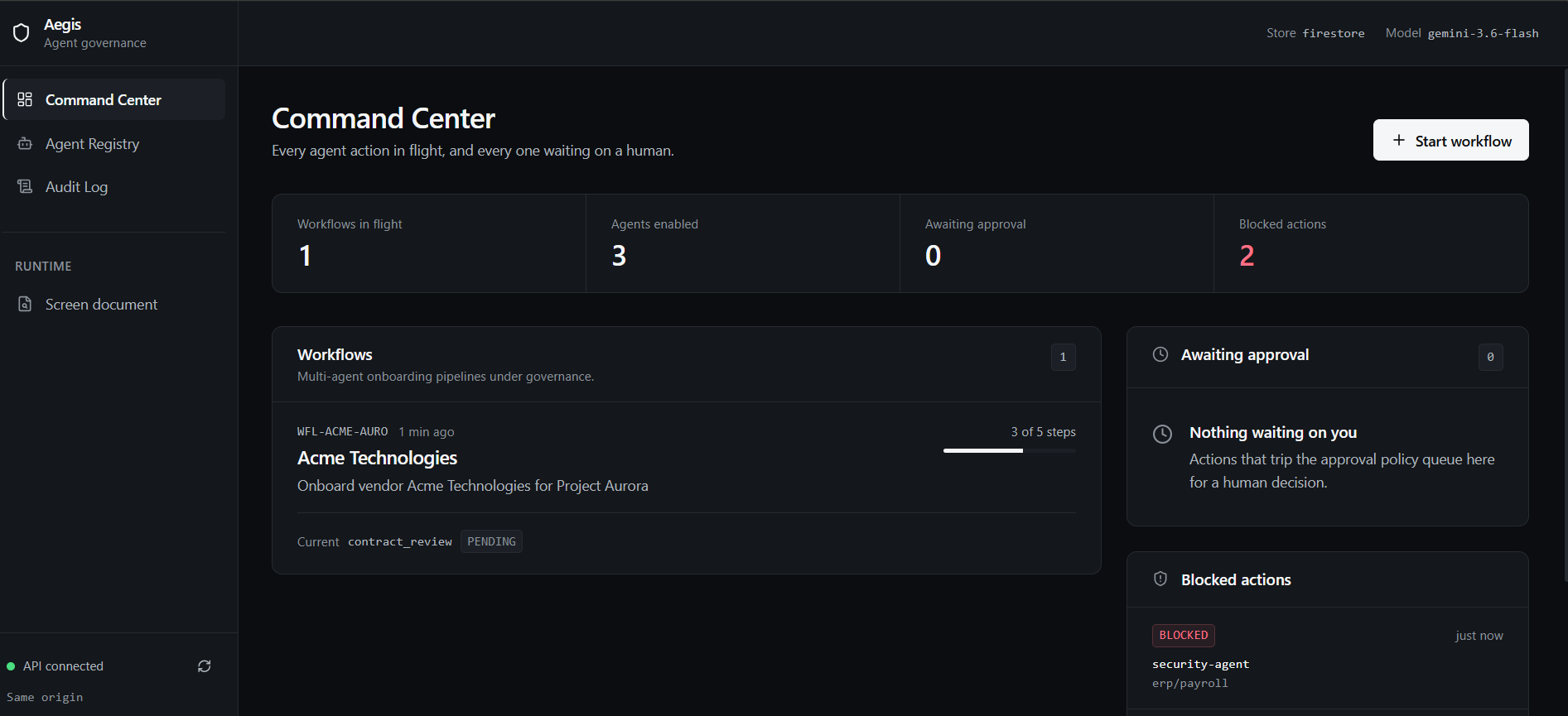
Command Center
-
-
-
-
-
About Aegis
Inspiration
As AI agents become capable of taking actions across real-world systems, simply making an agent more autonomous is not enough.
The key question is:
How do we make sure an AI agent can act autonomously without being given unrestricted authority?
This inspired us to build Aegis, a governance layer for AI agents that keeps humans and security policies in control of high-impact actions.
We wanted to demonstrate a realistic scenario where AI agents can automate a business workflow while still respecting security boundaries and organizational policies.
What We Built
Aegis is an AI agent governance and orchestration platform designed to safely execute multi-step business workflows.
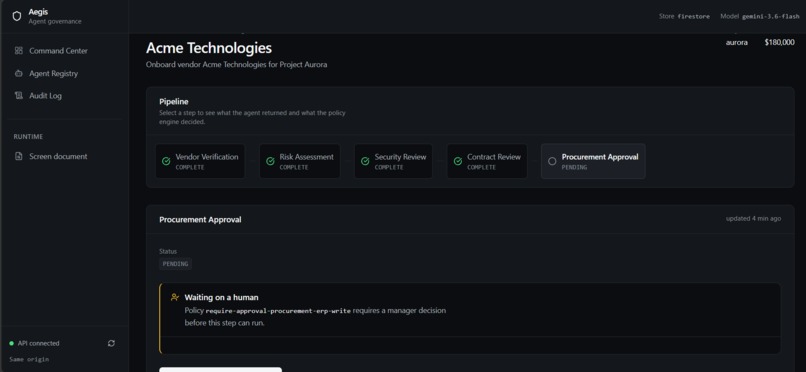
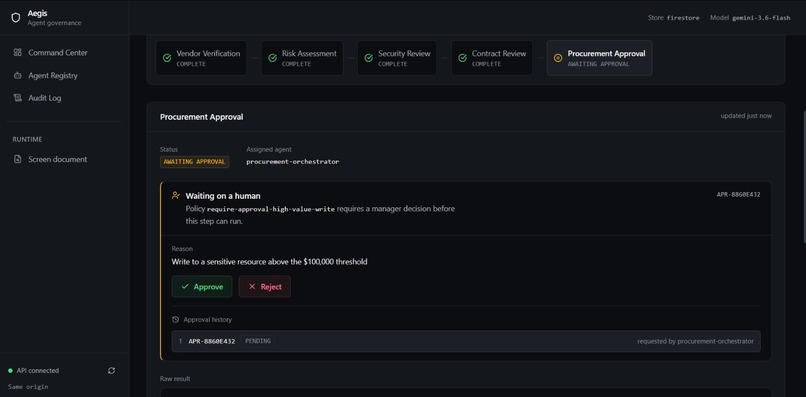
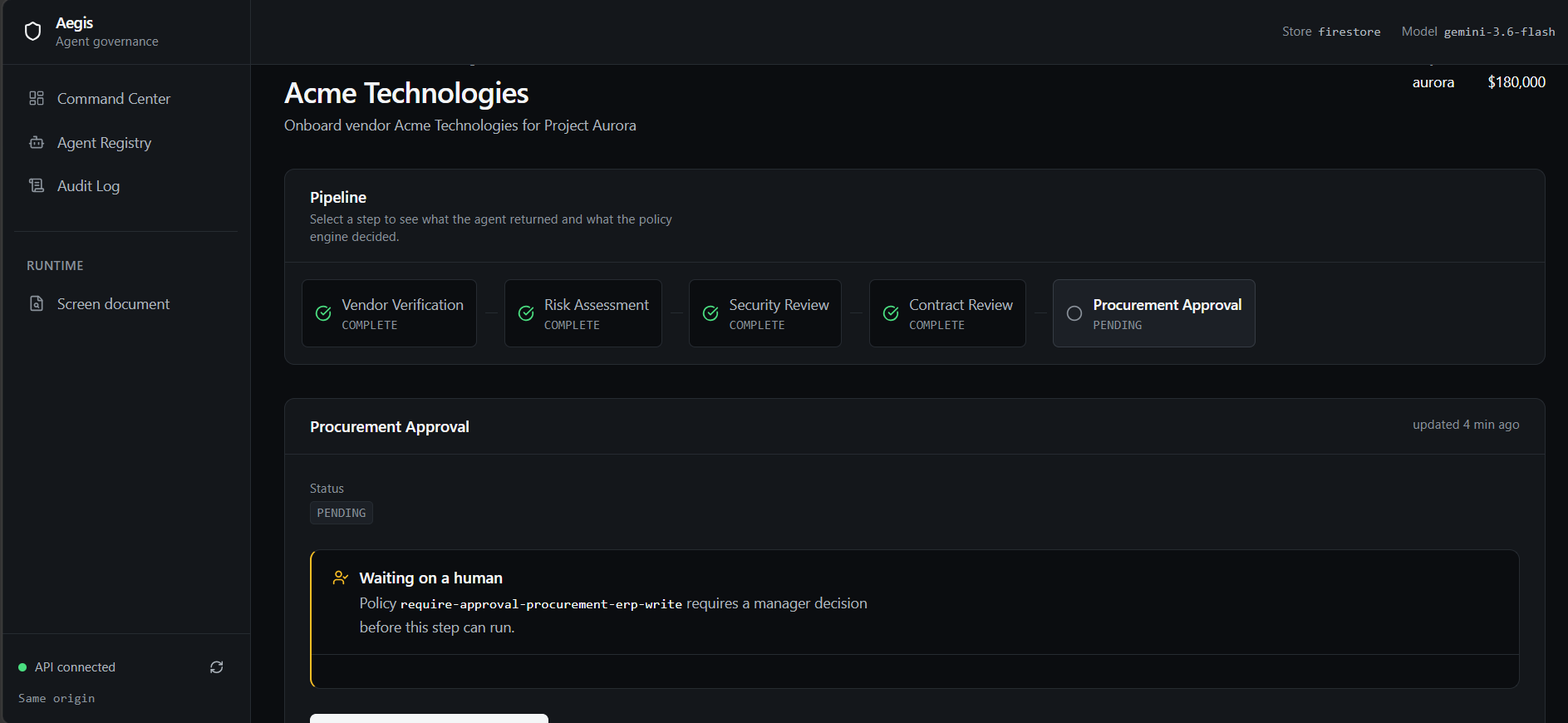
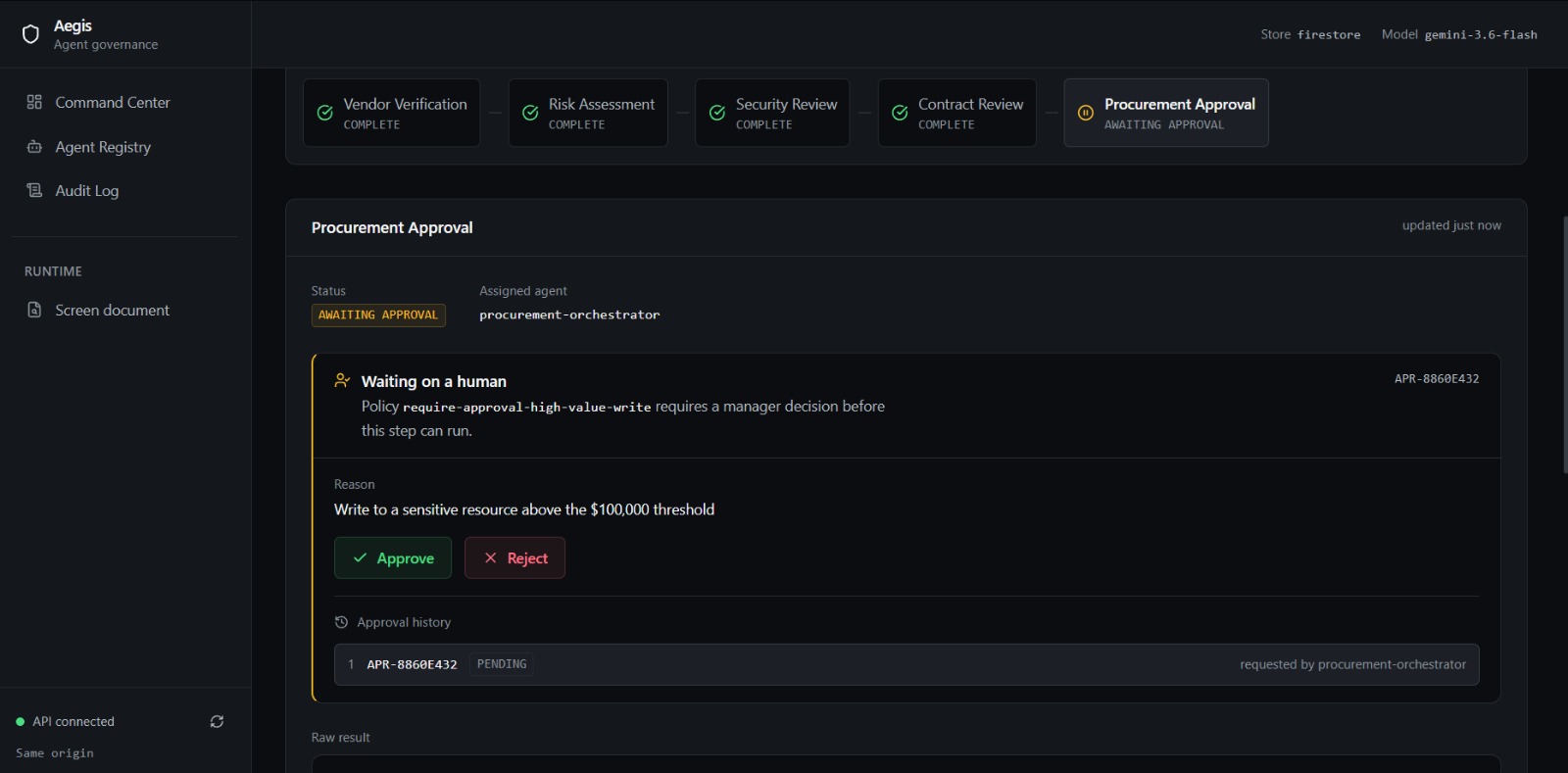
Our demonstration uses a vendor procurement workflow consisting of:
- Vendor verification
- Risk assessment
- Security review
- Contract review
- Procurement approval
Agents can autonomously execute routine tasks, while sensitive operations are evaluated by Aegis's governance layer.
For example, when an agent attempts a $180,000 ERP write, the policy engine detects that the transaction exceeds the configured approval threshold. Instead of allowing the agent to continue, Aegis pauses execution and requests human authorization.
We also implemented a security boundary for untrusted vendor content to protect agents from prompt-injection attempts.
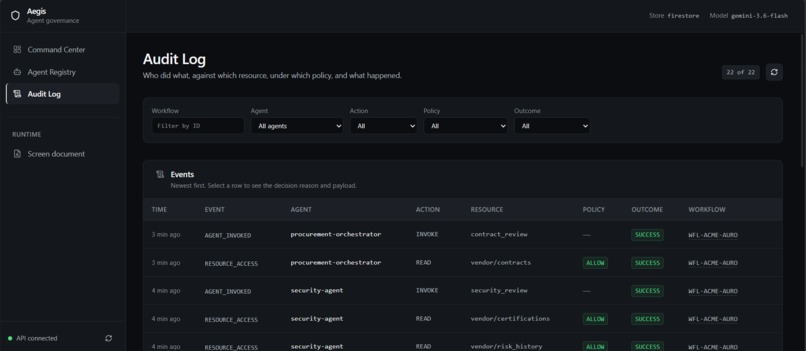
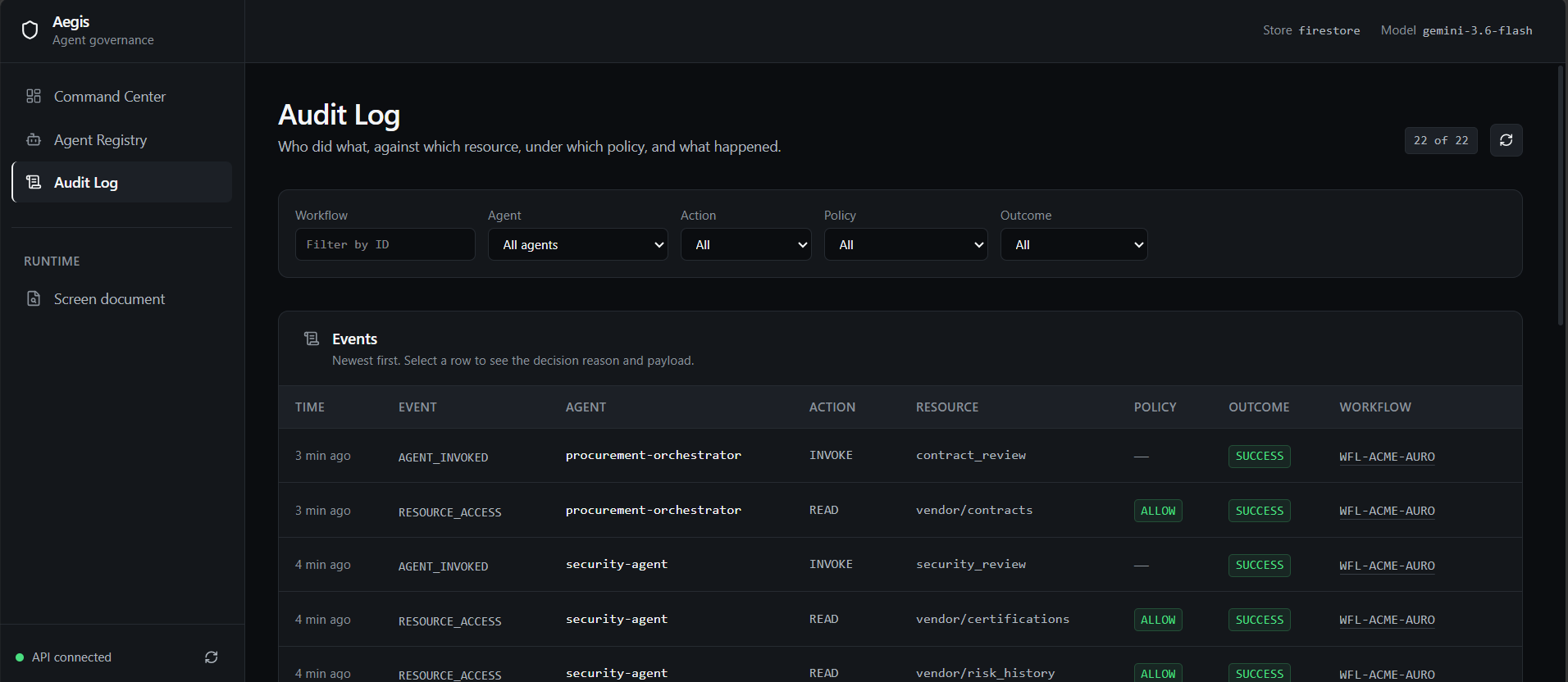
Every important workflow state, policy decision, security event, and human approval is recorded in an auditable trail.
How We Built It
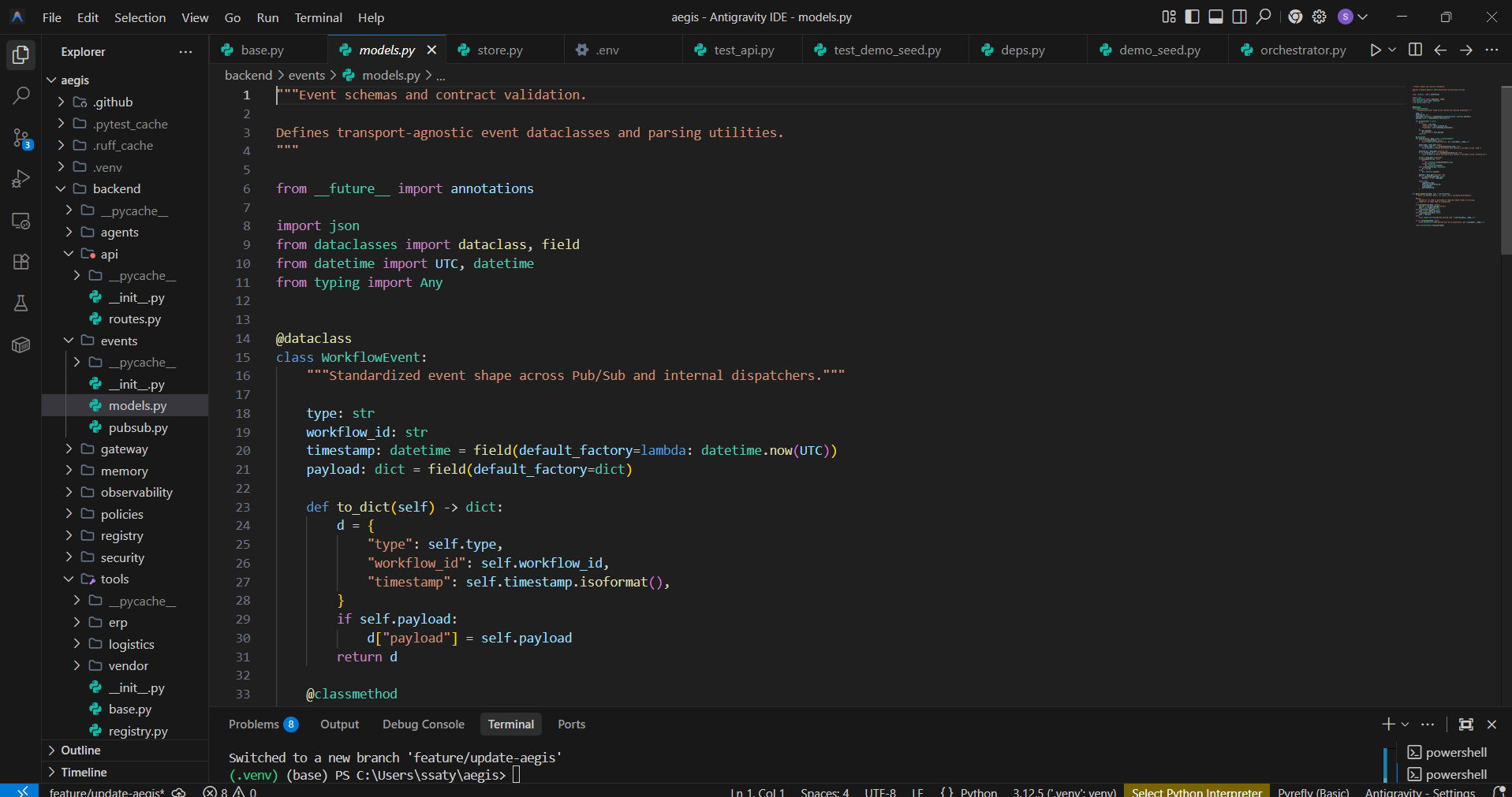
The backend was built using Python and FastAPI, with a stateful workflow orchestration layer managing agent execution.
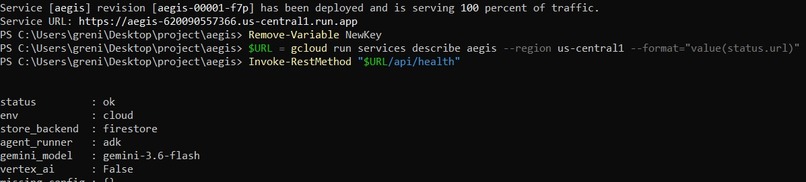
We integrated Google Cloud Vertex AI and Gemini for AI-powered agent execution and Google Cloud Firestore for persistent workflow and approval state.
The frontend was built using React and TypeScript, providing:
- Command Center
- Workflow visualization
- Human approval interface
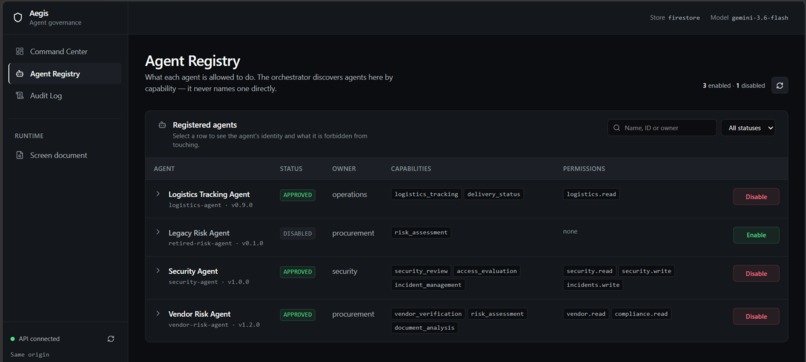
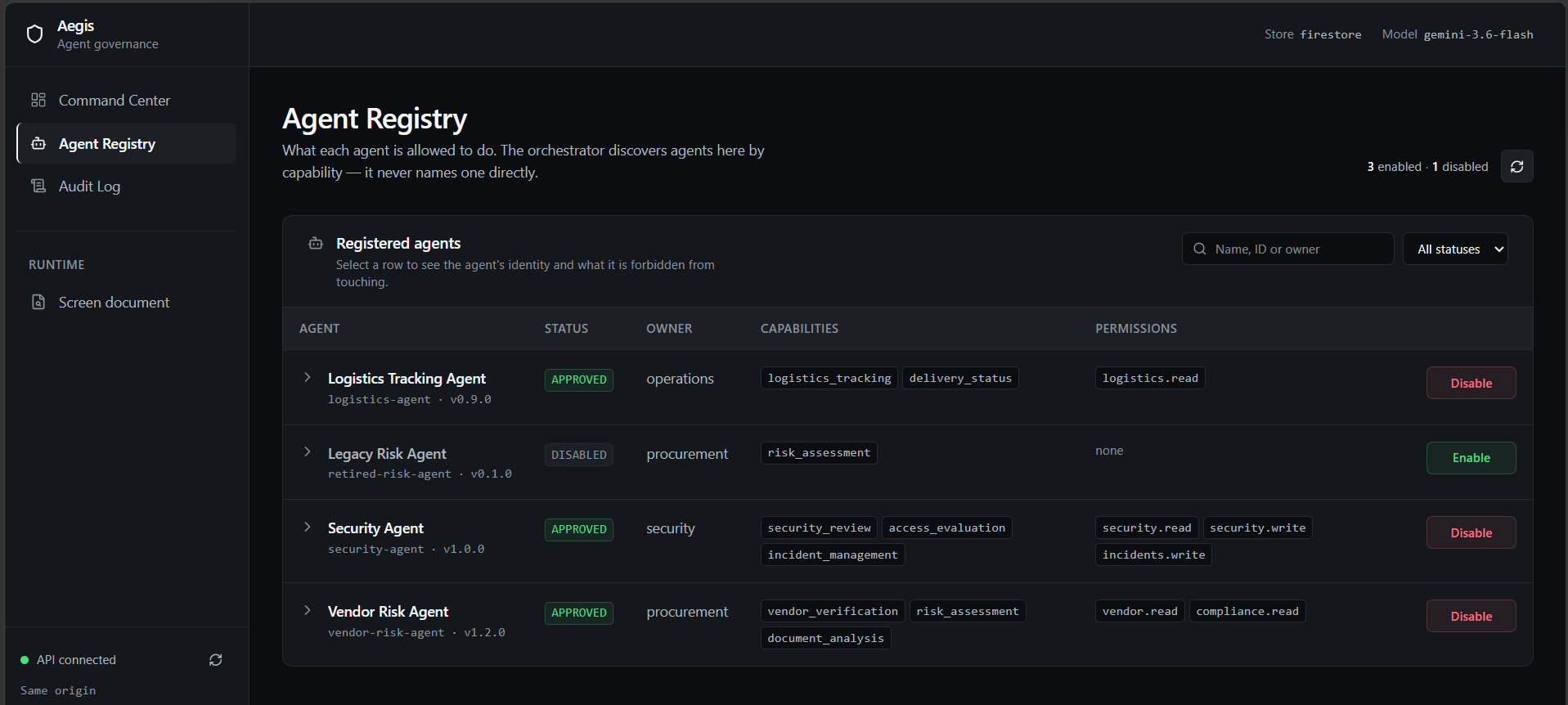
- Agent Registry
- Security Events
- Audit Log
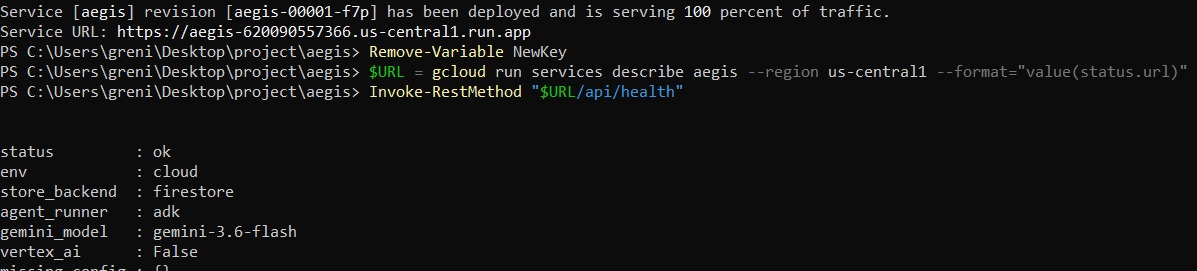
The application is deployed on Google Cloud Run.
We also created a demo-mode seed system that generates realistic workflows, approvals, security events, and audit records so the complete governance lifecycle can be demonstrated consistently.
Challenges We Faced
One of our biggest challenges was making human-in-the-loop approval a real workflow state rather than simply a frontend feature.
We encountered situations where an approval decision was stored correctly, but the corresponding workflow step was not synchronized. This could cause a rejected workflow to incorrectly remain in a pending state.
We solved this by making the backend the authoritative source of approval state and synchronizing approval decisions with the associated workflow step.
We also implemented protection against conflicting approval actions. Once an approval decision is made, it cannot silently be changed. If reconsideration is required, Aegis creates a new approval while preserving the original decision in the audit trail.
Another challenge was integrating Vertex AI and Gemini while maintaining governance, security, and observability around agent execution.
What We Learned
Building Aegis taught us that agentic AI is not just about making agents autonomous.
A production-ready agent system also needs:
Policy + Security + Human Oversight + State Management + Observability
We learned how to integrate AI agents with real cloud infrastructure, manage stateful multi-step workflows, implement human approval boundaries, protect against untrusted inputs, and maintain an auditable record of decisions.
Most importantly, we learned that the goal should not be to remove humans completely.
The goal is to automate what can be automated while knowing exactly when human control is required.
The Vision
Aegis is built around one simple principle:
Let AI move fast, but never let it move beyond its authority.
Built With
- ai-agents
- ai-governance
- docker
- fastapi
- firestore
- gemini
- generative-ai
- google-adk
- google-cloud
- google-cloud-run
- python
- react
- typescript
- vertex-ai


Log in or sign up for Devpost to join the conversation.