-
-
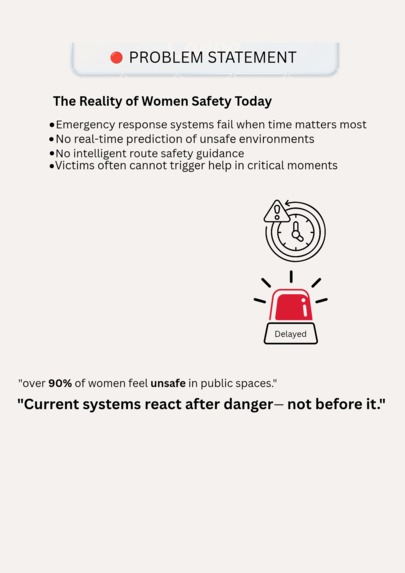
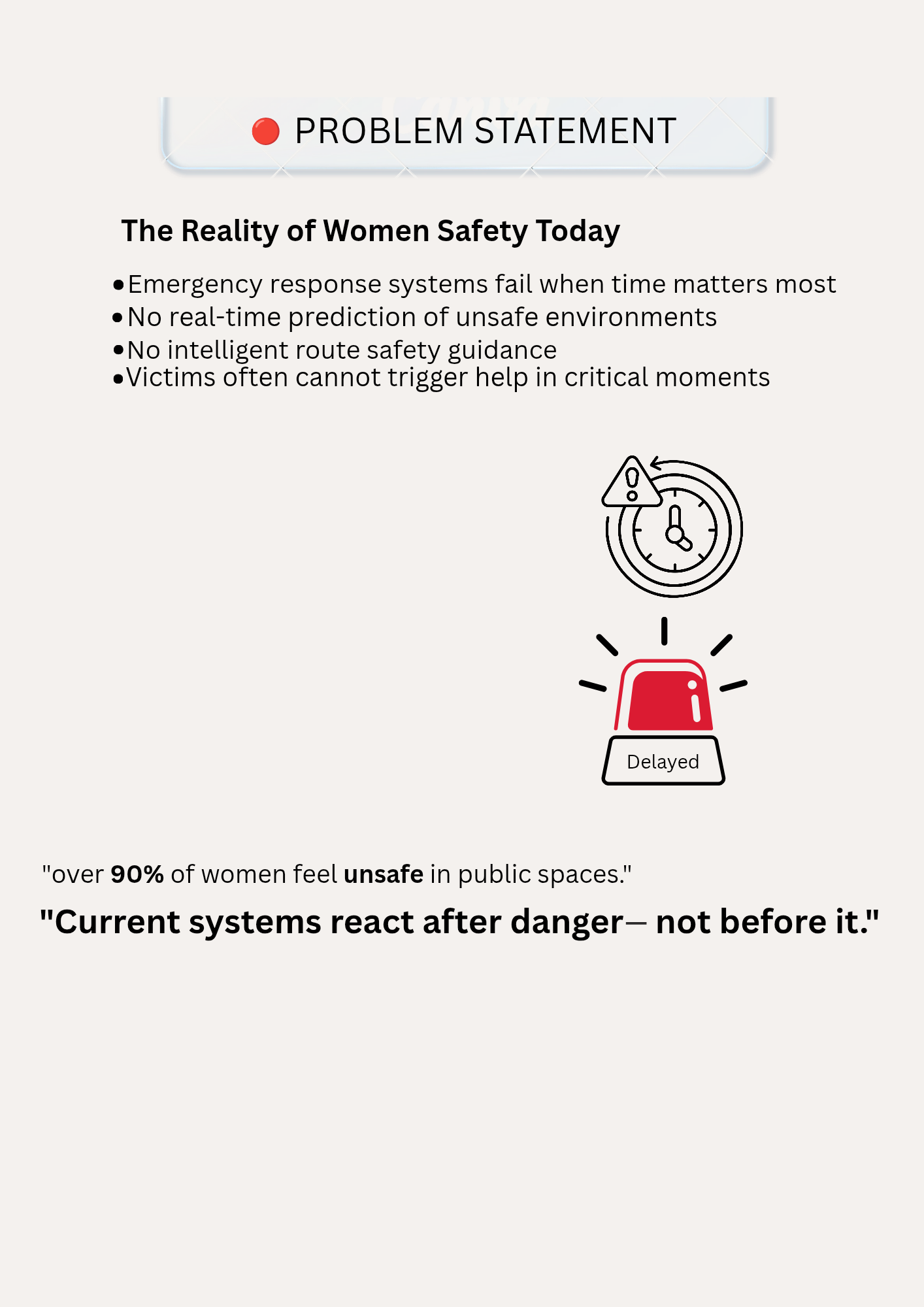
Problem
-
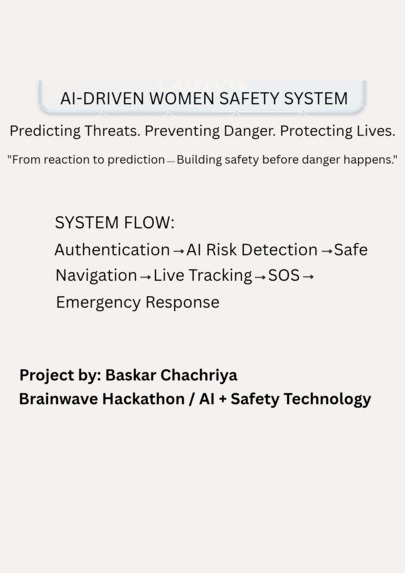
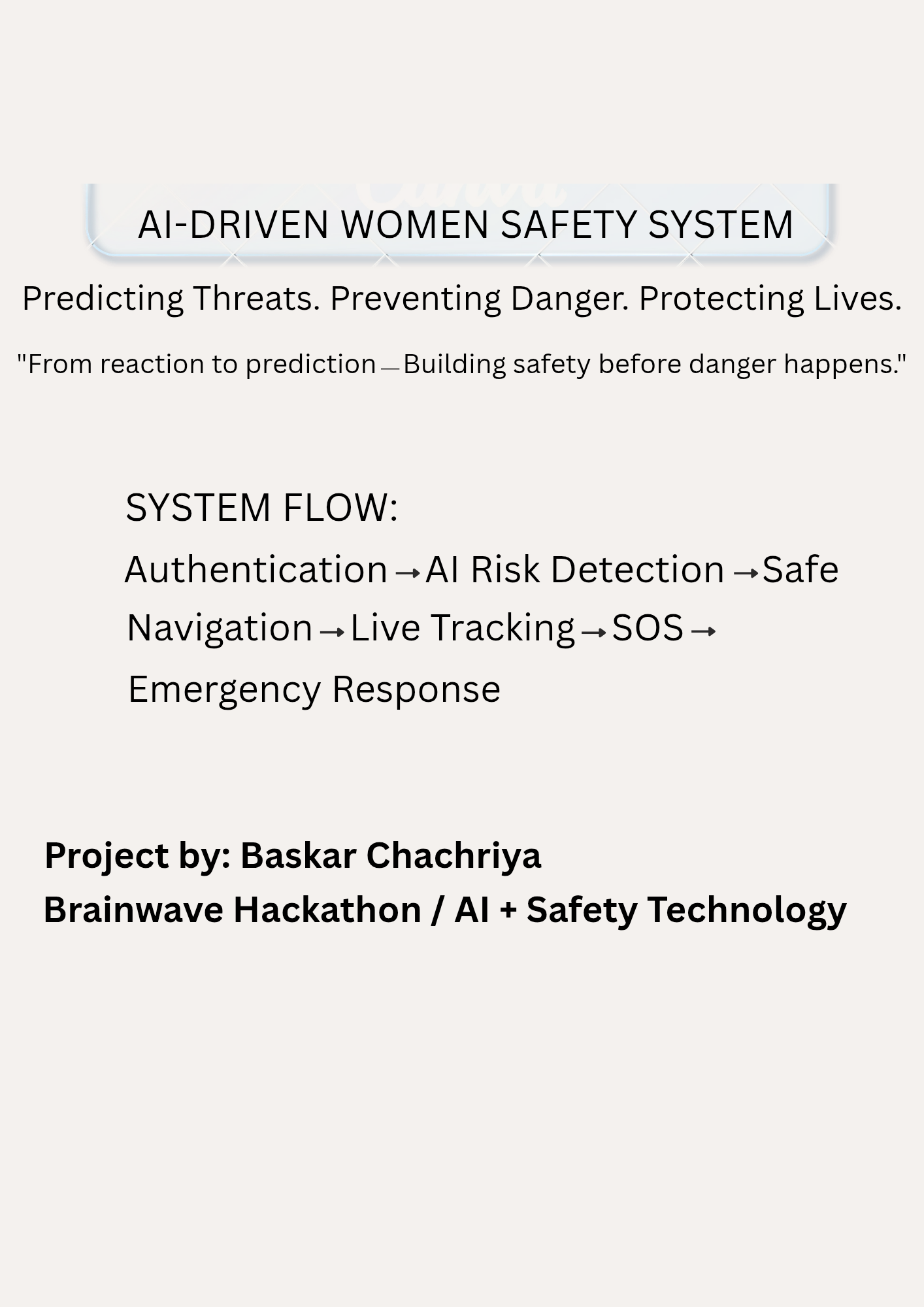
System flow
-
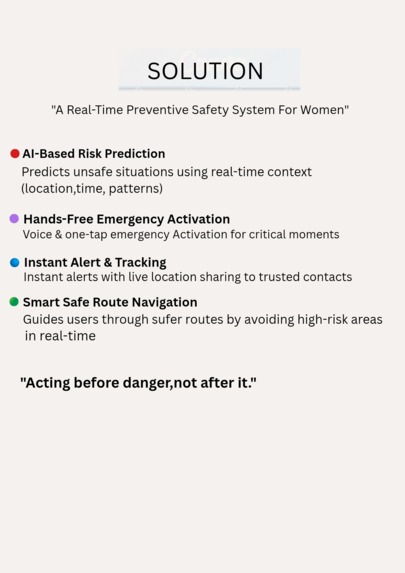
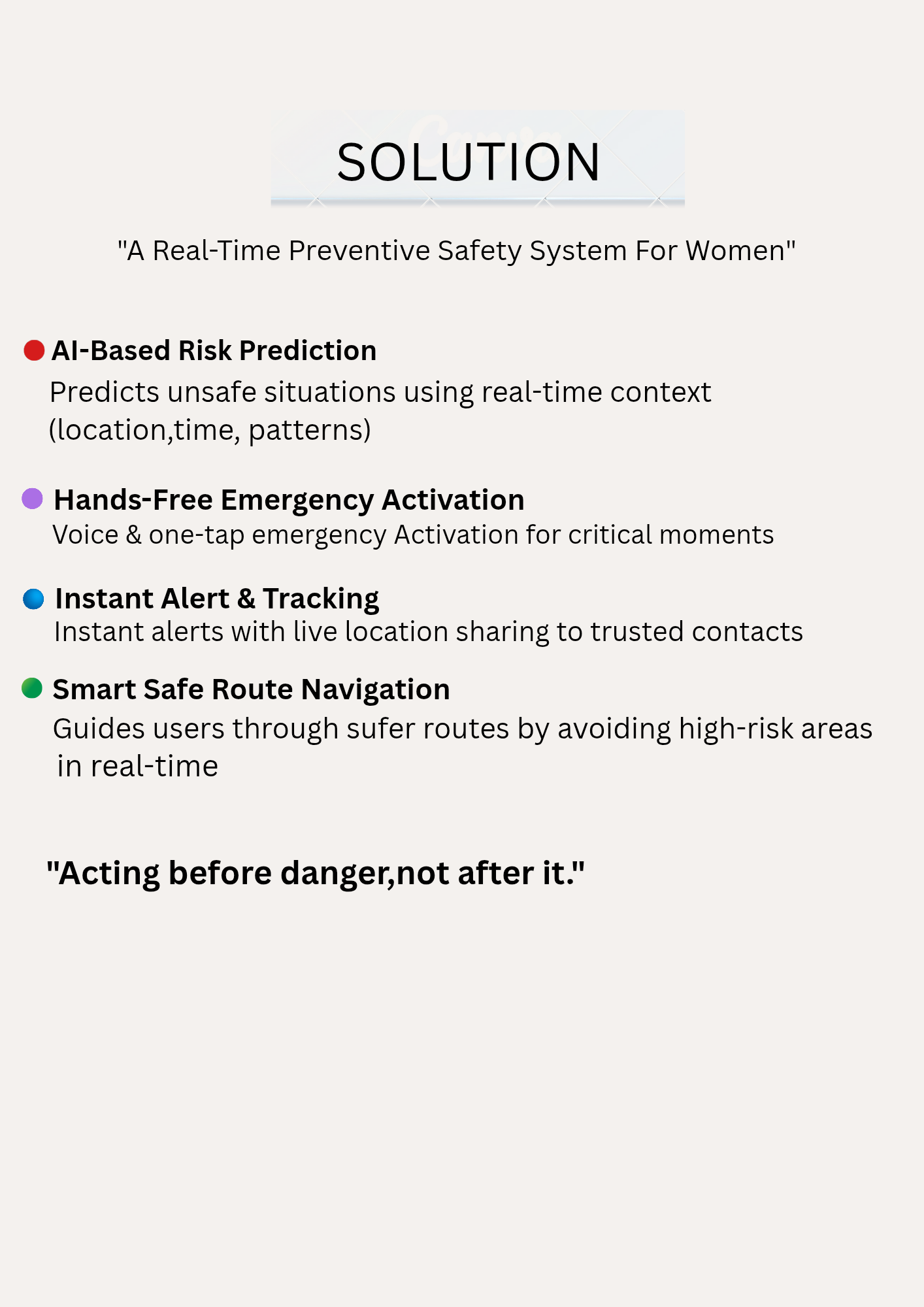
Solution
-
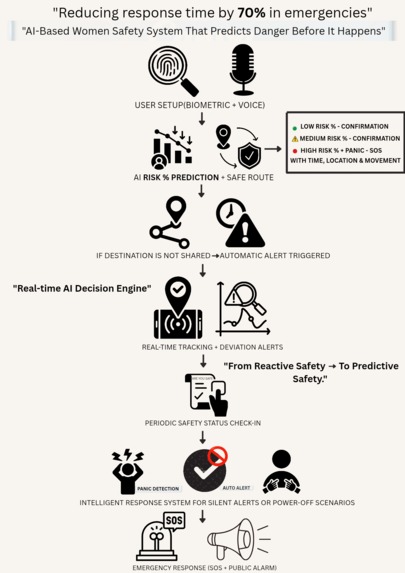
Design
-

-
-

-




Inspiration
The spark for Aegis AI came from a personal experience at 5:00 AM, while I was walking alone in the dark to take my JEE exam. Navigating unlit streets at that hour made me realize the intense anxiety and vulnerability women face daily just to pursue their dreams. Existing safety apps are purely reactive, requiring a victim to press a button after danger strikes. This inspired me to create a solution that shifts the paradigm from reactive defense to proactive, predictive safety—ensuring no woman ever has to second-guess her security while striving for her future.
What it does
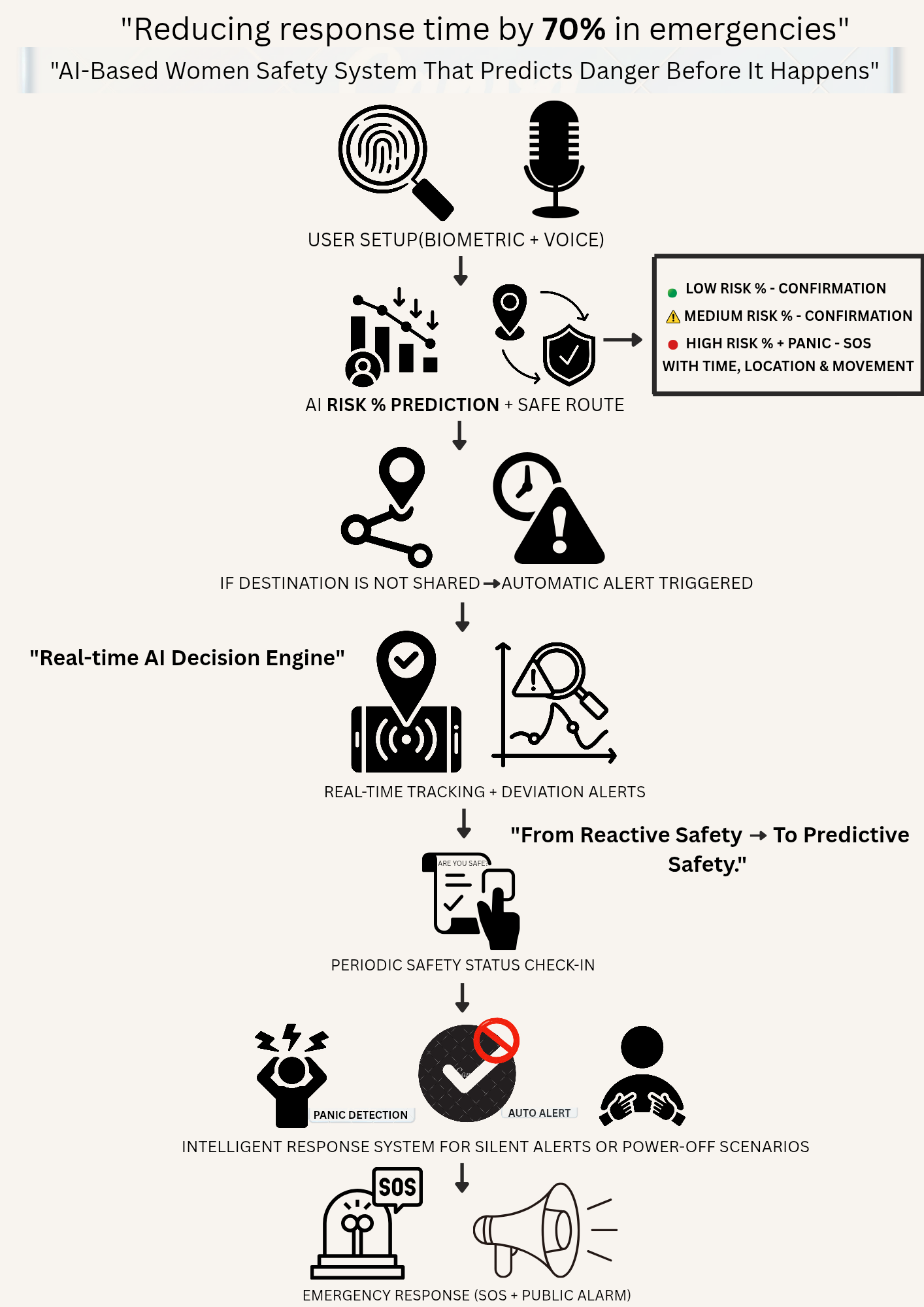
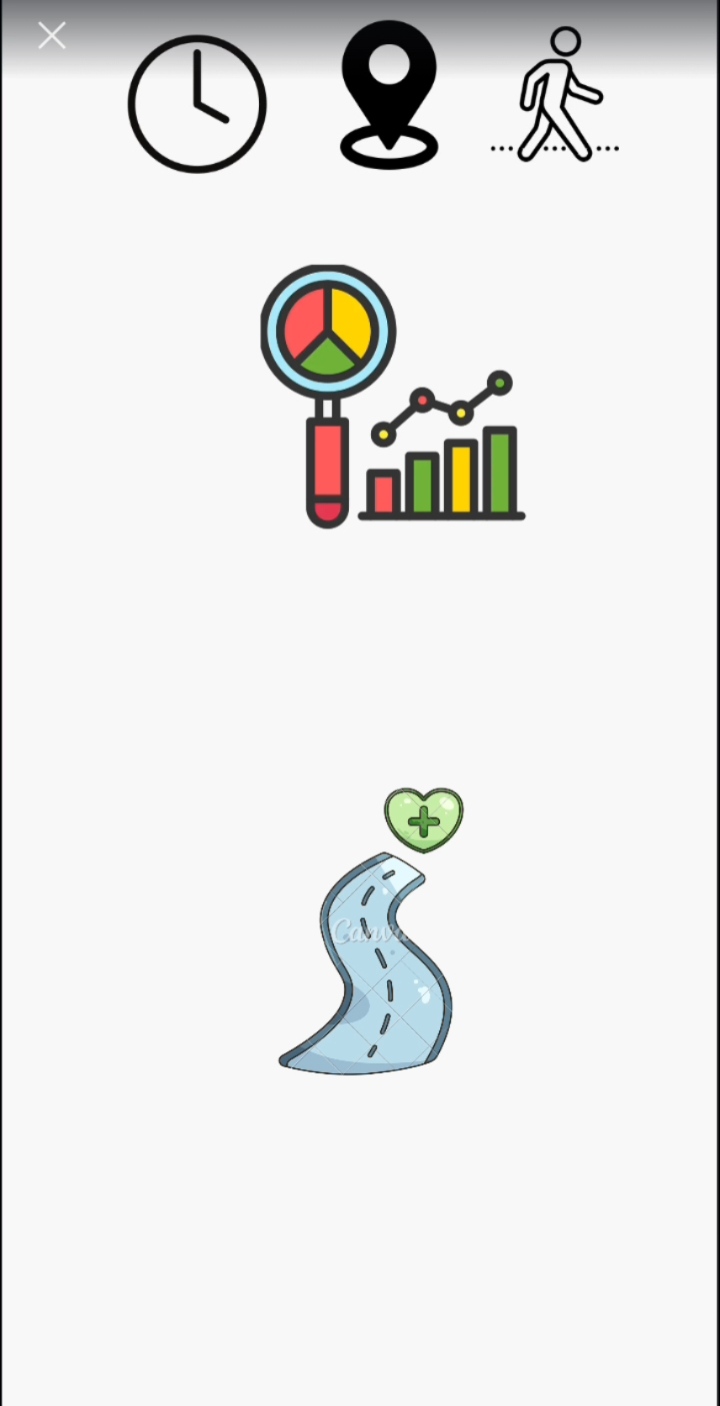
Aegis AI shifts women's security from reactive to predictive by calculating danger before it happens. Upon a secure biometric and voice setup, the app's Real-time AI Decision Engine automatically tracks the user's route and time to generate a live AI Risk Percentage (Low, Medium, High). If a user strays from their path or fails to check in, the system instantly triggers an automatic alert without needing any manual button presses. Most importantly, it features an Intelligent Response System that detects silent panic and forced phone power-offs, ensuring a panic SOS with location and movement data is dispatched to emergency teams and public alarms, effectively cutting emergency response times by 70%.
How we built it
We developed Aegis AI using a fast, low-latency mobile framework integrated with a custom Predictive Machine Learning Model that dynamically processes time, live GPS coordinates, and historical area data to generate real-time risk scores. The backend is powered by a robust cloud architecture that handles seamless voice-print verification and utilizes high-speed messaging APIs to dispatch instant location-metric payloads. Finally, we integrated mapping APIs to calculate route deviation alerts and map optimized safe pathways.
Challenges we ran into
Our biggest challenge was designing a truly fail-safe system for worst-case scenarios, such as when an attacker forcefully powers off the phone or silences the user. We solved this by implementing a Server-Side Check-in Timeout mechanism that automatically triggers a panic SOS from the cloud if the app abruptly loses connection. Additionally, we worked hard to optimize continuous background tracking to minimize smartphone battery drain and refined our audio classification filters to reduce false alarms caused by everyday street noise.
Accomplishments we are proud of
We are immensely proud of successfully shifting the women's security paradigm from a traditional reactive defense to a fully predictive safety architecture. We successfully engineered an advanced fail-safe logic capable of reducing emergency response times by 70%. Creating a fully functional system that successfully addresses worst-case scenarios—such as forced phone power-offs and silent panic situations—stands as our team’s greatest technical milestone during this hackathon.
What we learned
Through this intense sprint, we mastered the implementation of proactive machine learning logic on the backend and optimized server-side timeout mechanisms for critical situations. We gained deep insights into enforcing strict user data privacy protocols to safeguard sensitive live location metrics. Additionally, we learned how to optimize continuous background tracking to ensure seamless, low-latency performance within strict time and hardware constraints.
What's next for aegis AI
The next phase for Aegis AI is to expand beyond mobile screens by integrating our system directly with smart city public alarm infrastructures and local police networks. We plan to design standalone biometric wearable hardware, such as smart rings or bands, that sync seamlessly with our predictive engine. Ultimately, we aim to implement offline mesh networking capabilities to ensure women can dispatch instant SOS alerts even in zero-connectivity environments.
Offline Security (Zero-Connectivity Mode)
To ensure absolute safety even in remote areas, Aegis AI features an advanced Offline Mode that functions without cellular network or internet connectivity. In dead zones, the system utilizes compressed offline SMS payloads encoded with the user's last known coordinates to transmit distress signals. Simultaneously, it activates local peer-to-peer Mesh Networking protocols via Bluetooth and Wi-Fi Direct, broadcasting encrypted emergency alerts to nearby Aegis-enabled devices and smart city nodes, ensuring help is dispatched even when traditional communication lines fail.
Built With
- bluetoothlowenergy
- firebase&mangodb
- google-maps
- twilioapi

Log in or sign up for Devpost to join the conversation.