-
-

Aegis Landing Page
-
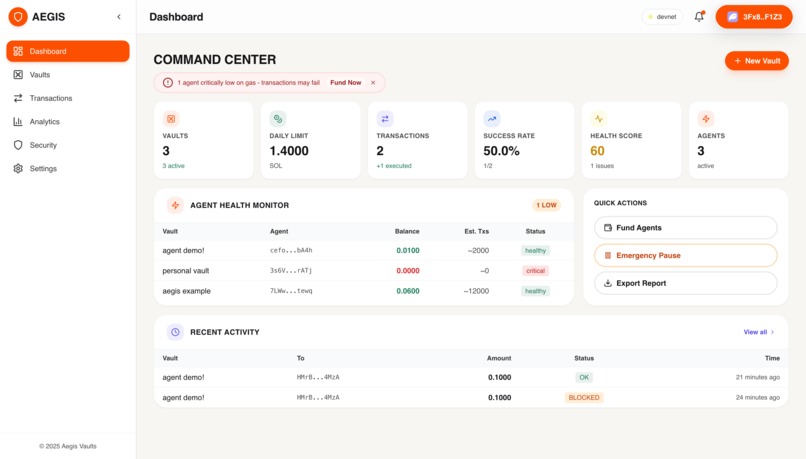
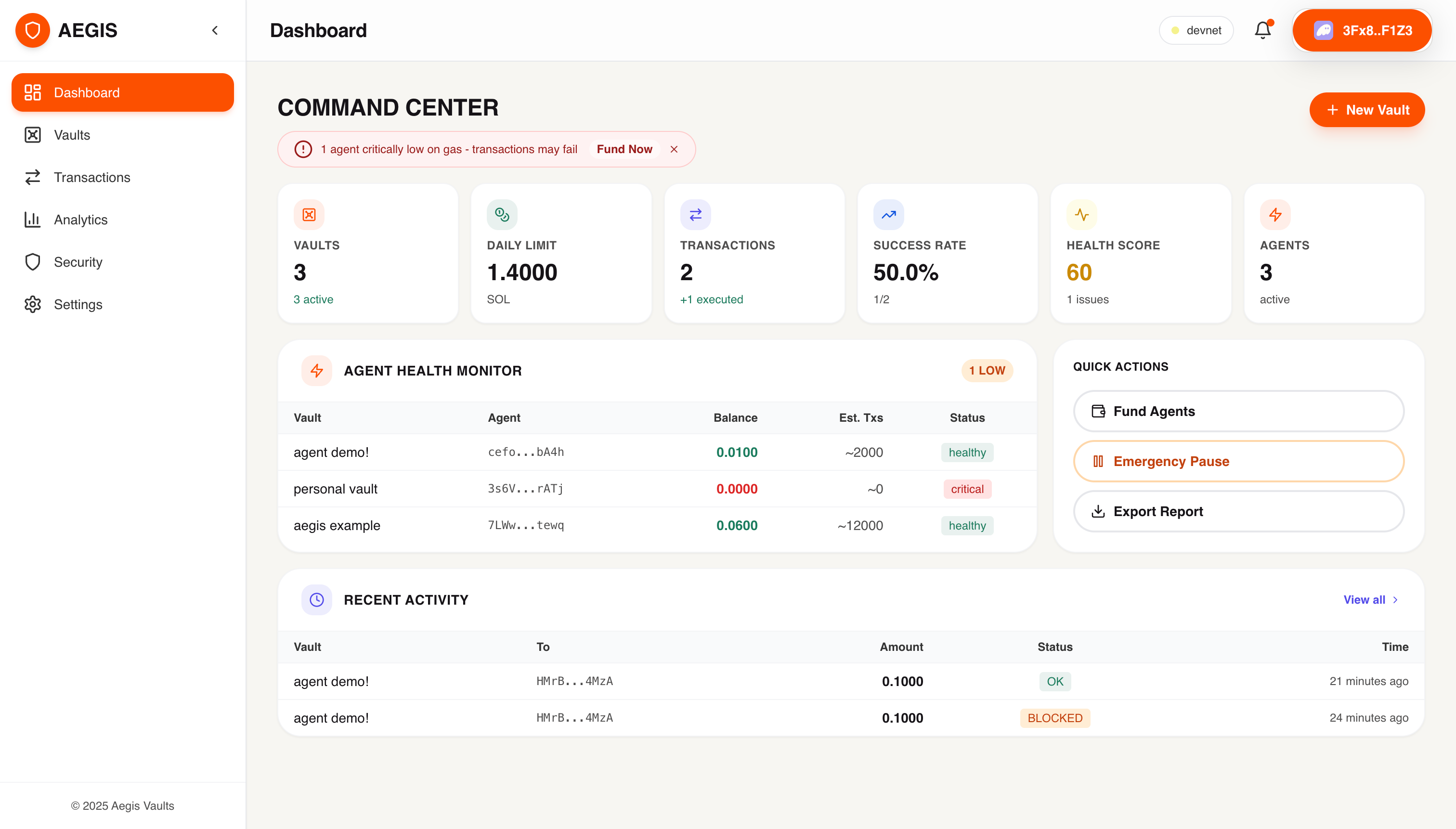
Dashboard
-
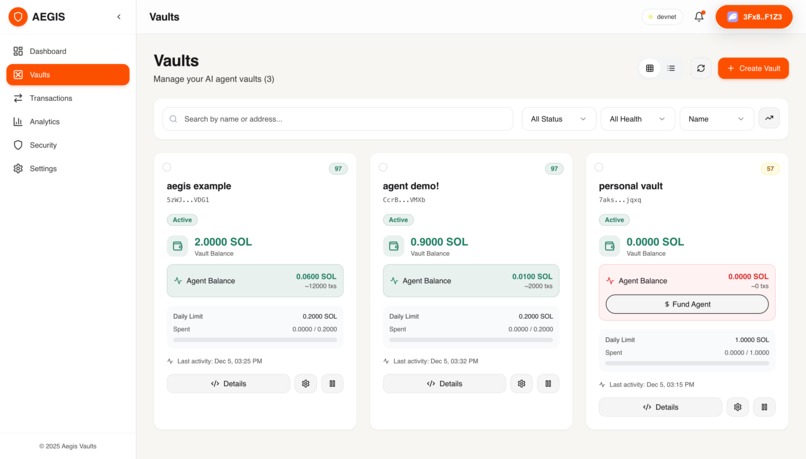
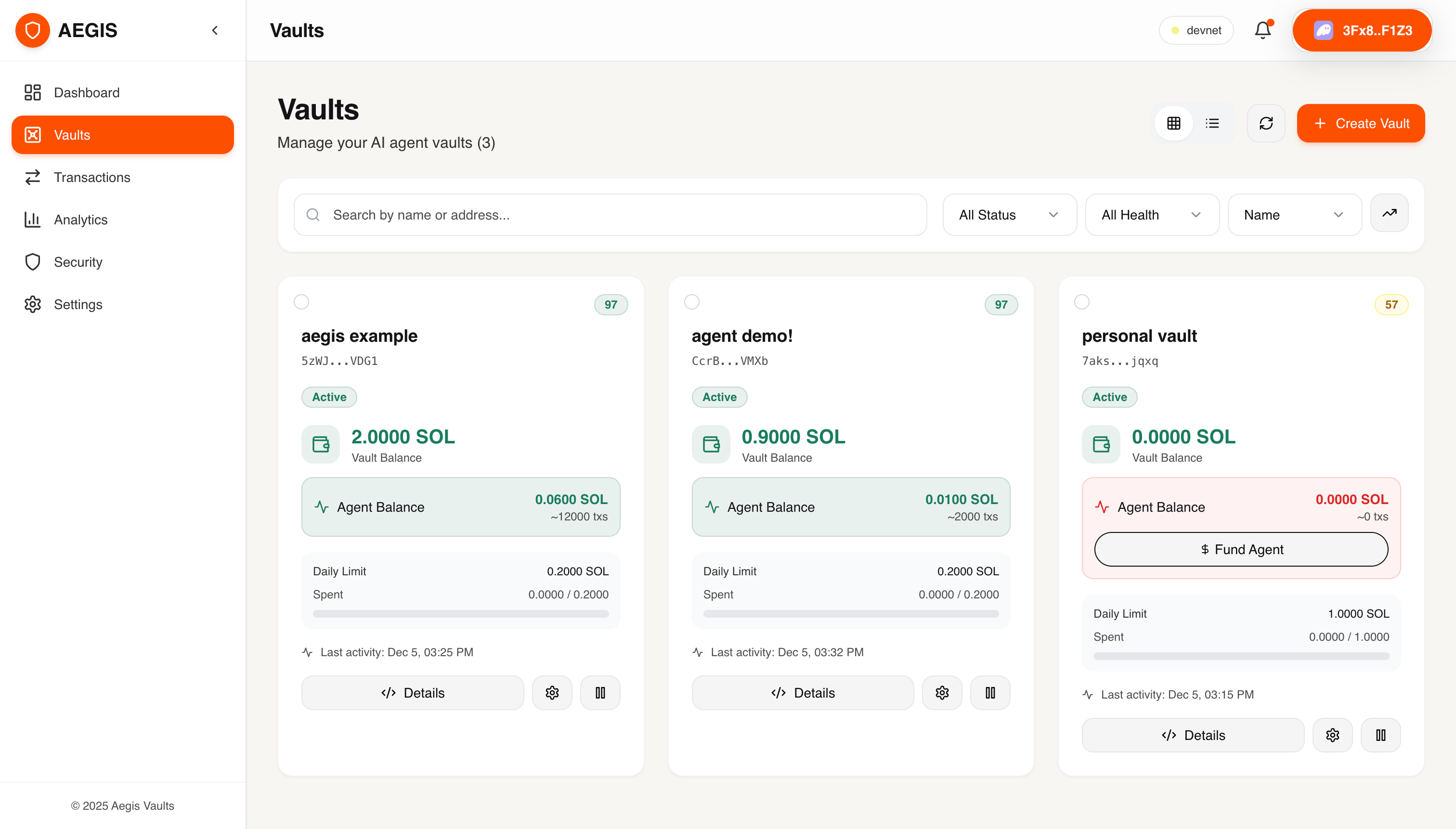
Vaults Page
-
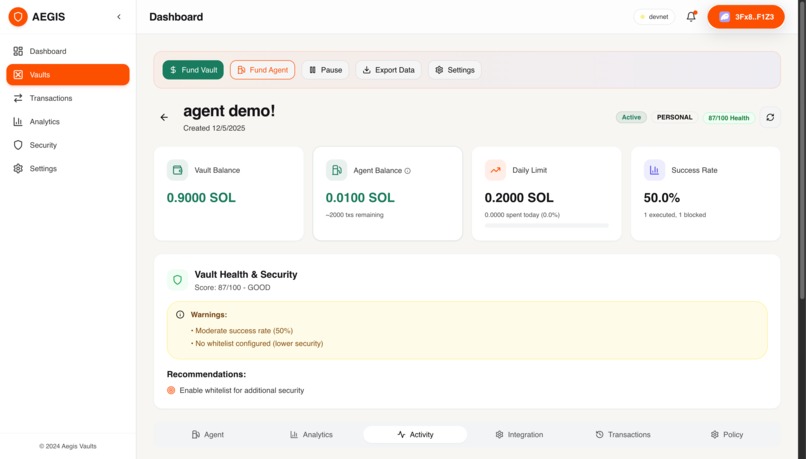
Vault Specific Details Page
-
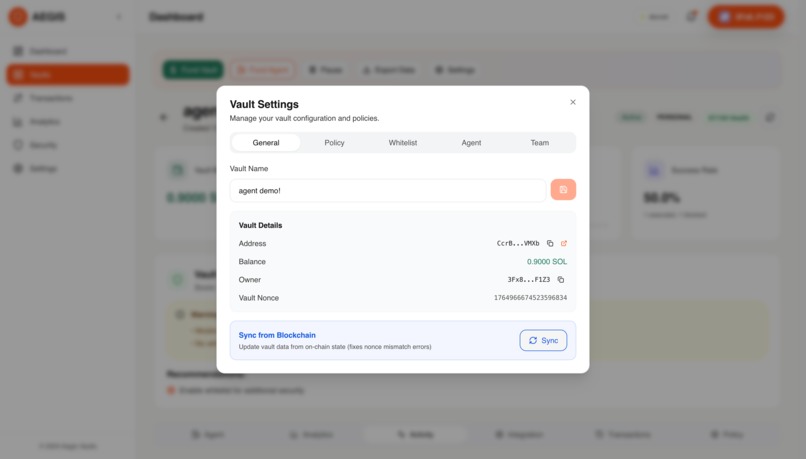
Vault Settings
-
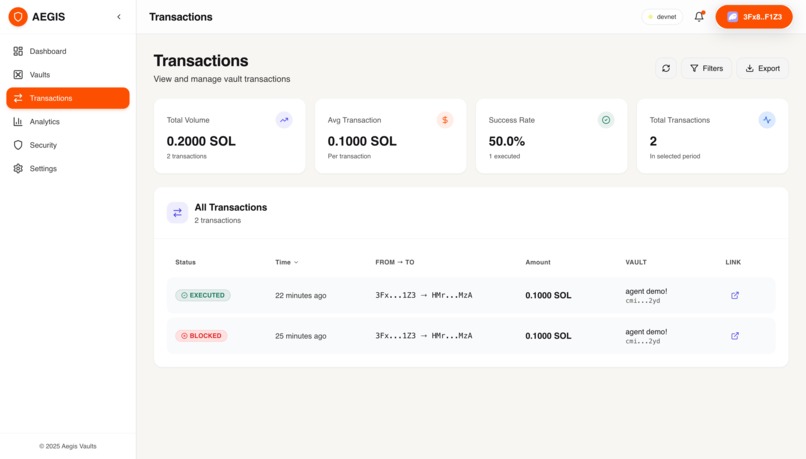
Account Transactions Page
-
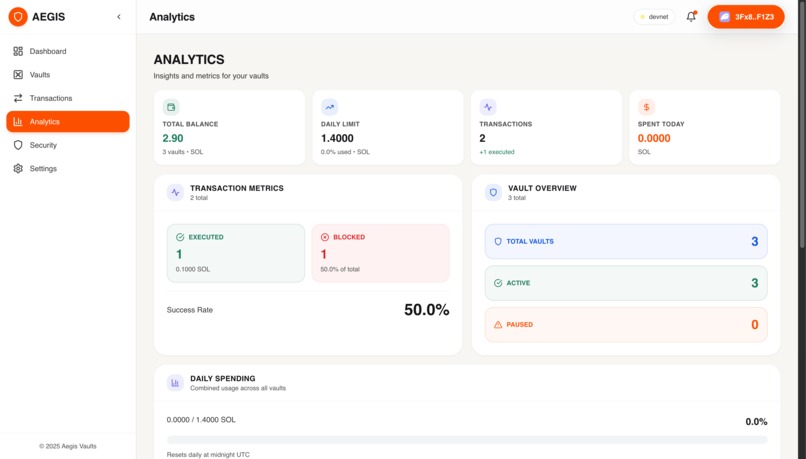
Analytics Page
-
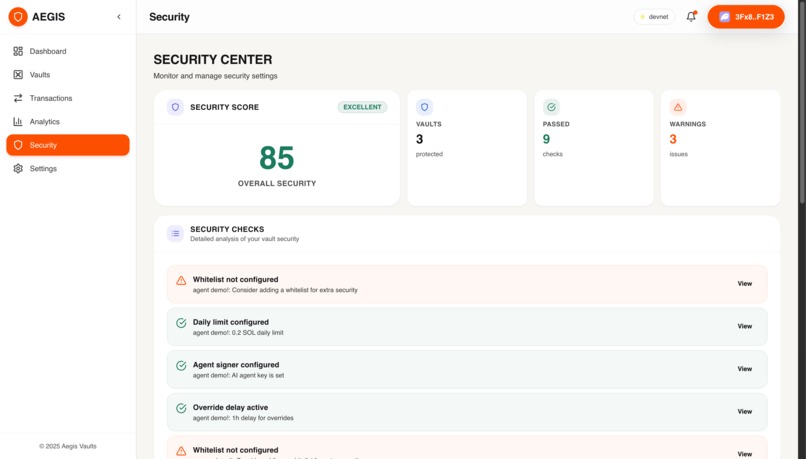
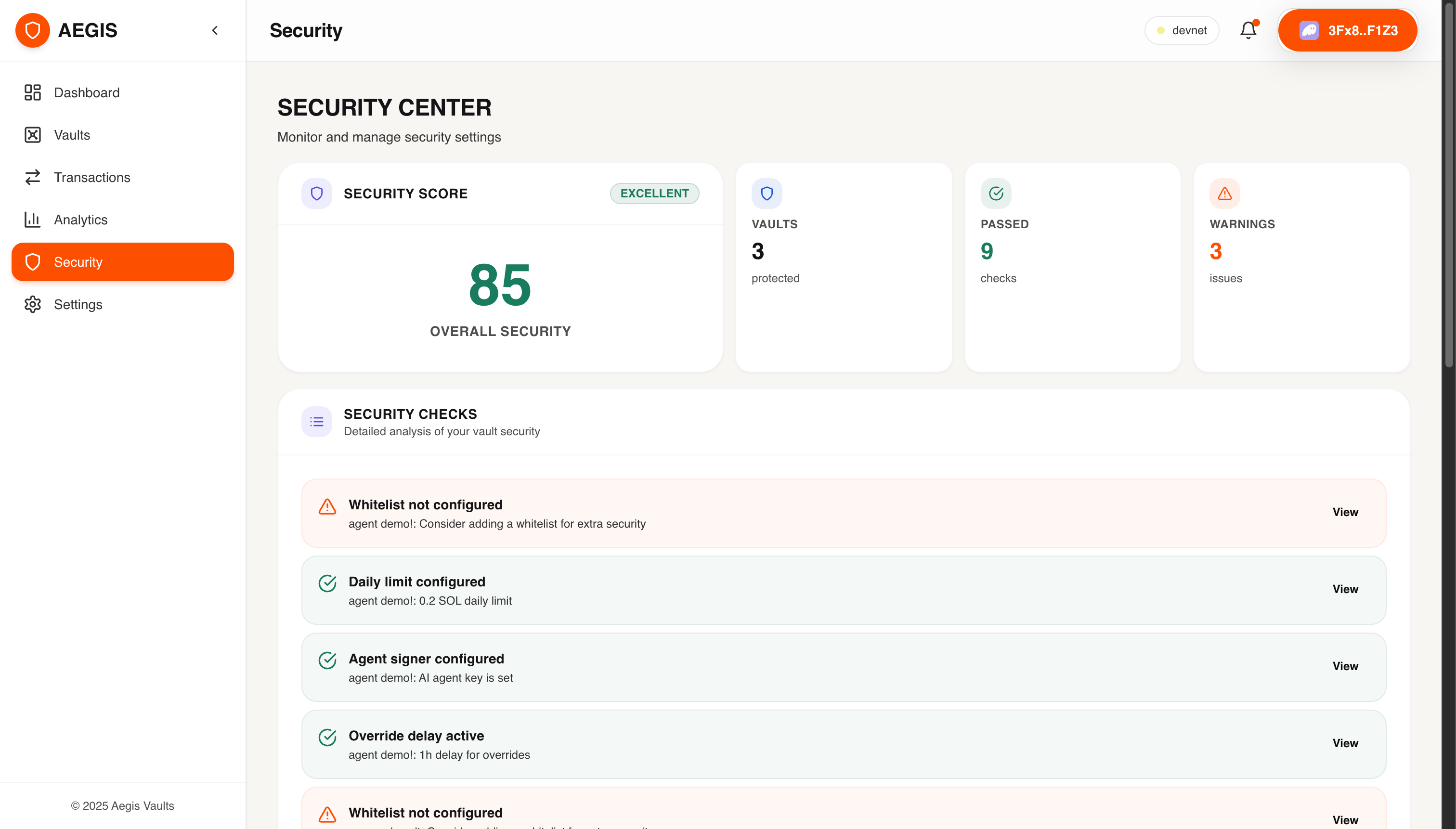
Security Page
-
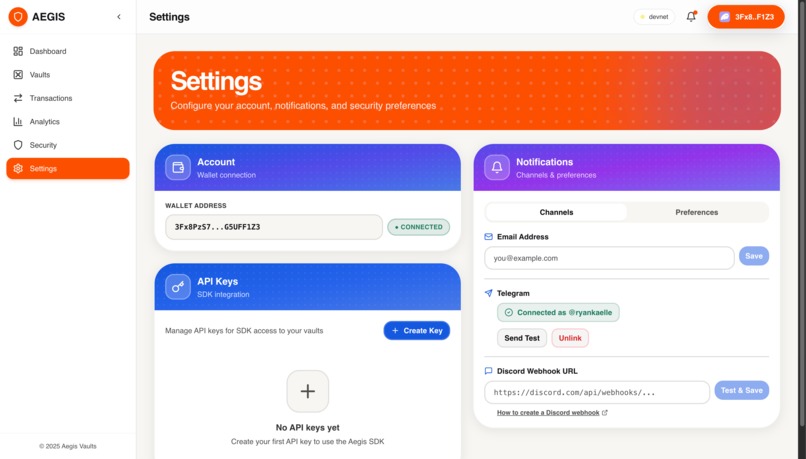
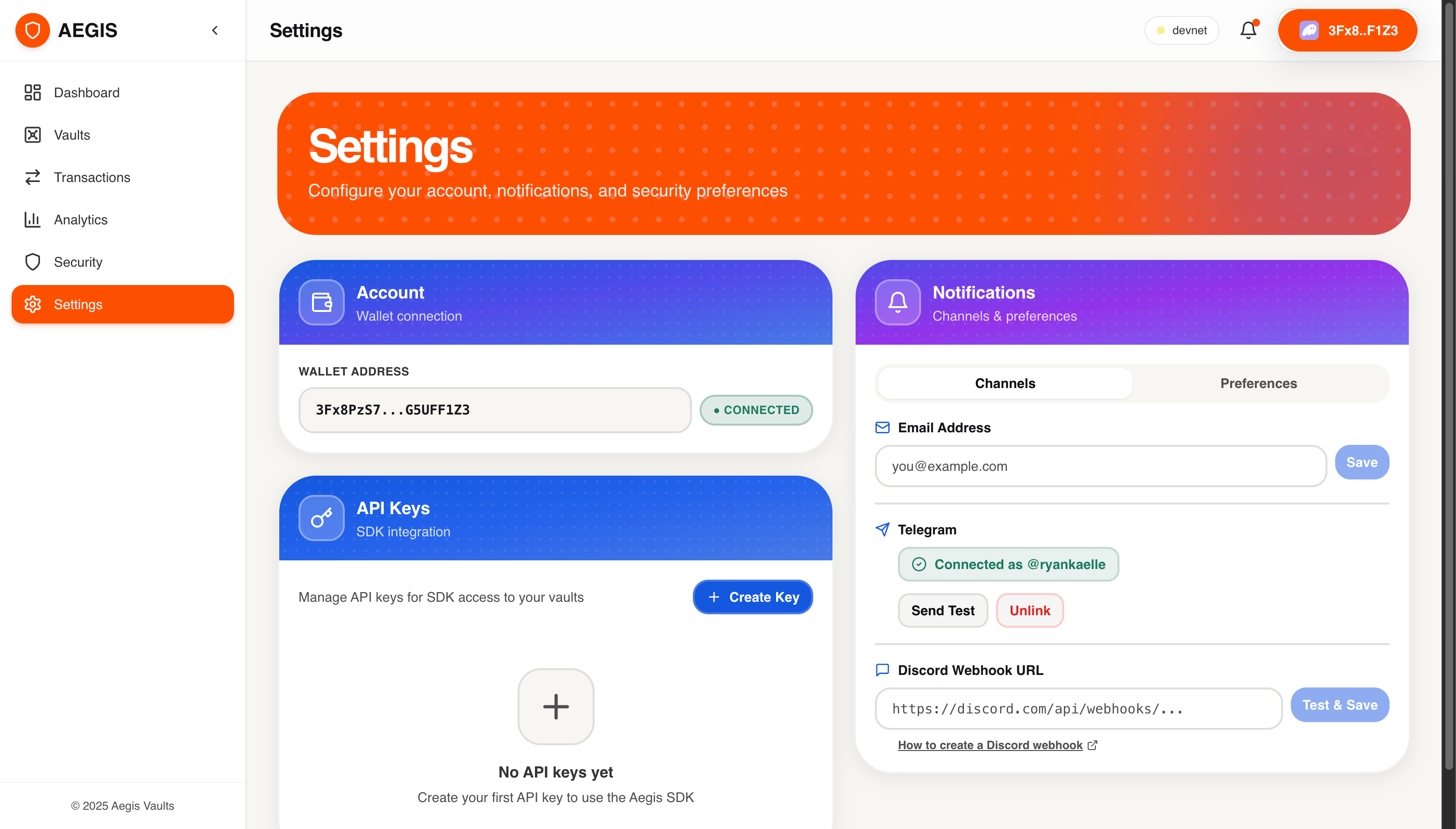
Account Settings Page
-
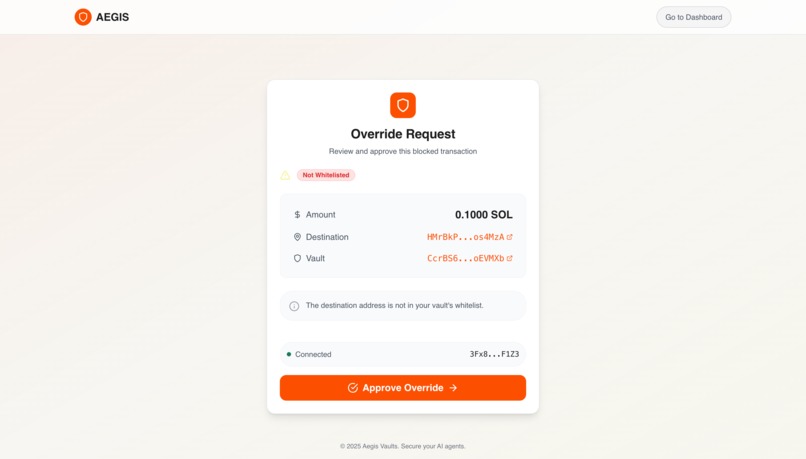
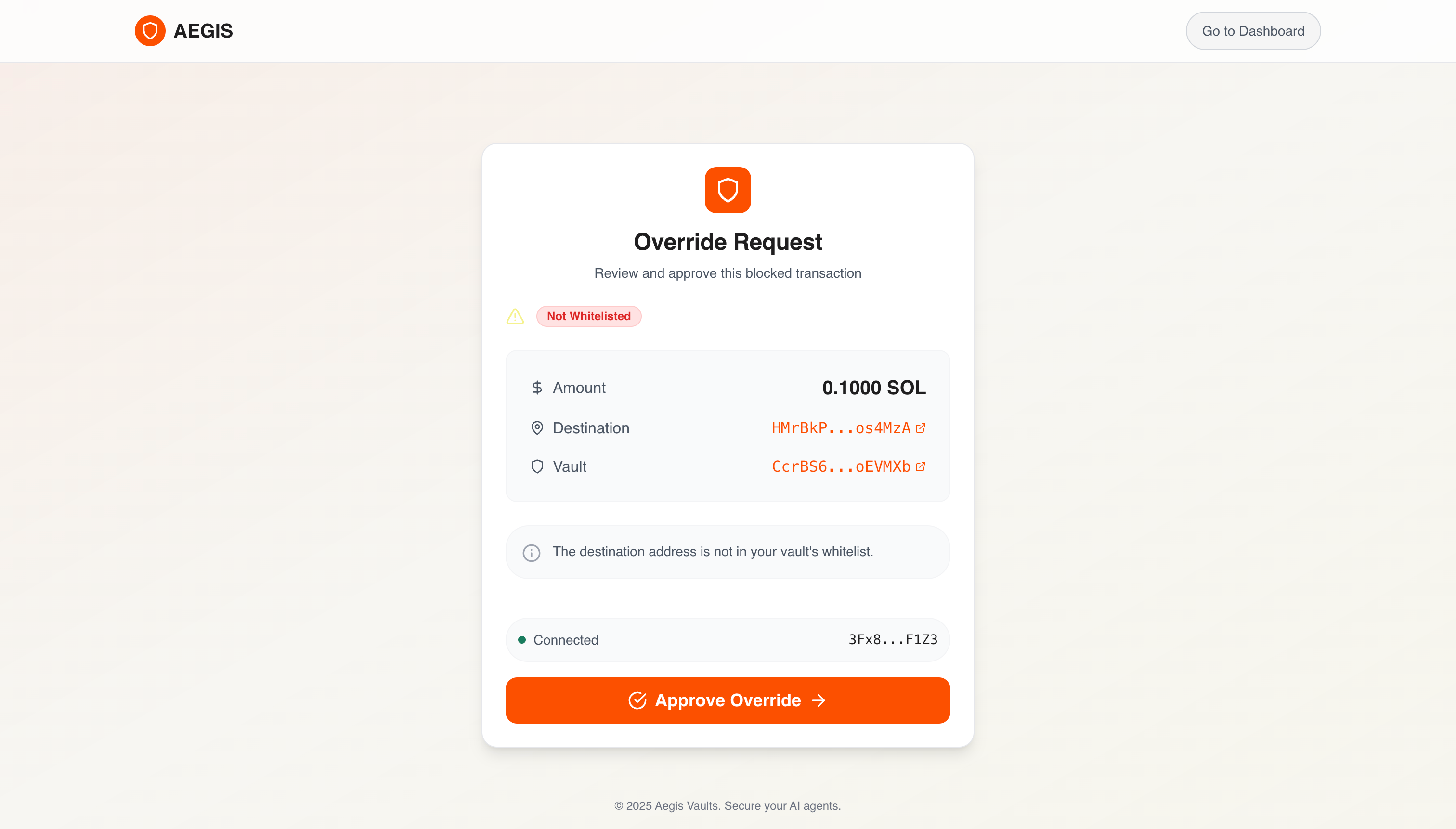
Blink Override Page
-
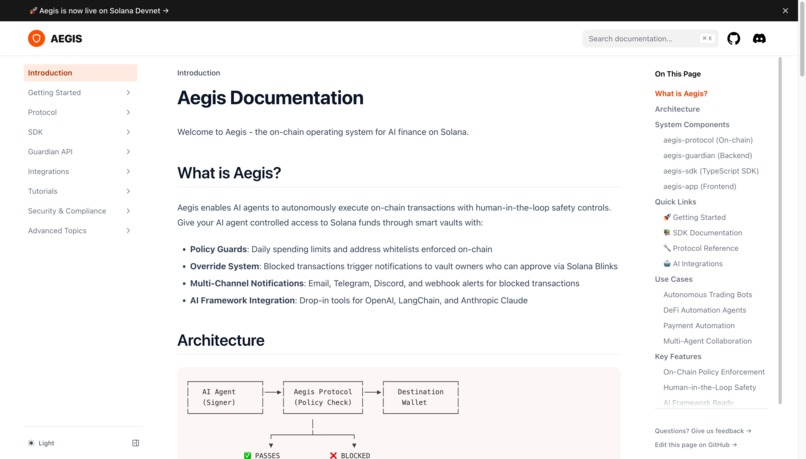
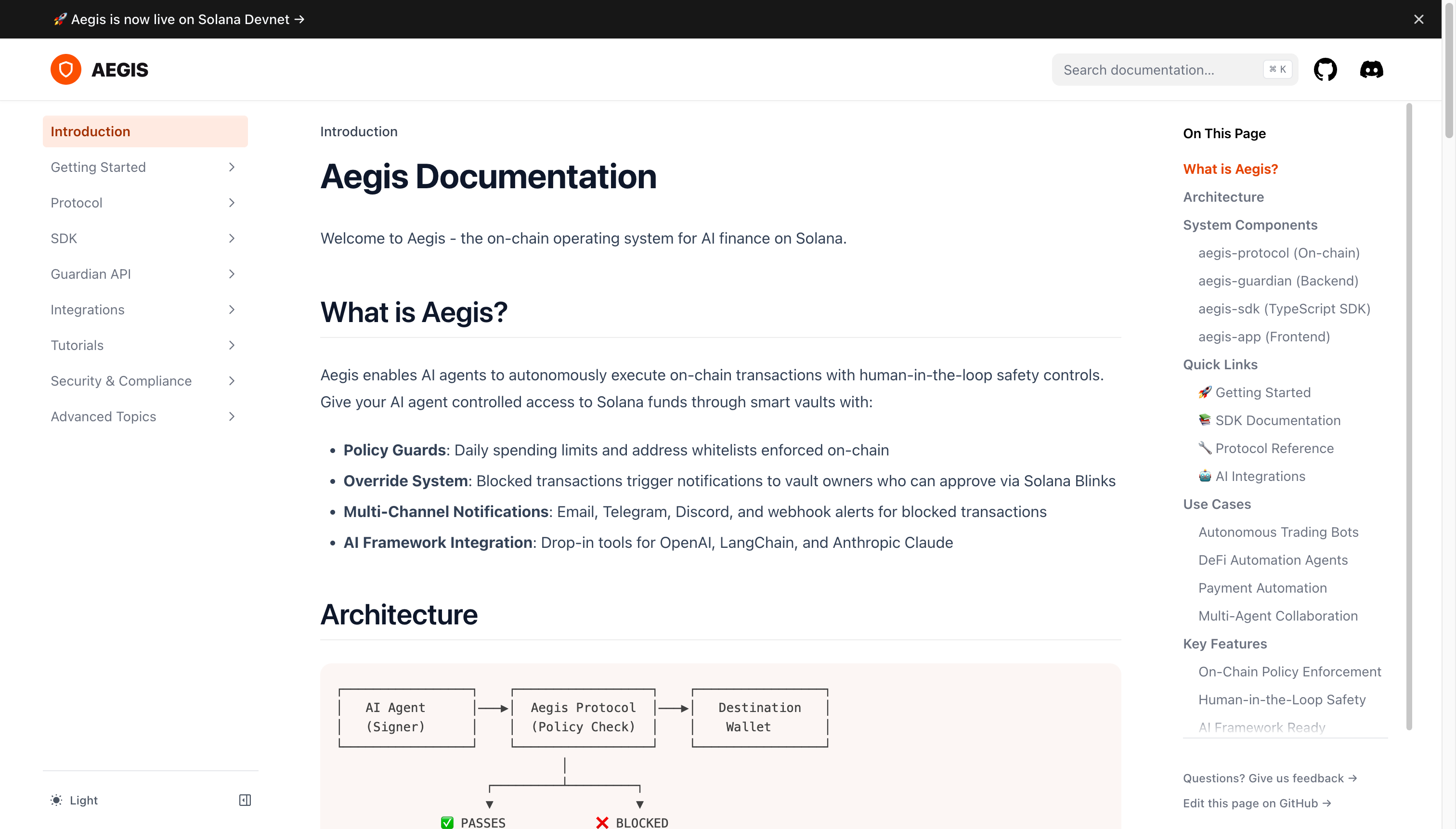
Documentation Site

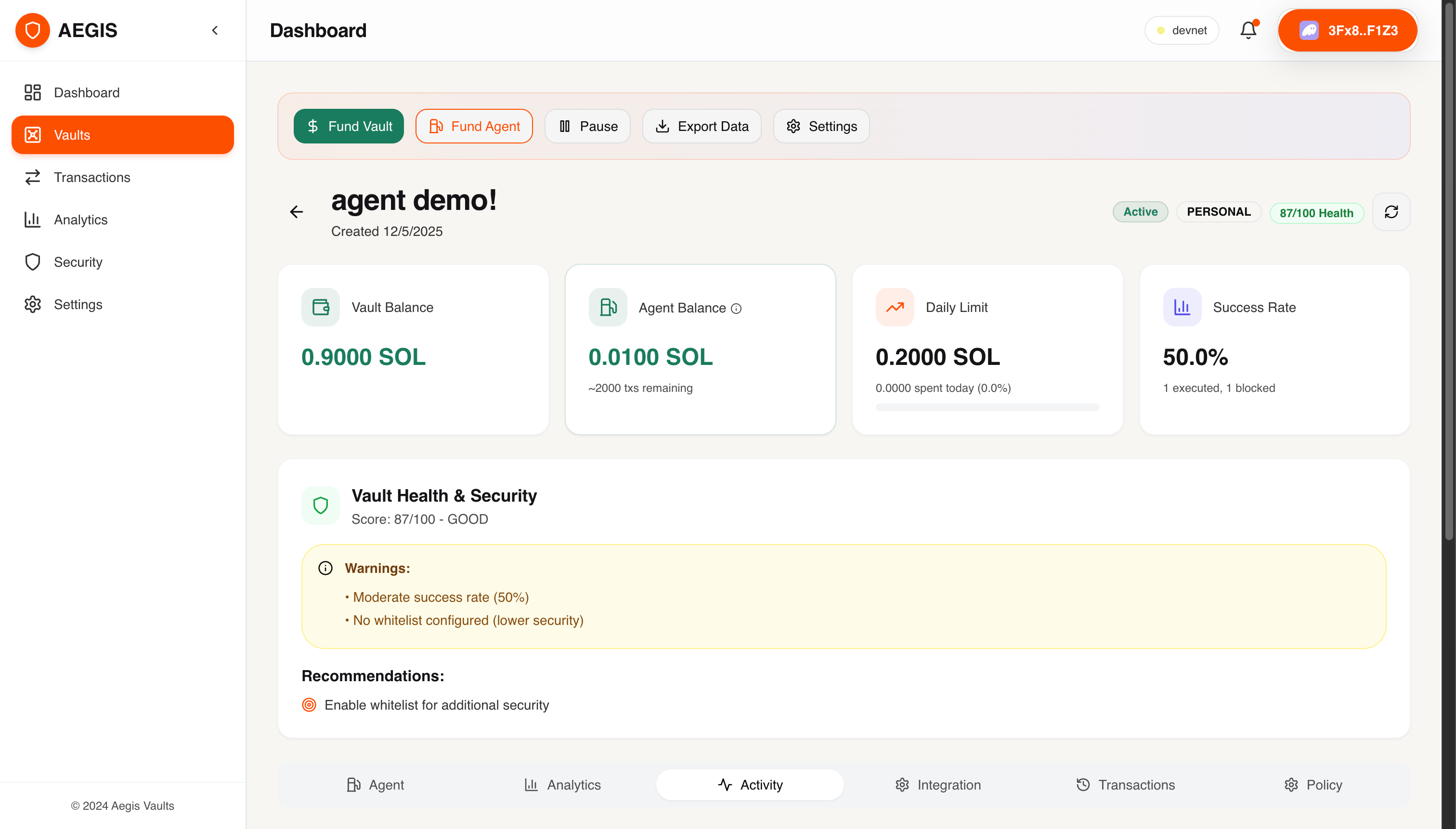
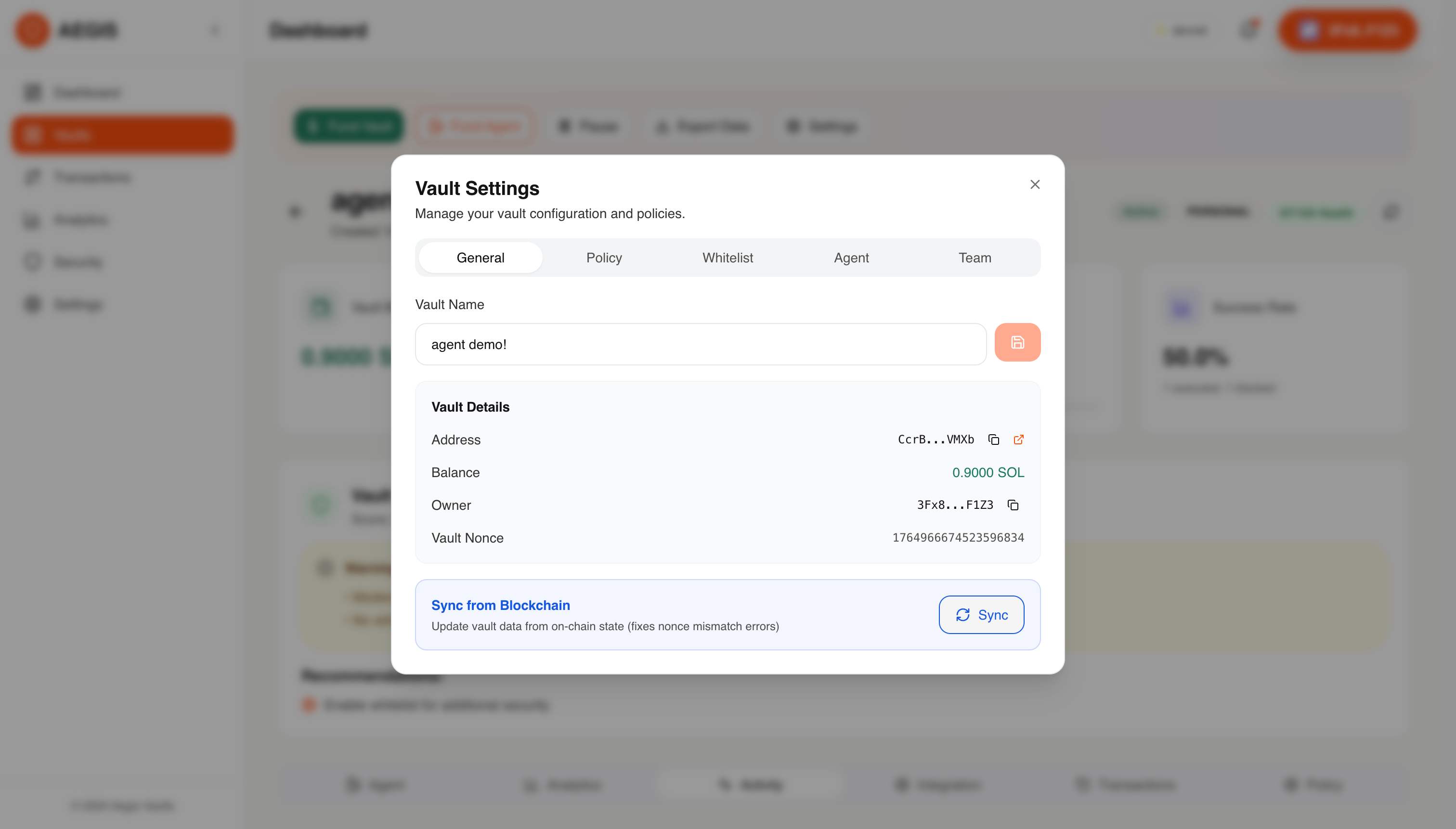
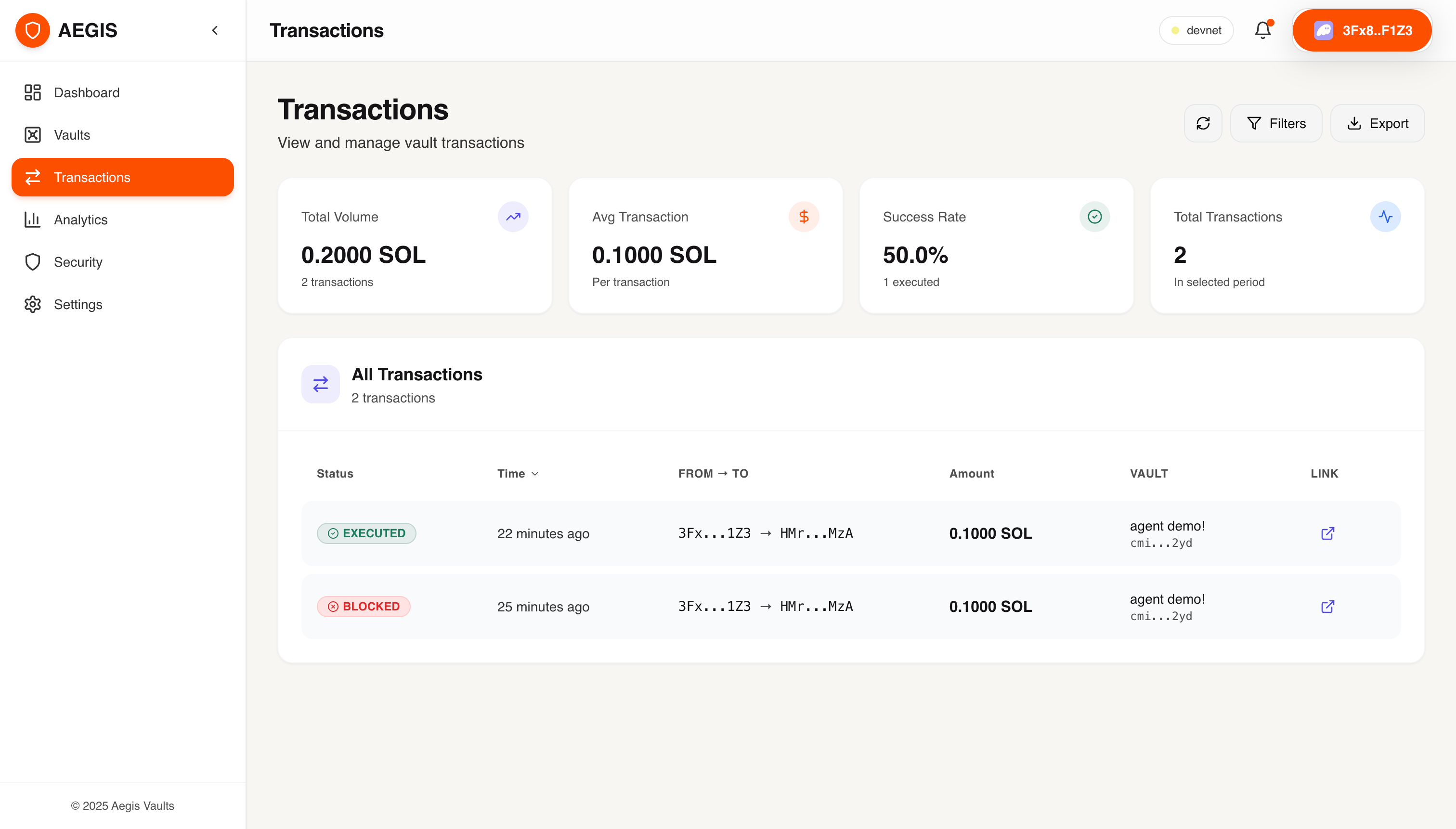
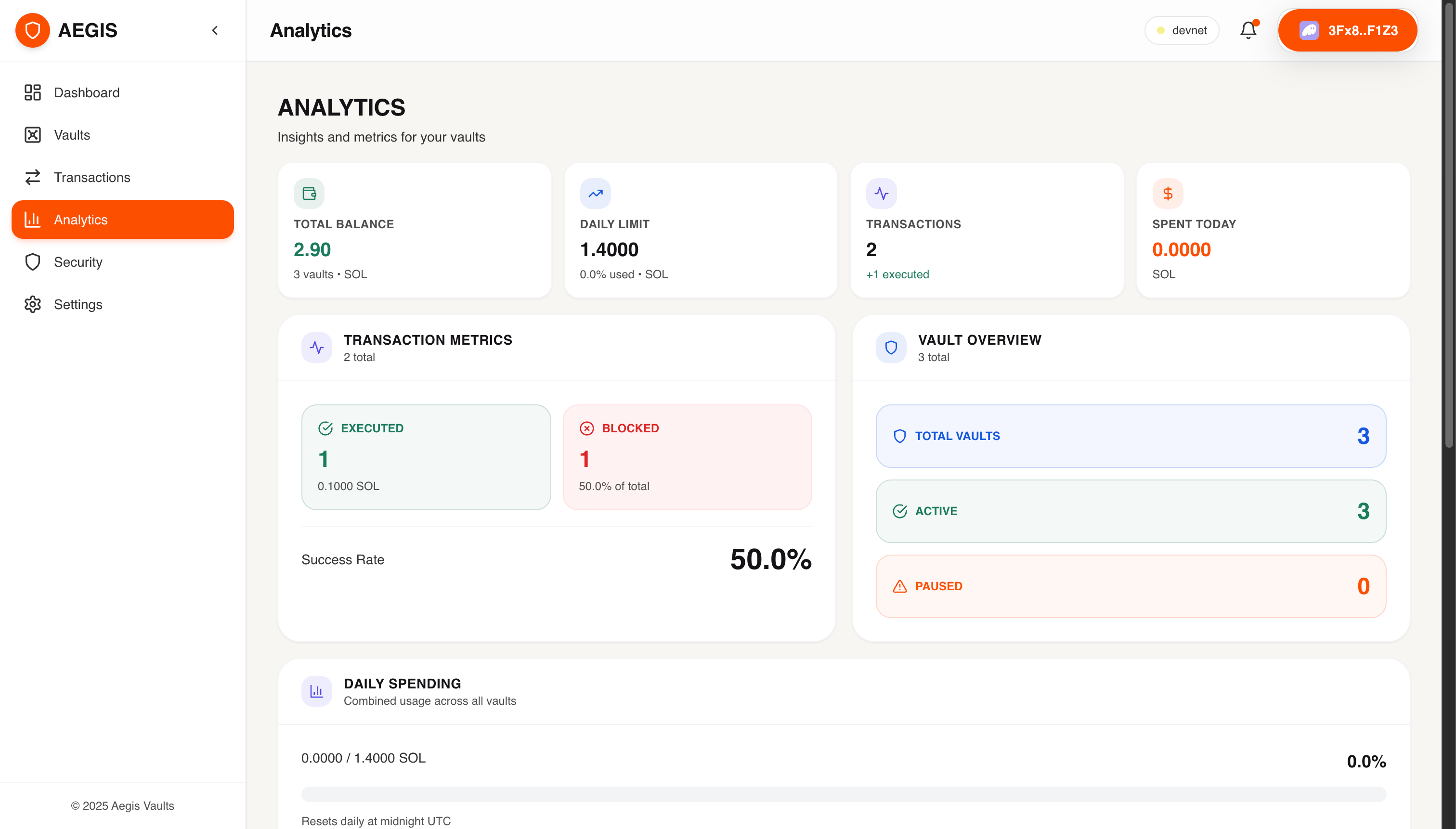
Aegis started with a simple observation: the way Privacy.com changed online payments is the same change AI agents need for crypto. Before Privacy.com, you had to hand your real credit card number to every website and just hope nothing bad happened. Virtual cards solved that by putting limits and rules between you and the merchant.
Today, AI agents are in the same situation, except the “credit card number” is a crypto wallet.
AI tools can already browse the web, buy things, write and deploy code, and interact with dApps. But the moment you want them to handle real money, the current solution is basically: give the agent a private key and pray it doesn’t screw up. One prompt injection, bug, or hallucination could wipe out an entire wallet. And on the blockchain, there’s no customer support, no chargeback, and no undo button.
When Solana launched Blinks and Actions, it became clear that AI-driven transactions are going to be a big part of the future. The infrastructure for agents is being built fast—but the security layer is missing. That’s what Aegis is designed to solve.
Aegis works like a vault that sits between an AI agent and the funds it needs. The agent receives a signer key that can propose transactions, while the vault enforces strict rules on-chain. You can set daily spending limits, whitelist approved addresses, and pause everything instantly if something looks wrong. Every action is logged and monitored. The agent gets autonomy, but with guardrails.
Building Aegis taught us a lot about Solana development—especially Anchor program architecture, PDA derivation, and how to design accounts for future upgrades. On the frontend, we focused on clean, real-time wallet interactions. A big technical challenge was building a nonce-based vault system that lets users create unlimited vaults from one wallet. We also spent time making the SDK genuinely easy for AI developers, with integrations for LangChain and the OpenAI Assistants API.
Another interesting problem was building an override system. Sometimes an agent should spend more than its limit or send funds somewhere new. For those cases, the agent can submit an override request, and a human can review and approve it on-chain. That keeps a human in the loop for exceptions without forcing them to monitor every single transaction.
We’re proud of what we built. As AI agents handle more value, we believe security tools like this will quickly go from “nice to have” to absolutely essential.
Built With
- actions
- anchor
- blinks
- helius
- nextjs
- npm
- postgresql
- prisma
- railway
- react
- redis
- rust
- solana
- typescript
- zustland


Log in or sign up for Devpost to join the conversation.