-
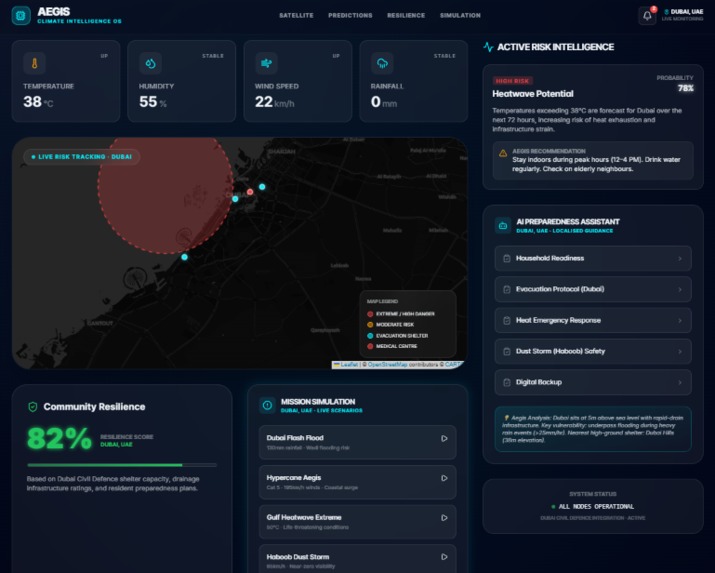
Dashboard Screenshot
-
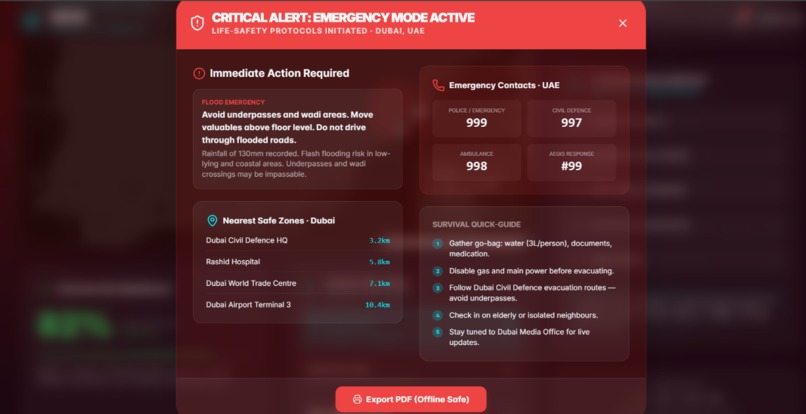
Exemplar Emergency response
-
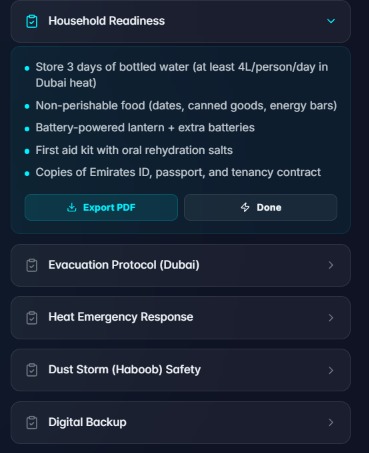
AI Preparedness Assistant
Inspiration
Climate disasters are becoming more frequent and unpredictable, yet millions of people still lack access to fast, understandable, and actionable emergency information. We were inspired by the idea that technology should not just predict disasters, but actively help communities prepare, respond, and stay safe in real time. We wanted to create a platform that combines AI, weather intelligence, and emergency response systems into one unified experience that feels modern, accessible, and genuinely useful during critical situations.
What it does
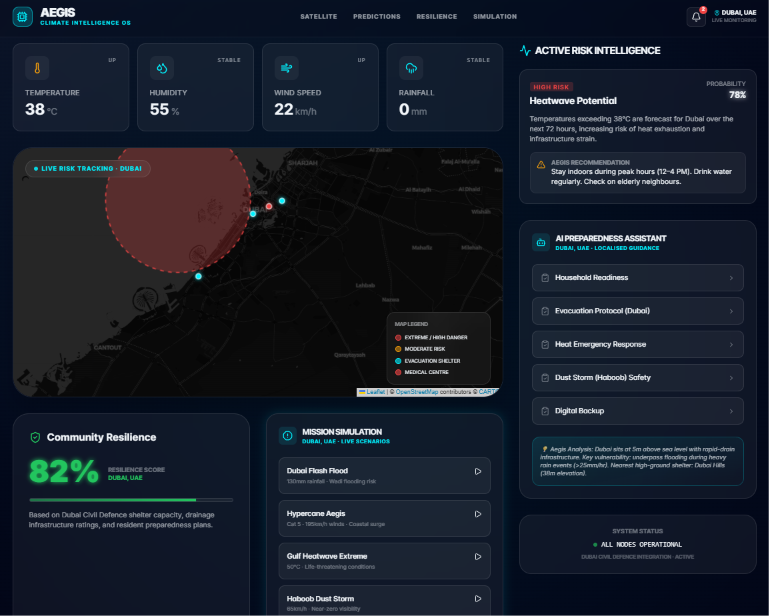
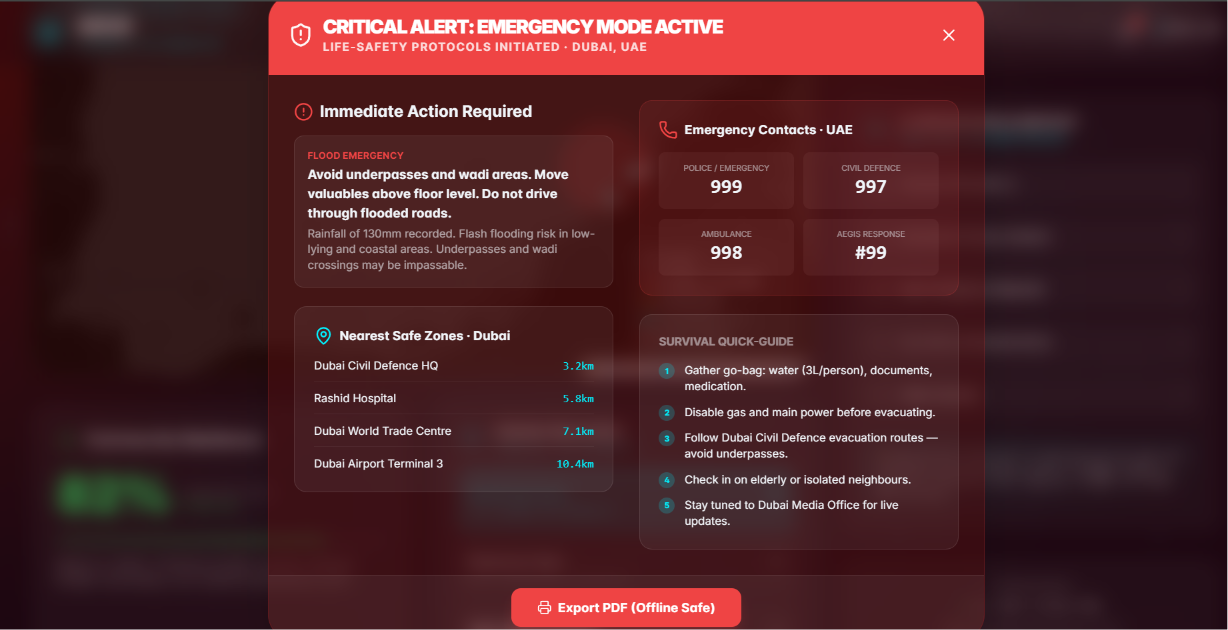
Aegis is an AI-powered climate resilience and disaster response platform designed to help communities predict, prepare for, and respond to extreme weather events.
The platform provides:
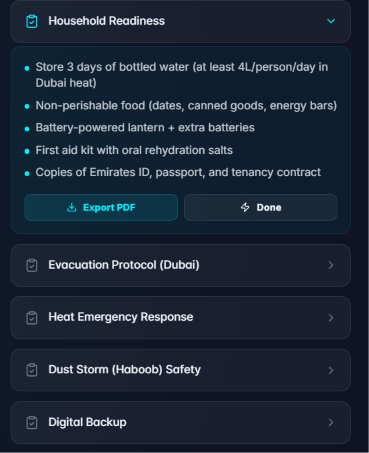
real-time weather intelligence AI-powered disaster risk prediction hyperlocal risk maps emergency preparedness guidance disaster simulation tools offline-ready emergency resources community resilience features AI-generated safety recommendations
Users can explore disaster risks such as floods, cyclones, storms, and heatwaves while receiving actionable preparedness insights and emergency response guidance.
How I built it
I built Aegis using a modern full-stack architecture focused on performance, scalability, and real-time interactivity.
Frontend:
Next.js TypeScript Tailwind CSS Framer Motion shadcn/ui
Backend and APIs:
Next.js API routes AI-powered prediction and recommendation systems Weather data integrations
Visualization and mapping:
Recharts for analytics and graphs Interactive map systems for hyperlocal risk visualization Dynamic simulation and alert interfaces
AI:
Gemini API for intelligent disaster analysis, preparedness recommendations, and emergency explanations fallback simulation logic for demo reliability
I also focused heavily on UX and visual storytelling to make the platform feel intuitive and impactful during emergency scenarios.
Challenges we ran into
One of the biggest challenges was balancing realism with usability. We wanted the disaster prediction and emergency systems to feel intelligent and believable without overwhelming users with technical complexity.
Another challenge was designing simulations that felt dynamic and interactive while still remaining performant in a browser environment. We also spent significant time refining the UI so the platform could transition smoothly between standard monitoring mode and emergency response mode.
Integrating AI-generated insights in a safe, practical, and explainable way was another major challenge, especially when designing preparedness recommendations that felt useful and trustworthy.
Accomplishments that I'm proud of
I am especially proud of:
- Creating dynamic AI-powered disaster simulations
- Designing a hyperlocal emergency response experience
- Developing a meaningful social-impact project with real-world relevance
- Combining AI, mapping, simulations, and weather analytics into one cohesive platform
What we learned
Through building Aegis, I learned:
how to design AI systems responsibly for high-impact situations how to visualize complex environmental and weather data effectively how to create interactive simulations for real-world disaster scenarios the importance of accessibility and clarity in emergency technology how modern frontend technologies can create highly immersive user experiences how AI can support disaster preparedness beyond simple forecasting
Most importantly, I learned that impactful technology is not just about technical complexity — it is about helping people make better decisions when it matters most.
What's next for Aegis
In the future, I want to expand Aegis with:
real-time satellite and radar integrations multilingual emergency support SMS and low-bandwidth alert systems predictive flood spread simulations AI voice emergency guidance live shelter coordination systems accessibility-focused emergency modes community reporting and crowdsourced incident tracking partnerships with local disaster-response organizations
My long-term vision for Aegis is to create an intelligent climate resilience platform that helps vulnerable communities around the world stay safer, more informed, and better prepared.
Built With
- carto
- framer-motion
- html5-geolocation-api
- leaflet.js
- lucide-react
- next.js
- nominatim-api
- tailwind
- typescript
- zustand

Log in or sign up for Devpost to join the conversation.