-
-
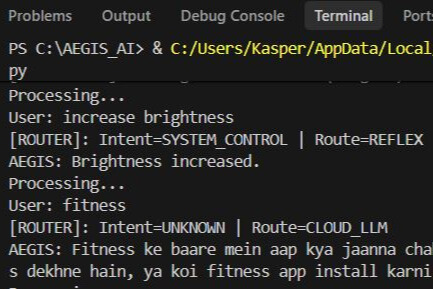
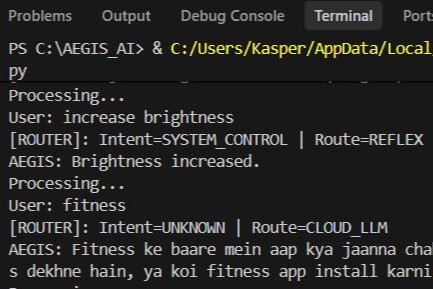
Terminal (The Agentic Brain in Action)
-
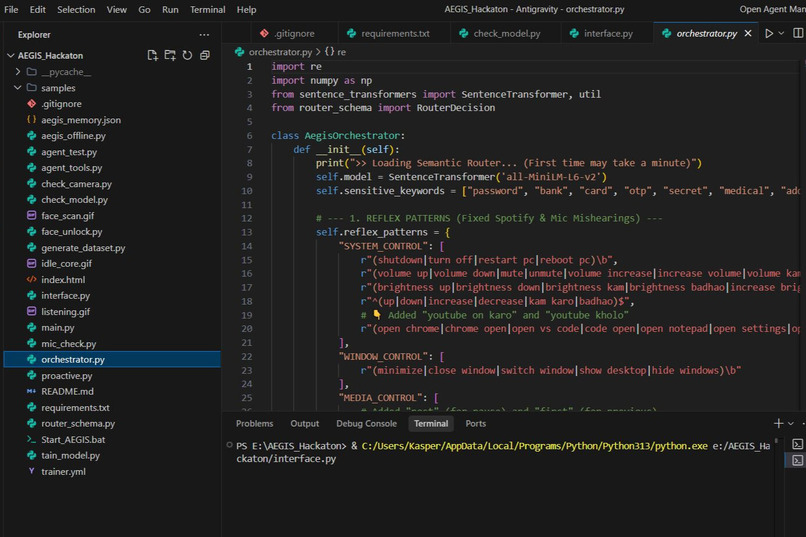
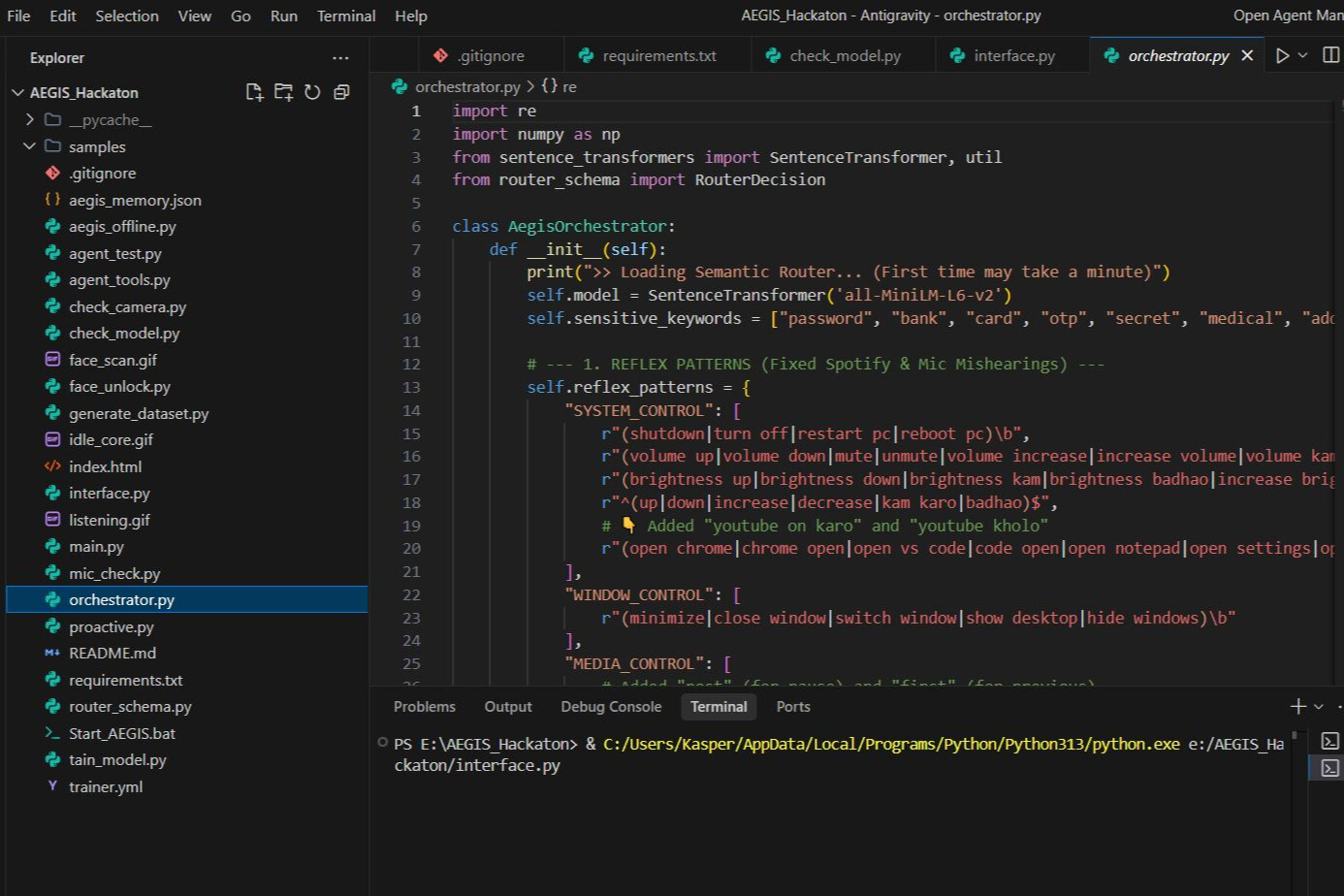
Architecture/Code
-
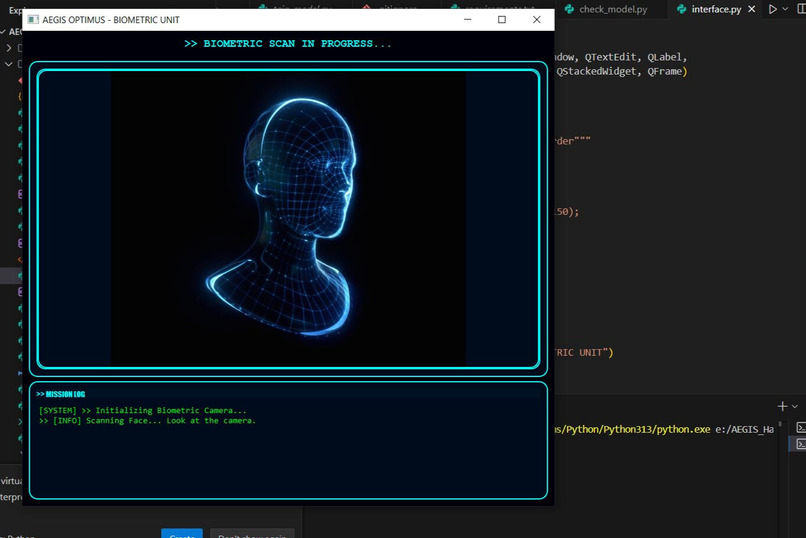
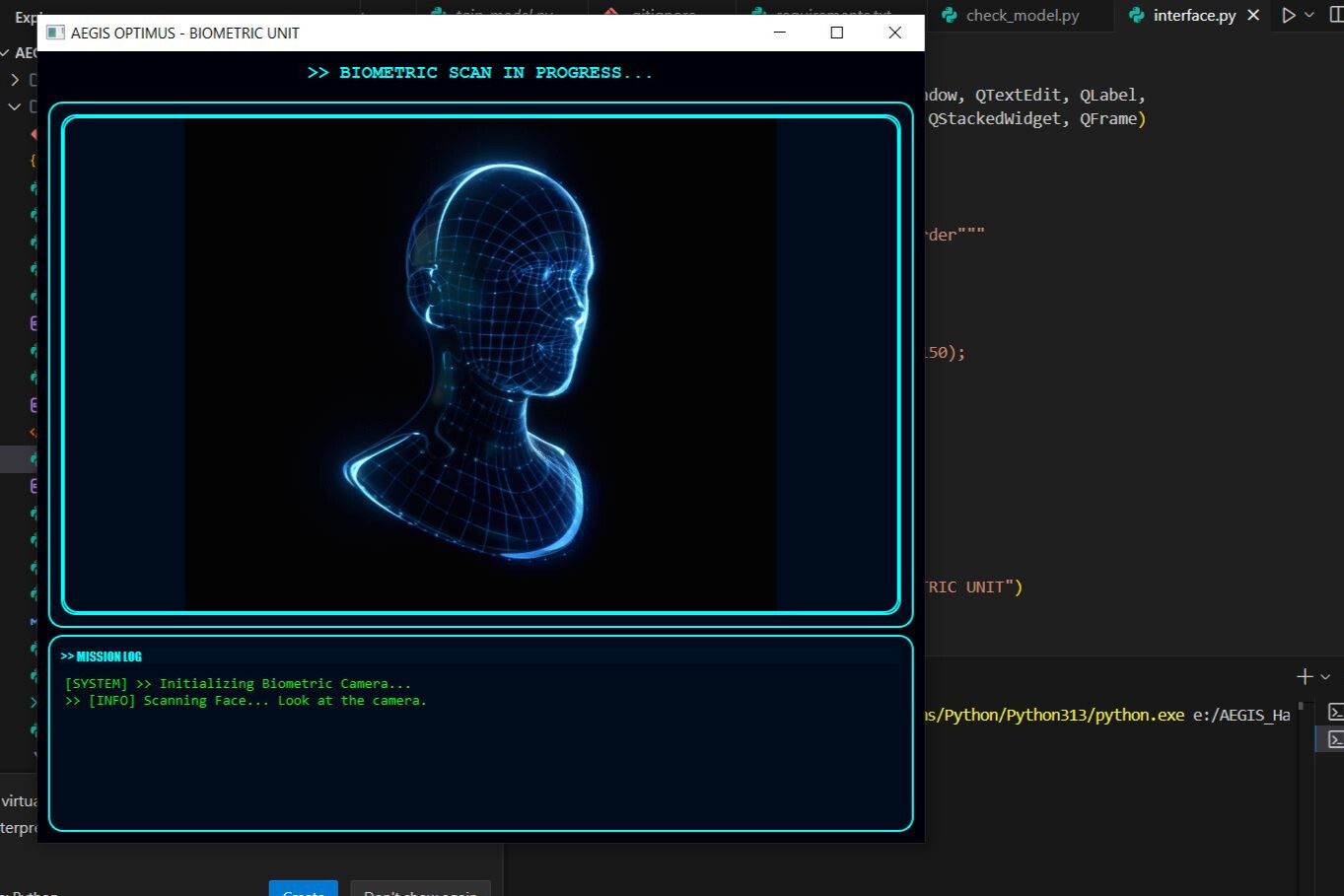
Face Recognition (Biometric Security)
-
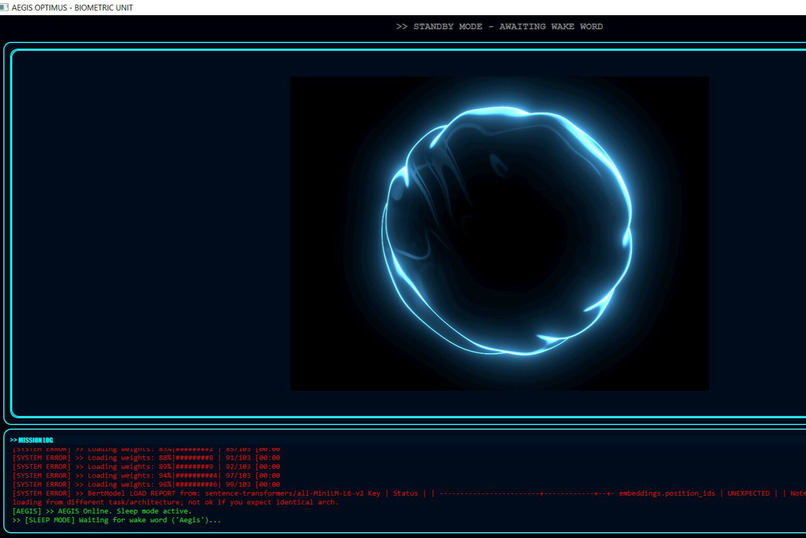
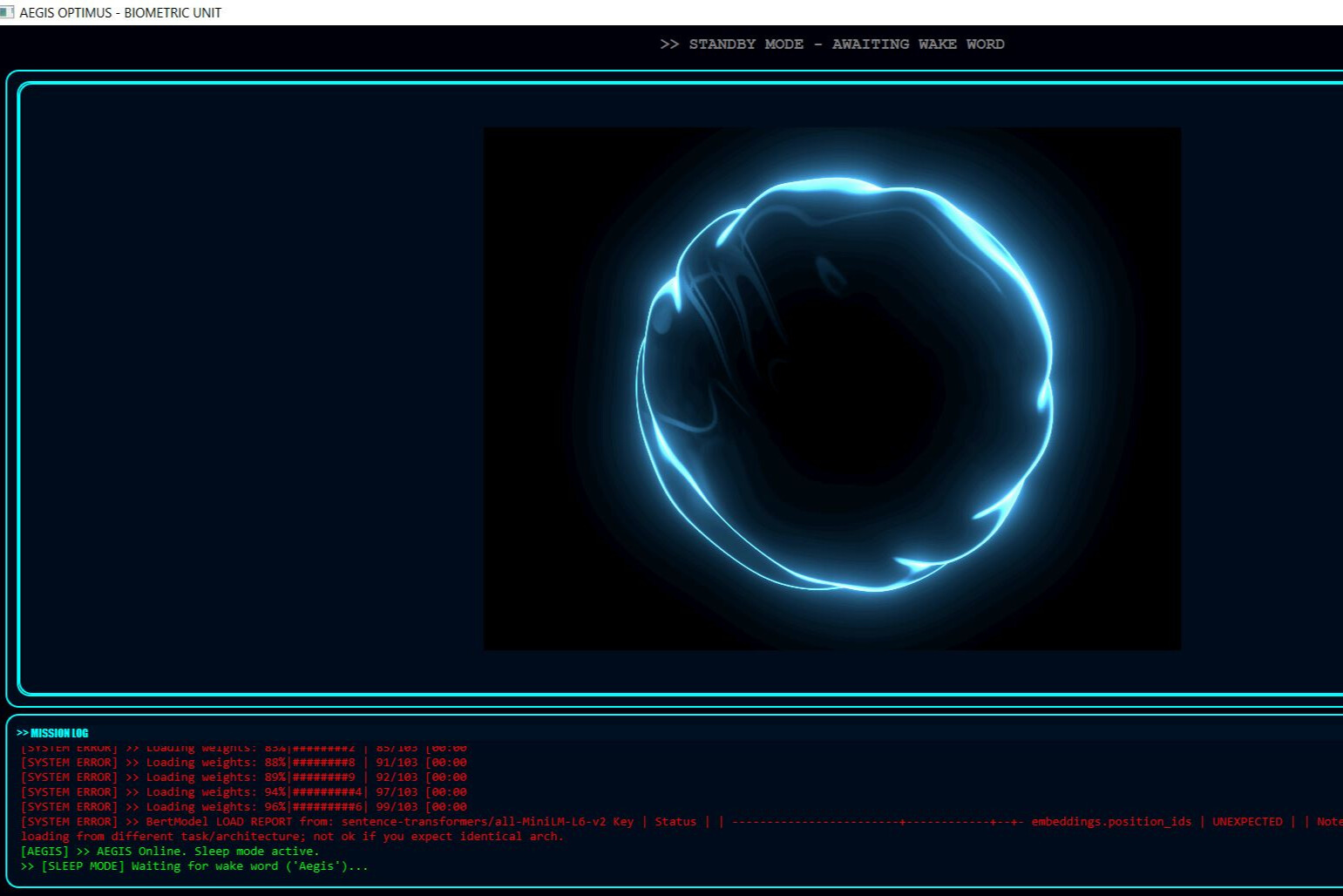
The UI
AEGIS: The Autonomous, Proactive, and Agentic AI Ecosystem
💡 Inspiration
Every developer secretly dreams of building their own J.A.R.V.I.S.—an assistant that doesn't just talk, but actually does things. However, most modern voice assistants suffer from two major flaws: they are entirely reactive (they only act when spoken to) and they lack agentic execution (they can't manage files, write code, or install software on a local machine).
I wanted to bridge this gap. My inspiration was to build AEGIS (Autonomous Ecosystem for General Intelligence & Systems)—an AI companion that continuously monitors system health proactively, routes queries intelligently to ensure data privacy, and utilizes function-calling to take complete control of the desktop environment.
⚙️ How We Built It
AEGIS is built on a highly modular, multi-threaded Python architecture, combining several cutting-edge AI concepts:
- The Biometric & Cybernetic UI: The frontend is built using PyQt5, featuring a dynamic interface with real-time state management (Idle, Face Scan, Listening) and a live "Mission Log" terminal. It runs completely decoupled from the AI backend using
QProcessto prevent UI freezing. - The Semantic Router (The Spinal Cord): Instead of sending every request to a cloud LLM (which introduces latency and privacy risks), AEGIS uses a local
SentenceTransformer(all-MiniLM-L6-v2). When the user speaks, the query is converted into dense vector embeddings. We calculate the cosine similarity against predefined intent vectors:
$$\text{Similarity}(Q, I_k) = \frac{Q \cdot I_k}{||Q|| \times ||I_k||}$$
If the confidence score exceeds our threshold ($S_c \ge 0.25$), the query is routed to instant local Python reflexes (for volume, brightness, app launching). If it's a complex task, it is escalated to the Agentic Brain.
- The Proactive Monitor: A daemon background thread uses
psutilto continuously monitor CPU load, RAM usage, battery levels, and screen time. It features a collision-avoidance system (IS_BUSYflag) so it never interrupts the user while they are speaking, proactively warning them if the battery drops below 20% or if they've been working without a break. - The Agentic Brain (Function Calling): For complex tasks, AEGIS uses the Gemini API powered by native Function Calling. It translates natural language ("Create a python file with a hello world script and open it in VS Code") into structured JSON arguments, triggering custom Python tools that utilize
subprocess.Popenandwingetto manipulate files, control the browser, and even install new software silently. - Hybrid Memory: A localized RAG (Retrieval-Augmented Generation) system utilizing a JSON ledger and an offline LLM to store and retrieve personal user facts without sending sensitive data to the cloud.
🚧 Challenges We Faced
Building an autonomous system that interacts with the OS layer came with intense debugging sessions:
- The Infinite Loop Collision: Running an infinite continuous listening loop (
speech_recognition) alongside a PyQt5 event loop caused severe system hangs. We overcame this by isolating the AI core script and piping itsstdoutdirectly into the UI's log frame asynchronously. - The "Electron ICU" Bug: When using the Agentic LLM to dynamically create files and open them in VS Code via
os.system(), Python inadvertently shared its environment variables, causing a fatal Invalid file descriptor to ICU data crash in VS Code. We solved this by refactoring our execution tools to usesubprocess.Popenwith detached shells. - Speech Misinterpretation vs. Execution: Natural language can be messy. The system initially confused phrases like "Pause video" with "Post video". We engineered robust regex fallback patterns and an intent-escalation protocol to ensure the LLM could interpret context when the local regex failed.
🧠 What We Learned
This project was a masterclass in advanced Python engineering. Key takeaways include:
- Mastering Function Calling / Agentic AI workflow, turning LLMs from text-generators into action-takers.
- Implementing Semantic Routing to save API costs, reduce latency to milliseconds for basic tasks, and protect user privacy.
- Handling Asynchronous Multi-threading and
QProcesscommunication to keep graphical interfaces buttery smooth while heavy machine learning models load weights in the background. - Low-level Windows OS manipulation using
subprocess,pyautogui, andpsutil.
🚀 What's Next for AEGIS
- Headless Browser Agents: Integrating Playwright so AEGIS can silently navigate the web, fill forms, and scrape data without opening a visible browser window.
- Advanced Memory Graphs: Upgrading the JSON memory to a local Vector Database (like ChromaDB) for infinite, contextual long-term memory.
- IoT Integration: Connecting AEGIS to local smart home devices to turn off the lights when it detects the user has put the PC to sleep.
Built With
- antigravity
- geminiapi
- os
- psutil
- pyautogui
- pyqt5
- python
- pyttsx3
- pywhatkit
- sentencetransformers
- speechrecognition
- subprocess
- webbrowser
- winget


Log in or sign up for Devpost to join the conversation.