-
-
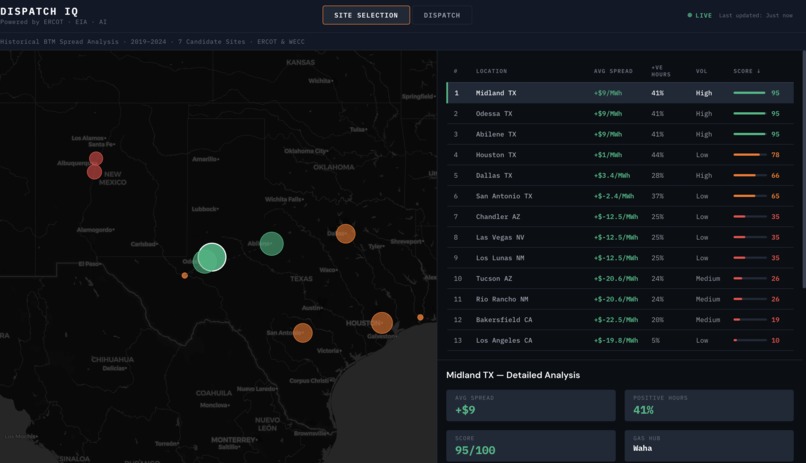
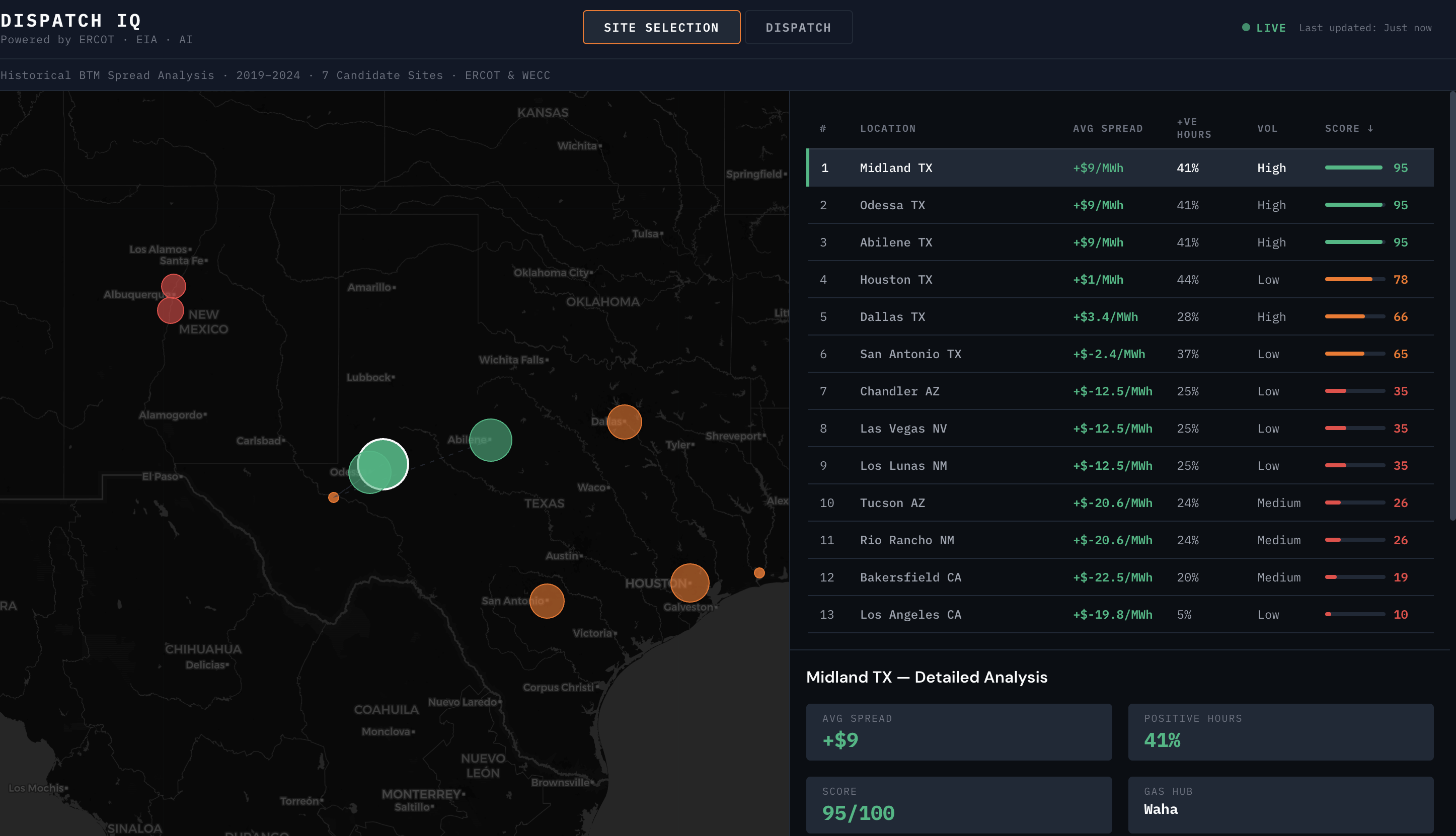
shows ranking of different regions where energy for data centers are profitable or in loss
-
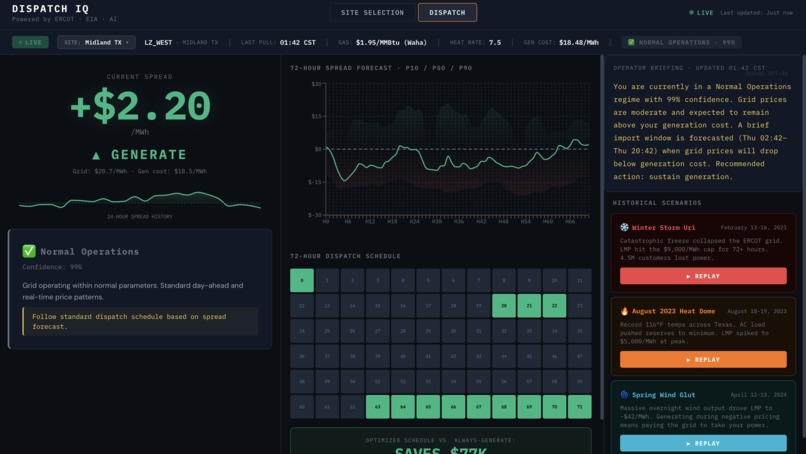
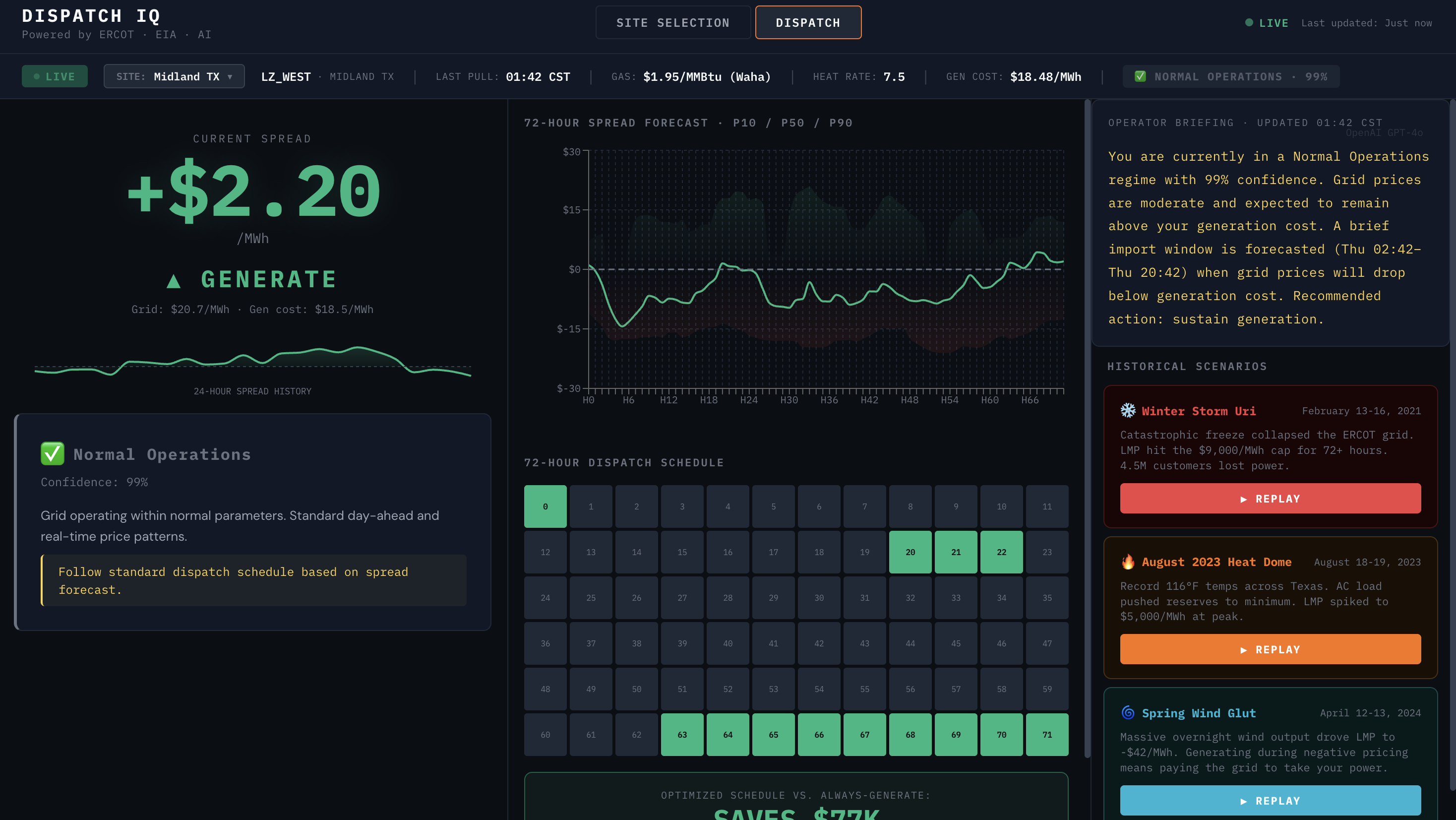
showing particular regions if they are generating on site energy(green) or importing from grid(red shown in next image)
-
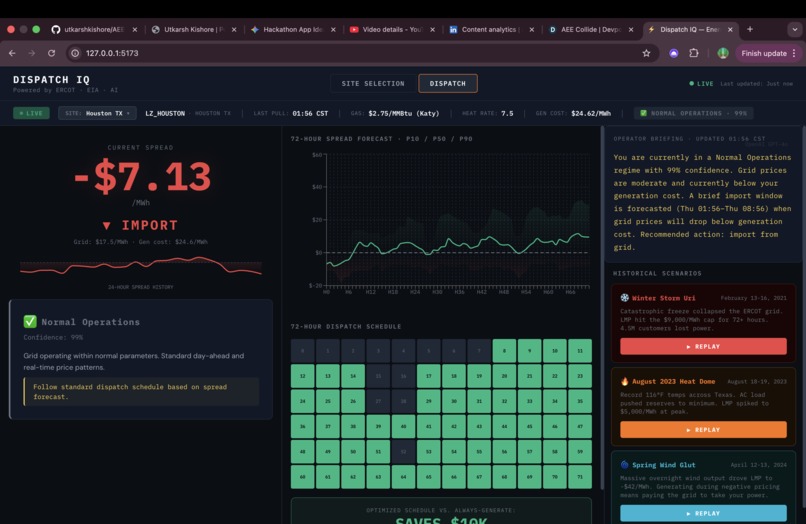
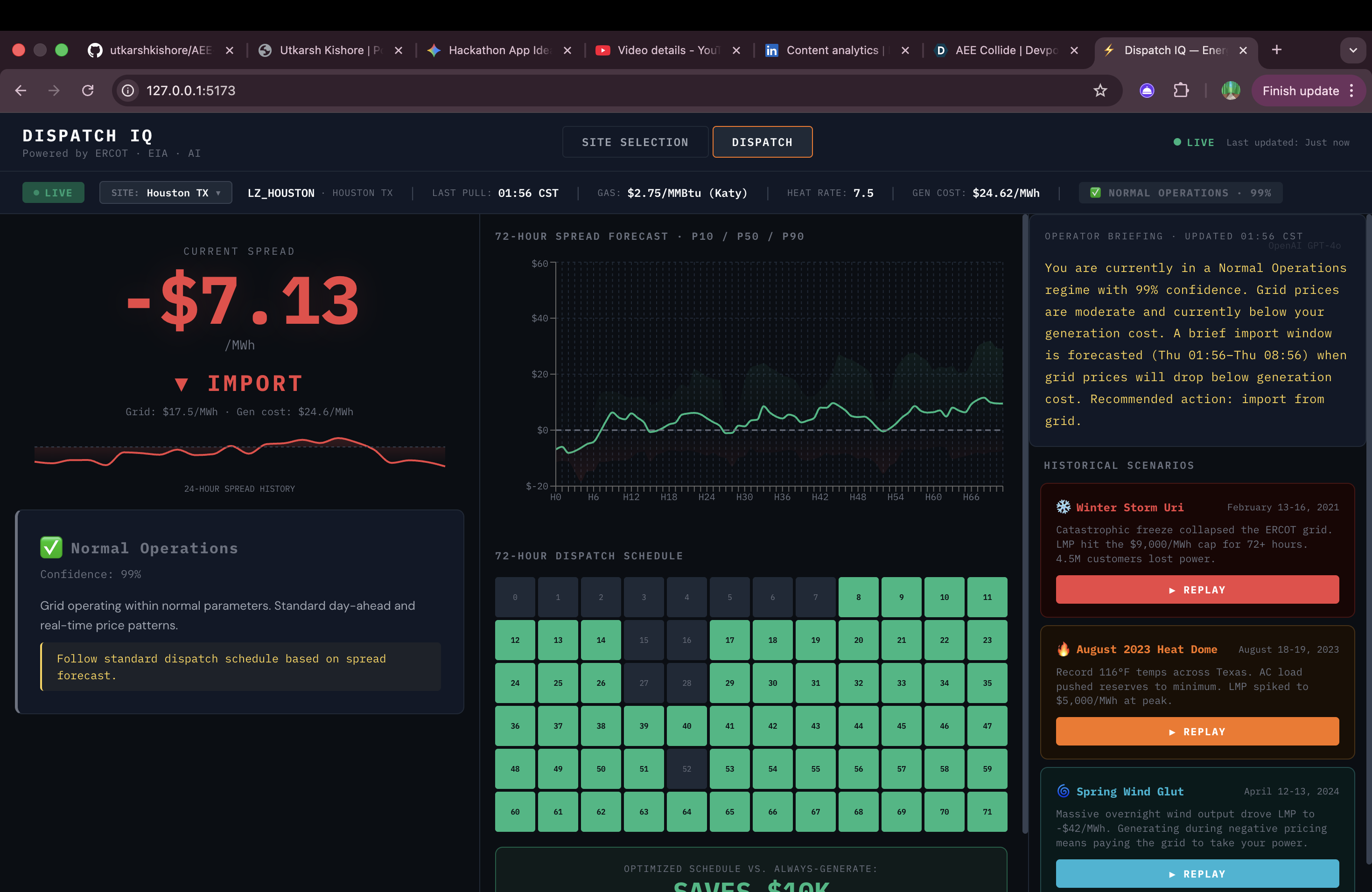
Showing loss which means importing energy from grid
Inspiration
Energy decisions move fast, but the data is scattered and hard to trust. We were inspired by operators who must balance price, reliability, weather, and constraints under pressure. AEE Collide is our attempt to turn noisy grid and market signals into clear, actionable guidance. We wanted a tool that feels like a co-pilot, not another dashboard for everyone, from analysts to dispatchers, during critical moments.
What it does
AEE Collide shows where to dispatch energy and why. It pulls live-style market signals, ranks sites, and forecasts spreads with uncertainty bands. You can explore scenarios, replay conditions, and see regime changes that shift strategy. A brief AI summary highlights the main drivers and risks in plain language. The goal is faster, more confident decisions with fewer tabs open for teams managing volatility across markets.
How we built it
We built a Python backend that collects data, computes spreads, detects regimes, and runs forecasting models. It exposes simple API routes for sites, dispatch guidance, and replay. The frontend is a React app that renders maps, tables, charts, and a dispatch war-room view. We packaged datasets and model artifacts so the demo runs predictably and quickly using reusable services, clean components, and a focused UX.
Challenges we ran into
Energy data is messy: missing points, changing formats, and different assumptions across markets. Making “real-time” feel responsive while staying stable was tricky. We also had to balance accuracy with explainability, so users understand what a forecast means. Finally, we worked to keep the UI simple, even when the underlying logic is complex and probabilistic. Debugging edge cases, validating outputs, and tuning models took more time.
Accomplishments that we're proud of
We’re proud we shipped an end-to-end product, not just a model. The backend, data pipeline, and ML pieces connect to a UI that people can actually use. Forecasts include uncertainty, scenarios are replayable, and site rankings are visible and debuggable. The AI briefing turns charts into a clear story. It feels cohesive, fast, and demo-ready. Most importantly, it helps decide actions, not just show information.
What we learned
We learned that trust beats novelty. Users want to know the source, the uncertainty, and the “why” behind a recommendation. Small UX choices—labels, defaults, and sane filters—matter as much as model choice. We also learned to build for iteration: clear services, test scripts, and replay make debugging faster. When time is short, clarity wins. Pairing data science with product thinking made the system usable today.
What's next for AEE Collide
Next, we’ll add more markets, more sites, and fresher live integrations. We want continuous retraining, better calibration, and alerts when conditions flip. We’ll improve explainability with driver breakdowns and “what changed” notes. Longer term, we’ll integrate with real dispatch workflows: permissions, audit logs, and handoff to scheduling tools. The aim is production reliability, not just demos with strong monitoring, cost controls, and human override options.
Built With
- api
- caiso-api
- eia-api
- ercot
- fastapi
- javascript
- node.js
- npm
- numpy
- pandas
- parquet
- pickle
- python
- react
- rest-apis
- scikit-learn
- uvicorn
- vite
- xgboost

Log in or sign up for Devpost to join the conversation.