-
-
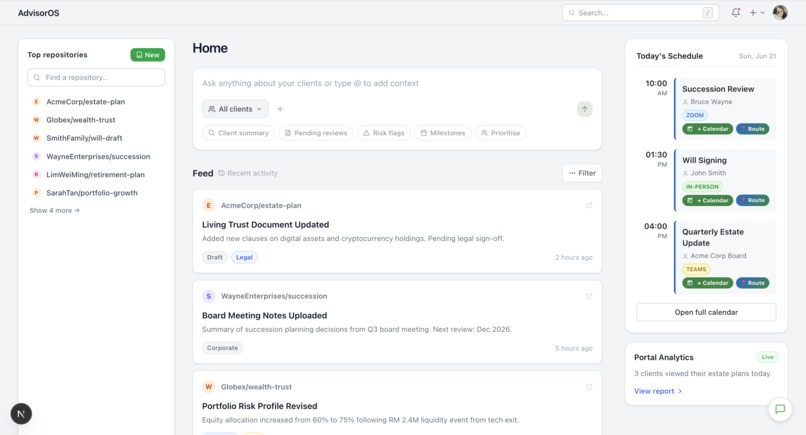
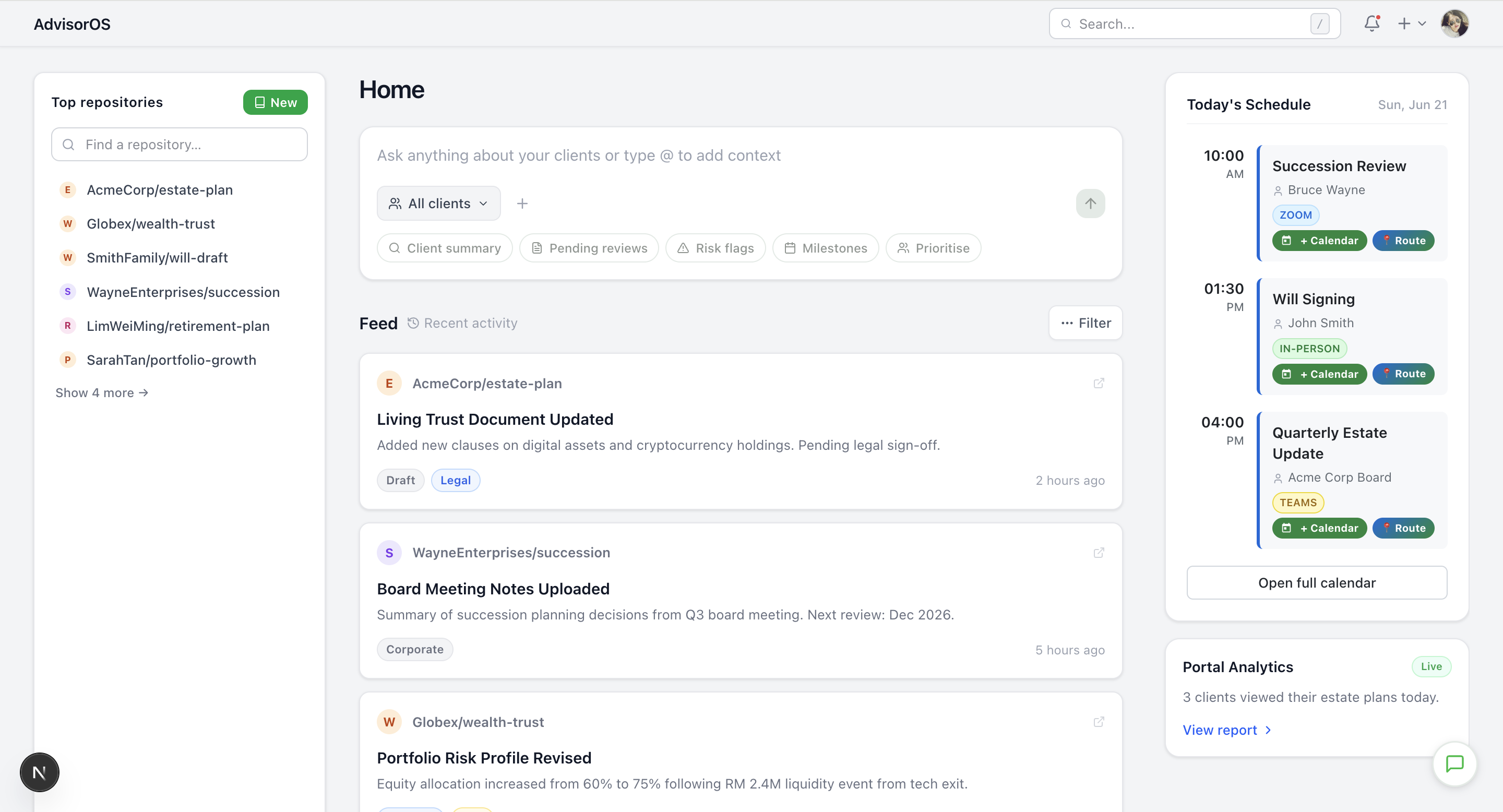
Dashboard: Central hub with client repos, activity feed, and a schedule linked to Google Calendar & Maps for instant reminders and routing.
-
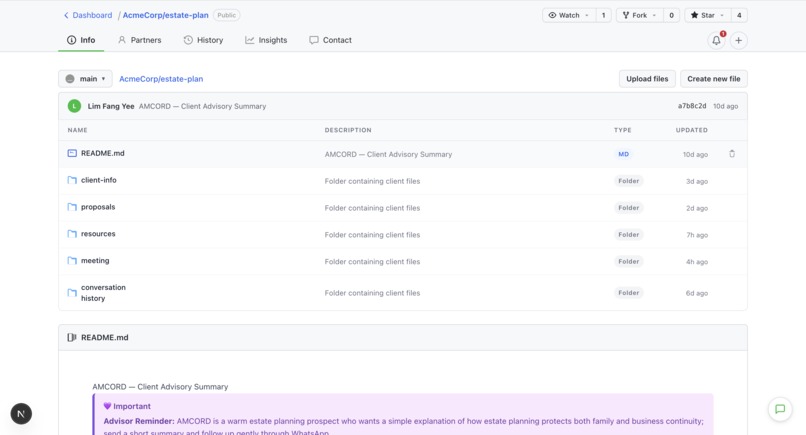
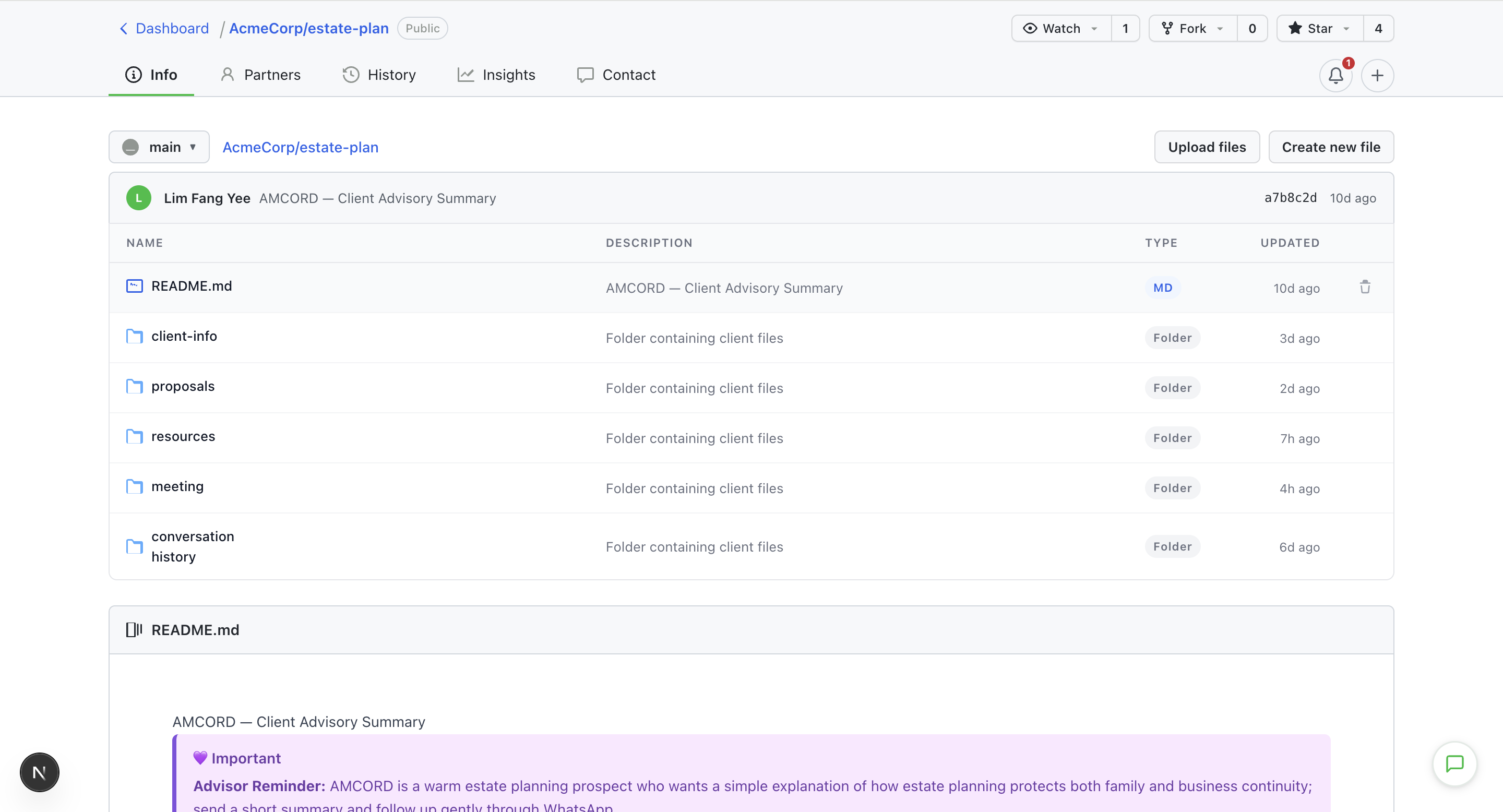
Client Repository: A file manager that organizes client proposals, notes, and history into clean folders with a quick Markdown summary.
-
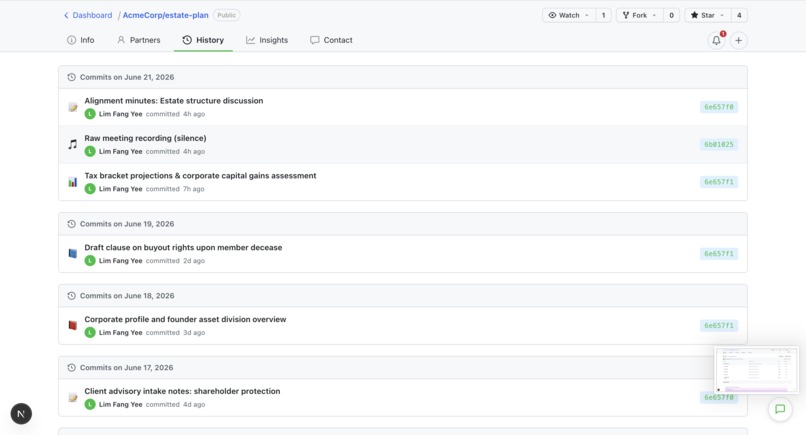
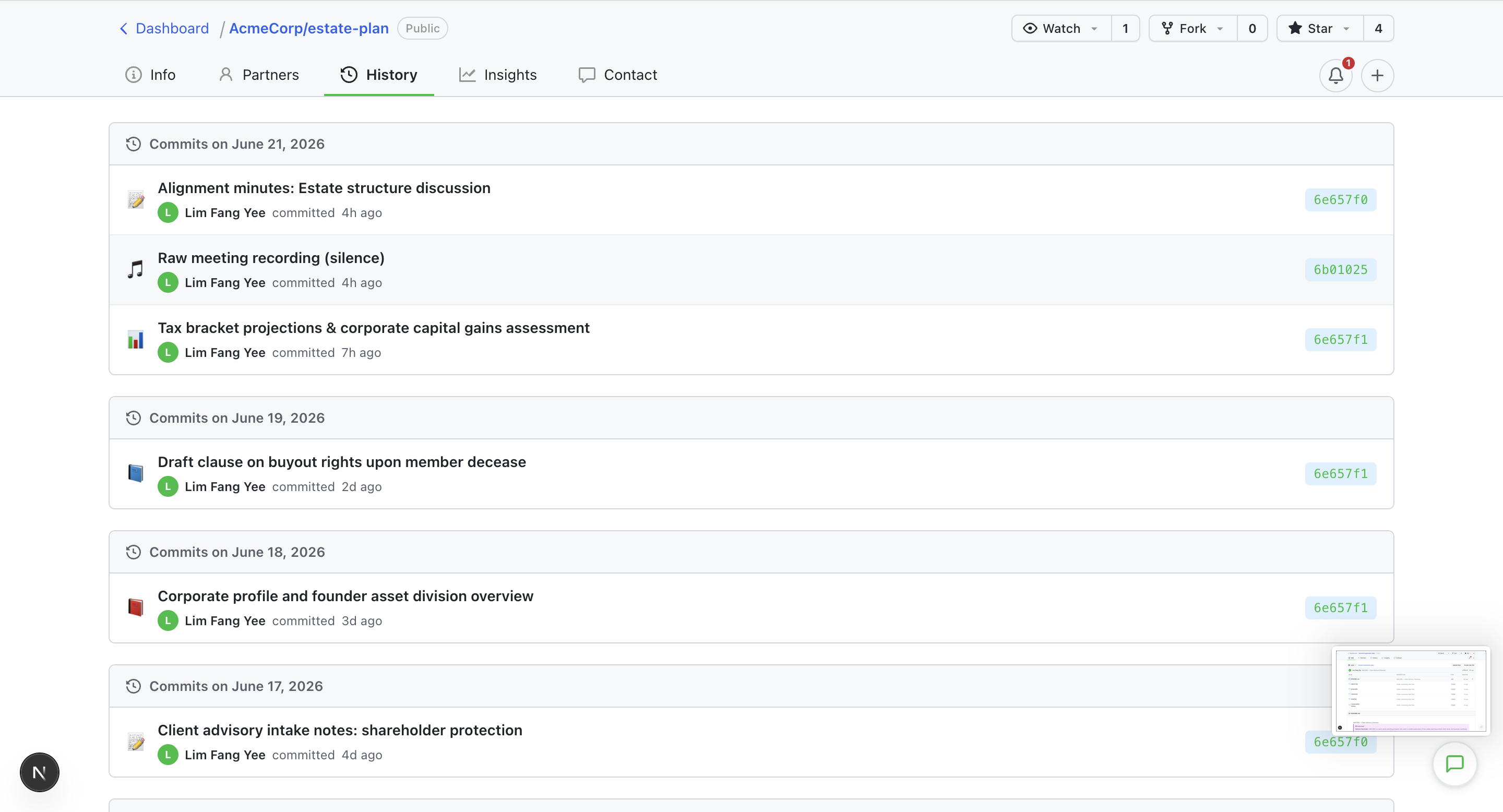
Like software development, every update is logged as a "commit," creating a transparent, immutable ledger of what was done and when.
-
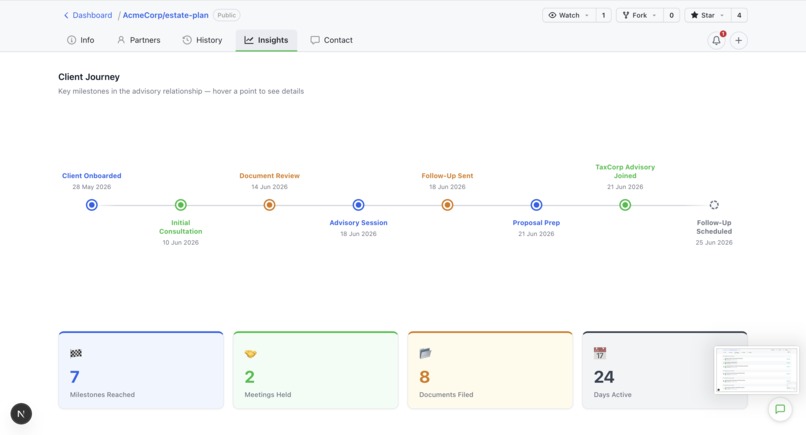
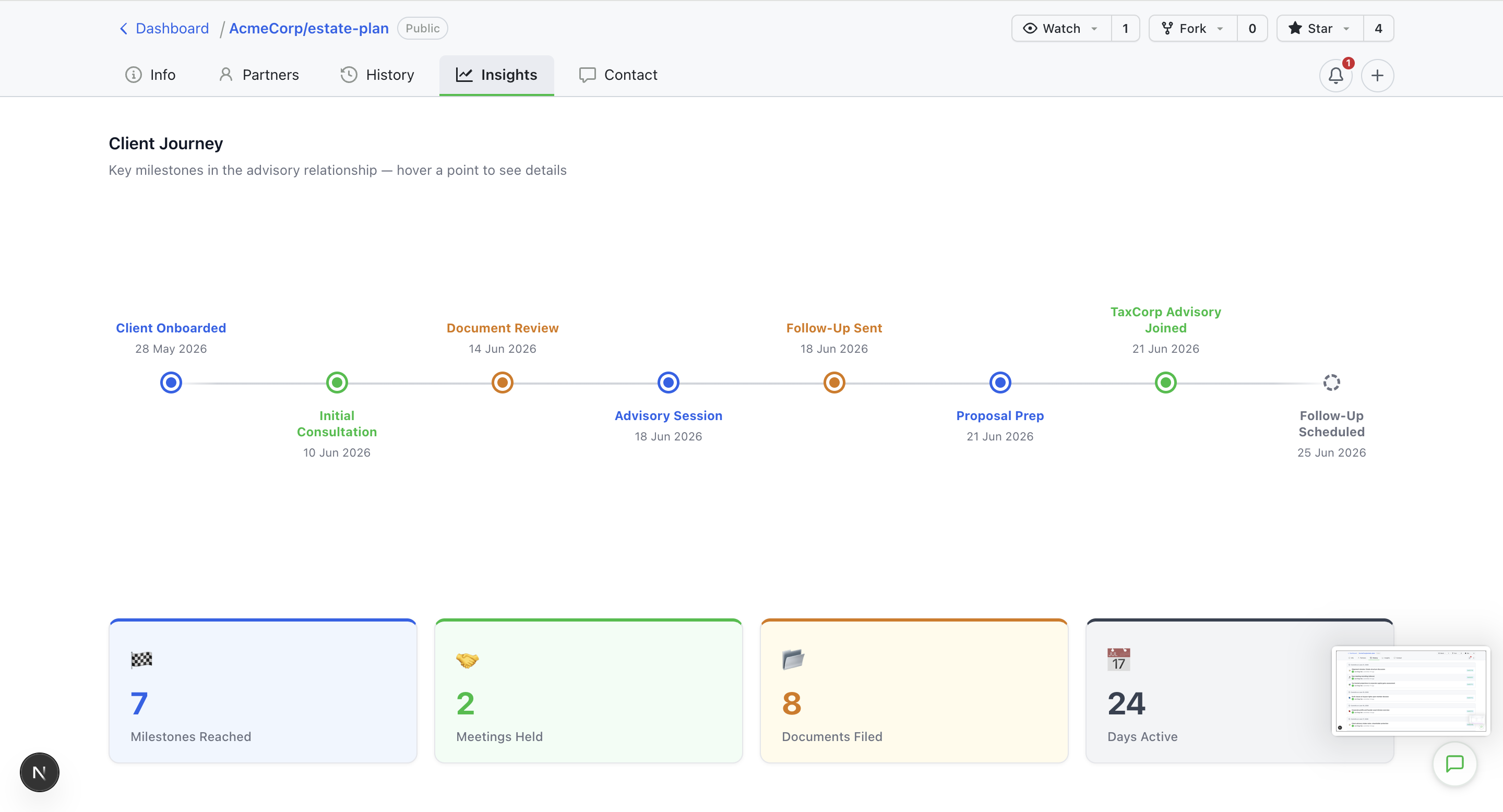
A chronological history tab that visualizes the client's entire journey, tracking milestones and documents for long-term visibility.
-
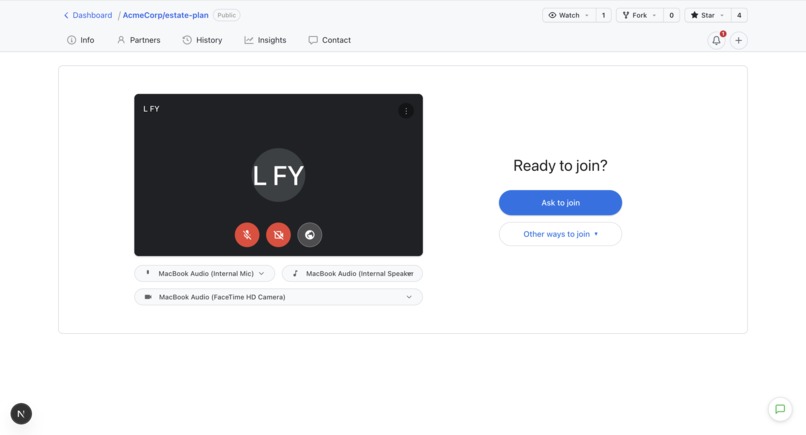
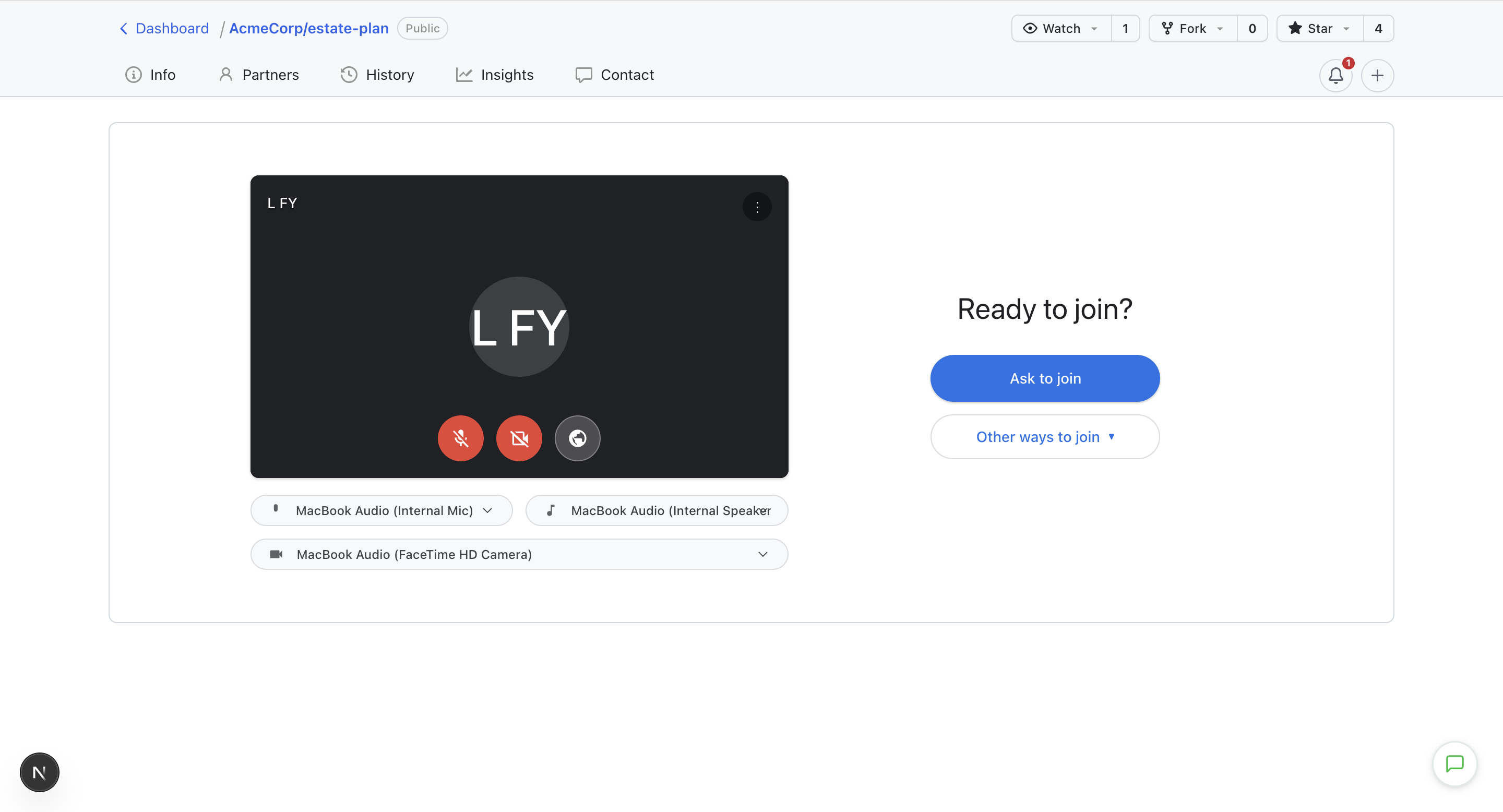
Direct integration to create and join virtual meetings like Google Meet or Zoom straight from the client’s workspace seamlessly.
-
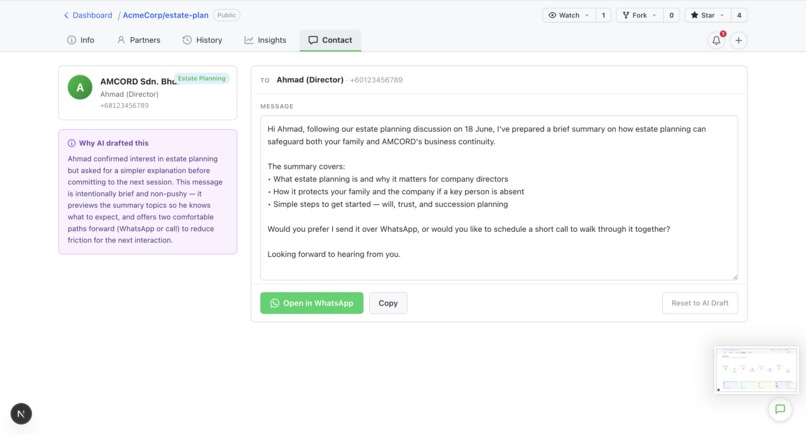
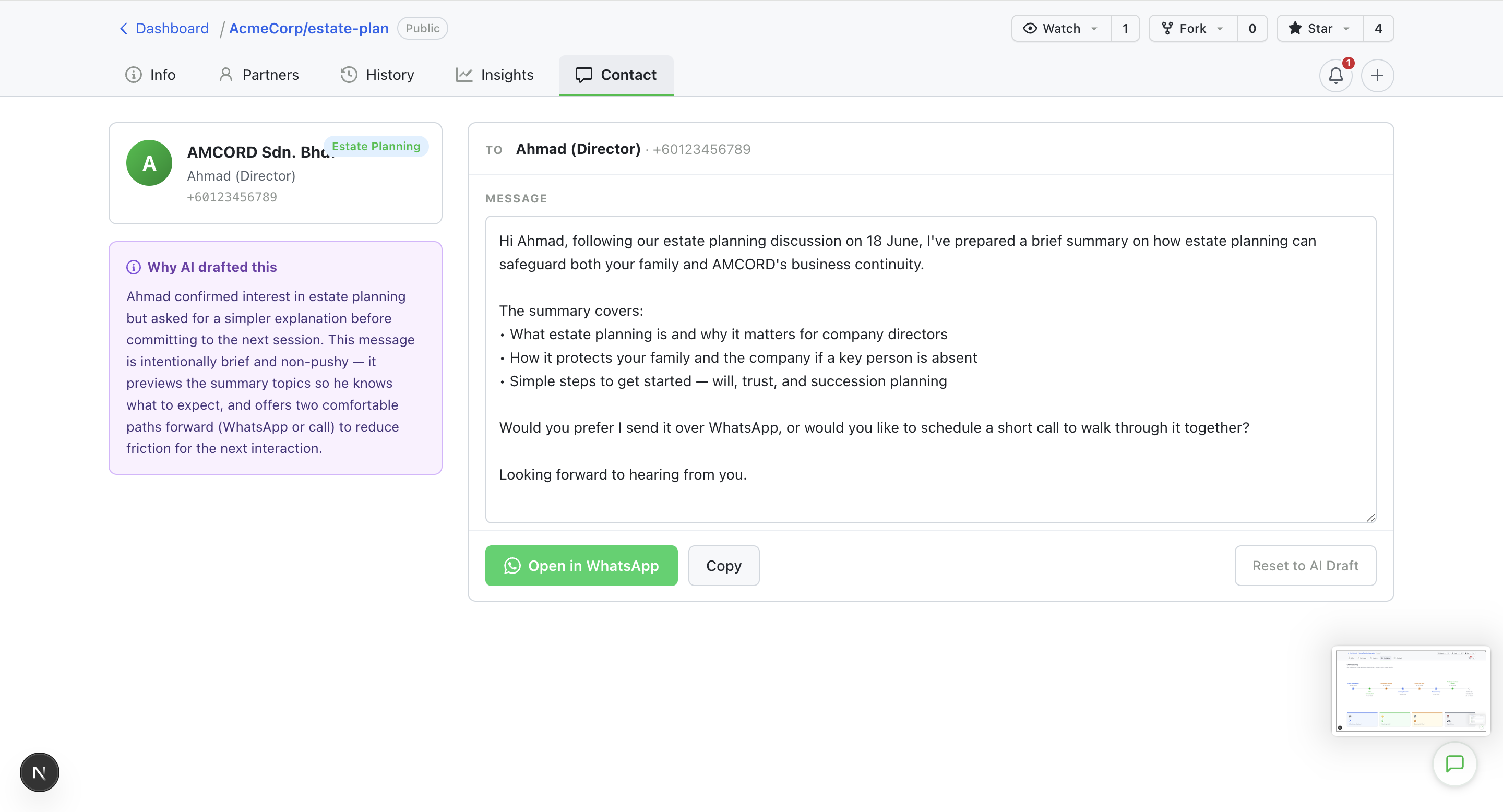
Securely message clients via WhatsApp. Conversations pass through PII redaction and are stored in the client's repo as AI context.
-
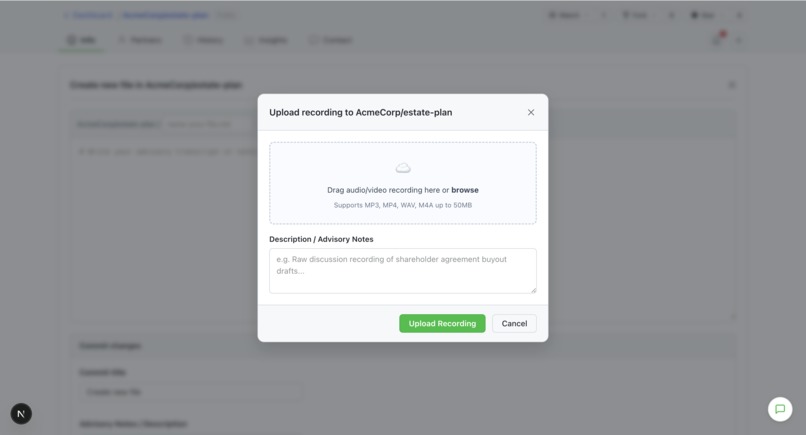
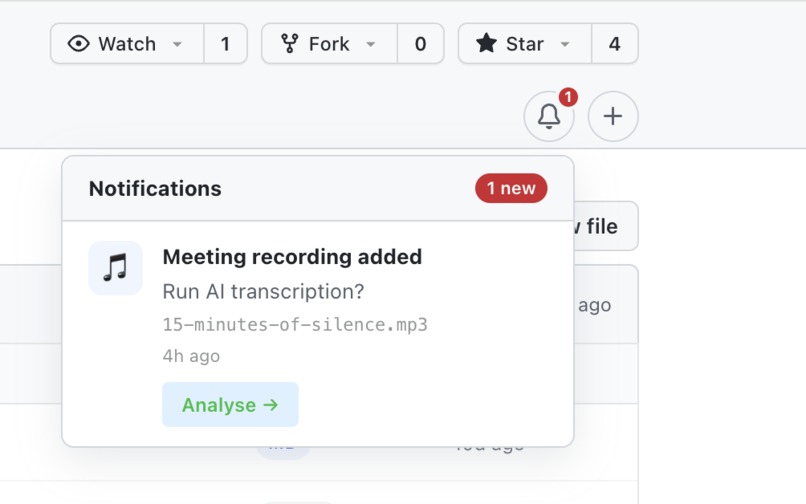
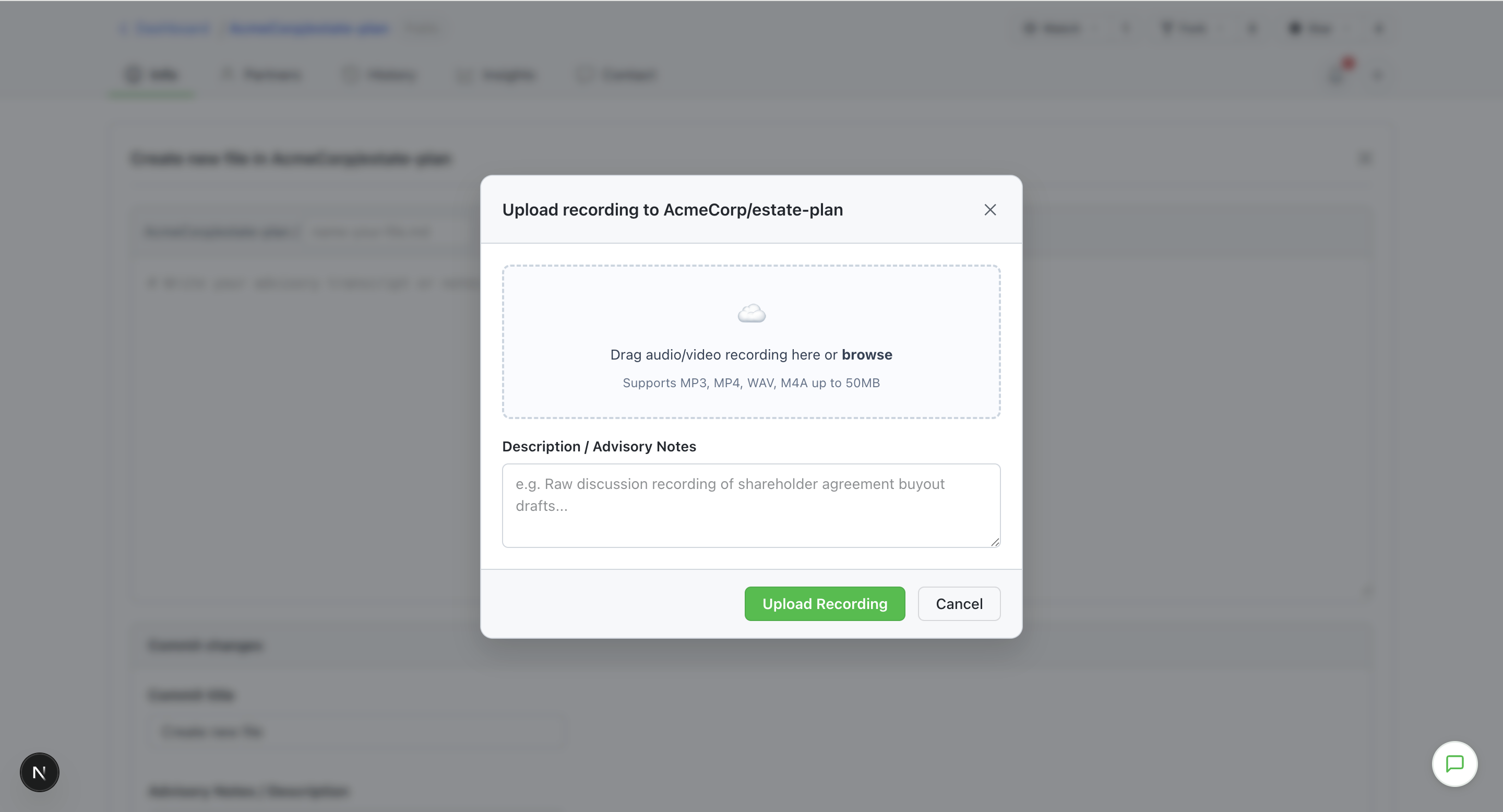
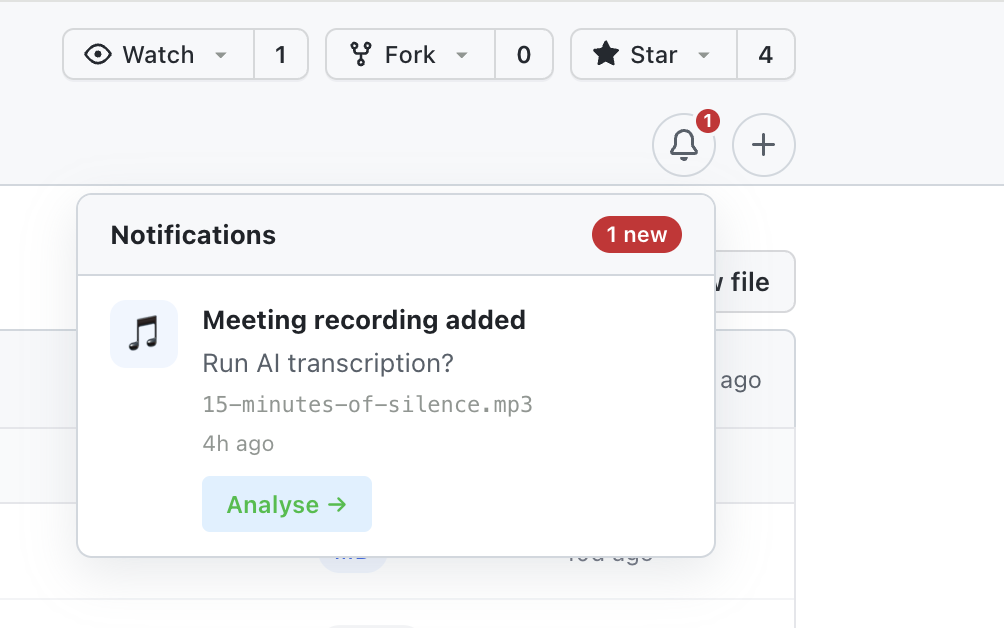
Drag-and-drop interface to upload meeting recordings. The system processes media automatically to generate searchable text transcripts.
-
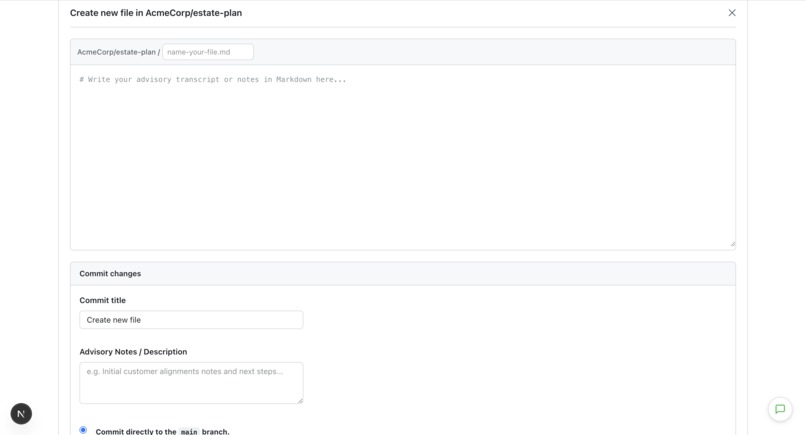
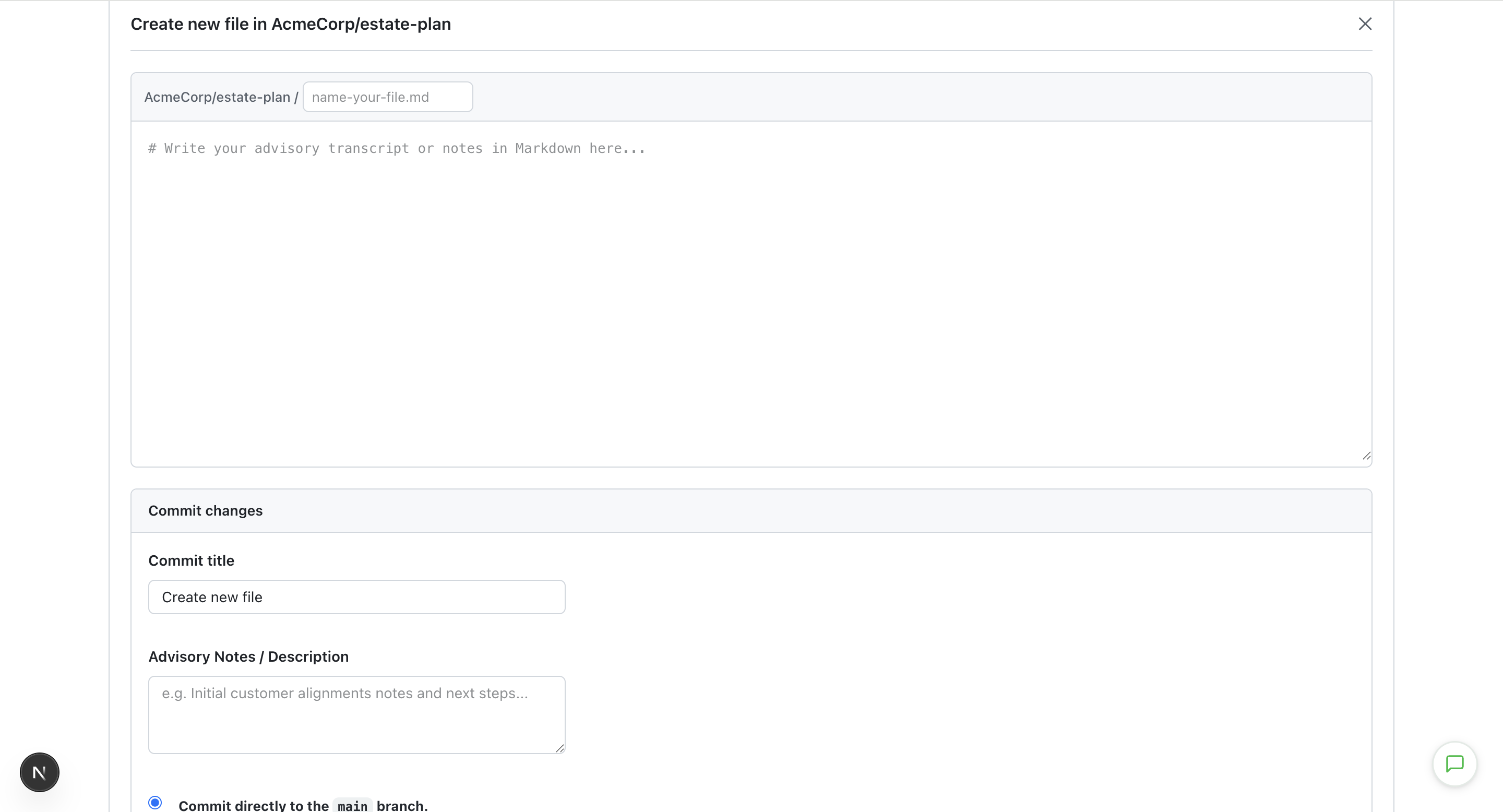
An inline editor to natively create documents, draft proposals, or update notes. Saving automatically commits changes to the repo.
-
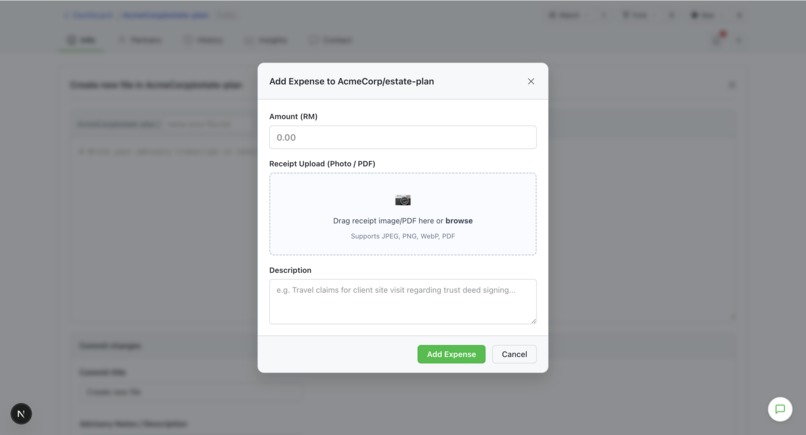
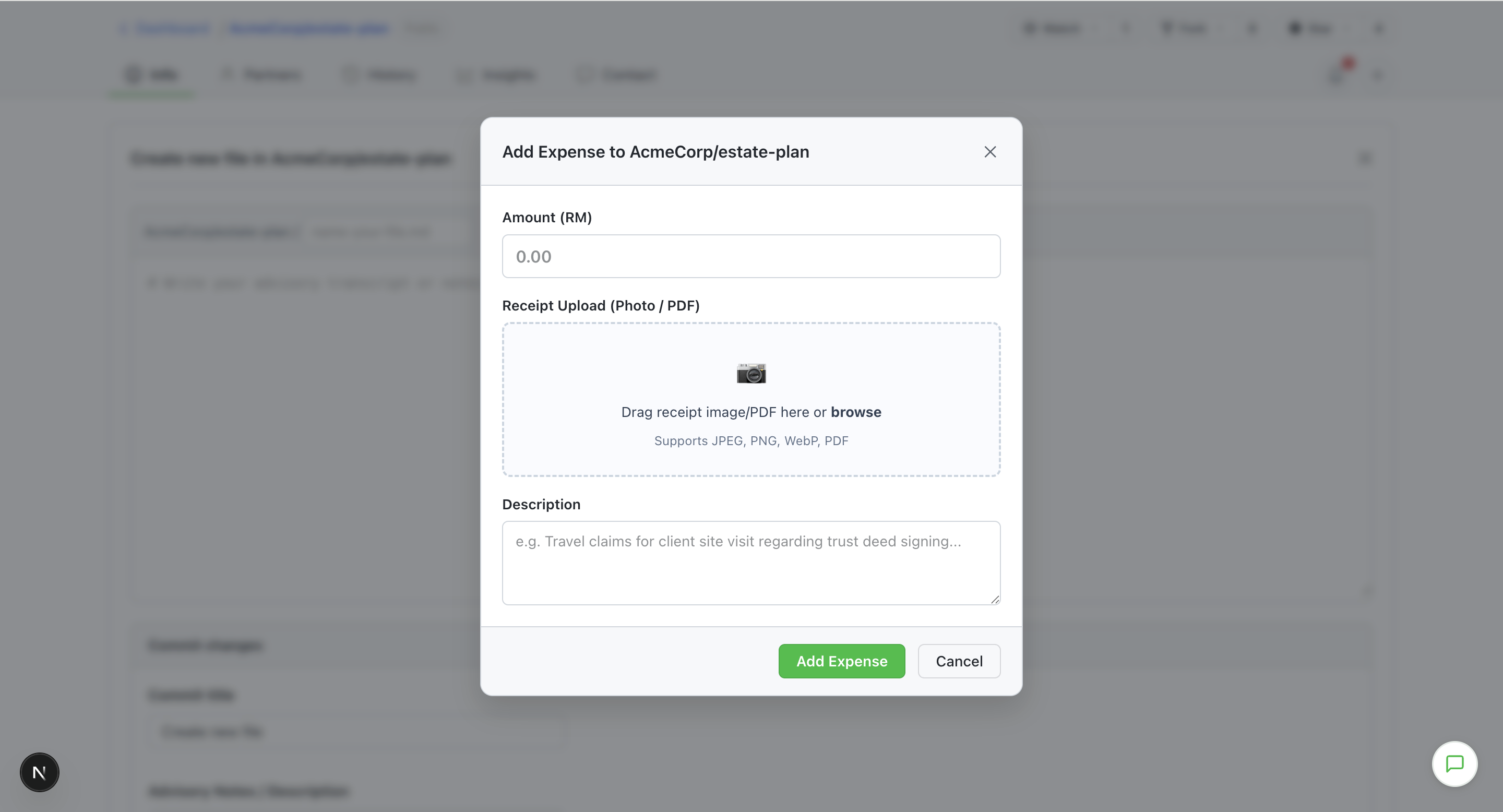
Easily log meeting expenses (like coffee or meals) directly in the client workspace to simplify company reimbursement claims.
-
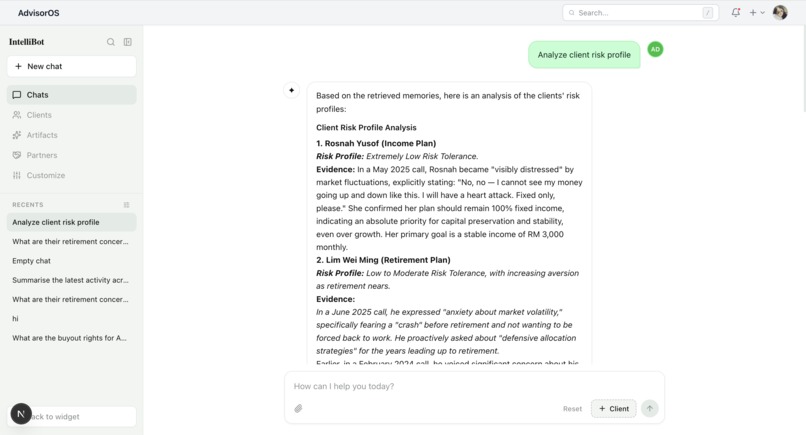
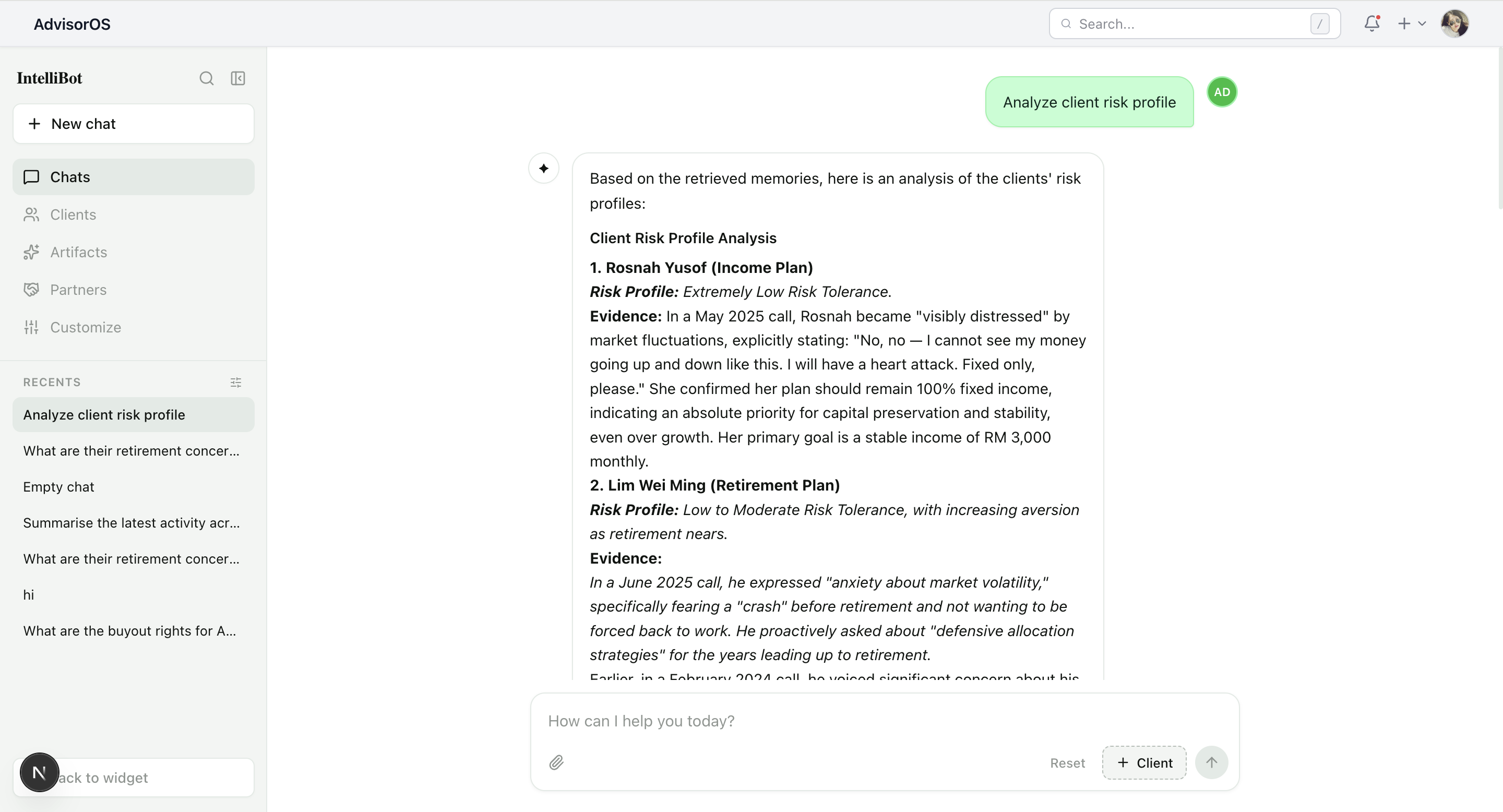
Intellibot: A RAG-backed AI assistant. Ask questions to surface past insights and analyze uploaded proposals for suggestions.
-
An inline editor to natively create documents, draft proposals, or update notes. Saving automatically commits changes to the repo.
Inspiration
While observing the financial advisory industry, we noticed that many advisors struggled to keep up with managing client information, which is often distributed across WhatsApp, phone calls, handwritten notes, and disjointed CRM systems. These scattered data sources often led to repetitive admin work like meeting scheduling, note-taking, and follow-up tracking.
Through discussions with professionals, we identified a key issue: long-term client journeys lack visibility. The inability to easily access a client's historical context impacts the advisor's ability to provide proactive, personalized financial advice.
This inspired us to create a solution that empowers advisors by treating every client as a structured, living repository, similar to how developers use GitHub, bringing order and AI-driven intelligence to wealth management.
What it does
AdvisorOS is an AI-powered advisory operating system designed specifically for financial advisors. It acts as a centralized repository that groups client conversations, documents, and history, transforming scattered data into a clear, searchable, and distraction-free workspace.
The platform includes features such as a VS Code-style file manager, a transparent visual timeline for tracking client milestones, and Intellibot—a RAG-powered AI assistant. Intellibot automates meeting preparation, follow-ups, and administrative tasks, while allowing advisors to seamlessly recall insights from years of client history. AdvisorOS not only boosts productivity but also helps foster deeper, more informed client relationships.
How we built it
AdvisorOS is built using a modern web stack with a focus on seamless document management, AI integration, and a clean, GitHub-inspired user experience.
a) Frontend: Developed with Next.js 16 and React 19 for a fast, structured application. We used Tailwind CSS v4 and styled-jsx to create a responsive, document-like UI that features complex elements like a tabbed file viewer, inline editors, and collapsible sidebars.
b) Backend & Storage: Powered by Supabase Storage, which serves as our core file system (bucket: Advisor_OS). We established a unique folder-based hierarchy containing global context (CLAUDE.md, MEMORY.md), a /Playbook for advisor skills, and dedicated client folders.
c) AI Processing & Architecture: We integrated Google Gemini 2.0 Flash for conversational reasoning and Gemini Embedding 001 for document vectorization. We built a custom document parser to ingest unstructured data and implemented a semantic search engine using cosine similarity to match advisor questions with relevant client history. Additionally, we designed an architecture to ingest WhatsApp communications through a PII Redaction layer before passing the data to Intellibot, which can trigger downstream actions via Google Maps and Google Calendar.
Challenges we ran into
One of the main challenges was balancing the power of a desktop-grade file manager with browser constraints. Emulating a VS Code-style tree view and tabbed workspace required complex React state management to handle drag-and-drop uploads and inline file editing without breaking the clean design system.
We also faced technical challenges in ensuring our RAG pipeline returned highly accurate, grounded responses. This required careful text chunking of unstructured financial documents and fine-tuning the prompt context so the LLM wouldn't hallucinate sensitive client details.
Finally, while we successfully implemented our core backend using Supabase, we found that deploying and properly configuring the Supabase infrastructure was a major limitation. Setting up the environment, configuring storage buckets, and managing database schemas proved to be surprisingly time-consuming, eating into valuable development time during the fast-paced hackathon. Compounding this, designing a secure data flow was complex; processing WhatsApp chats and financial documents required implementing robust PII redaction before any data could hit the AI models or our vector store.
Accomplishments that we're proud of
We successfully created a completely novel approach to CRM software by mapping the paradigms of software development, including repositories, file trees, and markdown memory, to wealth management.
Our integration of a fully functional, custom-built RAG pipeline natively understands a folder-based hierarchy to answer complex financial queries accurately. Most importantly, AdvisorOS provides an exceptionally clean, responsive UI that is intuitive and powerful for non-technical financial advisors.
What we learned
Through building AdvisorOS, we developed a deeper understanding of the incredible power of treating unstructured text (like Markdown files and chat logs) as structured, persistent memory for LLMs.
We also gained hands-on experience in advanced semantic search, vector embeddings, and chunking strategies for varied document types. Most importantly, we learned how to architect a scalable, document-centric web application using Next.js and Supabase while managing the trade-offs of time-consuming infrastructure setup.
What's next for AdvisorOS
Built With
- gemini
- google-calendar
- google-maps
- javascript
- next.js
- react
- speech-to-text
- supabase
- tailwindcss

Log in or sign up for Devpost to join the conversation.