Inspiration

The inspiration behind this framework comes from tracking universal patterns and mechanical systems—knowing that everything in a complex system operates under distinct payout cycles and rule sets. Just like recognizing deep patterns in a casino slot machine or observing the underlying math of universal mechanics, software and AI systems have specific, predictable behaviors under stress.

We wanted to design a rigid, bulletproof validator that wouldn't get distracted by noise, focusing entirely on the pure, foundational mechanics of data integrity. The Adversarial Compliance Matrix was built to prove that with a clear vision, a "14k mindset," and the right logic, you can construct a flawless, automated defensive baseline that catches every anomaly instantly.

How we built it

  • Language: Built with 100% pure, memory-safe Rust for maximum performance and stability under adversarial conditions.
  • Core Engine (src/cvm.rs & src/main.rs): Contains the primary validation logic, analyzing binaries and testing payloads against real-world malicious profiles.
  • Fixture Generator (src/bin/gen_fixtures.rs): Automatically generates clean and malicious test files to simulate live security incidents.
  • The Simulation Matrix (tests/simulation_matrix.rs): Runs the engine through a gauntlet of 12 unique, complex vulnerability scenarios to guarantee bulletproof classification.
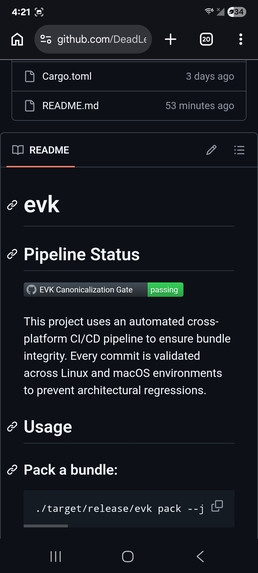
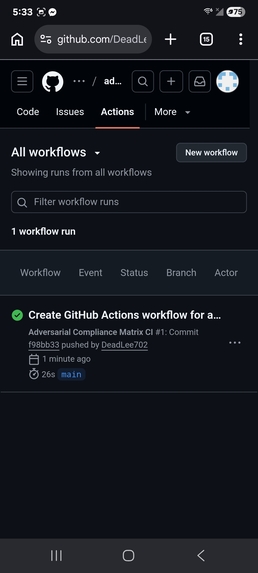
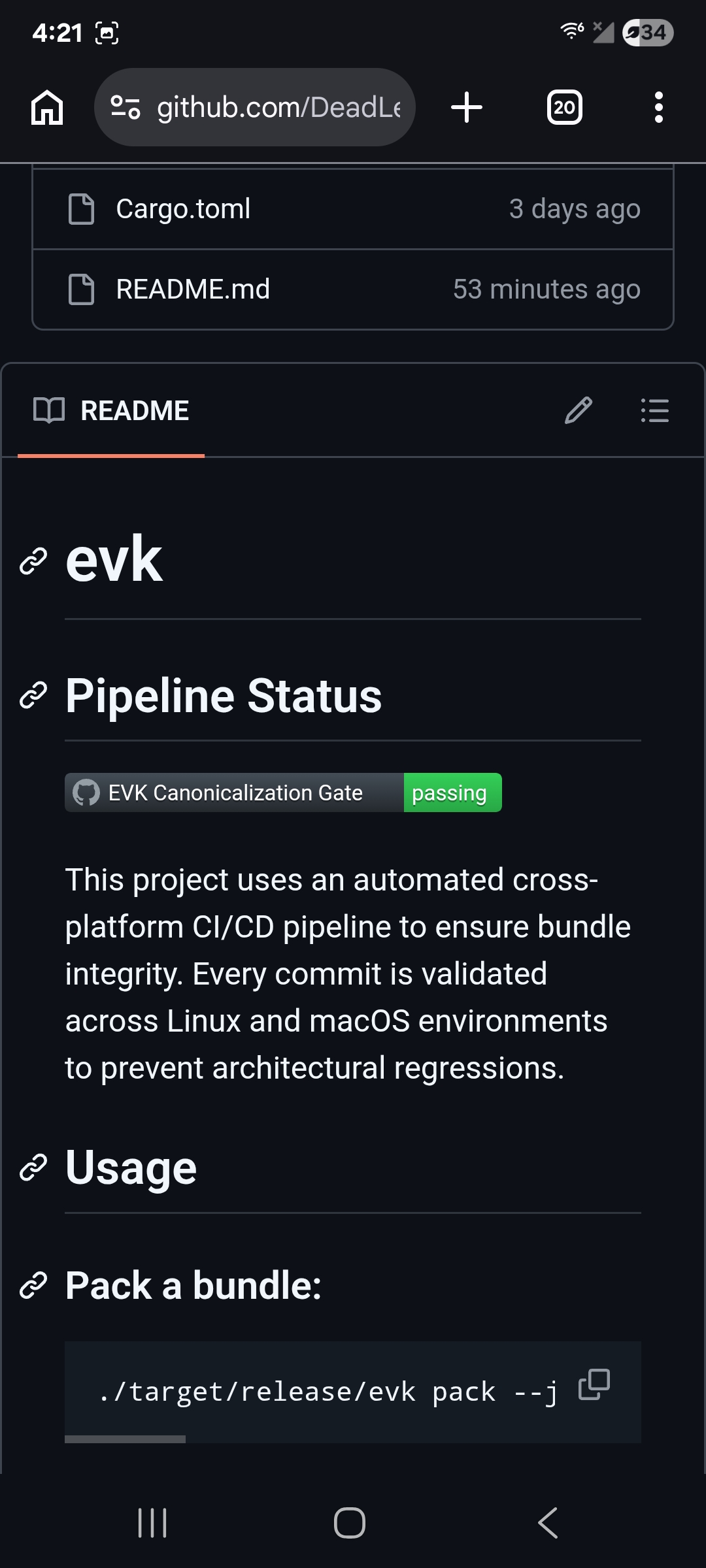
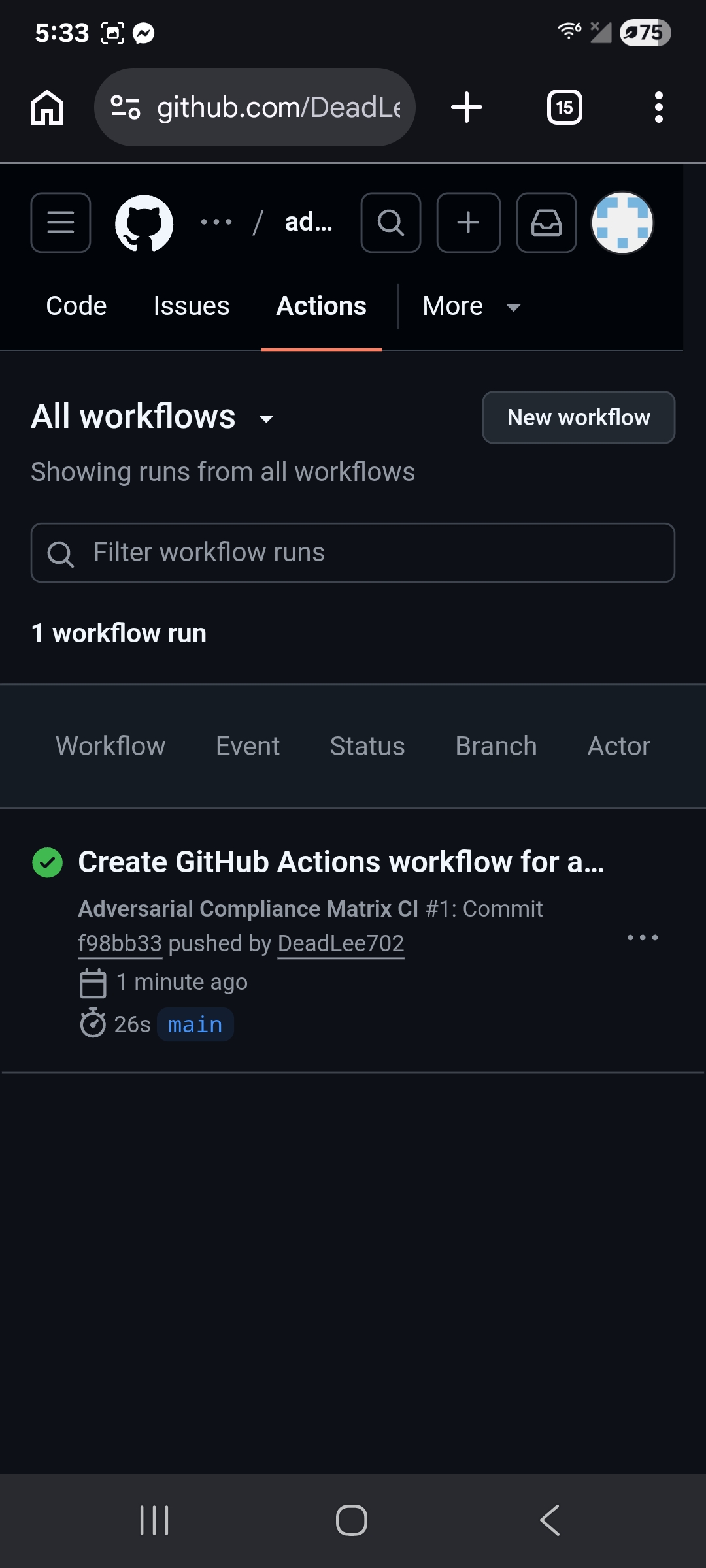
  • Automated Cloud Validation (CI/CD): Features a fully automated continuous integration pipeline powered by GitHub Actions (.github/workflows/test.yml). Every codebase change instantly spins up a cloud virtual machine, provisions the stable Rust toolchain, caches dependencies, compiles the binaries, and executes the entire 12-incident compliance test suite automatically.

Challenges we ran into

Building a complete, multi-file Rust compilation framework and provisioning fully automated GitHub Actions cloud runners entirely from a mobile device was a true trial by fire. Managing directories, reviewing code fragments, and pushing live repository commits via a mobile layout meant there was absolutely zero room for error. Every command had to be structurally flawless on the first attempt to prevent dependency conflicts or cloud runner compilation failures.

Accomplishments that we're proud of

We are incredibly proud of achieving a flawless, 100% successful compilation and a passing green test run on the GitHub cloud on the very first try. Building an advanced backend engineering pipeline completely on the move—and running out the monthly AI token limit exactly at the moment the final file was secured—felt like hitting the ultimate jackpot.

What we learned

We proved that complex backend engineering, test-driven development, and cloud automation aren't restricted to a desktop setup. With tight pattern recognition, precise logic, and a highly coordinated mobile-AI workflow, you can architect and deploy enterprise-grade security systems from anywhere in the world.

What's next for Adversarial Compliance Matrix

The next step is expanding the core engine from a 12-incident validation matrix to a fully comprehensive behavioral analysis suite. We plan to integrate live network anomaly tracking, deeper status-code telemetry, and real-time visualization tools so that the system can actively intercept and neutralize emerging threat vectors on the fly.

Built With

  • ci/cd
  • github-actions
  • rust
  • security
Share this project:

Updates

posted an update

Z-12: Sovereign Runtime Security Platform

Deterministic verification. Hardened execution. Continuous compliance. Runtime enforcement.


Why Z-12 Exists

Modern software systems increasingly rely on autonomous services, AI agents, automation pipelines, and distributed infrastructure to make decisions in real time.

As these systems become more capable, the consequences of executing unverified actions become significantly greater.

Traditional security solutions often focus on observing events after they occur or responding once an incident has already happened.

Z-12 approaches the problem differently.

Instead of assuming execution should proceed unless something appears suspicious, Z-12 establishes multiple layers of verification before, during, and after runtime.

The objective is simple:

Verify trust before execution. Continuously validate runtime behavior. Enforce policy when required.


Executive Summary

Z-12 is a layered runtime security platform designed to provide deterministic verification, hardened execution environments, continuous compliance validation, and runtime enforcement for modern software systems.

Rather than functioning as a single security tool, Z-12 combines multiple independent security layers into a unified platform.

The ecosystem currently consists of:

Repository Purpose
EVK Deterministic identity and integrity verification
Gemini-Box Hardened execution environment
Adversarial Compliance Matrix Continuous runtime validation
Kill Vector Runtime enforcement and threat containment
Z-12 Dashboard Unified operational visibility

Each layer performs one responsibility while contributing to the overall runtime security posture.


Core Principles

Z-12 is designed around five engineering principles.

1. Deterministic Verification

Identity and integrity should be verified before execution whenever possible.


2. Layered Security

Each component performs a single responsibility.

No single component is expected to solve every security problem.


3. Runtime Enforcement

Detection without enforcement provides visibility.

Detection combined with enforcement provides control.


4. Observable Operations

Security systems should clearly communicate their current state.

Operators should never need to guess what the platform is doing.


5. Modular Architecture

Every major component can evolve independently while remaining part of the larger ecosystem.


Repository Ecosystem

                         Z-12 Platform

                               │
                               ▼

                    Z-12 Dashboard (Control Plane)

                               │
        ┌──────────────────────┼──────────────────────┐
        │                      │                      │

        ▼                      ▼                      ▼

      EVK                Gemini-Box        Compliance Matrix

        │                      │                      │

        └──────────────┬───────┴──────────────┬──────┘
                       │                      │
                       ▼                      ▼

                 Kill Vector          Runtime Telemetry

                       │
                       ▼

                  Enforcement Layer

Platform Components

EVK

Role

Deterministic verification engine.

Responsibilities

  • Identity verification
  • Integrity validation
  • Cryptographic attestation
  • Pre-execution trust establishment

Gemini-Box

Role

Hardened execution environment.

Responsibilities

  • Environment isolation
  • Configuration protection
  • Runtime consistency
  • Execution boundary enforcement

Adversarial Compliance Matrix

Role

Continuous runtime validation engine.

Responsibilities

  • Runtime inspection
  • Policy validation
  • Compliance monitoring
  • Threat simulation
  • State evaluation

Kill Vector

Role

Runtime enforcement engine.

Responsibilities

  • Policy enforcement
  • Runtime response
  • Threat containment
  • Enforcement workflows

Ghost Matrix

Role

Containment environment.

Responsibilities

  • Controlled isolation
  • Runtime observation
  • Incident analysis
  • Safe execution boundaries

Z-12 Dashboard

Role

Operational control plane.

Responsibilities

  • Real-time monitoring
  • Runtime visualization
  • State reporting
  • Platform health
  • Operational awareness

Log in or sign up for Devpost to join the conversation.

posted an update

We have significantly upgraded the stability and reliability of the EVK project: Automated CI/CD Pipeline: Integrated a robust GitHub Actions workflow that automates the build and testing process for every push to main. Cross-Platform Verification: Implemented automated integrity checks across both Linux (ubuntu-latest) and macOS (macos-latest) environments. Adversarial Testing: Added automated "corruption gates" that verify the tool correctly handles tampered/invalid data. Professional Documentation: Updated the repository with a comprehensive README.md, including live status badges, to ensure clear usage and maintainable architecture. This ensures that the project remains bug-free, byte-identical, and reliable across all supported platforms.

Log in or sign up for Devpost to join the conversation.