-
-
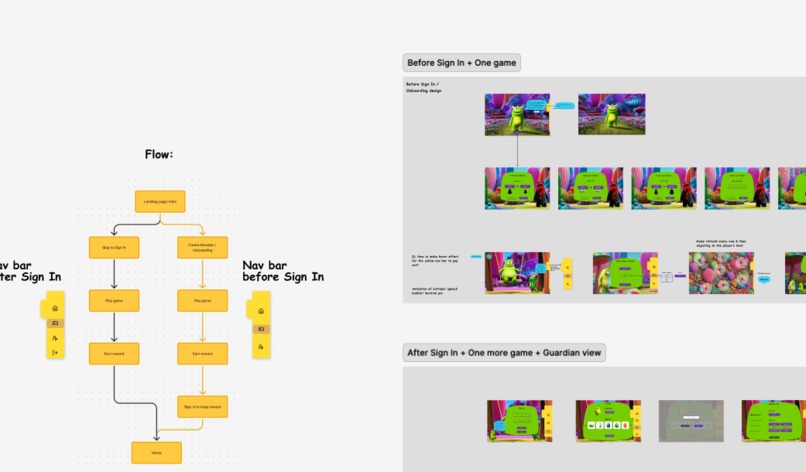
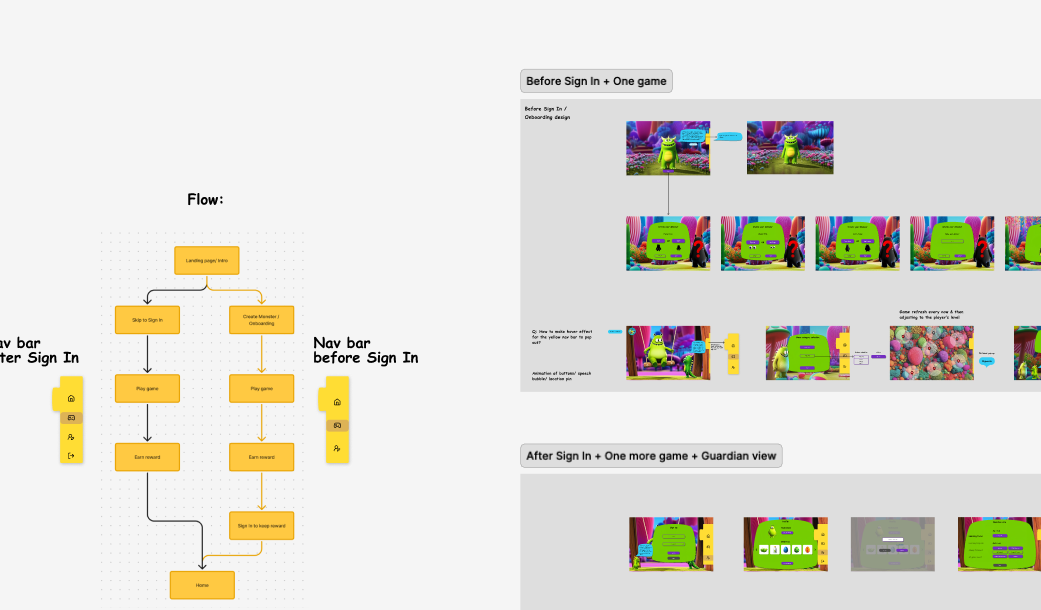
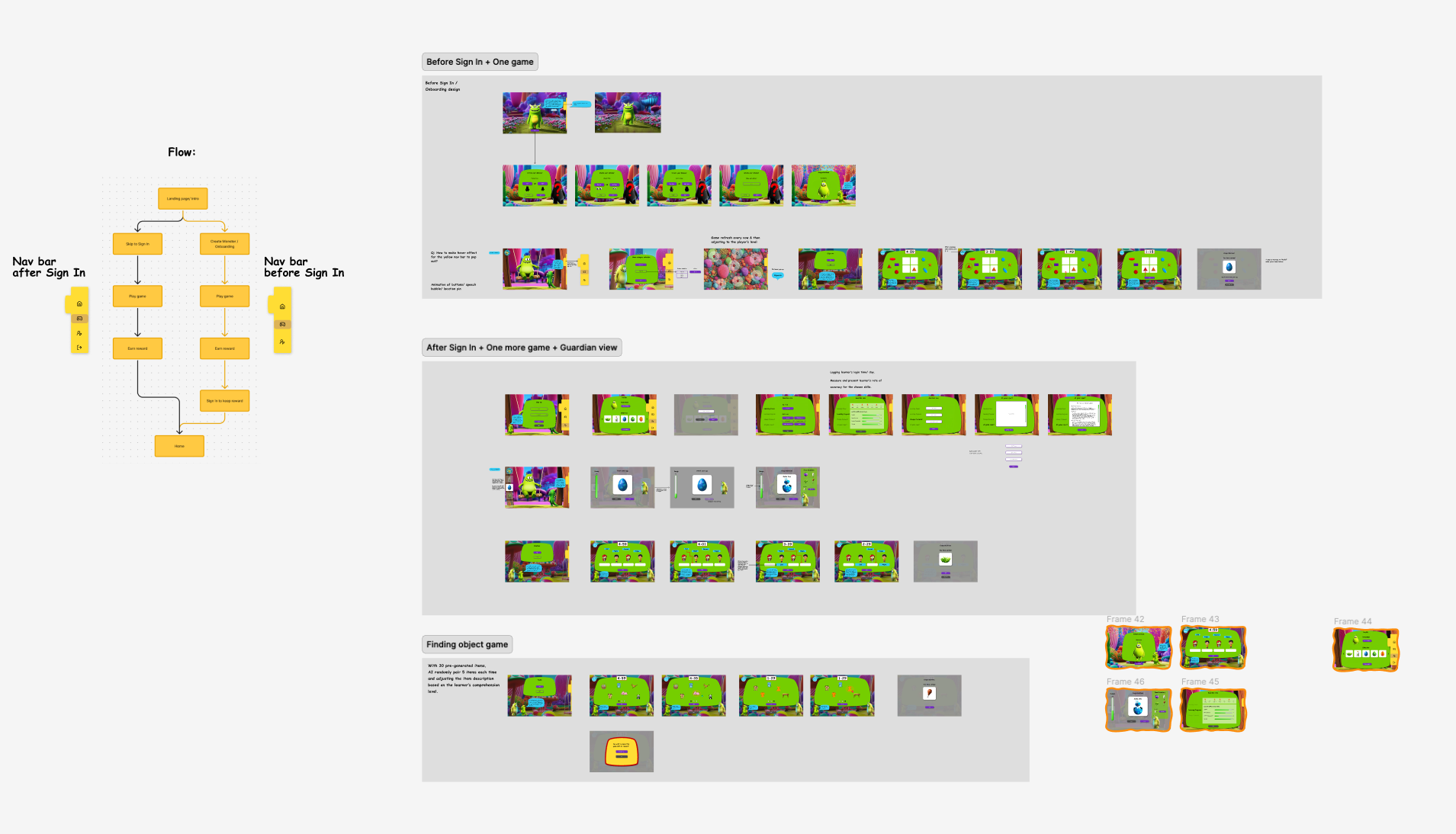
figma design file
-
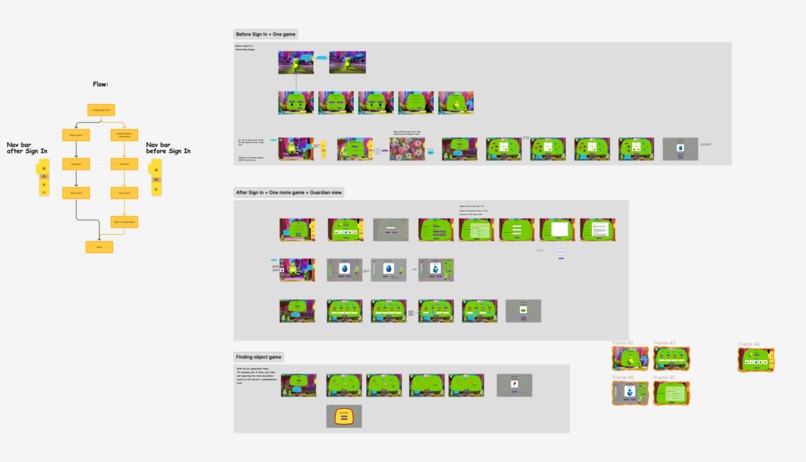
figma design material
-
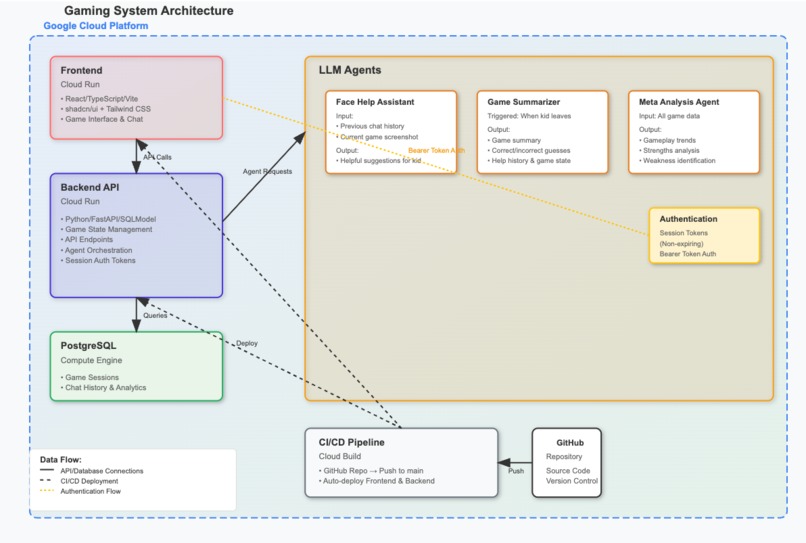
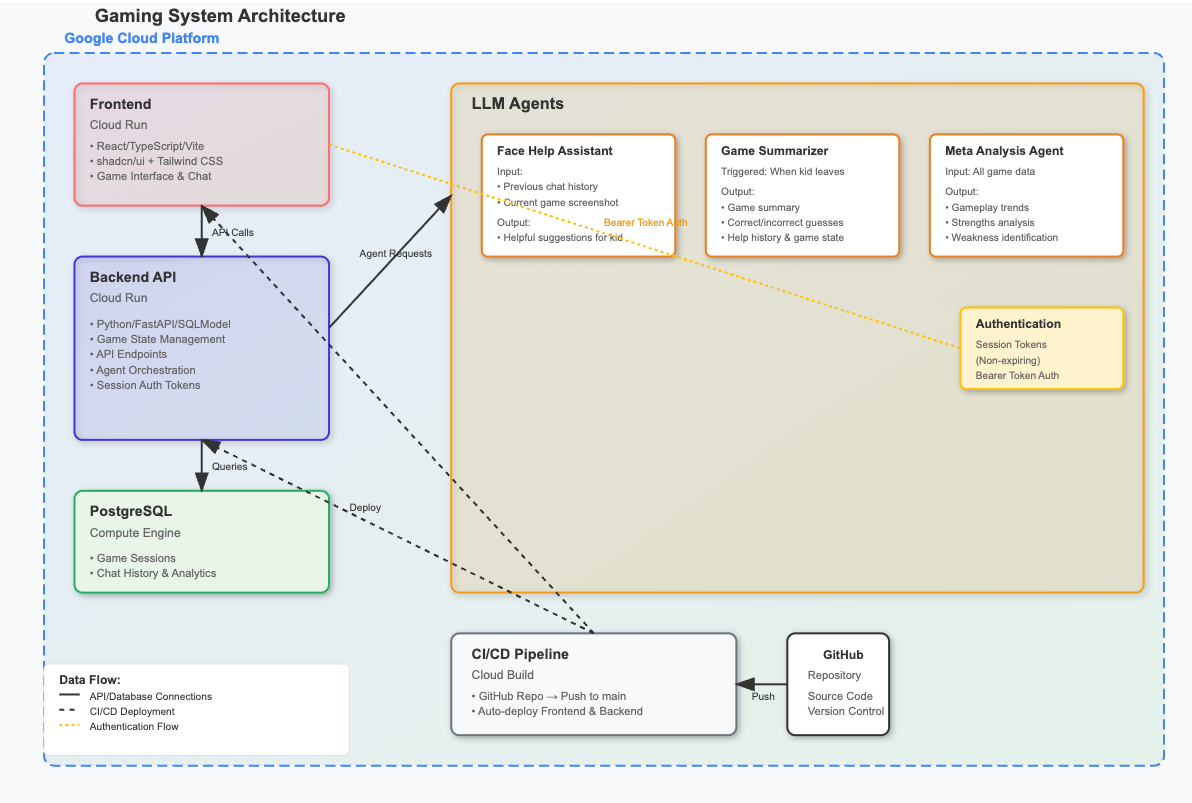
architecture diagram
-
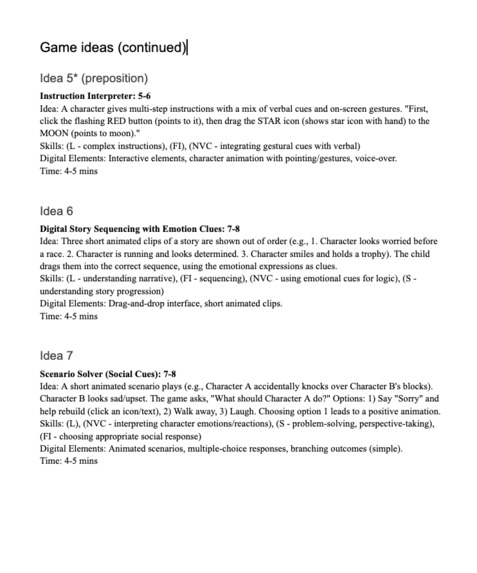
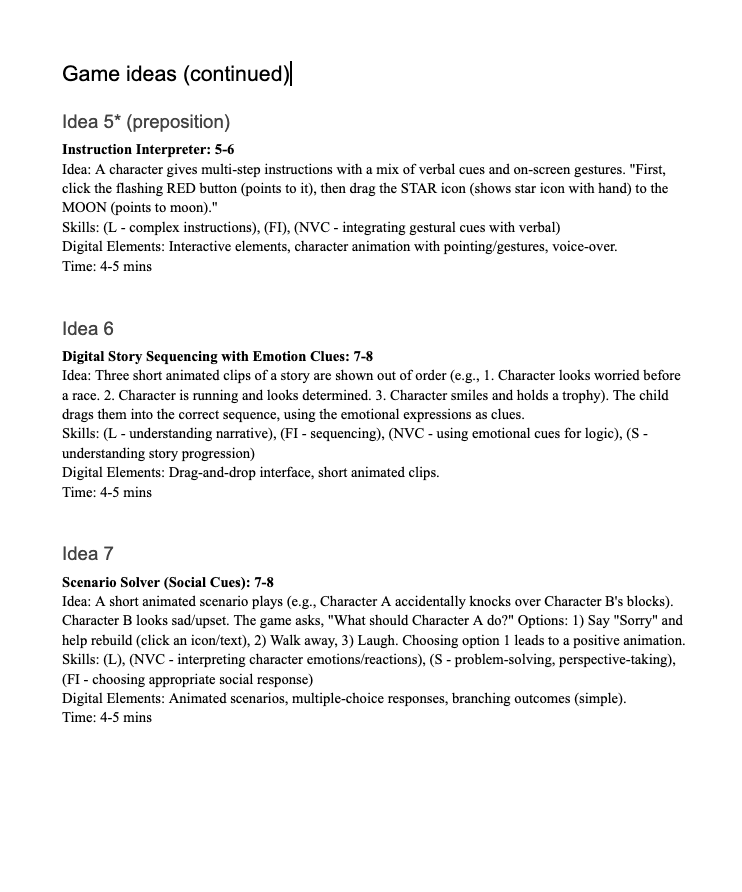
Other Game Ideas (continued)
-
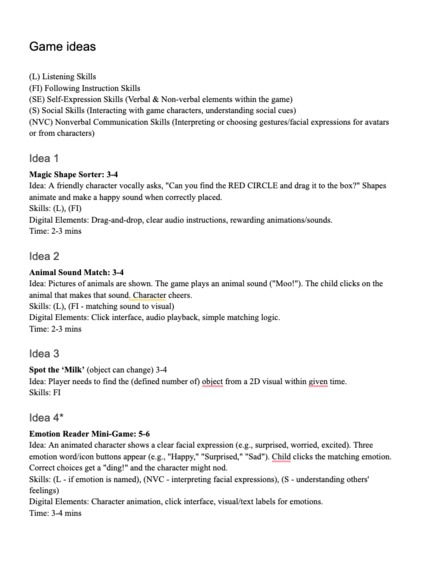
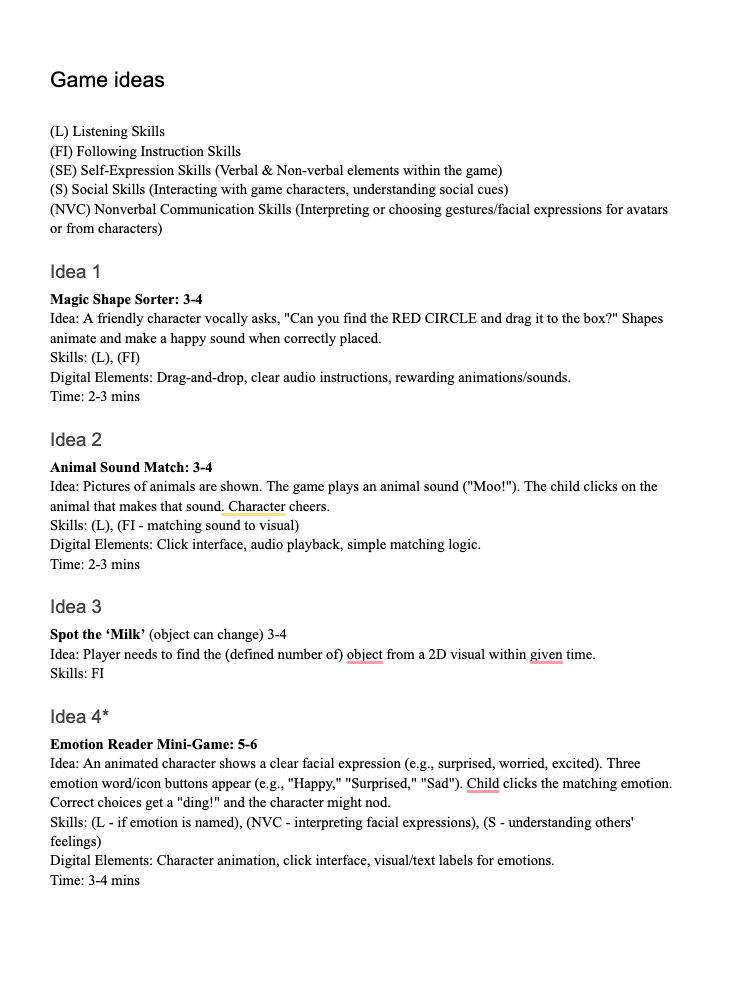
Other Game Ideas
Inspiration
Our teammate’s inspiration came from experience working with children with autism. Despite children using a significant amount of time engaging with digital devices, there is a lack of digital products to assist these individuals’ learning. With this knowledge, we surveyed 6 professionals who work with children with autism, and the results show a unanimous consensus on the need for technology-based learning, with 80% thinking it is the most effective learning mode for this target group. That is where the idea of building a fun and educational game originated, and our target group this time would be children with autism between the ages of 3 to 8.
What it does
Game content generation using AI with guided capabilities, for example, the game difficulty/help provided is adjusted to the player's capability and focused skill set. Their progress is also being tracked and can be reviewed by the guardian. With limited development time, we focused on demonstrating at least one full game experience and the Guardian review page. The level is set to be beginner-friendly, and the skill set is targeted at social skills and following instructions.
In the Guardian view, you can change settings for the learning path as well as review each game and generate overall reports, including a meta-analysis of all the child's games played, to help give trends and strengths/weaknesses.
How we built it
We built Adventures with Sprout using a modern, scalable tech stack designed for rapid prototyping and future extensibility. The backend is powered by Python’s FastAPI framework, with PostgreSQL for persistent data storage and a robust authentication system using tokens. The frontend is developed in TypeScript with React, focusing on accessibility and child-friendly visuals that are engaging but not overstimulating.
A core innovation is our integration of Google’s Agent Development Kit (ADK) and Gemini 2.0 Flash, which enables dynamic game content generation and real-time, context-aware interactions. The ADK database-backed session service maintains conversational context, while the AI agent processes both game state images and user input to deliver adaptive text and audio responses. All development was completed in parallel with full-time jobs and other commitments, requiring careful prioritization and agile collaboration.
Challenges we ran into
One significant challenge was trying to set up Google ADK’s voice streaming directly, which was essential for decreasing response time and creating a more seamless, interactive experience. Integrating this feature required navigating limited documentation and learning a new framework. We also faced constraints due to limited development time, as all team members balanced this project alongside full-time jobs and/or other commitments. Additionally, we encountered technical hurdles such as slower-than-expected model response times, watermark limitations on Google AI Studio-generated images, and the need to optimize the feedback loop between the AI agent and the user interface.
Accomplishments that we're proud of
We are proud of the promising state of the application, both visually and functionally. The architecture emphasizes type safety across the stack and follows modern design patterns, making it scalable and maintainable. We also developed a simple yet effective authentication system inspired by classic arcade token mechanisms. Most importantly, we have received positive interest from guardians and children, validating the project’s potential impact for kids with autism.
What we learned
Through this project, we deepened our understanding of Google’s Agent Development Kit and its capabilities for real-time, adaptive content generation. We also gained insights into the unique needs of children with autism and the importance of designing for accessibility, engagement, and predictability. The process reinforced that building an educational game is not just about content—it’s about crafting a holistic user experience, from thoughtful color choices to intuitive progress tracking and guardian involvement. Conducting user surveys and collaborating with professionals expanded our perspective on technology-based learning for this population.
What's next for Adventures With Sprout
Our next steps are to determine the level of interest from industry stakeholders, guardians, and children through targeted user testing. If there is sufficient interest, we plan to develop additional games, enhance our feedback mechanisms, further decrease response times, and improve the overall visual experience. We aim to leverage AI more effectively for content generation and progress tracking, and to explore advanced features such as custom image models for consistent character generation and improved lip-syncing for more immersive audio-visual feedback. Ultimately, our goal is to create a suite of adaptive, engaging learning tools that can make a meaningful difference in the lives of children with autism.
Built With
- cursor
- dnd-kit
- docker
- docker-compose
- fastapi
- figma
- gemini
- github
- google-adk
- google-aistudio
- google-cloud-build
- google-cloud-run
- google-compute-engine
- makefile
- openapi-typescript-codegen
- postgresql
- pydantic
- python
- react
- shadcn
- sqlalchemy
- sqlmodel
- tailwindcss
- tanstack-query
- tanstack-router
- typescript
- uv
- vite
- zustant


Log in or sign up for Devpost to join the conversation.