-
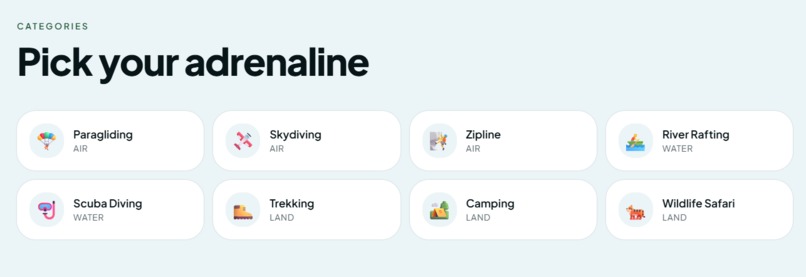
explore the adventure
-
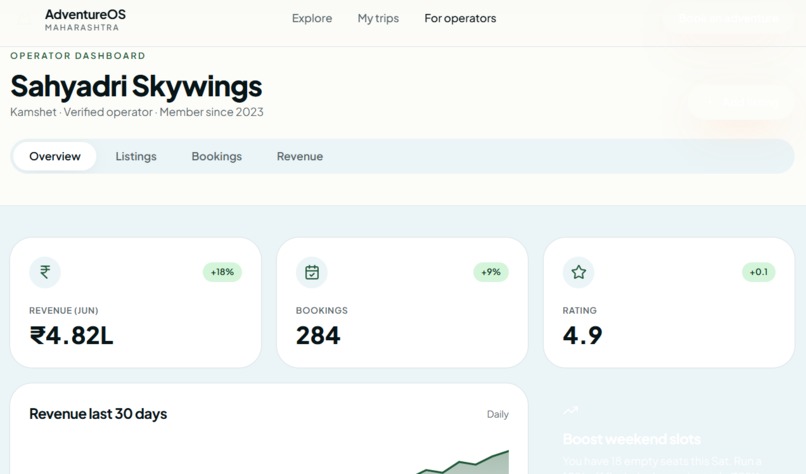
for operators
-
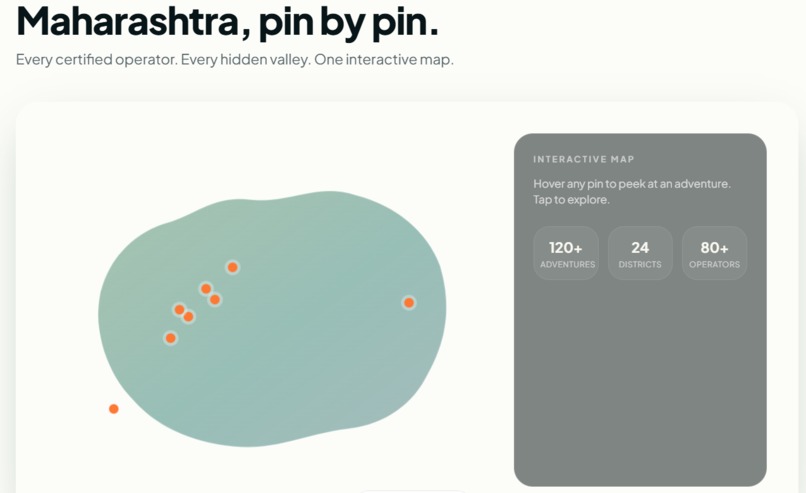
maharashtra interactive map
-
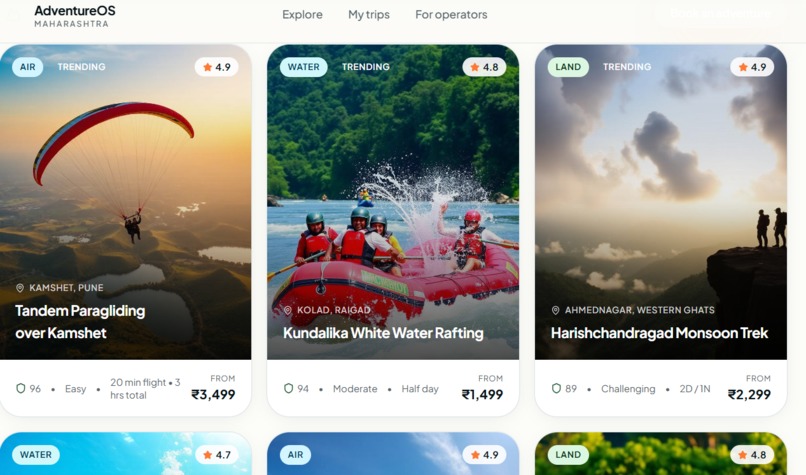
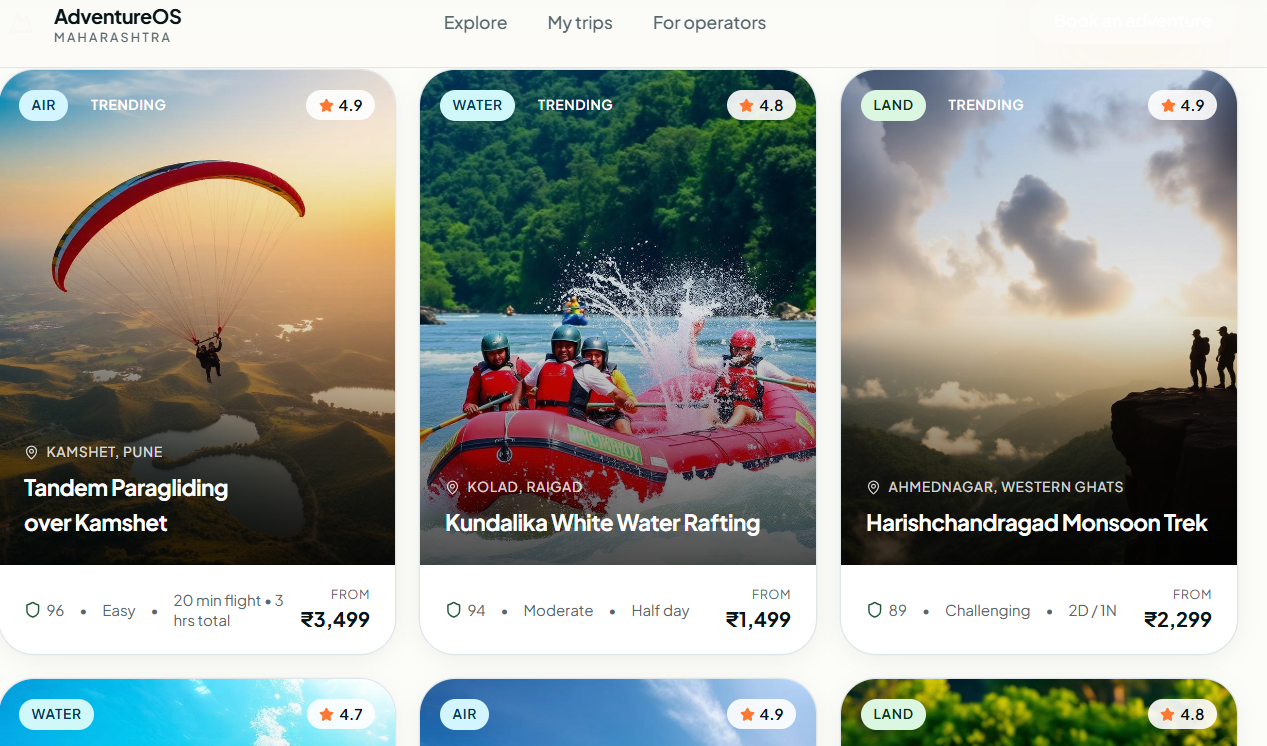
browse through listings
-
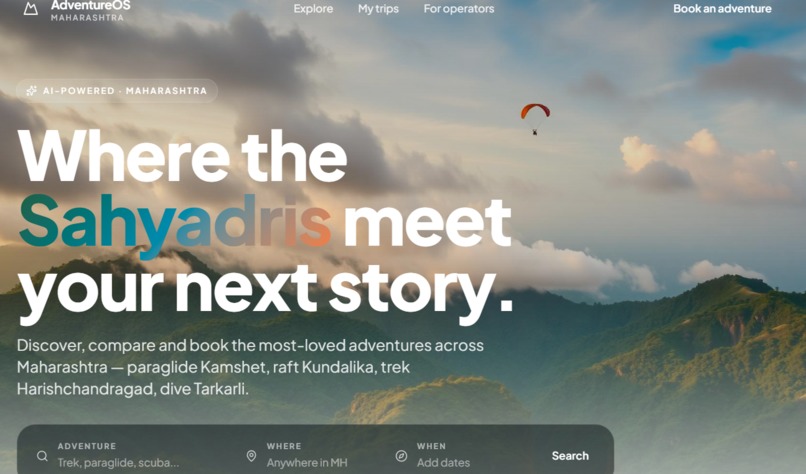
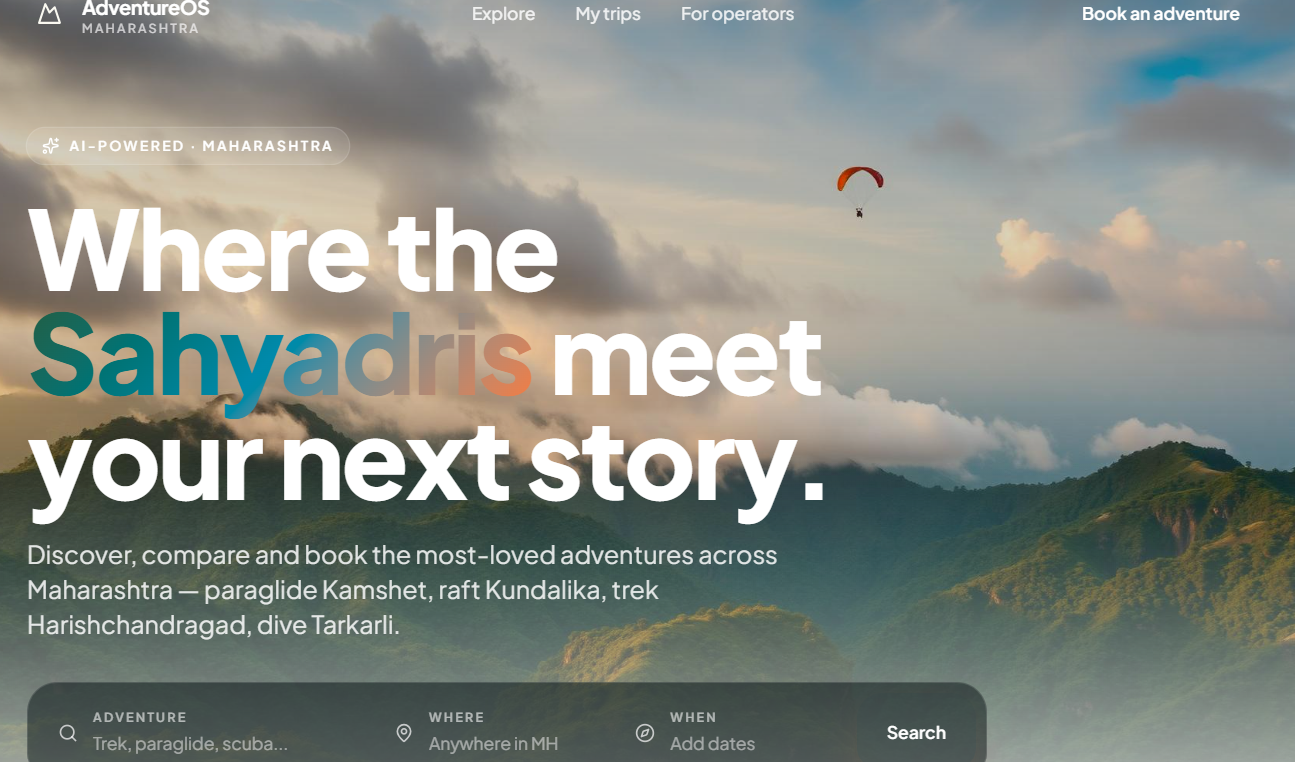
homepage and hero
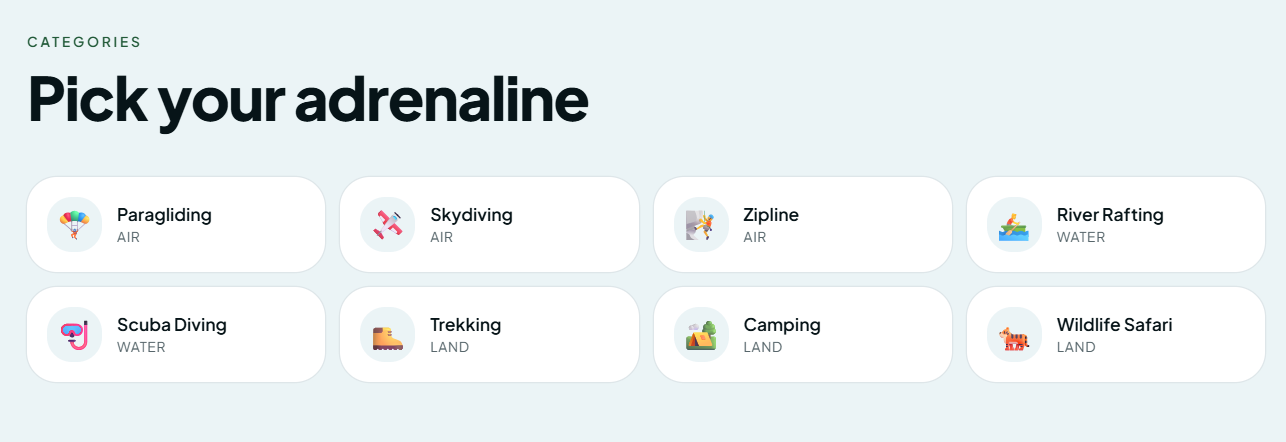
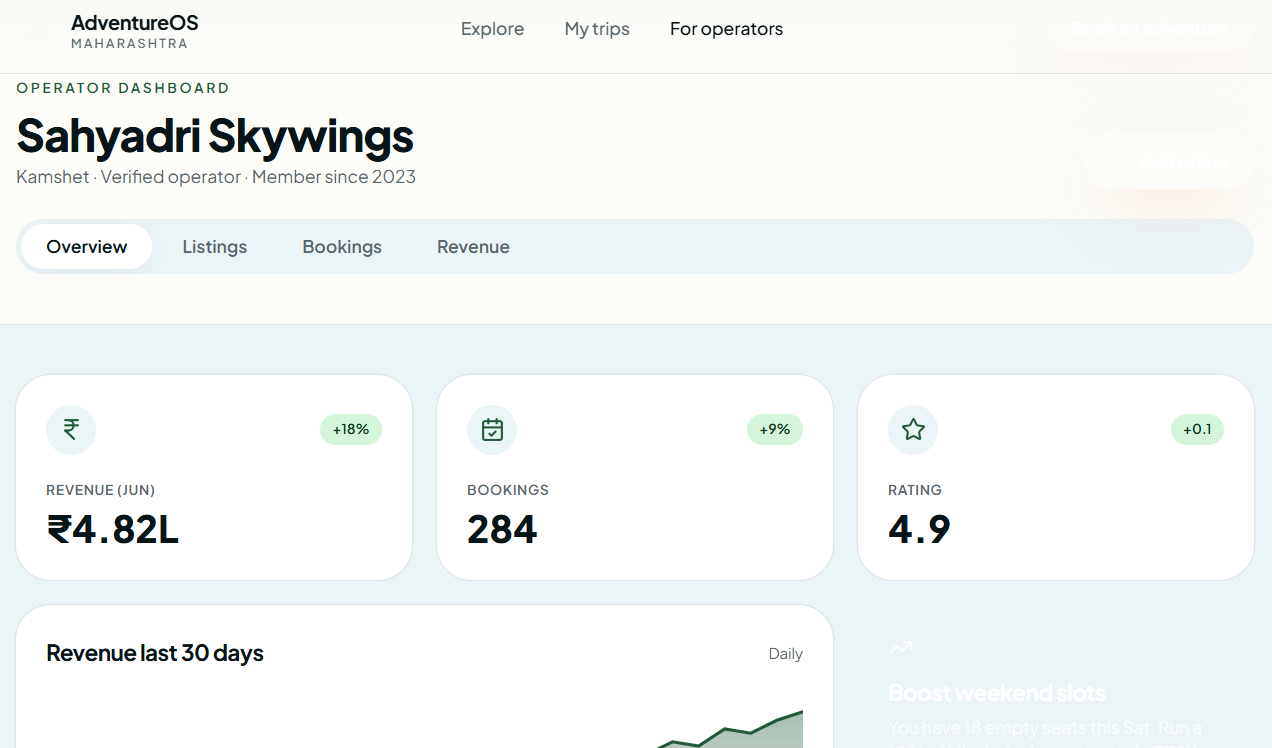
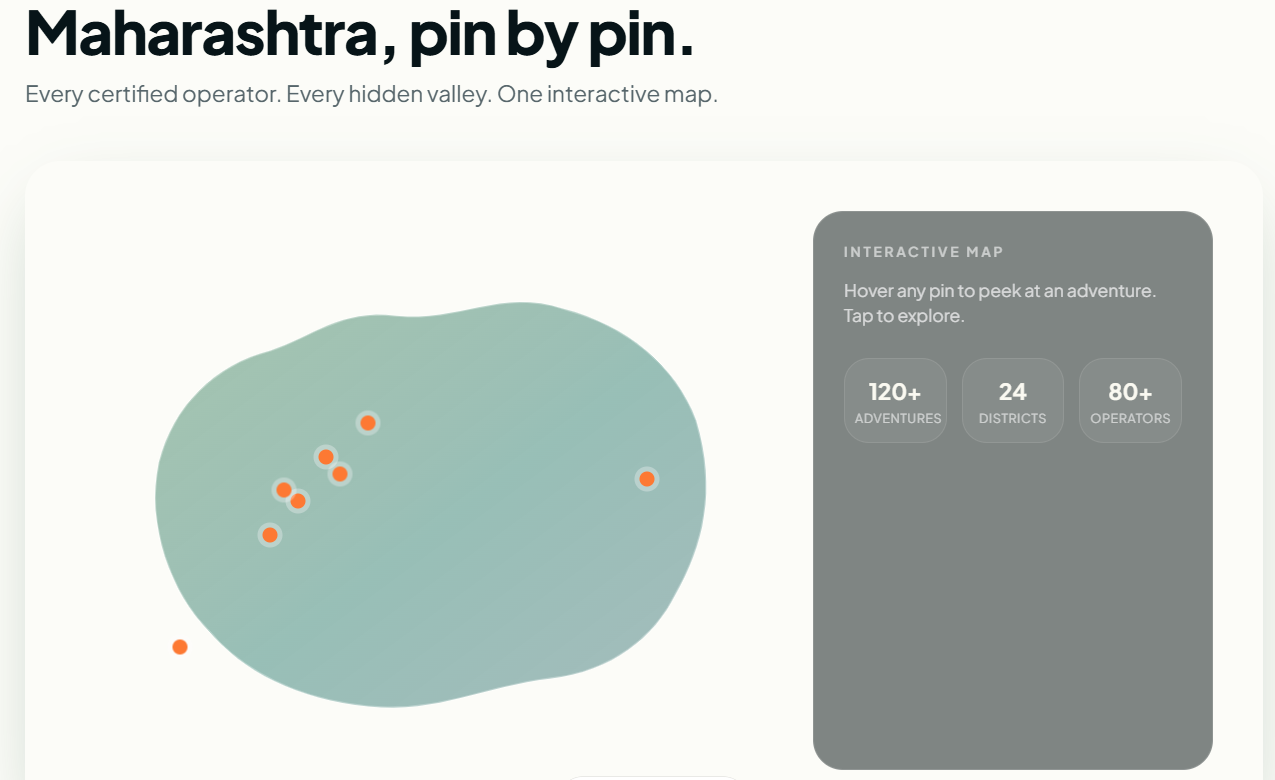
Inspiration
Growing up, I always felt that Maharashtra has some of the most incredible adventure destinations in India-from the Sahyadri forts and trekking trails to paragliding in Kamshet, scuba diving in Tarkarli, and white-water rafting in Kolad. Yet, planning these experiences was surprisingly difficult. Information was scattered across multiple websites, operator details were inconsistent, safety information was hard to verify, and there was no single platform that brought everything together.
What it does
AdventureOS is not just another travel booking website. It is designed as a unified digital ecosystem that connects: Travelers Adventure operators Tourism stakeholders The emphasis is on personalization, accessibility, and improving the overall planning experience rather than only facilitating transactions.
How we built it
The project began with extensive research into Maharashtra's adventure tourism ecosystem. I explored: Popular adventure destinations. Existing booking platforms. User pain points. Government tourism initiatives. Modern travel platform design patterns. After defining the product vision, I focused on creating an intuitive user experience with clean navigation and a mobile-friendly interface. The development process involved: Designing the platform architecture. Building a modern frontend. Structuring scalable booking flows. Planning secure payment integration. Incorporating AI-driven itinerary generation. Organizing features around real traveler needs instead of simply adding technology. Throughout development, I continuously refined the interface based on usability and clarity.
Challenges we ran into
Understanding the Problem: The biggest challenge was identifying the real user pain points instead of simply creating another booking website. I spent considerable time understanding how travelers currently plan trips and where they encounter friction. Learning New Technologies: The project required exploring tools and workflows that were new to me. Working with modern AI-assisted development environments, integrating services, and understanding deployment workflows involved a steep learning curve. AI-Assisted Development: Using AI accelerated development, but it also introduced challenges. AI-generated code still needed to be reviewed, tested, and adapted to fit the project's architecture. This required careful debugging and iterative refinement rather than simply accepting generated output. Integrating Multiple Features: Adventure Maharashtra combines itinerary planning, booking workflows, payment integration, maps, and other travel-related capabilities. Designing these as one cohesive experience while keeping the interface intuitive required balancing functionality with simplicity.
Accomplishments that we're proud of
Built a unified platform that brings together adventure discovery, AI trip planning, booking, and tourism information in one place instead of requiring users to navigate multiple websites. Designed with real user problems in mind, focusing on simplifying trip planning rather than just adding features. Created a scalable architecture that can support future integrations like payments, live operator availability, weather updates, and emergency assistance. Leveraged AI thoughtfully to deliver personalized travel recommendations based on user preferences, budget, and trip duration. Developed an intuitive and accessible user experience that makes adventure tourism easier for both travelers and local operators. Validated a concept that can strengthen Maharashtra's adventure tourism ecosystem by increasing digital visibility for local businesses and improving traveler confidence.
What we learned
Technology should solve genuine user pain points, not just showcase advanced features. User experience is as important as functionality. Simple, intuitive interfaces significantly improve adoption. AI is most impactful when it enhances decision-making, such as helping travelers discover personalized itineraries instead of overwhelming them with options. Building scalable software requires planning from the beginning, especially when integrating multiple services like bookings, payments, maps, and AI. Rapid prototyping and continuous iteration allowed us to transform an idea into a functional solution within a limited hackathon timeline.
What's next for Adventure Maharashtra
Phase 1 Complete secure online booking and payment integration. Launch a dedicated operator dashboard for managing activities and bookings. Introduce booking confirmations and automated notifications. Phase 2 AI-powered itinerary optimization based on weather, budget, fitness level, and travel preferences. Live activity availability and dynamic pricing. Integrated emergency support and safety alerts. Interactive maps with offline navigation. Phase 3 Community reviews, achievements, and travel journals. Sustainability scoring to encourage responsible tourism. Multilingual support for wider accessibility. Collaboration with the Maharashtra Tourism Department and local adventure operators. Expand the platform model to other Indian states while keeping Maharashtra as the flagship implementation.

Log in or sign up for Devpost to join the conversation.