Inspiration
Brain tumor diagnosis using MRI is time-consuming and depends heavily on radiologists. We wanted to build an AI system that can assist doctors by providing fast, accurate, and explainable results.
What it does
Our system automatically:
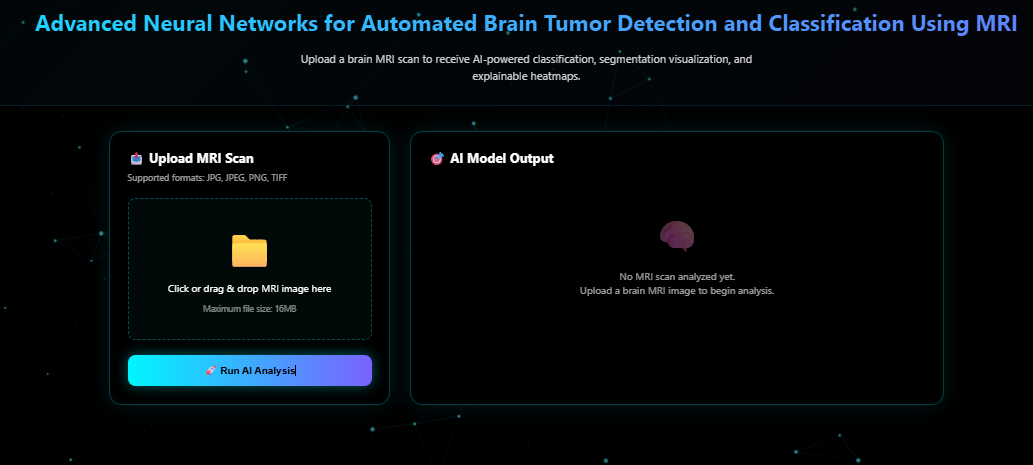
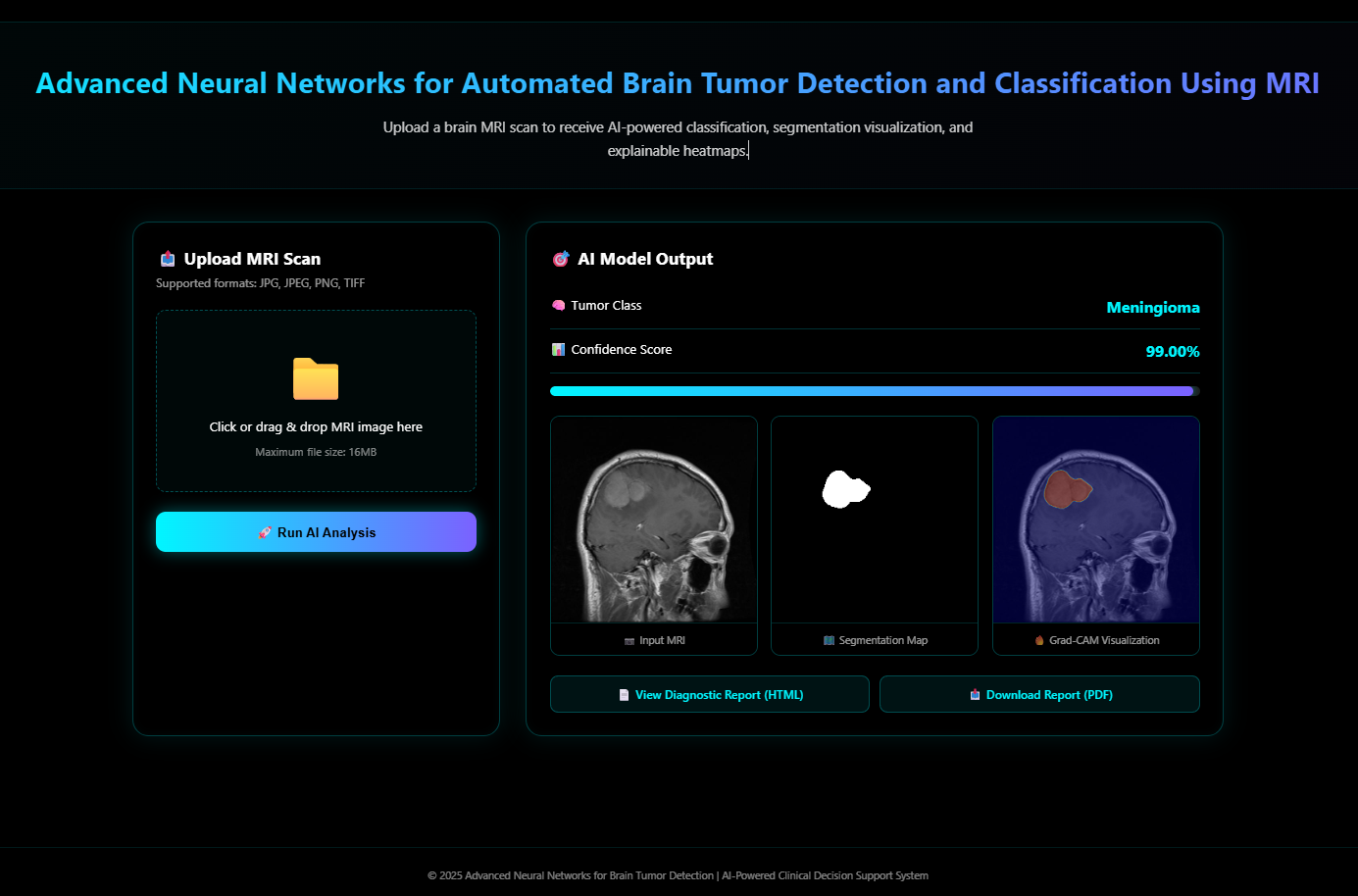
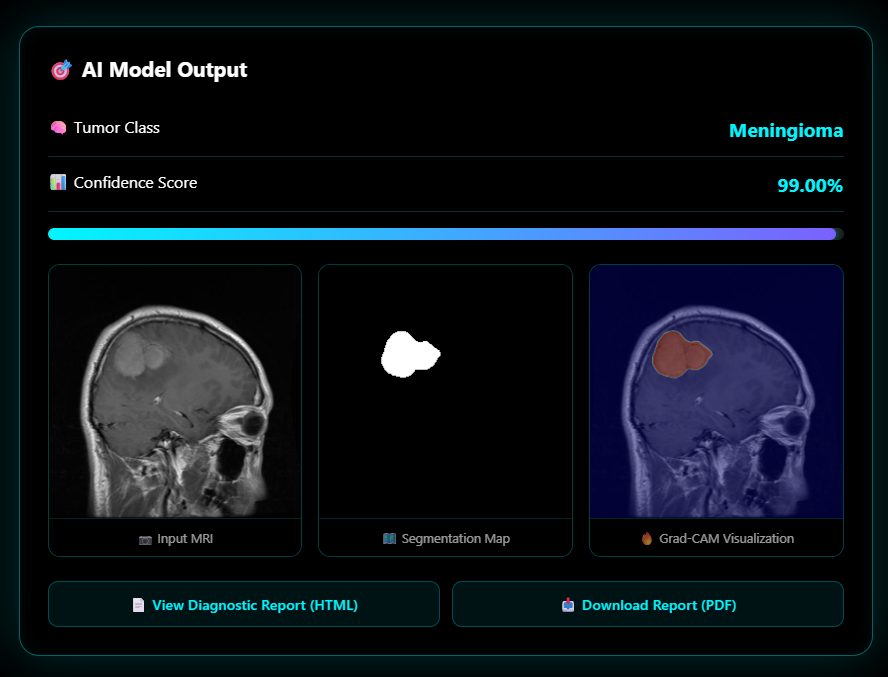
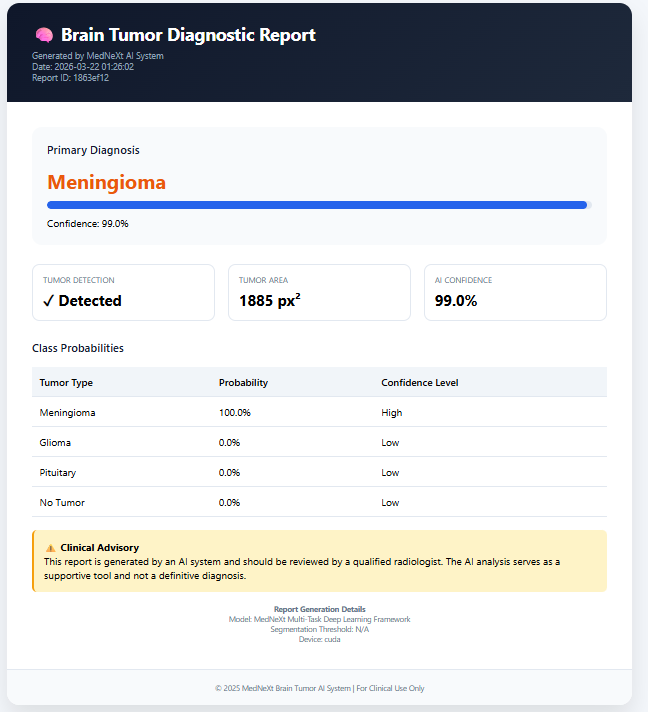
Detects brain tumors from MRI scans Segments tumor regions at pixel level Classifies tumors into glioma, meningioma, pituitary, or no tumor Generates Grad-CAM heatmaps for explainability Produces a structured diagnostic report
How we built it
We developed a multi-task deep learning model based on:
U-Net architecture for segmentation EfficientNet-B3 encoder with transfer learning CBAM attention module to focus on relevant regions
Preprocessing includes:
CLAHE for contrast enhancement Data augmentation for robustness
The system is deployed using:
Flask backend HTML/CSS frontend Automated HTML report generation
Challenges we ran into
Limited and imbalanced medical datasets Accurate segmentation of small tumor regions Making the model interpretable (black-box problem) Integrating classification + segmentation in one pipeline
What we learned
Multi-task learning improves efficiency and performance Attention mechanisms significantly improve accuracy Explainability (Grad-CAM) is critical for medical AI trust End-to-end system integration is harder than model building
Results
Classification Accuracy: 93.2% Dice Score: 0.81 IoU: 0.72
The system successfully generates:
Tumor segmentation maps Explainable heatmaps Diagnostic reports
Future Scope
Use larger medical datasets Improve real-time performance Add multi-modal MRI support Deploy as a clinical tool


Log in or sign up for Devpost to join the conversation.