-
-
-
-
-
-
-
Cross Chain Block Explorer
🚀 About the Project
🎯 Inspiration
Drivechains represent one of the most promising paths for scaling and innovating on Bitcoin without compromising its core principles. However, as we explored the current landscape, we found a major gap: usability and transparency.
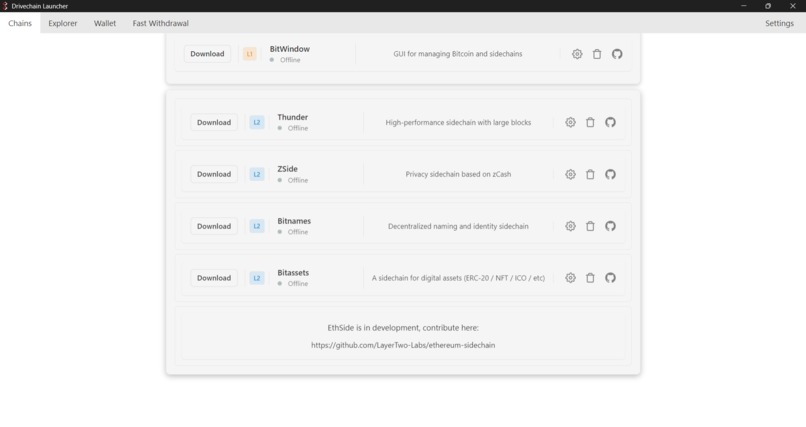
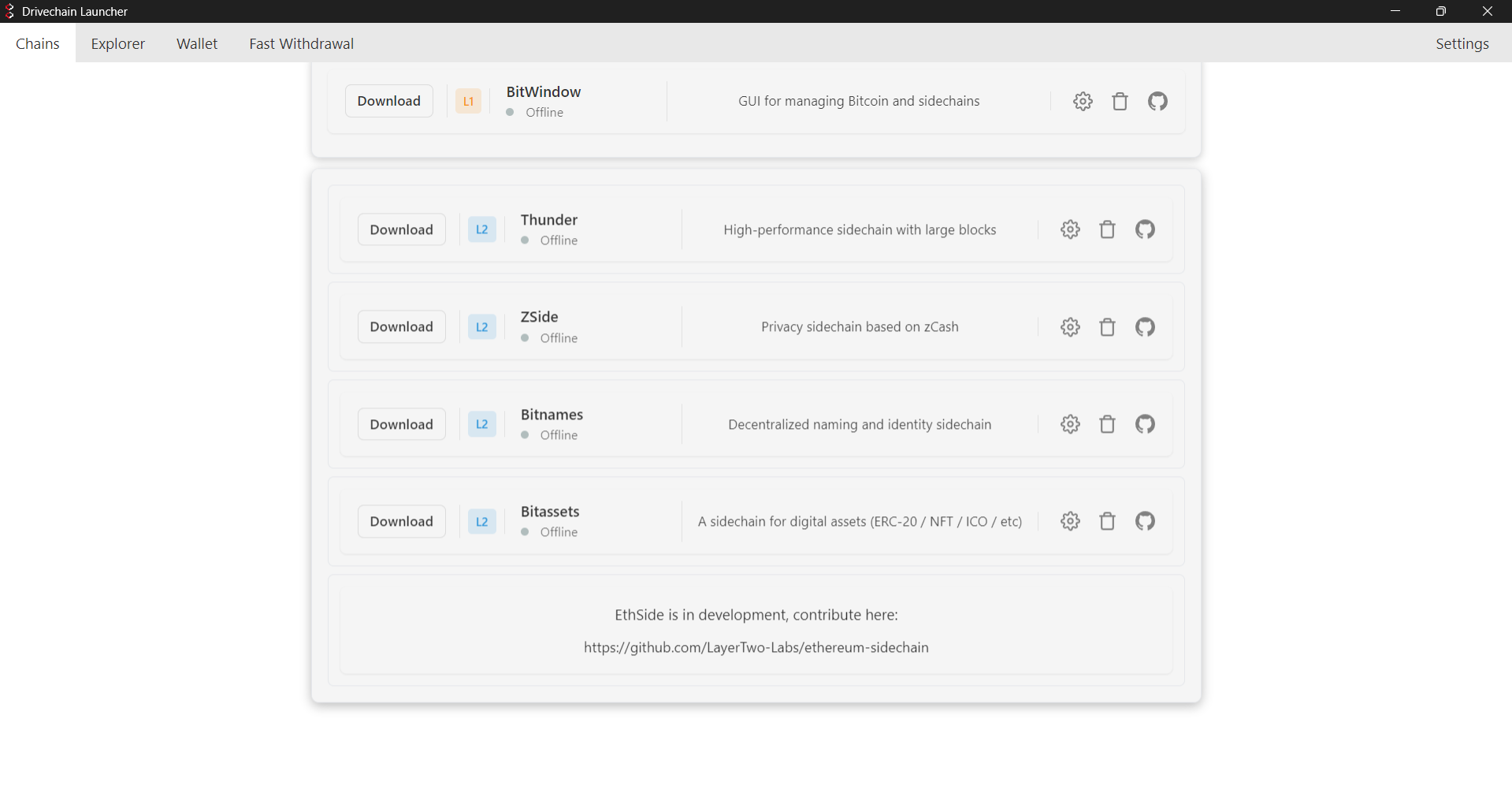
The original Drivechain Launcher provided the bare functionality but lacked visibility into the complex cross-chain operations involved in BIP300/301. It was difficult for users to trust or understand what was happening—making onboarding nearly impossible.
We were inspired to fix that.
💡 What We Built
We created the Enhanced Drivechain Launcher—a comprehensive and user-friendly dashboard that brings clarity and confidence to the Bitcoin sidechain experience.
The project includes:
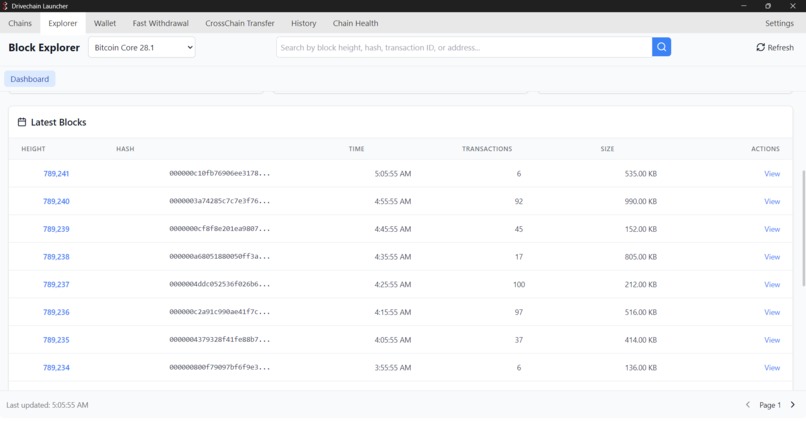
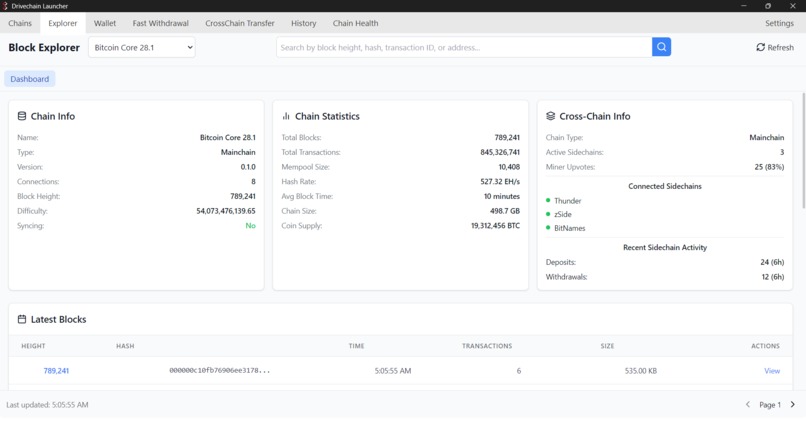
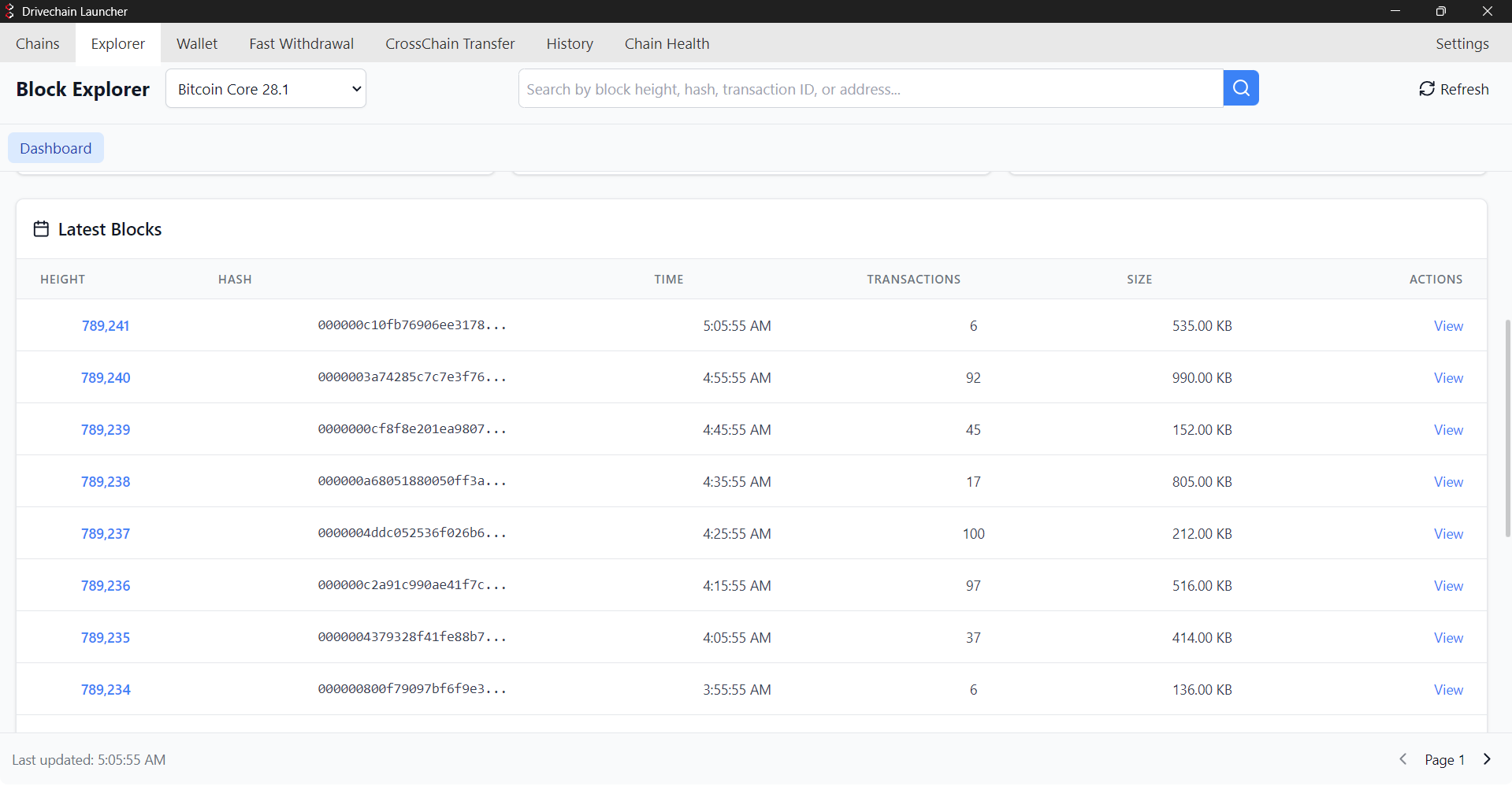
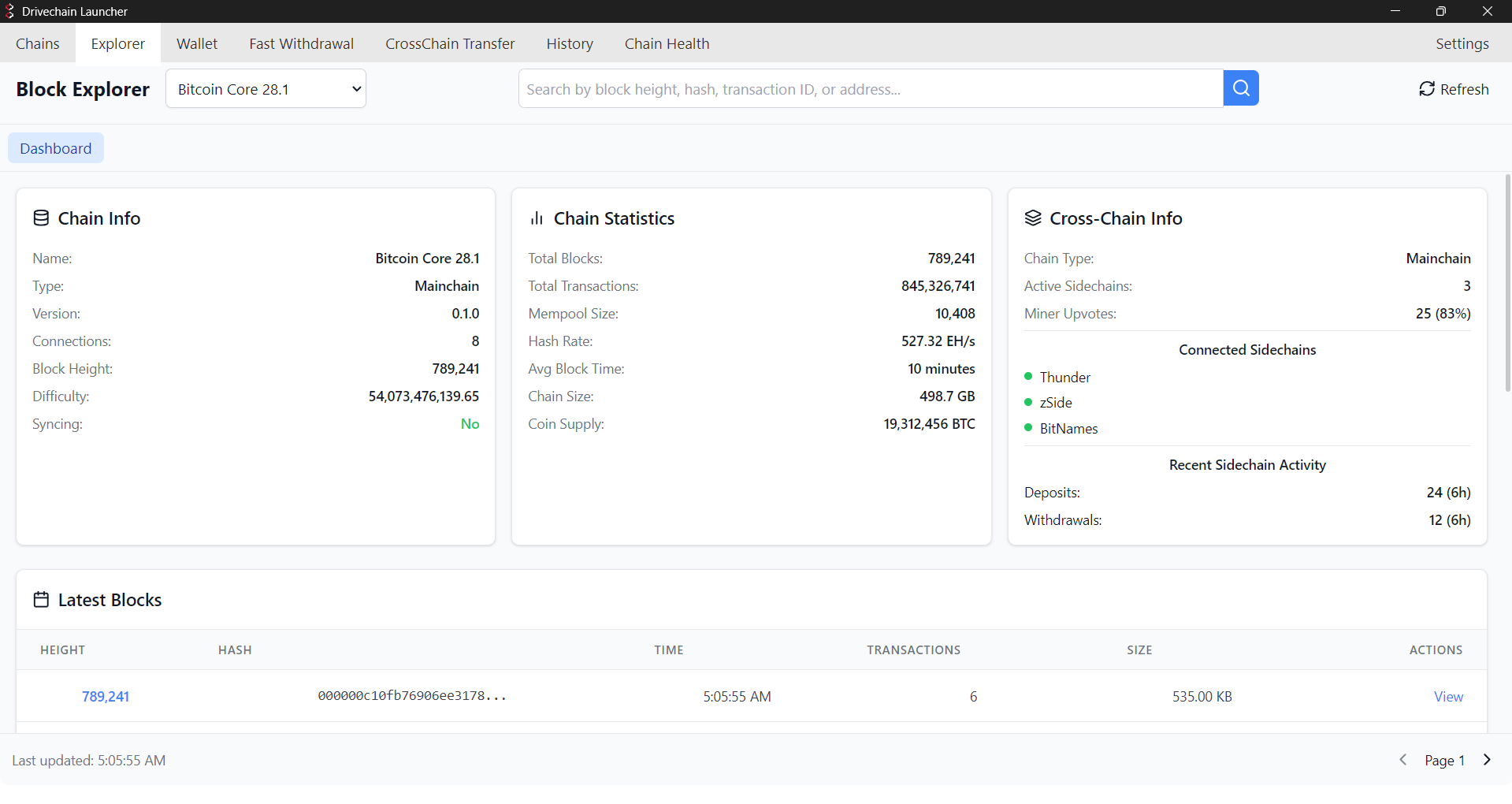
- A multi-chain block explorer with real-time BIP300/301 tracking
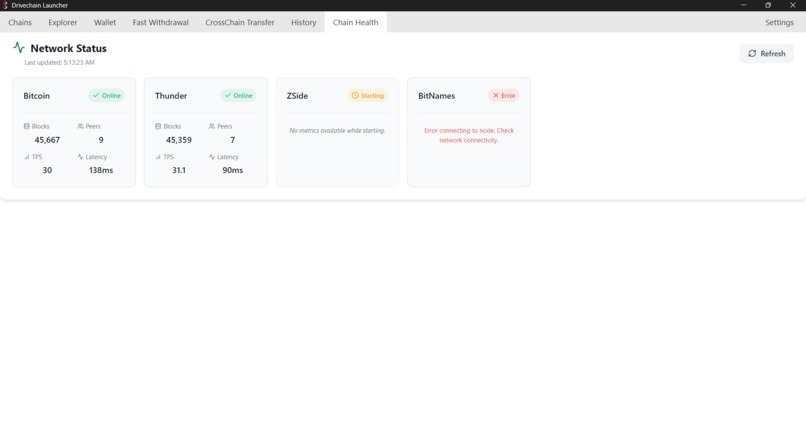
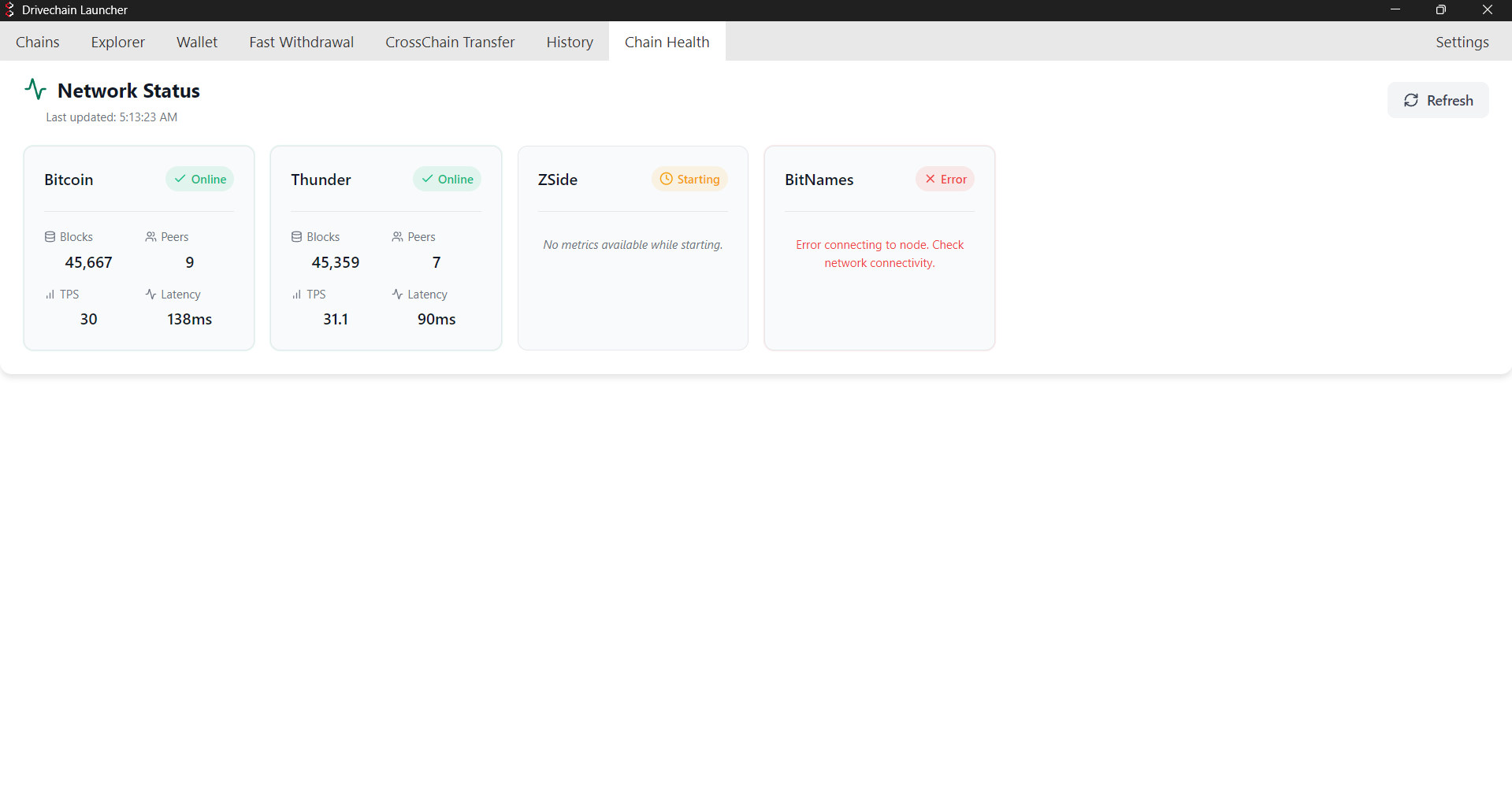
- A chain health monitor that visualizes node and network status
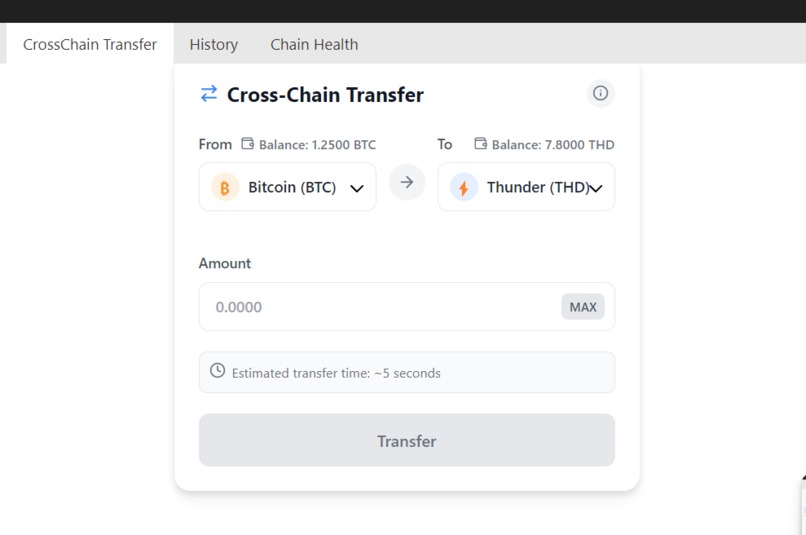
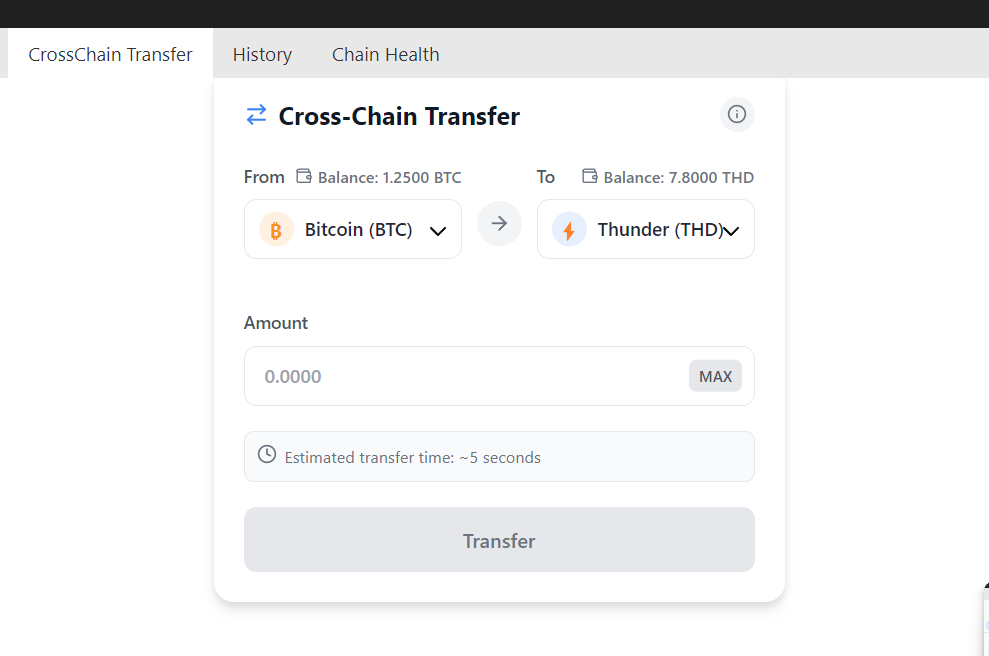
- An intuitive cross-chain transfer interface with transaction validation and feedback
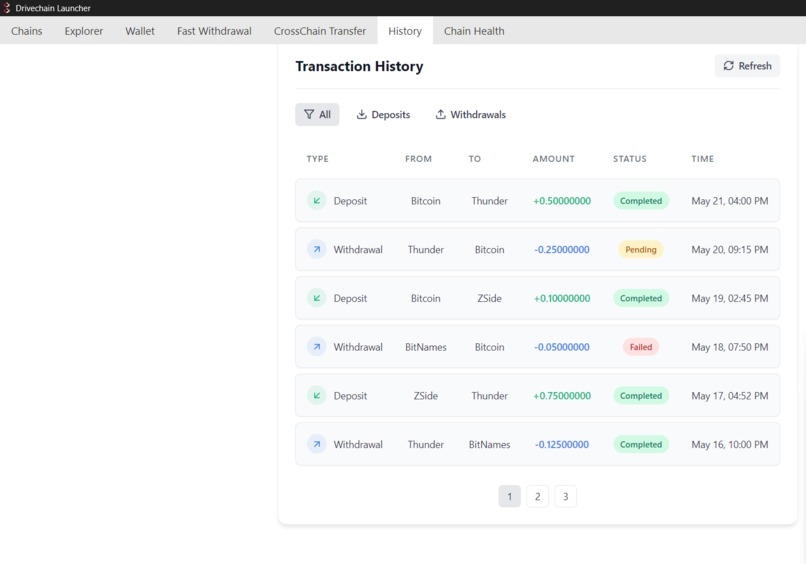
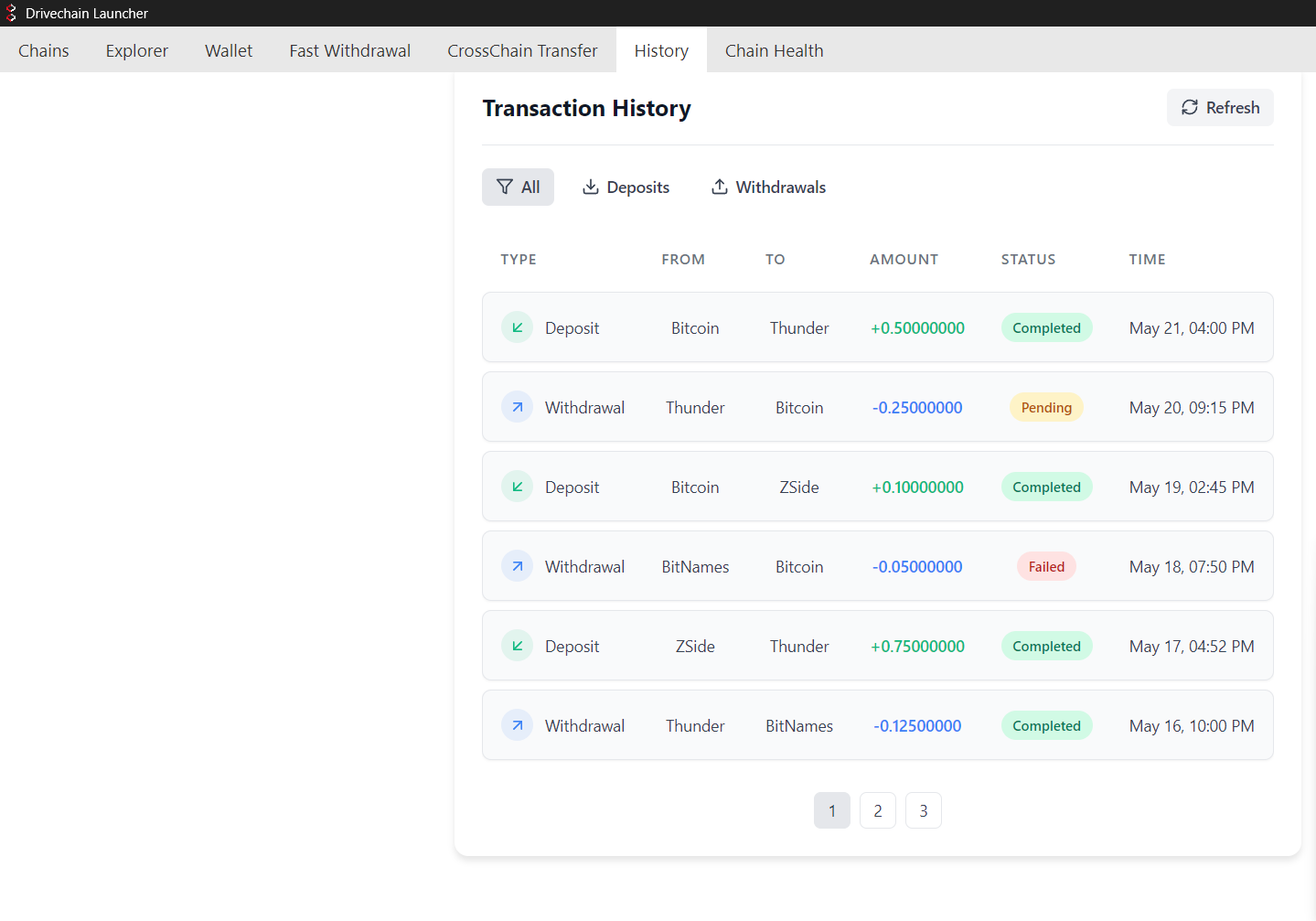
- A detailed transaction history viewer to audit past activity
These components work together to make sidechains visible, understandable, and usable.
🧠 What We Learned
- How BIP300/301 operate at a deeper technical level, especially around the nuances of the two-way peg and sidechain verification
- How essential UX feedback is when dealing with blockchain operations—especially irreversible or time-delayed processes
- The value of data visualization and real-time status tracking in improving user trust and system transparency
🛠️ How We Built It
- We used React to create a modular and scalable frontend architecture
- All components were built using inline CSS with no external UI libraries to maintain full control and portability
- We simulated chain and node data to build against realistic scenarios, and structured everything for easy RPC integration
- The app is fully responsive and adapts across screen sizes, including collapsible panels and smart layout grids
🚧 Challenges We Faced
- The original Drivechain Launcher had a fixed UI and limited interactivity, which we had to completely rework from scratch
- BIP300/301 operations are not inherently user-friendly—so translating abstract logic into visual, intuitive components took significant design iteration
- Without live RPC endpoints, we needed to simulate realistic multi-chain data while leaving our codebase ready for production integration
- Ensuring real-time updates and maintaining performance in a multi-chain environment required careful state management and UI design
Built With
- bitcoin
- blockchain
- react
- tailwindcss


Log in or sign up for Devpost to join the conversation.