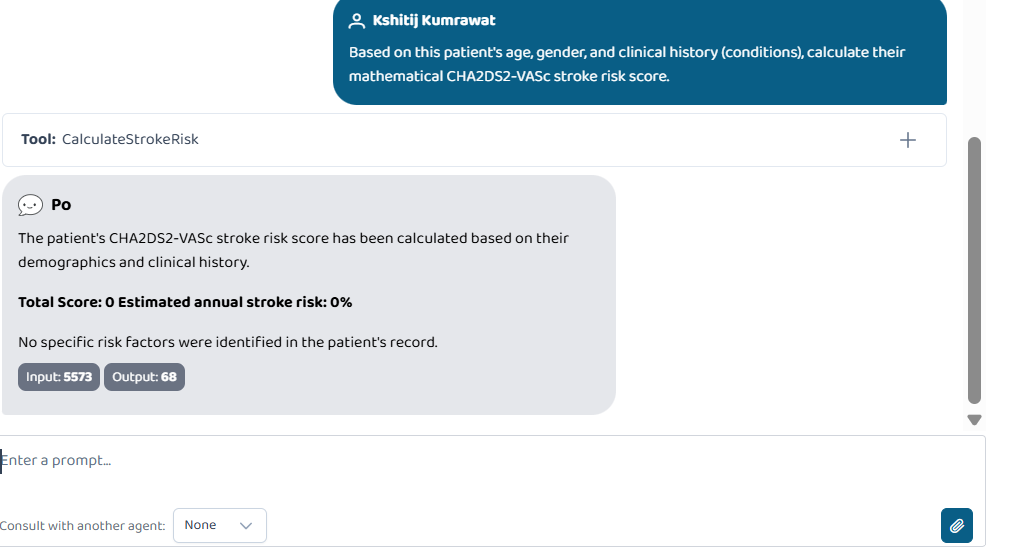
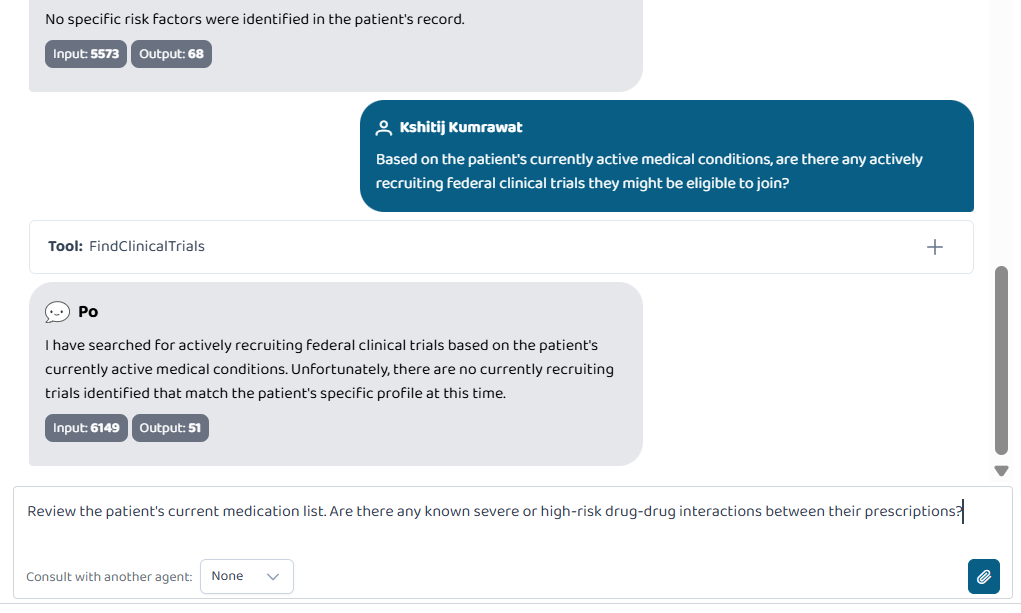
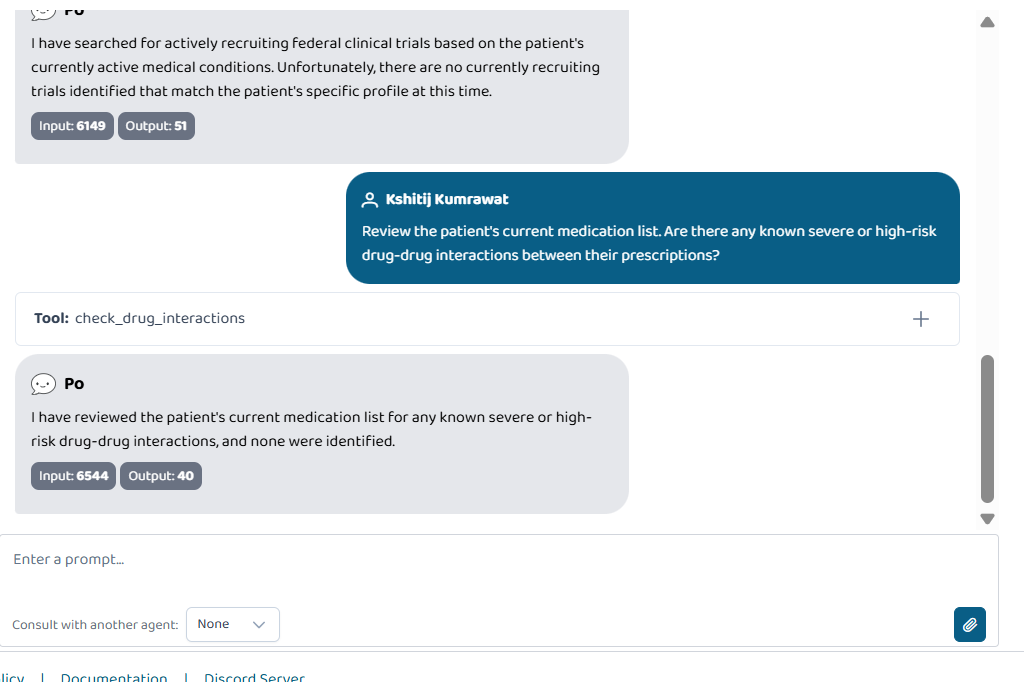
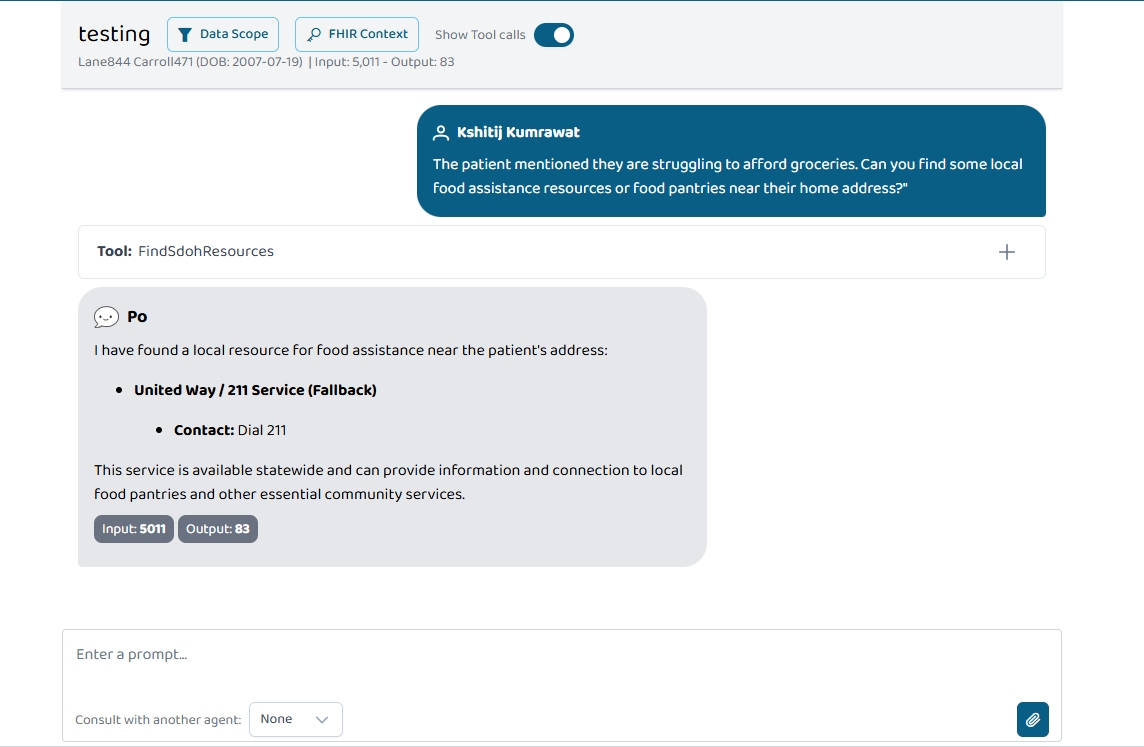
Inspiration The Agents Assemble challenge inspired us to conquer the "Last Mile" of healthcare AI—the gap where raw artificial intelligence must be converted into actionable clinical deliverables . While traditional AI agents can perform basic chat functions, we wanted to build a true "Superpower" . We were inspired to create a Model Context Protocol (MCP) server that extends an AI agent's capabilities far beyond standard FHIR CRUD operations by bridging patient data with complex clinical math and live, real-world external APIs . What it does The Advanced Clinical Superpower MCP Suite acts as a toolset ("hammer") that any AI agent can pick up and use to solve complex healthcare workflows . It features four specialized tools: Local SDoH Resources Locator: Addresses Social Determinants of Health by automatically extracting the patient's location from their FHIR demographics and querying the OpenStreetMap (Nominatim) API to find local community assistance programs, like food pantries or clinics . Predictive Risk Calculator: Deterministically calculates a patient's CHA2DS2-VASc stroke risk score and estimated annual stroke risk percentage . The math evaluates based on FHIR data: CHA 2 DS 2 -VASc=CHF(1)+HTN(1)+Age≥75(2)+Diabetes(1)+Stroke/TIA(2)+Vascular(1)+Age 65-74(1)+Sex Category(1) The tool automatically cross-references patient age, gender, and clinical code strings to assign these weighted points . Clinical Trial Matcher: Extracts active, recurrent, or relapsing resources from the patient's chart and queries the live NIH ClinicalTrials.gov V2 API to return recruiting experimental studies matching the patient's exact diagnoses . Drug-Drug Interaction Checker: Acts as a pharmacy safety guard by analyzing a patient's active and resources, converting plain text drugs into RxCUIs, and checking the NIH Interaction API for high-severity warnings . How we built it We developed the server using the community MCP repository as our foundation . To make our tools accessible over the internet, we deployed and served our MCP server using Hugging Face Spaces. To integrate it with the Prompt Opinion platform, we added our Hugging Face Space URL to our Workspace Hub and explicitly enabled the FHIR Context box . This crucial step allowed our server to receive the authentication token required to natively pull synthetic patient data directly from the Prompt Opinion FHIR server . We powered the underlying agent utilizing the recommended Gemini 3.1 flash light model via Google AI Studio and ensured that our data flows adhered to the SHARP Extension Specs so that patient IDs and FHIR tokens propagated seamlessly through our tool calls . Challenges we ran into One significant challenge involved handling anomalies in synthetic healthcare data . Since we strictly used synthetic data to comply with the hackathon's safety rules , we discovered that Synthea test patients frequently default to a dummy "00000" zip code . This completely broke our SDoH API location searches. We overcame this by programming a logical fallback in our Python/TypeScript utilities that detects the dummy zip code and defaults to querying the extracted City and State demographics instead . Additionally, resolving plain text medication names into the standardized RxNorm Concept Unique Identifiers (RxCUIs) required by the NIH Interaction API took considerable data cleaning and secondary API routing . Accomplishments that we're proud of We are incredibly proud to have successfully integrated live federal databases (NIH ClinicalTrials and NIH RxNav) and OpenStreetMap with a real-time Generative AI agent . We successfully turned complex clinical algorithms into a fully functional, interoperable toolset that could theoretically be deployed in a real healthcare system today . Finally, we successfully navigated the Stage One requirements by configuring and publishing our MCP suite to the Prompt Opinion Marketplace Studio, making it fully discoverable and invokable . What we learned Building this project provided deep, hands-on experience with the Model Context Protocol (MCP) and interoperable healthcare standards . We learned how to deeply navigate FHIR resource structures (such as filtering resources by clinical status) and how Prompt Opinion manages seamless authentication through SHARP context propagation . What's next for Advanced Clinical Superpower MCP Suite We plan to expand the suite by adding more specialized clinical calculators (such as ASCVD risk or GFR renal function scores). We also want to integrate additional live APIs, such as insurance formulary checkers, to further assist clinicians at the point of care.
TRY IT OUT LINK HAS MCP SERVER LINK WHICH DO NOT REQUIRE AUTH.
Built With
- fhir
- gemini-3.1-flash-light
- google-ai-studio
- huggingface-spaces
- model-context-protocol-mcp
- nih-clinicaltrials-api
- openstreetmap-api
- prompt-opinion
- python
- sharp-extension-specs
- typescript

Log in or sign up for Devpost to join the conversation.