AdSync
AI-powered automatic brand placement in any video — no editing, no reshoot.
Inspiration
Product placement works because it doesn’t feel like an ad. Brands pay hundreds of thousands for it — months of negotiation, manual compositing, and coordinated shoots. But what if it could be done automatically and in real-time without reshoots and changing the scripts?
With this approach, streaming platforms like Amazon Prime Videos could target audiences more precisely based on interests, and creators could get sponsorships without reshooting or rewriting scripts. Brands would appear naturally in the content, tailored to the scene.
What It Does
Upload a video.
AdSync analyzes the scene to find the most contextually appropriate surface (walls, billboards, screens, objects). It then searches an ad directory to identify brands that best match the context of the video.
Once a suitable brand is selected, AdSync places the logo onto the detected surface with realistic perspective, lighting, and scene-aware blending, making the advertisement appear naturally embedded in the video.
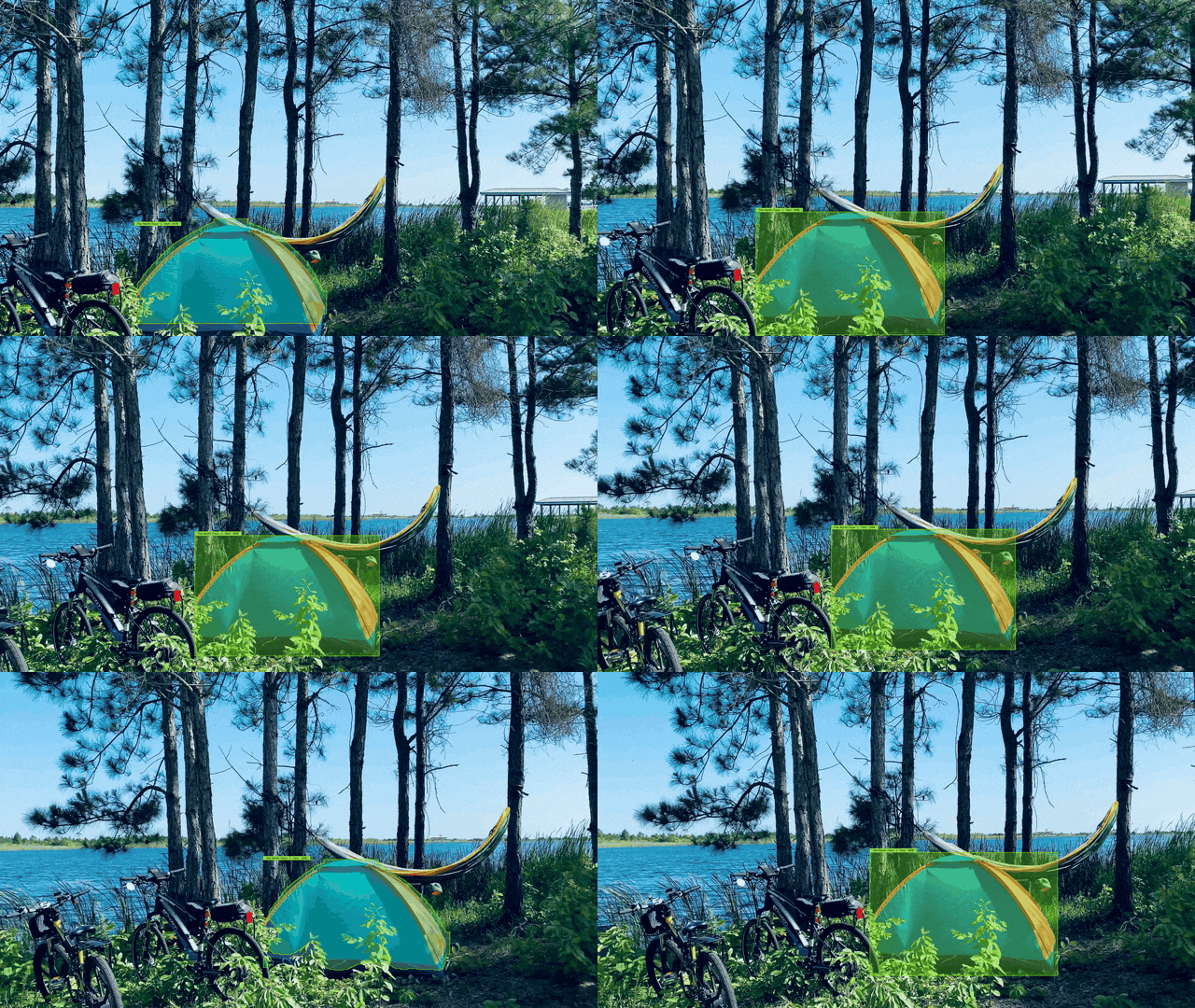
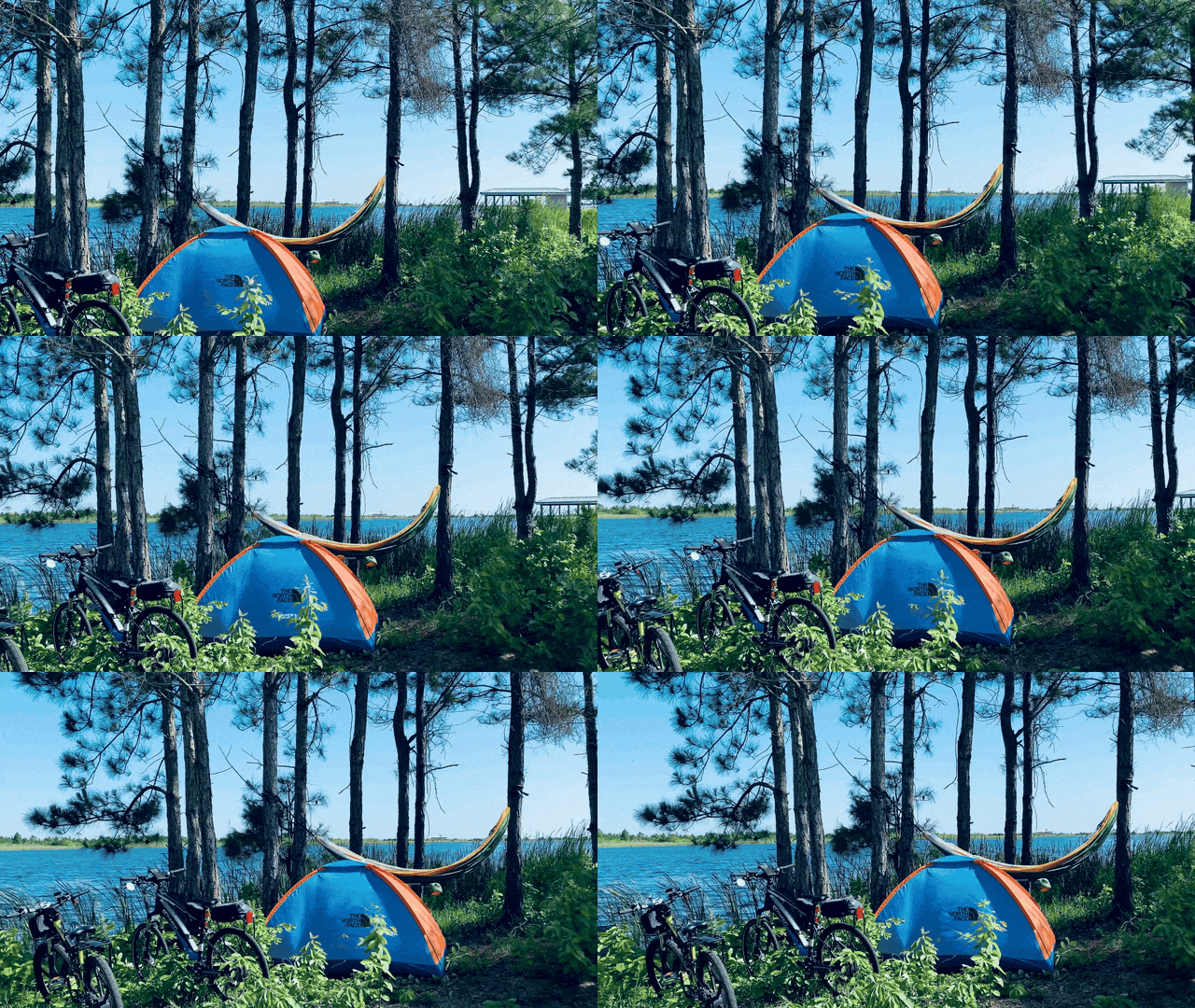
The demo: In our demo, AdSync detects a camping scene and automatically selects The North Face from the ad directory because it’s an outdoor brand. The logo is placed on the tent and tracked with non-rigid surface tracking, so when the fabric moves in the wind, the logo moves and flexes with it like a real print.
How We Built It
Four AI stages on AWS:
Amazon Nova Pro acts as an AI advertising strategist. It analyzes the video, understands the scene, selects a relevant brand, evaluates possible surfaces, and chooses the single best location to place the advertisement based on contextual fit, stability, and visibility.
Rekognition + YOLO World locates the target in every frame. If Rekognition can't match by label, YOLO World runs the same natural language description directly against each frame as a fallback.
Perspective warp + ambient lighting maps the logo to the surface geometry and absorbs the scene's color cast so it doesn't look pasted on.
Amazon Nova Canvas inpaints the surrounding pixels, blending the logo into the scene's lighting and texture.
Frontend: React + Vite + Tailwind. Backend: Python + Lambda + S3 + DynamoDB + CDK.
Challenges We Ran Into
One of the biggest lessons from building this system was that surface selection is really a judgment problem, not just a detection problem. Early prototypes could detect surfaces correctly and place logos with proper perspective, but the placements often felt contextually wrong. A technically correct placement isn’t always the right placement from an advertising standpoint.
Another challenge was dealing with non-rigid surfaces. Things like fabric, flags, or tents move and deform, which breaks the assumptions behind simple rigid perspective warping. To make placements believable, the system had to track surfaces that bend and flex over time rather than treating them like flat, static planes.
We also ran into limitations with Amazon Rekognition. Its label vocabulary doesn’t always map cleanly to natural language concepts you might want to target in ads. Because of this, we added YOLO-World as a fallback for open-vocabulary detection.
Accomplishments That We're Proud Of
One of the things we’re most proud of is getting a fully working demo of automatic brand placement. The system can analyze a video, choose a relevant brand, find a suitable surface, and place the logo in a way that looks natural within the scene.
A moment that really shows this working is the tent example in the demo. The tent moves in the wind, and the logo moves with it — flexing with the fabric just like a real printed logo would. Achieving non-rigid surface tracking on real outdoor footage with natural lighting is one of the hardest parts of the problem.
What We Learned
One of the biggest lessons from this project was that the hardest part wasn’t just placing the logo. It was figuring where it should go and then tracking that surface over time. Choosing a placement that actually makes sense in the scene requires contextual judgment, not just detection.
Tracking moving objects was another challenge. Flexible surfaces like fabric are hard to follow, and sometimes the logo can slip or disappear for a few frames.
We also learned the importance of fallback systems. Real-world videos vary a lot, so relying on a single detection or tracking method isn’t enough. Adding backups made the pipeline much more reliable.
What's Next for AdSync
Temporal smoothing to eliminate flicker on deforming surfaces. Then the marketplace — where brands set budgets, creators connect content libraries, and AdSync matches them automatically. The technology works. The market is 50 million creators. The infrastructure just hasn't existed until now.

Log in or sign up for Devpost to join the conversation.