
AI Emergency Response & Relief Network (ADRN)
Build a production-quality disaster management platform by extending an existing AI Emergency Response Network. Do not create a separate food project. Integrate food and relief logistics as part of the same ecosystem.
Tech Stack
- Frontend: Next.js (TypeScript + Tailwind CSS)
- Backend: Spring Boot (Java)
- Database: MongoDB Atlas
- Real-time: WebSockets
- Maps: OpenStreetMap/Google Maps API
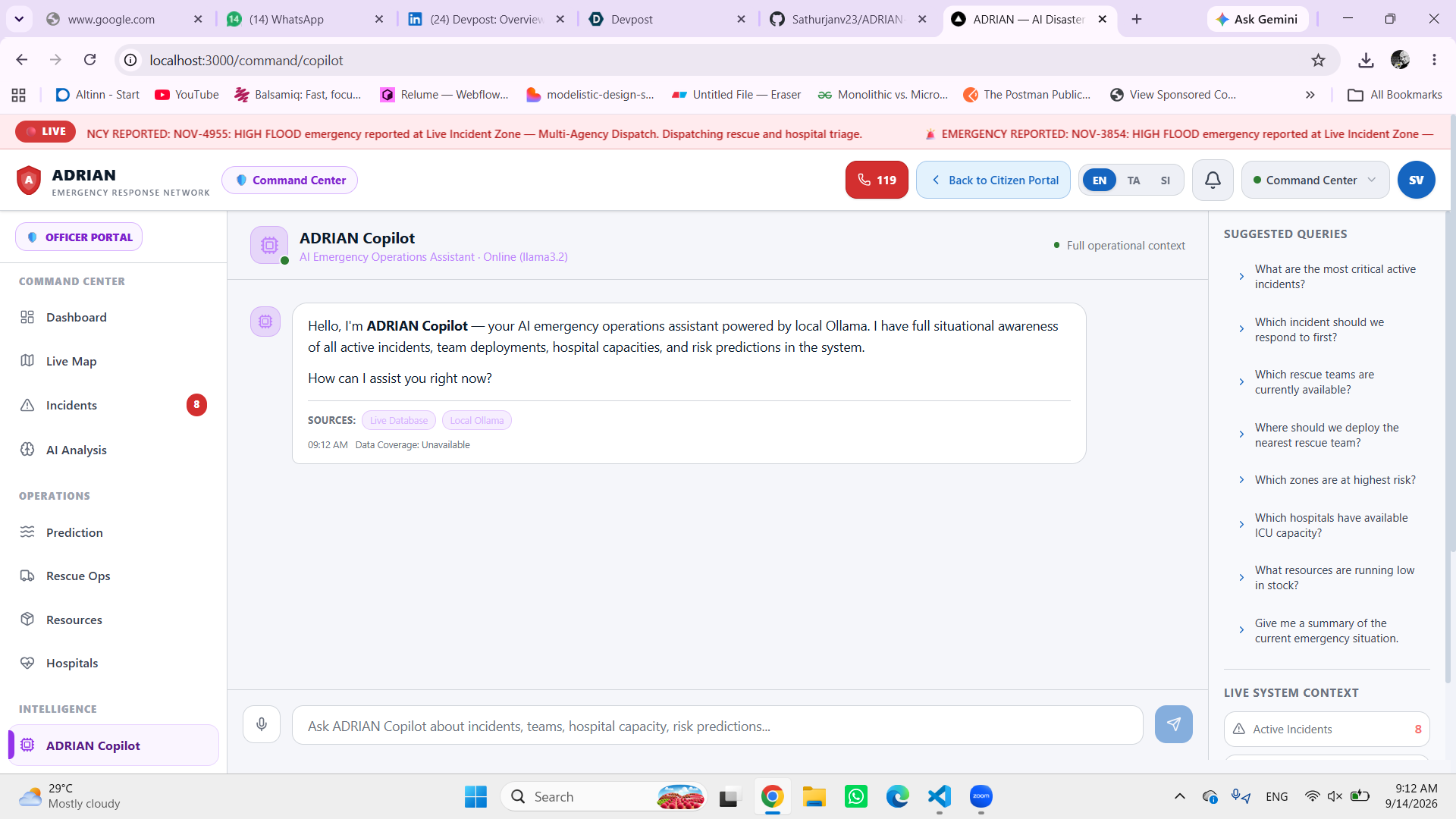
- AI Ready: Copilot architecture (future AWS AI integration)
Existing 4 Portals (Keep Them)
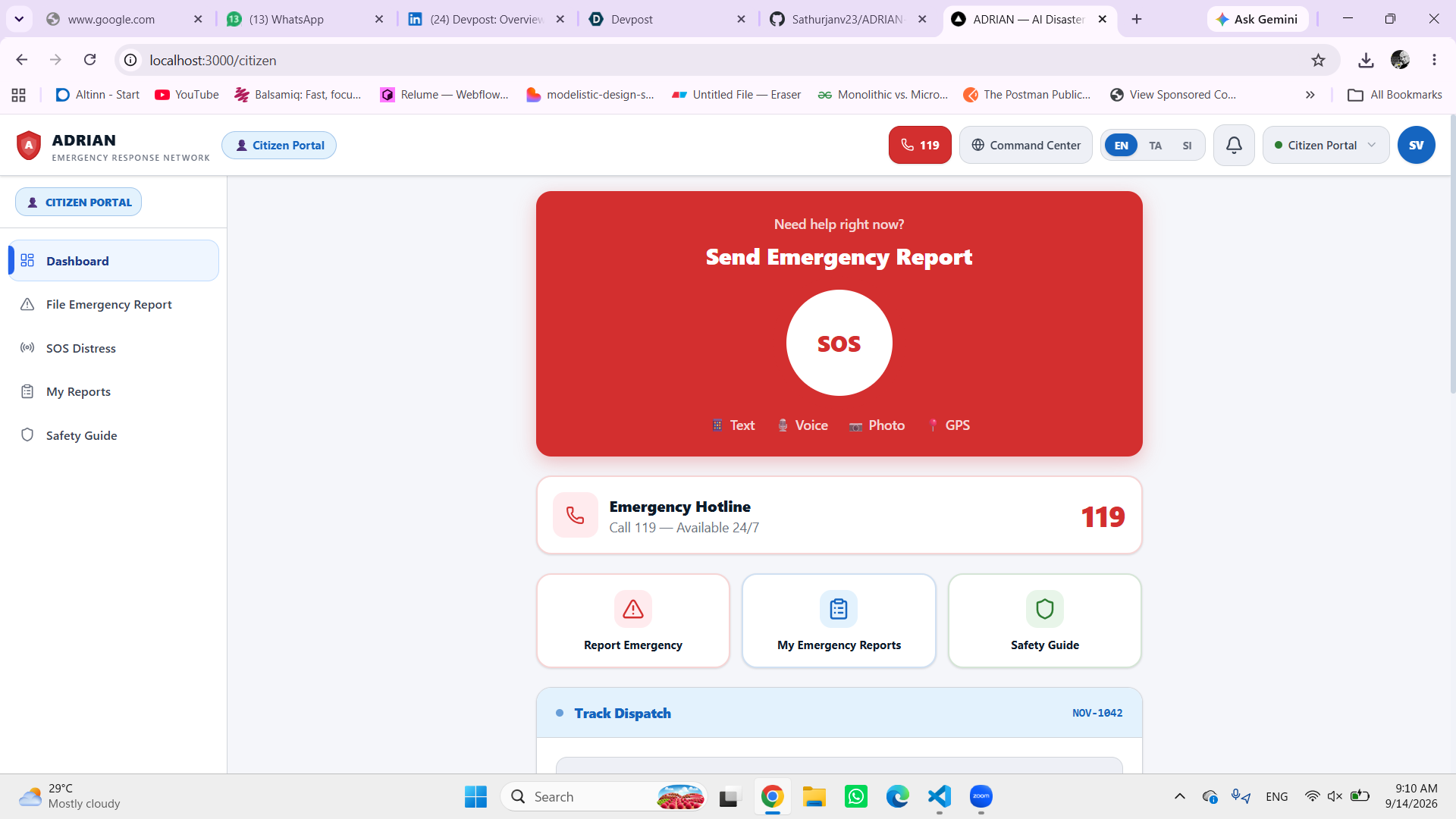
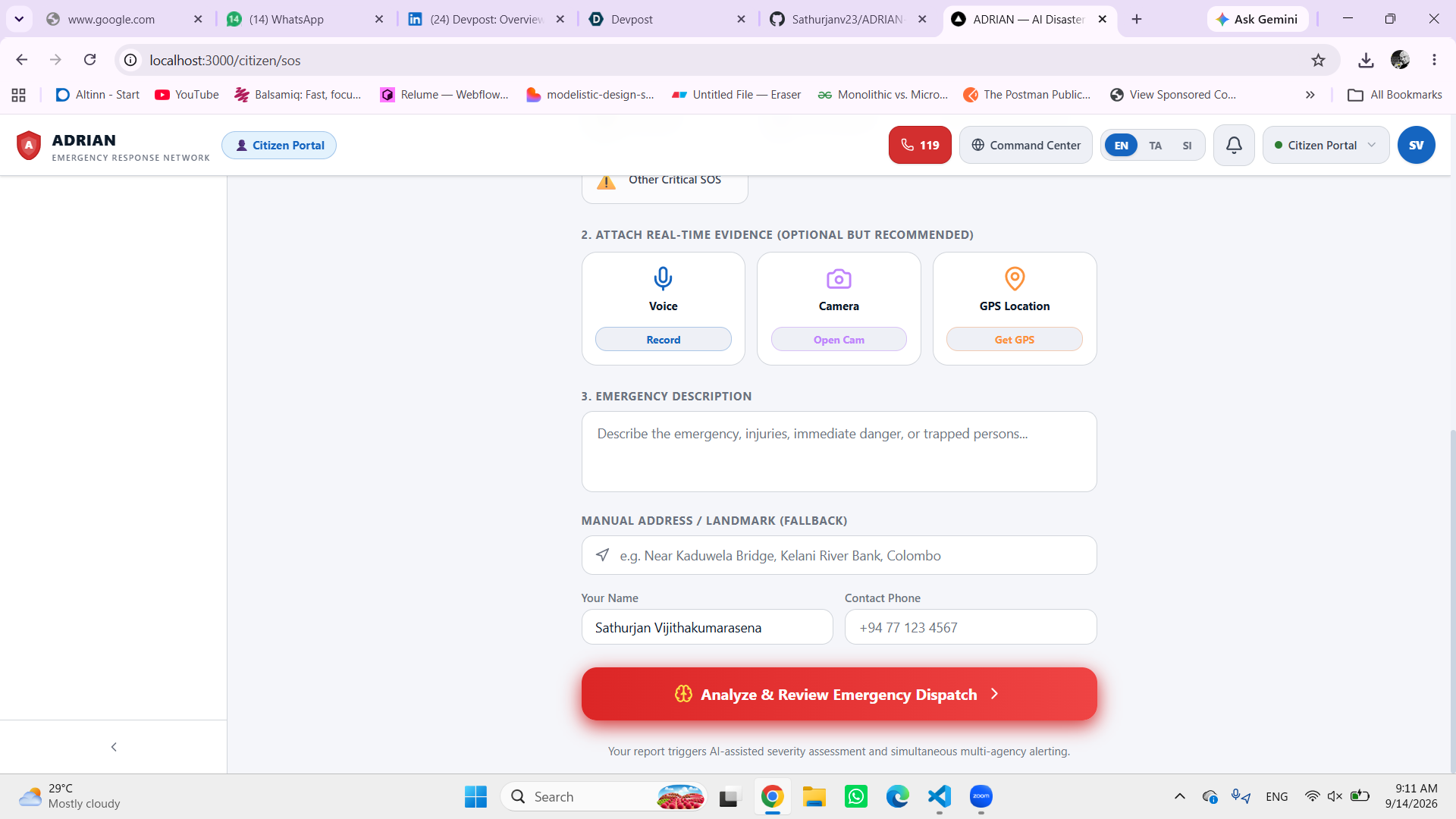
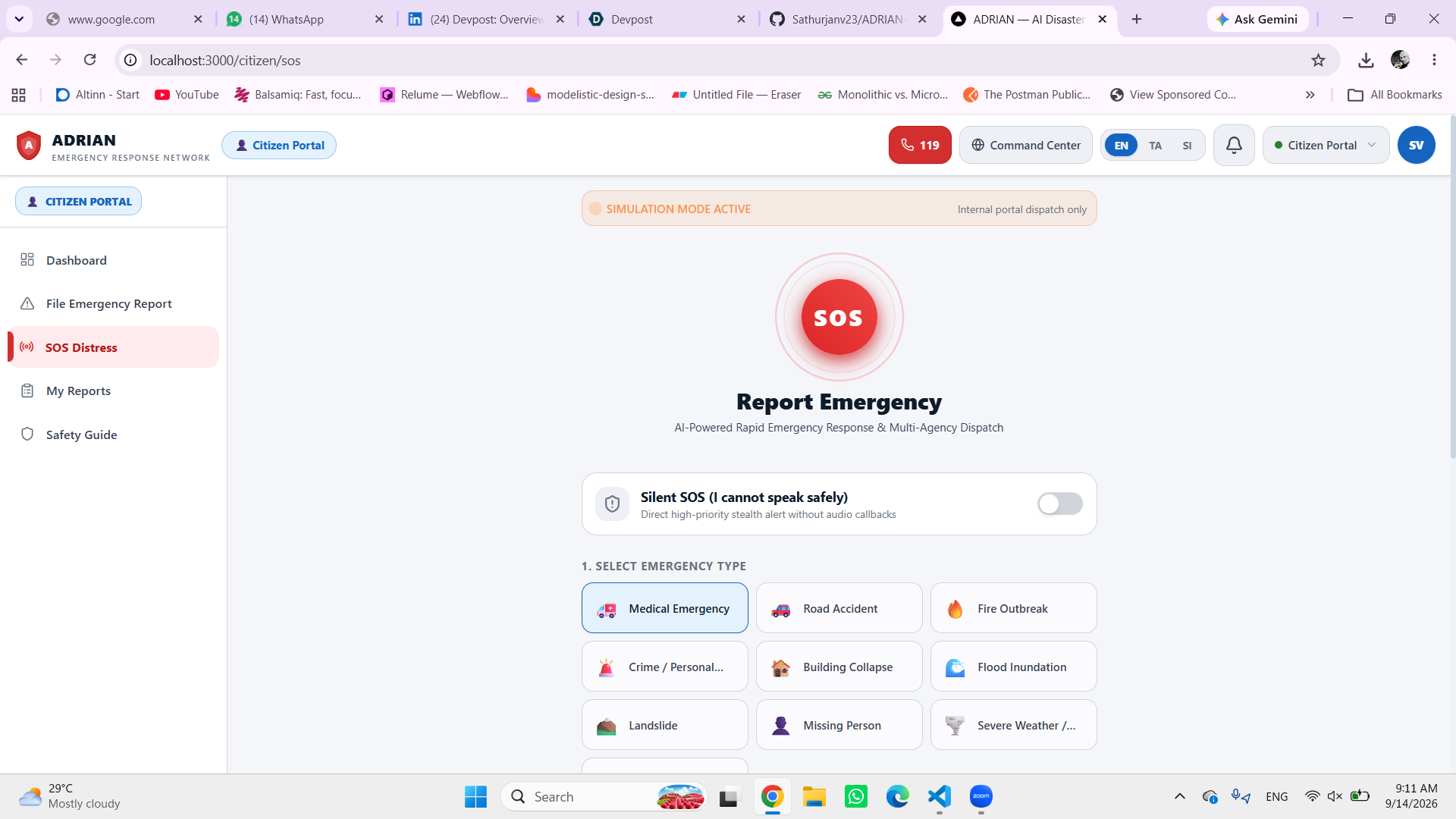
- Citizen Portal
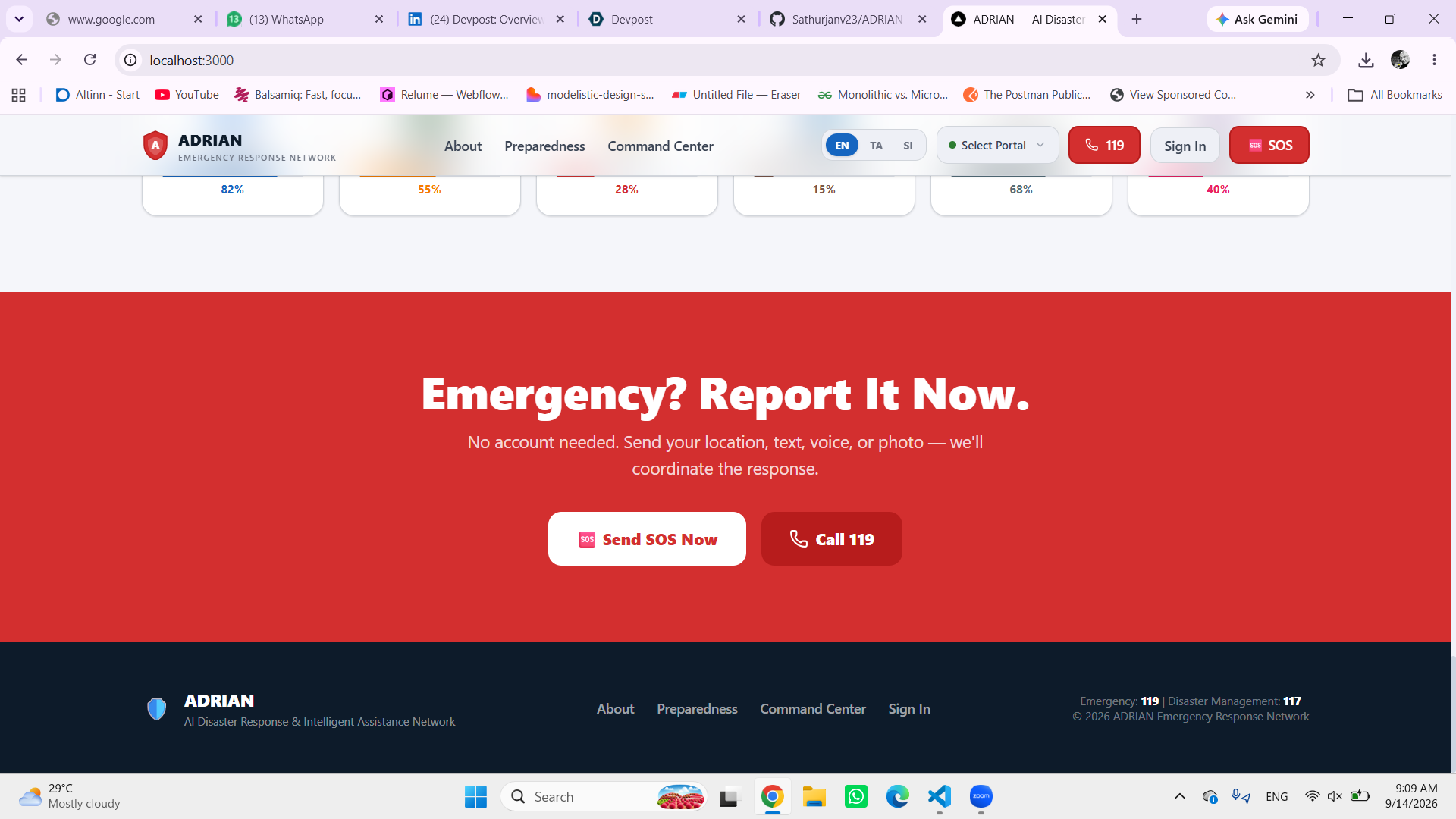
- No login required for SOS.
- Send emergency report.
- Optional inputs:
- Voice recording.
- Photos.
- Live GPS location.
- Text message.
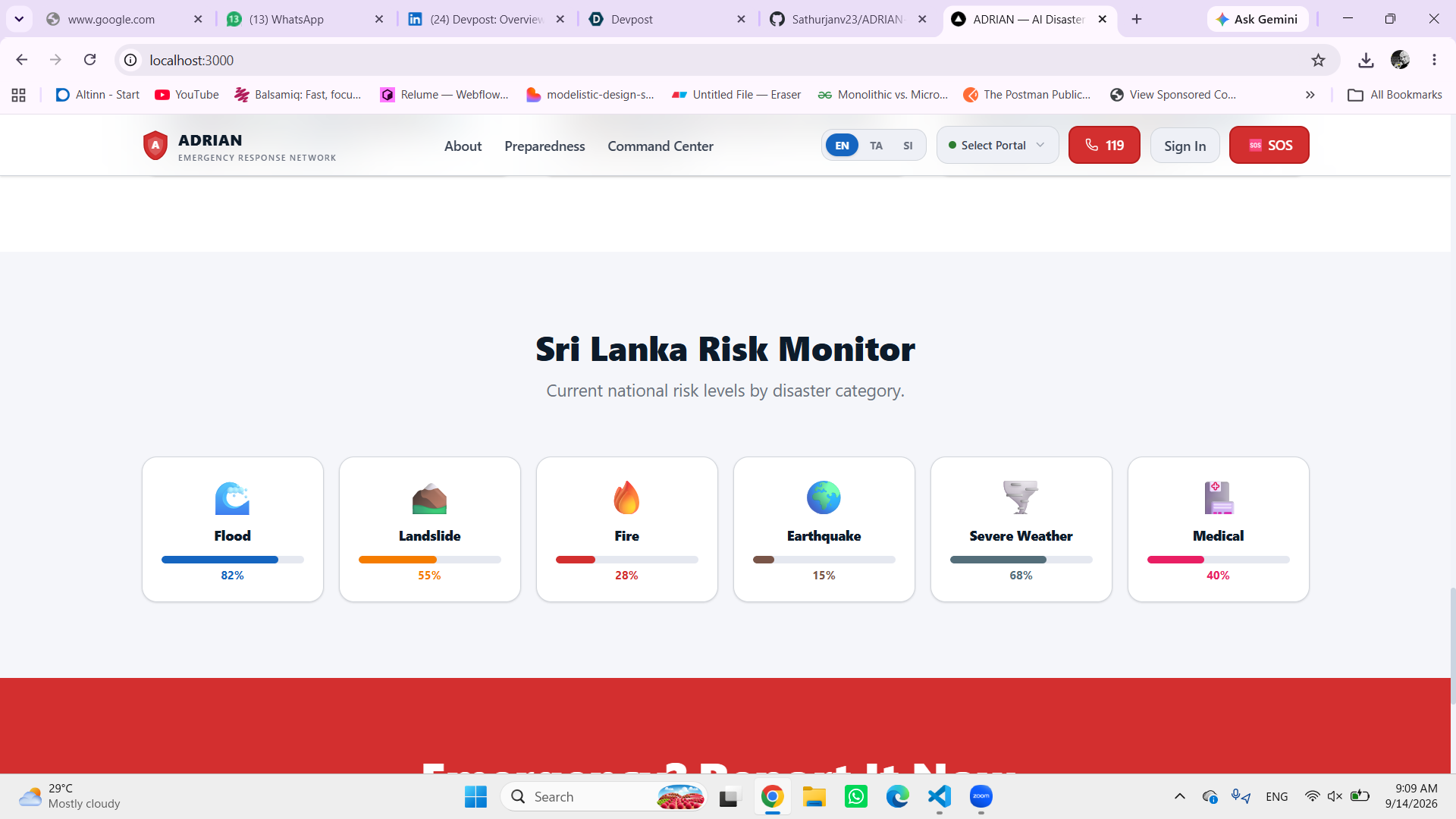
- Emergency category:
- Flood.
- Fire.
- Earthquake.
- Landslide.
- Medical Emergency.
- Rescue Team Portal
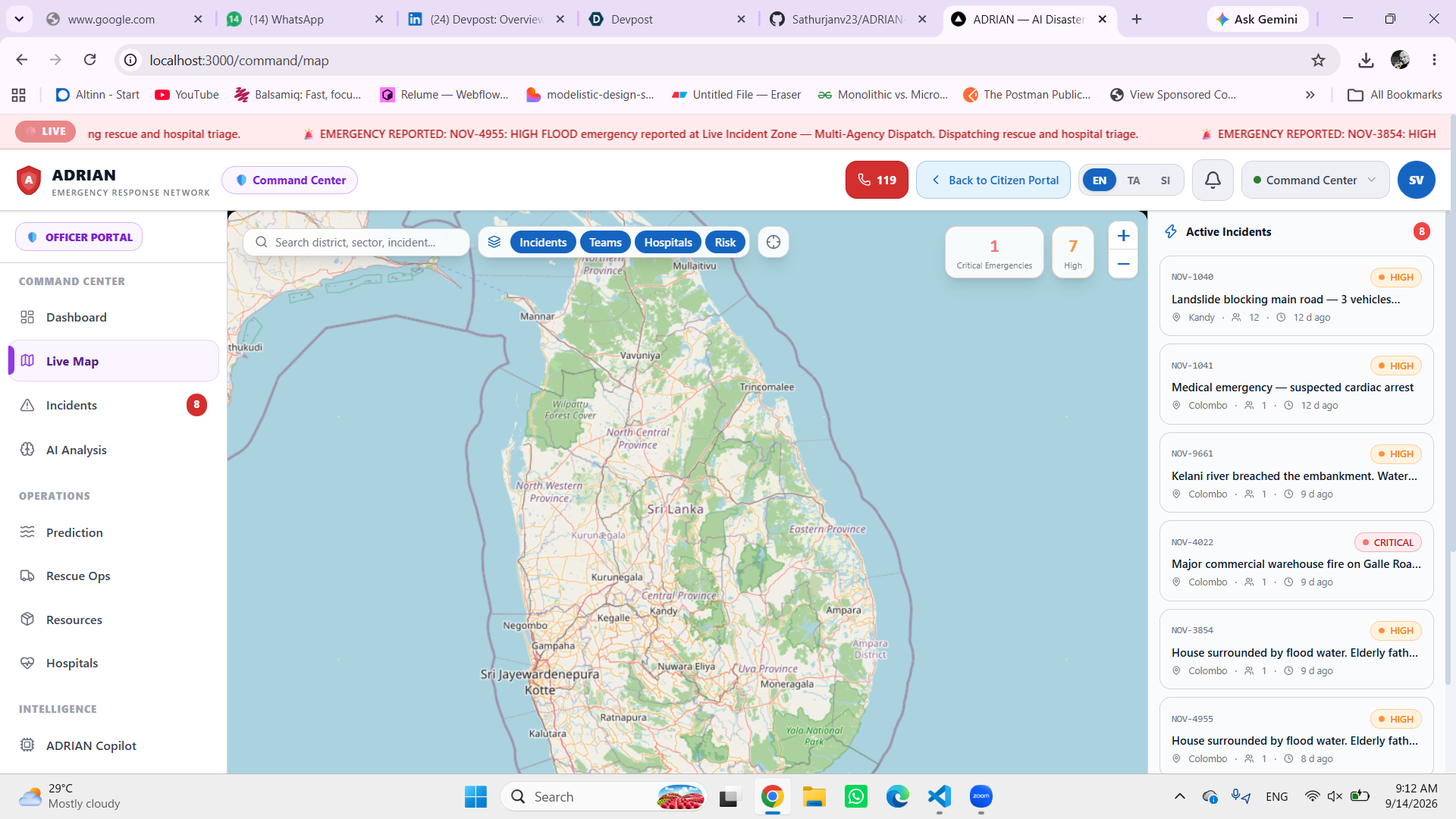
- Live map with incoming SOS.
- Priority queue.
- First Come First Serve inside each priority.
- Accept mission.
- Navigate to victim.
- Update mission status:
- Assigned.
- On the way.
- Rescued.
- Delivered to hospital.
- Completed.
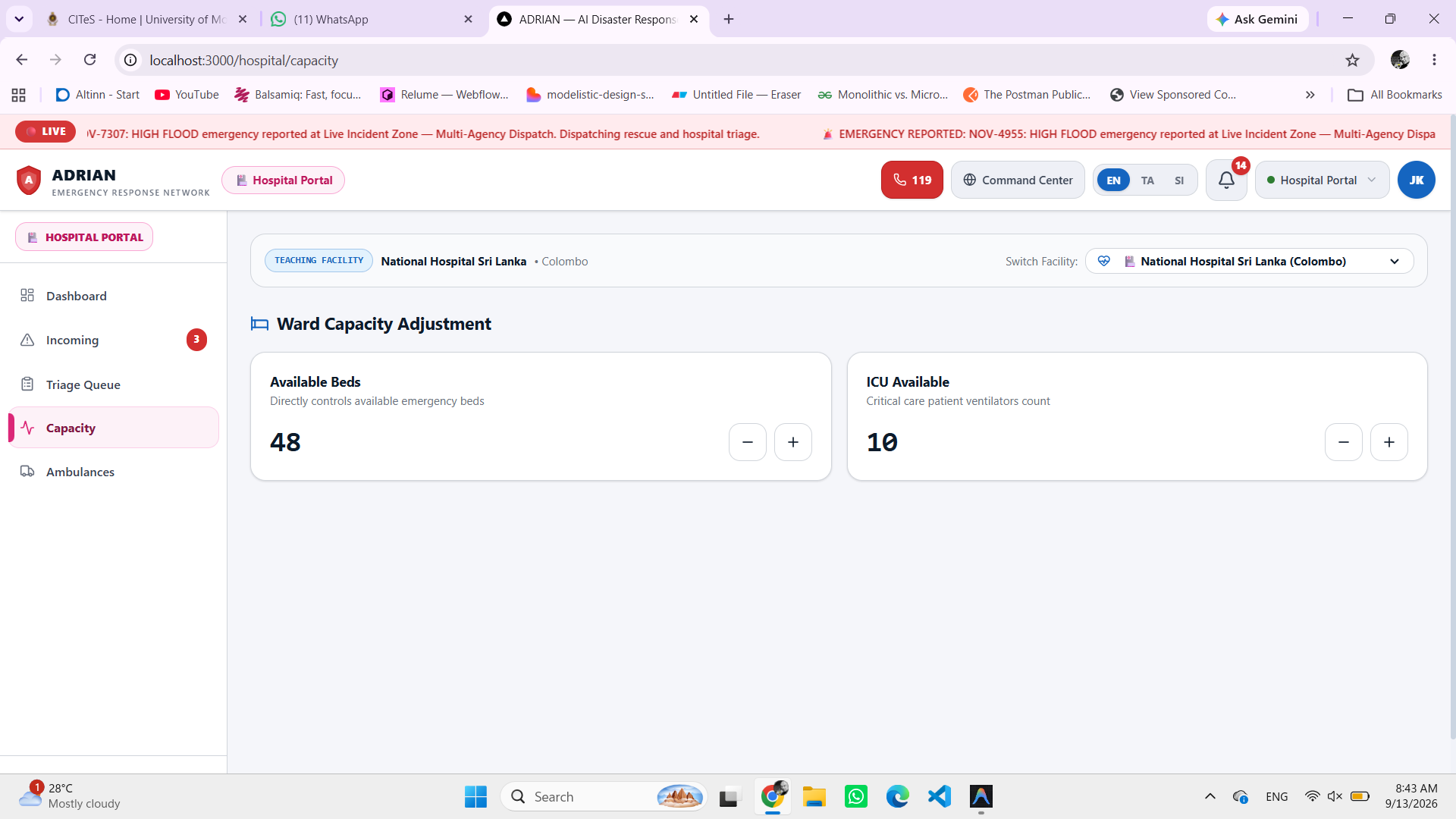
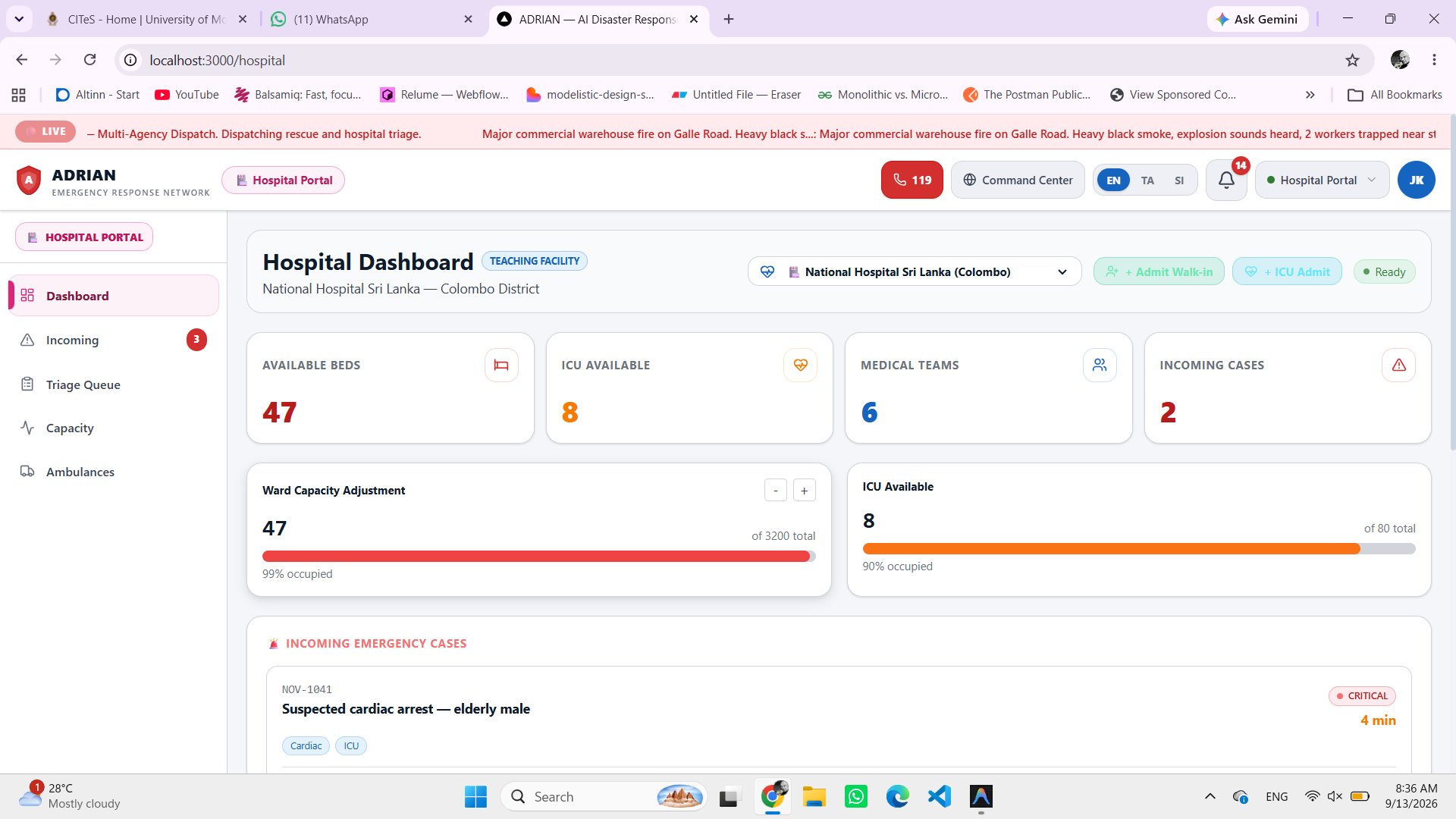
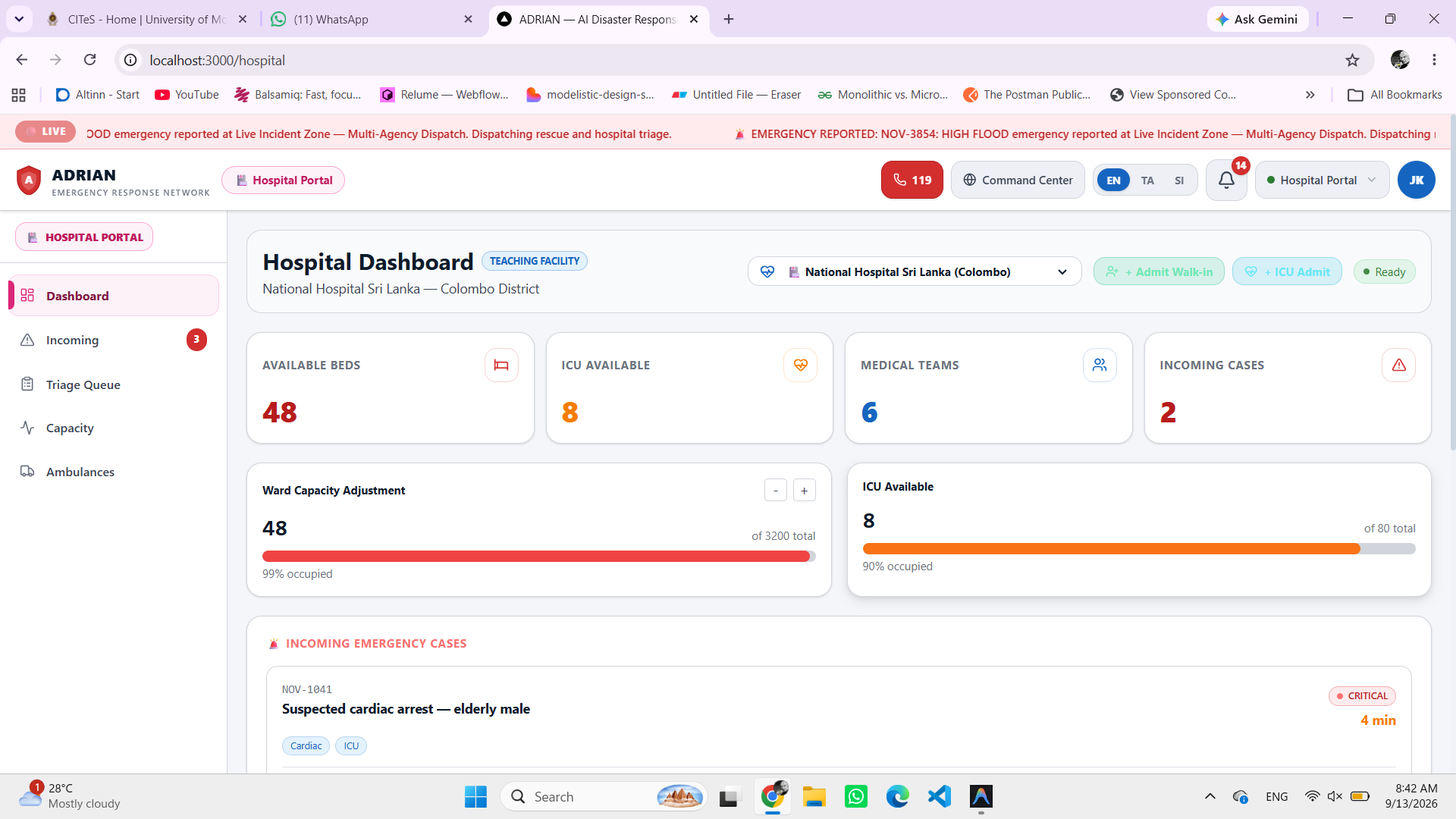
- Hospital Portal
- Bed availability.
- ICU availability.
- Ambulance availability.
- Doctor and emergency team availability.
- Admit patient.
- Update capacity in real time.
- Command Center
- AI Copilot chat.
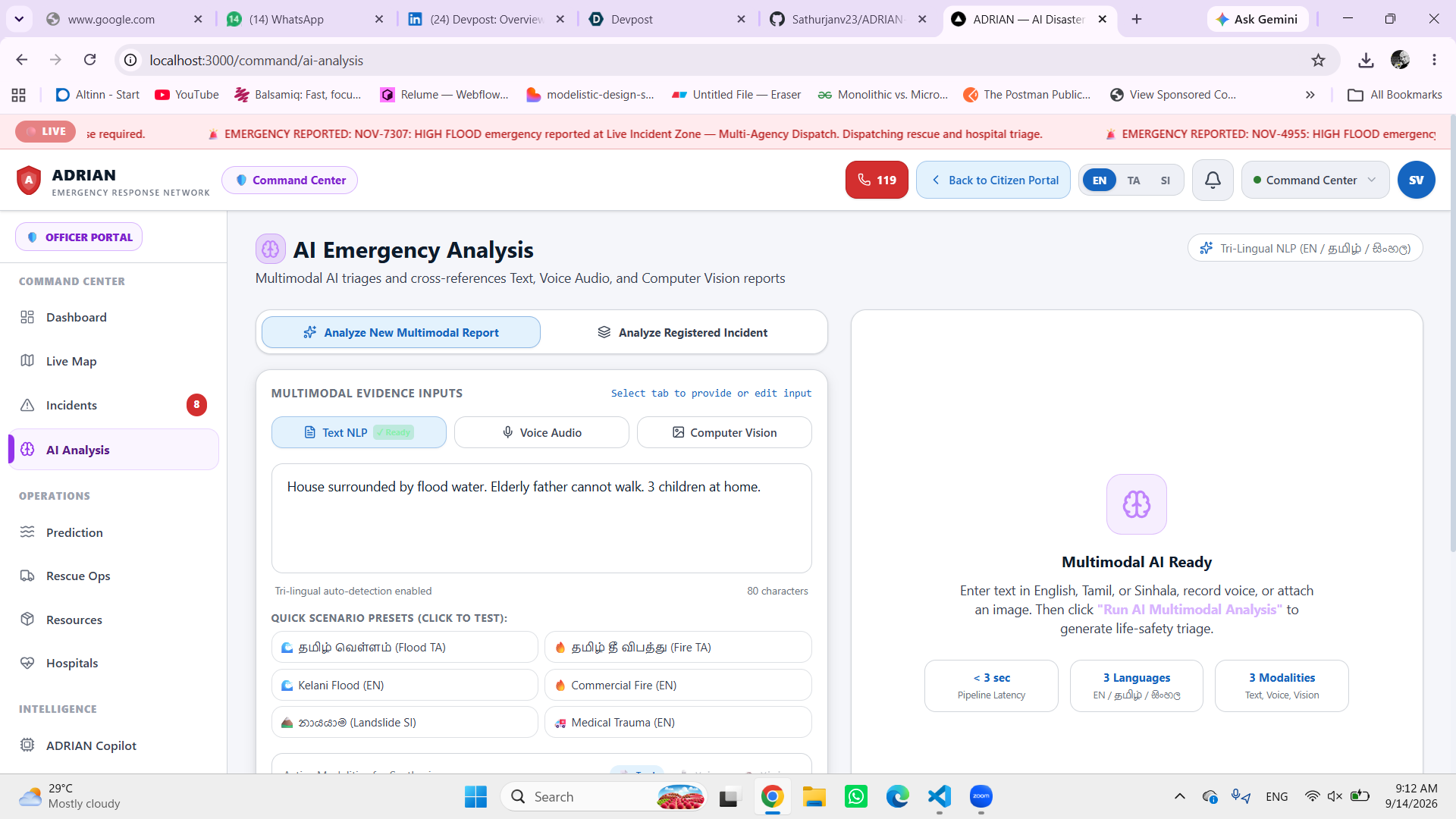
- AI Incident Analysis.
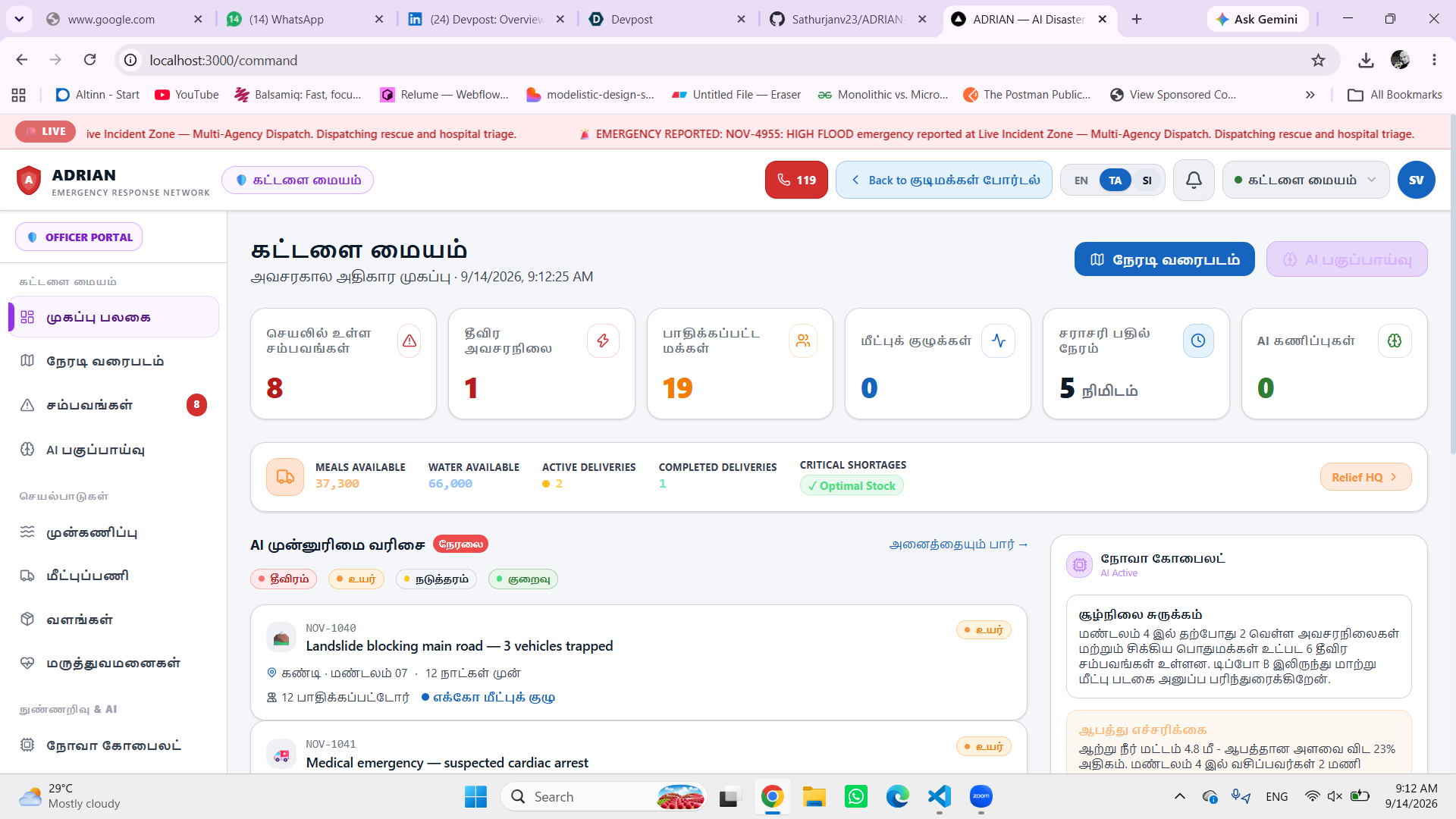
- Multilingual support (Tamil, Sinhala, English).
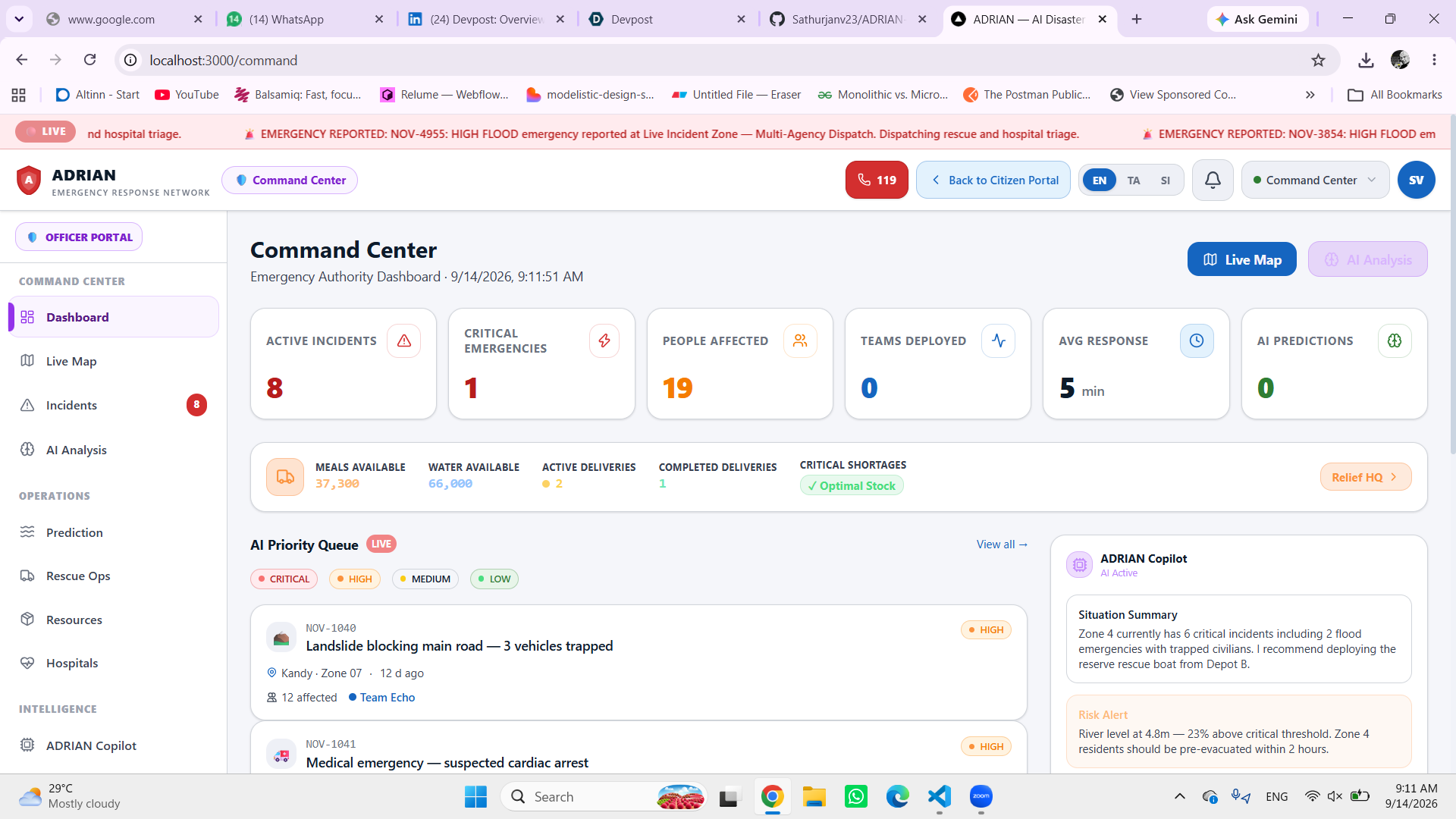
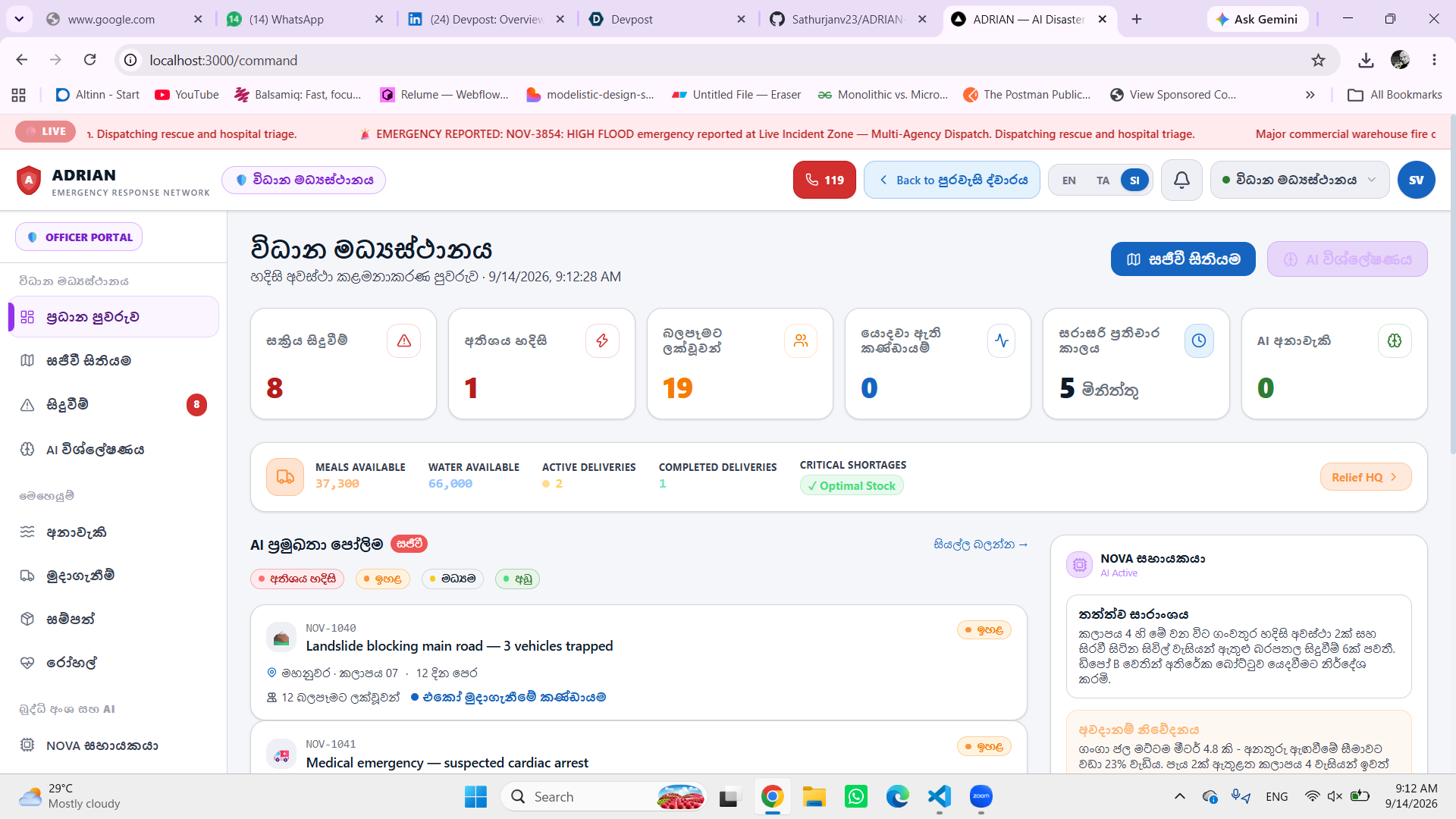
- Dashboard with disaster heatmap.
- Live rescue monitoring.
NEW MODULE — AI Relief Logistics (Integrated)
This module activates automatically when AI detects a disaster affecting people.
Objective
Connect locations with excess food and water to disaster zones needing relief.
Food Sources
- Restaurants.
- Hotels.
- Supermarkets.
- Food warehouses.
Relief Workflow
- AI detects disaster zone.
- AI estimates affected population.
- AI calculates meals and water needed.
- AI searches nearest excess food sources.
- AI chooses best source based on:
- Distance.
- Quantity.
- Food freshness.
- Travel time.
- Government rescue vehicles receive delivery mission.
- Live tracking until supplies arrive.
New Collections
- FoodSource
- ReliefRequest
- ReliefMission
- Inventory
- Volunteer (optional future)
Food Source Fields
- Name.
- Type.
- GPS location.
- Available meals.
- Water bottles.
- Expiry time.
- Contact.
Relief Request Fields
- Disaster location.
- People affected.
- Required meals.
- Required water.
- Priority level.
- Status.
Relief Mission Fields
- Rescue vehicle.
- Pickup location.
- Destination.
- ETA.
- Status.
AI Decision Engine
Automatically determine:
- Nearest food source.
- Best delivery route.
- Priority delivery order.
- Hospital-first delivery if medical supplies needed.
Priority Rules:
- Hospital emergency supplies.
- Children and elderly shelters.
- Large shelters.
- Remaining public requests.
Live Tracking
Every 5 seconds:
- Rescue vehicle GPS.
- Delivery progress.
- ETA updates.
- Route recalculation if blocked.
Command Center Dashboard
Add Relief Widgets:
- Meals available.
- Water available.
- Active deliveries.
- Completed deliveries.
- Critical shortage alerts.
Citizen Experience
After SOS:
- Receive rescue status.
- Receive food/water arrival ETA.
- View assigned hospital.
- View rescue team live location.
UI Theme
Dark emergency theme. Accent colors:
- Red = Emergency.
- Green = Hospital.
- Orange = Relief Logistics.
- Blue = Citizen.
Modern glassmorphism dashboard with responsive mobile + desktop layouts.
Deliverables
Generate:
- MongoDB schema.
- Spring Boot models, repositories, services, controllers.
- REST APIs.
- Next.js pages for all portals.
- AI Copilot integration placeholders.
- Real-time WebSocket events.
- Complete folder structure.
- Clean reusable components.
- Sample seed data for hospitals, rescue teams, food sources and disaster reports.
The entire system should behave as one unified AI Disaster Response Platform, not two separate applications.
Built With
- amazon-web-services
- atlas
- css3
- google-maps
- mongodb
- nextjs
- springboot
- tailwind
- typescript
- websockets

Log in or sign up for Devpost to join the conversation.