Inspiration
Traditional Digital Adoption Platforms (like WalkMe, Whatfix, or Pendo) rely on rigid, hardcoded click sequences and screen coordinates. Whenever a SaaS team updates their UI, these tours break instantly and require constant engineering maintenance. We built AdoptionLayer to be the world's first AI-native Digital Adoption Platform (DAP): an autonomous, real-time interface guide that understands what is on the screen without brittle coordinate maps.
What it does
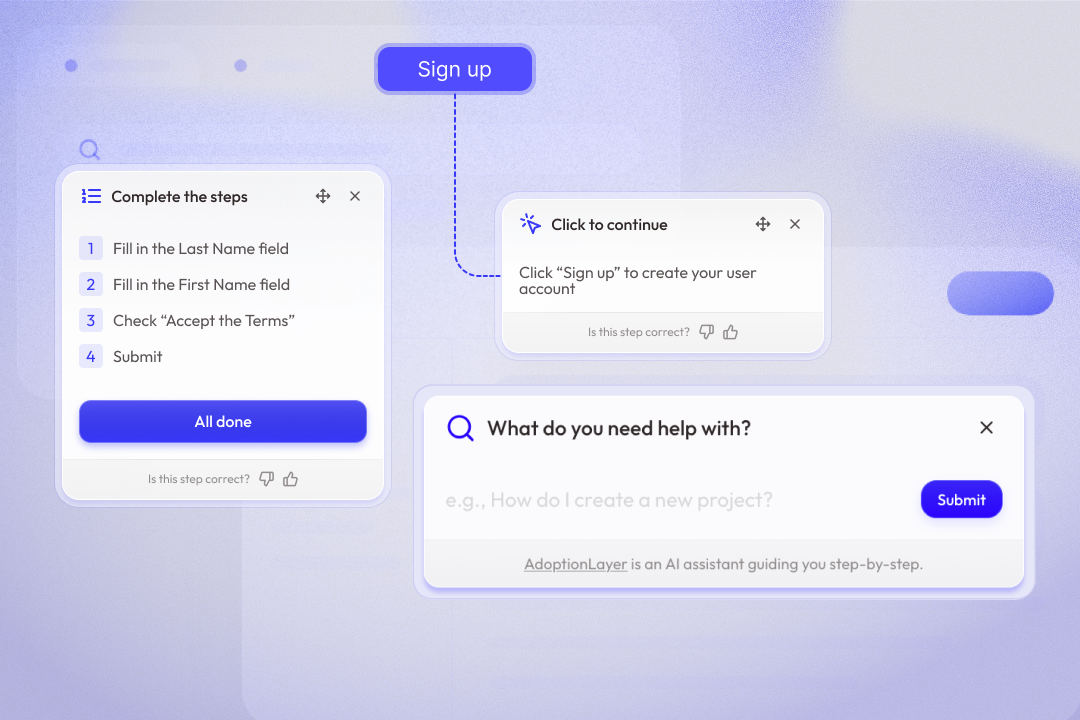
AdoptionLayer embeds into any web application or SaaS with a single lightweight <script> tag. Using advanced LLMs (Gemini, Claude, GPT) combined with a real-time live DOM parsing engine, it:
- Dynamically analyzes the visible UI and interactive elements.
- Highlights target buttons and triggers contextual tooltips.
- Guides users through complex multi-step forms.
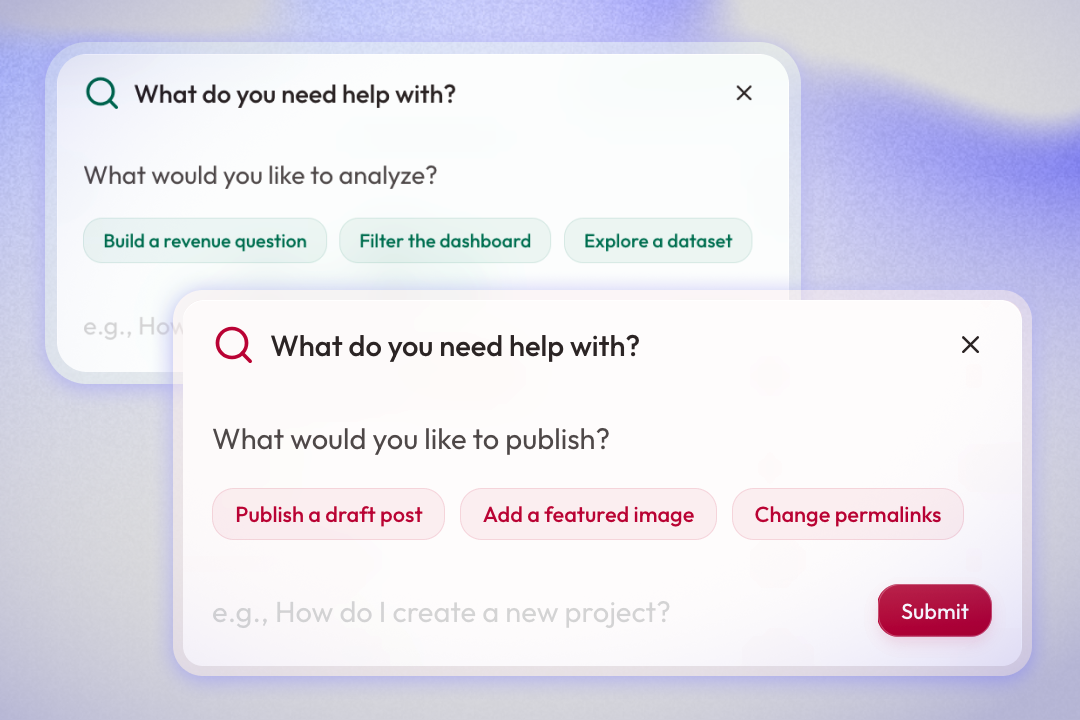
- Answers user questions contextually right inside the host application.
- Adapts automatically to UI changes, redesigns, and dynamic Single Page Apps (SPAs) with zero maintenance.
How we built it
- Frontend Widget: Lightweight ES6/Vanilla JavaScript widget bundled with esbuild, built with strict host isolation, custom shadow styling, and a state machine.
- Live DOM Parser: Compact semantic client-side parser extracting interactive elements, forms, and landmarks without screenshots or privacy leakage.
- Backend & Guidance Engine: Ruby on Rails 8 API orchestrating LLM tool loops via Vertex AI (Gemini 3 Flash) and OpenRouter with strict server-side output policies.
Challenges we ran into
Building low-latency guidance that reacts in real-time to dynamic DOM modifications while guaranteeing 100% host page isolation and GDPR compliance.
Accomplishments that we're proud of
- Delivering a sub-50ms lightweight embed widget.
- Zero-maintenance guidance that doesn't break when CSS classes or DOM structures change.
- A seamless developer experience with 1-line script installation.
Built With
- ai
- gemini
- javascript
- llm
- openrouter
- ruby-on-rails
- tailwindcss
- web-components

Log in or sign up for Devpost to join the conversation.