-
-
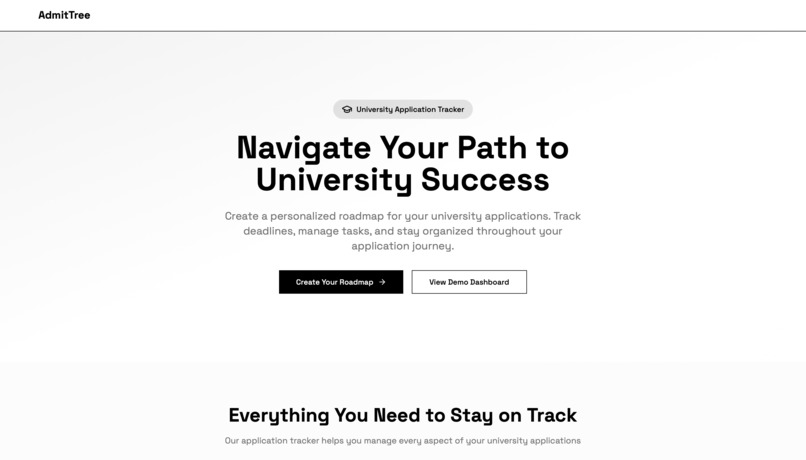
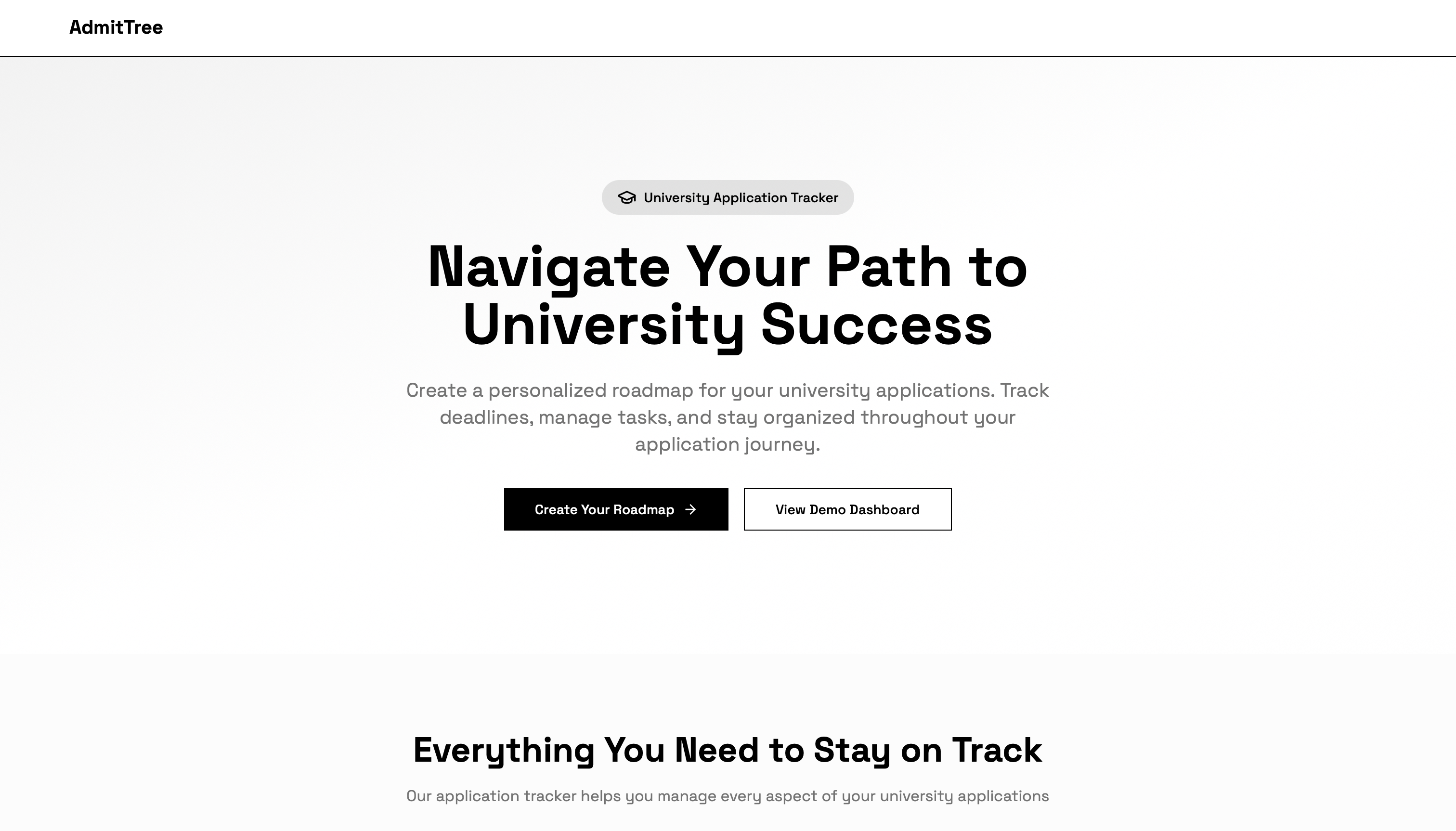
Landing Page
-
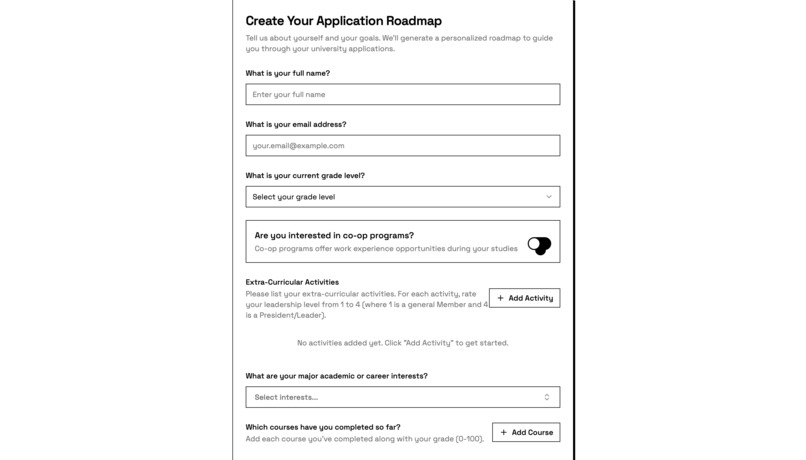
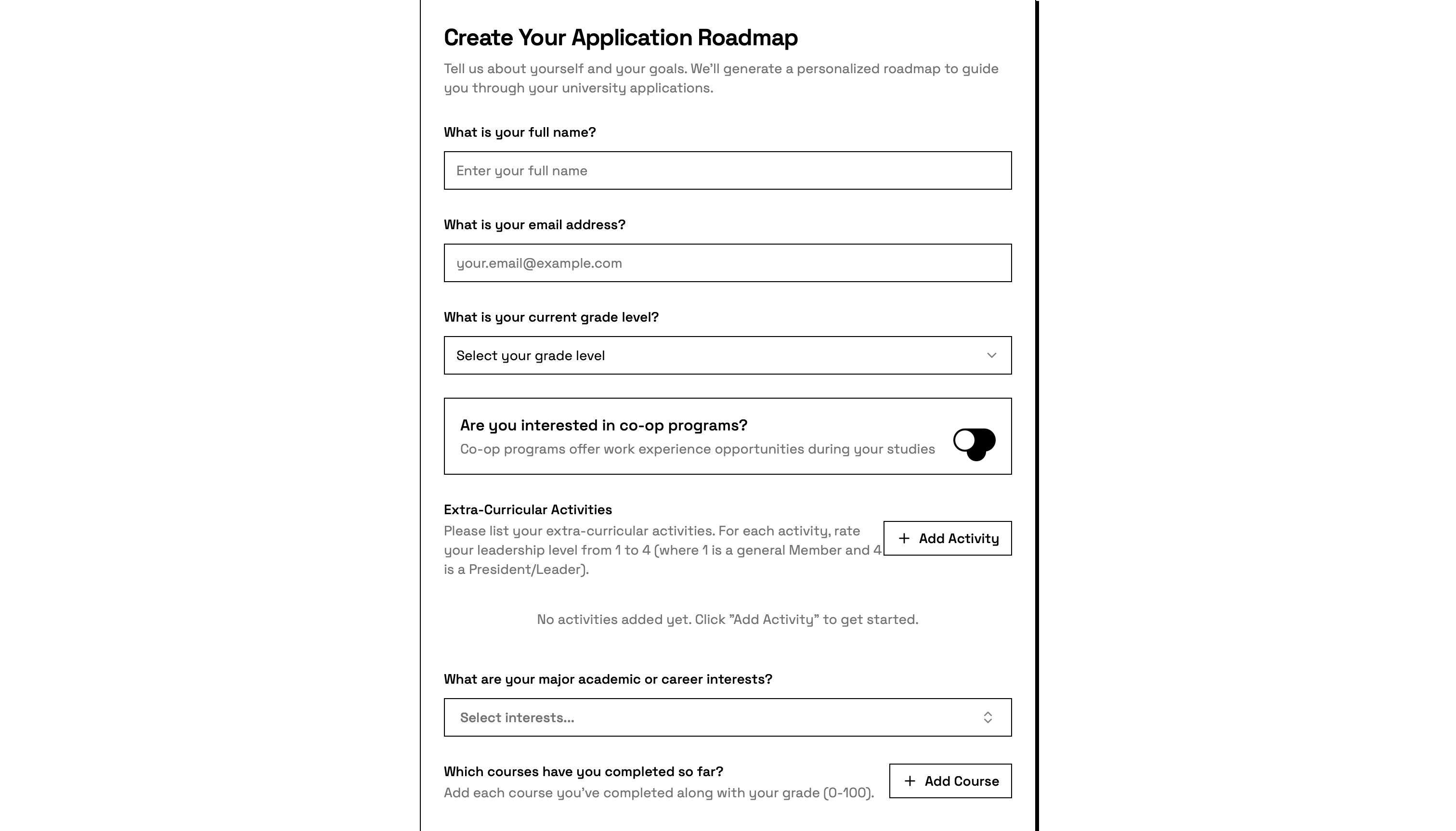
Intake Form
-
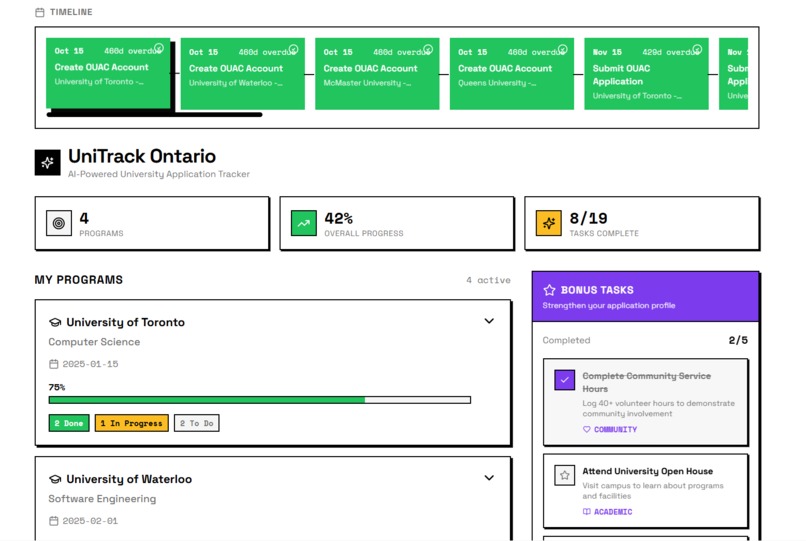
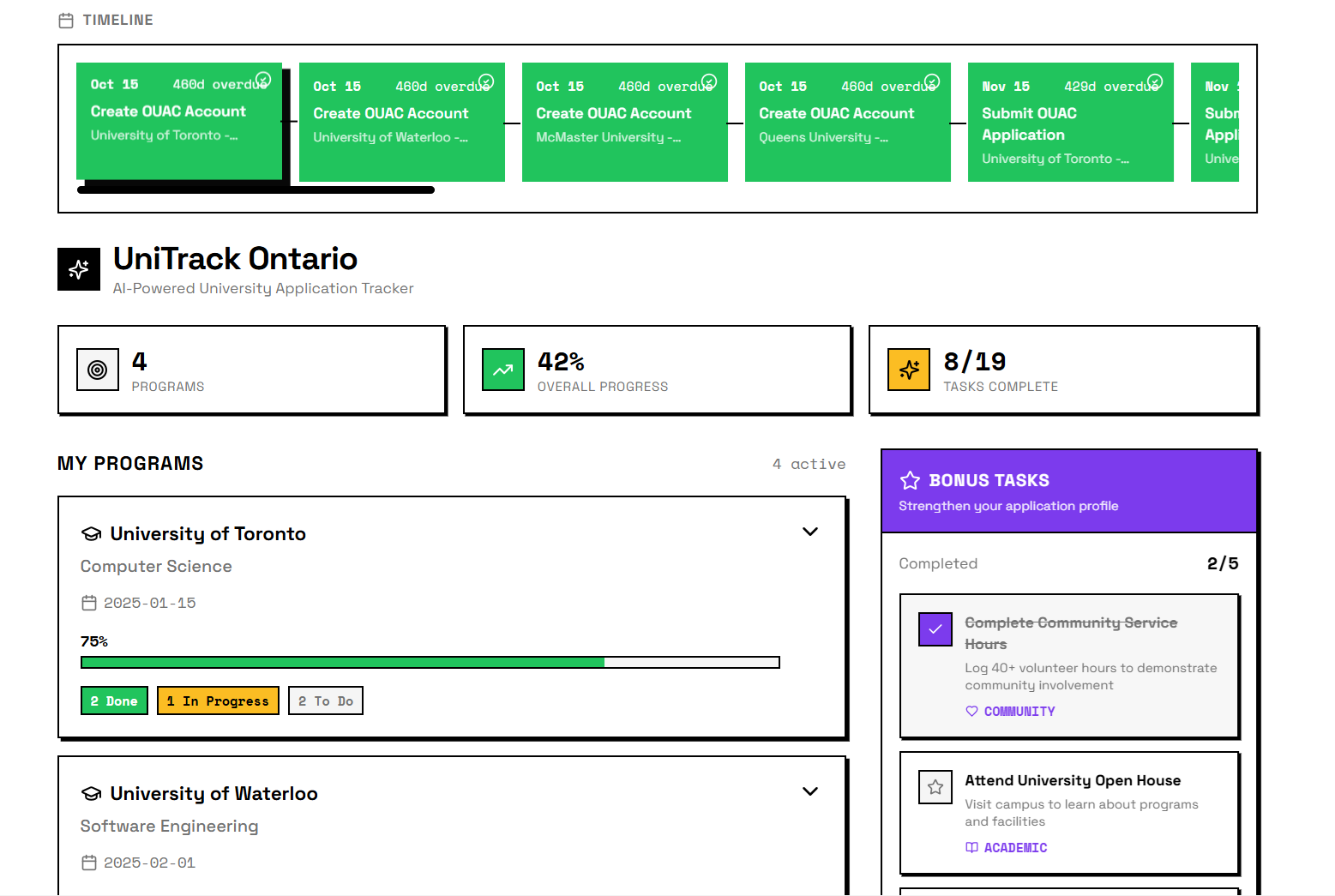
Dashboard
-
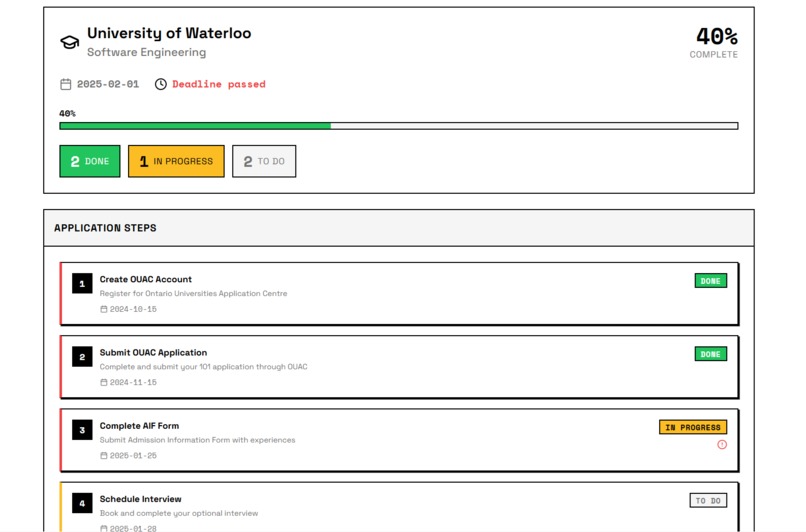
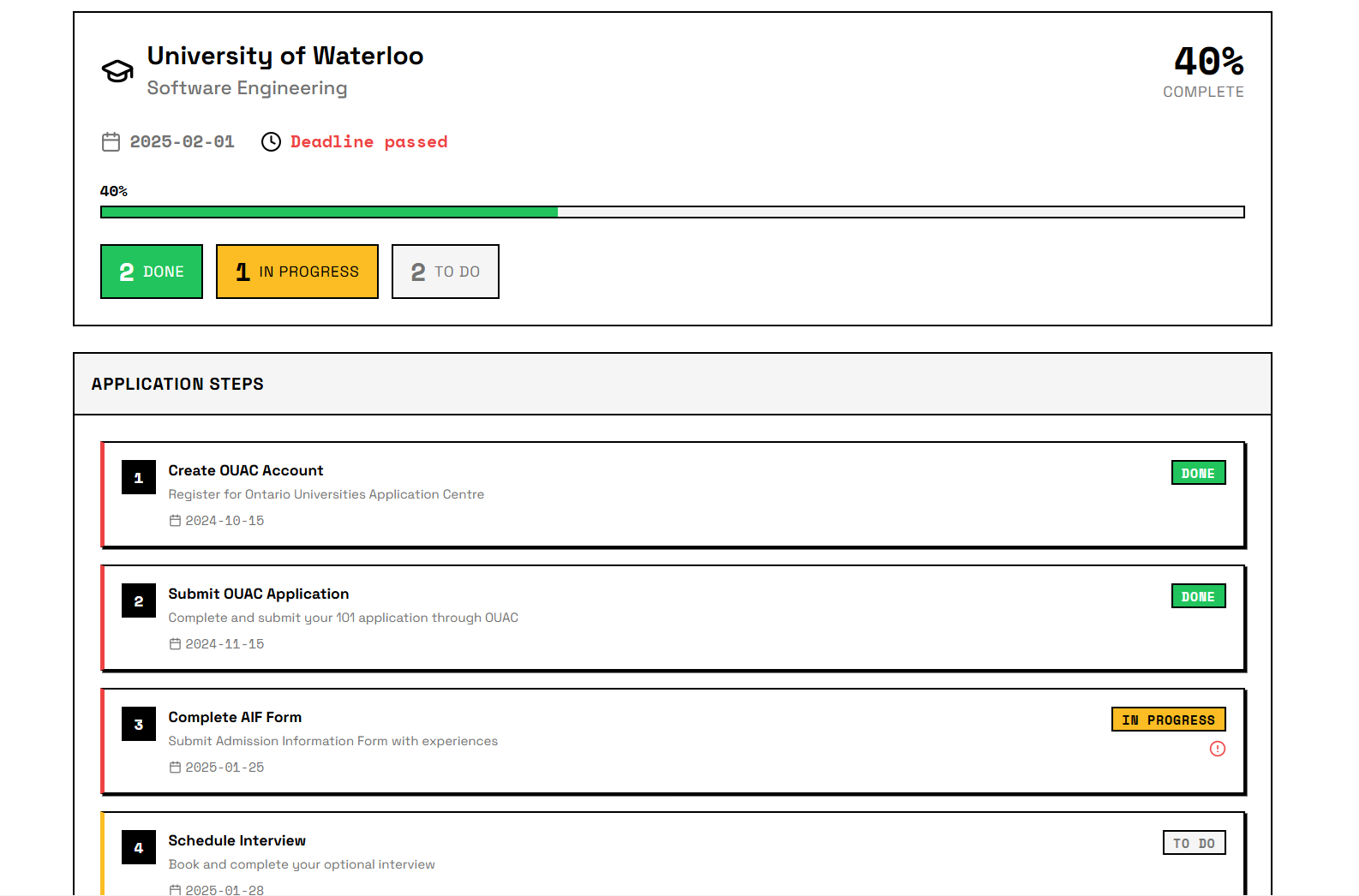
Detailed Page
Inspiration
Information regarding college applications is scattered across the internet. A student currently has to navigate 50 different tabs, decipher vague requirements, and cross reference incompatible deadlines just to figure out if they are eligible for a single program. Our goal was to build a centralized GPS for university admissions, which is a single platform where scattered requirements are turned into a personalized and actionable roadmap.
What it does
Admit-Tree is a centralized application hub that transforms scattered university requirements into a unified, actionable checklist. It streamlines the journey from “Information Overload” to “Application Submitted.”
Smart Intake Engine
A hybrid form that captures the student’s academic profile and interests to instantly filter thousands of options down to the most relevant programs.Dynamic Roadmap
Once a program is selected, the system generates a Roadmap - a visual dashboard that converts complex admission data into a clear timeline of prerequisites and deadlines.Program-Specific Consultation
A built-in AI agent that acts as an expert on the specific program you are viewing.- Accessed by clicking chat bubble on the bottom right
- Pre-loaded with program-specific requirements, admission timelines, and application processes
- Allows users to chat with a consultant about their progress, roadmap, and next steps
- Supports complex questions such as:
> “What is the exact deadline for the supplementary application?”
- Accessed by clicking chat bubble on the bottom right
How we built it
Frontend
We built a fast, type-safe interface using React (TypeScript) and Vite. Styling was handled with Tailwind CSS and shadcn/ui for accessible, reusable components. We used React Hook Form with Zod for robust form validation, and TanStack Query for efficient API state management.
Backend & Data
The core application logic runs on a Flask (Python) server, which powers the matching algorithm. We chose MongoDB as our database to flexibly store the varied and complex data structures required for university program requirements.
Infrastructure
The entire application, including the Program-Specific Consultation Agent, is hosted on DigitalOcean to ensure reliable performance and scalability.
Challenges we ran into
One of the challenges we faced was designing the scoring algorithm. It was difficult to build a logic engine that could fairly weigh grades, interests, and extracurriculars while also adjusting its criteria based on a student’s grade level, such as distinguishing between Grade 10 and Grade 12 students.
Another challenge was clearly defining our target users. We needed a scope that was broad enough to be useful to many students but narrow enough to be realistic within the competition timeline. This required careful thought and iteration to ensure we had a well defined audience and a clear direction for development.
We also struggled early on with collecting reliable data on post secondary programs and their admission requirements. While we initially tried automating the process using Firecrawl, the free tier limitations made it difficult to scale. Managing multiple accounts was time consuming and unsustainable, which ultimately led us to manually scrape and verify data directly from university websites.
Accomplishments that we're proud of
We’re proud that Admit-Tree addresses a real-world problem for high school students by simplifying the often overwhelming college application process. By centralizing scattered program requirements, deadlines, and prerequisites into a clear, actionable roadmap, the platform helps students plan efficiently, reduce stress, and focus on what matters most. This streamlined approach not only saves time but also provides personalized guidance, matching students to programs that align with their academic profiles and interests.
What we learned
Teamwork and power of friendship.
What's next for AdmitTree
- Real-Time Scraping: Implementing a live RAG pipeline to fetch requirements from university websites in real time.
- Timeline Generator: Automatically syncing application deadlines to the student’s Google Calendar.
- Document Parsing: Allowing students to simply upload a PDF of their transcript to auto fill the intake form.

Log in or sign up for Devpost to join the conversation.