-
-
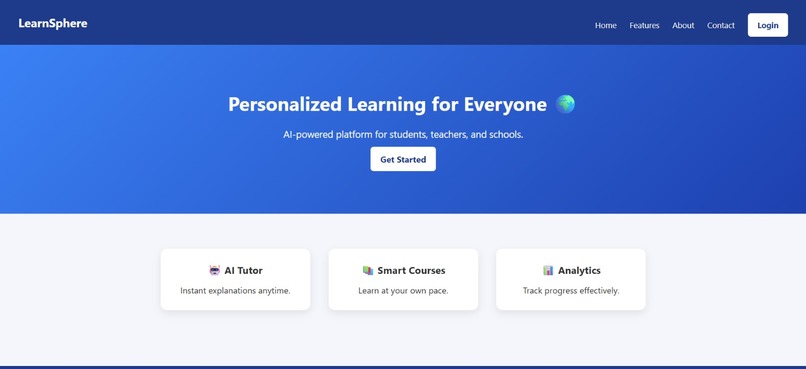
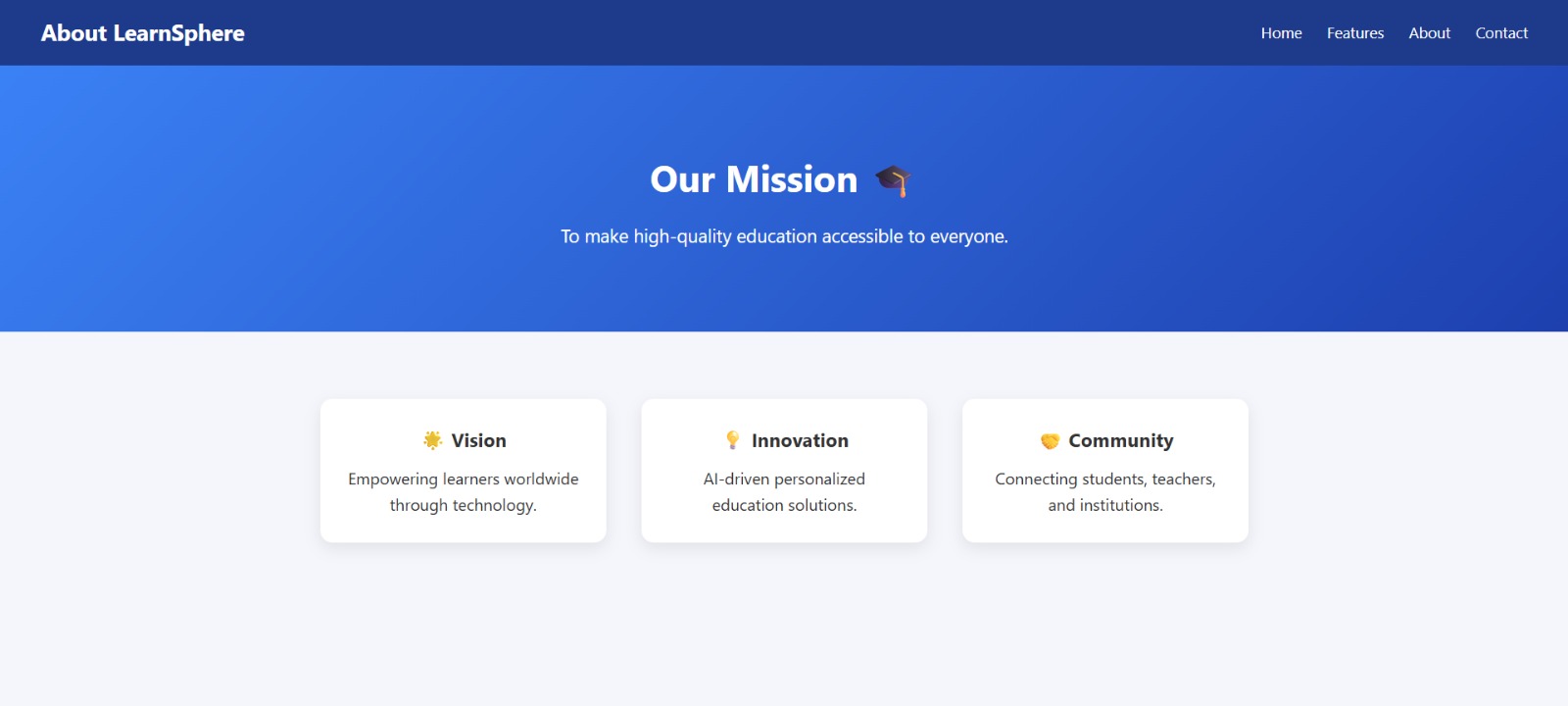
Main Page
-
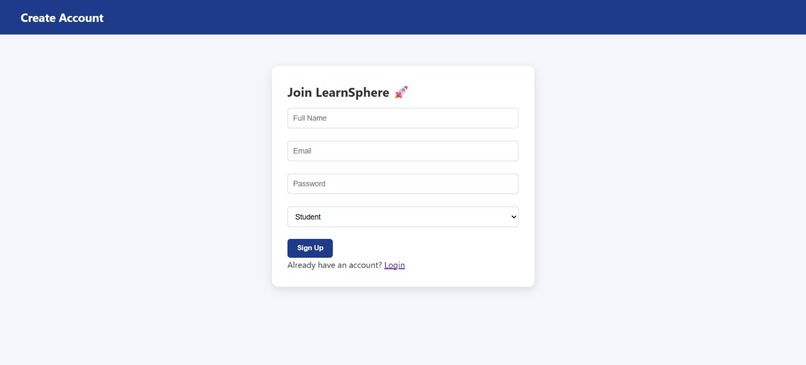
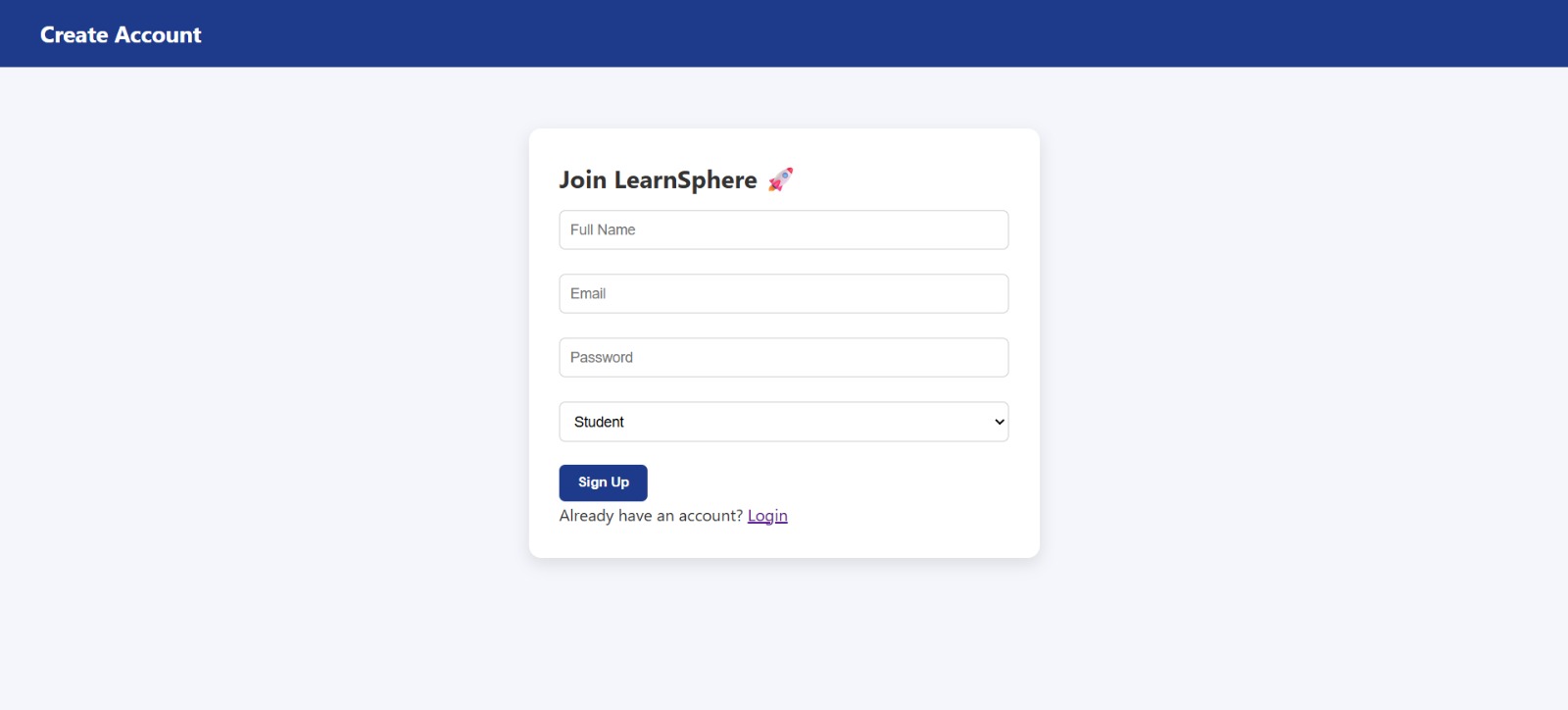
Login Page
-
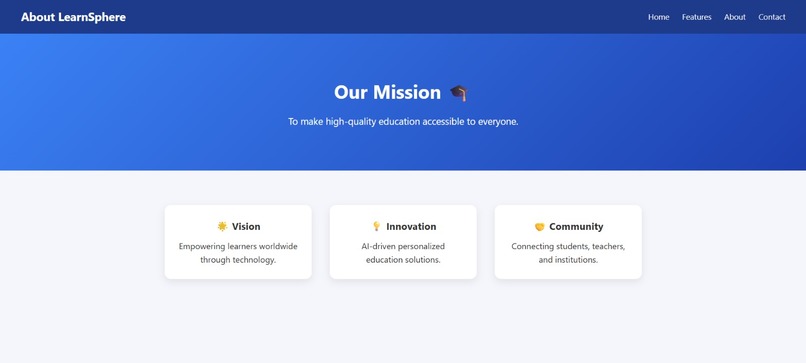
Tools Section
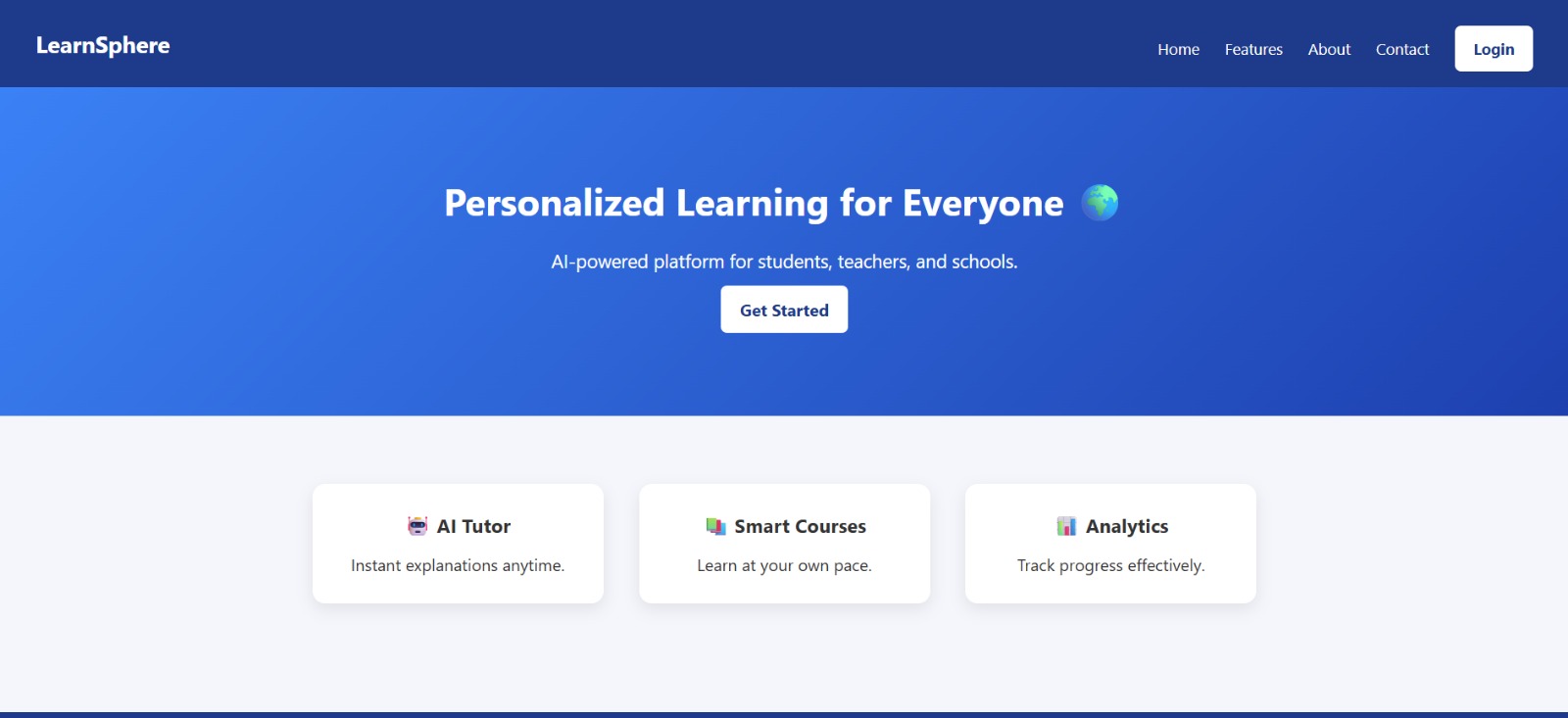
About the Project
Inspiration
LearnSphere was inspired by the challenges students and teachers face in today’s education system—limited personalization, lack of real-time feedback, and fragmented digital tools. Many learning platforms provide content but fail to guide learners based on their individual strengths and weaknesses. At the same time, educators often lack simple tools to monitor progress and adapt their teaching strategies. The vision behind LearnSphere was to create a unified platform that supports students, empowers teachers, and improves accessibility to quality education for everyone.
How We Built It
The project was designed as a modular web application with role-based access for students, teachers, and administrators. The frontend was developed using HTML5, CSS3, and Vanilla JavaScript, focusing on clean UI, usability, and scalability for future backend integration.
Key components include:
- Public website (Home, Features, About, Contact)
- Student dashboard with courses, AI tutor interface, and progress tracking
- Teacher dashboard for course creation and analytics
- Admin panel for system-wide management
- Simulated role-based login and navigation
- Organized folder structure for maintainability
The platform architecture is designed to support future enhancements such as real authentication systems, databases, and AI integration.
What We Learned
Building LearnSphere provided valuable experience in both technical and design aspects of software development:
- Designing user-centric interfaces for different roles
- Structuring scalable frontend projects
- Implementing responsive layouts and reusable components
- Managing navigation across multi-page applications
- Understanding real-world EdTech requirements
- Improving problem-solving and project planning skills
We also gained insight into how technology can bridge gaps in accessibility and learning outcomes.
Challenges Faced
Several challenges arose during development:
- Designing for multiple user roles while maintaining a consistent UI
- Organizing a clean and scalable project structure
- Ensuring smooth navigation between many interconnected pages
- Simulating real system behavior without a backend
- Balancing simplicity with professional-level functionality
Another key challenge was conceptual—creating a platform that is realistic enough to reflect real-world educational needs while remaining feasible as a frontend prototype.
Future Scope
LearnSphere is designed as a foundation for a full-scale EdTech solution. Planned enhancements include:
- Backend integration (Node.js / Flask / Firebase)
- Database support for persistent data
- Real authentication and authorization
- AI-powered tutor and recommendation engine
- Live classes and collaboration tools
- Advanced analytics dashboards
- Mobile application support
Conceptual Model
Personalized learning can be viewed as optimizing educational outcomes based on learner performance data:
[ \text{Next Topic} = f(\text{Current Skill Level},\ \text{Past Performance},\ \text{Learning Pace}) ]
This adaptive approach aims to maximize engagement and retention while minimizing frustration and cognitive overload.
Conclusion
LearnSphere demonstrates how a unified digital ecosystem can transform education by making learning personalized, teaching data-driven, and administration efficient. The project serves as both a functional prototype and a scalable foundation for future development into a full-fledged intelligent learning platform.
Built With
- ai
- and
- and-git/github-for-version-control-and-hosting.-it-follows-a-modular-multi-page-architecture-with-role-based-dashboards-and-is-designed-to-support-future-integration-with-backend-technologies
- and-vanilla-javascript-for-interactivity.-the-project-was-developed-using-visual-studio-code-with-live-server-for-local-testing
- css3-for-styling-and-responsive-design
- databases
- learnsphere-is-a-frontend-web-application-built-using-html5-for-structure

Log in or sign up for Devpost to join the conversation.