Inspiration
As generative AI continues to transform industries, we were inspired by the need for scalable and intelligent content creation systems that go beyond single-agent models. The Agent Development Kit (ADK) offered a unique opportunity to orchestrate multiple specialized agents working together — similar to real-world enterprise workflows. This inspired us to design a system that mimics a full content creation pipeline through coordinated AI agents.
What it does
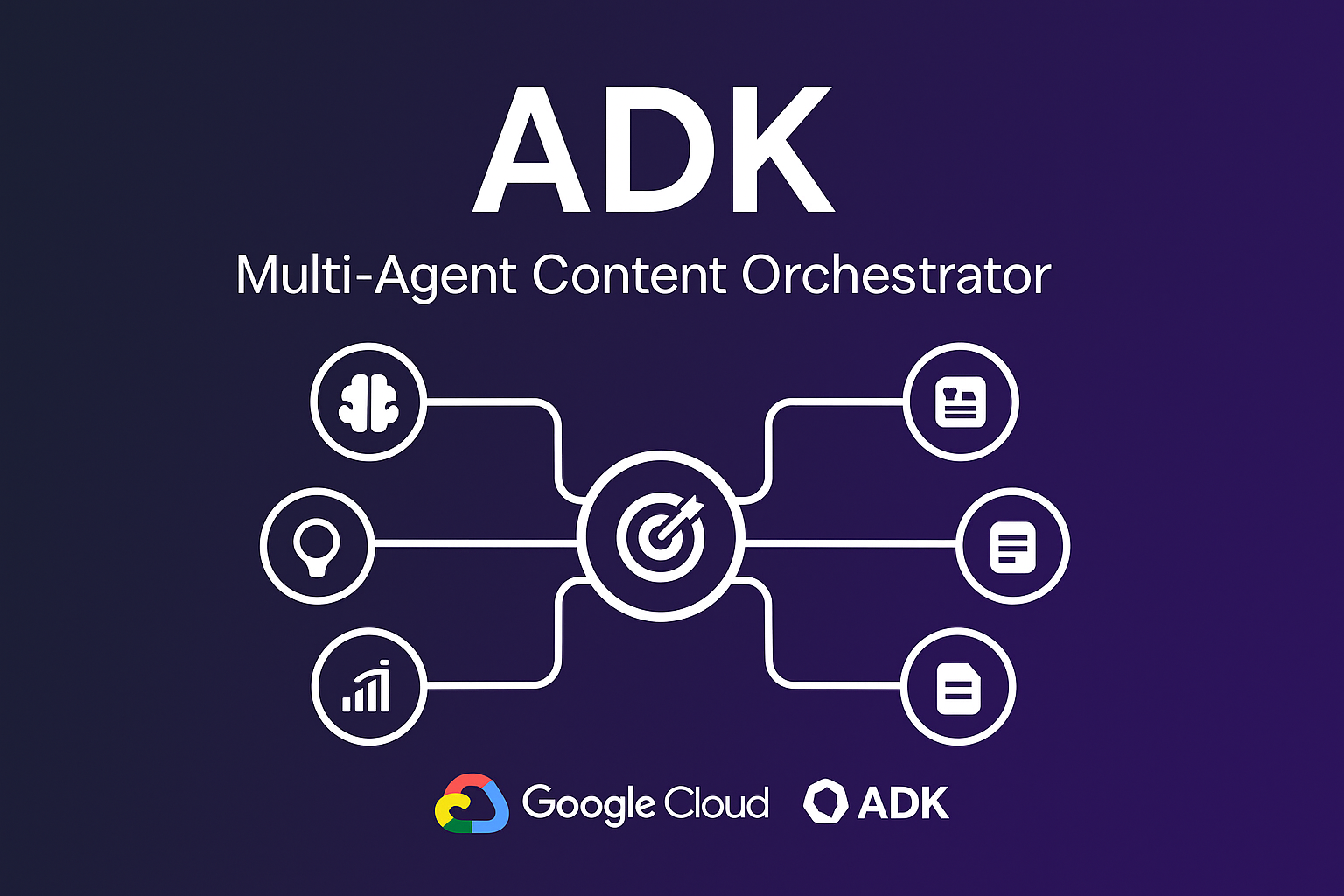
ADK is a multi-agent content generation system built with the Agent Development Kit. It orchestrates a team of AI-powered agents — such as a Research Coordinator, Content Strategist, Creative Writer, Technical Writer, Visual Designer, and Quality Controller — to collaboratively generate high-quality content tailored to user requirements. From marketing campaigns to technical documentation, the system handles every step of the content lifecycle.
How we built it
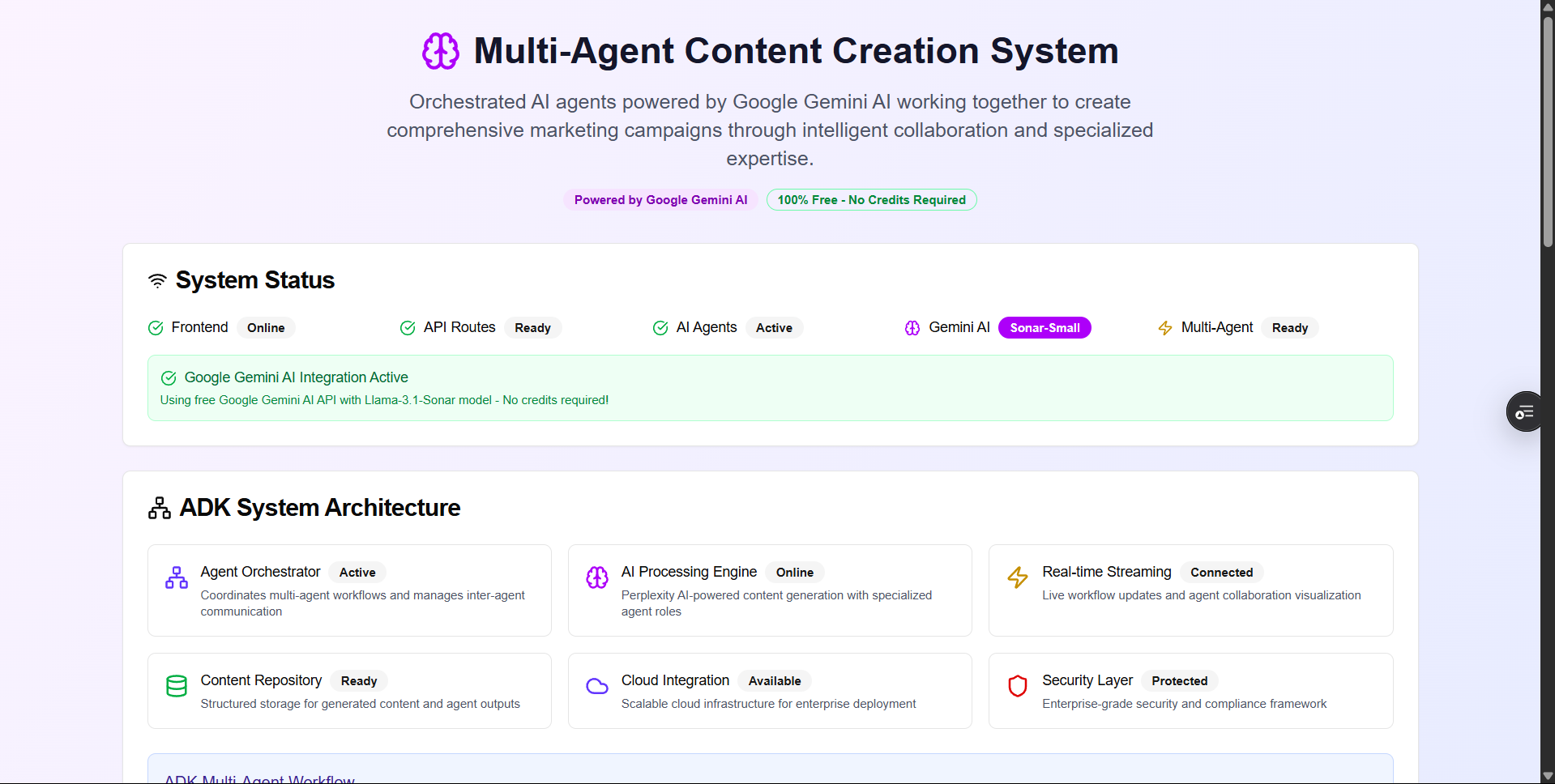
- Frontend: Built with Next.js and Tailwind CSS, the UI allows users to define content parameters like tone, industry, audience, and constraints.
- Multi-Agent System: Using the Agent Development Kit (Python version), we designed and orchestrated multiple autonomous agents that pass tasks among one another to build structured outputs.
- Streaming Communication: Real-time logs and step-wise updates are streamed to the frontend using Server-Sent Events (SSE) to visualize the orchestration process.
- Integration: While ADK was the foundation, we enhanced our agents with calls to LLM APIs for tasks like copywriting and summarization, and designed for potential Google Cloud integrations such as BigQuery or Vertex AI.
Challenges we ran into
- Agent Coordination: Designing logical, task-specific workflows between agents was more complex than expected. Ensuring smooth data hand-offs was critical.
- Streaming Feedback: Maintaining a real-time UI with streamed logs and dynamic results required low-latency backend/frontend coordination.
- API Rate Limits: Testing multiple agent calls during development ran into rate limits for external APIs, requiring retries and fallback logic.
- Google Cloud Integration: Balancing the hackathon time constraints while exploring BigQuery and AI APIs from Google Cloud was a learning curve.
Accomplishments that we're proud of
- Successfully orchestrated a functional multi-agent pipeline with clear communication and collaboration logic.
- Built a production-grade frontend with a beautiful UI/UX, including tabs, badges, orchestrator visuals, and system metrics.
- Created an extensible architecture that can easily scale with more agents or more advanced external integrations.
What we learned
- The power of agent-based systems for breaking down complex, multi-step tasks.
- How to use the Agent Development Kit (ADK) to coordinate specialized AI tasks efficiently.
- Advanced frontend techniques like SSE streaming and reactive state updates for real-time feedback.
- Deeper understanding of how to modularize AI roles and workflows for content generation and beyond.
What's next for ADK
- Google Cloud Integration: Incorporate BigQuery for data analysis and Vertex AI for custom model generation.
- Adaptive Agent Routing: Enable agents to reassign tasks based on performance or input complexity.
- Domain Expansion: Add more agent types for finance, healthcare, legal, and multilingual content.
- User Feedback Loop: Implement real-time user feedback for generated content to help agents self-optimize.
- Team Collaboration Mode: Allow human users to co-work with agents in an interactive editing interface.

Log in or sign up for Devpost to join the conversation.