Inspiration Most people run into two kinds of powerlessness at some point: a civic problem nobody seems to own (a broken streetlight, an overflowing garbage bin, a pothole that's been "under review" for months), and a rights problem where the other side has all the leverage (a landlord who won't return a deposit, a shop that won't honor a refund).
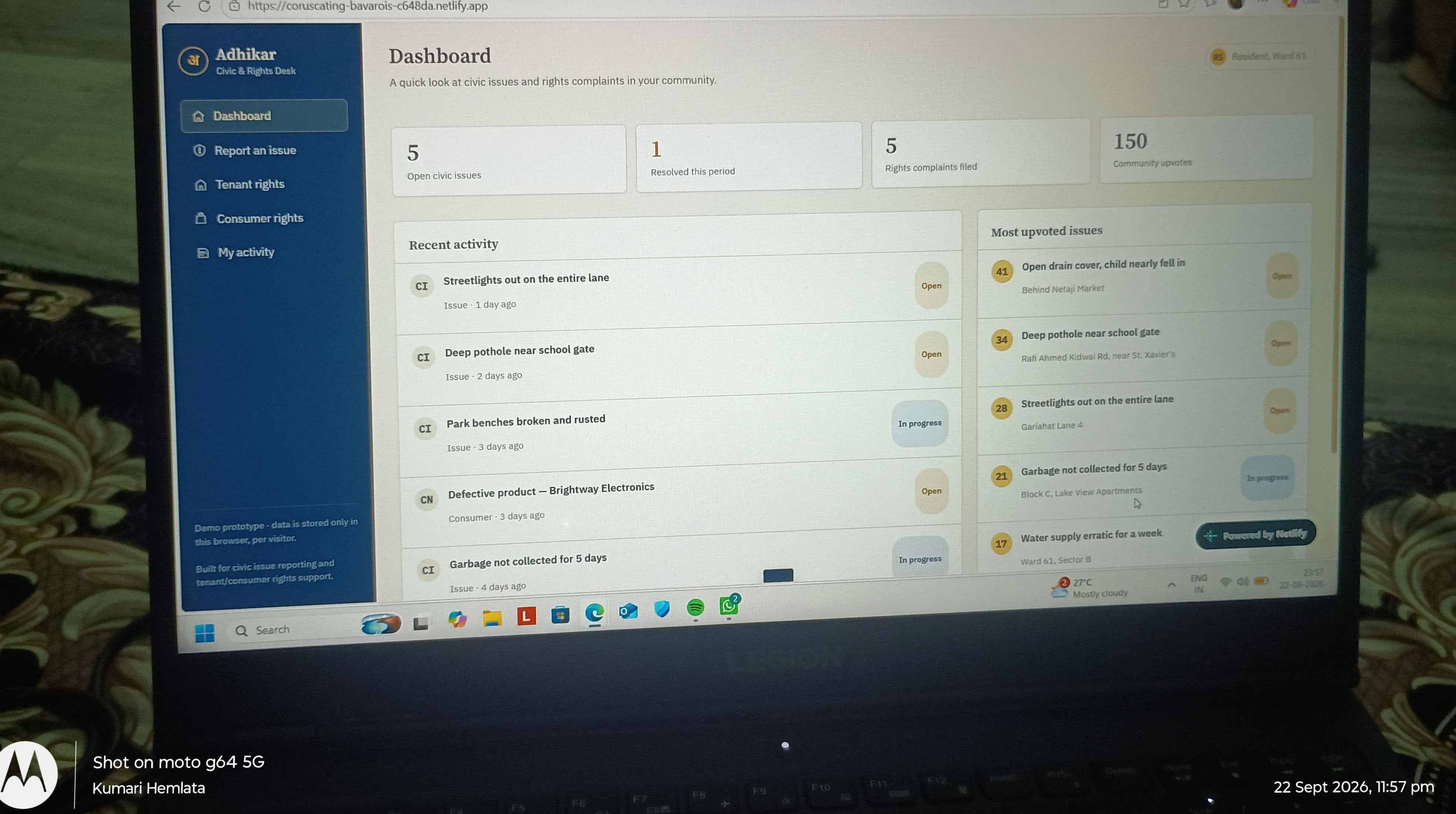
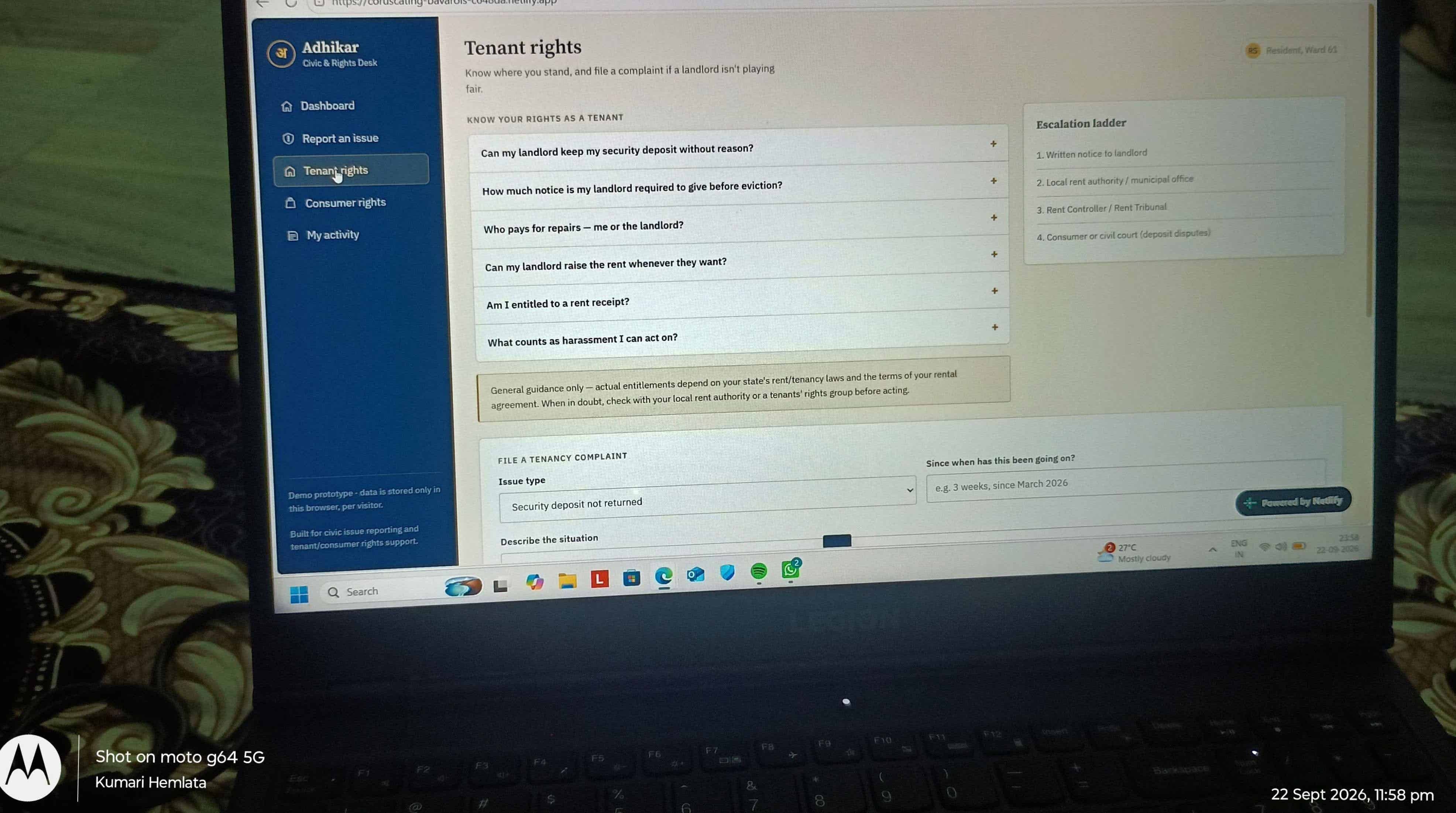
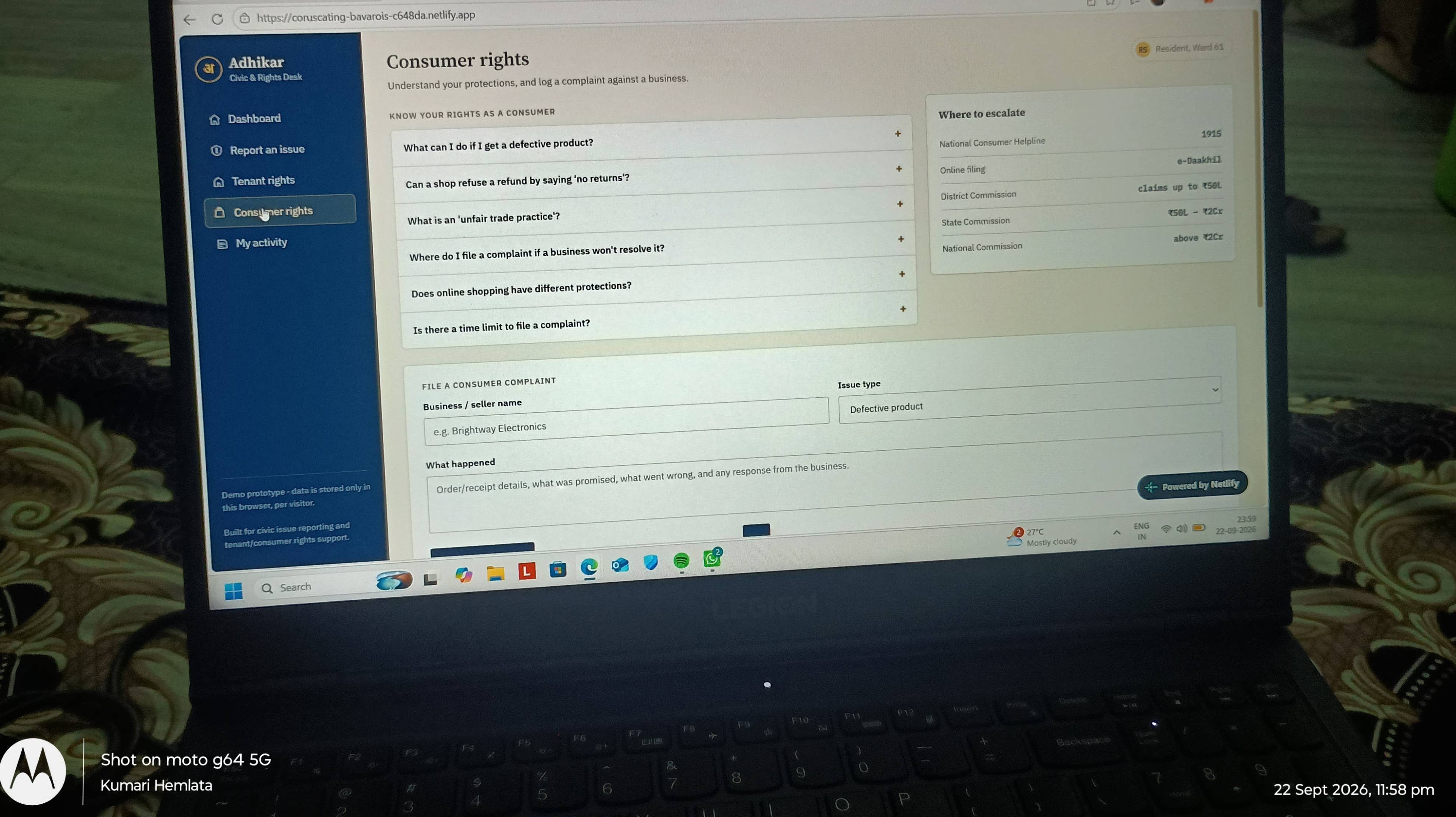
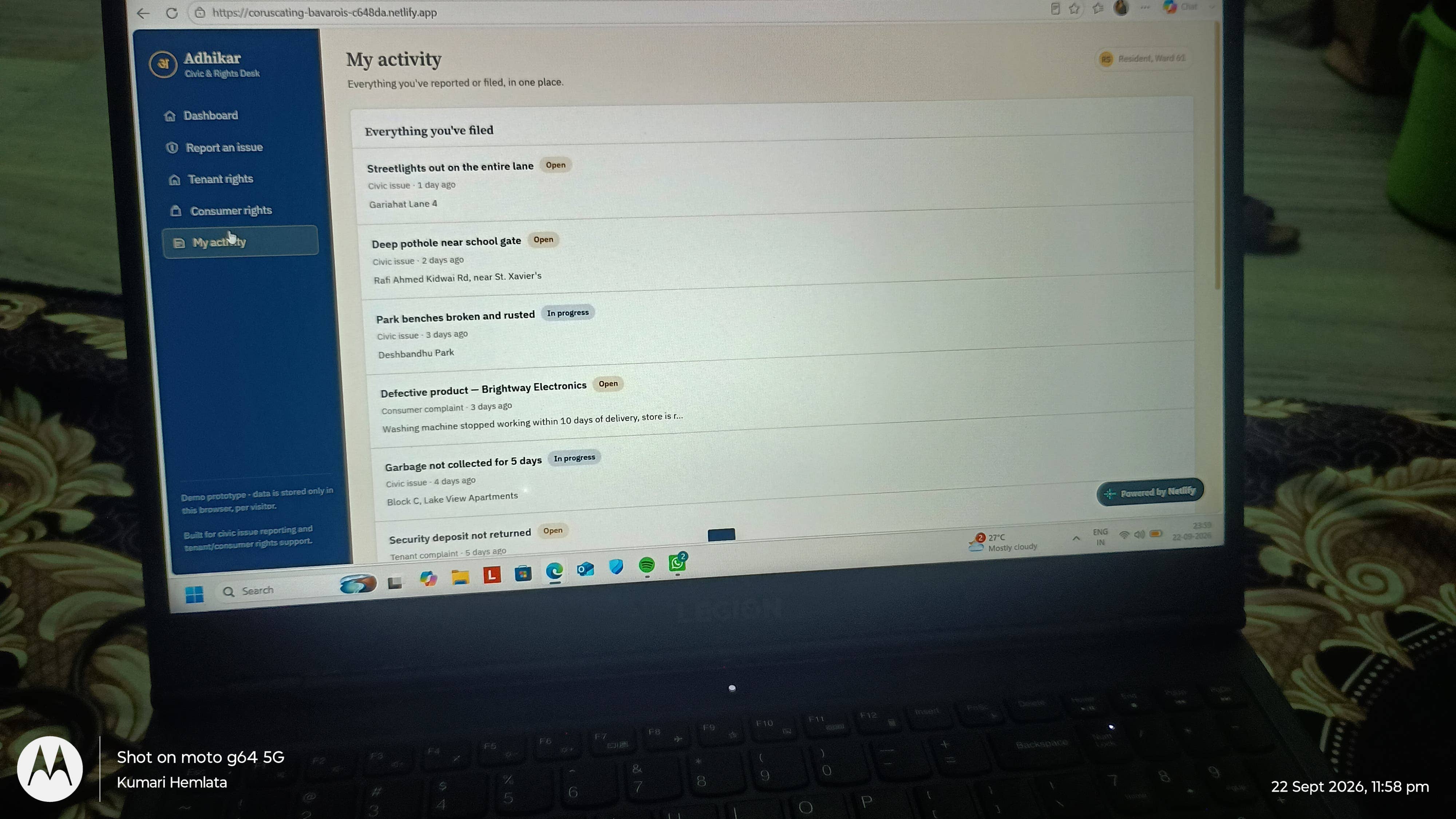
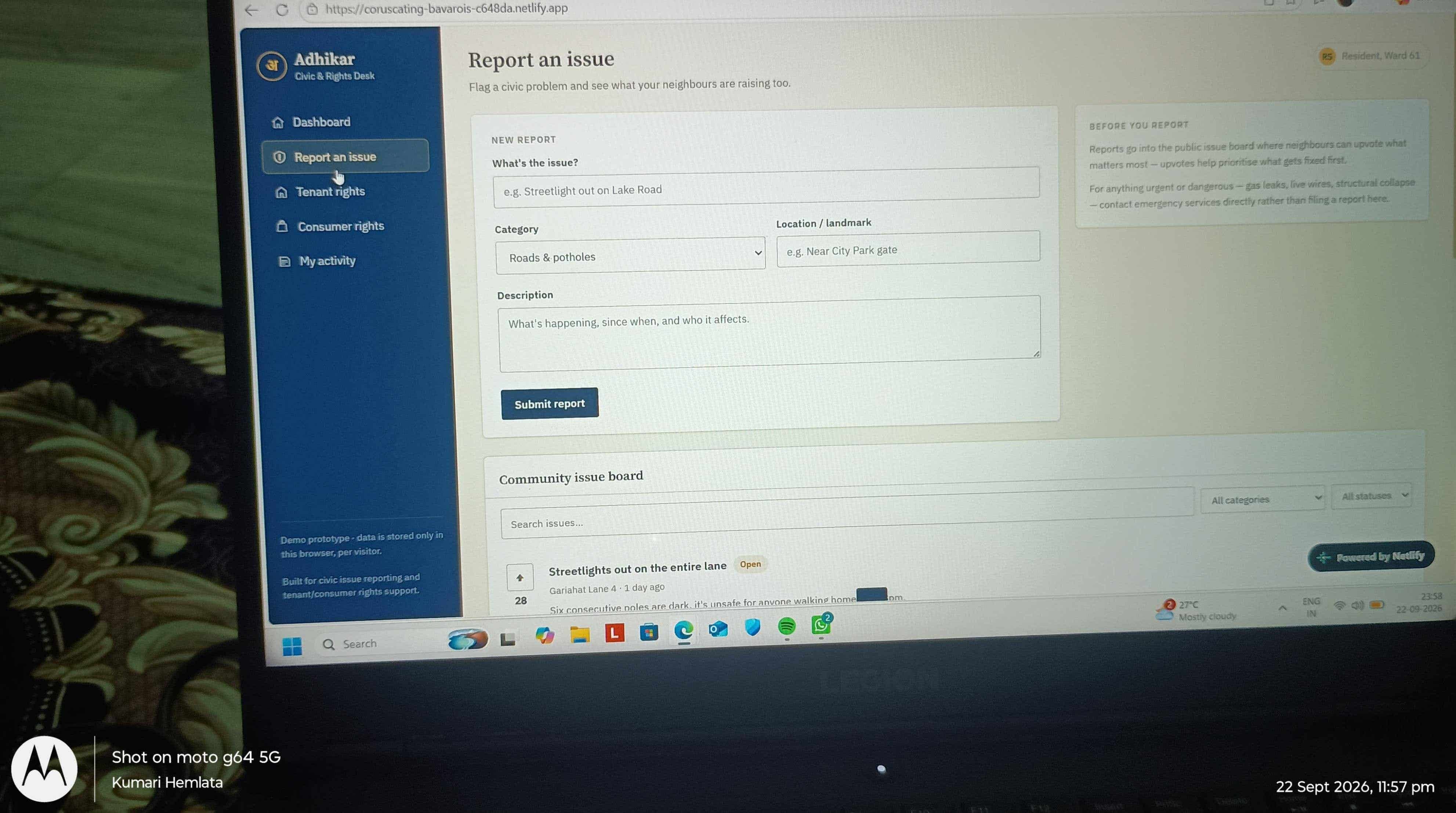
What it does Adhikar lets a resident report a civic issue (roads, garbage, streetlights, water, drainage, safety, parks), see it on a public board, and upvote issues that matter most to the neighborhood — so priority is set by the community, not buried in a queue. Alongside that, it has a plain-language rights guide for tenants and consumers, and a matching complaint form for each, so someone dealing with a landlord or a business doesn't have to first go figure out what their rights even are. Everything a person files — reports and complaints — rolls up into one activity view and one dashboard
How we built it I designed it as a single-page app: vanilla HTML, CSS, and JavaScript, with no framework overhead, so the whole thing loads as one self-contained file. State (issues, complaints, upvotes) is held in the browser via localStorage, which was enough to make every flow — filing, upvoting, filtering, status tracking — actually work end-to-end for a demo, rather than mocking the UI with static data. I built the design system around a "civic gazette" feel — navy and gold, serif headlines, official-document tone — to make it read as a trustworthy public-service tool rather than a generic app template. For a production version, I mapped out the next layer: a real backend (Node/Express or Django), a Postgres database, auth for residents vs. municipal/admin accounts, and file uploads for photo evidence.
Challenges we ran into
- Balancing scope vs. depth 2.Getting legal content right without overreaching 3.Designing one system that doesn't feel generic
Accomplishments that we're proud of
A single, coherent platform where three normally-separate problems (civic issues, tenant rights, consumer rights) share one clean, consistent experience. A fully working prototype — not just mockups — where reporting, upvoting, filing, and tracking all function end-to-end. Rights guides that are actually usable as a quick reference, not just filler text.
What we learned
We learned how much of "civic tech" is really information design — most people don't lack the will to act, they lack a clear next step and a place to put their complaint that feels like it goes somewhere. We also learned the value of designing for trust: status badges, timestamps, and visible complaint history do a lot of work in making a system feel credible, even at prototype stage.
What's next for Adhikar
A real backend (Node.js/Express + PostgreSQL) so reports and complaints persist across users and devices, with authentication for residents and municipal/admin accounts. Geo-tagged issue pins on a live map, and photo evidence uploads. Status updates and notifications so people know the moment their issue moves. An AI-assisted rights chatbot to answer specific tenant/consumer questions conversationally. Partnering with local ward offices or consumer forums to pilot real complaint routing, not just tracking.
Built With
- browser
- css3
- googlefront
- html5
- javascript


Log in or sign up for Devpost to join the conversation.