Inspiration
As someone who’s lived with ADHD my whole adult life, I grew frustrated with productivity tools that felt like they were “fighting” my brain—rigid timers, guilt-driven metrics, and overwhelming UIs. I wanted something that met neurodivergent folks where we are: honoring fleeting focus, small wins, and the need for immediate positive reinforcement. That spark led me to build ADHD Flow—for me, and for the millions of adults like me.
What it does
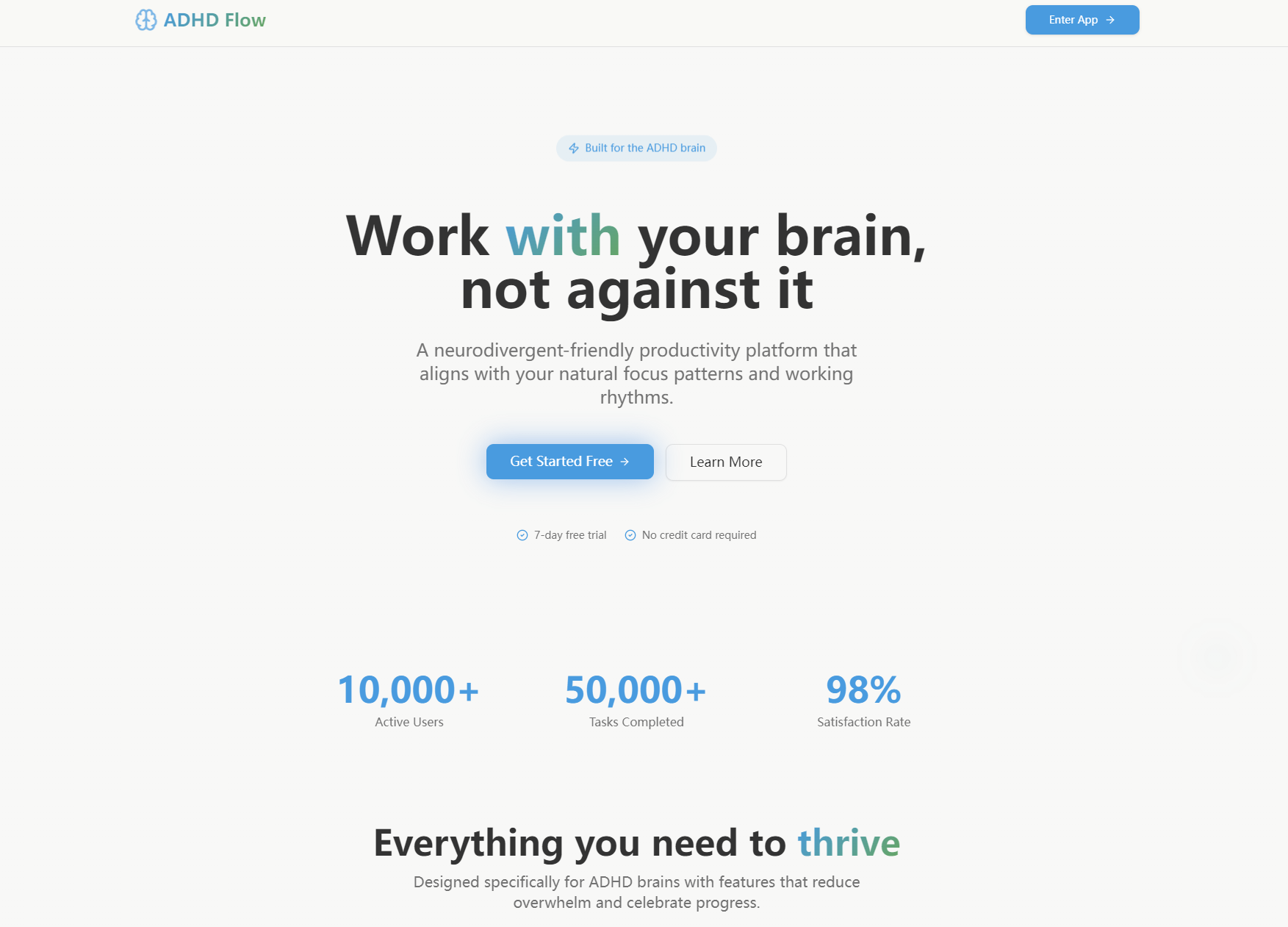
ADHD Flow is a productivity platform designed for ADHD brains: instant “brain dump” capture (text/voice/image), breaking tasks into 5-minute micro-steps, adaptive focus timers with movement reminders, and a reward system that celebrates progress (not perfection). No shame, no rigid rules—just tools that work with your natural rhythm.
How we built it
I started with core user stories (e.g., “I need to capture a thought before I forget it”) and prioritized low-friction interactions. I used React for the frontend (leaning into Web Animations API for smooth, non-overstimulating animations) and Node.js/Express for the backend. Firebase handled cloud sync, and MongoDB stored task/progress data. Every animation—from confetti on task completion to breathing timers—was tested to be supportive, not distracting.
Challenges we ran into
The biggest hurdle was balancing animation (key for engagement) with performance—some neurodivergent users find too much motion overwhelming, while others need it for focus. I built adaptive animation logic that scales complexity based on device performance and added subtle controls to tweak motion intensity. Another challenge: designing a reward system that’s motivating but not overstimulating—iterating with ADHD users to find that sweet spot of positive reinforcement.
Accomplishments that we're proud of
We created a tool that centers neurodivergent needs without tokenism—every feature (from guilt-free progress tracking to one-tap brain dumps) is rooted in real ADHD experiences. The adaptive animation system works seamlessly across devices, and early users report feeling less overwhelmed and more in control of their tasks. Most importantly: the language is supportive, never judgmental—no “you missed your streak!” shaming, just celebration of small wins.
What we learned
I learned that accessibility for neurodivergent users isn’t just about compliance—it’s about empathy. Testing with real ADHD adults (not just designing for them) revealed critical pain points (e.g., too many input fields during capture) that I’d missed on my own. I also learned to prioritize performance over “flashy” animations—smooth, intentional motion beats complex effects every time for our audience.
What's next for this project
Next, we’ll add gentle AI-powered suggestions for micro-task breakdown (no automation—just guidance) and expand cross-device support (e.g., sync with mobile widgets for even faster brain dumps). We’re also building a lightweight companion app for quick access, and iterating on the reward system with user feedback to add more personalized milestones. Our goal: keep ADHD Flow rooted in neurodivergent joy, not just productivity.

Log in or sign up for Devpost to join the conversation.