-
-
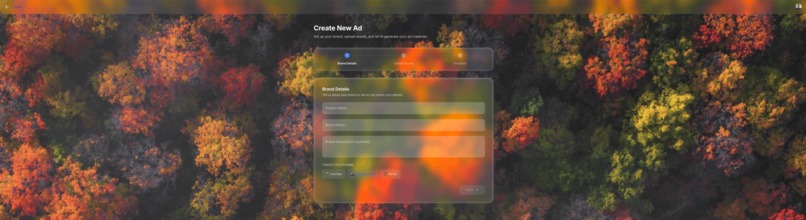
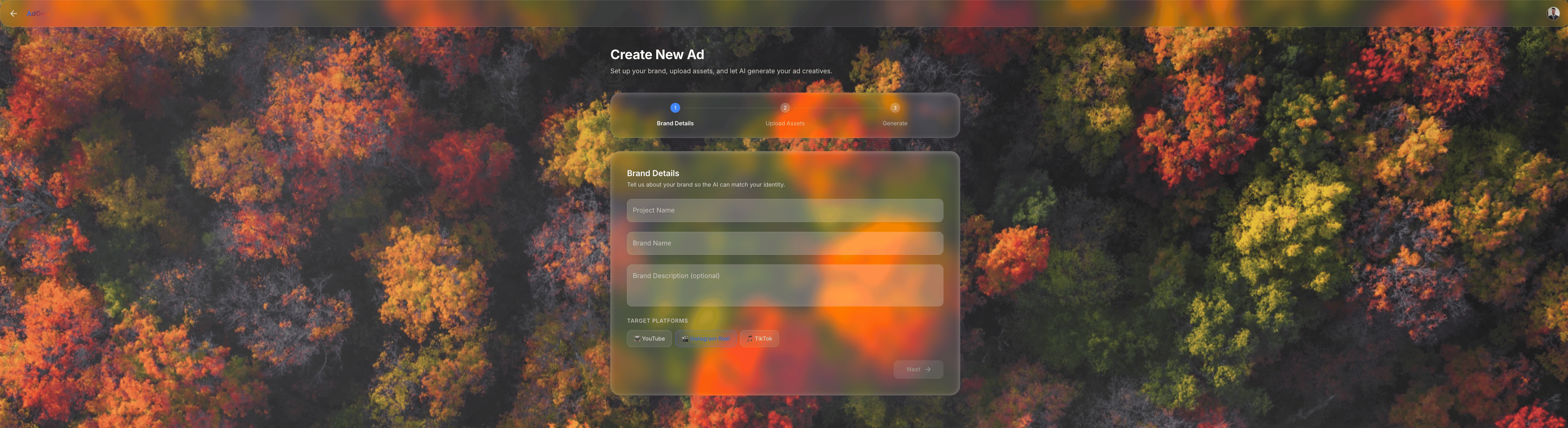
AdGen Workflow
Inspiration
Brands constantly struggle with fragmented workflows. Moving from a campaign idea to polished ad output usually means juggling separate tools for copy, image generation, editing, and video. We wanted to build an AI creative studio that unifies this process. The goal was to allow teams to build campaign-ready creatives from brand context, refine them in a live canvas, and export platform-specific assets, including high-resolution 4K video, all from a single workspace.
What it does
AdGen takes a brand's campaign direction, target platform, and assets like logos and product images to generate tailored ad creatives. It features an editable canvas where teams can adjust copy and layout directly. It also includes chat-based image editing for focused changes, like background updates, without losing the core composition. Finally, it generates short-form video ads shaped specifically for platforms like YouTube, Instagram Reels, or TikTok, keeping the campaign intent perfectly aligned.
How we built it
We stitched AdGen together as a coordinated creator pipeline. Leveraging past professional experience in building production multi-agent systems, we designed an architecture where Gemini 3.1 Pro acts as the reasoning layer. It carries campaign context through a series of specialist agents: a Brand Analyzer, Creative Director, Copywriter, Art Director, and Video Director. For the frontend, we used Next.js, React, TypeScript, and Konva. The backend runs on Node.js and Express. Still-image generation and editing are handled by Nano Banana Pro, while Veo 3.1 renders the final video output. The entire infrastructure is deployed on Google Cloud using Terraform, Cloud Run, and Firebase.
Challenges we ran into
One major challenge was ensuring the brand story remained consistent across different modalities like text, still images, edits, and video. We had to carefully engineer the handoffs between our specialist agents so the core creative brief was never lost. Another hurdle was implementing the chat-based image edit flow. Traditional text-to-image models often discard the original composition when edited, so we had to fine-tune the prompts and workflow with Nano Banana Pro to preserve the core ad while only applying targeted changes.
Accomplishments that we're proud of
We are incredibly proud of the seamless multimodal agentic architecture. Building a system where distinct AI agents collaborate on a shared campaign context is complex, but it resulted in a highly cohesive user experience. We are also proud of the editable creative canvas, which bridges the gap between raw AI generation and practical, workable drafts that marketing teams can actually use.
What we learned
We learned a great deal about orchestrating complex AI workflows using the Google GenAI SDK. Coordinating multiple models like Gemini, Nano Banana Pro, and Veo 3.1 taught us how to optimize reasoning layers for better multimodal outputs. We also deepened our knowledge of Infrastructure as Code using Terraform to deploy full-stack AI applications reliably on Google Cloud.
What's next for AdGen
Next, we plan to integrate automated quality assessment features to evaluate the AI-generated media before it reaches the canvas, ensuring even higher fidelity outputs. We also want to expand the platform's support for more specialized marketing channels and explore deeper integrations with existing ad management platforms.
Built With
- gemni
- google-cloud


Log in or sign up for Devpost to join the conversation.