Scenario
Worker safety is a crucial issue to encourage the resumption of activities in the countries subject to lockdown and to ensure their continuation in other European countries. The problem is extremely topical and under discussion. The European Agency for Safety and Health at Work on 24/04/2020 published a report which highlights a series of guidelines for achieving this goal. At the Italian level, a law decree has been promoted, this obliges companies to comply with certain regulations to safeguard the health of workers at every stage of the work's day. Without an organized process, carrying out the operations connected with entering the workplace would be very complicated.
CAM-back is focused on the moment the worker enters the workplace (Factory/ Construction site). In particular, the project aims to monitor this operation in a simplified way. The proposed solution starts from the analysis of the aforementioned Italian decree. This requires the temperature measurement for anyone entering the workplace and the signing of a self-certification with which the worker declares that he has not had any contact with patients with COVID and that his temperature is 37,5°C below.
Employee’s journey without CAM-back
The companies usually adapting to the norm with a procedure such as the one described below, this is valide both which remained open during the lockdown and those that will reopen shortly are: 1- Recognition; the user identifies himself (especially in the case of large companies). 2- Temperature detection; one or more employees take care of detecting the temperature of all employees who enter the structure. 3- User's sign on certification; the employees sign self-certifications on paper forms in which they declare the detection of the temperature, the date on which it occurred and the time. In the case of detection below 37.5 ° C, they sign the appropriate form and enter the workplace. In the case of detection above 37.5 ° C, they sign a special individual form and return home. 4- Sanitizing; before starting work, employees can take disinfectant liquid from a common container. The certifications collected must be filed and kept by the company's security officers. In case of control on the site by the competent authorities, these must be available for a certain period of time.
Critical issues
This decree proposes operations to be carried out, however, it does not outline guidelines, it also does not take into account some problems relating to the fulfillment of the law. Point 1. The phase of recognition and signature of the self-certification at the time of entry could cause gatherings and queues, these are contrary to the regulations for the protection of workers and can be considered as a waste of time. Point 2. The recognition of employees, the measurement of temperature and the affixing of a signature on paper form imply a series of contacts and exchanges with objects (pen, document, thermometer scanner, sanitizing dispenser) that should be avoided, according to the same proposed directives. Furthermore, such document checking without an appropriate solution could be carried out by a person who would be forced to interface with dozens or hundreds of people, depending on the context. Point 3. Competent authorities have to go to company site to avoid compliance with the rules.
CAM-back
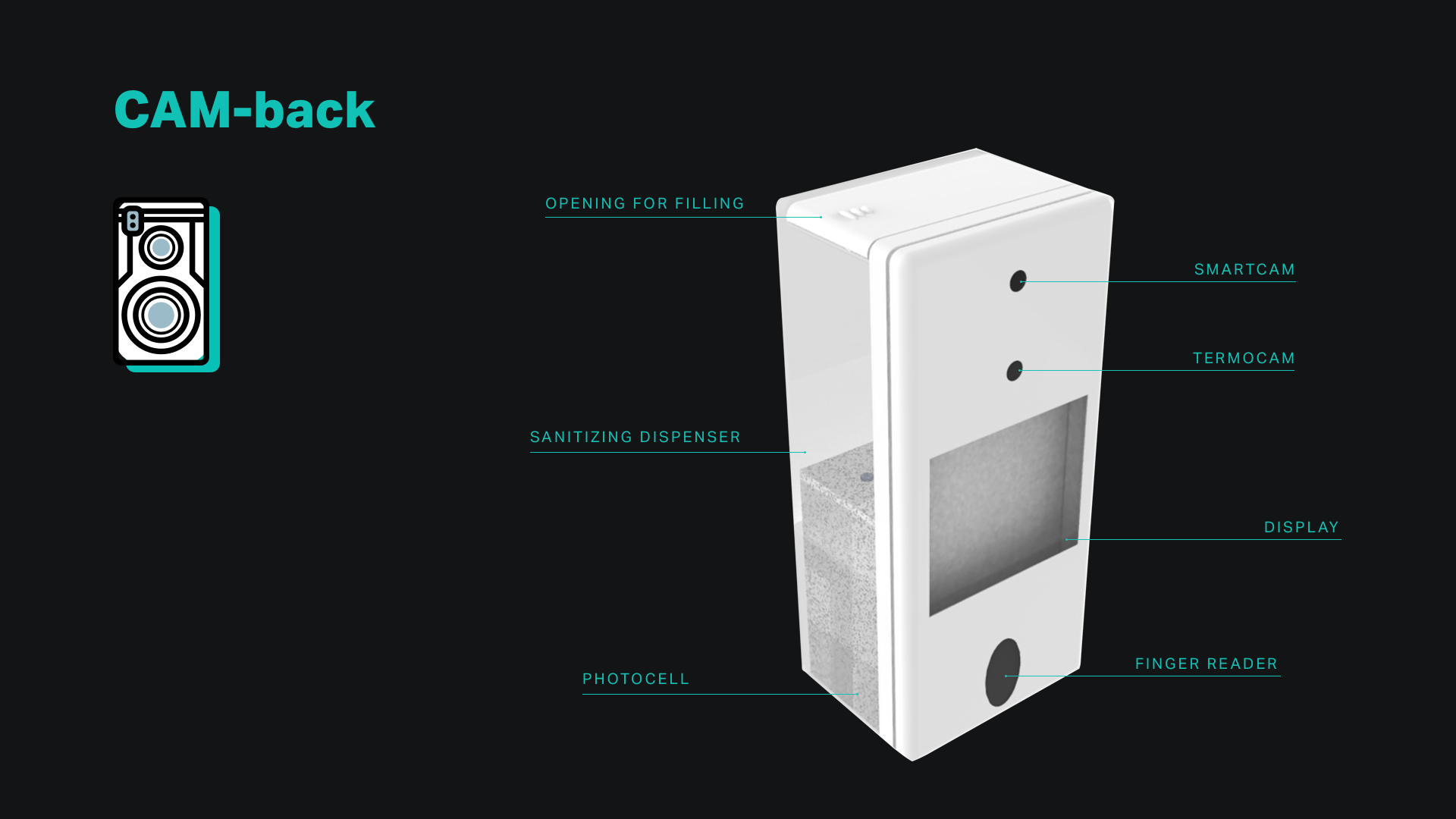
To respond to these problems CAM-back aims to develop a device featuring a thermal imaging camera, an intelligent video camera, a fingerprint reader and a sanitization dispenser. CAM-back aims to speed up and automate this series of operations so as to minimize the possibility of contagion. Last but not the least, CAM-back is based on an encrypted data storage system. For this reason, the data will not be accessible to anyone except the competent authorities. These will be able to access them both to verify the employer's compliance with the regulations.
Employee’s journey with CAM-back
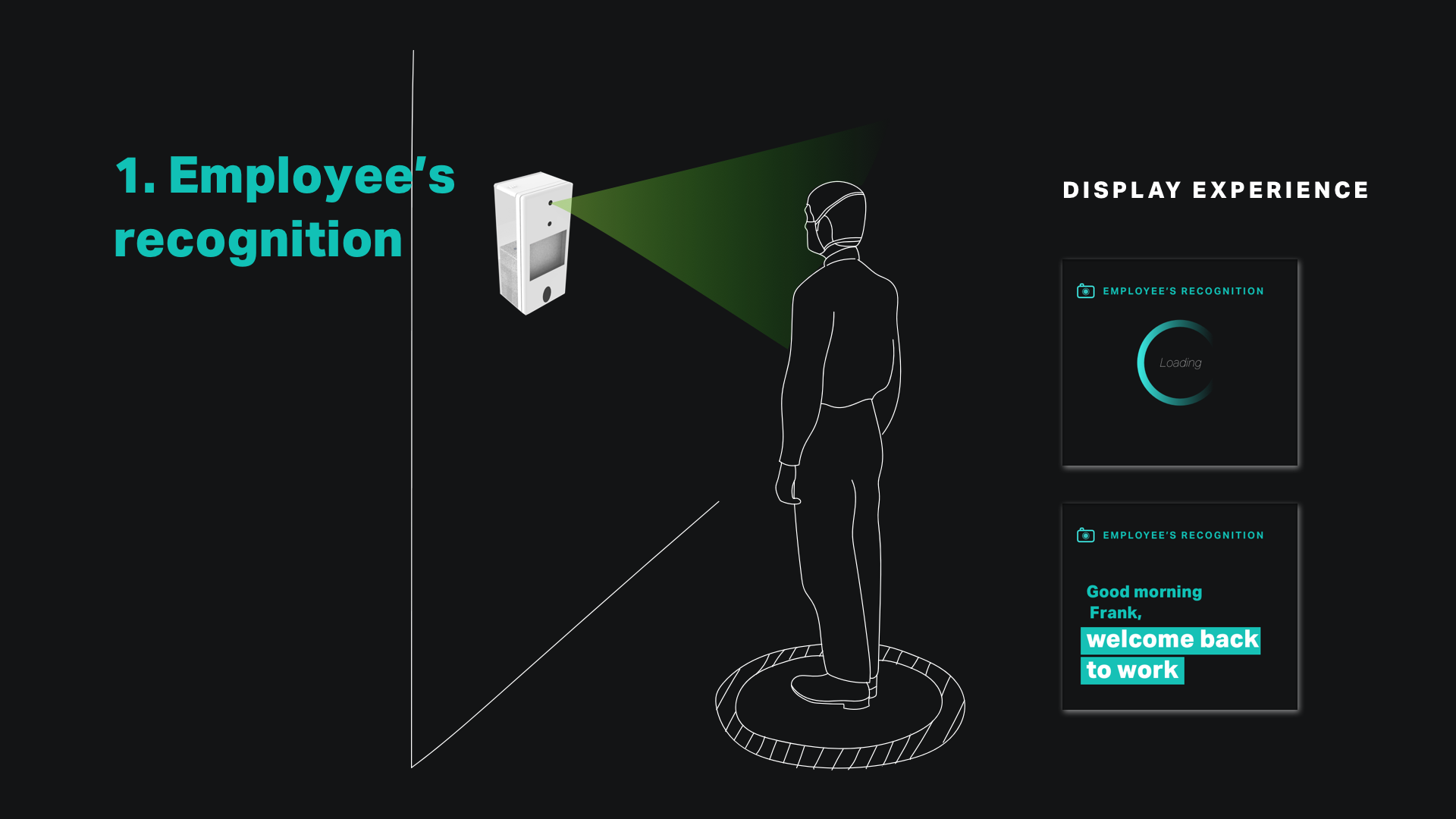
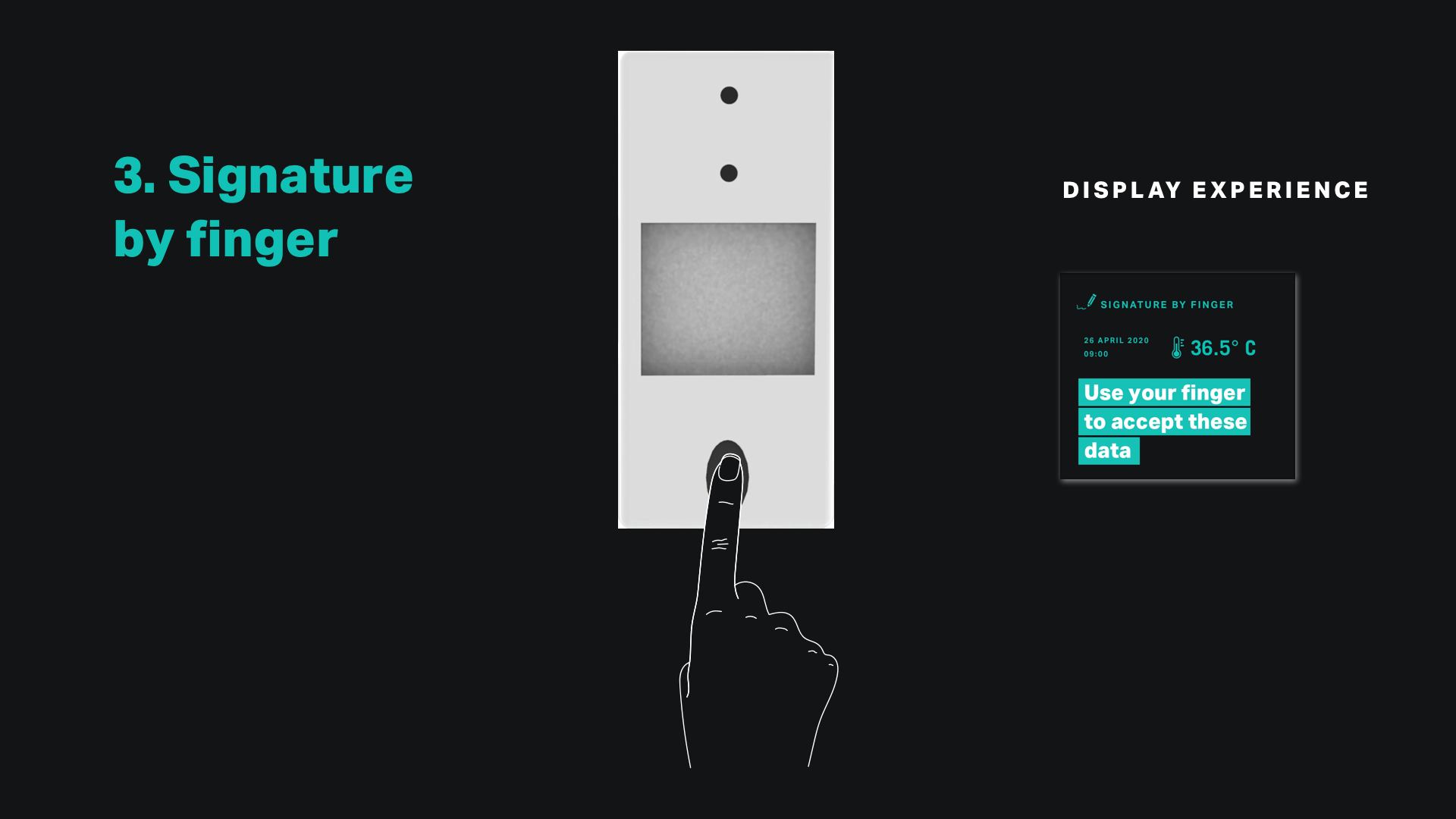
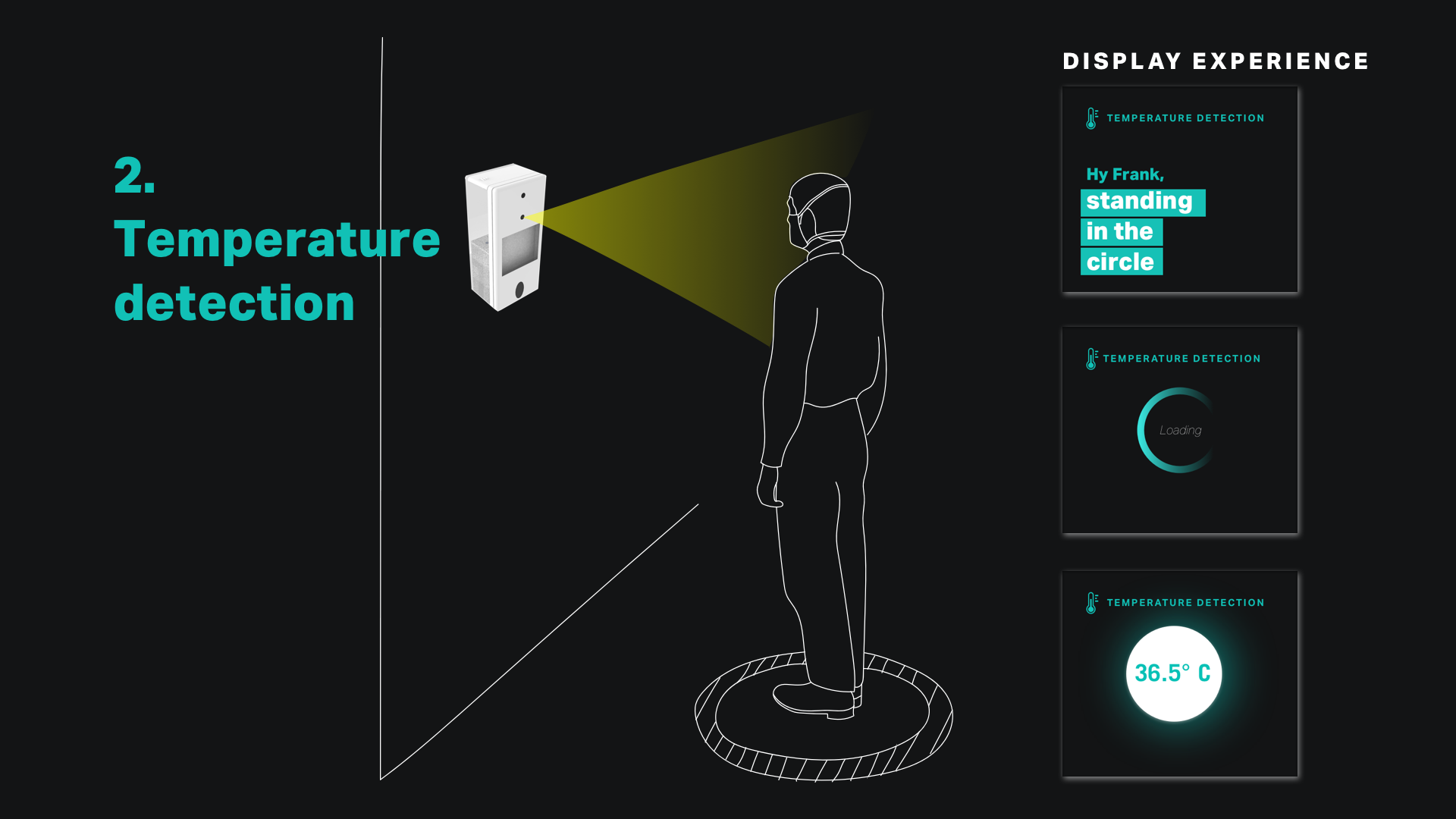
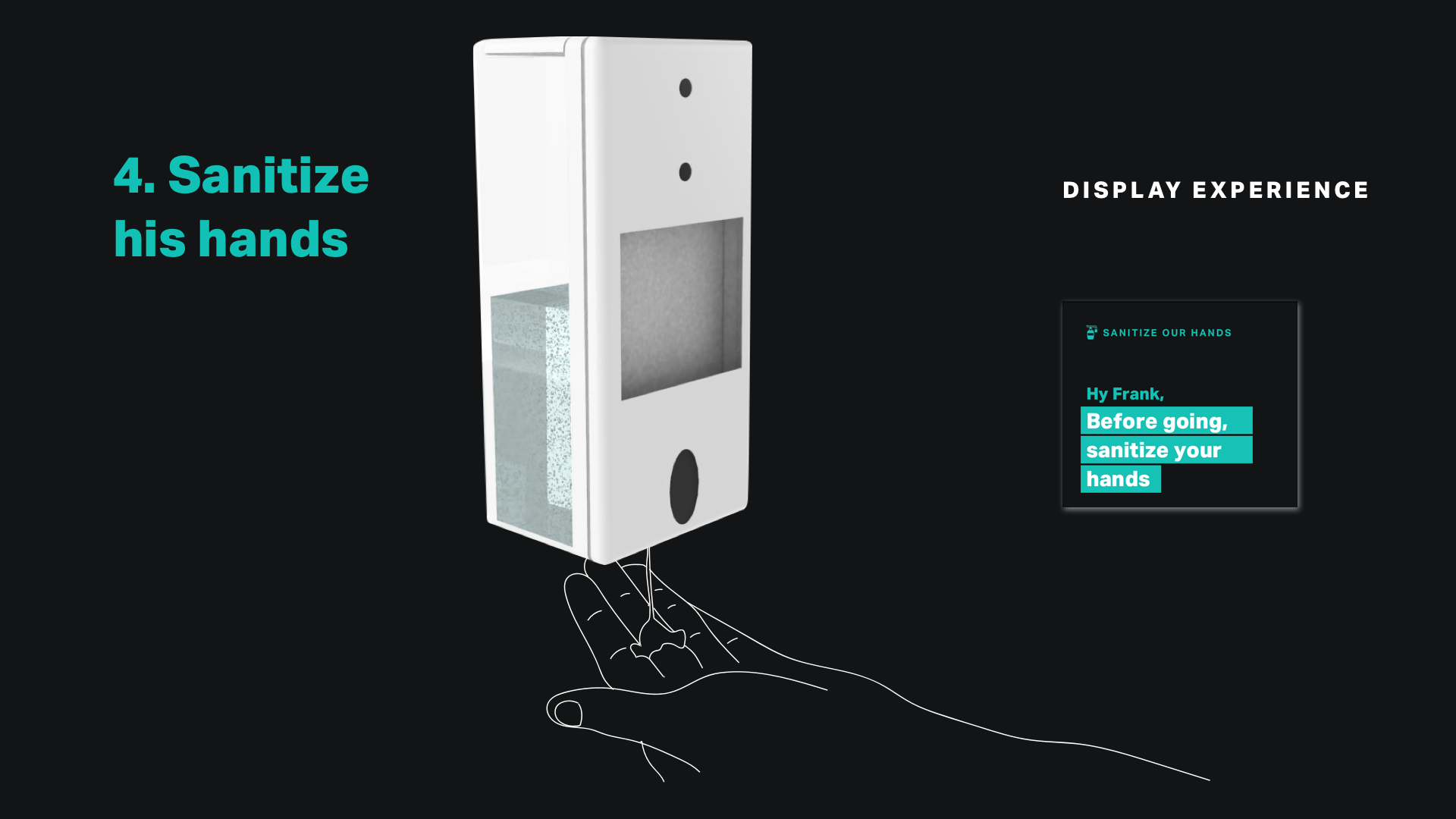
At the entrance of the construction site / industry of each worker, but also of other subjects, it is normally necessary to detect the temperature and then manually fill in a form with the data. The effective functioning of the system foresees a phase of convocation of the employees before its use. In this way it is possible to associate the face (the upper part of the eyes given the mandatory mask) to the imprint of each employee. 1- Employee's Recognition; the user is positioned in the area indicated on the ground. This distance was chosen based on the characteristics of the cameras and in order to be easily used by targets with different heights or with physical handicaps. At this point the system recognizes the employee. 2- Temperature detection; the user is analyzed by Termocam which returns the detected data on the monitor. 3- Signature by finger; the display shows the collected data (detection date, detection time, temperature) and asks the user to confirm that what is reported is true. The user confirms the validity by placing his finger on the fingerprint detector. If the measured temperature is lower than 37.5 ° C, the employee can enter the company, on the contrary, he will have to go home. 4- Sanitize your hands; after completing the checks, the employee places his hands under the product. a photocell activates the dispenser with a dose of disinfectant liquid. The user can disinfect his hands and go to his workplace. This data are collected in an Application. This App is accessible only for competent authorities and for the company security officer. This allows competent authorities to carry out effective remote control.
Benefit
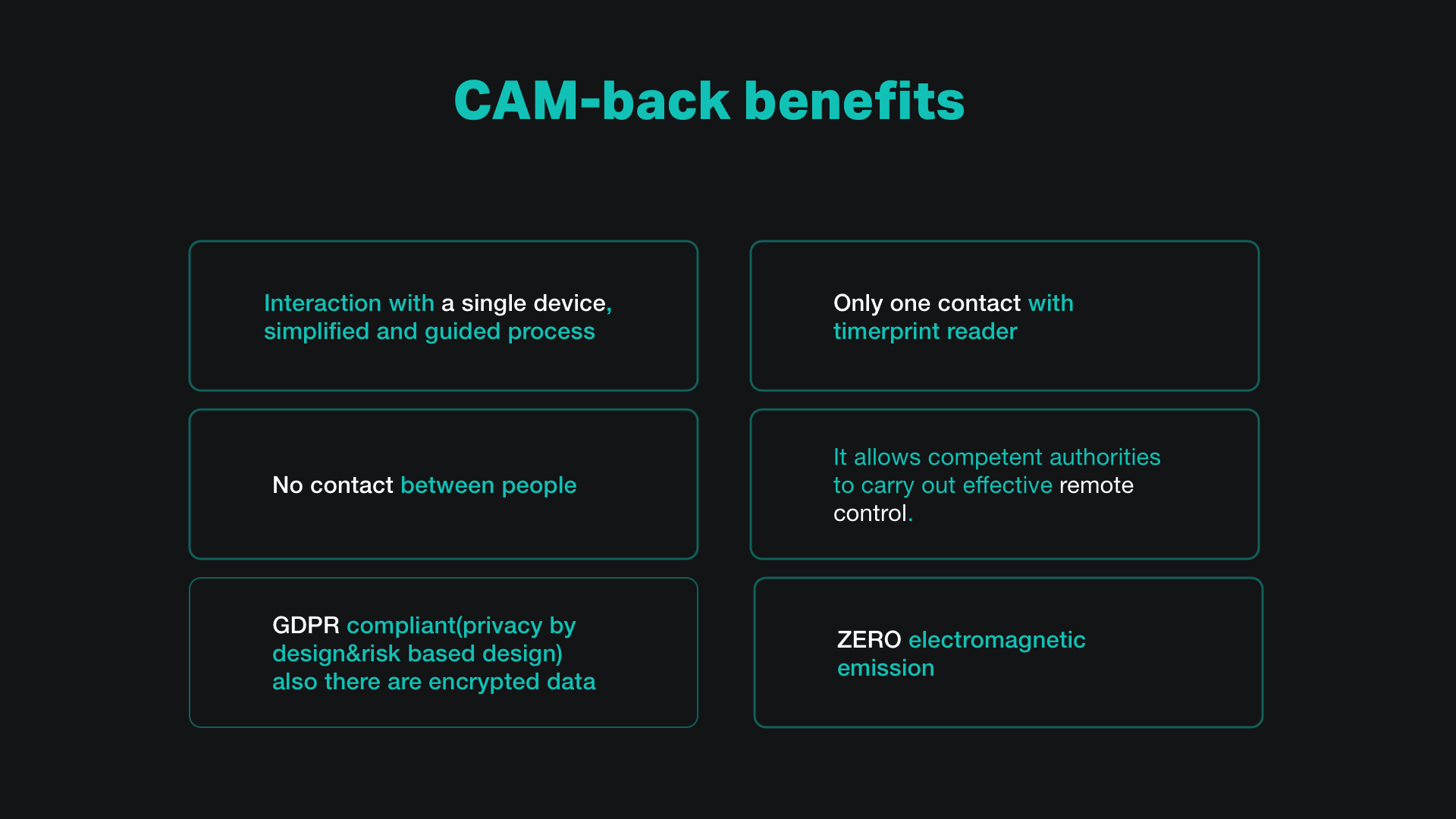
CAM-back solves all the problems identified. -Users have to interact themselves only with a single device through a simplified and guided process. -It is almost contactless. Users have only one contact with a fingerprint reader but they can sanitize their hands after this. -There are not contacts between people. -It allows competent authorities to carry out effective remote control. -The data managed is GDPR compliant (privacy by design and risk based design), also these are encrypted data. -It product has zero electromagnetic emissions.
The App
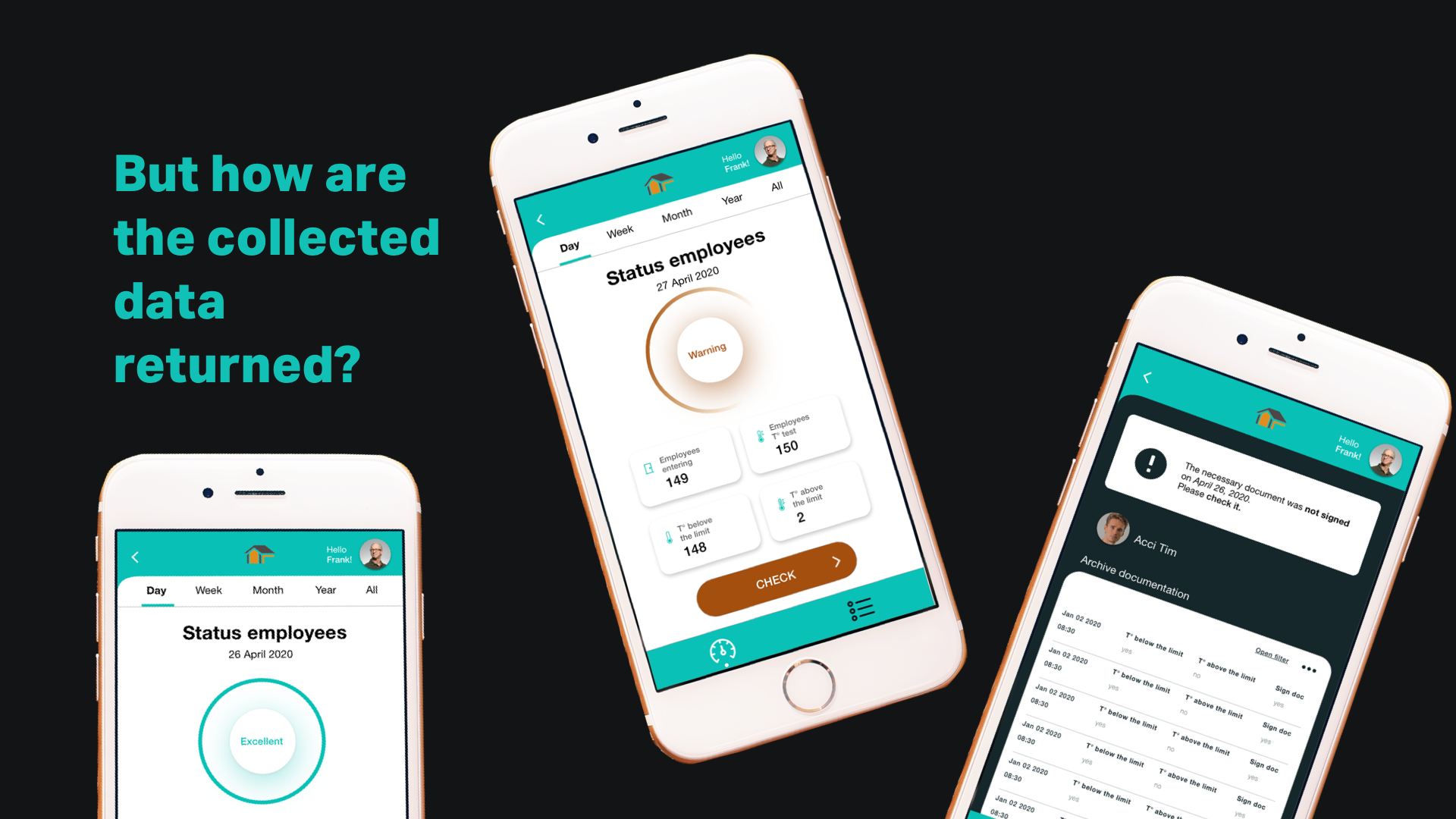
The application is designed for two types of users: the company safety manager and the managers of the competent authorities in charge of supervising compliance with the decree. The application replaces the archiving of paper forms with the collection of historians of the surveys made. This data is collected for the period of time determined by the competent authorities. The app allows viewing of all data. This provides a feedback service by reporting any discrepancies with the current legislation, simplifying the work of users. The competent authority can remotely view the data of all the companies that adopt the system. In this way his work is facilitated, respect for the rules is favored and unnecessary personal contacts are avoided. The main pages of the app are two: a dashboard and a complete list of company employees.
Data privacy
CAM-back is based on an encrypted data storage system. Every day, an employee of the authorities performs a backup of hte application. This data migrates to a secure hard disk called NAS. NAS is a system that saves data in compliance with the GDPR, therefore equipped with data encryption software, raid redundancy, user authentication. In the event of an attack or a crash, recovery allows the system to be reactivated. The data is safe. In case of hacking actions, hackers have access only to encrypted data, therefore not usable. Same goes for NAS. The development of the project implements the basic principles of the GDPR, in particular the concept of privacy by design. The system therefore from the initial stages is based on compliance with European privacy legislation (GDPR) and we can say that it implements privacy and security according to European directives. The flow to guarantee privacy and gdpr compliance will be: 1) First of all, risk impact assessment (dpia) relating to our processing of (sensitive) data. The risk assessment related to our "treatment" (temperature measurement and storage, with time stamp, and with the addition of personal data) will be performed later (it takes many hours) but based on our experience the impact of the risk should be classified among ACCEPTABLE and MEDIUM LOW values. Obviously, according to the GDPR procedures, treatment can only be carried out after DPIA, and everything must be regularly transcribed in the treatment register. 2) in case of acceptable risk (we have reason to think it is) we will move on to implementing our system. 3) pseudonymisation of the data (the names of the subjects are NEVER present on the systems, but only their code) The association of the name with the code is done EXTERNALLY. 4) adoption of minimum measures or safety standards.
Flexibility
The product has been designed to meet the needs highlighted by the Italian decree about workplaces. Its functions can be changed according to the needs of the different countries.
Target market and opportunity
To analyze the target, we started with the subjects to whom the decree is addressed, the companies. In Italy there are 217,805 companies with a number of employees greater than 11, all these companies are potentially interested in CAM-back (TAM). To focus more on the target, reference can be made to the small, medium and large enterprises of the six regions most affected by COVID (Lombardy, Piedmont, Emilia-Romagna, Veneto, Tuscany and Lazio). In this cluster, there are 145,402 businesses (SAM). By further defining the main target to which we could turn, we focused on medium and large companies in the most affected regions and which belong to the sectors that have the greatest impact on Italian GDP(Source_https://www.lavoce.info/archives/65895/riaperture-facciamole-con-metodo/?fbclid=IwAR2sD8mhtFM21JSqy0FyMk3xdiGeJvW9KQlLbJBervrodMKbtVExHm-dtcM). In particular: extraction of minerals from quarries and mines; manufacturing activities; supply of electricity, gas, steam and air conditioning; water supply sewerage, waste management and sanitation; buildings; transport and storage; accommodation and restaurant services; information and communication services; financial and insurance activities; real estate activities; professional, scientific and technical activities; other activities and services. Based on the filters set, the total number of target companies for CAM-back's market opportunity can be quantified as 14,142 units (SOM). Clearly it is valid for all public offices, we can filter these according to the same criteria used for the private sector. They can be included in the SOM, SAM and TAM analysis.
(Source for data companies in Italy http://dati.istat.it/Index.aspx?DataSetCode=DICA_ASIAUE1P&fbclid=IwAR0YR3DN21kDlmOE4cmeYYXqp3eHUwPl-bmvZ3SS16R0M7lZmS3M5esKC5k)
Scalability
CAM-back, although starting from the resolution of a punctual problem and based on an Italian decree, has a high scalability. In fact, the measurement of temperature could be an instrument applicable in different contexts to favor places and dynamics of interaction and exchange typical of the B.C. (Before Covid). The other tools that characterize the device (fingerprint reader and / or intelligent video camera) could also be used to facilitate any backtracking operations, perhaps in collaboration with the various monitoring applications that the Union countries are developing for this purpose. In this regard, it is essential to remember the possible voluntary membership and the presence of an encrypted data storage system to ensure user privacy.
Components
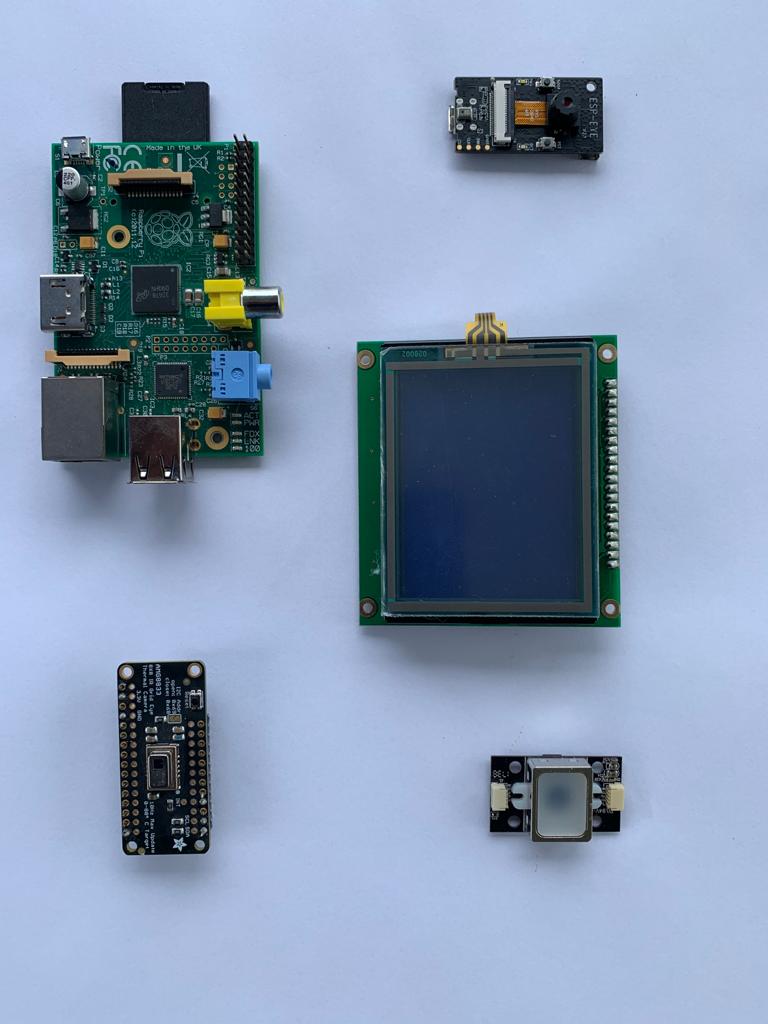
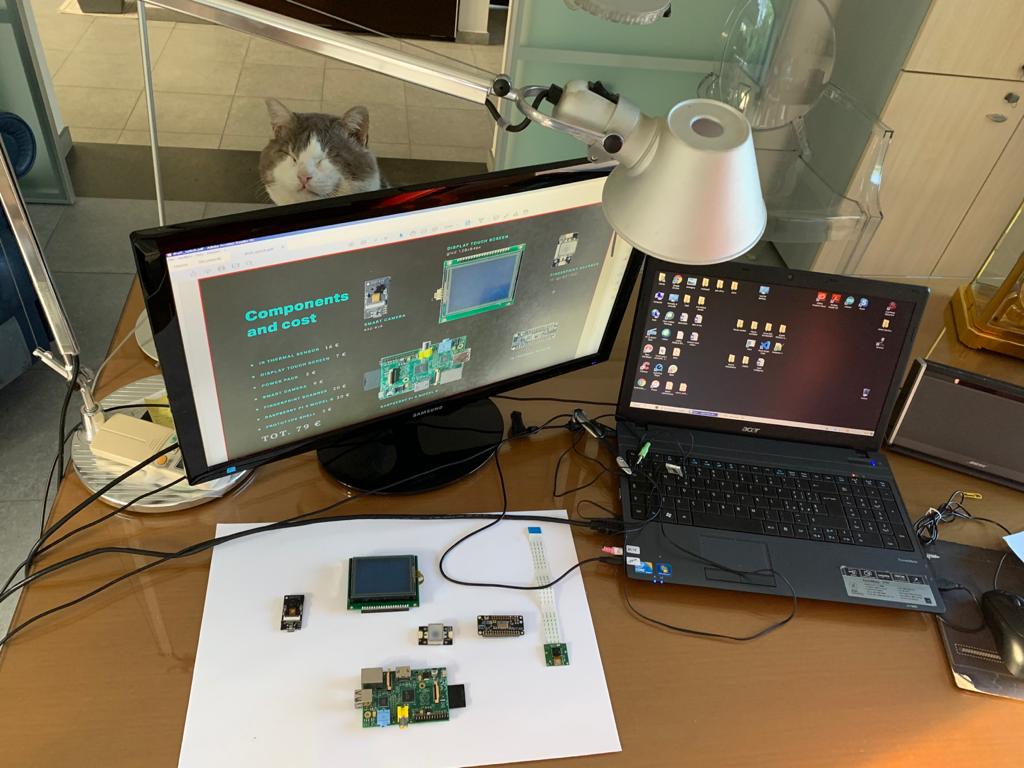
The device has: • Termocam • Smartcam • Finger reader • An internal display • The processing card (RASpberry). In the prototype phase we use a RASpberry, but in the implementation phase we will use a card of lower cost and with less features, since most of those of the card are not used. Inside the device there is the processing card (controller) which is equipped with an sd card for local storage, and a communication device for data transmission when necessary. Bluetooth, wifi, 5G can be provided in borderline cases. Data collection can take place via APP on smartphone or via PC.
Value of the solution after crisis
DEVICE features will continue to be useful even after the crisis:
- rapid temperature measurement: we think that after the crisis, until the spread of the vaccine, it will be necessary to carry out monitoring by measuring the temperature.
- flexible setup: it is possible that in the future the procedures will ease and maybe the signature will not be required through fingerprint detection; the setup already provides the option to exclude this feature.
- data collection and sending: even outside the crisis, sending data with / without signing by signature can be useful. The data can also come from remote sensors, in IOT logic, connected via the wifi / bluethooth with which the device is currently equipped, for now not used but inserted precisely for future use.
- Container design: it is such as to allow the insertion of any other electronic boards for various uses, and the mother board has a bus designed to accommodate some expansions.



Log in or sign up for Devpost to join the conversation.