-
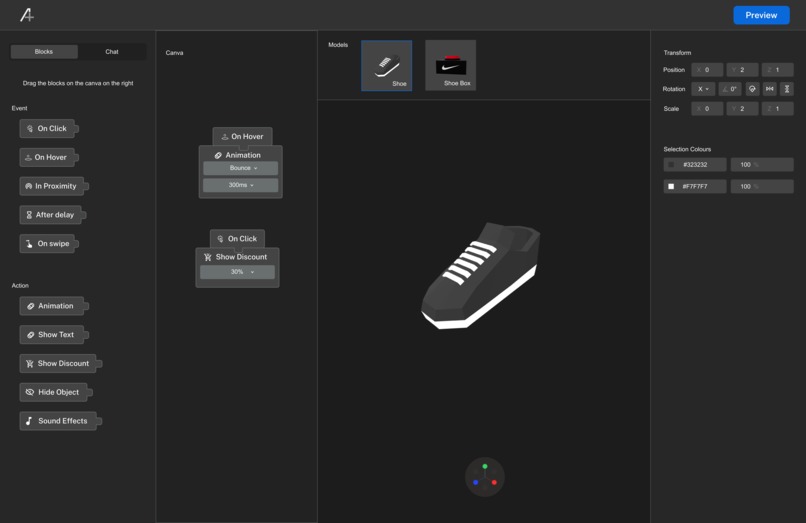
AD builder (Figma)
-
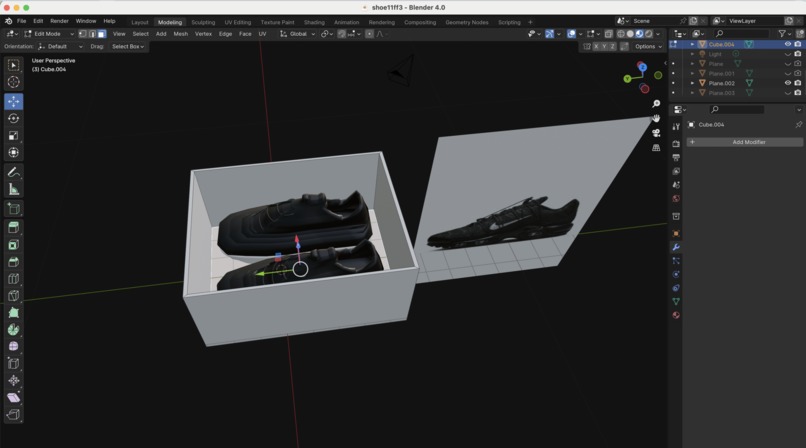
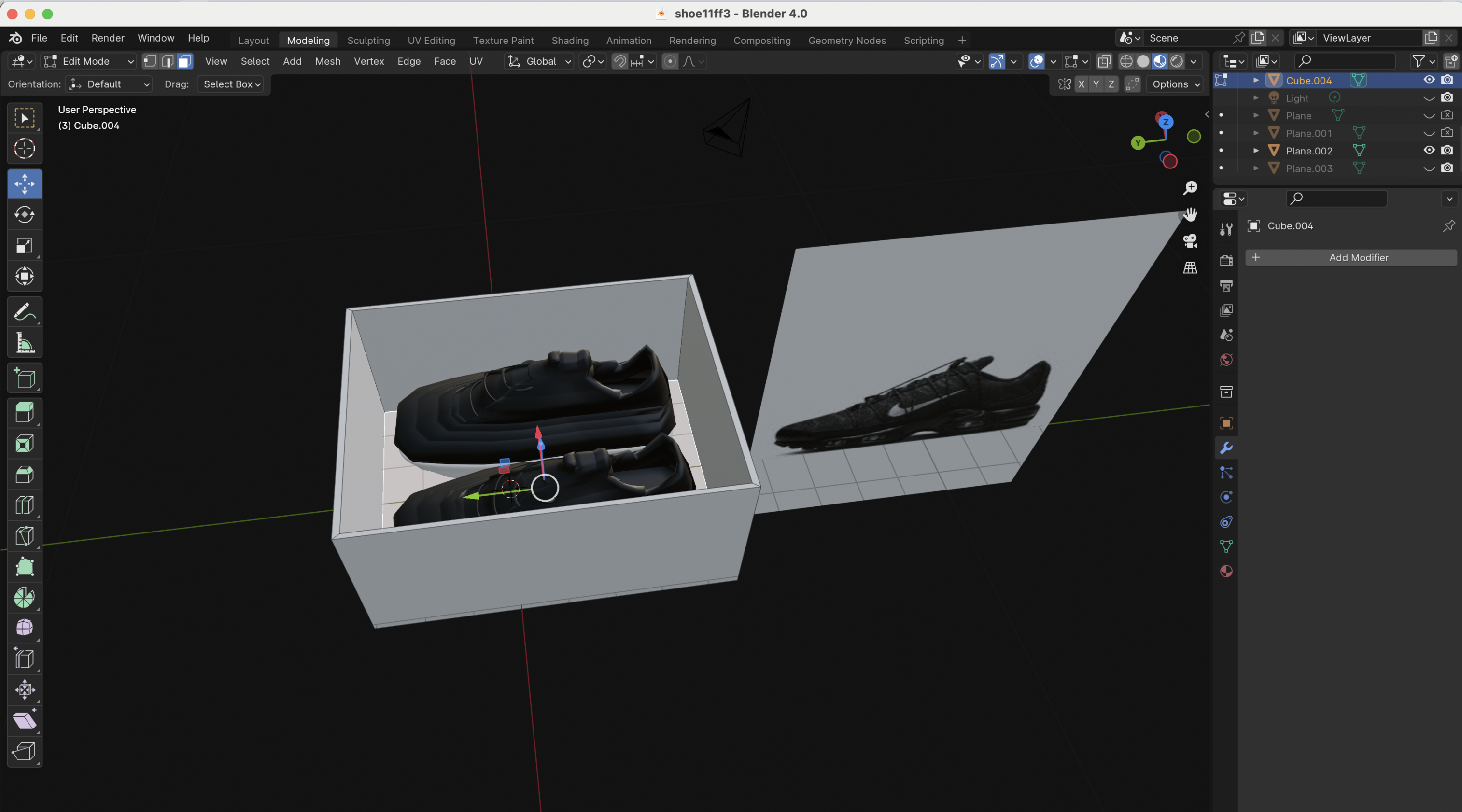
Blender
-
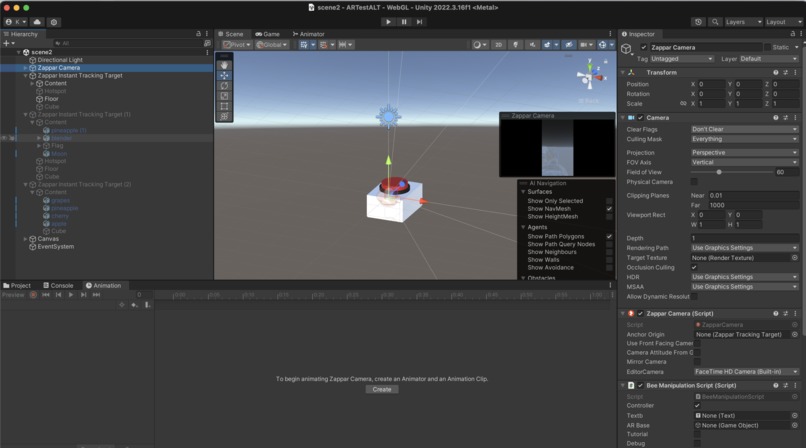
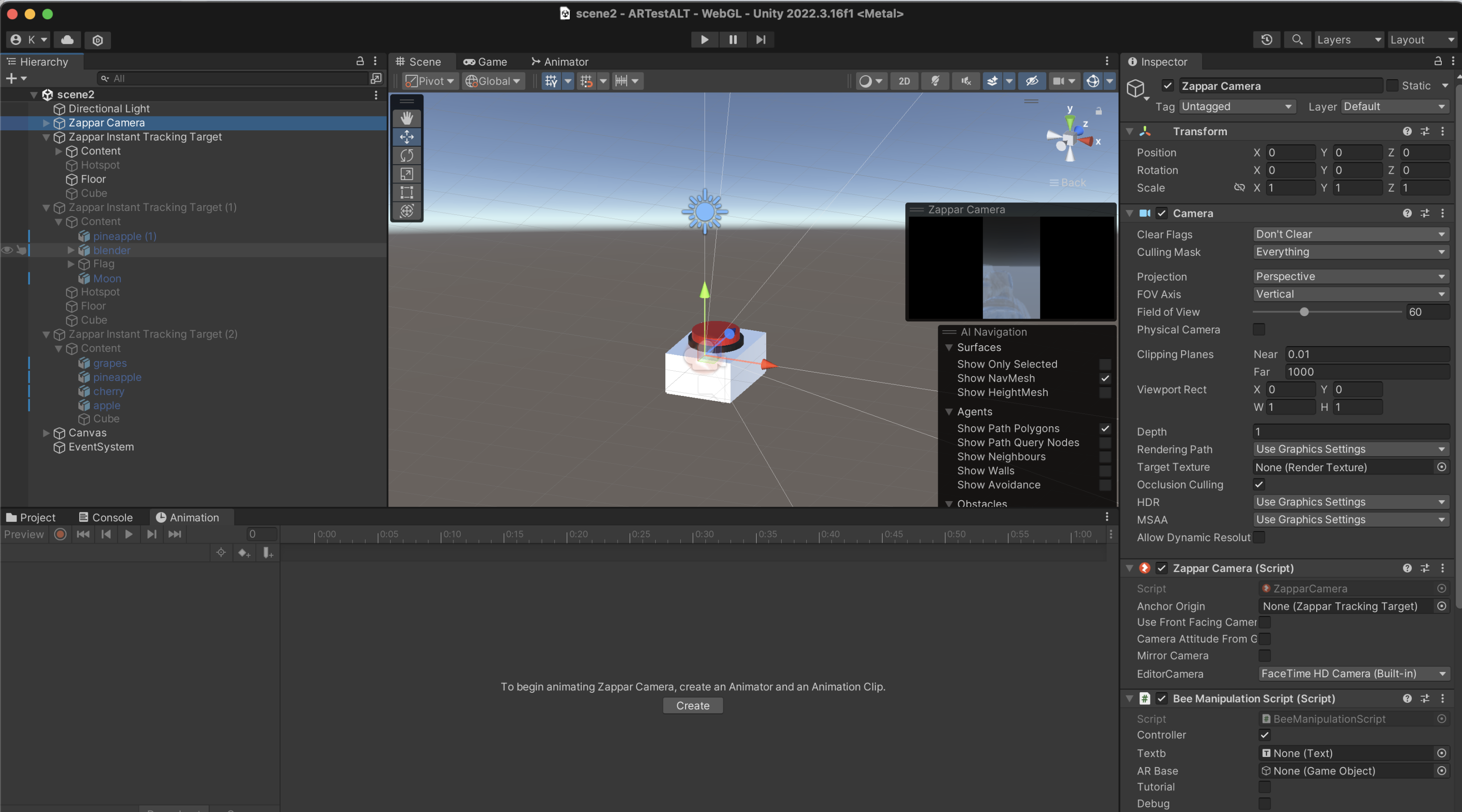
Unity
Inspiration
Although Social Media Ads account for nearly 40% of total digital ad spend, engagement rates are increasingly decreasing. Despite clear data showing that immersive ads drive outperform static formats, brands and advertisers struggle to build engaging, interactive ad experiences quickly, affordably, and at scale. We address two main pain points of the current process
- Non-Intuitive Creation Tools: Existing platforms like Unity, Unreal Engine, and Spark AR are powerful, but they’re built for developers and 3D technical artists. They require steep learning curves, scripting skills, and complex workflows.
- High Production Costs and Long Timelines: Creating interactive ads is time consuming and expensive. From 3D modeling to scripting and deployment, the process can take weeks and cost tens of thousands of dollars, making it inaccessible for smaller brands and incompatible with the rapid iteration cycles of modern advertising.

What it does
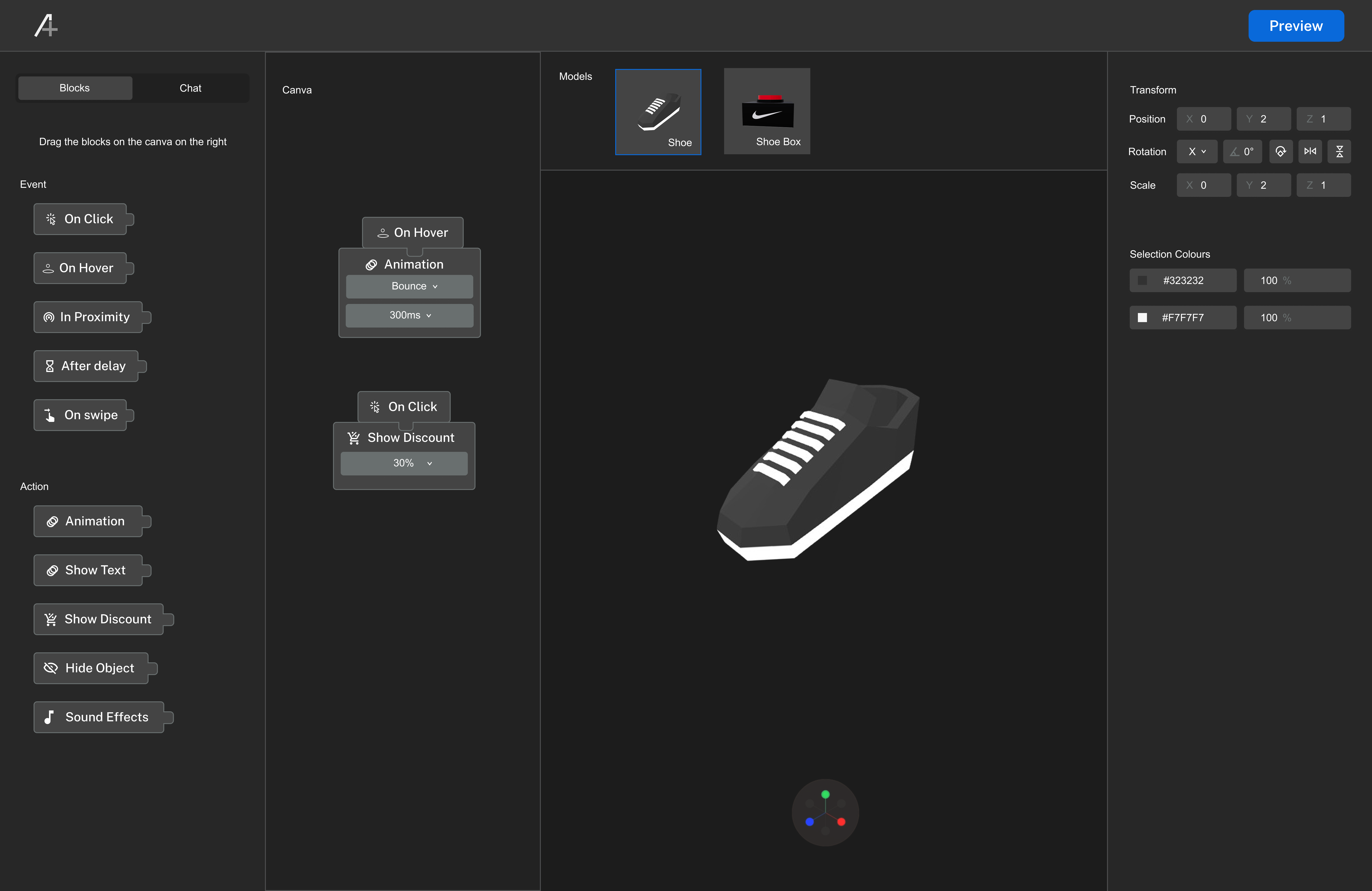
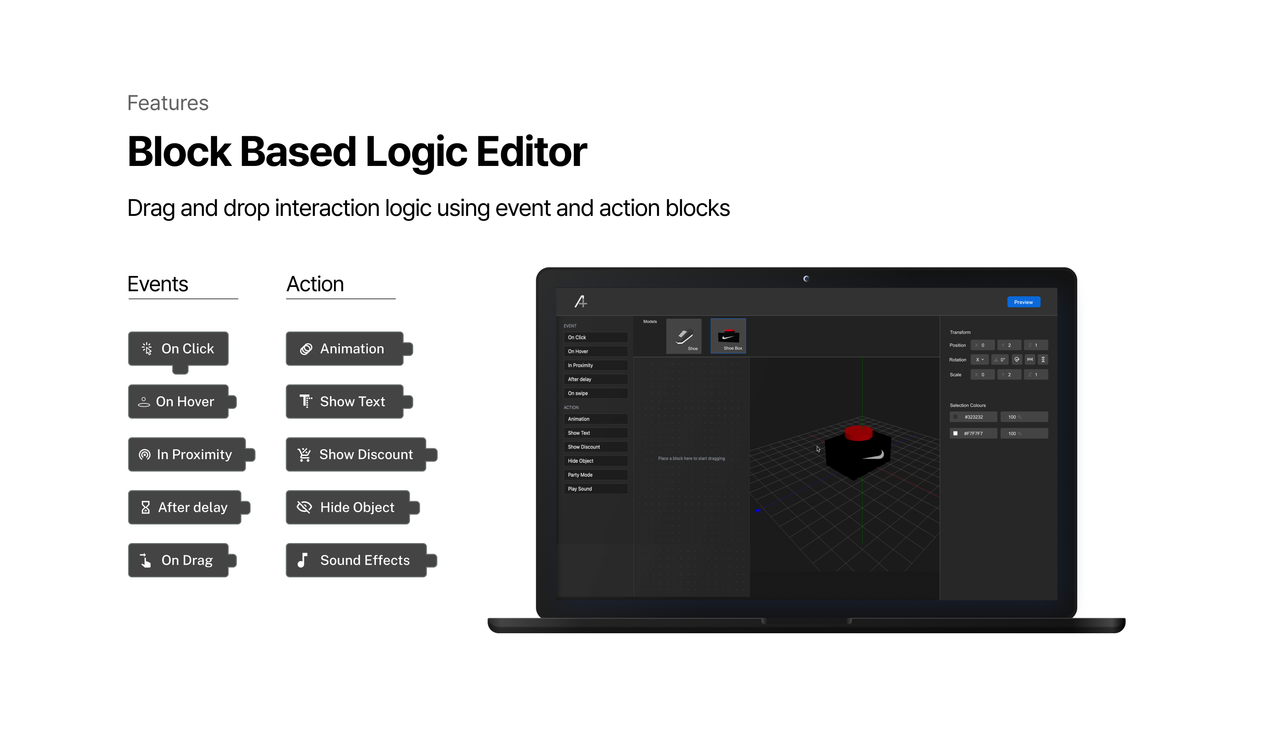
- Block-Based Logic Editor: Drag-and-drop interaction logic using intuitive Event + Action blocks
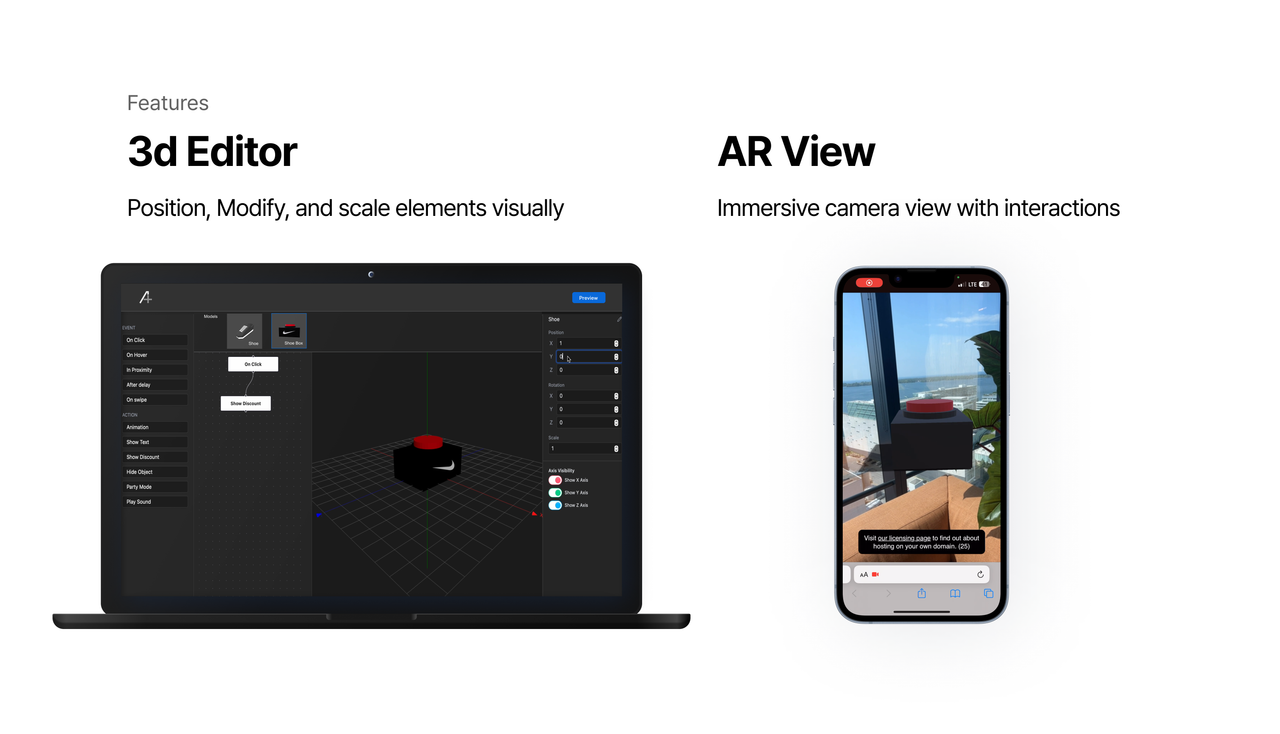
- Visual Canvas + 3D Editor: Create immersive experiences using a live 3D canvas + Position, modify, and scale elements visually
- AR view: Immersive camera view with interactions
- AI Model Generator: Instantly generate 3D models from prompts
How we built it
- Frontend: React, Three.js (with @react-three/fiber and @react-three/drei), Valtio (state management)
- Backend: Express.js (Node.js)
- AI Integration: Google Gemini API (text handling), OpenAI API (for DALL·E image generation), Large Reconstruction Model (LRM) for turning images into 3D models using TripoSR
- Database: MongoDB
- Deployment: Railway
- Design: Figma, Blender
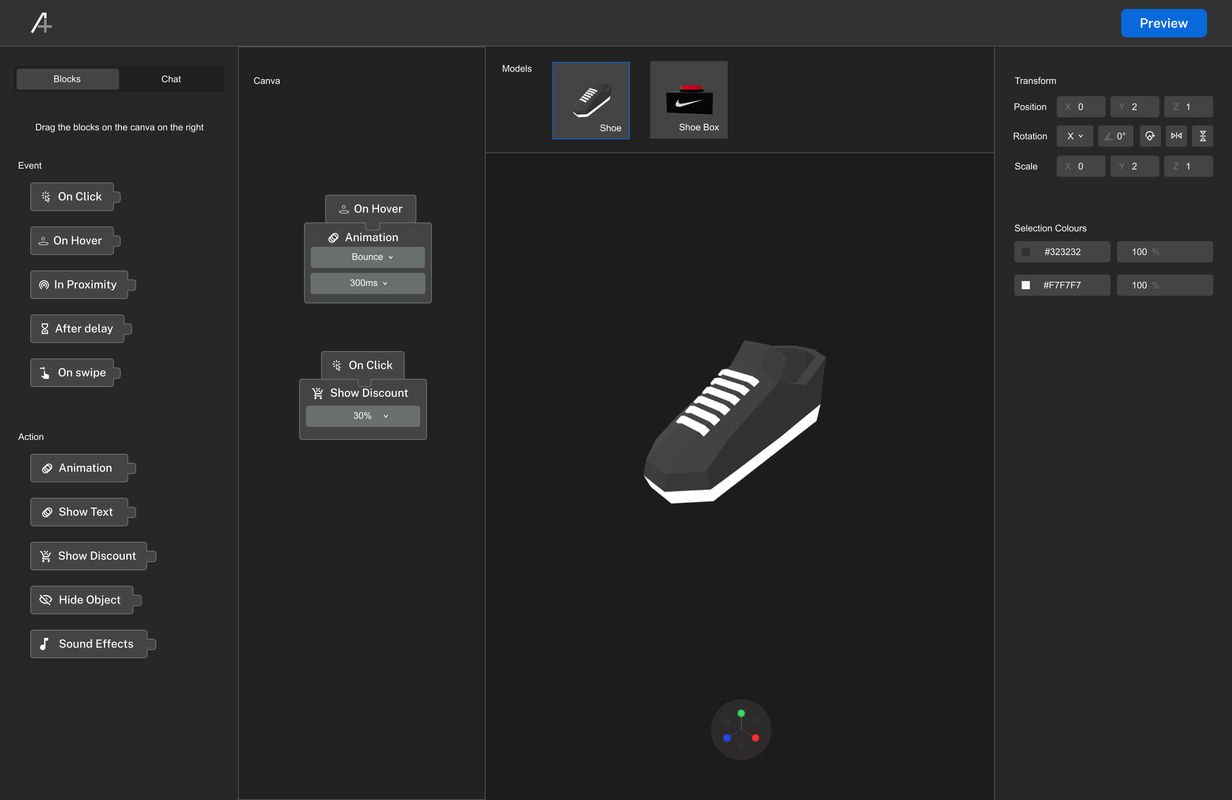 [Figma]
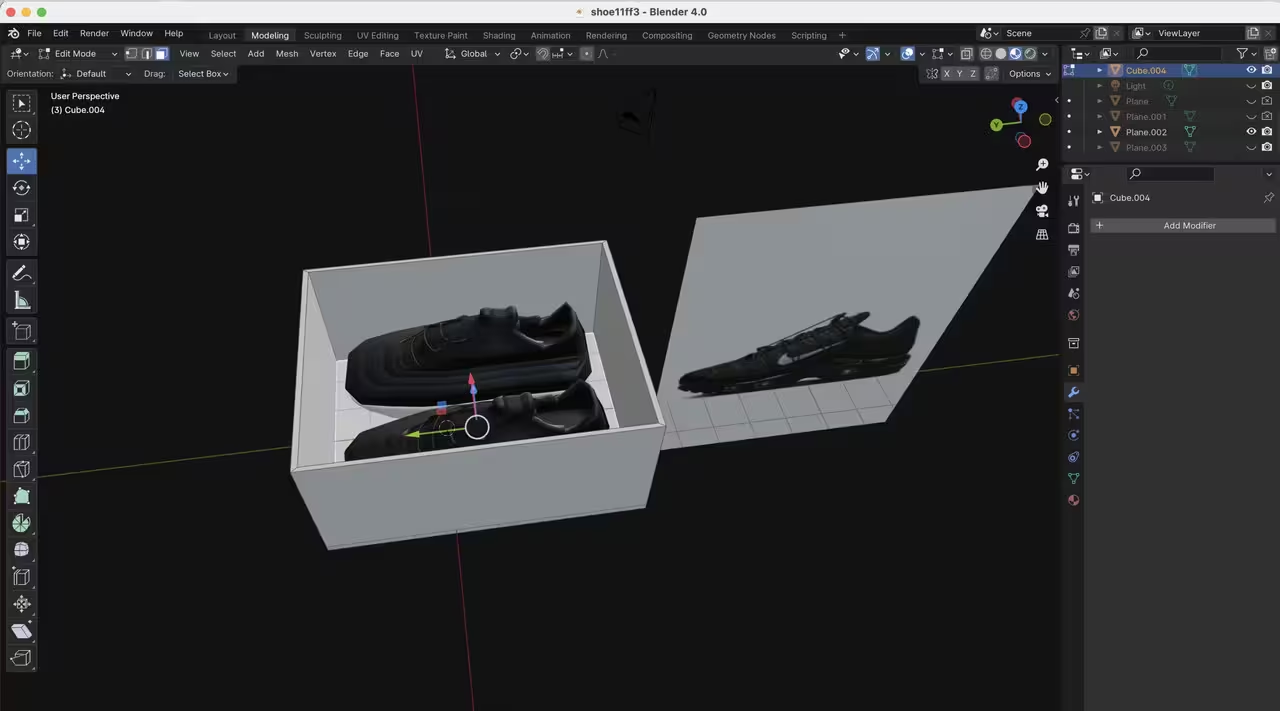 [Blender]
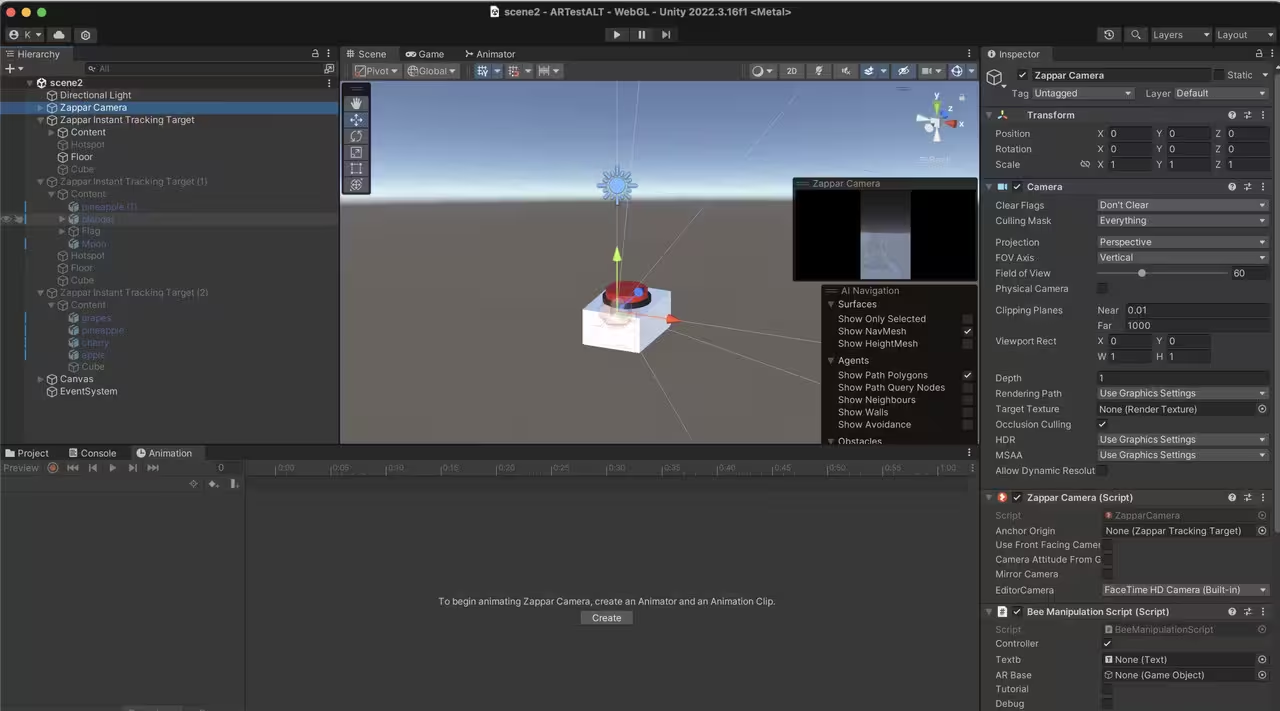 [Unity]

Log in or sign up for Devpost to join the conversation.