
Inspiration
AddBite was inspired by a simple problem: most nutrition apps make eating feel like a math problem.
Calories, macros, daily targets, scores, streaks, and "good" versus "bad" foods can turn an ordinary meal into something that needs to be measured, optimized, or corrected.
For the RevenueCat Shipaton challenge from Abbey's Kitchen, we wanted to explore a different approach based on Abbey Sharp's nutrition philosophy and Hunger Crushing Combo framework.
Instead of asking:
"What should I remove from this meal?"
AddBite asks:
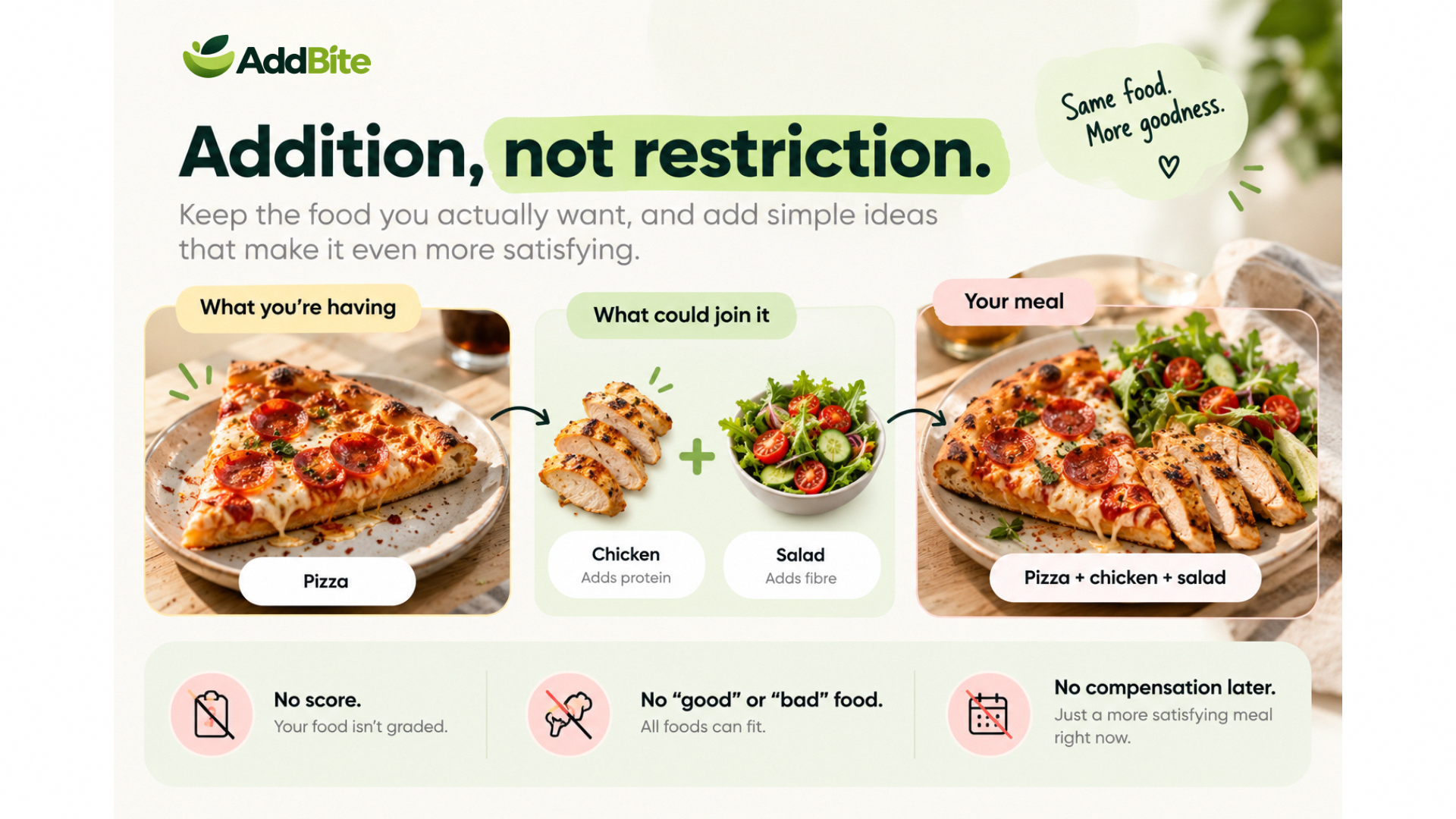
"What could I add to make this meal more satisfying?"
The goal was to build something for real life — busy mornings, snacks, takeout, restaurants, children's leftovers, and those nights when the fridge looks almost empty.
AddBite is designed to meet people where they already are, with the food they already want to eat.
What it does
AddBite is a nutrition companion that helps users make everyday meals and snacks more satisfying without calorie counting, macro tracking, restrictive meal plans, or food guilt.
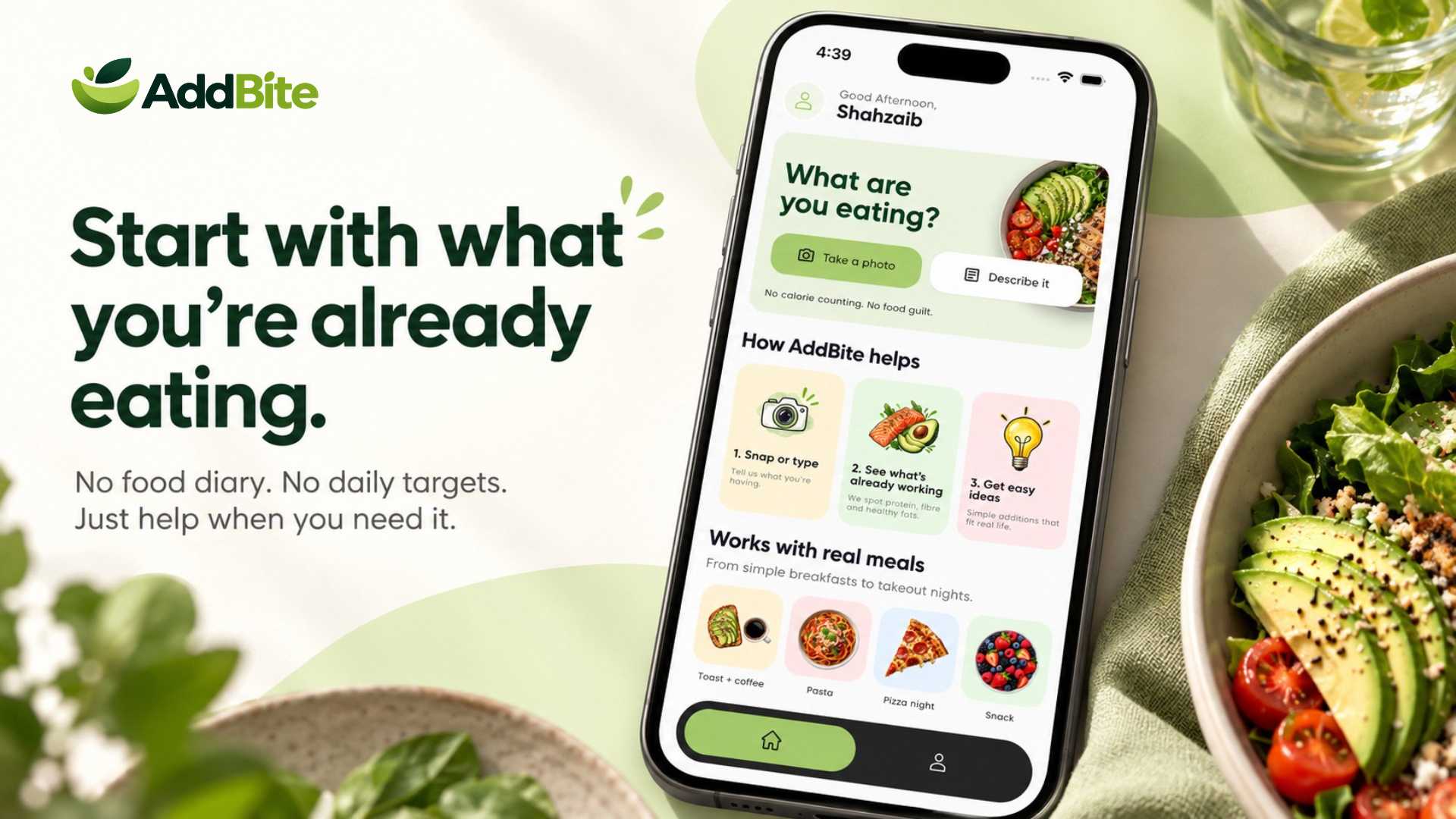
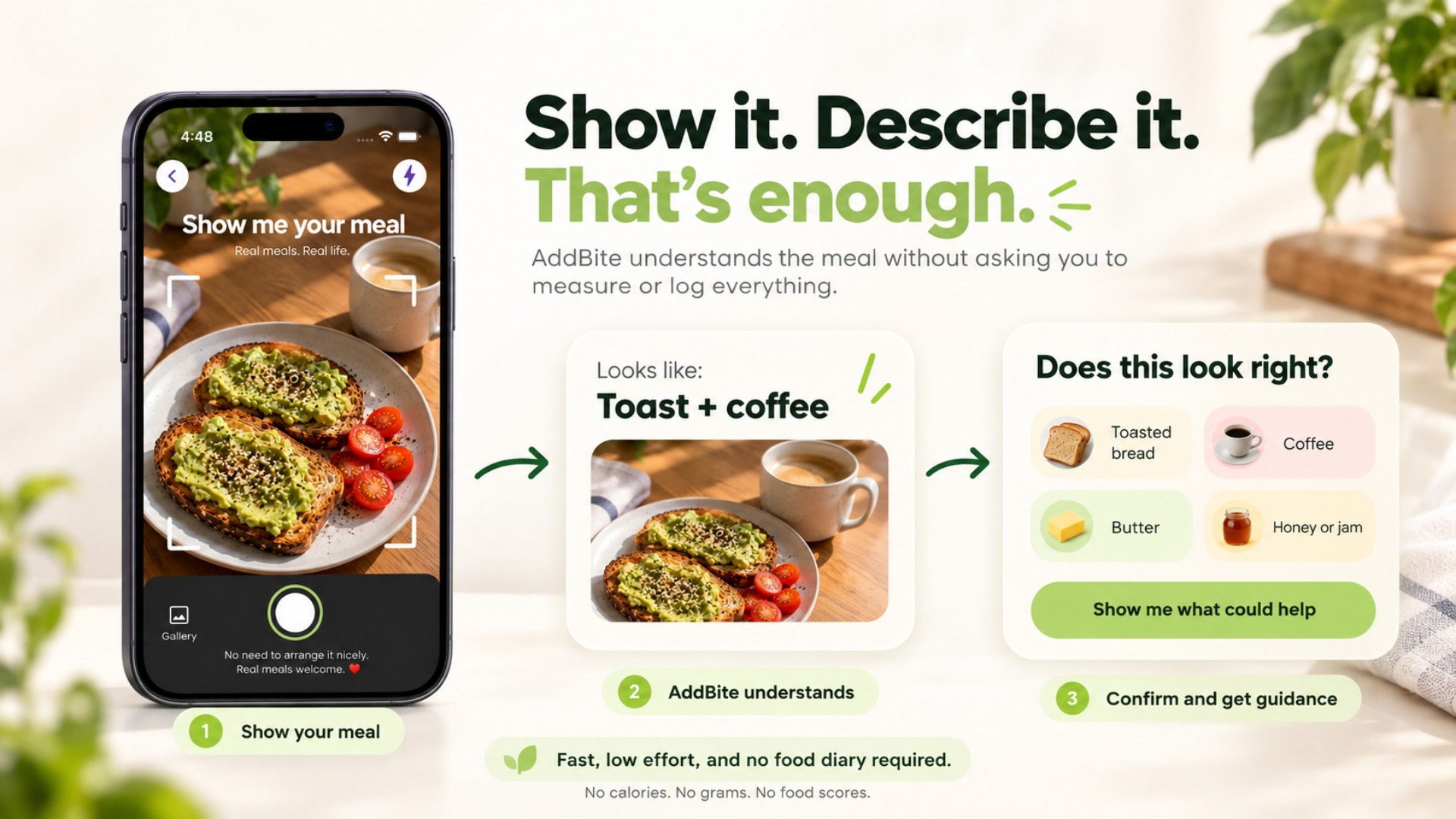
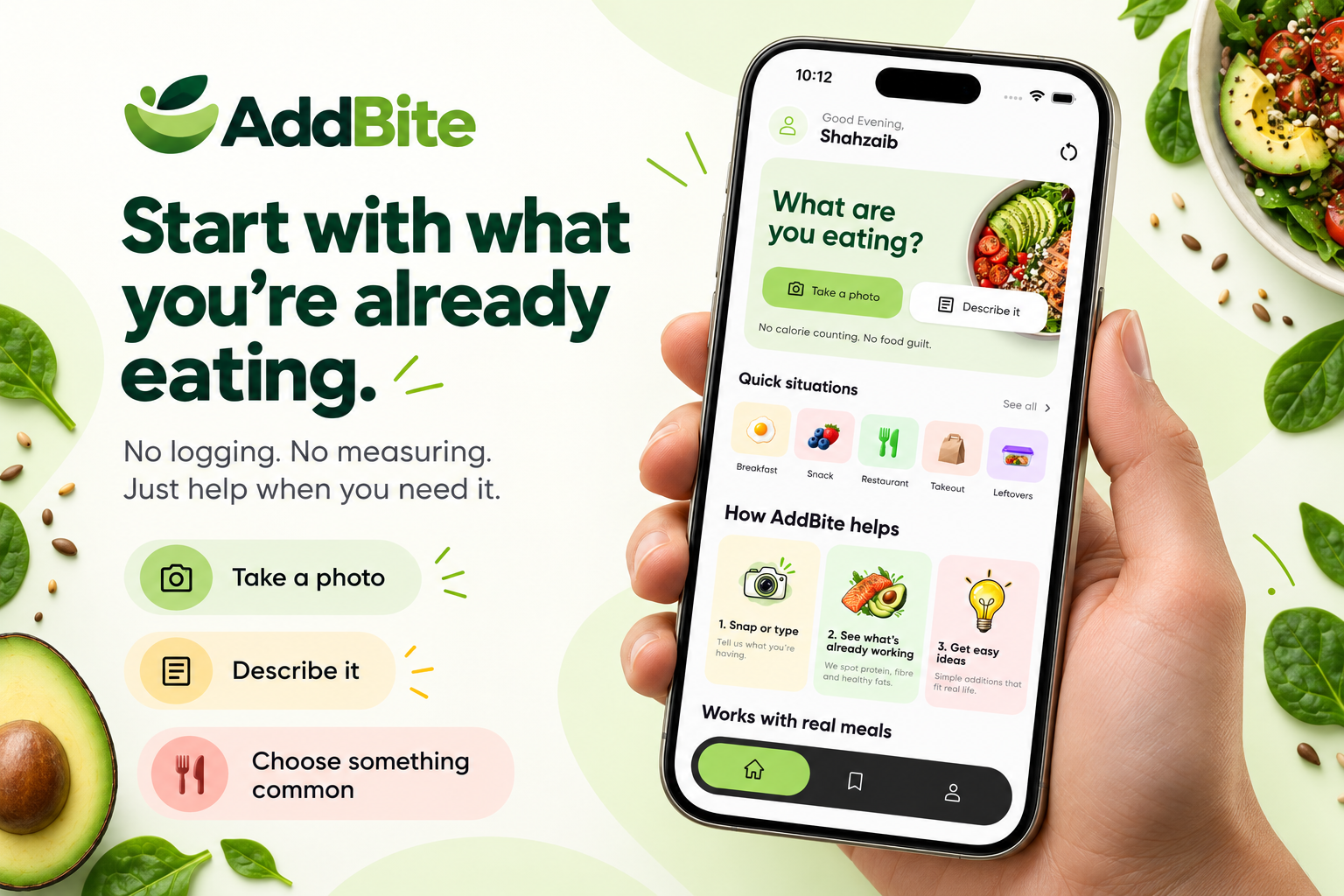
Users can start by:
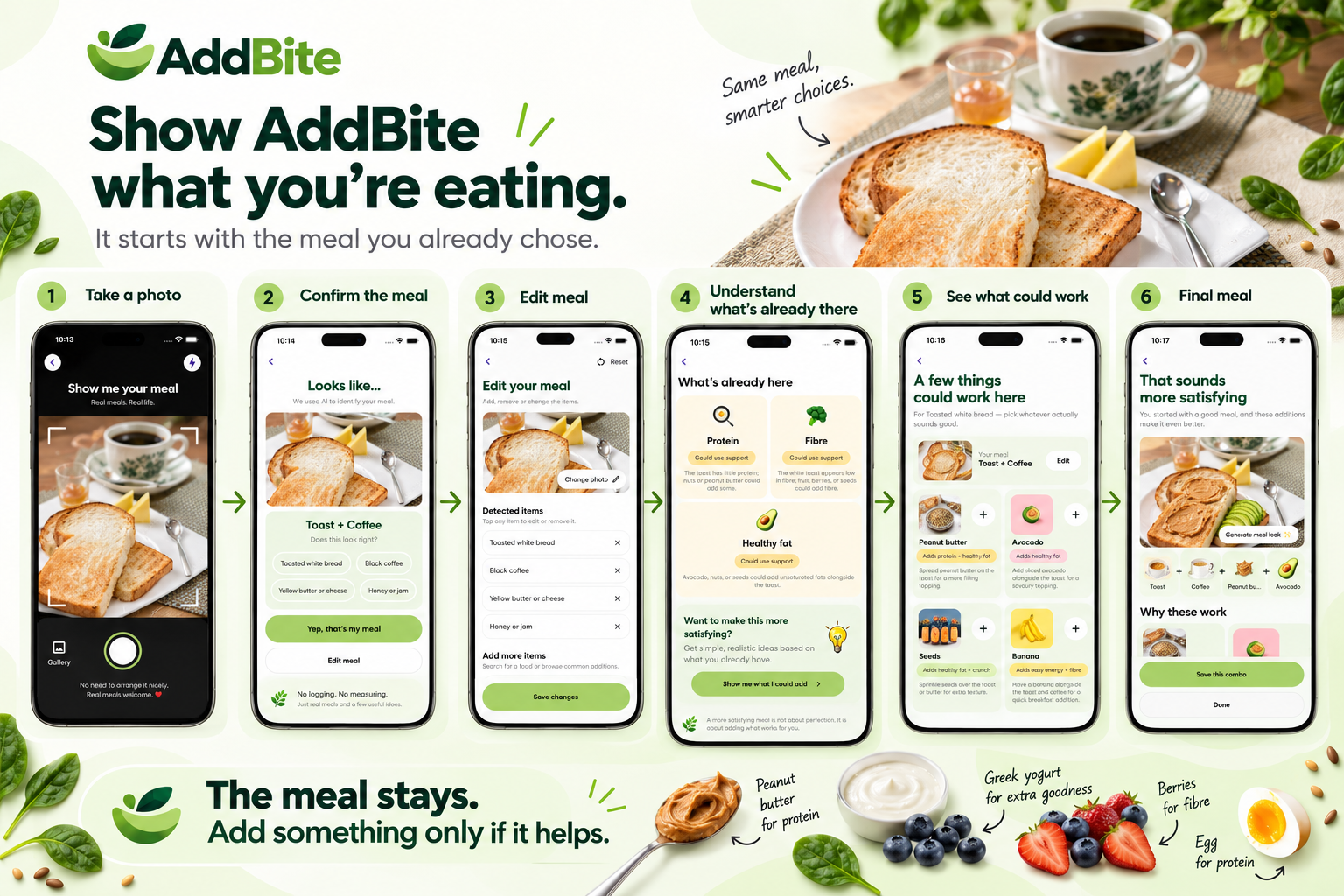
- Taking a photo of their meal
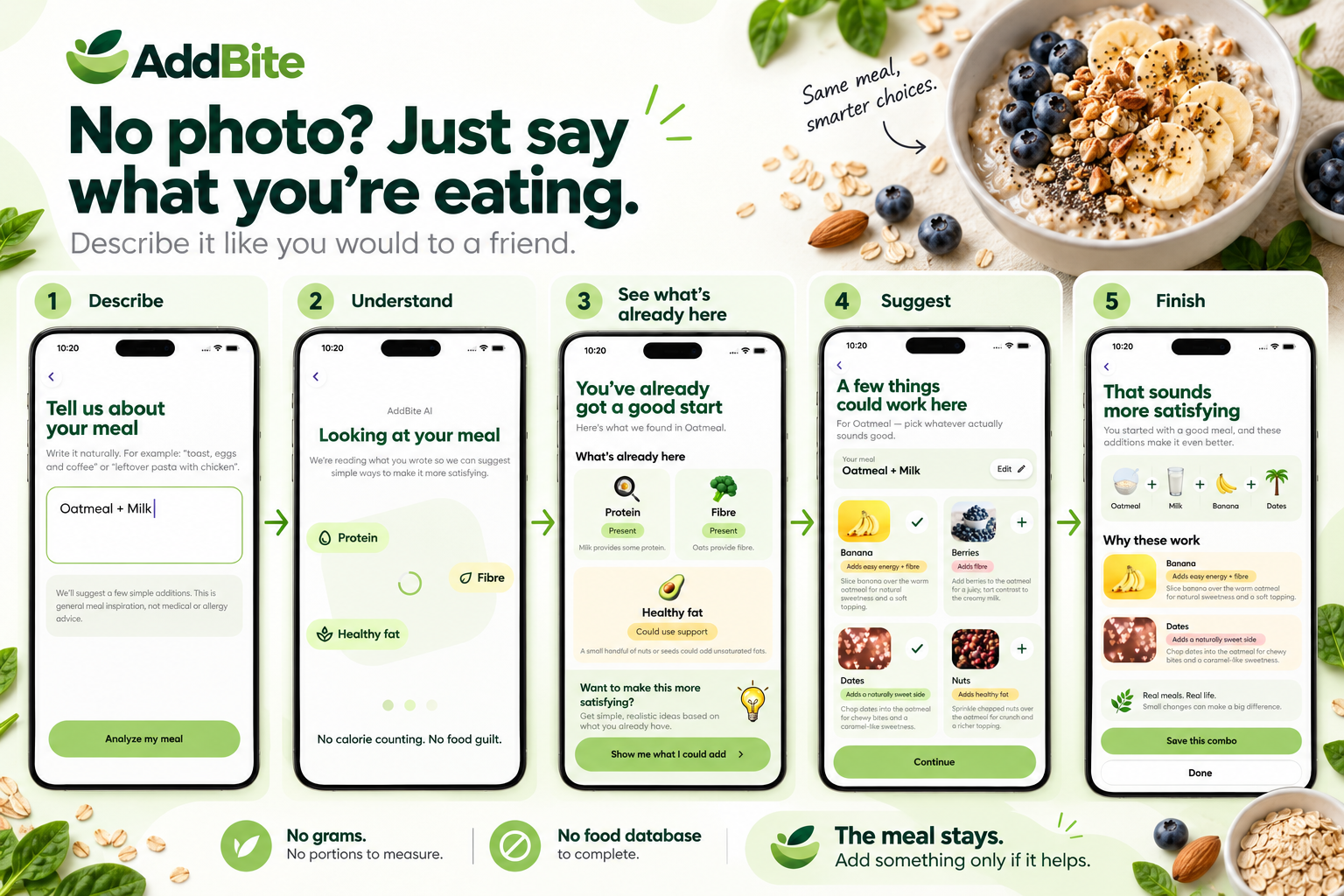
- Describing what they are eating
- Choosing a common meal
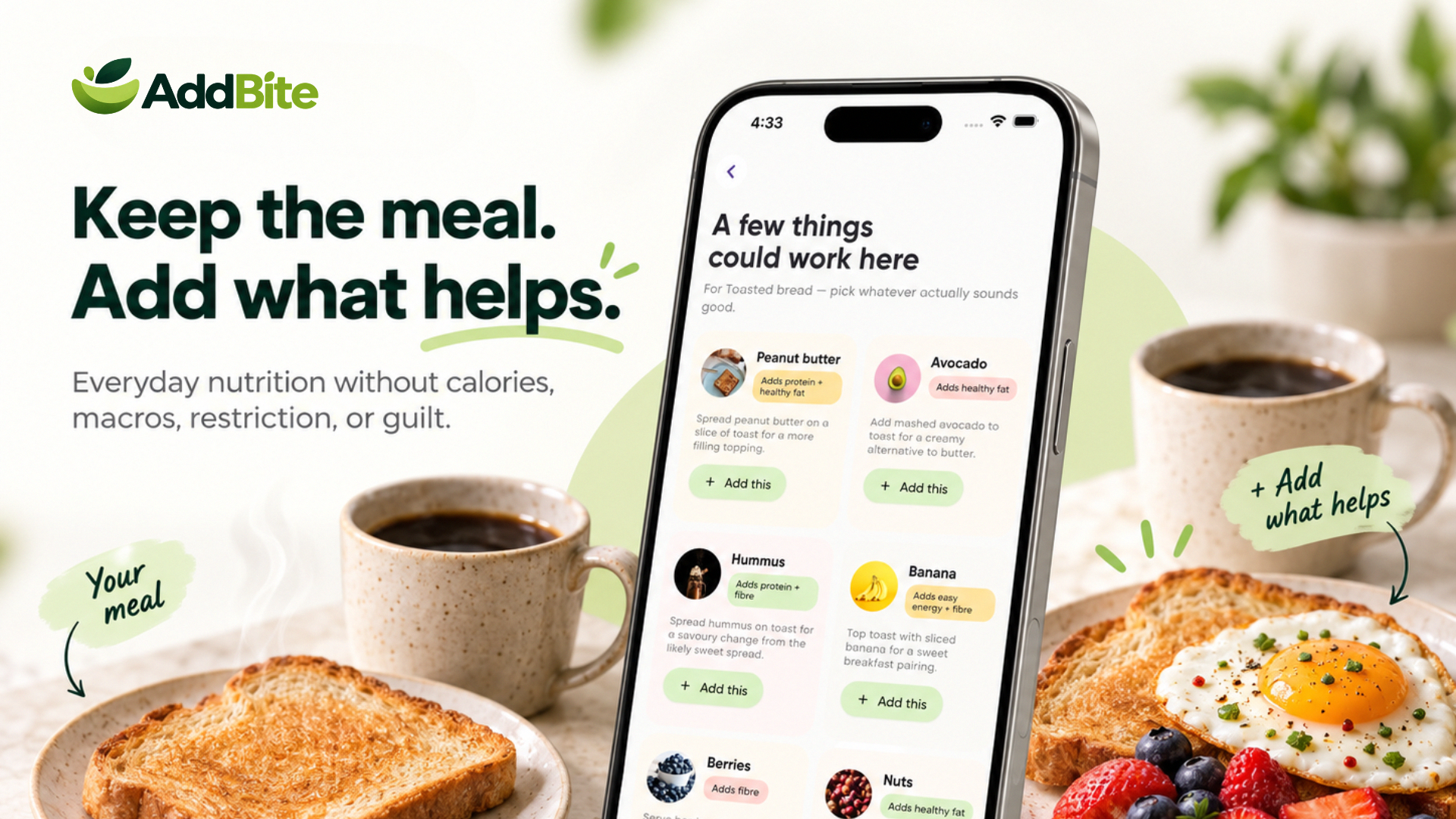
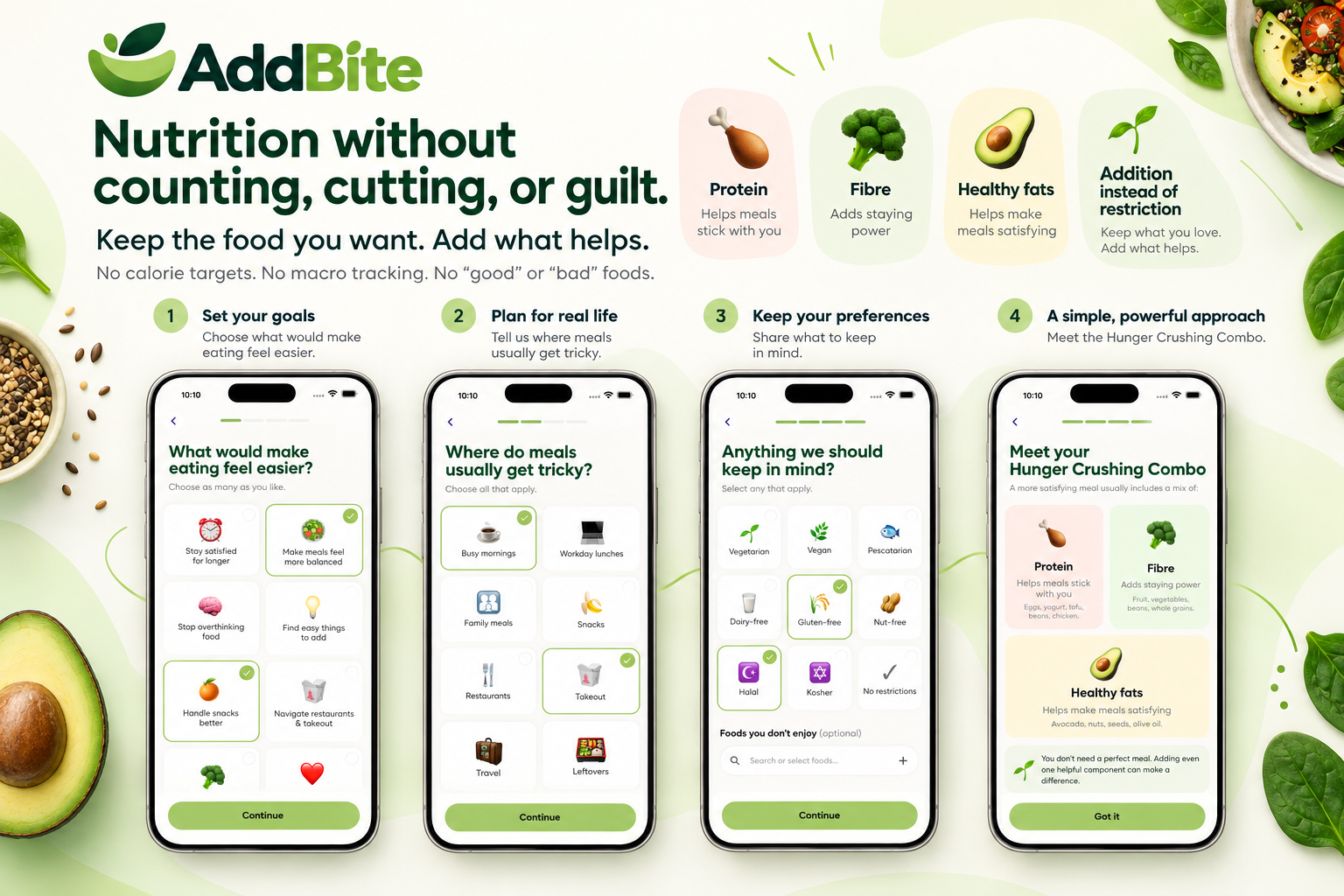
AddBite then looks at the meal through the lens of the Hunger Crushing Combo — protein, fibre, and healthy fats — and suggests practical foods that could be added.
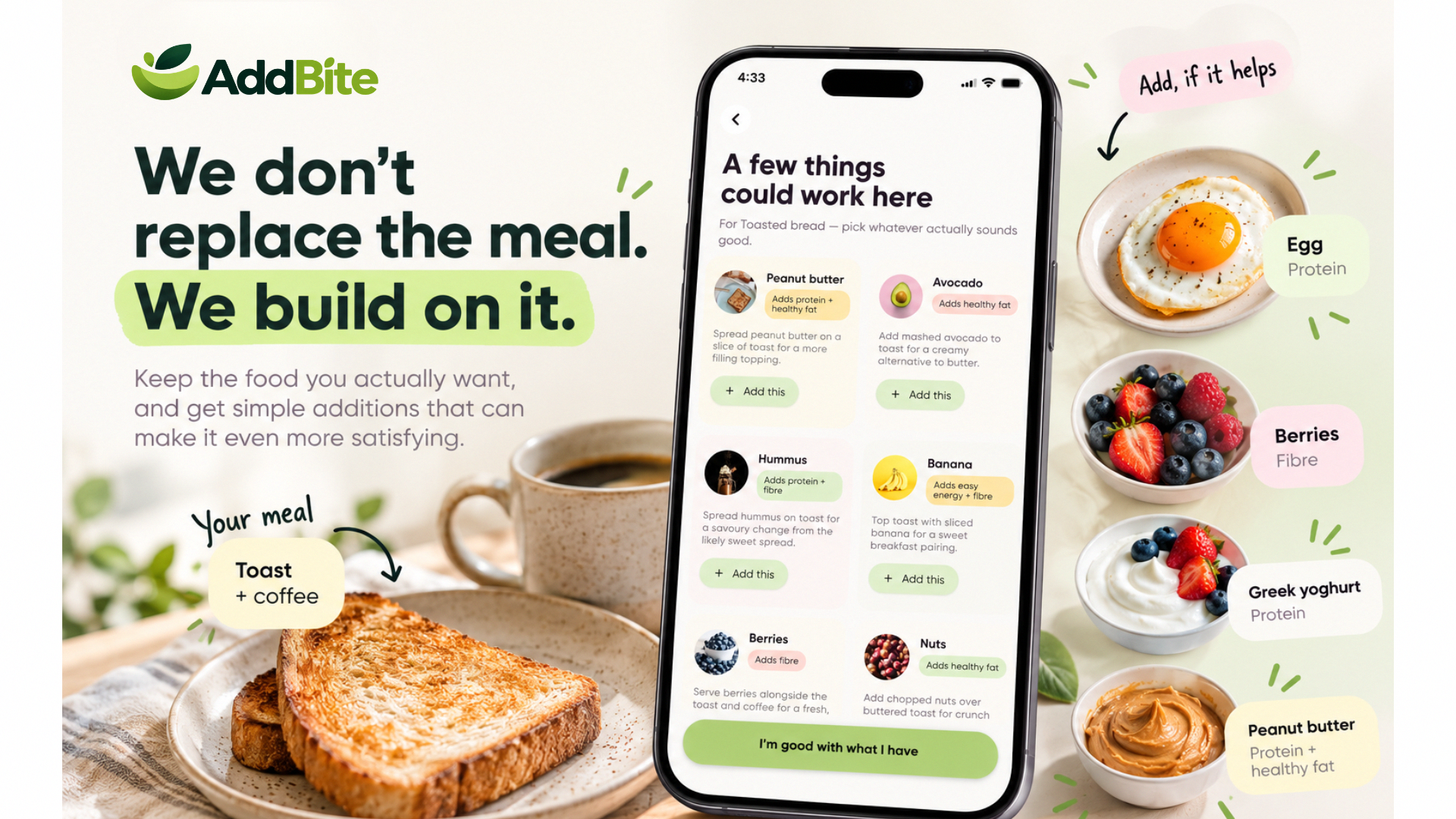
The original meal stays.
For example, if someone is having toast and coffee, AddBite might suggest adding eggs, Greek yogurt, berries, avocado, or peanut butter depending on what is realistic for them.
The app also includes quick real-life situations:
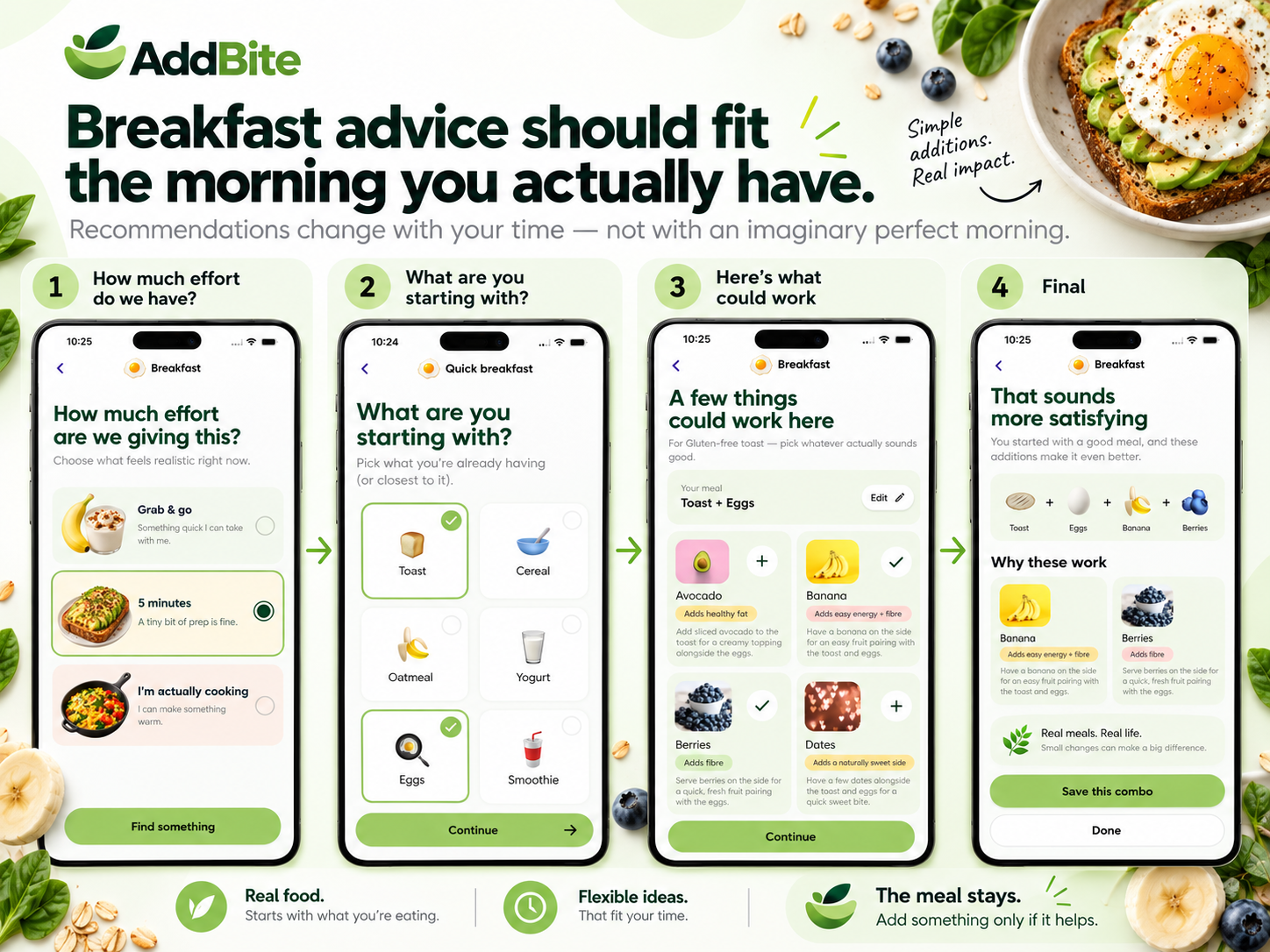
- Quick Breakfast — suggestions based on how much time the user actually has
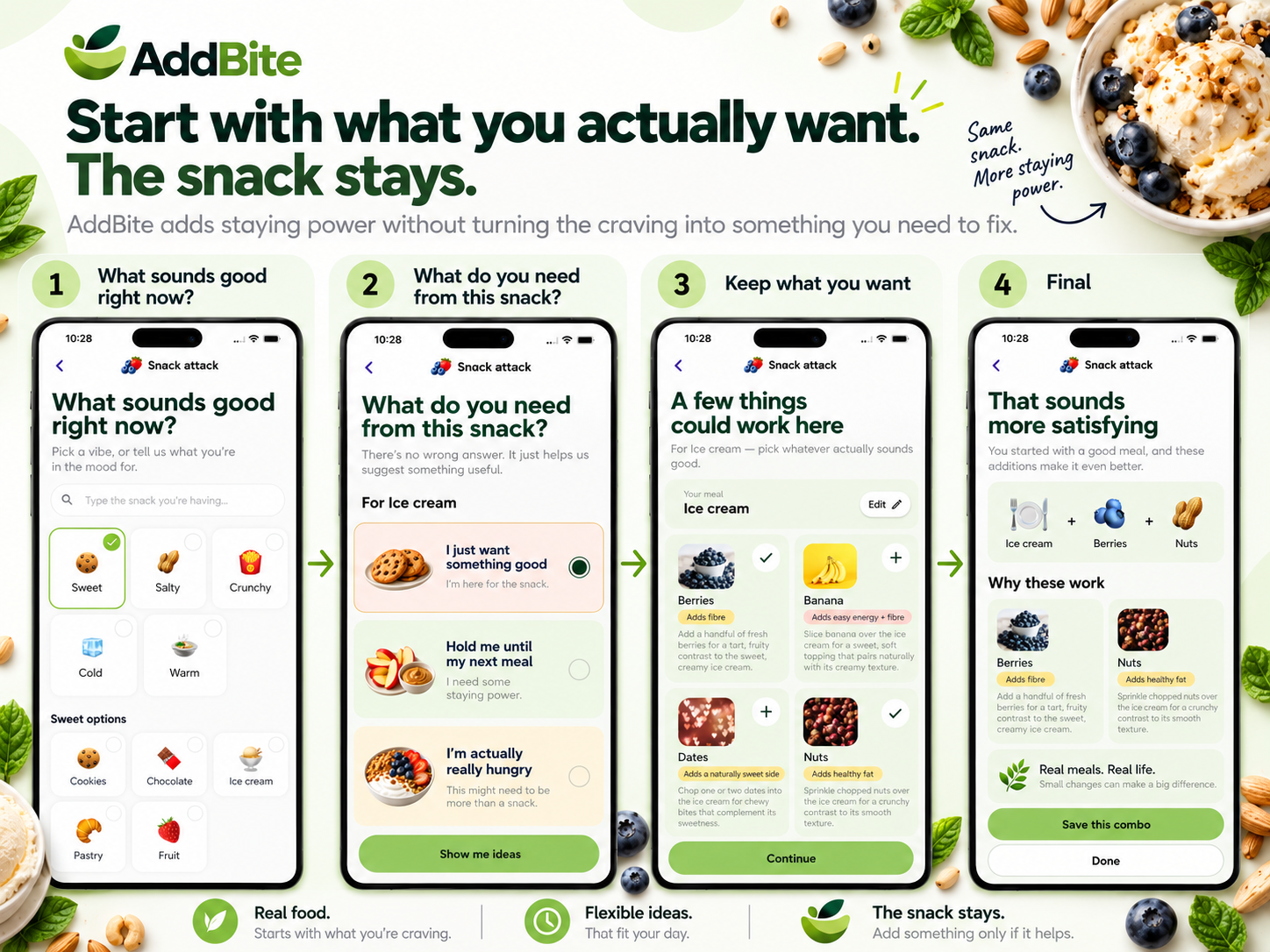
- Snack Attack — starts with what the user is craving and helps add staying power if they want it
- Eating Out — helps users navigate restaurant meals without searching for the "healthiest" option
- Takeout Tonight — keeps the order they want and suggests realistic additions from the restaurant or from home
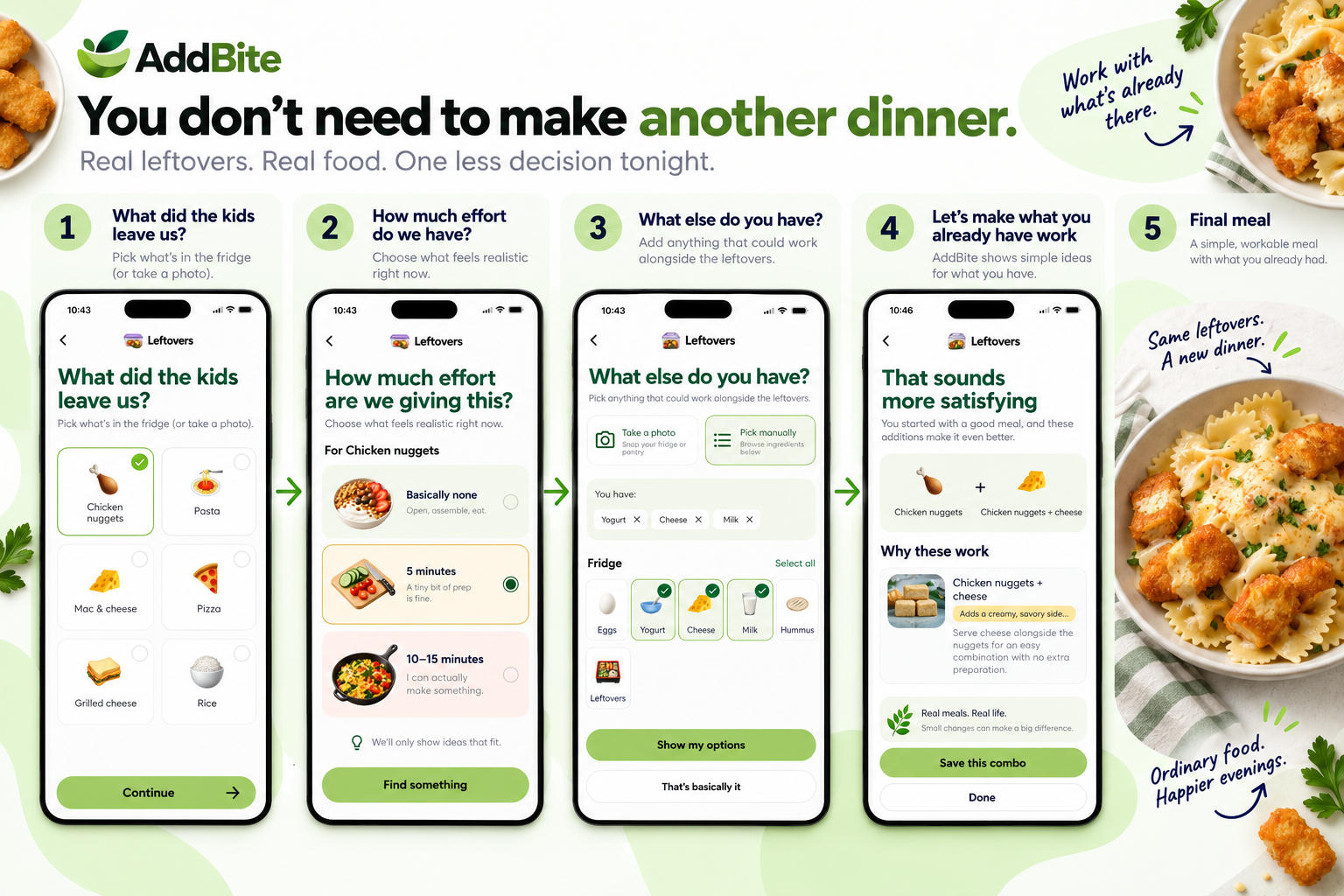
- Kid Leftovers — turns whatever the kids left behind into a workable meal
- Nothing in the Fridge — creates a few realistic ideas from the ingredients already available
Users can always choose:
I'm good with it as-is.
That option is intentional. AddBite is there to help, not to judge.
How we built it
We designed AddBite around one core product principle:
Meet the user where their food already is.
Instead of building a traditional nutrition dashboard, the home screen focuses on one immediate question:
What are you eating?
From there, the product uses short, situation-specific flows rather than forcing every user through the same meal-logging experience.
We created reusable UX components for:
- Meal input
- Food recognition and confirmation
- Ingredient selection
- Hunger Crushing Combo analysis
- Addition suggestions
- Real-life meal scenarios
- Completed meal combinations
This allowed different experiences such as breakfast, snacks, restaurants, takeout, leftovers, and low-grocery situations to feel specific while still sharing the same underlying product system.
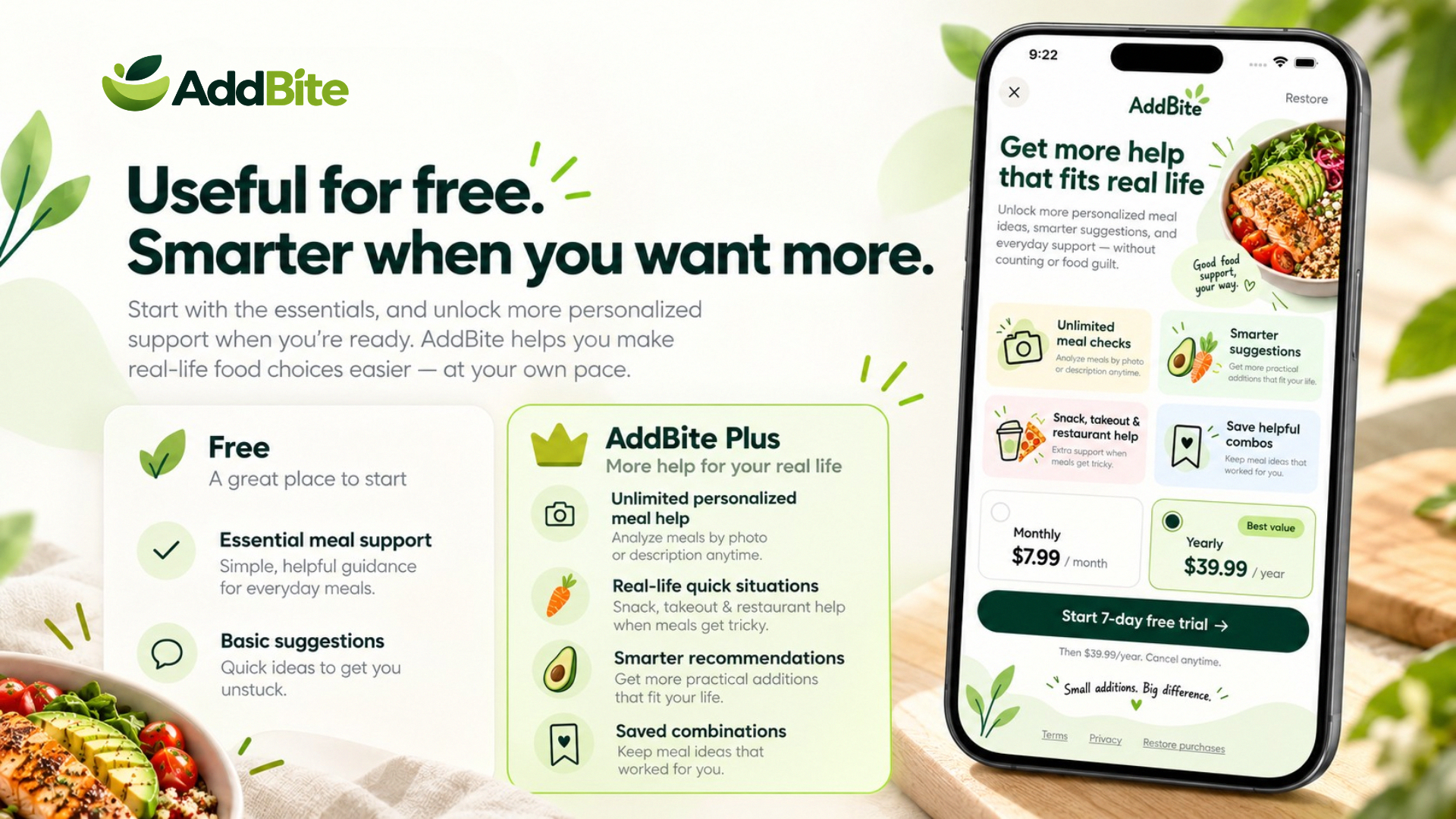
We also integrated RevenueCat for premium access and subscription management.
A major part of the build was not just adding features, but continuously removing anything that made the experience feel like a conventional diet tracker.
Challenges we ran into
The hardest challenge was designing a nutrition app without accidentally rebuilding diet culture in a different visual style.
It is easy to remove calorie numbers while still creating the same experience through:
- Health scores
- Progress bars
- Nutrient targets
- Red warnings
- "Incomplete" meals
- Daily streaks
- Better/worse food rankings
We deliberately avoided these patterns.
Another challenge was deciding how much information to show.
Nutrition can become overwhelming very quickly. AddBite needed to provide enough context to be useful without turning every meal into a lesson.
We also had to make each real-life situation behave differently.
A user ordering takeout has a completely different problem from someone staring at their children's leftovers or looking for a snack between meals. Reusing one generic food-analysis flow would have made the app technically simpler but much less useful.
The challenge became finding the smallest number of questions necessary to understand the situation and provide something genuinely practical.
Accomplishments that we're proud of
We're proud that AddBite does not feel like a traditional nutrition tracker.
There is:
- No calorie budget
- No macro target
- No body-weight goal
- No meal score
- No "bad food" warning
- No requirement to log every meal
The product is intentionally designed around addition instead of restriction.
We are also proud of the real-life flows.
Someone can come to AddBite with pizza, cookies, takeout, leftovers, or a nearly empty fridge and still receive useful support without being told they made the wrong food choice.
One of the most important product decisions was keeping an explicit "I'm good with it as-is" option throughout the experience.
The app should remain useful even when the user decides not to change anything.
What we learned
We learned that building a compassionate nutrition product requires more than changing the copy.
The underlying interaction model has to change too.
If an app still measures success through completion, targets, scores, or perfect meals, friendly language alone does not make it flexible.
We also learned that context matters as much as nutrition knowledge.
"Add some protein" is technically simple advice.
But the useful recommendation depends on whether the user:
- Has 30 seconds before leaving home
- Is sitting in a restaurant
- Already ordered pizza
- Wants cookies
- Is eating their child's leftovers
- Has only eggs and bread in the kitchen
The more AddBite understood the situation, the less advice it needed to give.
We also learned that the best recommendation is often not the nutritionally "perfect" one.
It is the one the user might realistically make right now.
What's next for AddBite
The next stage is making AddBite more personalized without turning personalization into tracking.
We want the app to gradually understand:
- Foods the user actually enjoys
- Dietary needs and restrictions
- Common meal situations
- How much cooking effort feels realistic
- Additions that worked well in the past
We also plan to expand:
- Restaurant and menu assistance
- Takeout support
- Saved meal combinations
- More real-life rescue scenarios
- Lightweight nutrition education
- Smarter meal and ingredient recognition
The long-term goal is simple:
Make balanced eating feel easier in real life — without asking people to count, restrict, or feel guilty about food.


Log in or sign up for Devpost to join the conversation.