Inspiration
Students preparing for board or semester exams usually get one generic timetable. Many have no mentor to say which topics to focus on, struggle with AI tools that work poorly in Hindi, and have several exams at once with no fair way to split their time. Nobody notices when they are tired or overloaded until results suffer.
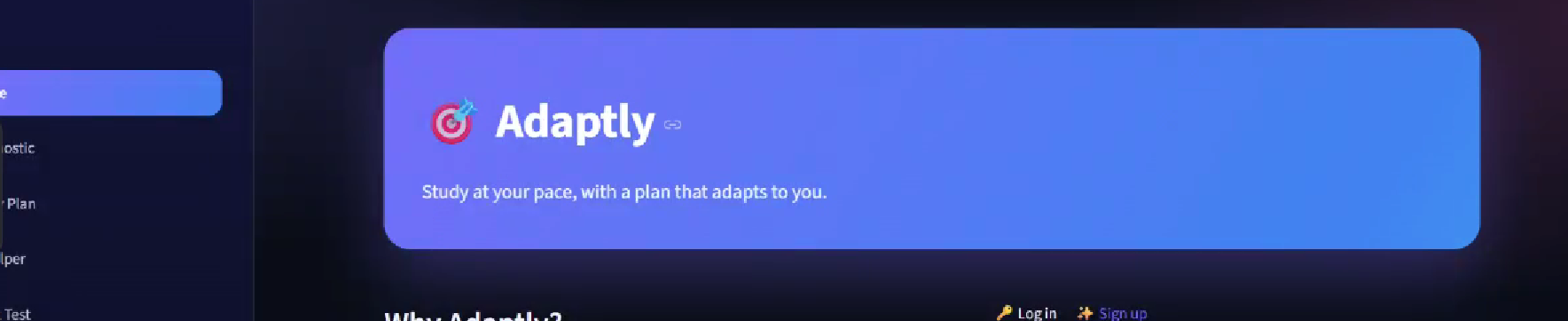
Adaptly is built for a school or college student with a heavy syllabus and several exams, such as a Class 12 board student or a first-year engineering student, who prefers to study in English or Hinglish.
What it does
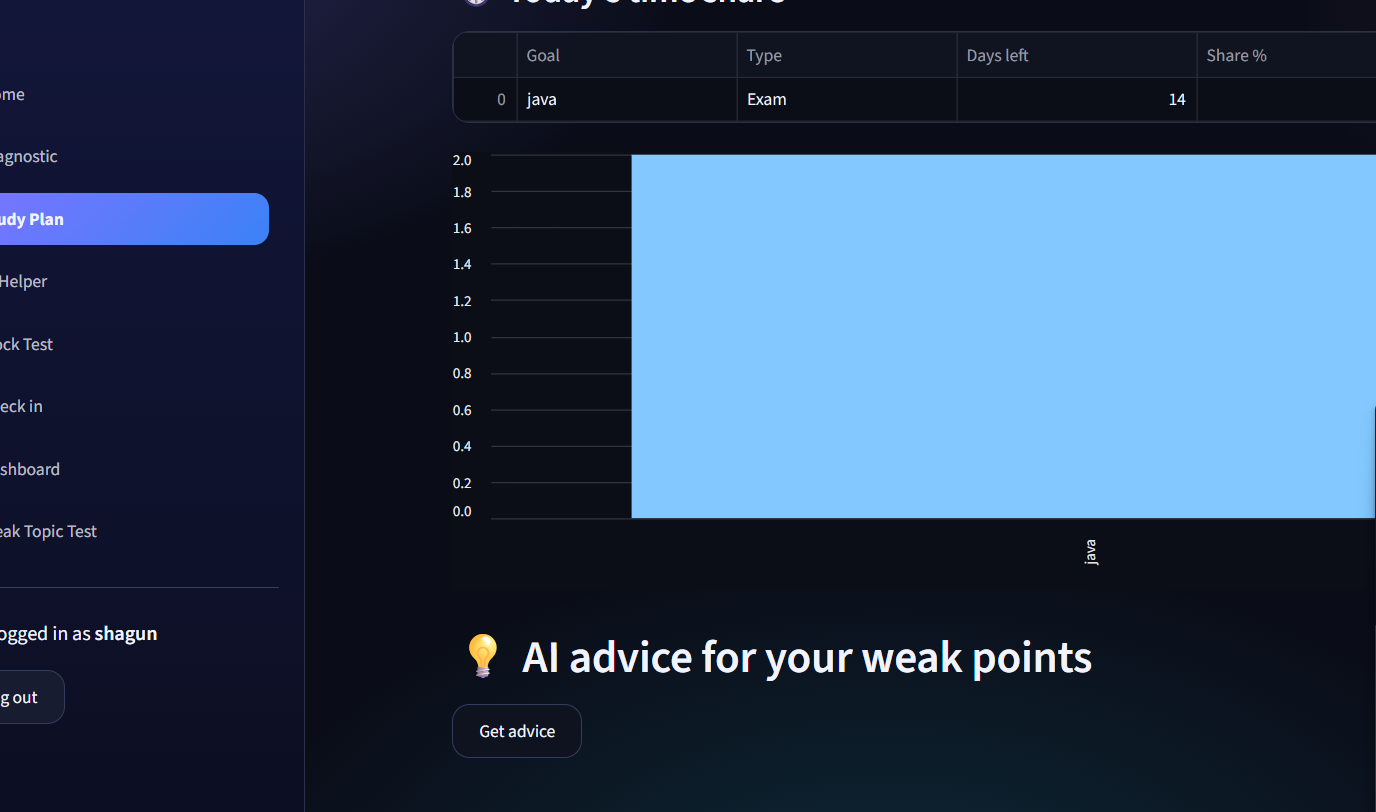
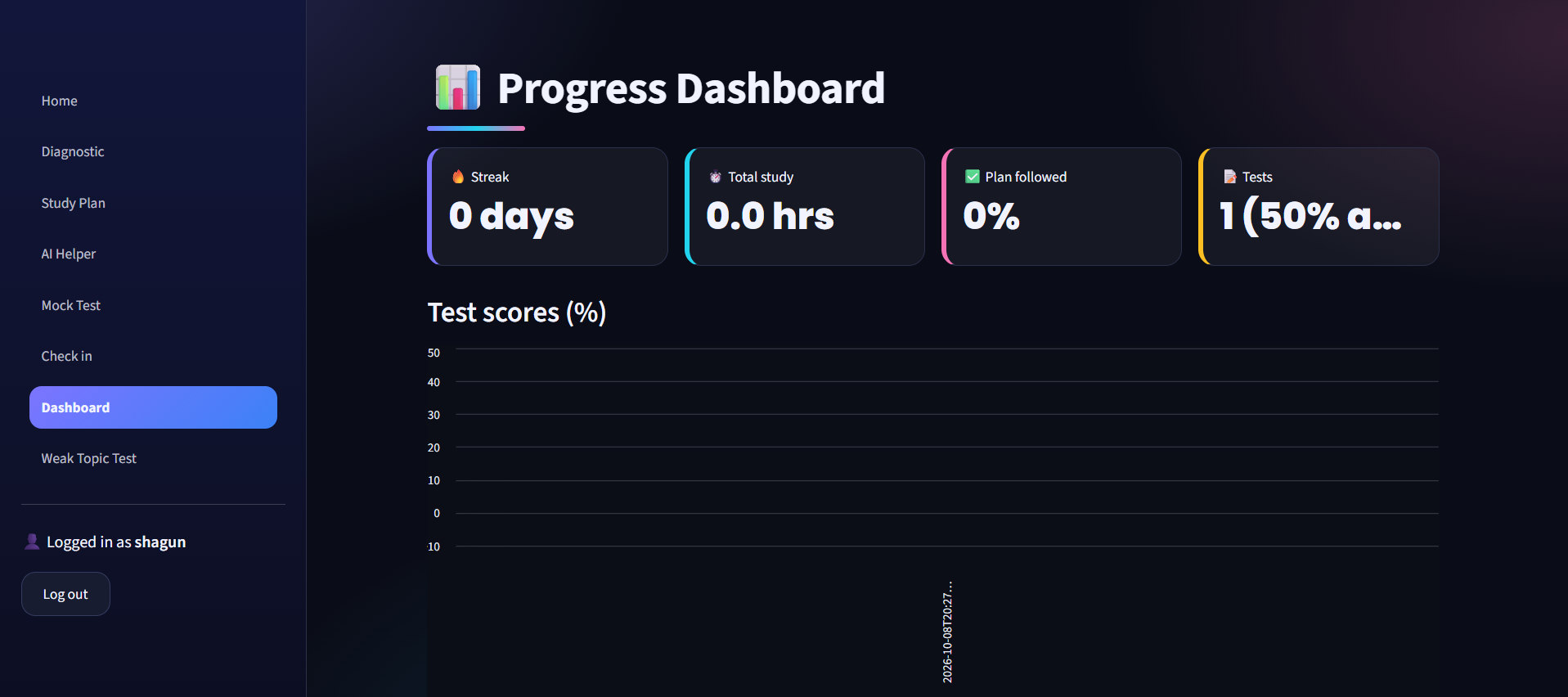
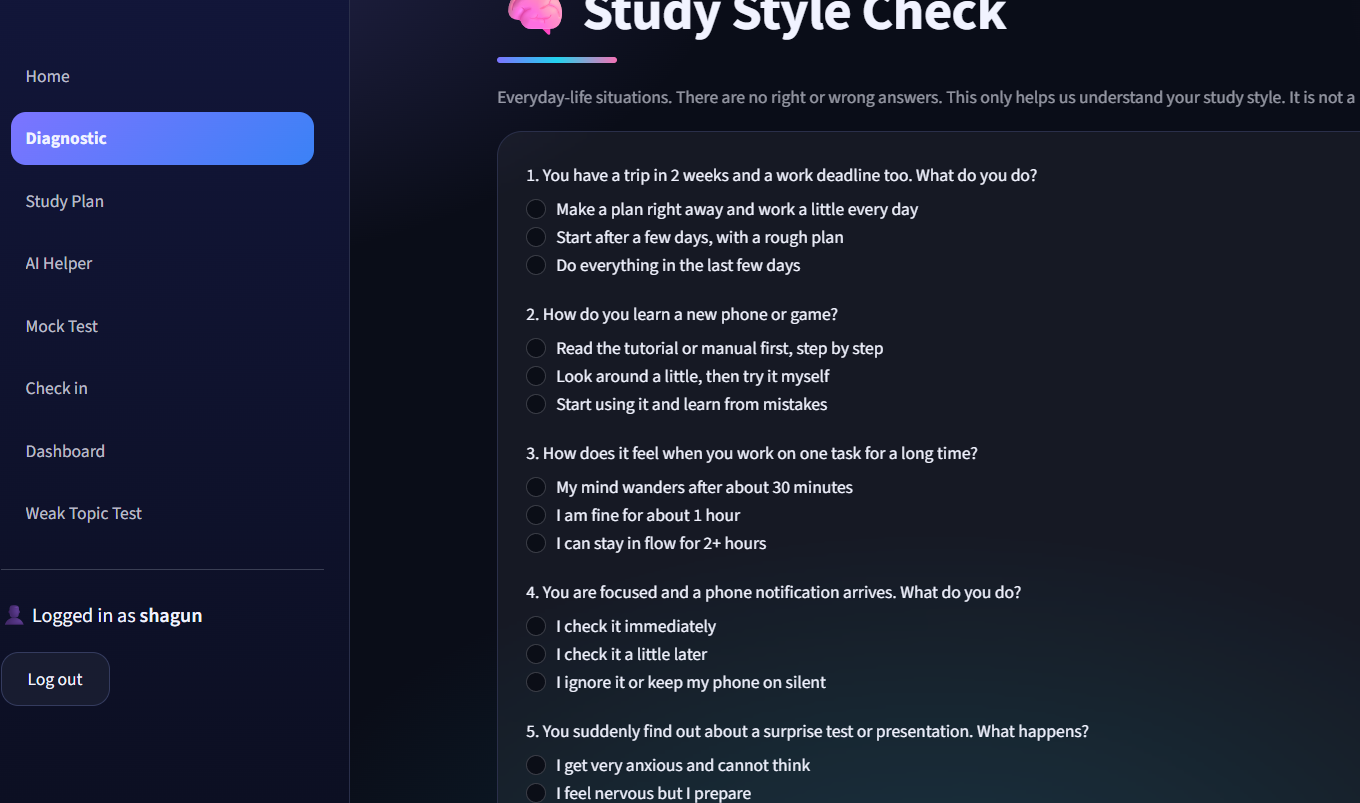
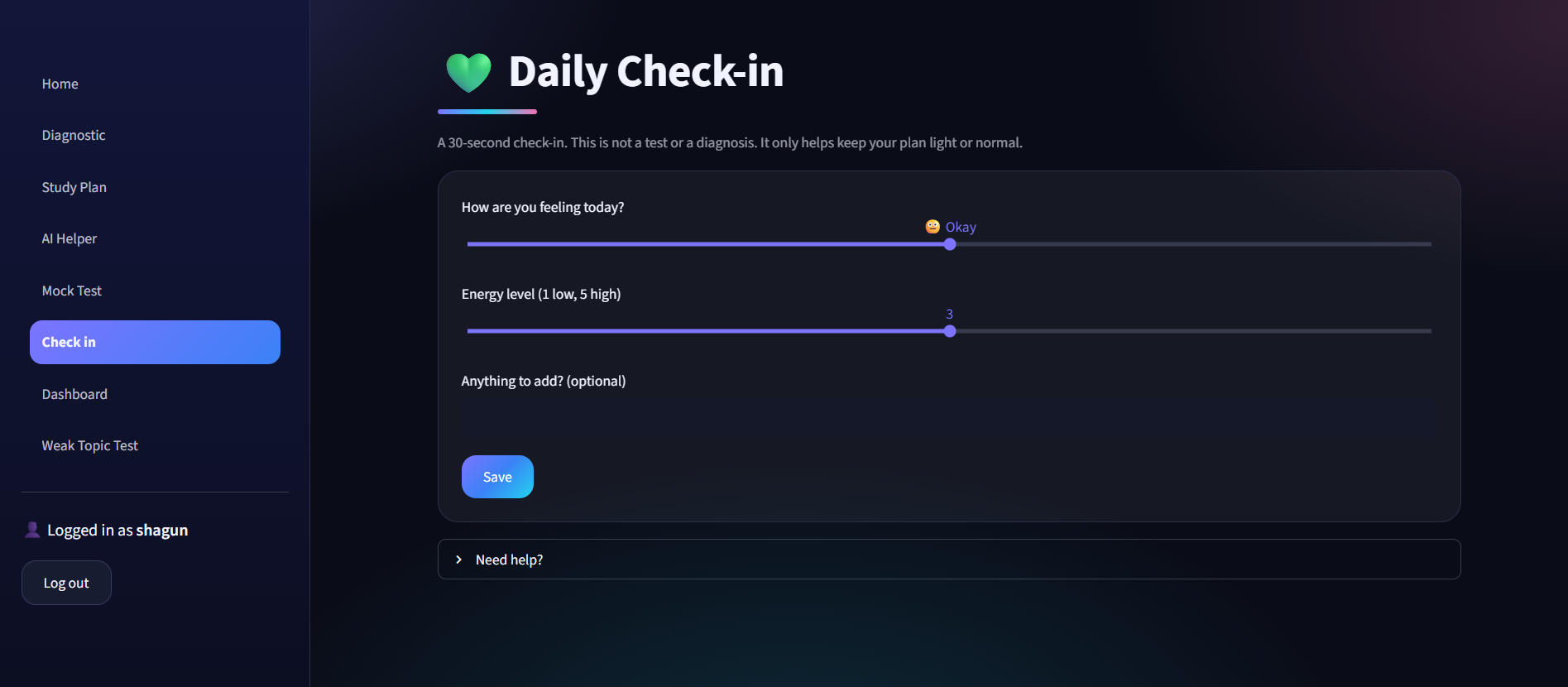
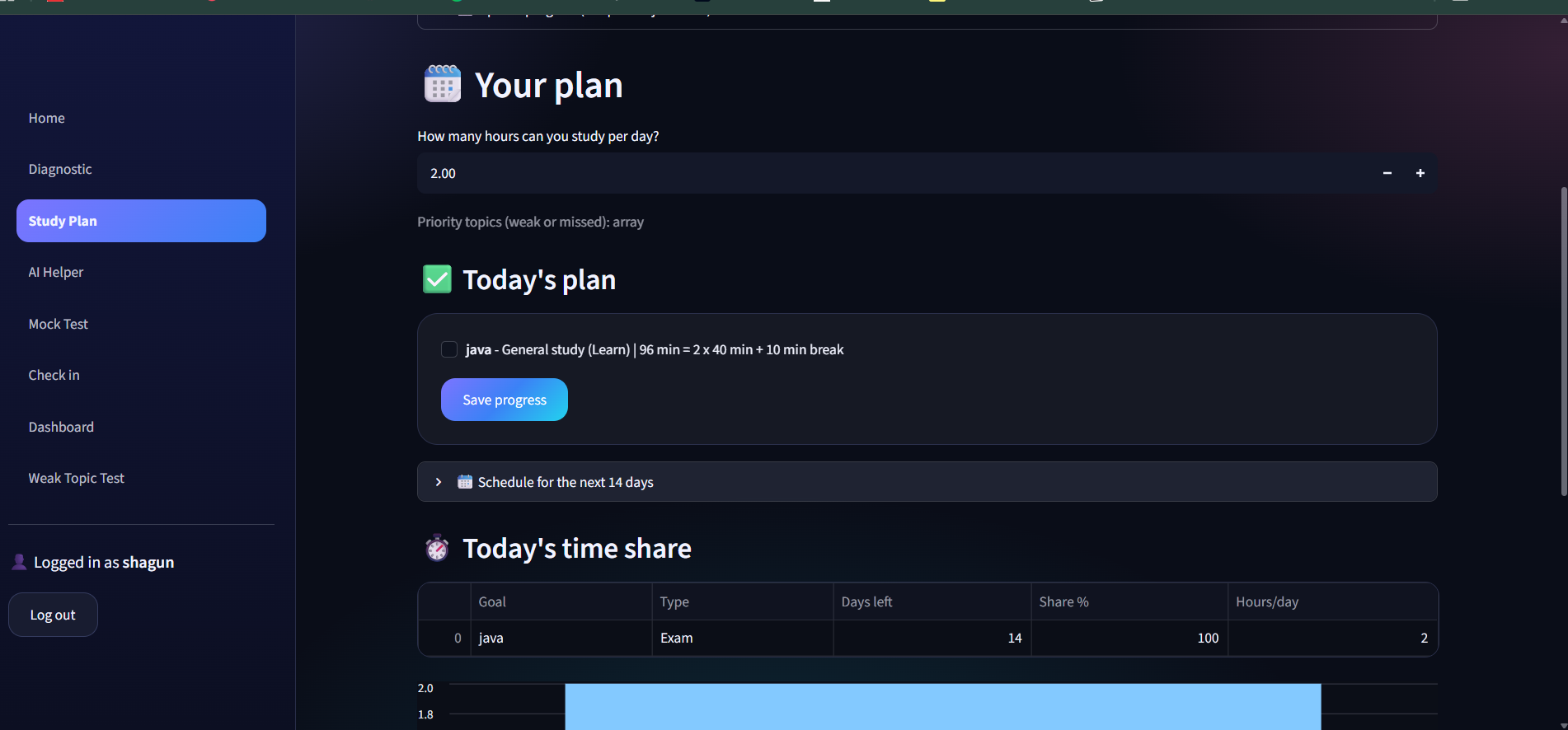
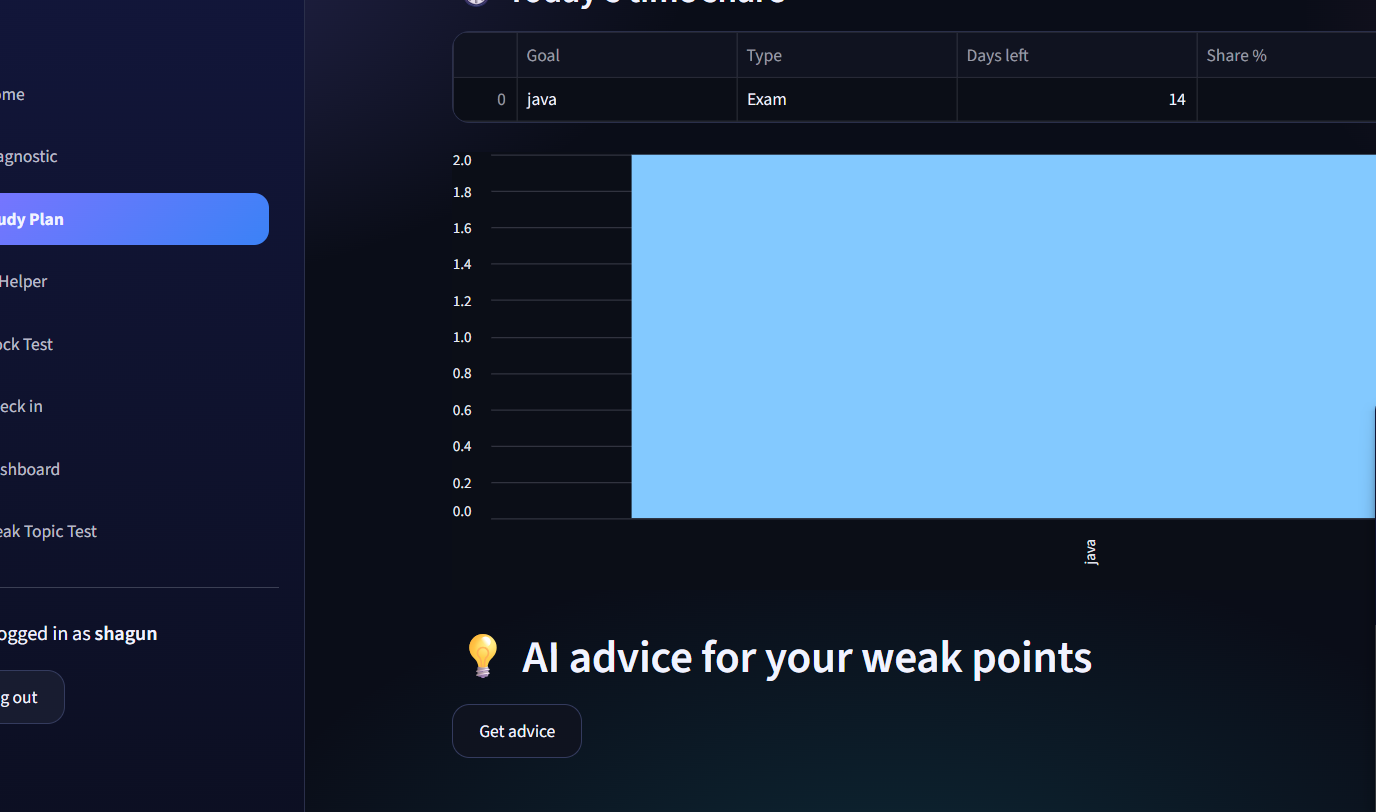
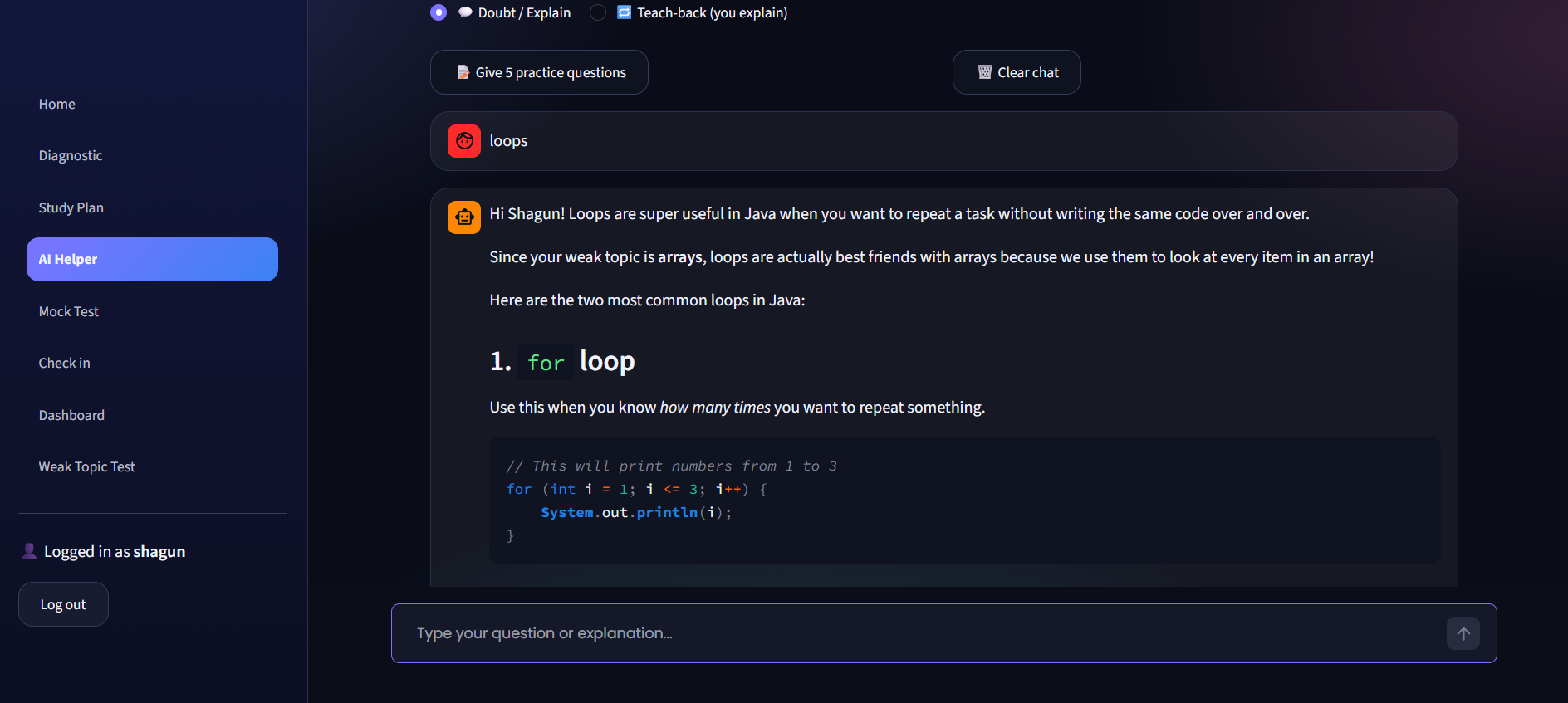
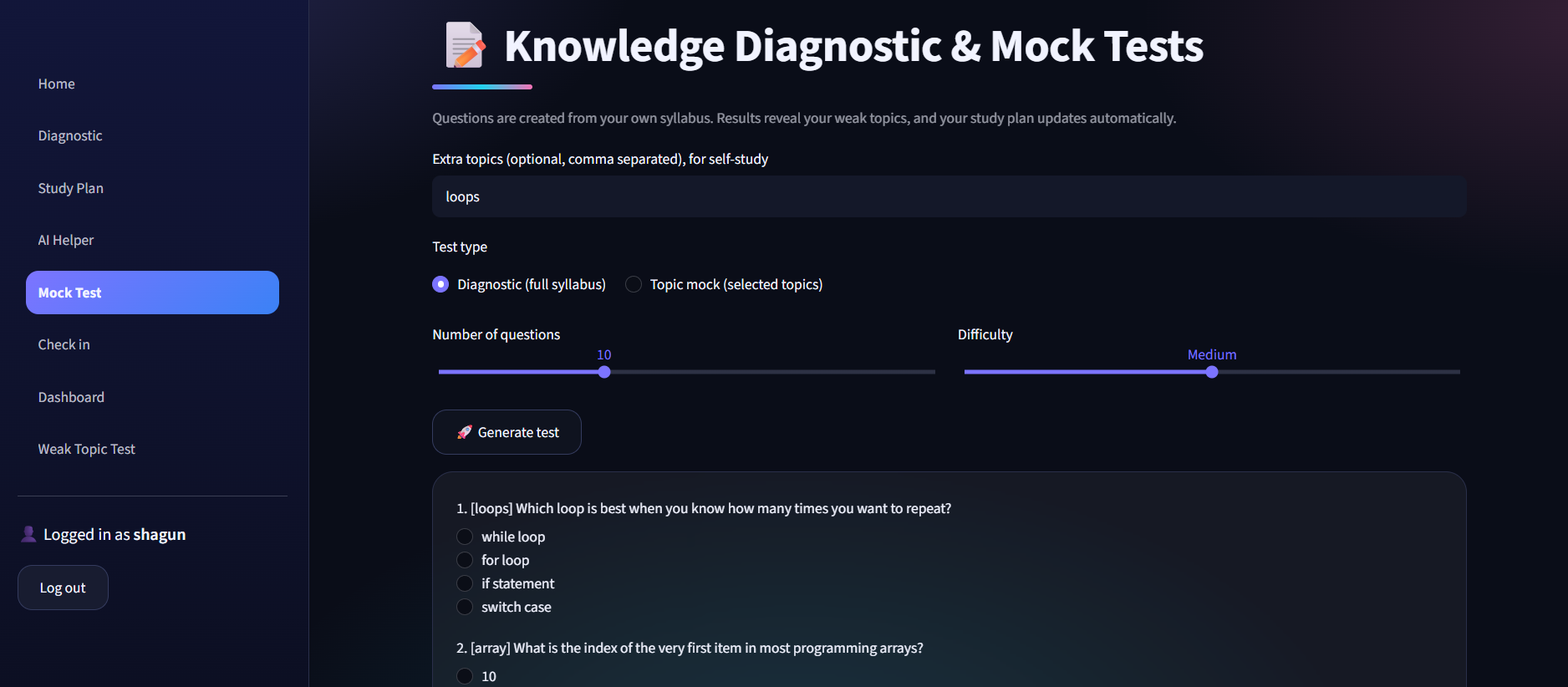
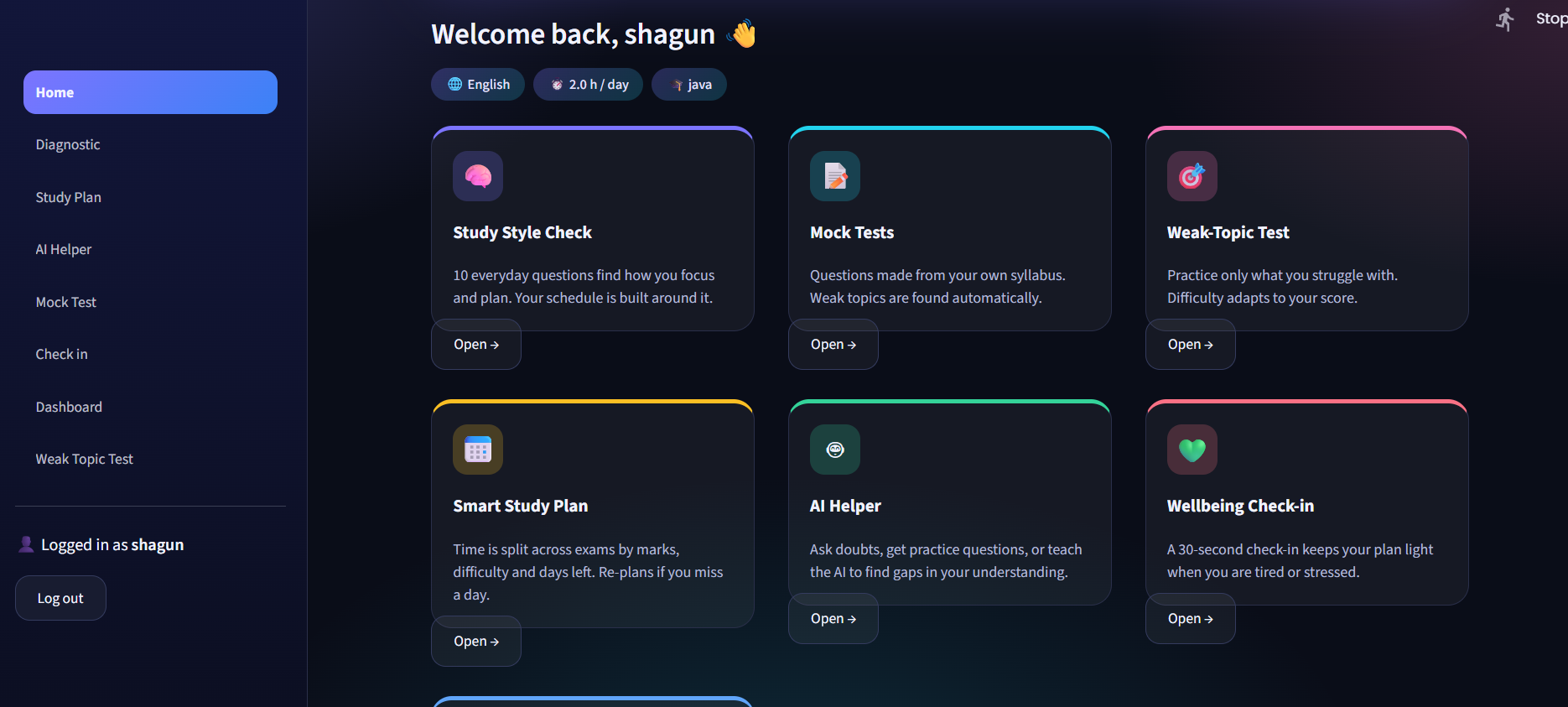
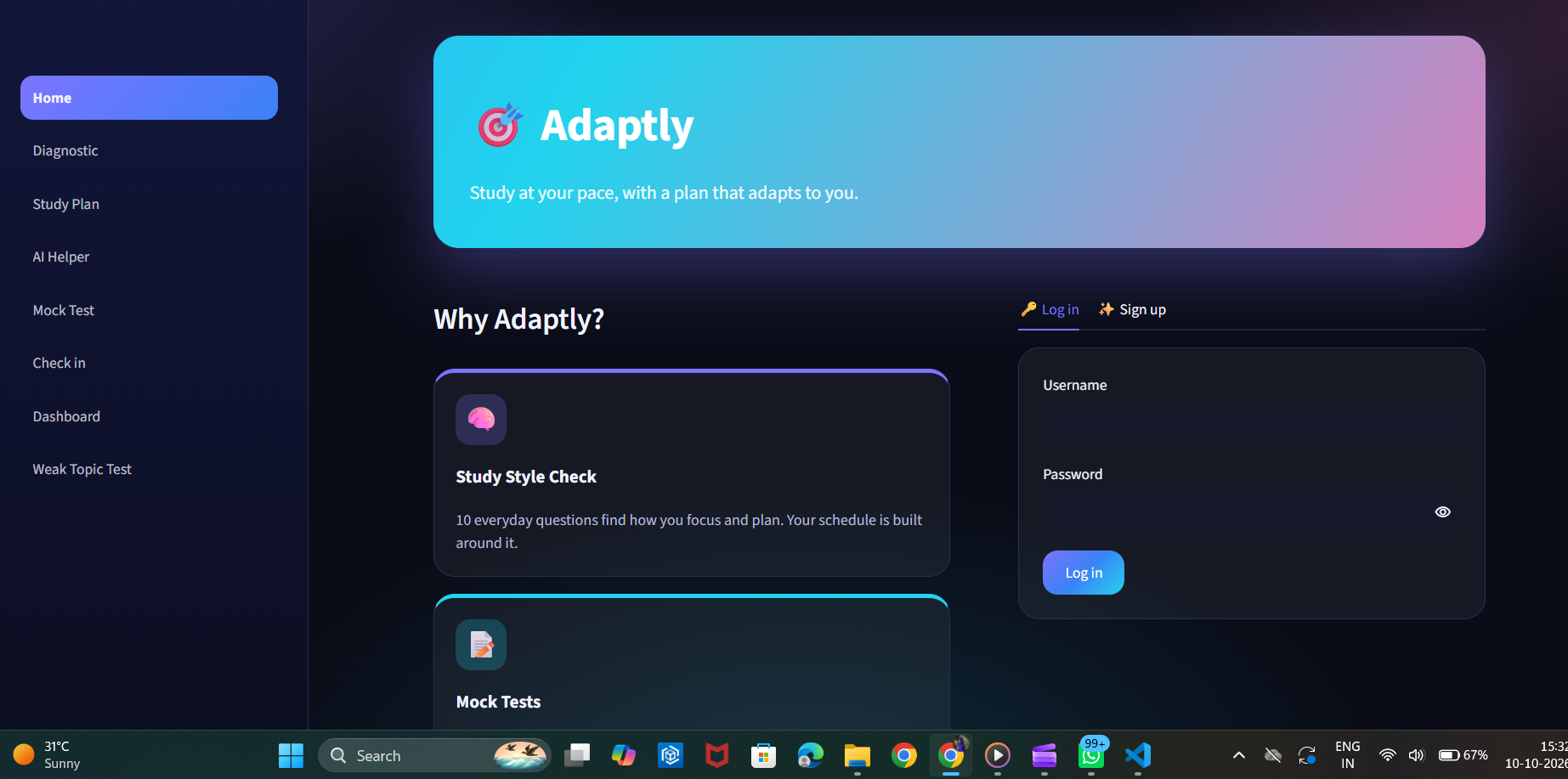
Sign up with a syllabus (PDF or text). The AI extracts topics with difficulty and estimated hours. Study Style Check: 10 everyday-life questions give a study-style profile (planning, focus span, pressure comfort, self-drive, group learning). This sets session length, breaks and buffer time. Mock tests and diagnostic: questions generated from the student's own syllabus, in their language. Scores per topic reveal weak topics. Weak-Topic Test: tests only weak topics, with difficulty matched to the current score, and shows before-and-after improvement. Smart Study Plan: splits daily hours across all exams and self-study goals by marks, difficulty, syllabus left and days left. It re-plans when a session is missed or a test goes badly, and switches to a lighter revision mode in exam week. AI Helper: a tutor that knows the student's goals, weak topics and today's plan, plus teach-back mode, where the student explains a topic and the AI acts like a curious beginner to expose gaps. Wellbeing check-in: if the last three check-ins are low, the plan becomes 20% lighter and the app suggests talking to a trusted person. Dashboard: streak, study time, plan follow-through, score trend, topic strength and mood trend.
How we built it
Frontend and app: Python and Streamlit, with login (PBKDF2-hashed passwords) and a themed multi-page interface. AI: Google Gemini API through google-genai, used for question generation, tutoring, teach-back, notes and summaries. No model training is needed. Key design choice: the AI writes content, while everything that decides the student's plan (scoring, weak-topic detection, time split, scheduling) is plain, explainable code. The time split is marks × syllabus left × difficulty ÷ √(days left). Reliability: retries, a fallback model, JSON repair, streaming replies, and rule-based fallbacks for topic extraction and study tips when the AI is busy. Storage: SQLite, stored locally. Languages: English and Hinglish for the interface; the AI also answers in Punjabi. Real-world impact
Adaptly gives every student a personal mentor's most useful habits: knowing the weak spots, splitting time sensibly across exams, and adjusting when things go wrong. It is aimed at students who cannot pay for coaching or one-to-one guidance.
Responsible AI No diagnosis: the Study Style Check measures study habits only, and every screen says it is not a medical or psychological test. The wellbeing feature only lightens the plan and points to trusted people and the Tele-MANAS helpline (14416). It never labels the student. AI answers carry a reminder to verify with a textbook or teacher. Planning decisions are visible rules, not hidden AI output. Data stays in local storage. Only prompt text goes to the Gemini API.
Challenges we ran into
Free-tier AI limits and "high demand" errors forced us to add retries, a fallback model and offline fallbacks. Keeping one language setting consistent across every page and every AI reply took careful design.
What's next for Adaptly: a study companion that adapts to you
React front end with a FastAPI backend, teacher dashboard for class-wide weak topics, voice input and read-aloud, native-speaker review of Punjabi labels, and answer-key checking for generated questions.

Log in or sign up for Devpost to join the conversation.