-
-
Logo
-
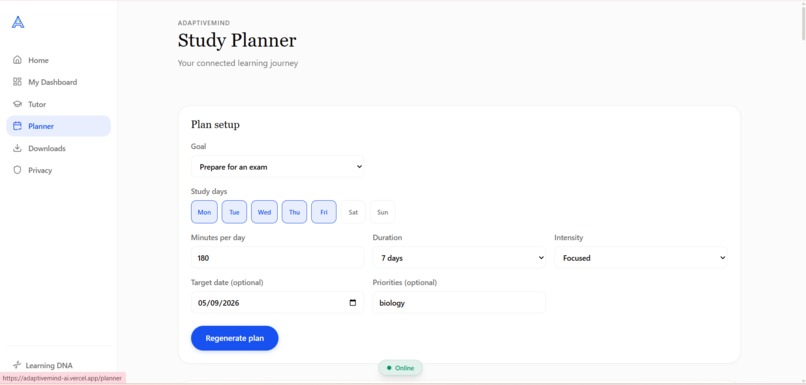
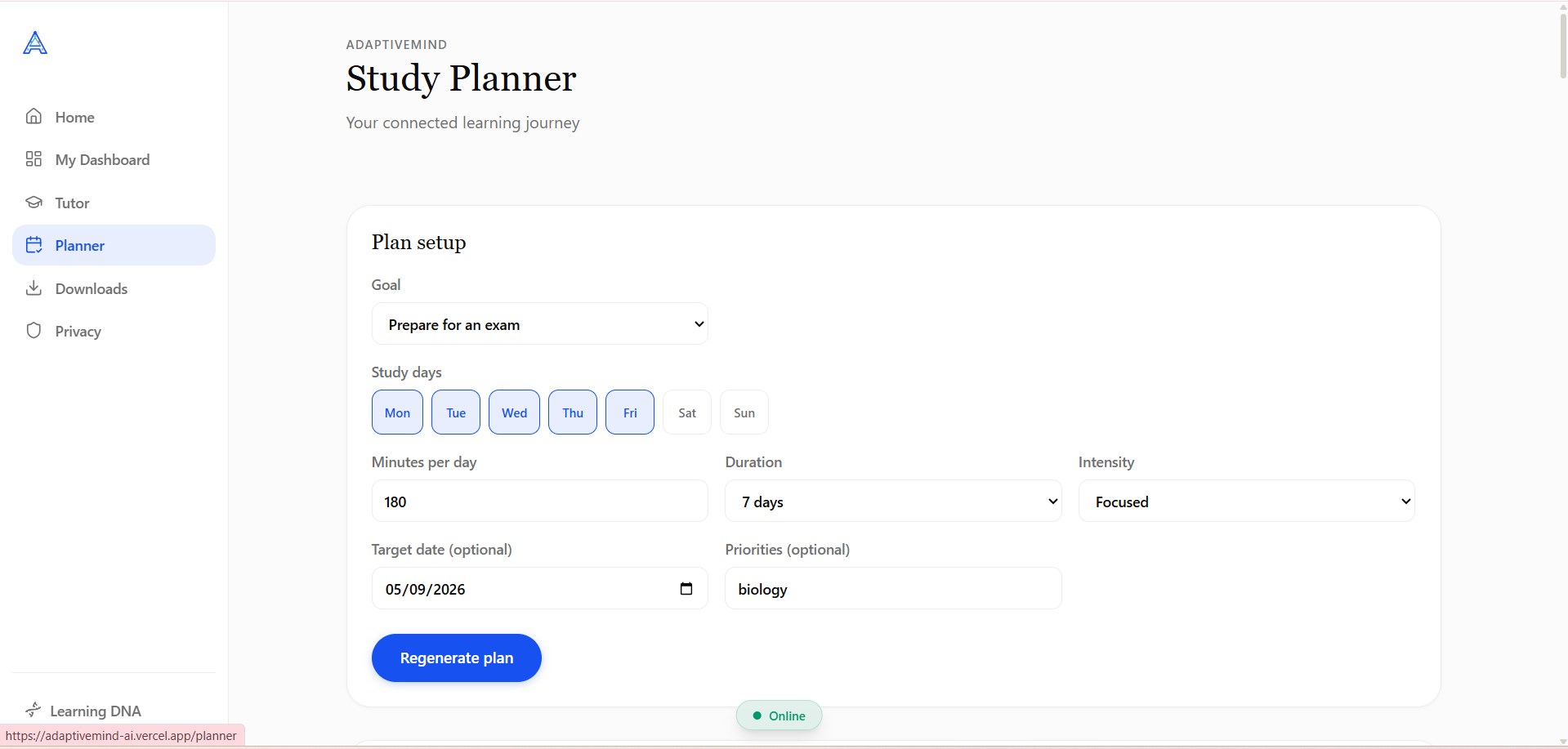
Study Planner
-
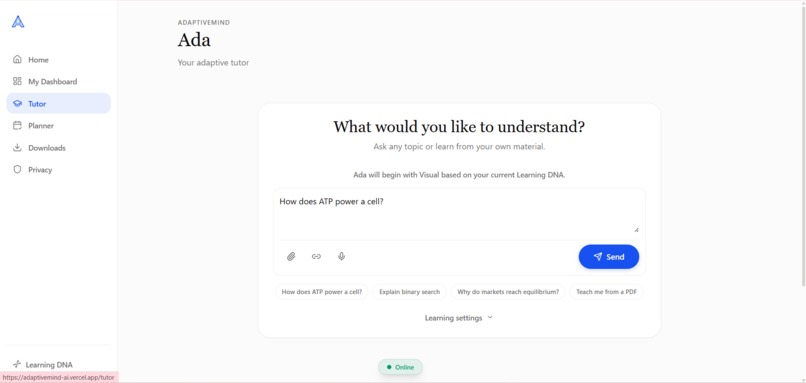
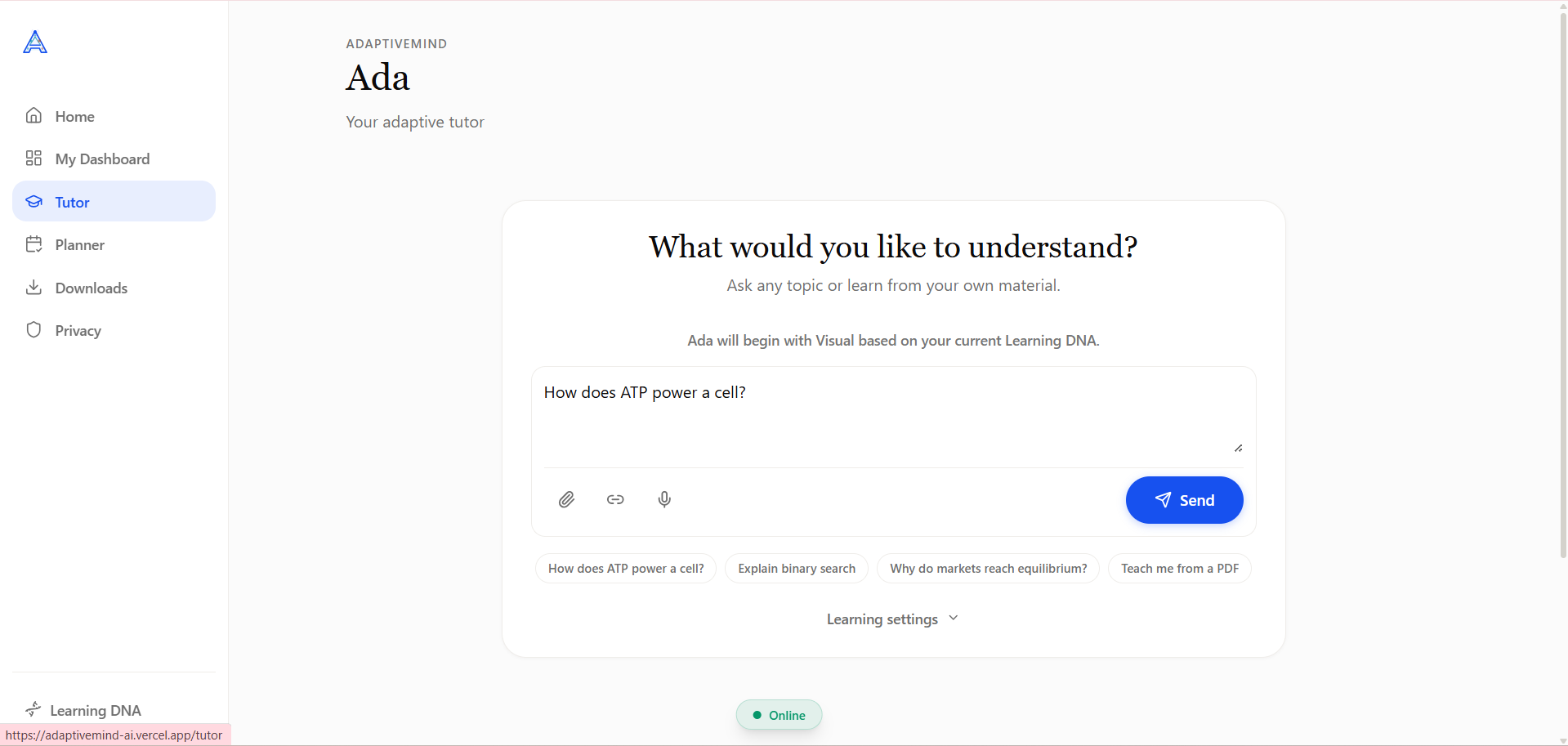
Tutor Ada
-
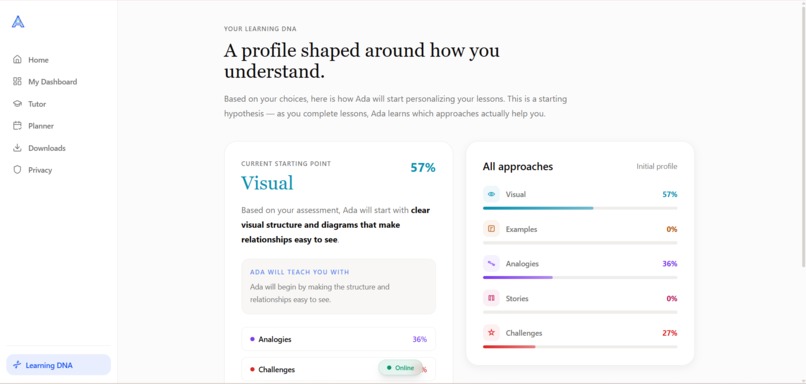
Assessment
-
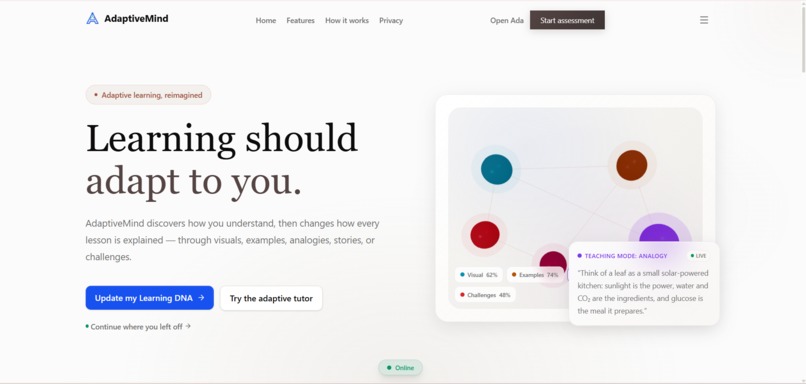
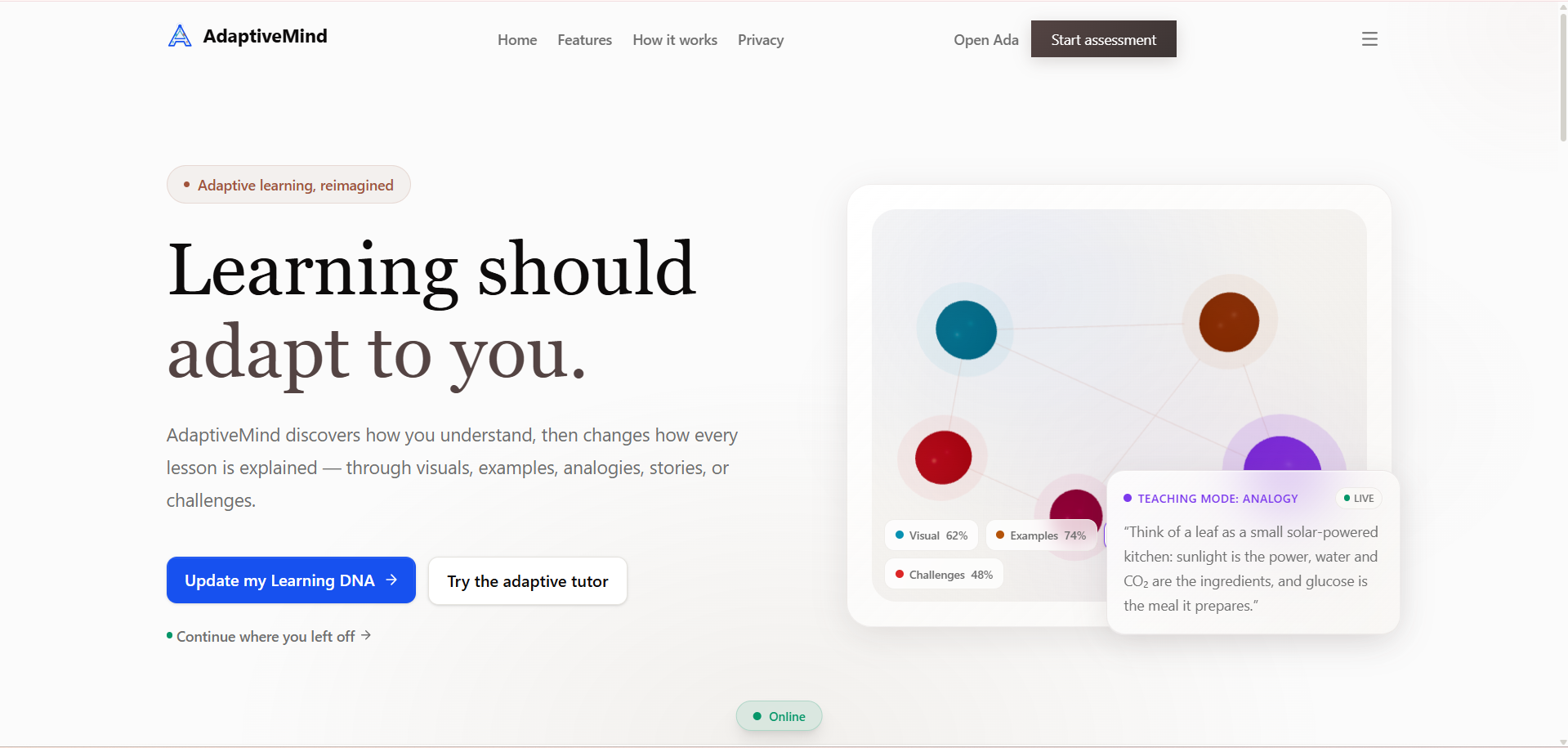
Landing page
-
-
Inspiration
Most AI tutors personalize what they say, but they rarely measure whether an explanation actually helped the learner understand.
A student may receive a visual explanation, an analogy, or a worked example, but the system often does not check which approach actually worked. It may also assign the learner a permanent “learning style,” even though understanding can change depending on the topic, difficulty, and context.
We built AdaptiveMind to create a more evidence-based learning experience.
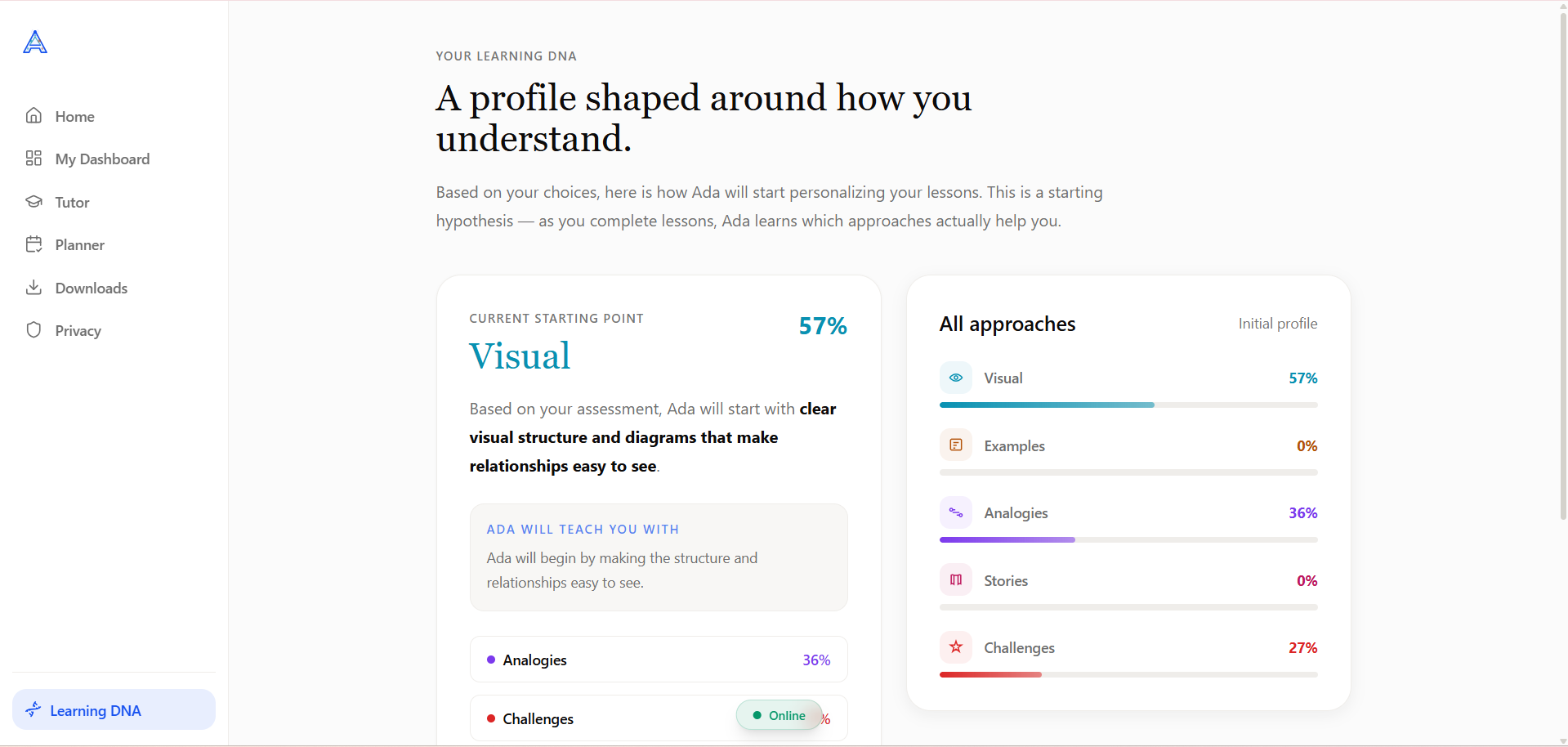
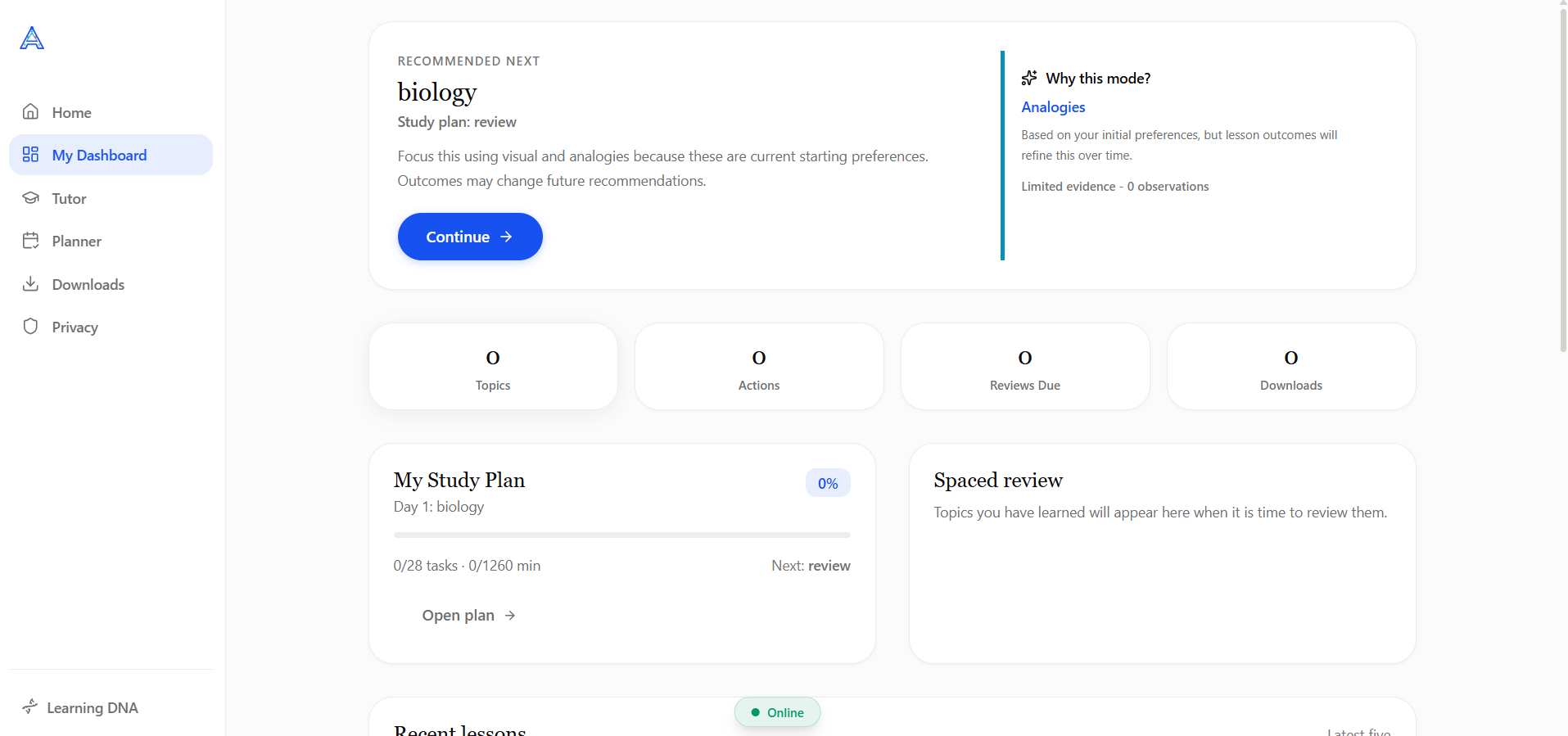
AdaptiveMind does not treat a learner’s preferences as fixed. Instead, it builds a continuously evolving Learning DNA using evidence from lessons, quizzes, confidence checks, Explain Back activities, practice, and review performance.
Our central idea is simple:
Explain, check, learn, and adapt.
What it does
AdaptiveMind is a local-first AI learning companion powered by Ada, an adaptive tutor.
A learner can ask about almost any educational topic, choose their academic level, or study from their own materials. Ada then selects an appropriate explanation approach and presents the lesson through methods such as:
- visual breakdowns
- worked examples
- analogies
- stories
- step-by-step reasoning
- challenges
- structured diagrams
- interactive visual sequences
After teaching, AdaptiveMind checks whether the explanation worked.
Learners can complete quizzes, Explain Back activities, confidence checks, guided practice, and review tasks. AdaptiveMind uses this evidence to update the learner’s Learning DNA and recommend what to study next.
The platform also includes:
- topic-based quiz generation
- source-based learning from PDFs, documents, images, and links
- visual lesson modes
- adaptive follow-up explanations
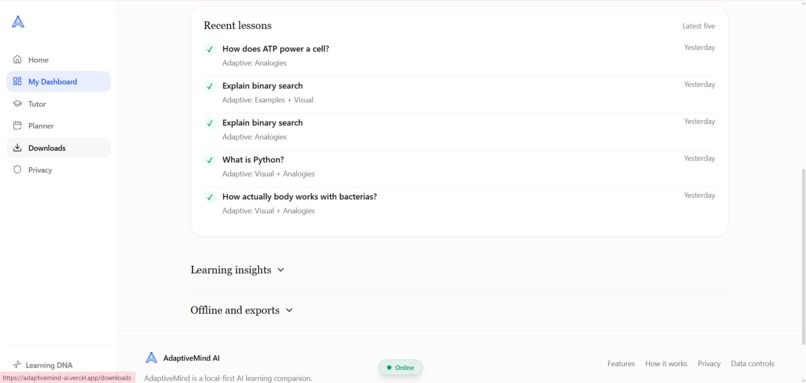
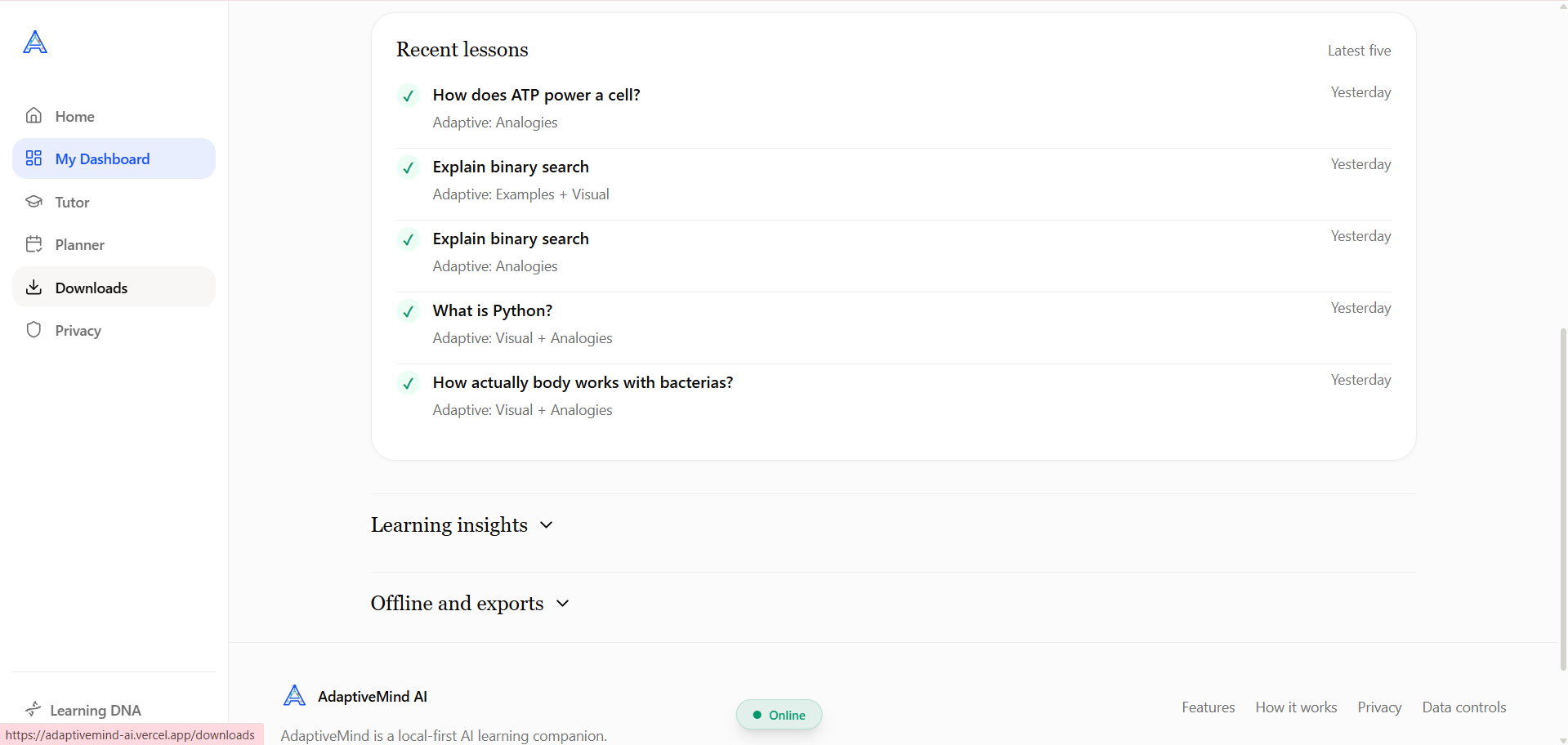
- learning history
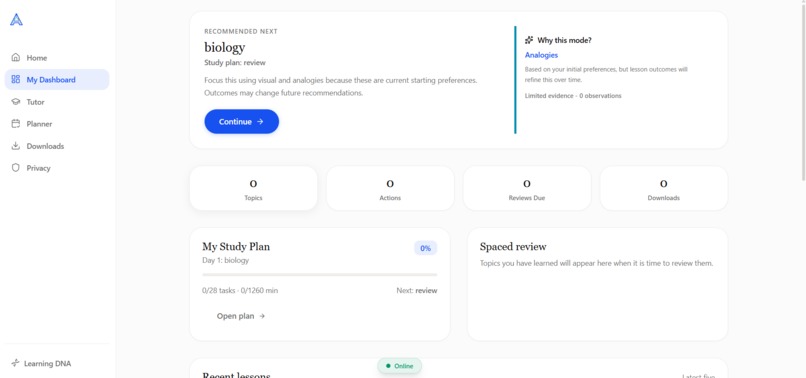
- review scheduling
- a simplified progress dashboard
- offline lesson saving
- study-plan exports
- privacy and local data controls
How we built it
AdaptiveMind was built as a full-stack Next.js application.
The frontend uses React, TypeScript, and Tailwind CSS to create a responsive and accessible learning interface.
Ada is powered through server-side AI routes so API credentials are never exposed in the browser. The AI orchestration layer handles:
- lesson generation
- explanation-mode selection
- follow-up questions
- understanding evaluation
- visual lesson generation
- quiz generation
- source-grounded responses
- structured-output validation
- retry and fallback behavior
We created a runtime-validated quiz contract using Zod. This prevents malformed AI responses from being treated as valid quiz data.
For uploaded resources, AdaptiveMind can process readable text from formats including PDF, DOCX, PPTX, TXT, and Markdown. Educational images can be analyzed through multimodal AI input, while public links are processed through protected server-side ingestion.
YouTube links are handled separately from normal webpages and are routed through Gemini’s native video-input capability when provider quota is available.
The platform stores learner progress locally using browser storage and IndexedDB. This allows the learner to use the application without creating an account while maintaining control over their data.
The project is deployed on Vercel and the source code is hosted on GitHub.
Learning DNA
Learning DNA is not a fixed learning-style label.
It is an evolving learner model based on demonstrated evidence.
For each explanation approach, AdaptiveMind can consider signals such as:
- quiz performance
- confidence before and after answering
- Explain Back quality
- hint usage
- repeated mistakes
- review performance
- lesson completion
- response to different explanation methods
The system then uses this evidence to recommend the next teaching approach.
For example, a learner may initially prefer visual explanations, but worked examples may produce stronger understanding for algebra. AdaptiveMind can record that difference and adapt future lessons accordingly.
Challenges we faced
Reliable AI output
AI-generated structured data is not always consistent.
During development, quiz generation sometimes returned unexpected property names, unsupported question types, or invalid answer formats. The interface initially failed because it assumed the AI response already matched the expected TypeScript type.
We solved this by creating a canonical Zod schema, validating quiz responses at runtime, normalizing harmless differences, and using one targeted repair attempt when necessary.
For ordinary lessons, AdaptiveMind can also provide a validated fallback quiz instead of failing completely.
Response speed
Early lesson requests could take more than 20 seconds and sometimes triggered multiple provider calls.
We added safe telemetry and server timing to measure validation, source preparation, prompt construction, provider duration, parsing, retries, and total request duration.
After removing duplicate and unnecessary calls, a normal warm lesson request was reduced to approximately 3.5 seconds with one provider call.
Source ingestion
Documents can fail for many different reasons, including scanned PDFs, unsupported files, corrupt documents, missing readable text, or processing limits.
We improved document handling so the learner receives a specific and useful message rather than a generic failure.
For example, an image-only PDF is identified as a scanned document without selectable text, and the learner is advised to upload the relevant page as an image.
Interface complexity
The first Tutor design displayed too many controls at the same time.
We redesigned it using progressive disclosure. Before a lesson is generated, learners see a focused composer and a compact Learning DNA summary. Advanced settings remain collapsed.
After generation, the page transforms into a lesson workspace with separate Learn, Visual, Quiz, Practice, and Sources areas. Focus Mode can hide secondary controls and enlarge the lesson.
Provider limitations
Some advanced features depend on external AI-provider quota and availability.
Public YouTube processing was successfully routed through the native video-understanding API, but live availability may still be limited by provider quota. Private, inaccessible, age-restricted, or unavailable videos are not supported.
What we learned
We learned that personalization is not simply changing the wording of an answer.
A useful adaptive tutor needs a complete feedback loop:
- choose an explanation approach
- teach the concept
- check understanding
- evaluate evidence
- update the learner model
- change the next teaching decision
We also learned that AI output must never be trusted only because it matches a TypeScript type during development. Runtime validation, safe fallbacks, bounded retries, and honest error messages are essential.
From a design perspective, we learned that powerful educational software should not expose every feature immediately. Progressive disclosure made AdaptiveMind much calmer and easier to understand.
Accomplishments
We are proud that AdaptiveMind now includes:
- adaptive explanations across many subjects
- evidence-based Learning DNA
- multimodal learning inputs
- quiz generation with runtime validation
- visual lesson experiences
- source-grounded learning
- Explain Back and guided practice
- confidence calibration
- offline lesson storage
- study planning and exports
- a responsive and accessible interface
- local-first privacy controls
The project currently passes:
- 235 automated tests
- ESLint validation with zero errors
- local production build validation
- Vercel production build validation
What is next
Future improvements could include:
- optional learner accounts and encrypted cloud synchronization
- teacher dashboards
- collaborative study rooms
- stronger AI evaluation for open-ended answers
- improved accessibility personalization
- expanded video-learning support
- cross-device learning history
- classroom integration
- more advanced spaced-repetition scheduling
Our long-term goal is to make AdaptiveMind a tutor that does not simply generate explanations, but becomes more effective by learning from every interaction.
Closing
AdaptiveMind turns AI tutoring into a measurable learning loop.
Most AI tutors personalize what they say. AdaptiveMind measures whether the explanation worked—and changes how it teaches next time.
Built With
- accessibility
- ai
- api
- css
- docx
- edtech
- education
- eslint
- gemini
- indexeddb
- learning
- localstorage
- machine
- multimodal
- next.js
- node.js
- pptx
- processing
- react
- tailwind
- typescript
- vercel
- web
- zod


Log in or sign up for Devpost to join the conversation.