-
-
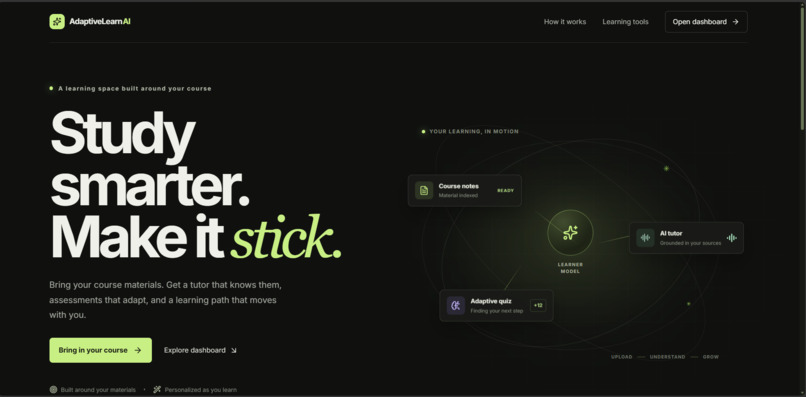
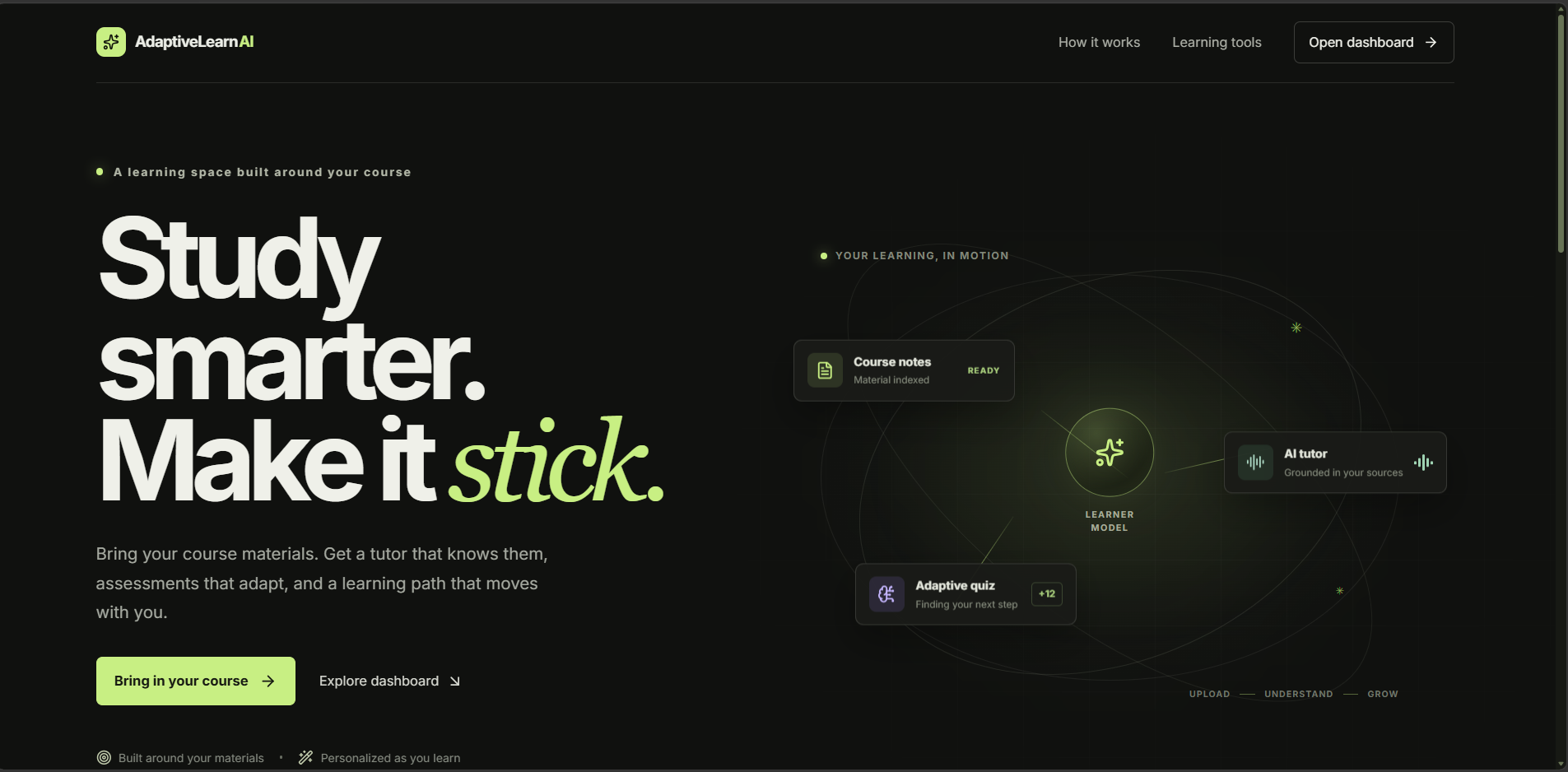
Landing page
-
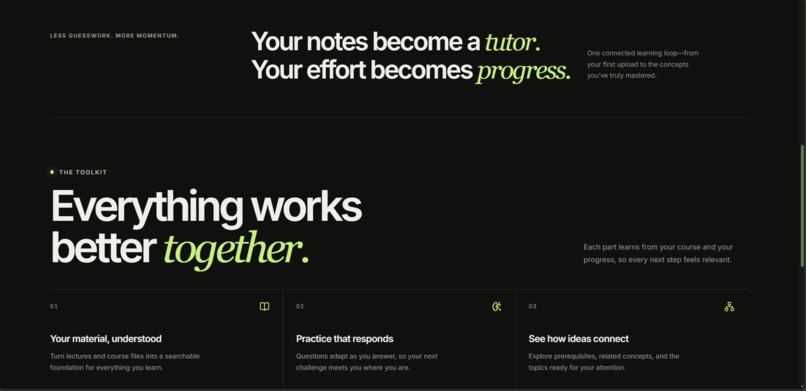
How it works ?
-
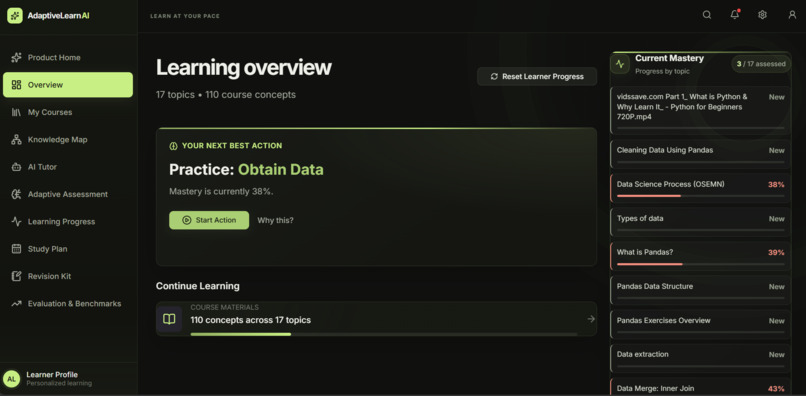
Overview
-
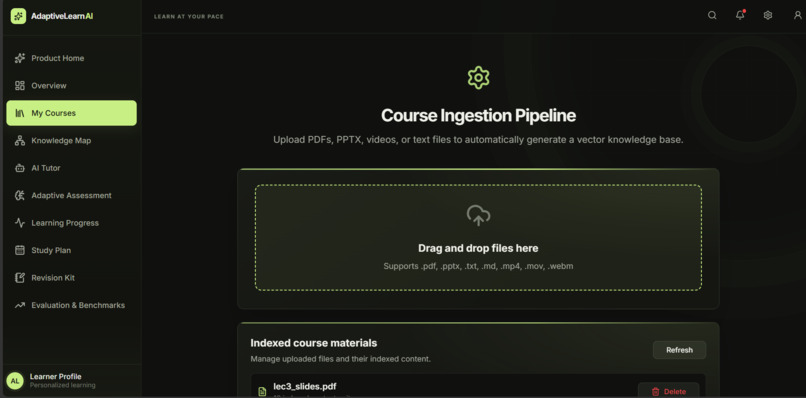
My Courses Dashboard
-
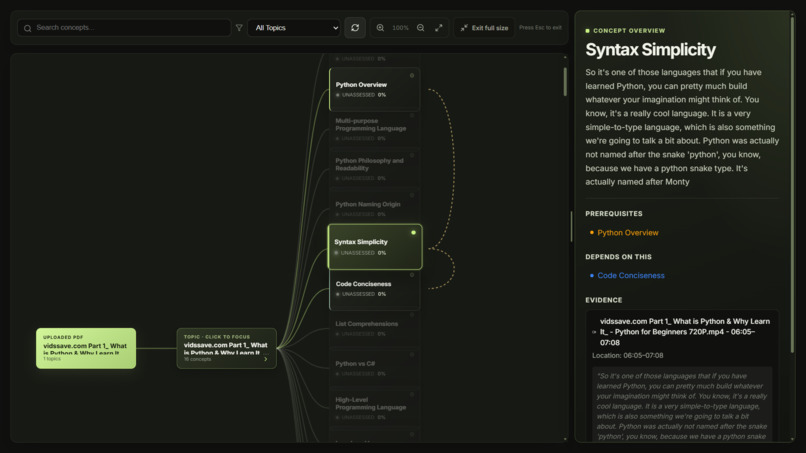
Knowledge Map
-
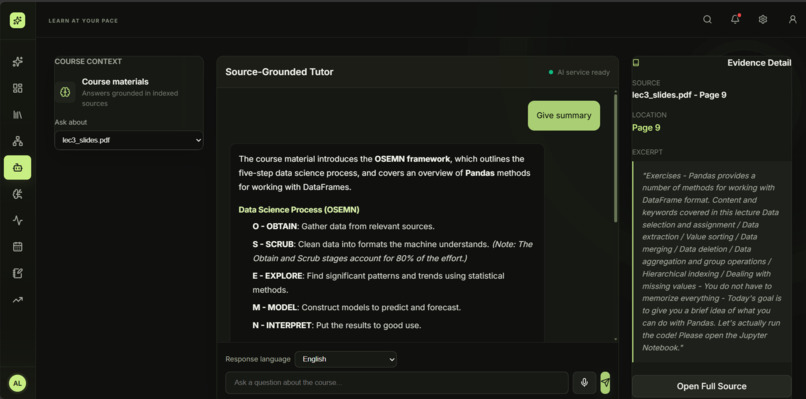
AI tutor with evidence details
-
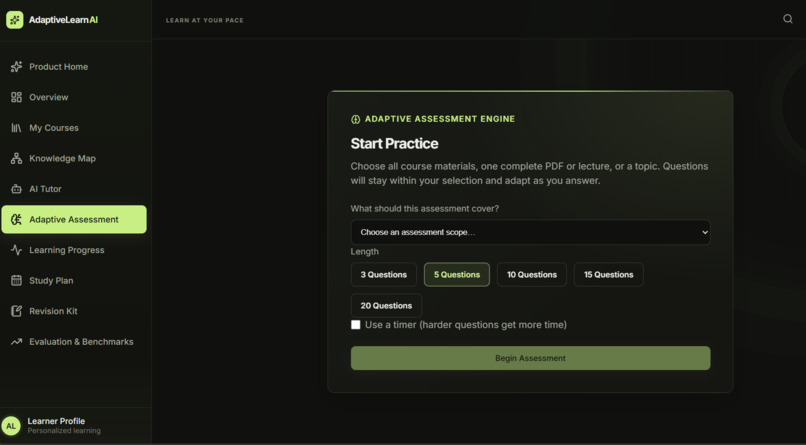
Adaptive Asessment
-
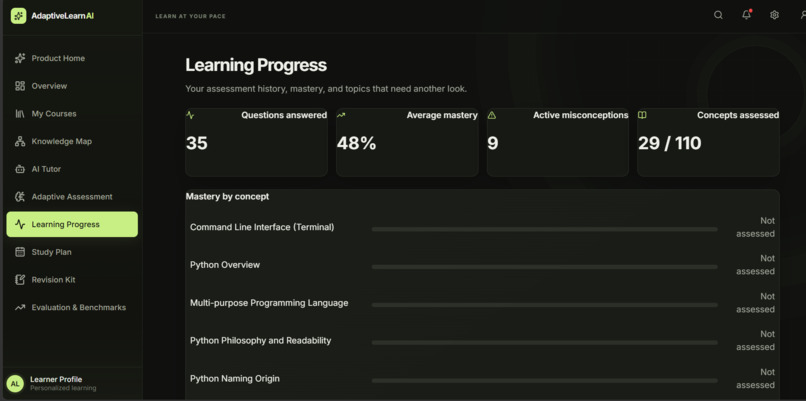
Learning Progress Dashboard
-
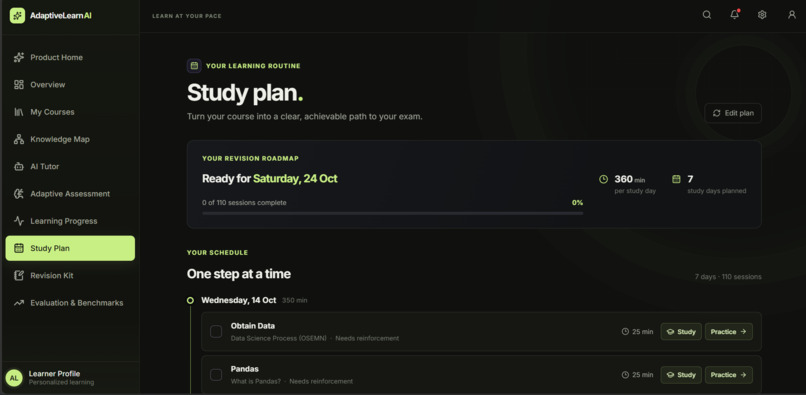
Study Plan
-
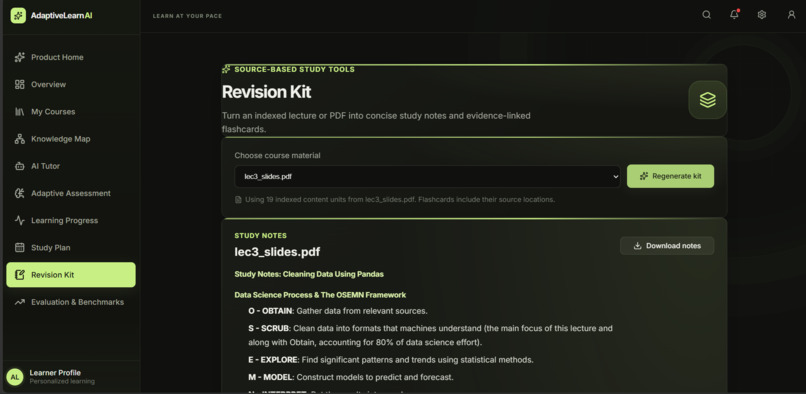
Revision Kit
-
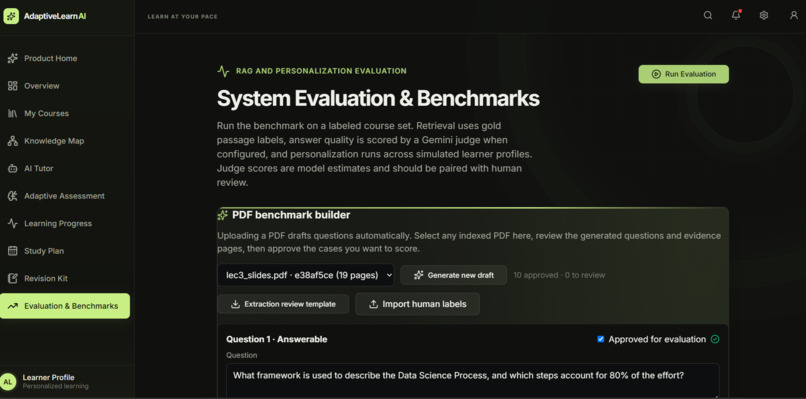
Evaluation and Benchmarks Dashboard
Inspiration
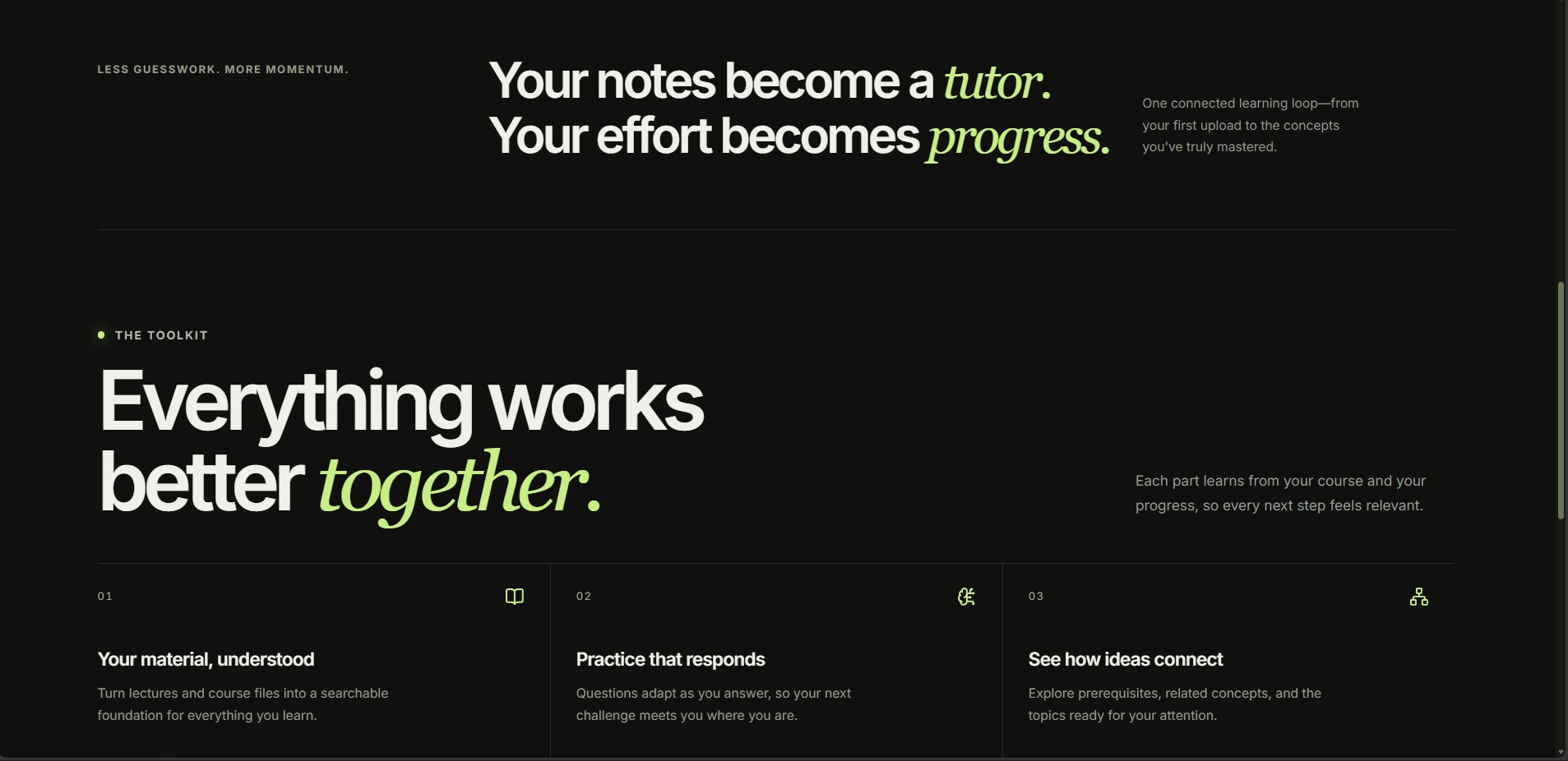
Learning from a collection of PDFs, slide decks, and lecture materials can feel fragmented. It is often difficult to connect ideas across sources, find where an explanation came from, and decide what to study next.
I built AdaptiveLearn AI to bring those steps together. The goal was to create a learning workspace that can turn course materials into an explorable knowledge map, answer questions with references to the source, adapt practice to learner progress, and help plan revision.
What it does
AdaptiveLearn AI supports a course workflow from source material to study:
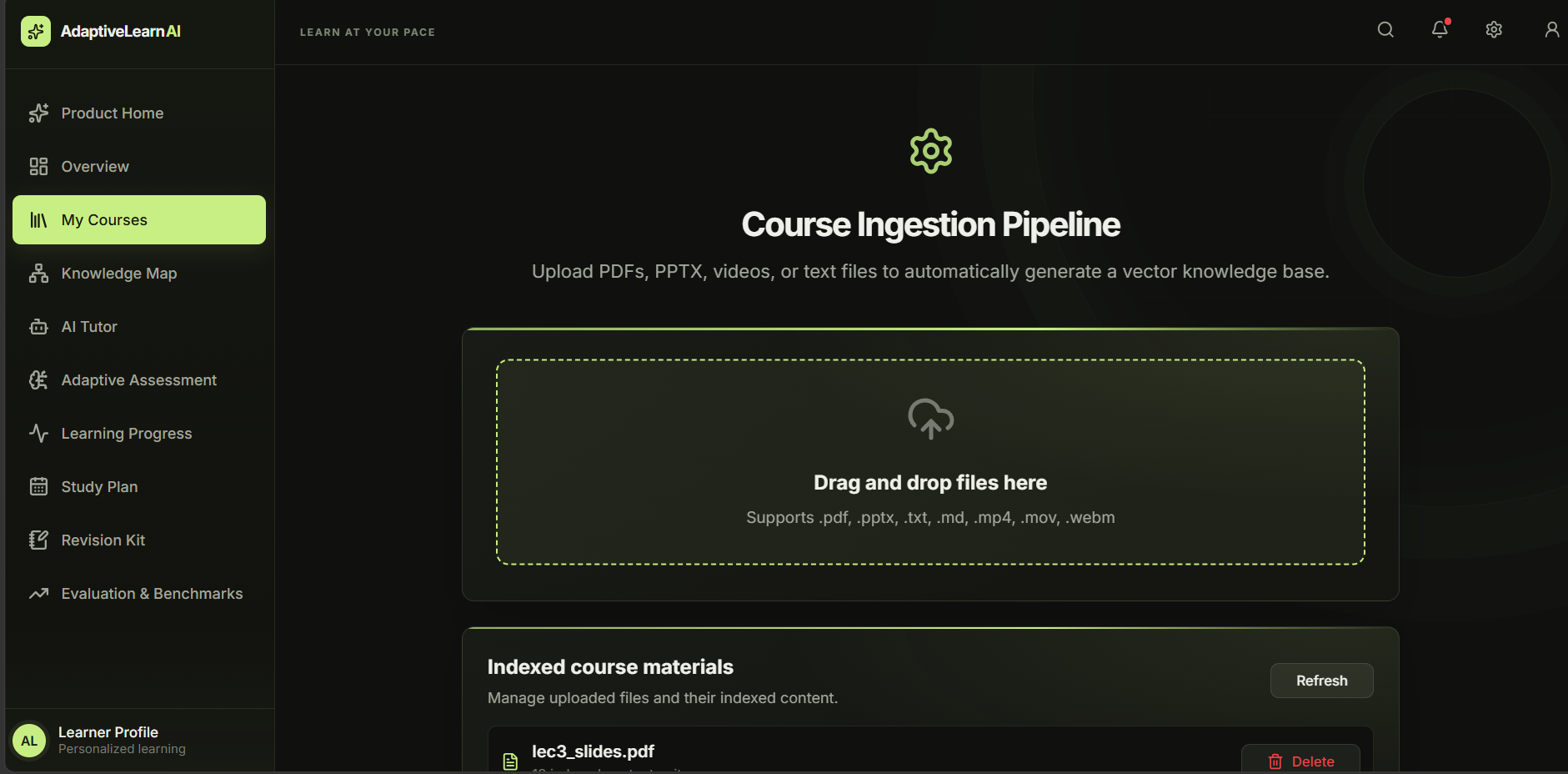
- Multimodal ingestion: Import PDFs, PowerPoint decks, text, and Markdown. Extracted content retains page, slide, or section locations.
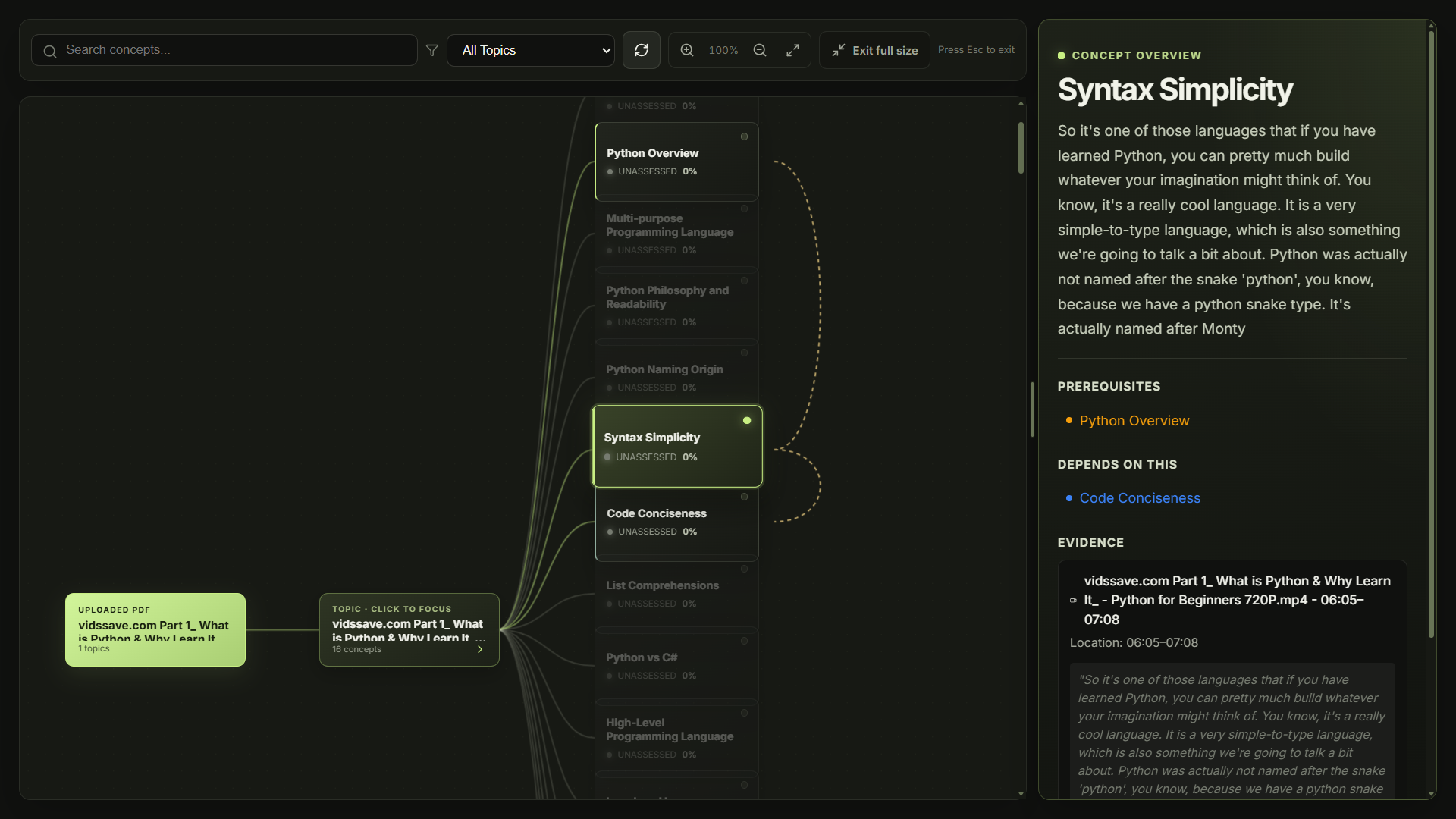
- Knowledge map: Explore sources, topics, concepts, and prerequisite relationships.
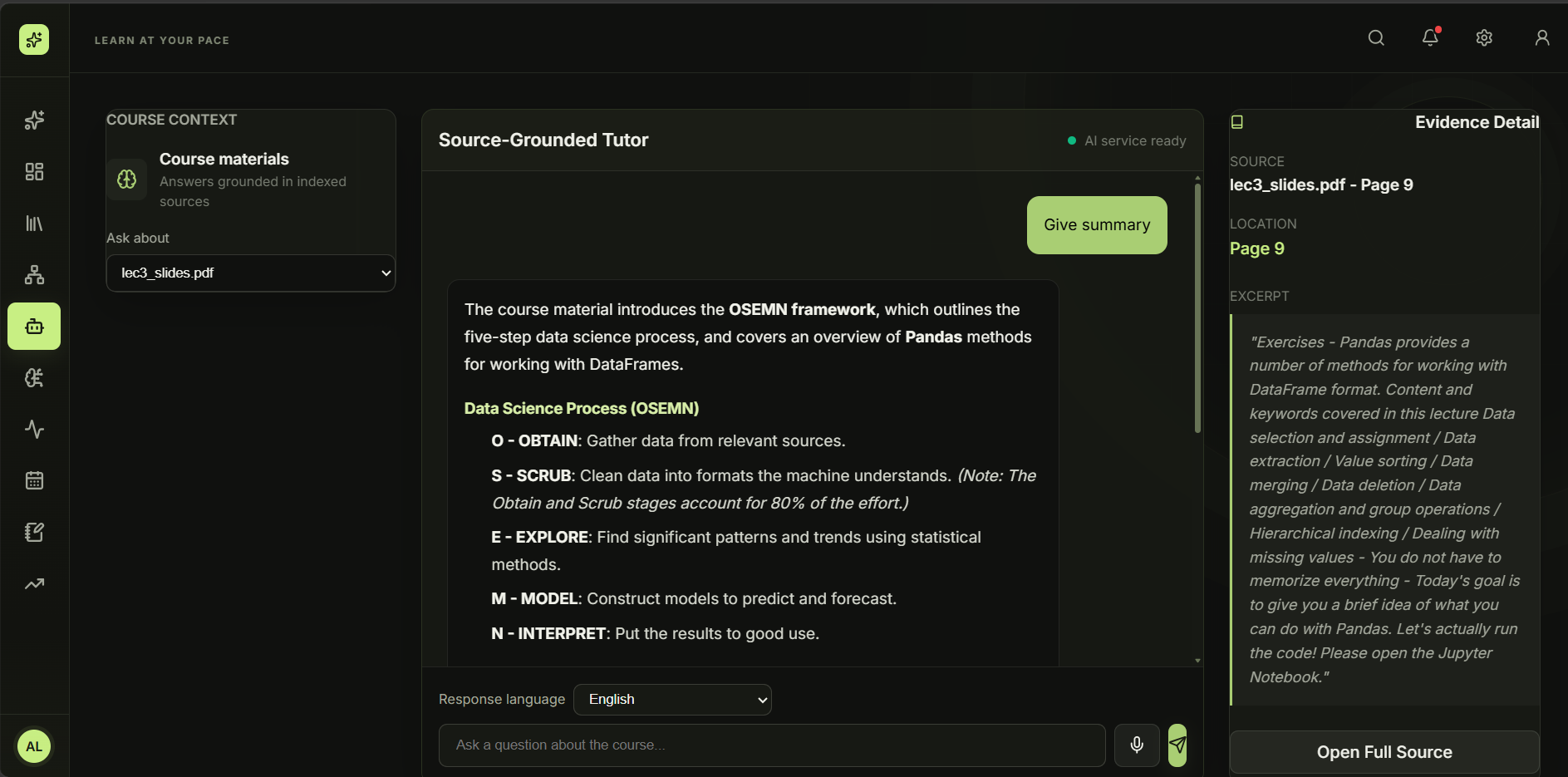
- Grounded AI tutor: Ask questions about all course material or a selected source. Answers include evidence and source locations; unsupported questions are identified instead of answered as fact.
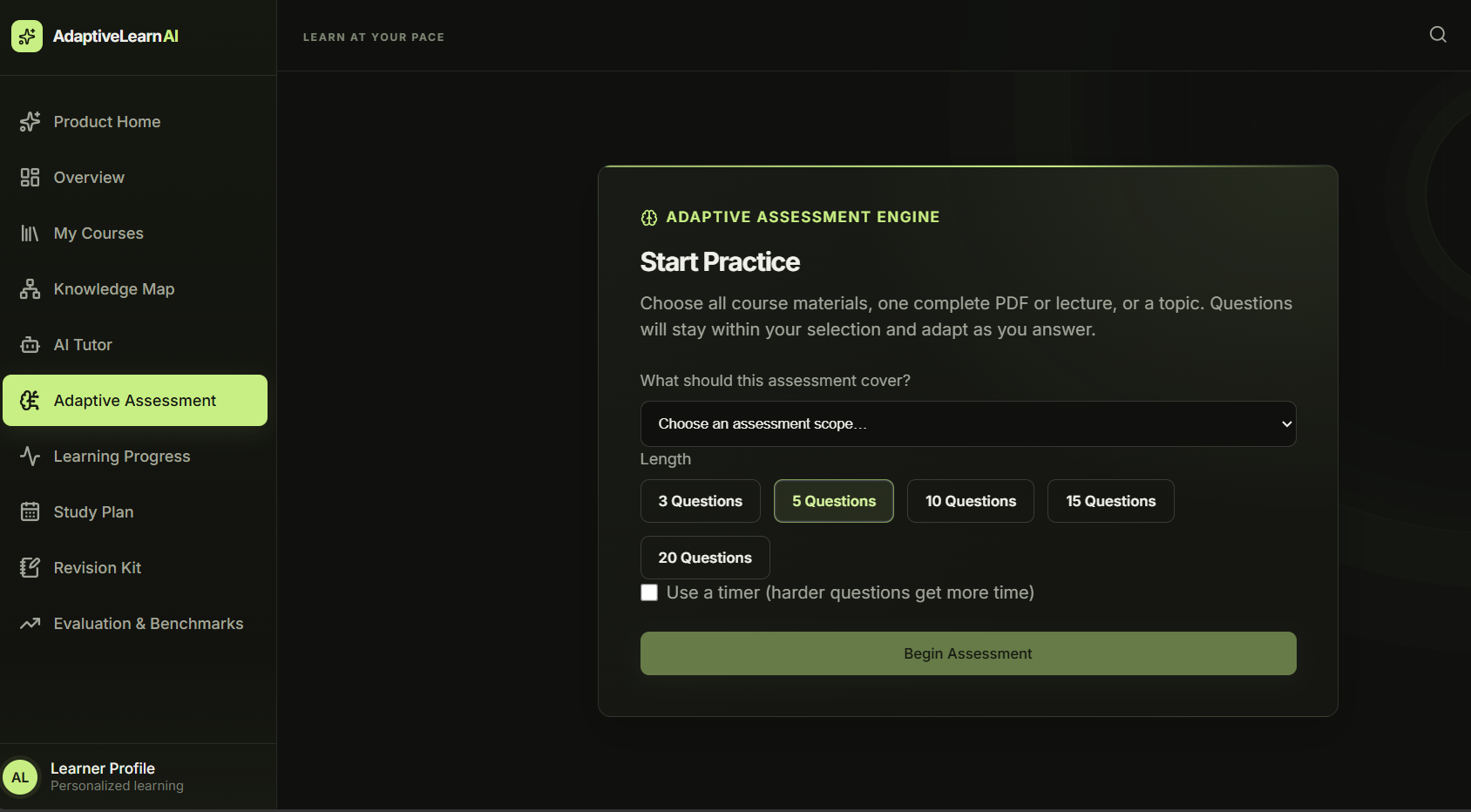
- Adaptive assessment: Take a diagnostic or practice by course, topic, or source. Supported question types include multiple choice, short answer, and numerical problems.
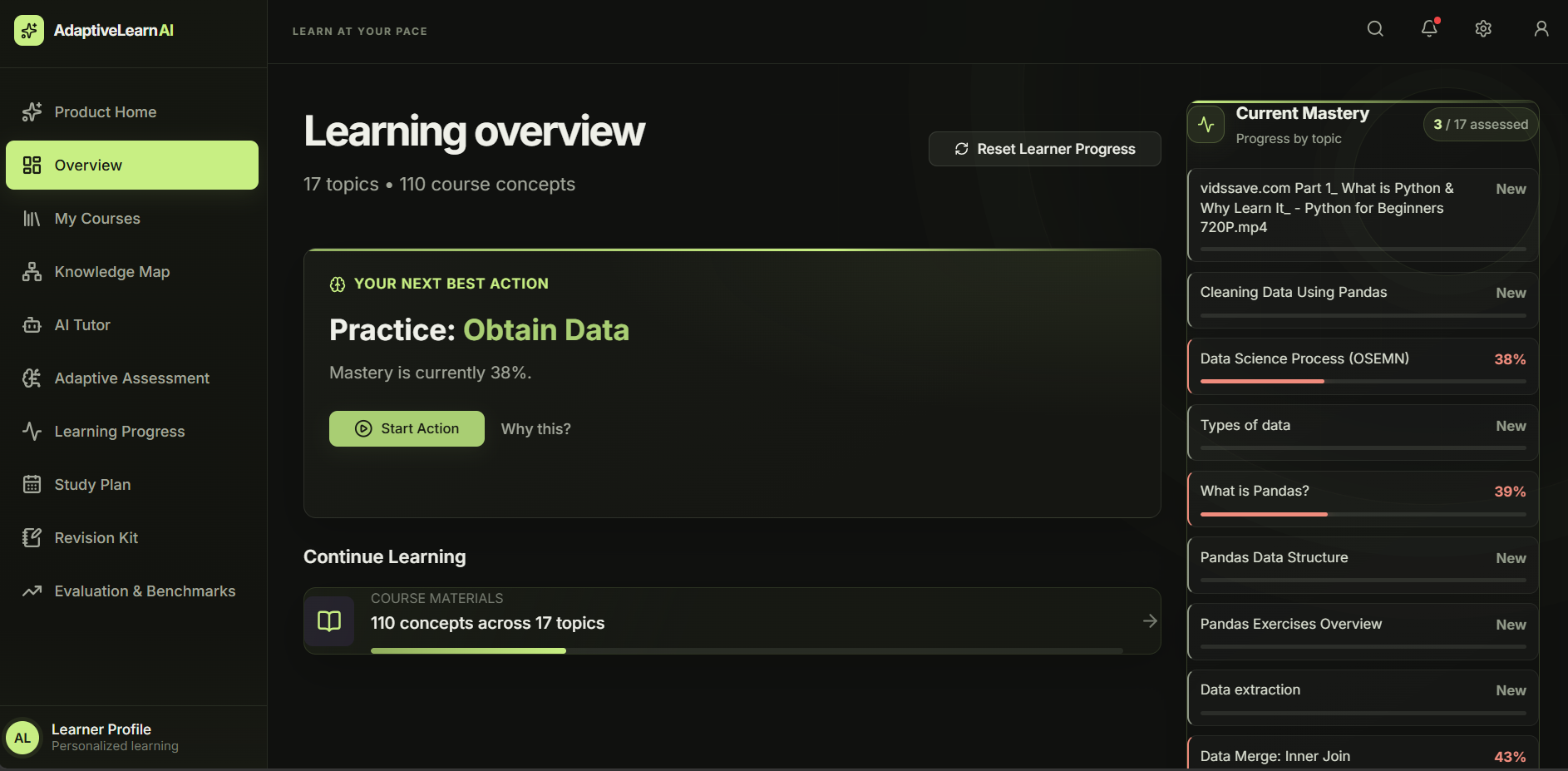
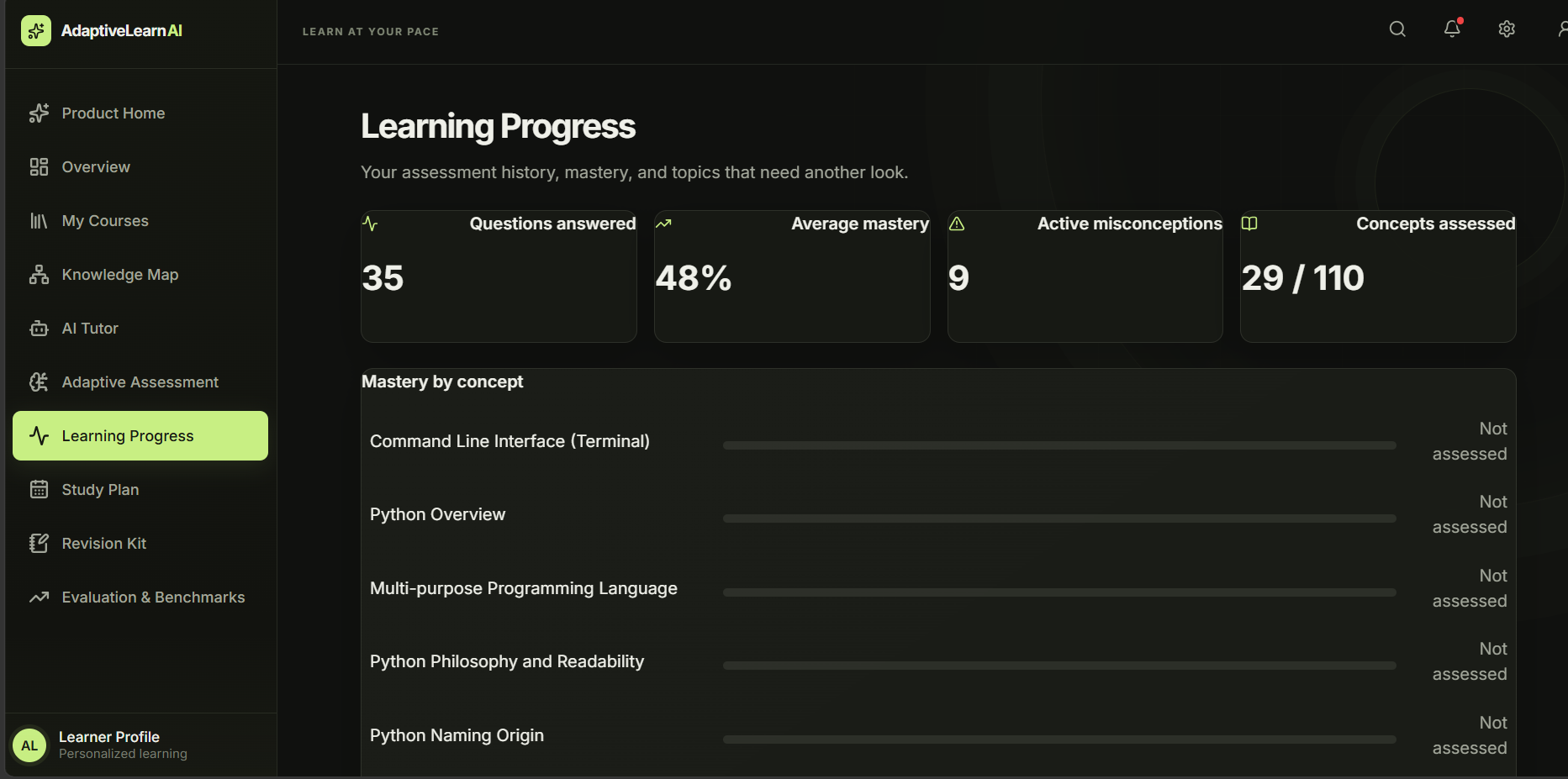
- Progress and recommendations: Review concept mastery, confidence, misconceptions, recent answers, and suggested next actions.
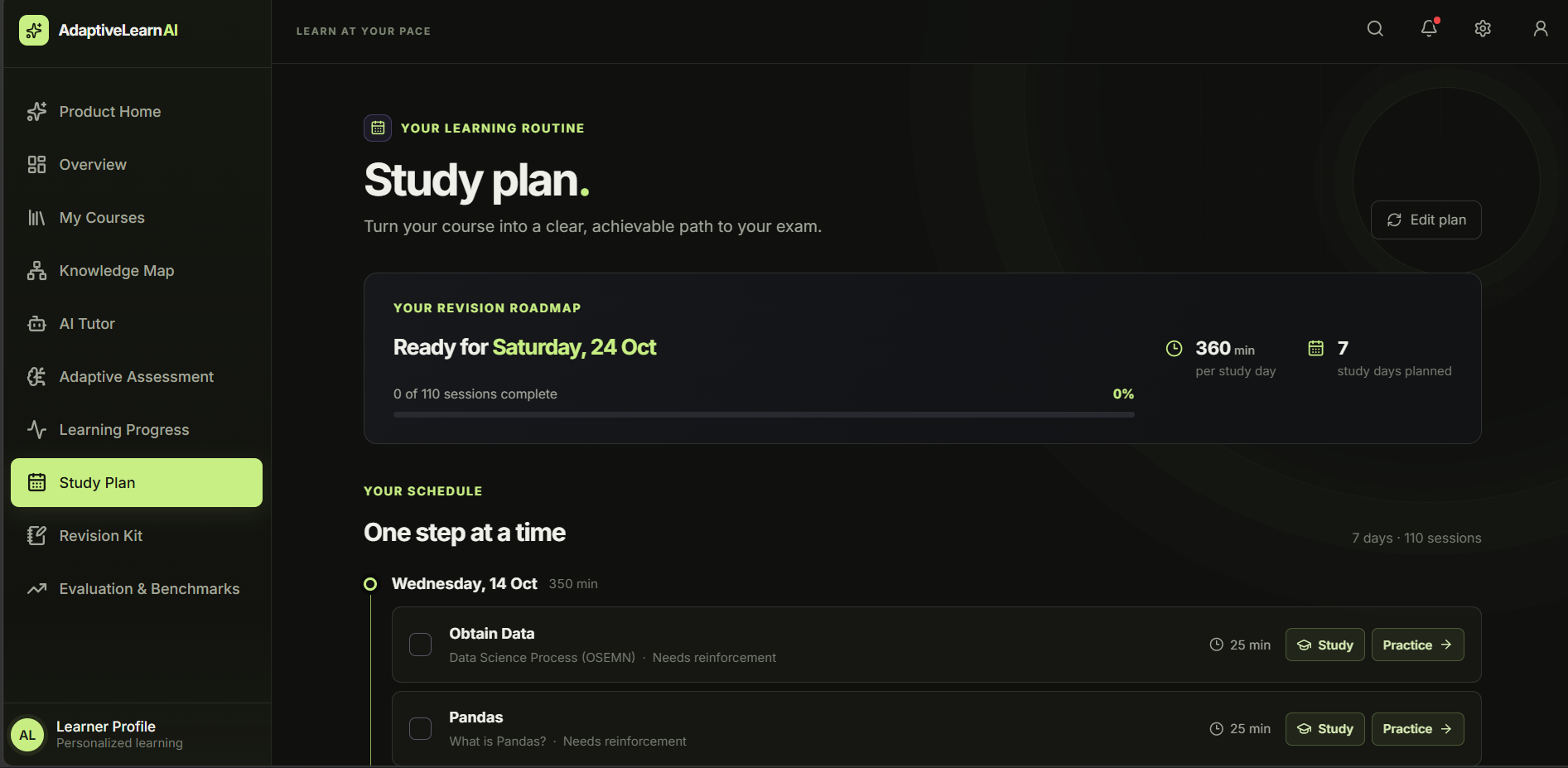
- Study planning: Build a schedule around an exam date, available weekdays, and daily study time, prioritizing prerequisites and concepts with lower mastery.
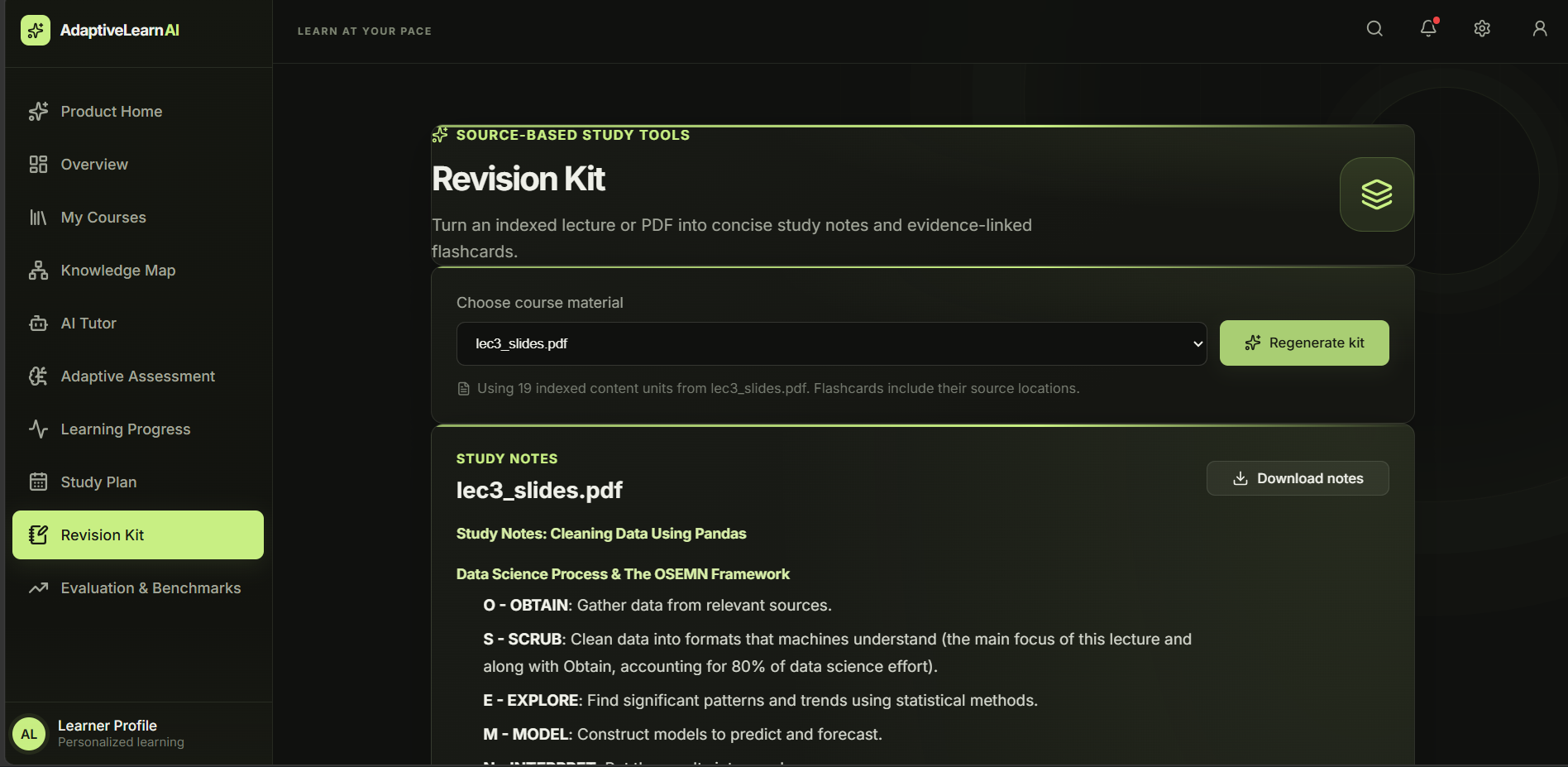
- Revision Kit: Generate summaries, key points, and flashcards linked back to source material.
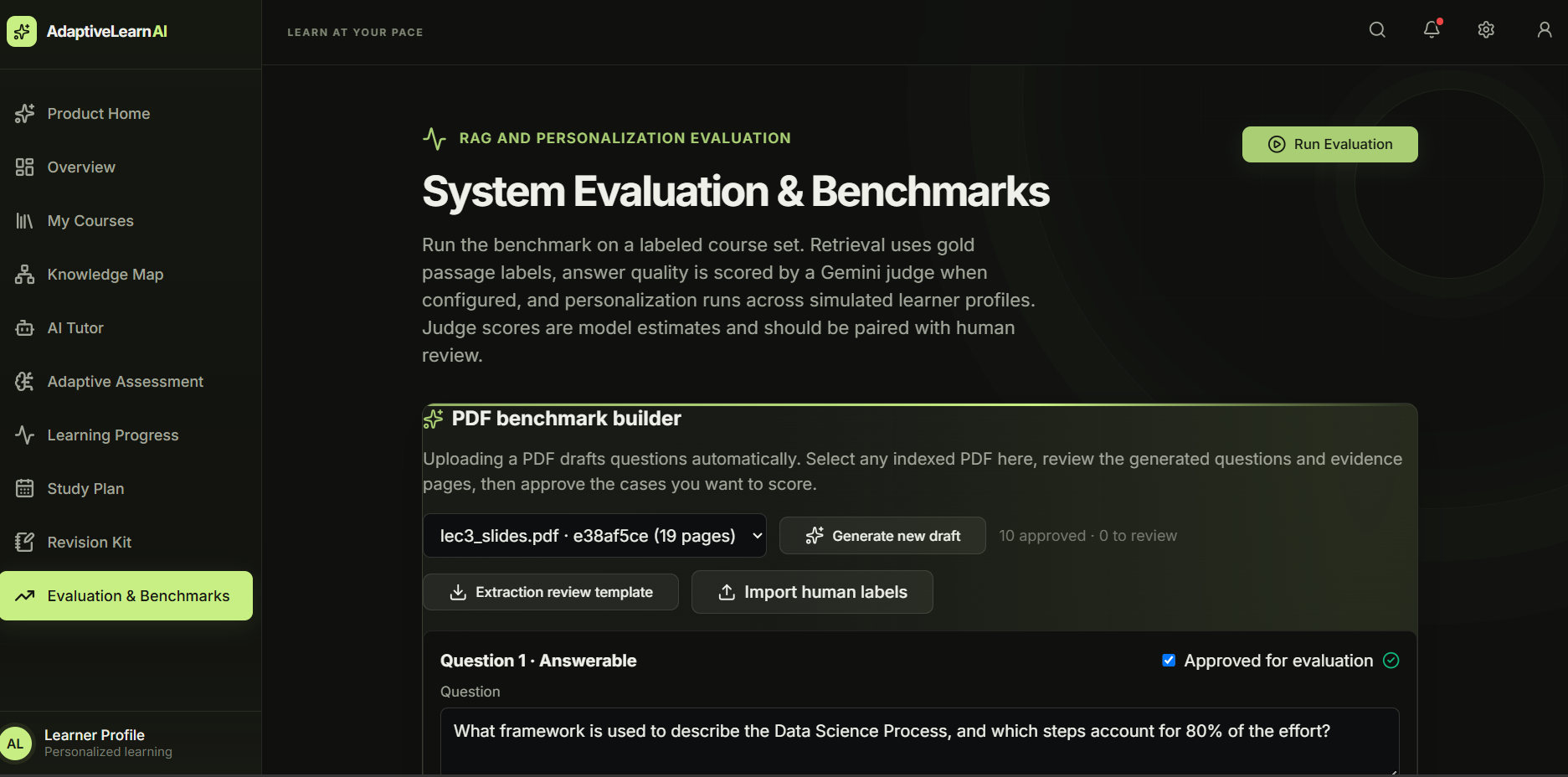
- Evaluation tools: Review PDF benchmark drafts, inspect extraction labels, run regression checks, and export approved cases for RAGAS metrics.
How I built it
The frontend is built with React, TypeScript, and Vite. An Express service handles Gemini API requests and local source and vector storage.
For supported document types, the app extracts content into units that retain source locations and concept metadata. Gemini creates embeddings for indexed content, which are stored in a local vector index. When a learner asks a question, retrieval can be scoped to a course or selected sources. The tutor uses retrieved excerpts, and citations are assembled from the stored source metadata.
Assessment generation produces evidence-linked questions and checks candidates against their source material before they are shown. Responses are graded with an answer key, required keywords, or a numerical tolerance. A deterministic learner model updates concept-level mastery and confidence from assessment results. Study planning uses that learner state together with prerequisite relationships and the learner’s schedule.
Google Gemini powers configured multimodal extraction, embeddings, tutoring, assessment generation, verification, and optional evaluation judging. OpenAI Codex assisted with parts of the implementation and documentation.
Challenges I faced
One challenge was keeping answers connected to the original material. I preserved page, slide, and section metadata through indexing so citations could point back to the source instead of relying on the model to invent a location.
Another challenge was handling unsupported questions. The tutor checks whether relevant material was retrieved and can decline when it cannot find evidence. Generated assessment questions also need evidence checks, and benchmark drafts require human review before their scores should be trusted.
Building a useful learner model was another tradeoff. This prototype uses understandable deterministic updates for mastery and confidence rather than claiming a validated learning-science model. Short answers are graded with keyword rules, and numerical answers use tolerances; these are practical approaches for a prototype but do not replace human evaluation.
What I learned
I learned how much work sits between calling a language model and building a dependable learning experience. Source tracking, retrieval scope, evidence checks, local persistence, question validation, and transparent evaluation all matter alongside generation quality.
I also learned to be careful about what evaluation results mean. AI-generated benchmark cases need review, judge scores are estimates, and simulated learner profiles are not evidence of real learning gains. Making those boundaries visible is part of building a tool learners can use responsibly.
What’s next
The current prototype uses one configured course and stores data locally, so progress does not sync across devices. Next steps include broader human-reviewed evaluation, stronger grading for free-response answers, improved extraction validation, and support for accounts and multiple courses.
Built With
- css
- express.js
- gemini-api
- google-gemini
- html
- javascript
- jszip
- localstorage
- lucide-react
- node.js
- pdf.js
- rag
- react
- typescript
- vite


Log in or sign up for Devpost to join the conversation.