Project Story
Inspiration
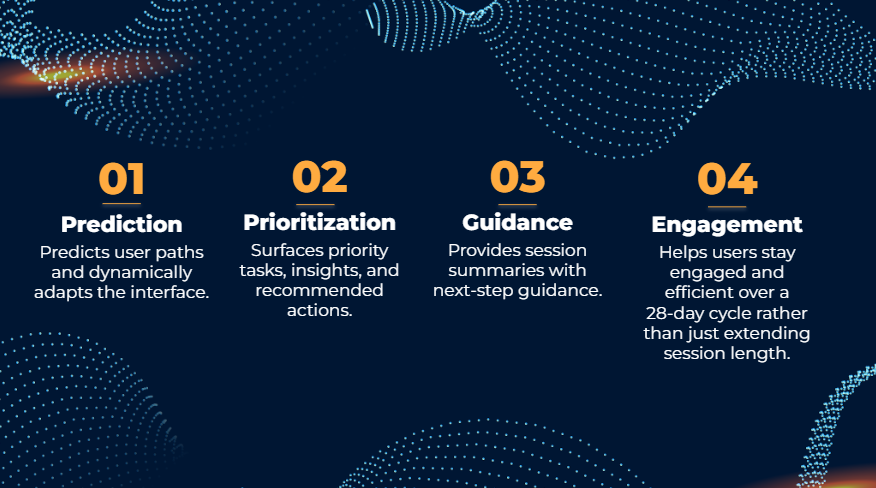
Our project enhances user engagement on the Federato RiskOps platform by implementing an Adaptive Workflow Engine that dynamically adjusts the way user paths are processed and visualized. The core goal was to optimize navigation efficiency and provide meaningful insights into user interactions.
The system integrates causal inference, predictive modeling, and interactive graph visualizations to optimize user workflows and maximize session efficiency. This ensures that platform users receive intelligent recommendations and seamless navigation, ultimately improving decision-making and engagement.
With our teammates developing ML models to detect different event paths, our role was to refine a final method that not only analyzes trends in the data but also presents them in an interactive and actionable manner.
What We Learned
Through this project, we gained extensive experience in:
- Data Handling & Analysis: Processing and structuring event-driven data for scalable insights.
- Machine Learning Integration: Utilizing predictive models to anticipate user behavior and optimize engagement.
- Causal Inference & Workflow Optimization: Identifying key actions that impact retention and dynamically adjusting workflows.
- Interactive Graph Visualization: Developing tools to visualize user paths and explore engagement patterns dynamically.
- Team Collaboration & Engineering: Combining backend, frontend, and ML capabilities into a cohesive platform.
How It Was Built
Our system is composed of three core components:
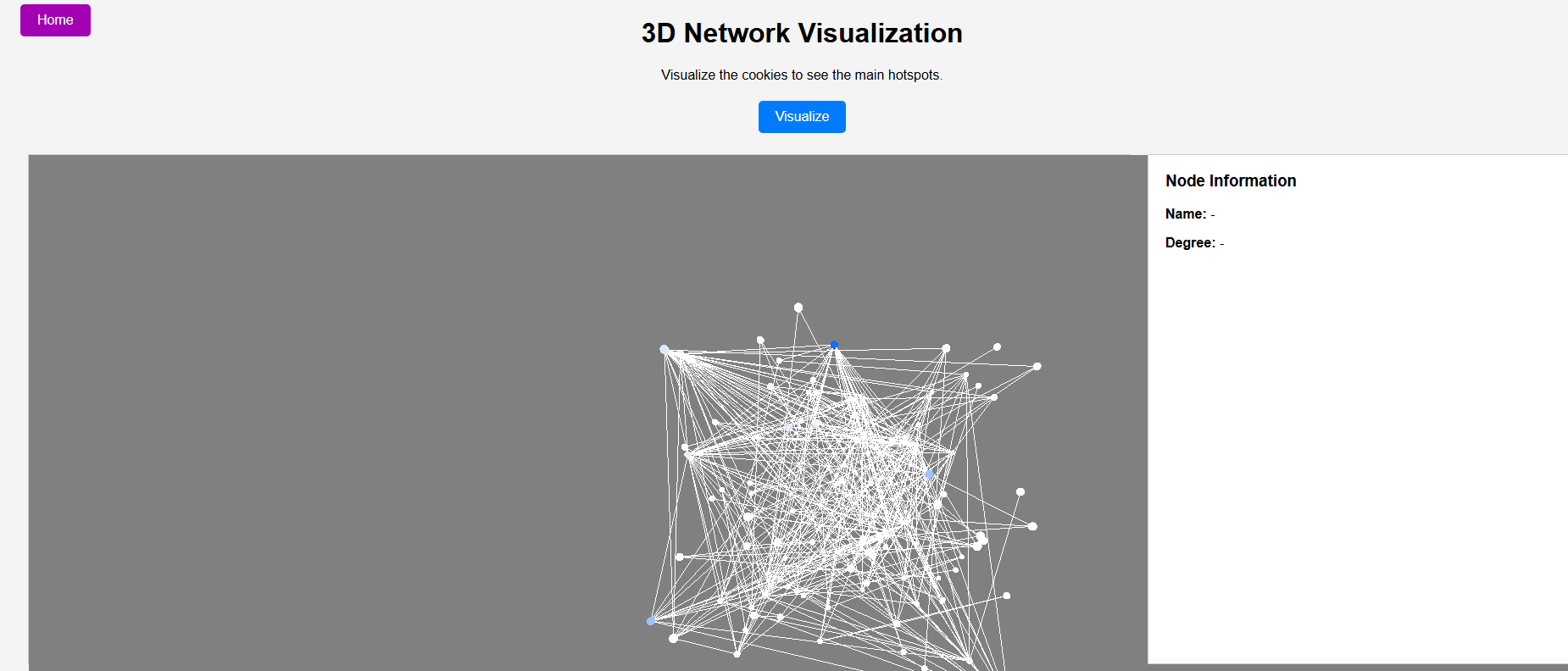
Interactive Event Graph
- Visualizes relationships between user actions dynamically.
- Nodes represent user actions, while edges illustrate transition patterns.
- Users can drag, resize, and explore event clusters to uncover behavioral insights.
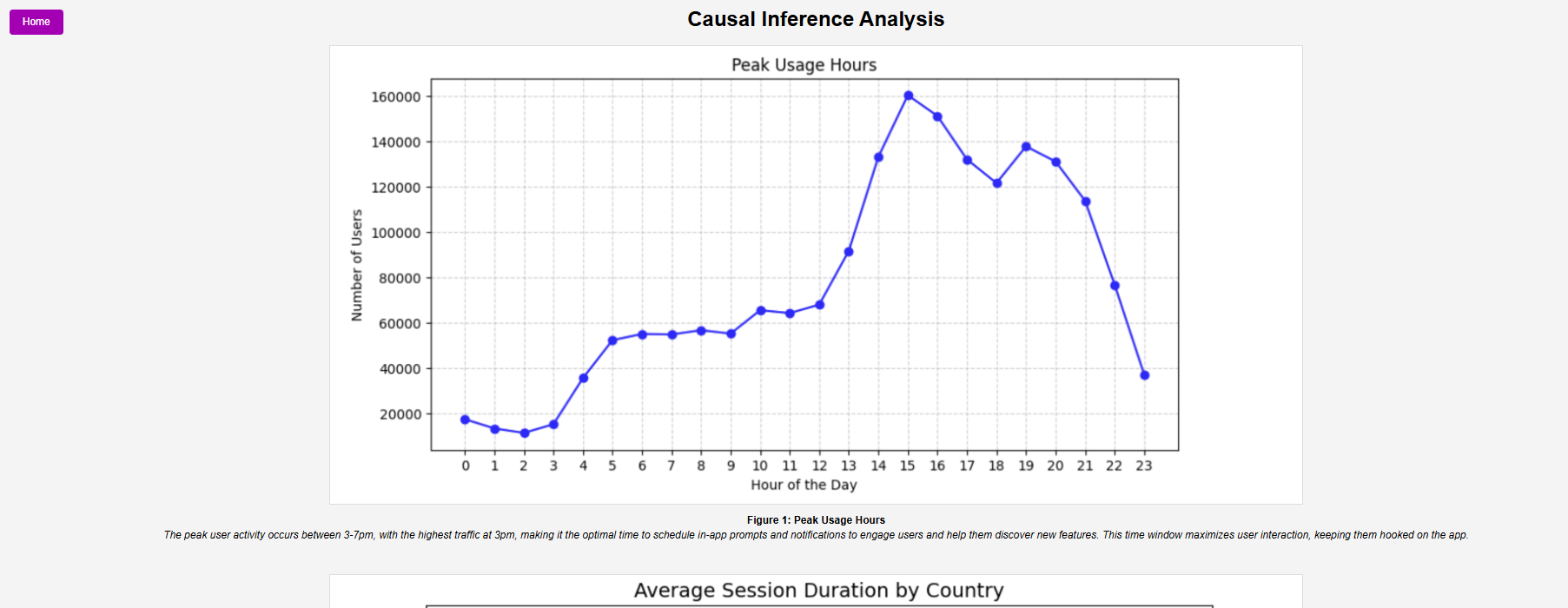
Causal Inference Engine
- Detects key actions that influence user retention and platform usage.
- Surfaces bottlenecks and optimizes workflow interactions based on data-driven insights.
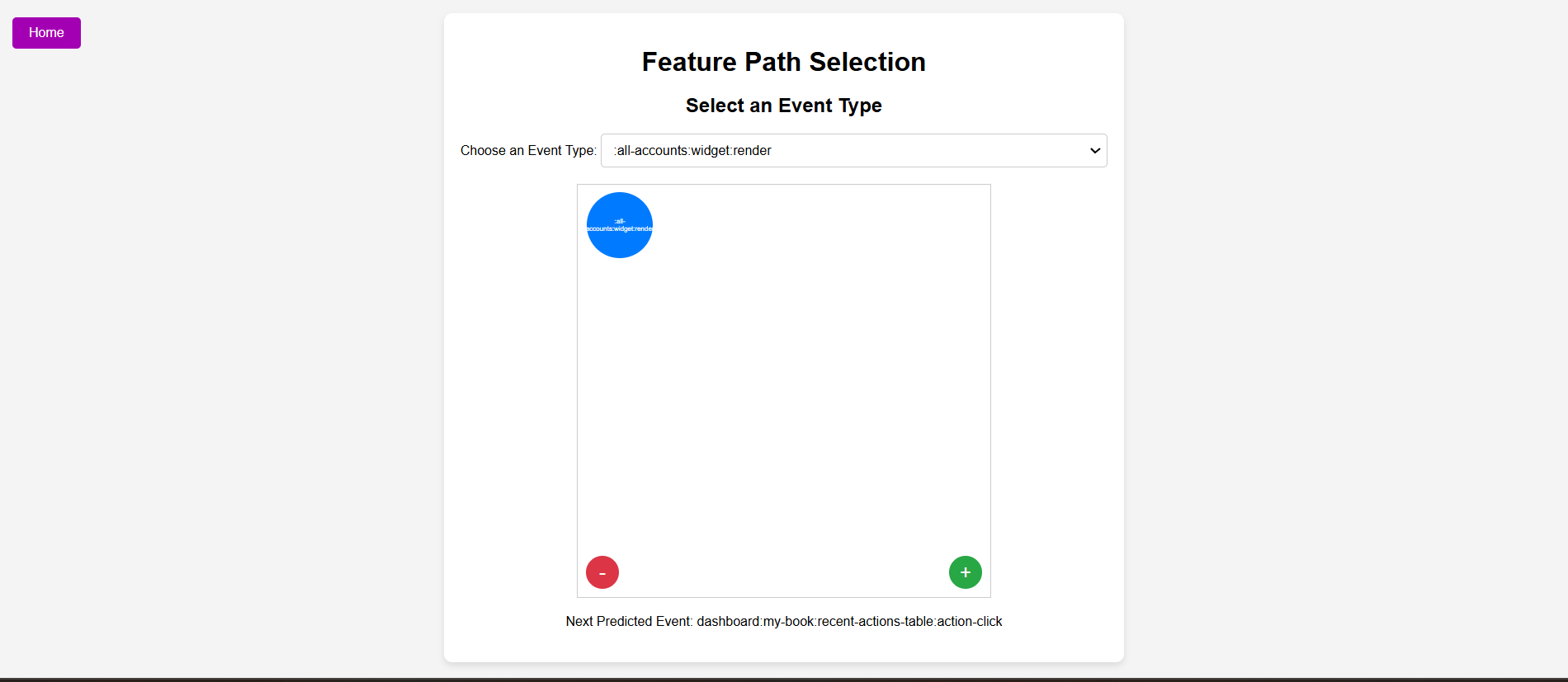
Predictive Path Model
- Forecasts the most probable next user action based on historical behavior.
- Personalizes recommendations to guide users through the platform efficiently.
- Enhances engagement by suggesting optimal workflow steps dynamically.
Challenges Faced
- Interpreting ML Outputs: Ensuring model predictions were meaningful and explainable.
- Scalability & Performance: Handling large-scale event-driven data efficiently while keeping response times low.
- Real-Time Adaptability: Designing an adaptive workflow engine that personalizes interactions in real-time.
- User Experience Optimization: Creating an intuitive and visually engaging interactive event graph.
Built With
Frontend
- Framework: Three.js
- Styling: Tailwind CSS / Bootstrap / Material UI
- Visualization: Pythree.js / Matplotlib / Plotly / Networkx
Backend
- Server: Node.js with Express / Python Flask
- Machine Learning: Scikit-learn / XGBoost
Additional Resources
Built With
- backend
- bootstrap
- css
- express.js
- flask
- javascript
- matplotlib
- ml
- networkx
- node.js
- plotly
- python
- pythree.js
- scikit-learn
- tailwind
- three.js
- xgboost


Log in or sign up for Devpost to join the conversation.