-
-
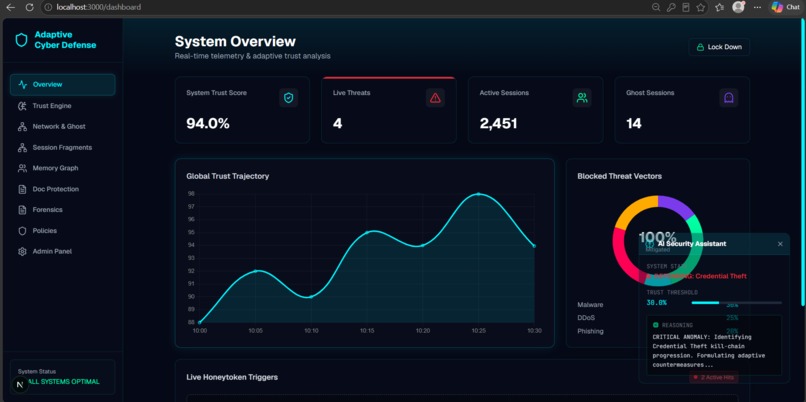
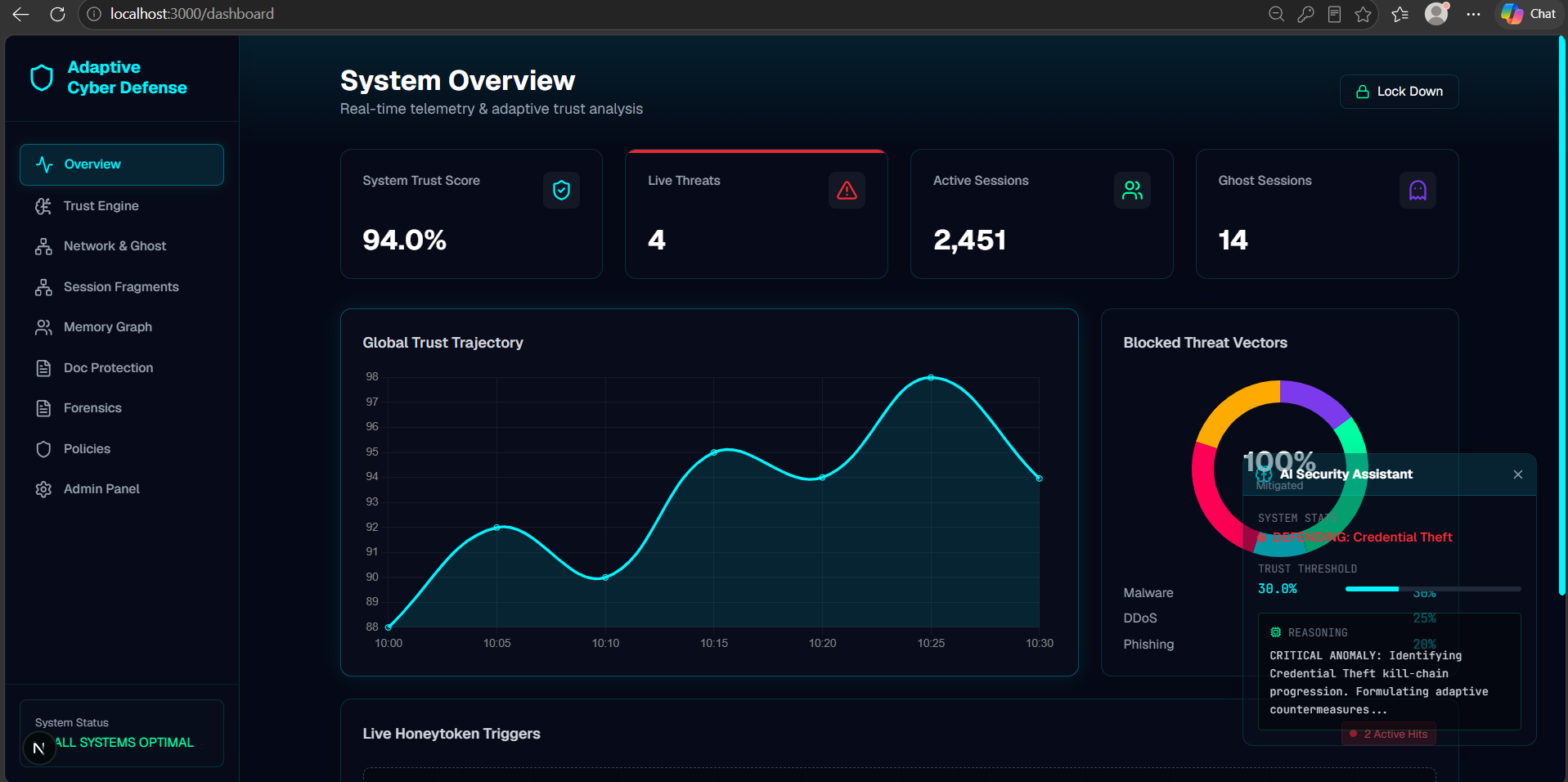
System Overview Dashboard — Real-time Trust and threat monitoring.
-
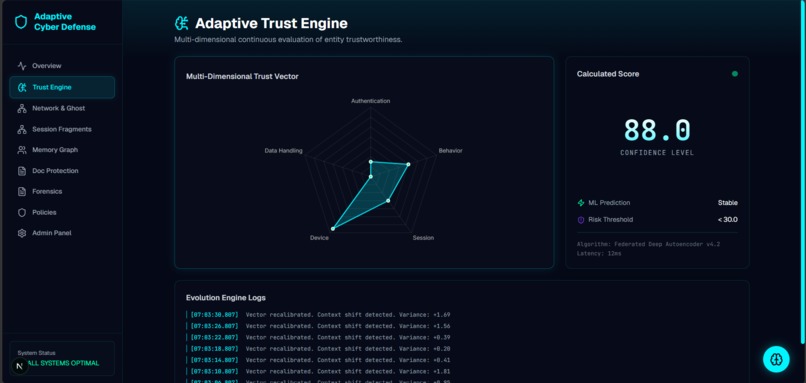
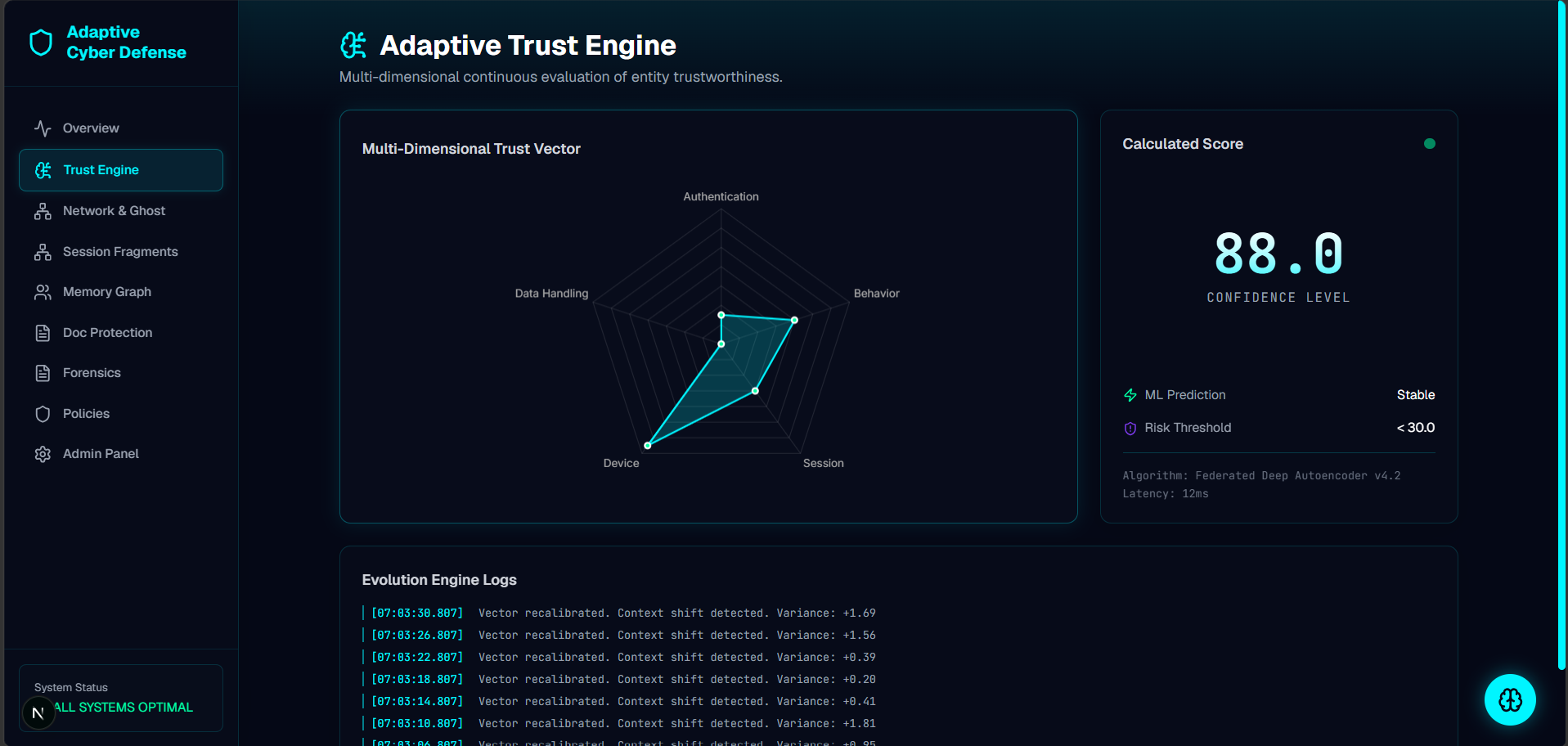
Adaptive Trust Engine — Dynamic trust scoring and multi-dimensional risk analysis.
-
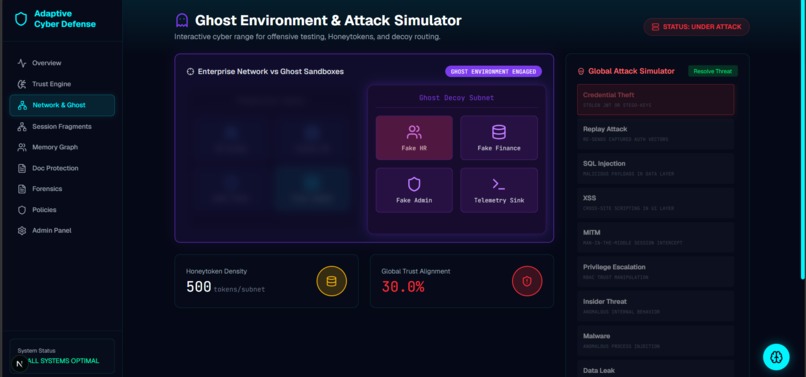
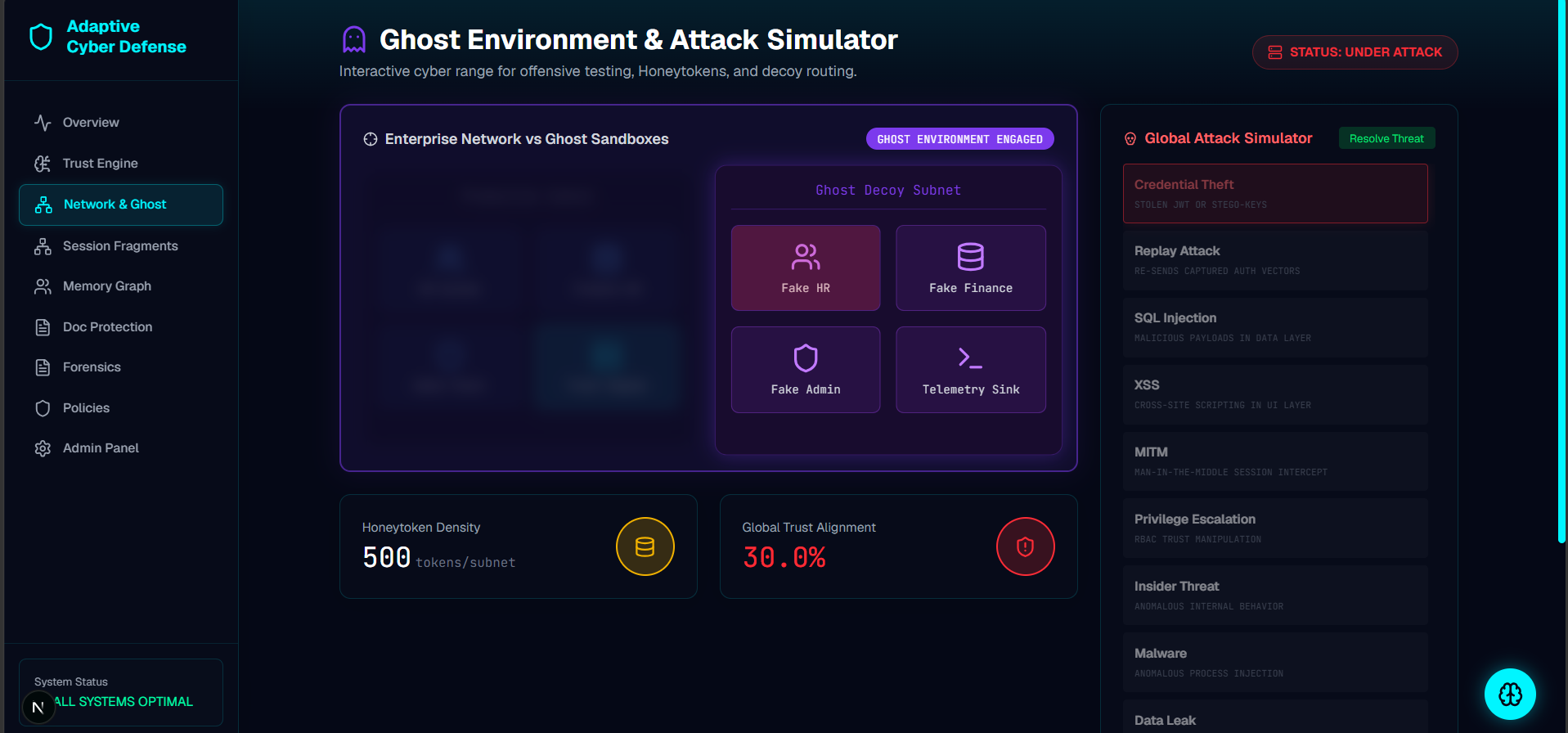
Ghost Environment & Attack Simulator — Adaptive deception and controlled attack simulation.
-
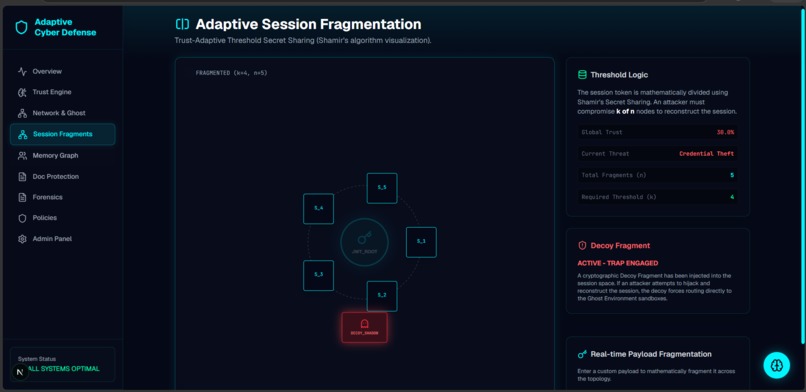
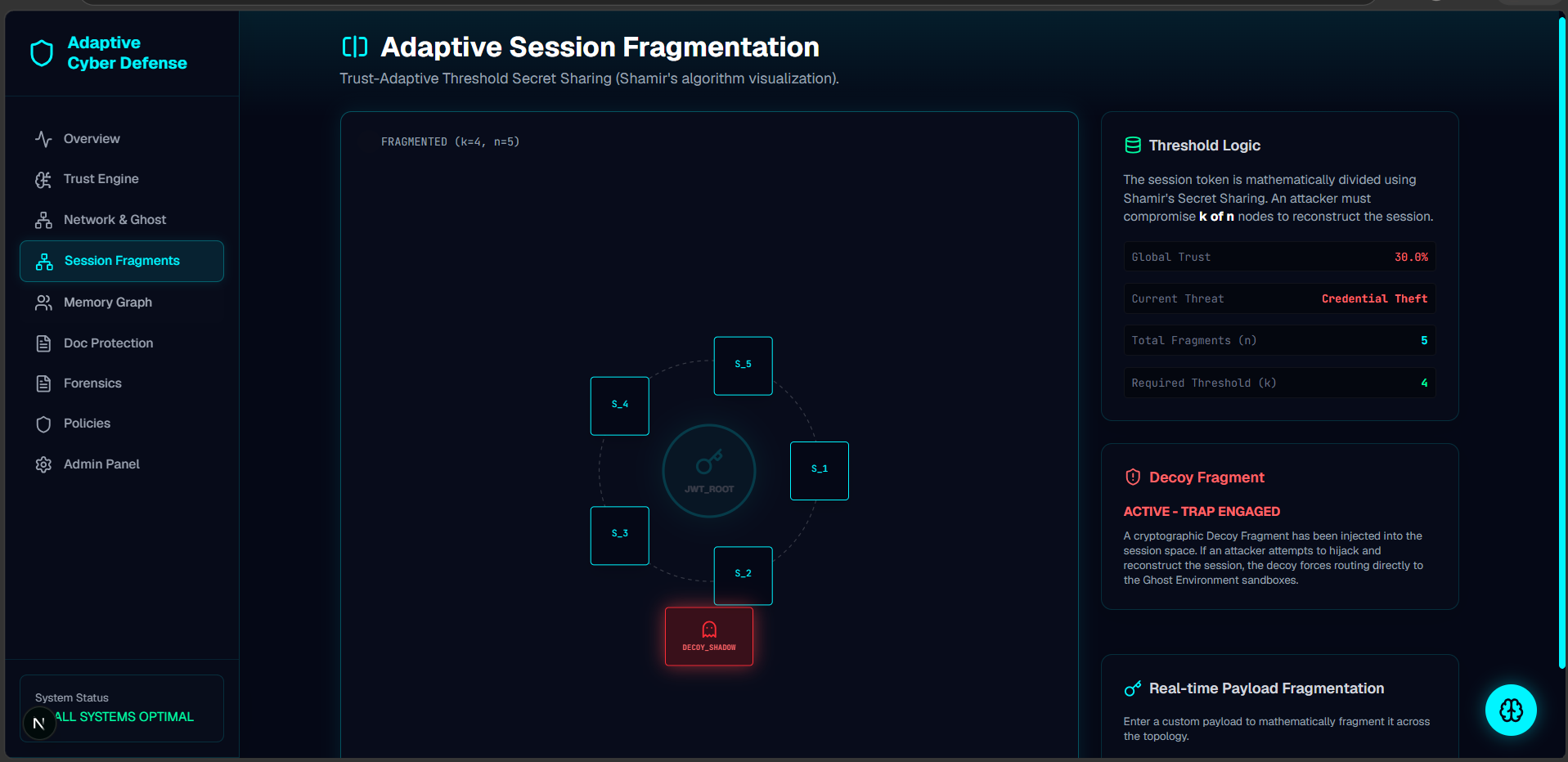
Adaptive Session Fragmentation — Trust-based session security with threshold secret sharing.
-
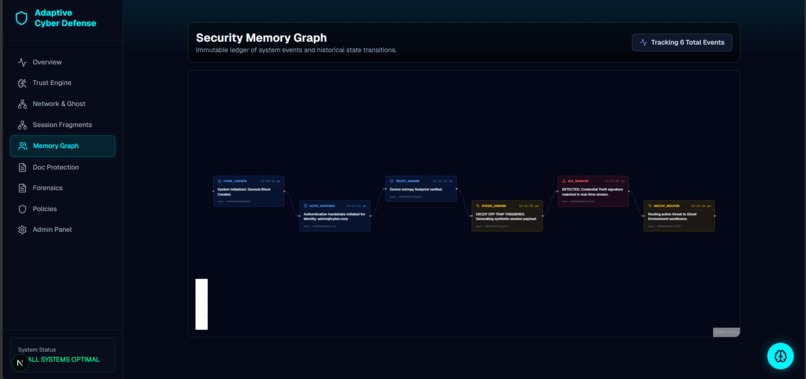
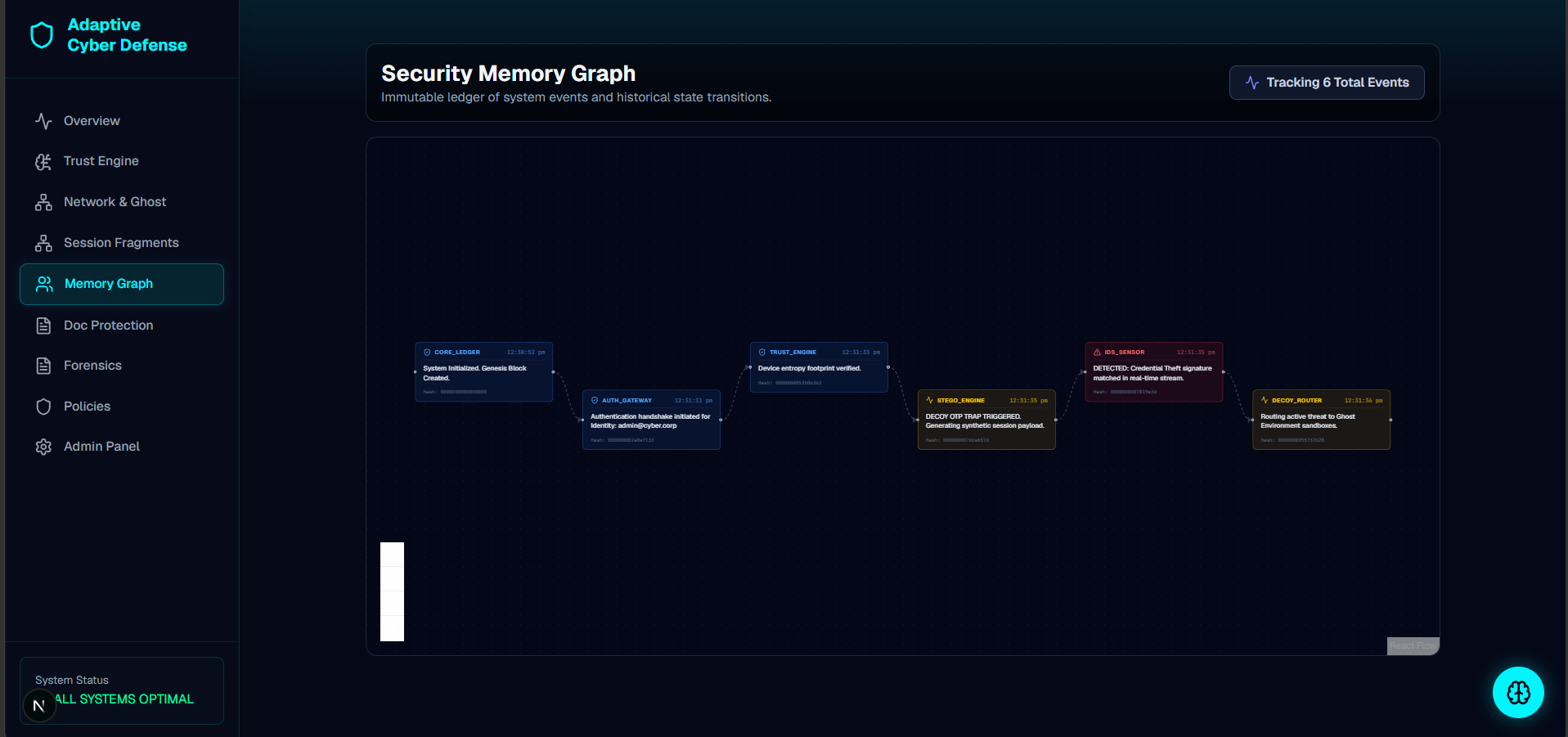
Security Memory Graph — Immutable event ledger tracking security events and state transitions.
-
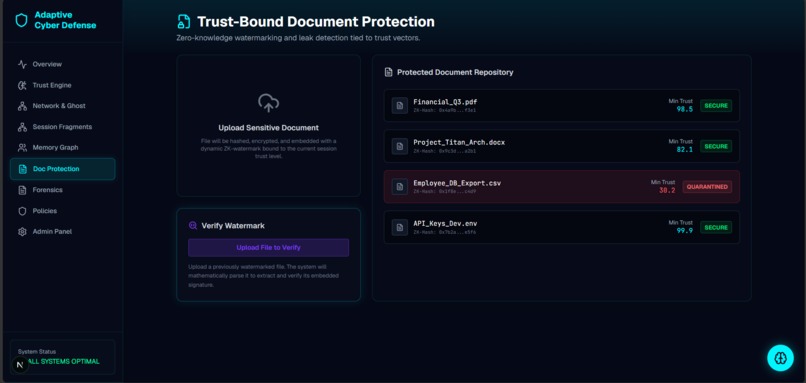
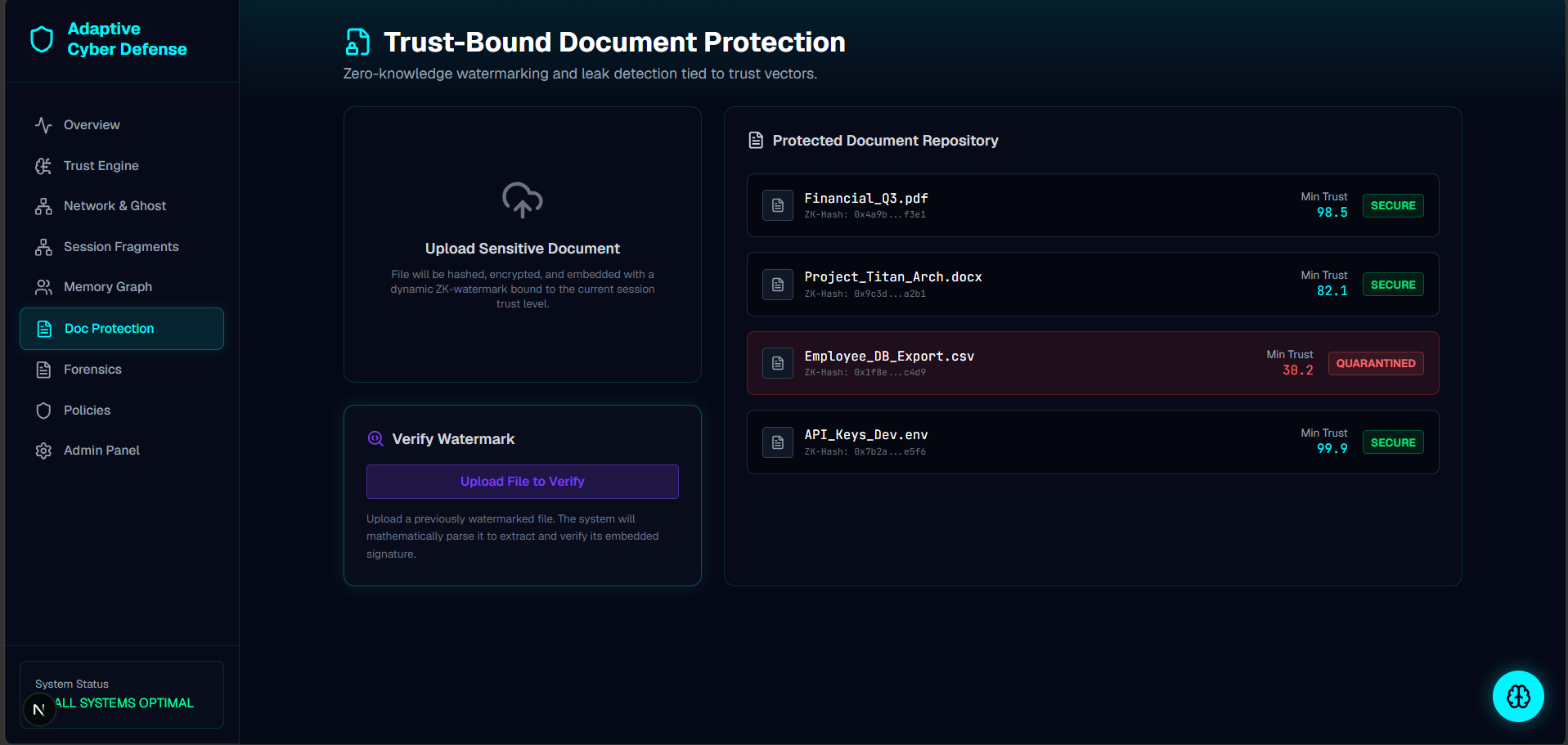
Trust-Bound Document Protection — Trust-based watermarking and secure document management.
-
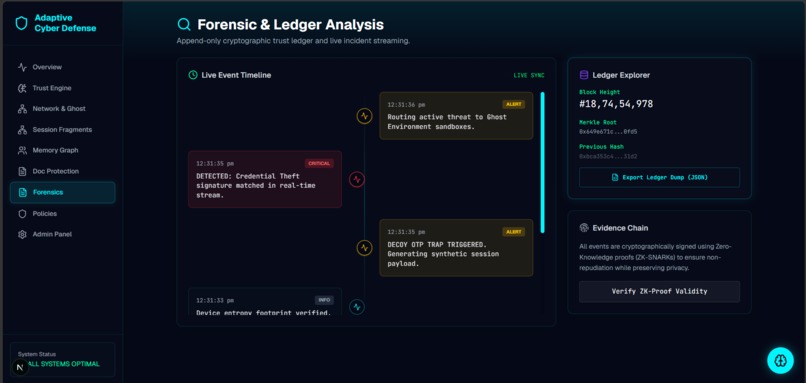
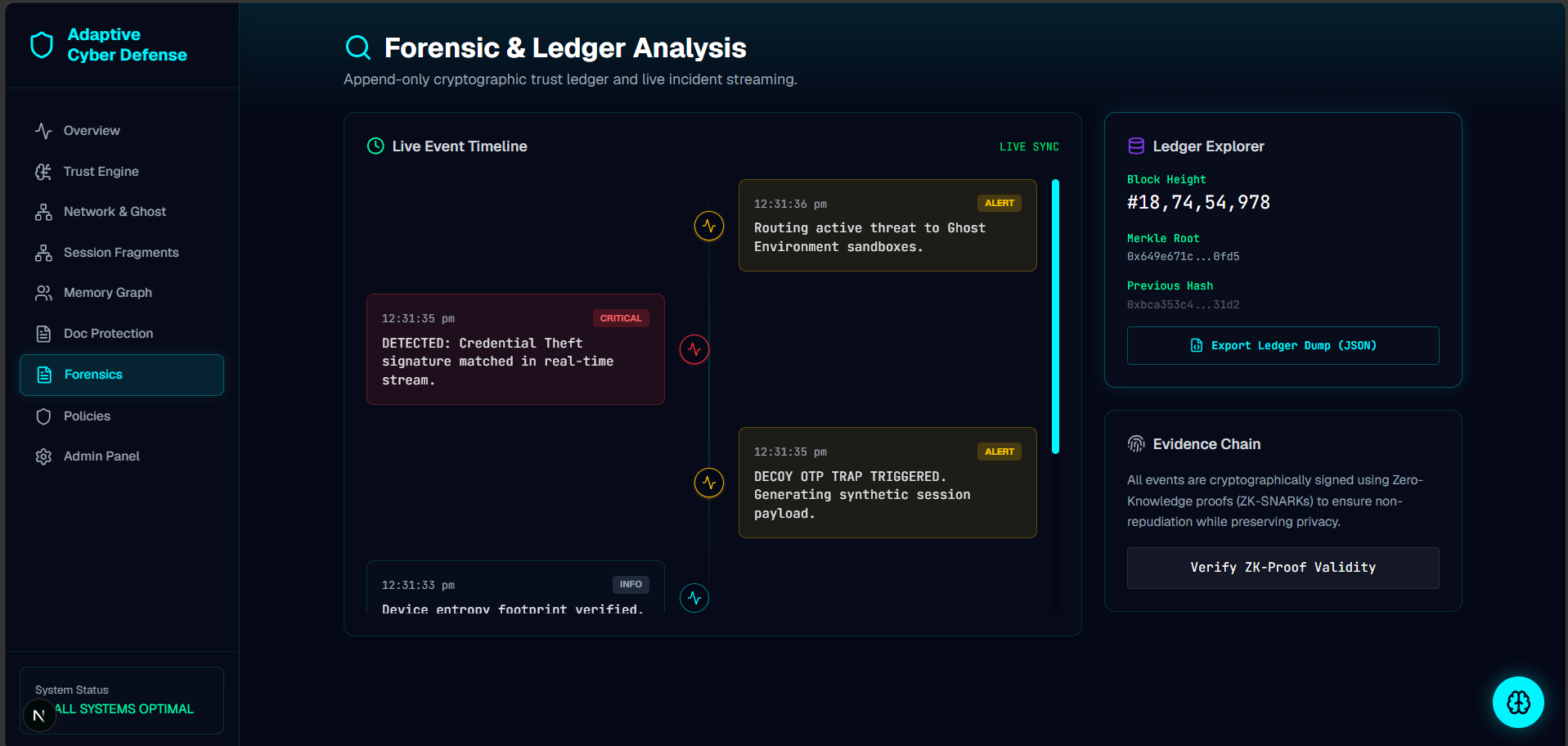
Forensic & Ledger Analysis — Live incident tracking and cryptographic evidence analysis.
-
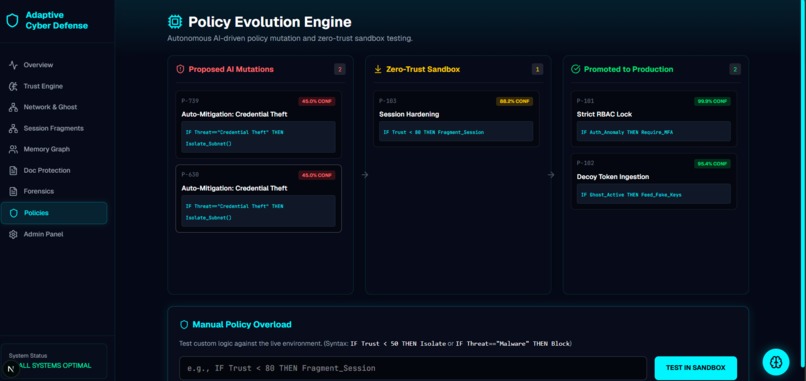
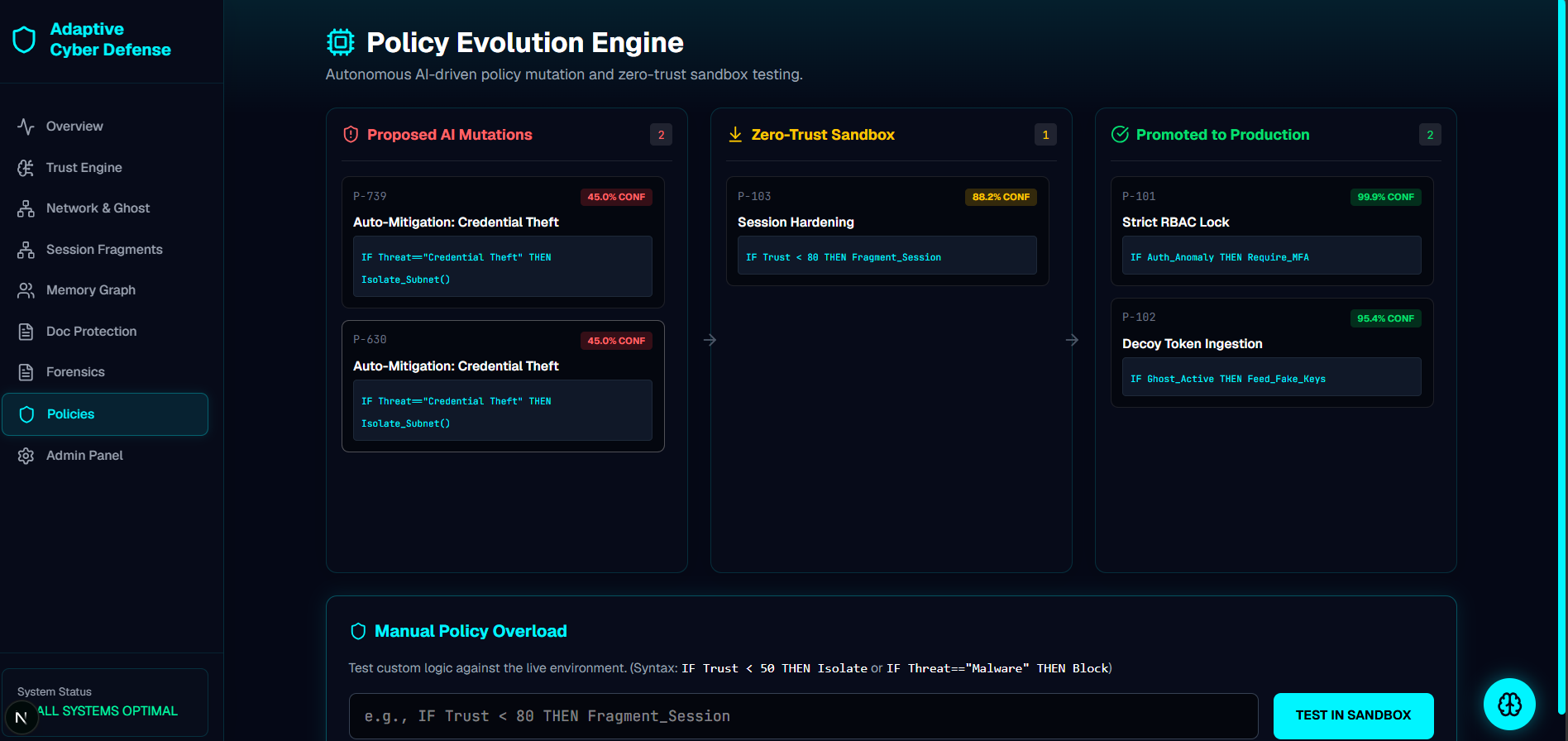
Policy Evolution Engine — Adaptive policy testing and zero-trust sandbox evaluation.
-
System Administration — User trust management and policy configuration.
-
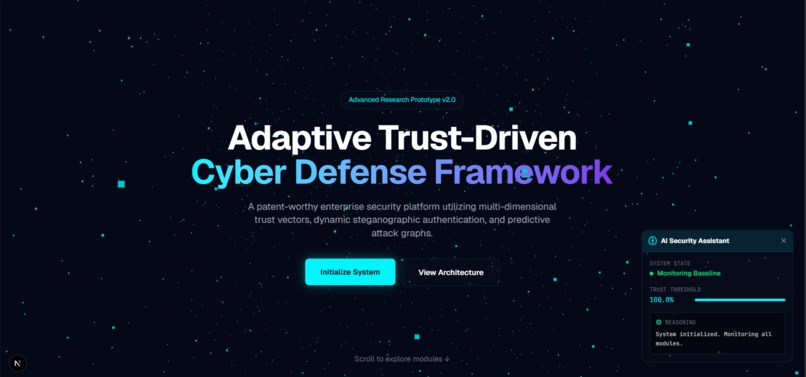
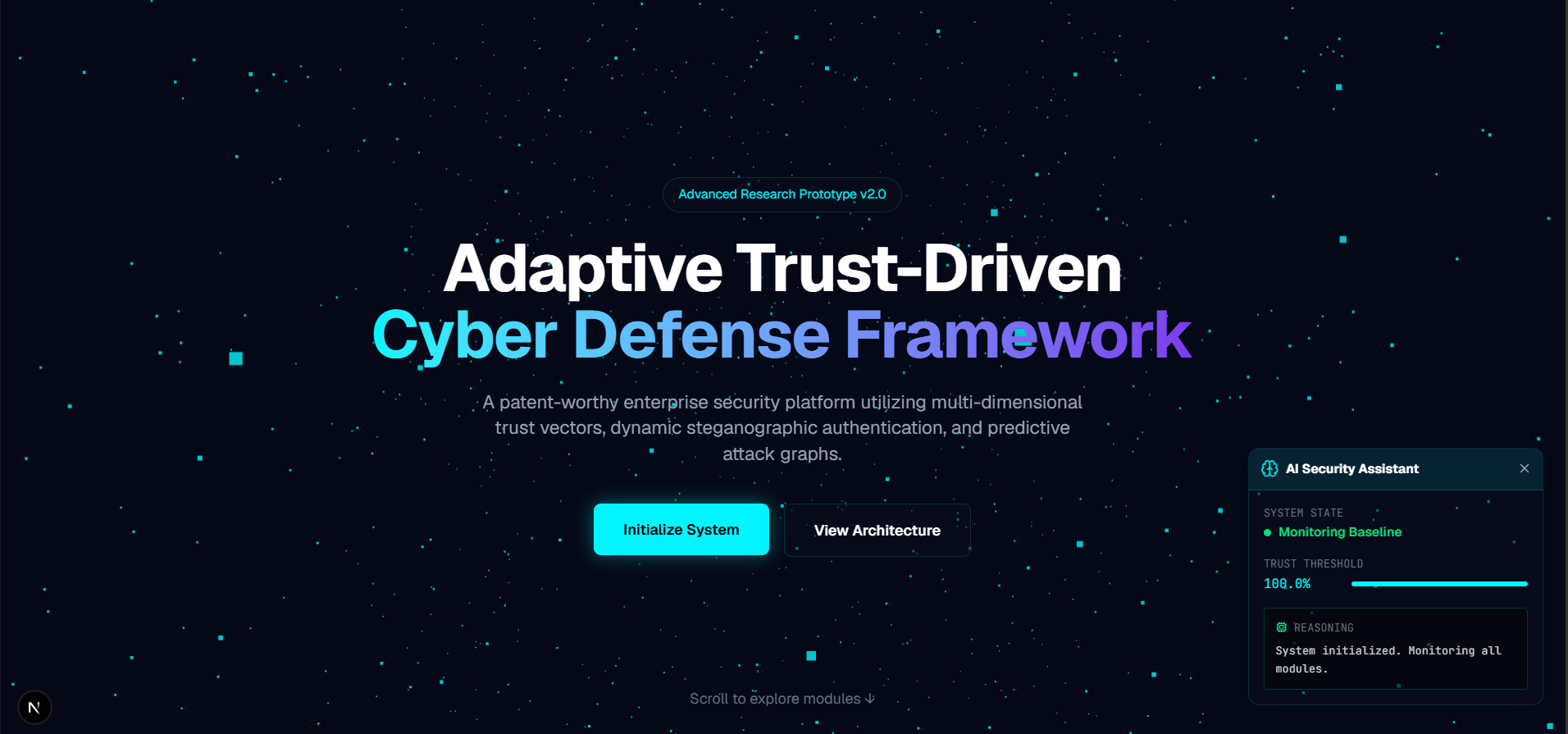
Adaptive Trust-Driven Cyber Defense — Enterprise security platform with adaptive trust and predictive threat analysis.
-
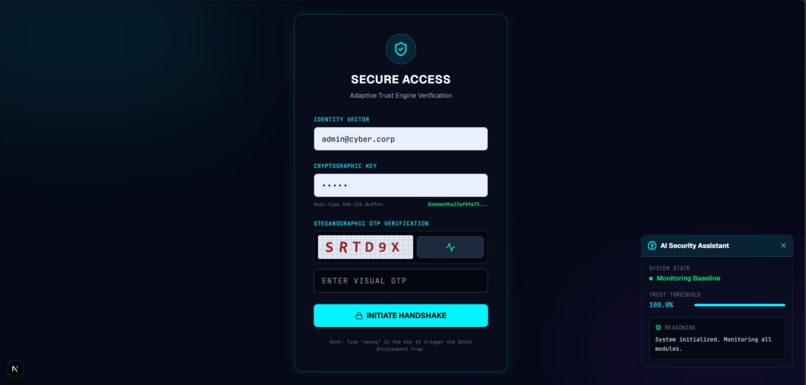
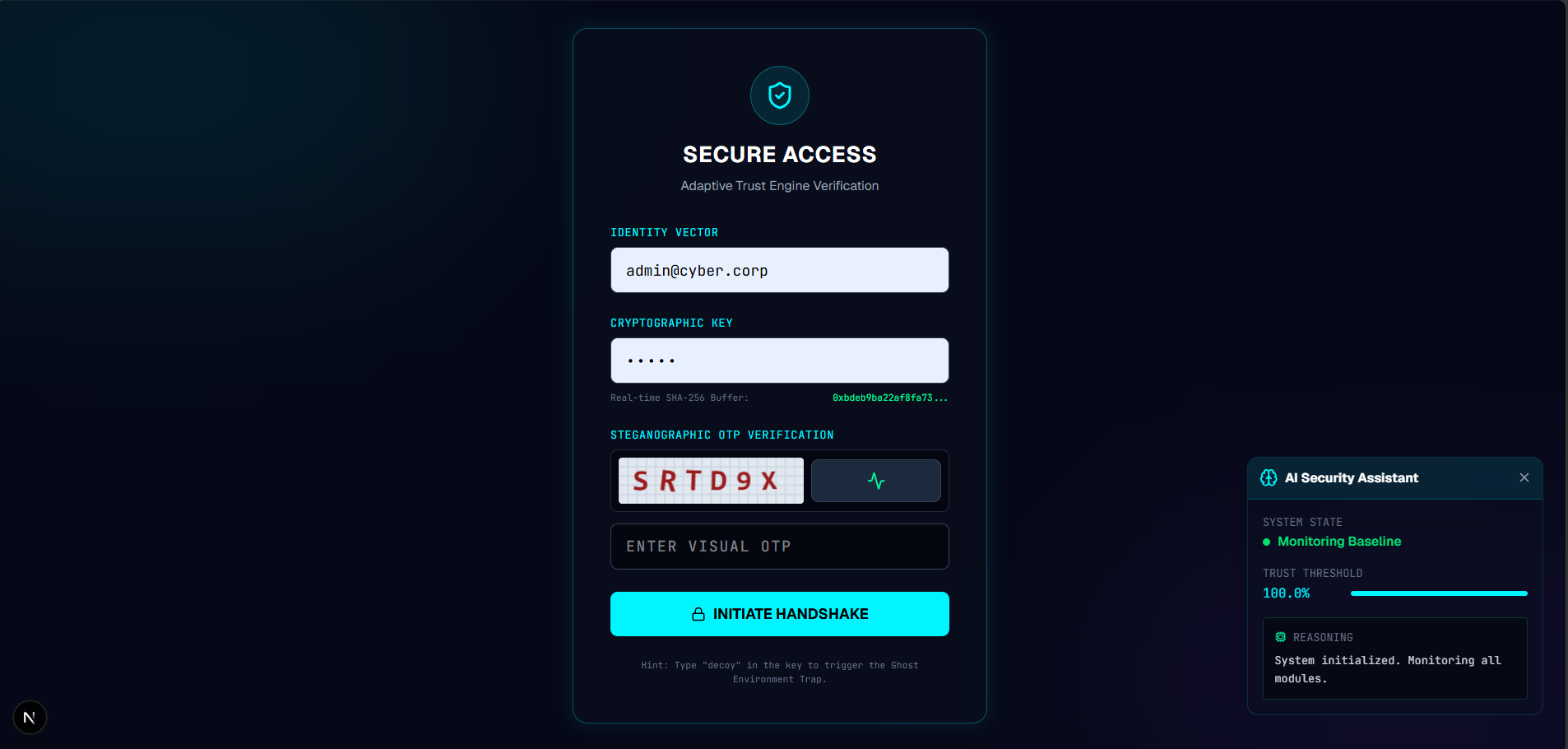
Secure Access — Multi-factor adaptive trust verification.
-
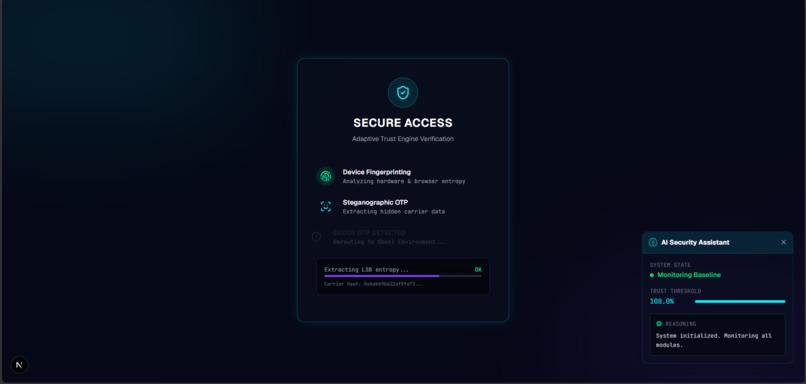
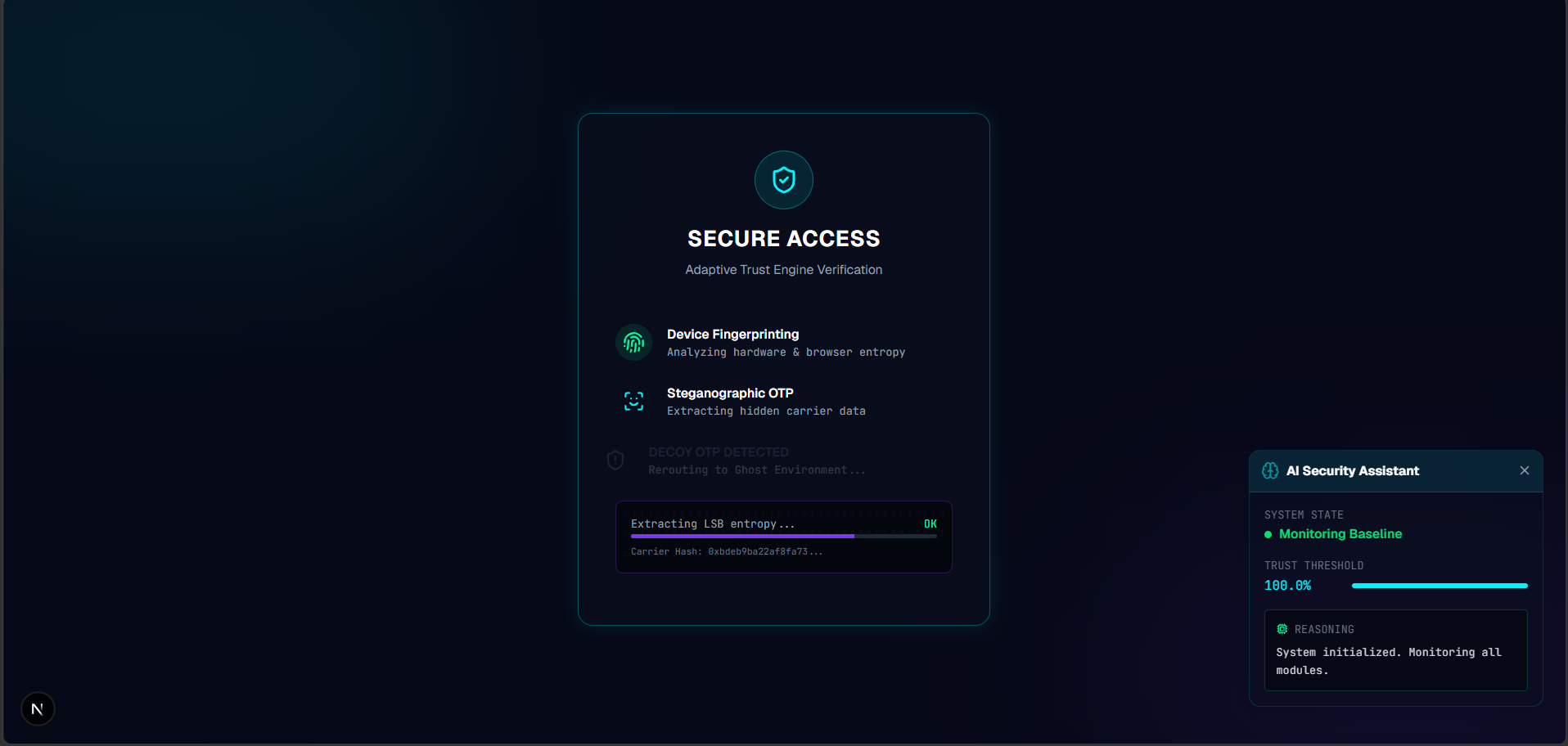
Adaptive Authentication — Device fingerprinting and steganographic OTP verification.
Inspiration
We were inspired by the limitations of traditional cybersecurity systems that depend on static rules and isolated security controls. Modern attacks can evolve quickly, so we wanted to create a system that continuously adapts its defense based on changing levels of trust and risk.
What it does
The system uses an Adaptive Trust Engine to continuously evaluate authentication, behavior, device, session, and data-related signals and generate a dynamic Trust Score.
When the Trust Score decreases due to suspicious activity, the system can automatically strengthen its defenses through session fragmentation, adaptive honeytokens, a Ghost Environment, threat intelligence updates, cryptographic event recording, and forensic evidence collection.
It also demonstrates trust-bound document watermarking, adaptive policy evaluation, attack simulation, security relationship mapping, and incident reconstruction.
The core concept is a closed-loop security process:
Security Event → Trust Change → Adaptive Defense → New Intelligence → Trust Update
How we built it
We designed the system as a multi-layer cybersecurity architecture with the Adaptive Trust Engine at its center. Different security mechanisms are connected through the Trust State so that the response can change according to the current risk level.
The system processes security events, updates the Trust Score, evaluates adaptive policies, and activates appropriate defensive mechanisms. Security events and resulting actions are recorded to support threat analysis and forensic investigation.
We also implemented simulation and visualization components to demonstrate how trust changes and how different defense layers respond to changing attack scenarios.
Challenges we ran into
One of the main challenges was coordinating multiple cybersecurity mechanisms without making them operate as completely independent modules.
Another challenge was designing a meaningful Trust State that could respond to different types of security signals while remaining understandable and demonstrable.
We also had to design the feedback loop so that security events could influence trust, trigger defenses, generate new intelligence, and contribute to subsequent trust evaluations.
Accomplishments that we're proud of
We are proud of creating a unified architecture that connects multiple cybersecurity mechanisms through a dynamic Trust State.
Instead of demonstrating isolated security features, the project shows how trust evaluation can coordinate session protection, deception, isolation, threat intelligence, cryptographic logging, and forensic analysis as part of a single adaptive defense workflow.
We are also proud of the attack simulation, security relationship mapping, document watermarking, and incident reconstruction capabilities that help demonstrate the system from detection through investigation.
What we learned
We learned how different cybersecurity techniques can be integrated into a coordinated defense architecture rather than being treated as isolated controls.
We also learned about dynamic trust evaluation, adaptive security policies, deception techniques, isolated environments, cryptographic event recording, threat intelligence, and forensic analysis.
Most importantly, we learned how a closed-loop architecture can continuously use security events and newly generated intelligence to adapt its defensive response.
What's next for Adaptive Trust Orchestration for Autonomous Cyber Defense
Our next step is to expand the system with more advanced behavioral analytics and machine-learning-based trust evaluation. We also plan to integrate additional real-time security telemetry, improve automated incident response, strengthen forensic capabilities, and support larger enterprise environments.
Built With
- chart.js
- d3.js
- express.js
- framer-motionbackend-&-database:-node.js
- frontend:-next.js
- mongodb
- mongoose
- python
- react
- react-flow
- react-three-fiber
- rest-api
- socket.io
- tailwindcss
- three.js
- typescript
- websockets

Log in or sign up for Devpost to join the conversation.