-
-
references
-
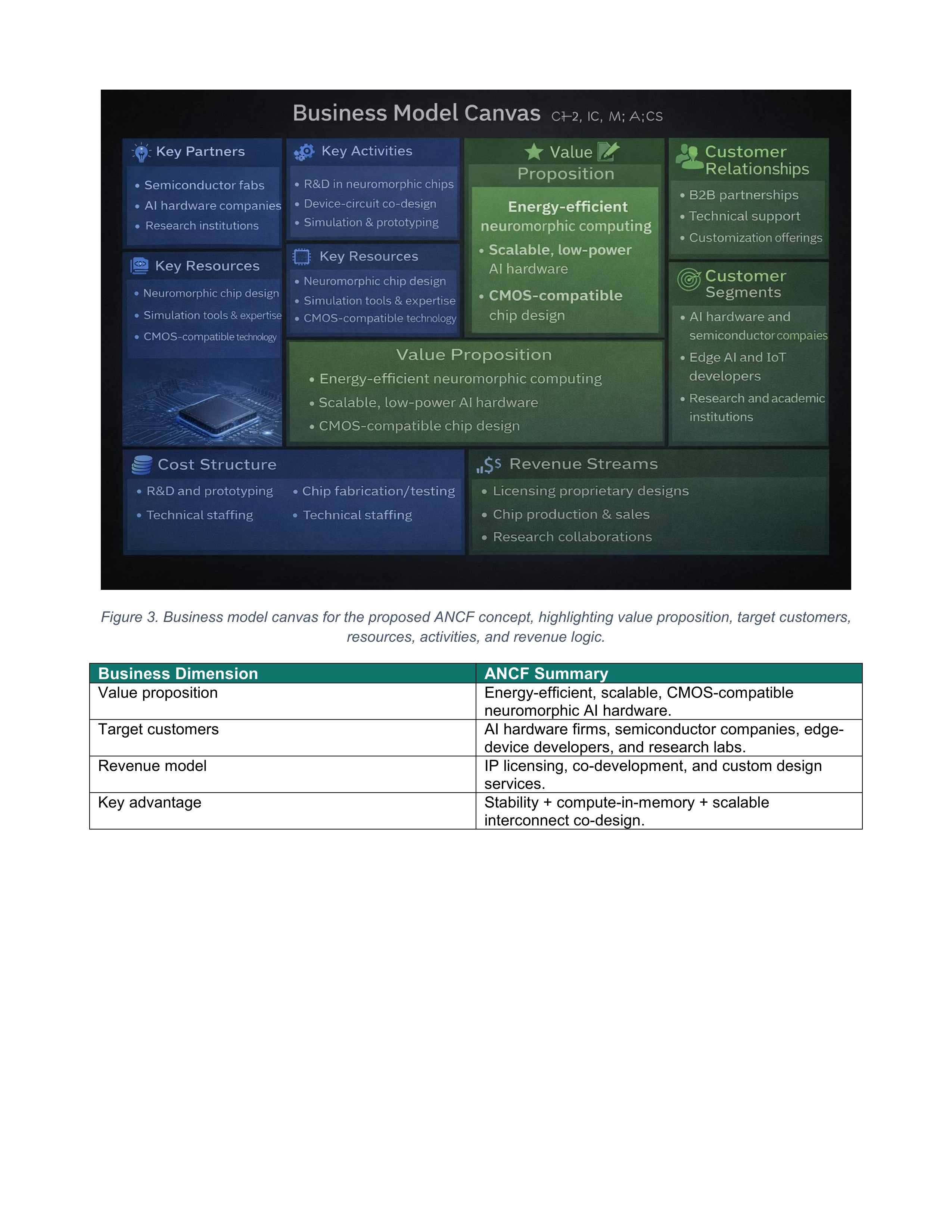
business model canvas
-
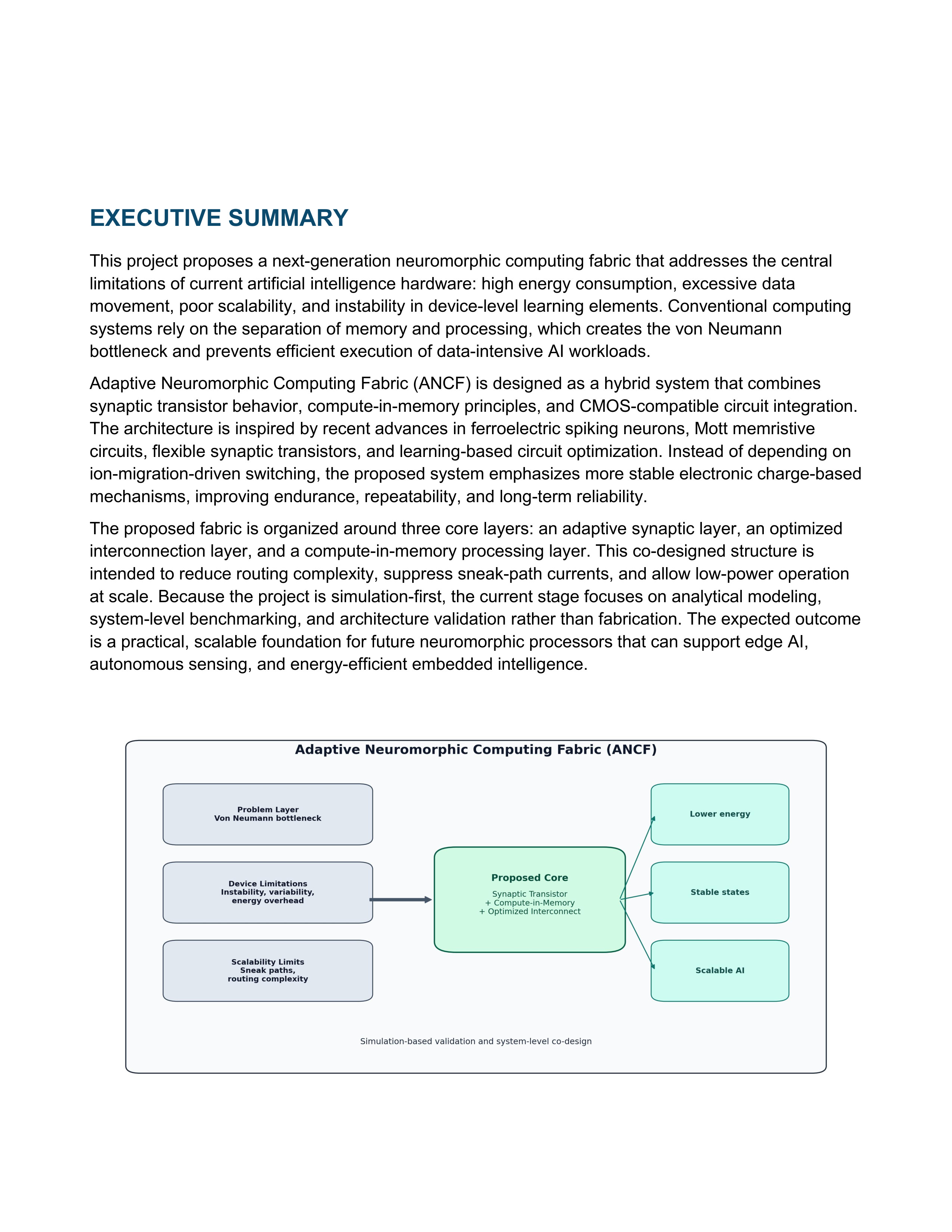
summary
-
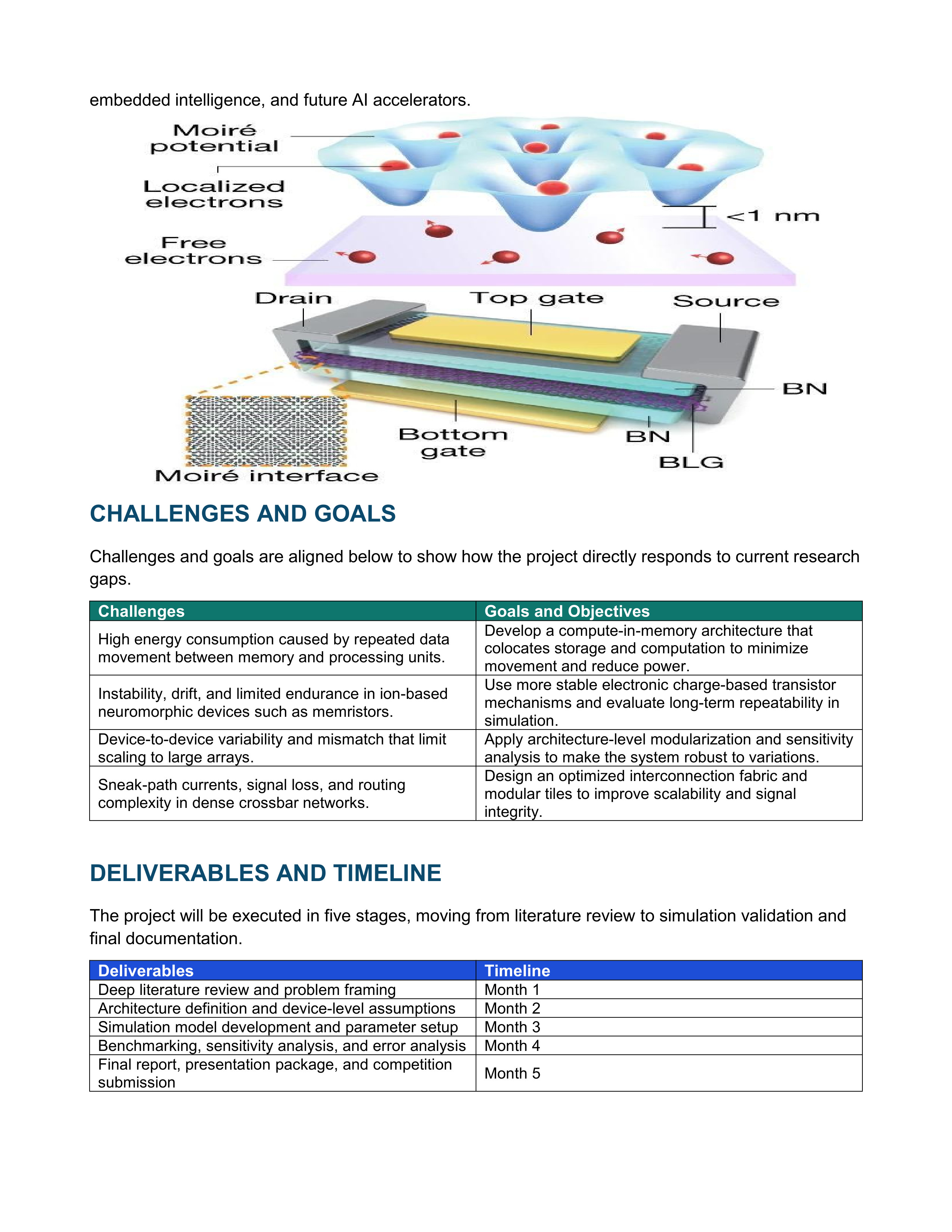
prototype construction
-
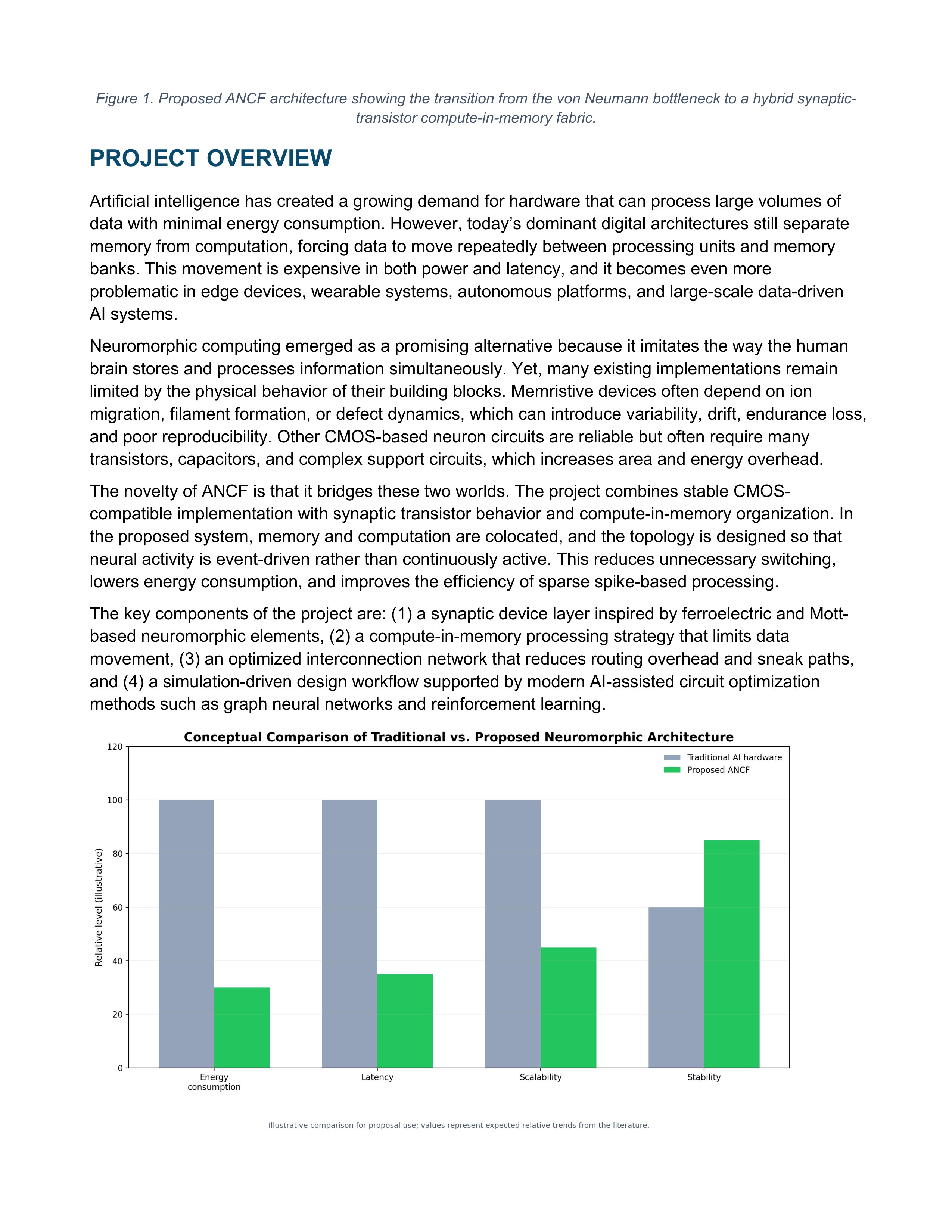
overview
-
industrial translation and product potential
-
scope of work
Inspiration
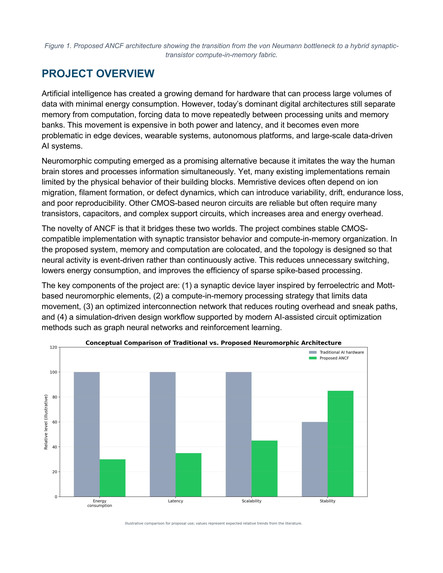
The rapid growth of artificial intelligence has exposed a fundamental limitation in current computing systems: the separation between memory and processing, known as the von Neumann bottleneck. This leads to excessive energy consumption, latency, and inefficiency—especially in edge AI systems.
While exploring recent research papers in neuromorphic computing, including synaptic transistors, Mott memristors, and ferroelectric neural devices, we realized that no single approach successfully solves all major challenges: stability, scalability, and energy efficiency.
This inspired us to design a hybrid system that combines the strengths of multiple technologies into one unified architecture.
What it does
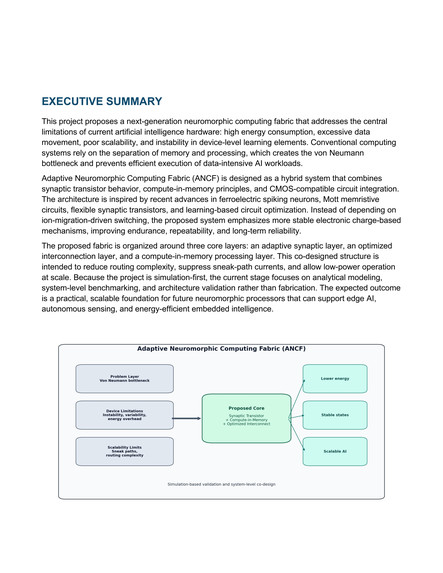
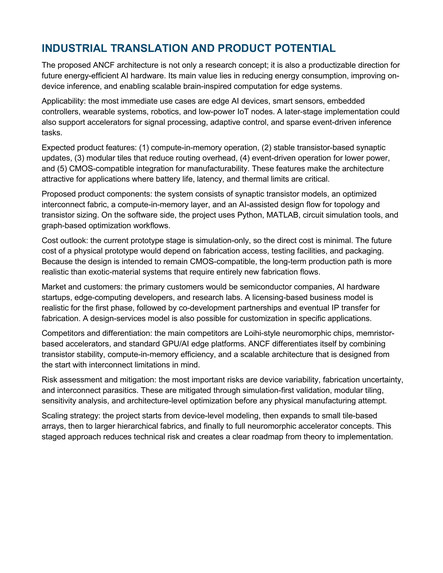
Our project introduces Adaptive Neuromorphic Computing Fabric (ANCF) — a brain-inspired computing architecture that integrates memory and processing in the same physical location.
Instead of moving data back and forth, ANCF uses:
- Synaptic transistor-based memory
- Compute-in-memory principles
- CMOS-compatible control systems
This enables:
- Ultra-low power consumption
- Faster processing
- Scalable AI hardware design
How we built it
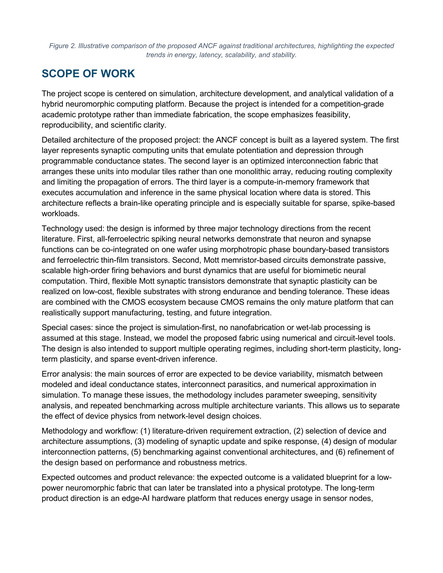
Since this is a simulation-first project, we focused on building a scientifically validated architecture rather than a physical prototype.
Our workflow included:
- Extracting requirements from state-of-the-art research papers
- Designing a layered neuromorphic architecture
- Modeling synaptic behavior (LTP/LTD) and spike-based processing
- Simulating system performance using:
- Python / MATLAB
- Circuit-level modeling tools (SPICE-inspired)
- Performing sensitivity and error analysis to test robustness
Challenges we ran into
One of the biggest challenges was combining different research directions into one coherent system.
We faced:
- Trade-offs between stability and scalability
- Modeling realistic synaptic behavior without fabrication
- Handling variability and interconnection complexity
To overcome this, we used:
- Modular architecture design
- Simulation-based validation
- Parameter sweeping and benchmarking
What we learned
Through this project, we gained deep insights into:
- Neuromorphic computing principles
- Synaptic plasticity and brain-inspired architectures
- Hardware limitations in AI systems
- The importance of co-design between device physics and system architecture
We also learned how to translate complex research into a practical engineering solution.
Future work
In future stages, we aim to:
- Build a physical prototype of the architecture
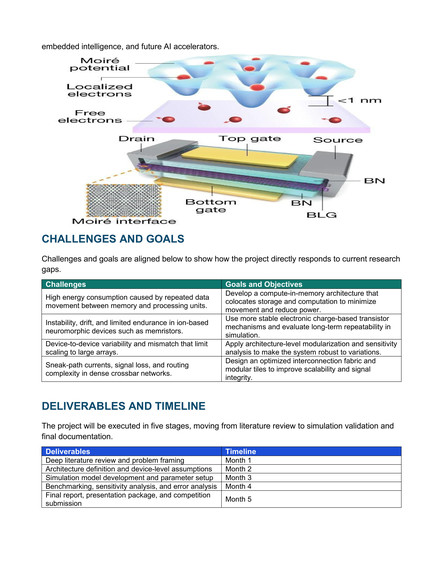
- Integrate real synaptic devices (e.g., CMOS or 2D materials)
- Optimize performance for edge AI applications
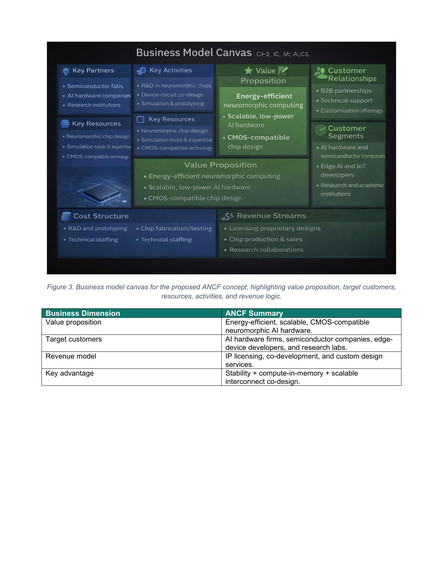
- Explore commercialization opportunities
Why this matters
Our goal is to move beyond traditional computing and toward systems that think more like the human brain:
Efficient, adaptive, and scalable.
ANCF represents a step toward the future of energy-efficient artificial intelligence hardware.

Log in or sign up for Devpost to join the conversation.