-
-
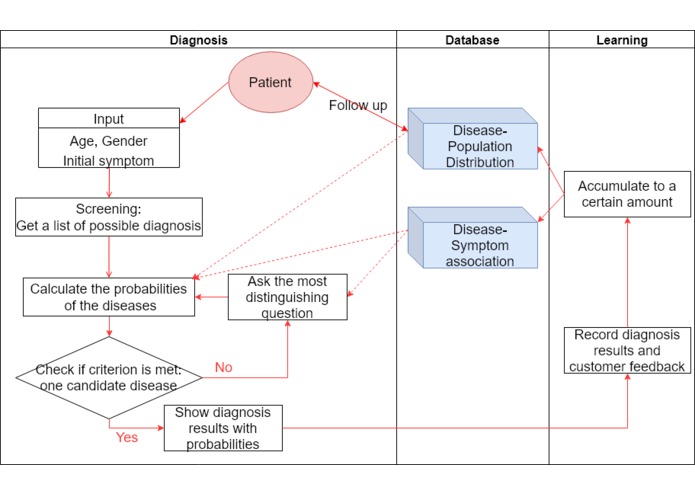
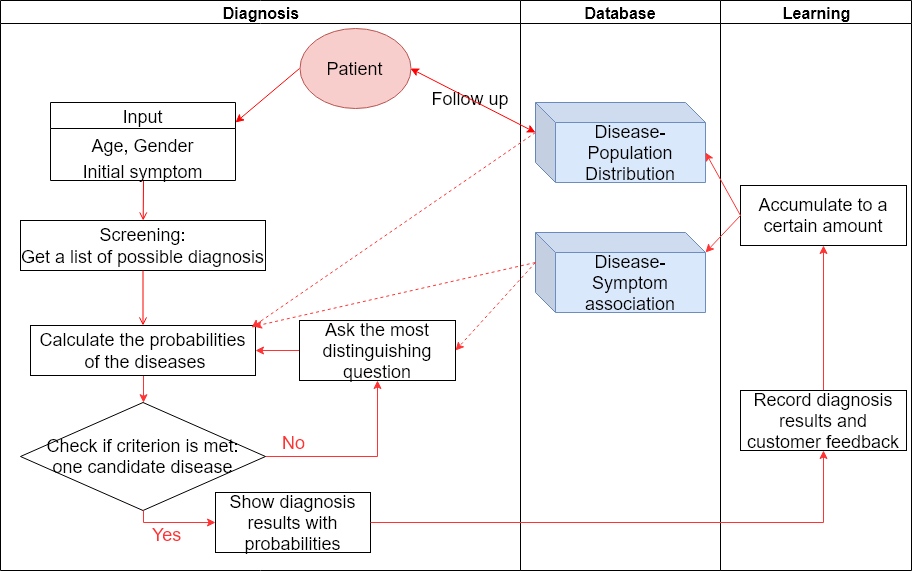
The diagnosis process
-
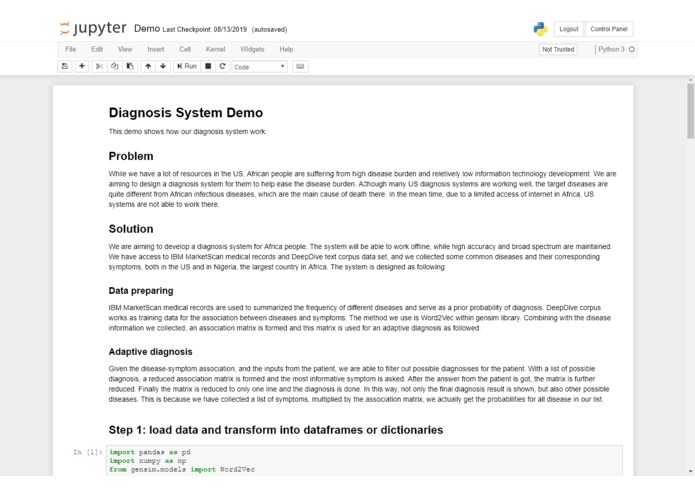
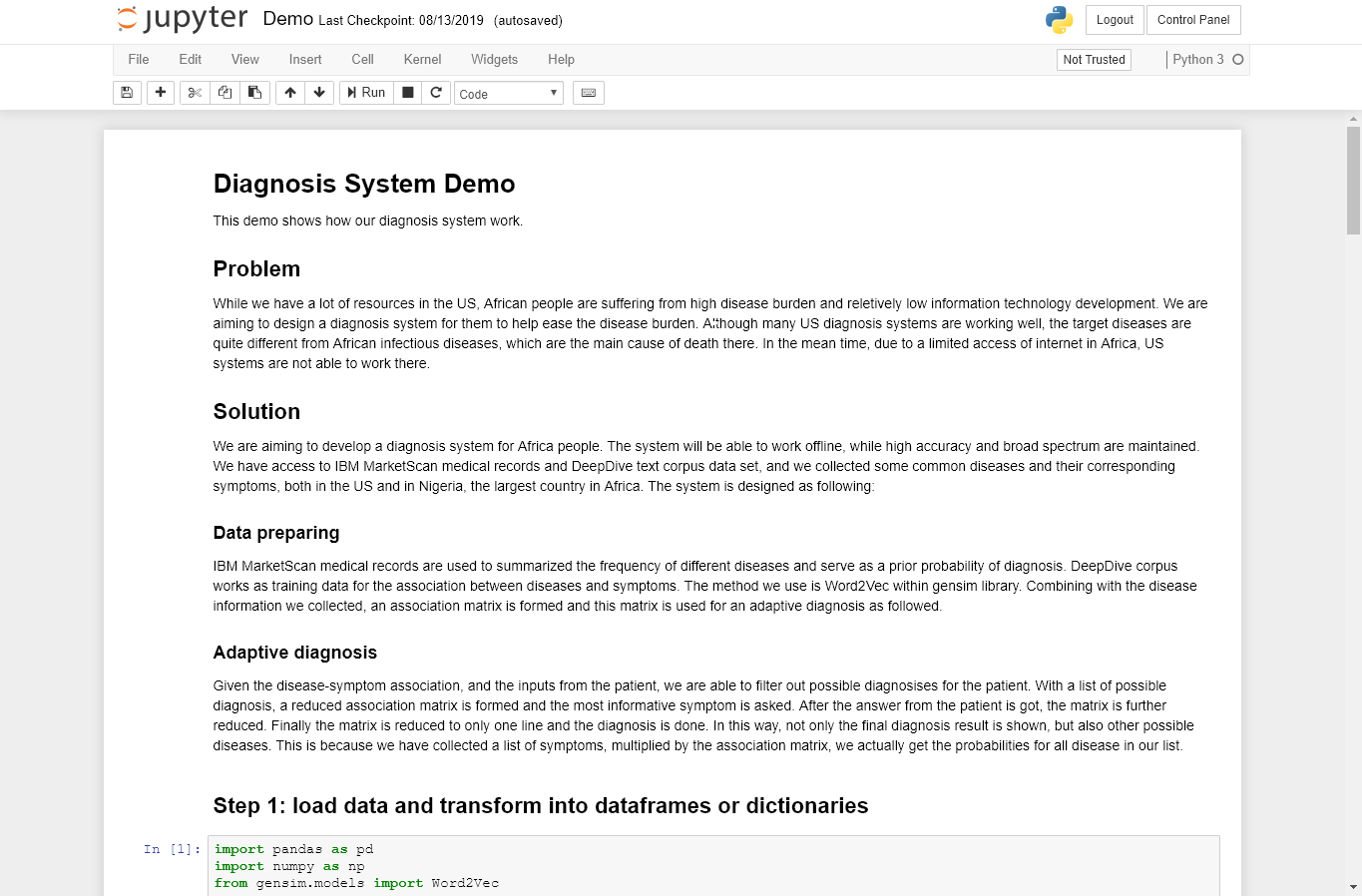
The jupyternote book for the diagnosis process with explanation
Inspiration
Africa is suffering from severe disease burden and lack of doctors. A well designed diagnosis app could help to increase the efficiency and accuracy of the doctor-seeing procedure. While most of the areas in Africa does not have internet coverage, we are developing a text message based mobile app to help with the diagnosis process.
What it does
Our diagnosis system are based on several large data sets including IBM MarketScan health records, DeepDive medical literature text corpus, UMLS medical codes, and disease-symptom association from New York Presbyterian Hospital. The app is able to make diagnosis based on the basic information and symptoms of the patients. The symptoms are gathered through an adaptive diagnosis by asking questions based on previous answers to maximize the information gain. In this way, the diagnosis process is very fast while the accuracy is also very high. In the end, the app automatically lead you to a bing search page for the diagnosis result.
How we built it
First from the MarketScan records, we aggregated the information to get the disease distribution serving as a prior probability of diagnosis. Then the DeepDive corpus is processed with Word2Vec and the similarity of disease terms and symptoms terms are gathered. Based on the disease symptom association, an adaptive diagnosis algorithm is applied and after asking 4 questions in average, a conclusion is made.
Challenges we ran into
The first challenge we met was the data gathering. And it is solved by buying MarketScan data from IBM. Another challenge is to make the system into a usable app, and we found a computer science group to help with the mobile app development.
Accomplishments that we're proud of
Our system is now usable as a Android mobile app, without the need of internet. This makes it able to work well in Africa, Nigeria. And now it can make diagnosis from the most common 150 diseases. It could help to save many lives!
What we learned
We learned how to do natural language processing and mobile app development, as well as a way to implement Azure service into our system to add features.
What's next for Adaptive diagnosis system for under development region
The next step is to deploy the app. We have connected with University of Ibadan in Nigeria for the deployment and testing. And we will improve the system based on feedbacks.


Log in or sign up for Devpost to join the conversation.