
🚀 AI-Powered Honeypot for Advanced Cyber Threats
🔍 Inspiration With the ever-growing landscape of cyber threats, organizations are constantly under attack from sophisticated hackers. Traditional security measures focus on defending against these threats, but what if we could deceive attackers, learn from them, and strengthen our defenses dynamically?
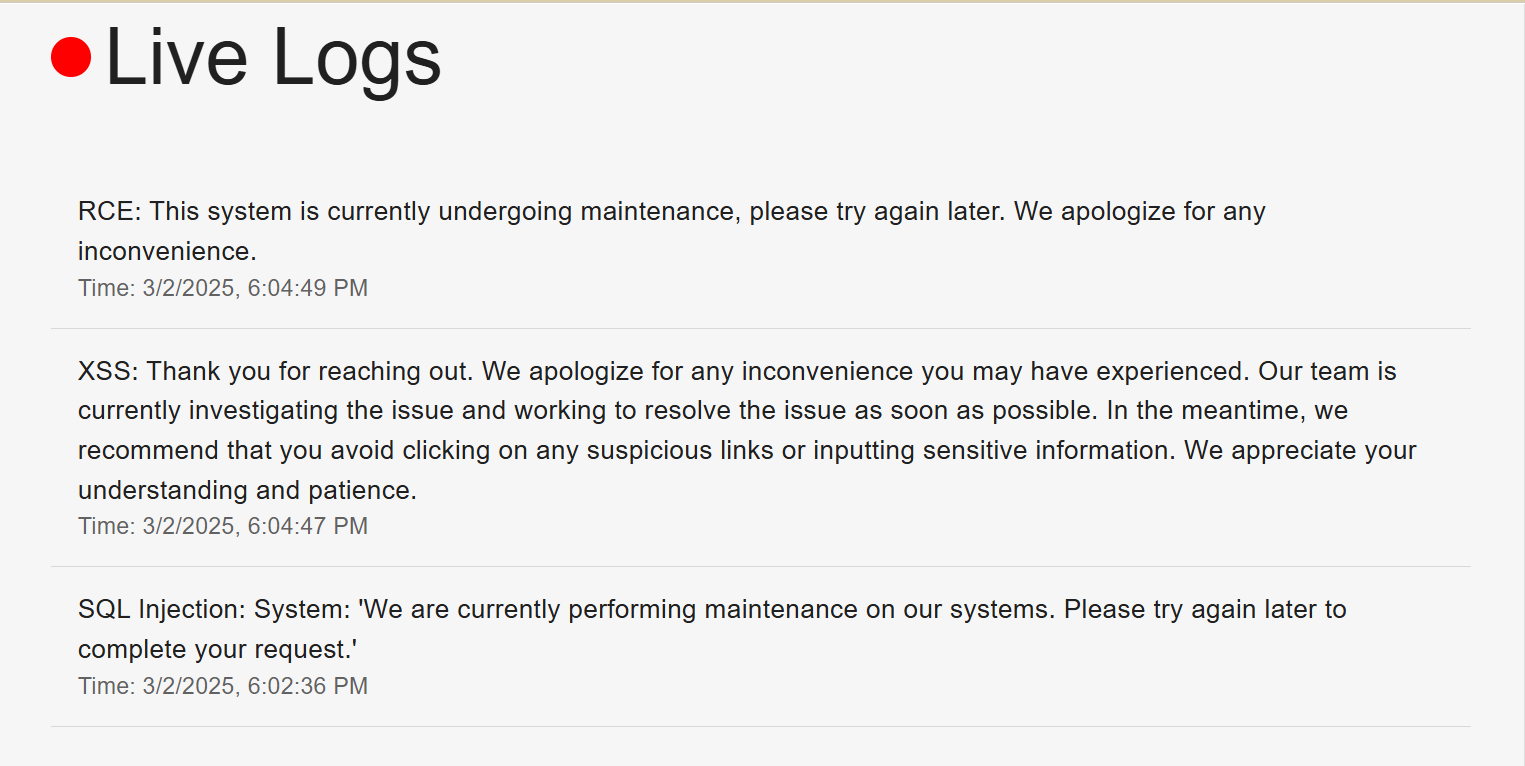
This idea led us to build an AI-powered honeypot—a cyber attack simulator and defender that doesn't just log threats but actively engages attackers, misleads them, and gathers intelligence on their behavior.
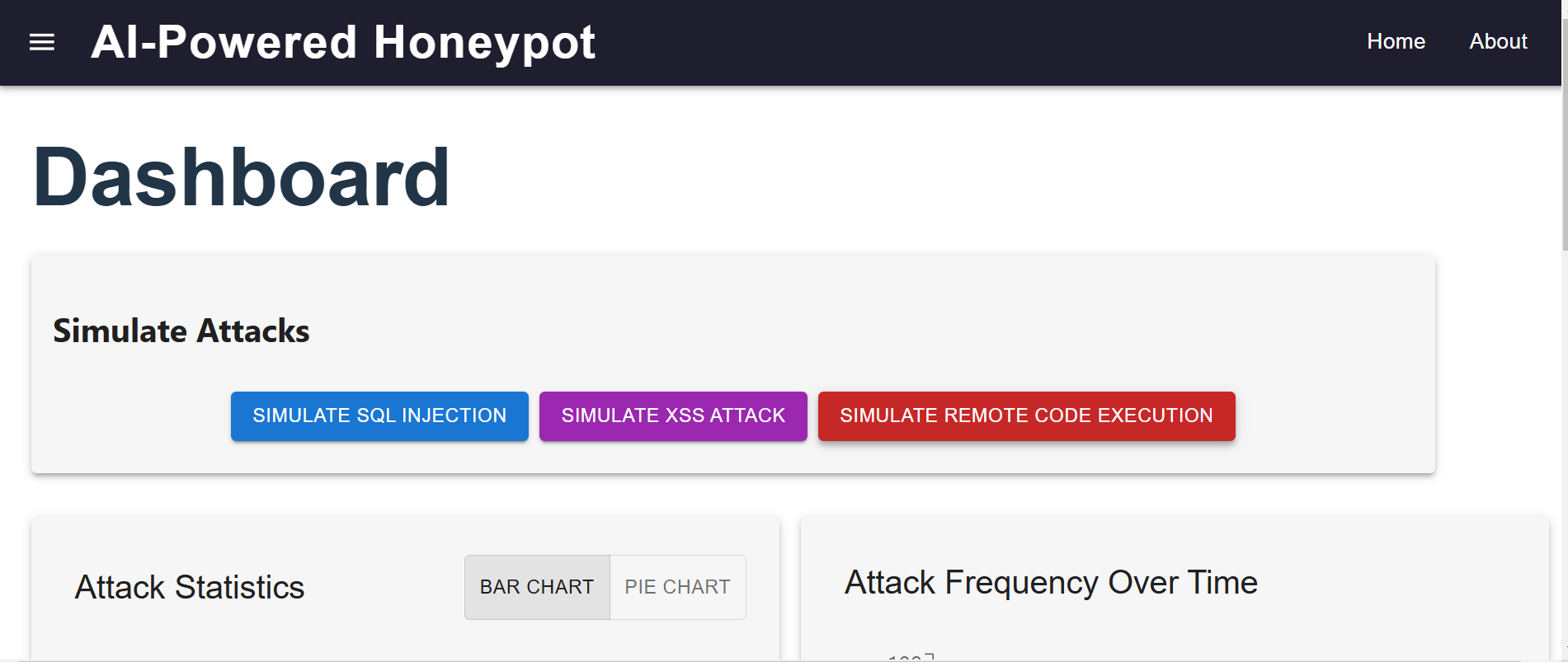
🛠 How We Built It 🔹 Tech Stack Backend: FastAPI (Python) for handling API requests and attack logging Database: SQLite with SQLAlchemy ORM for structured attack data storage AI Engine: Hugging Face Falcon-7B for generating deceptive responses Frontend: React.js with Material-UI for an interactive dashboard WebSockets: Real-time attack monitoring and response updates 🔹 Key Features ✅ AI-Driven Attack Pattern Recognition – Identifies and logs recurring cyber attack patterns ✅ Honeypot Counter-Attack Responses – Generates misleading responses using AI to deceive hackers ✅ Interactive Web Dashboard – Visualizes attack trends, risk analysis, and real-time logs ✅ Automated Threat Intelligence Reports – Generates weekly insights into attack vectors
🎓 What We Learned Real-world Cybersecurity Challenges 🛡️ – Understanding how cyber attackers operate and the tactics they use. FastAPI for Scalable Backends ⚡ – Building an efficient, high-performance API with asynchronous capabilities. SQLAlchemy ORM 🗄️ – Managing relational data efficiently while handling large-scale attack logs. AI-Powered Deception 🎭 – Leveraging NLP models to craft believable counter-responses to attackers. WebSockets for Real-Time Security Monitoring 📡 – Providing instant updates on ongoing cyber threats. ⚠️ Challenges We Faced 1️⃣ CORS & API Access Issues Initially, our frontend requests were blocked due to incorrect CORS settings. Solution: Explicitly allowed frontend origins (localhost:5173) in FastAPI. 2️⃣ Database Connection Errors Issue: API was returning 500 Internal Server Errors due to missing attack_logs table. Solution: Implemented an automatic database initializer and ensured tables exist before queries. 3️⃣ AI Model Response Formatting The Hugging Face Falcon-7B model returned inconsistent outputs. Solution: Used prompt engineering and post-processing to extract relevant deception responses. 4️⃣ WebSocket Stability WebSocket connections would drop unexpectedly, breaking the real-time logging. Solution: Implemented automatic reconnect logic in React frontend. 🌟 The Future of This Project 🚀 Next Steps & Improvements:
Expand AI deception capabilities – Using multi-modal models for voice & text deception. Threat Intelligence Integration – Connecting to threat feeds for real-time attack analysis. Deploying on a Cloud Platform – Hosting the honeypot on AWS or Azure for real-world testing. AI-Powered Attack Prediction – Using machine learning to predict attack types before they happen. 🎯 Final Thoughts Building this AI-powered honeypot was a challenging but rewarding experience. We not only deepened our knowledge in cybersecurity and AI deception but also developed a practical solution that could help organizations stay ahead of cybercriminals.
🔐 Cybersecurity isn't just about defense; it's about intelligence. With AI-powered deception, we can turn the tables on attackers and use their tactics against them.


Log in or sign up for Devpost to join the conversation.