-
-
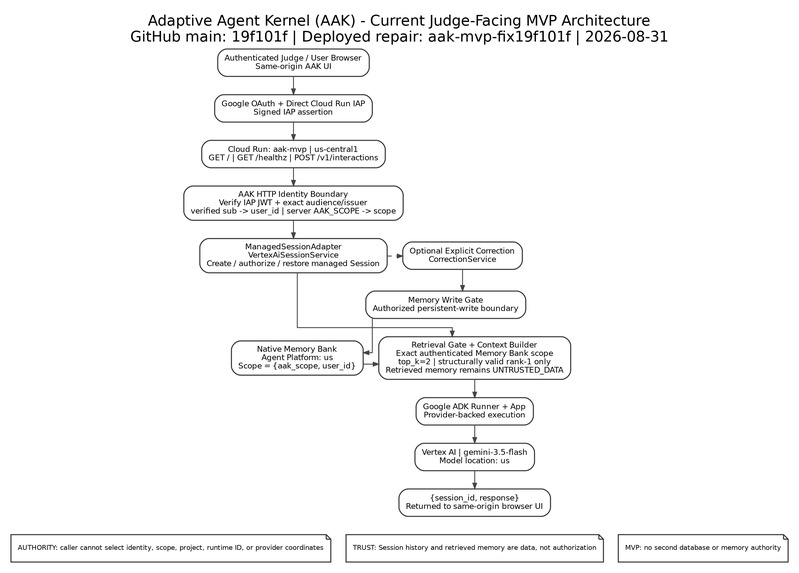
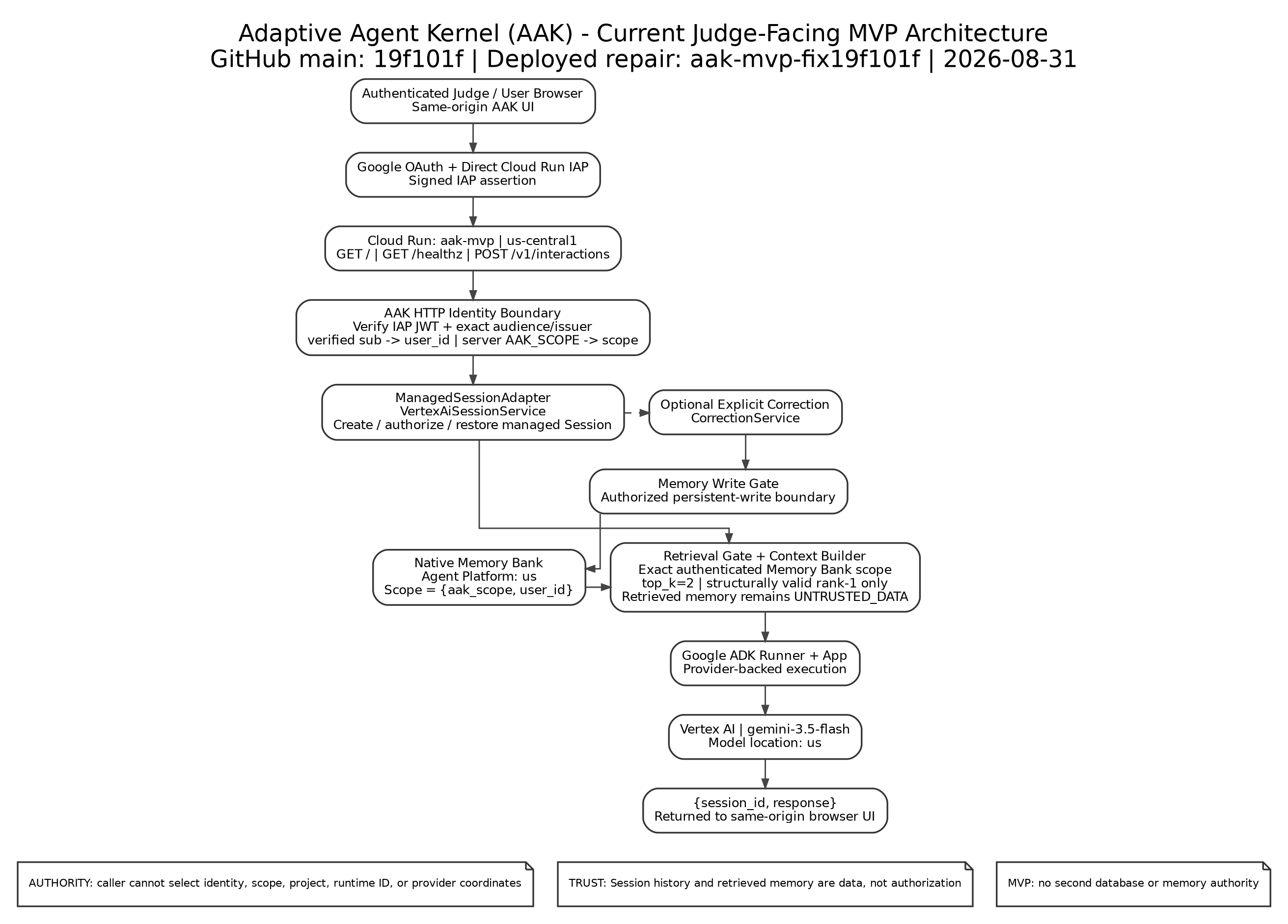
Architecture Map
-
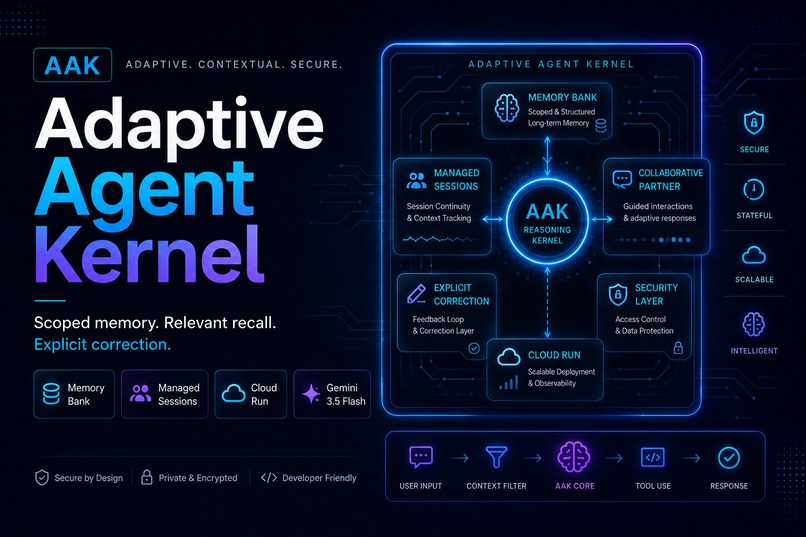
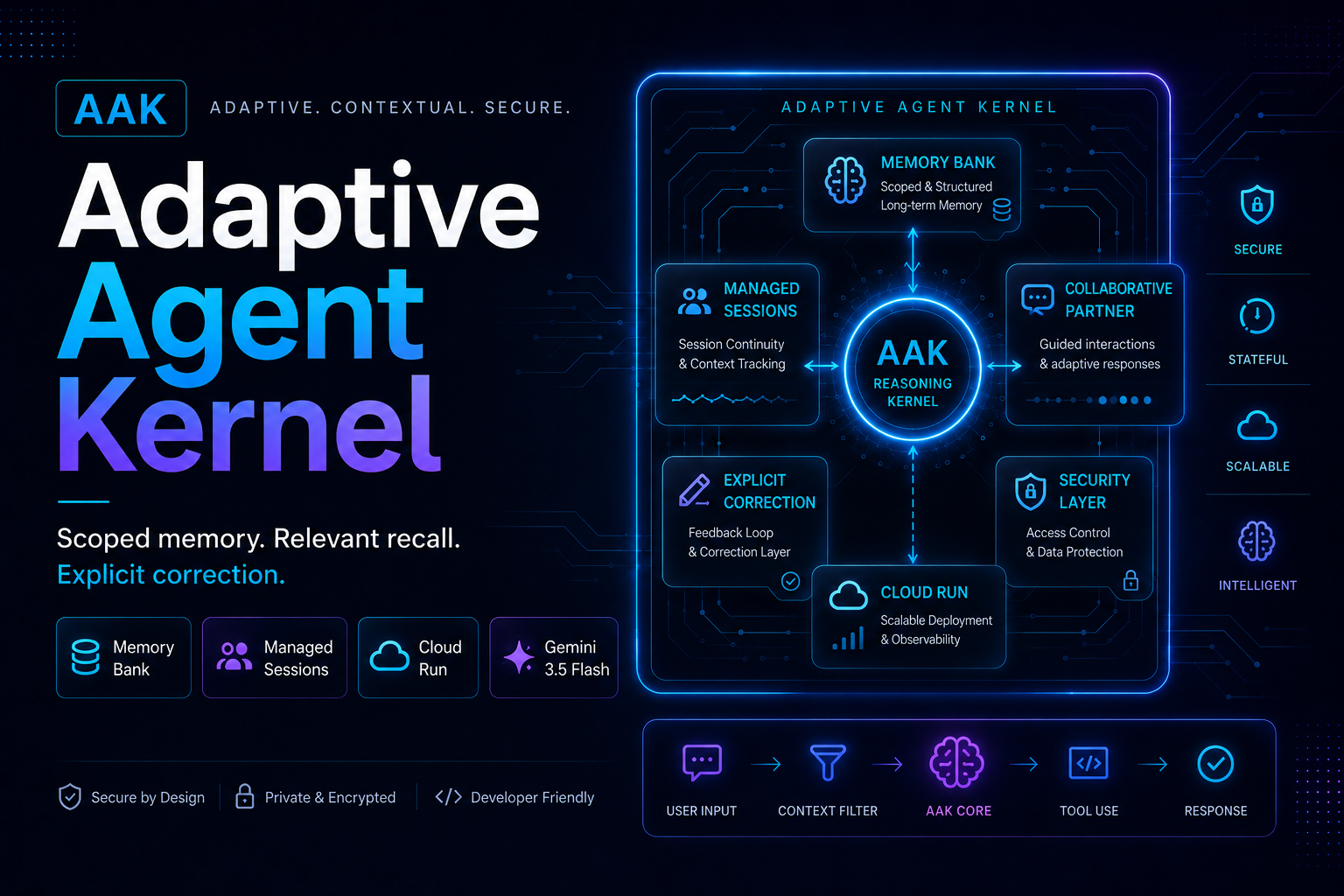
OG thumbnail from ChatGippity
-
Enhanced thumbnail from ChatGippity
-
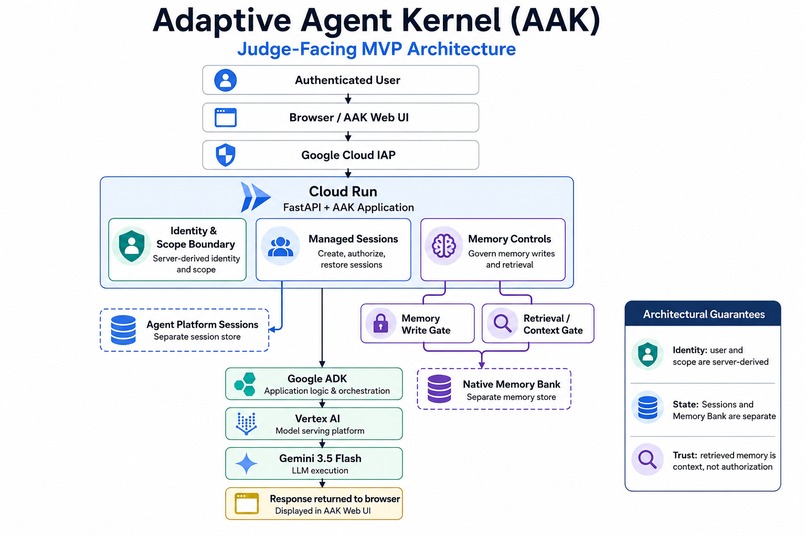
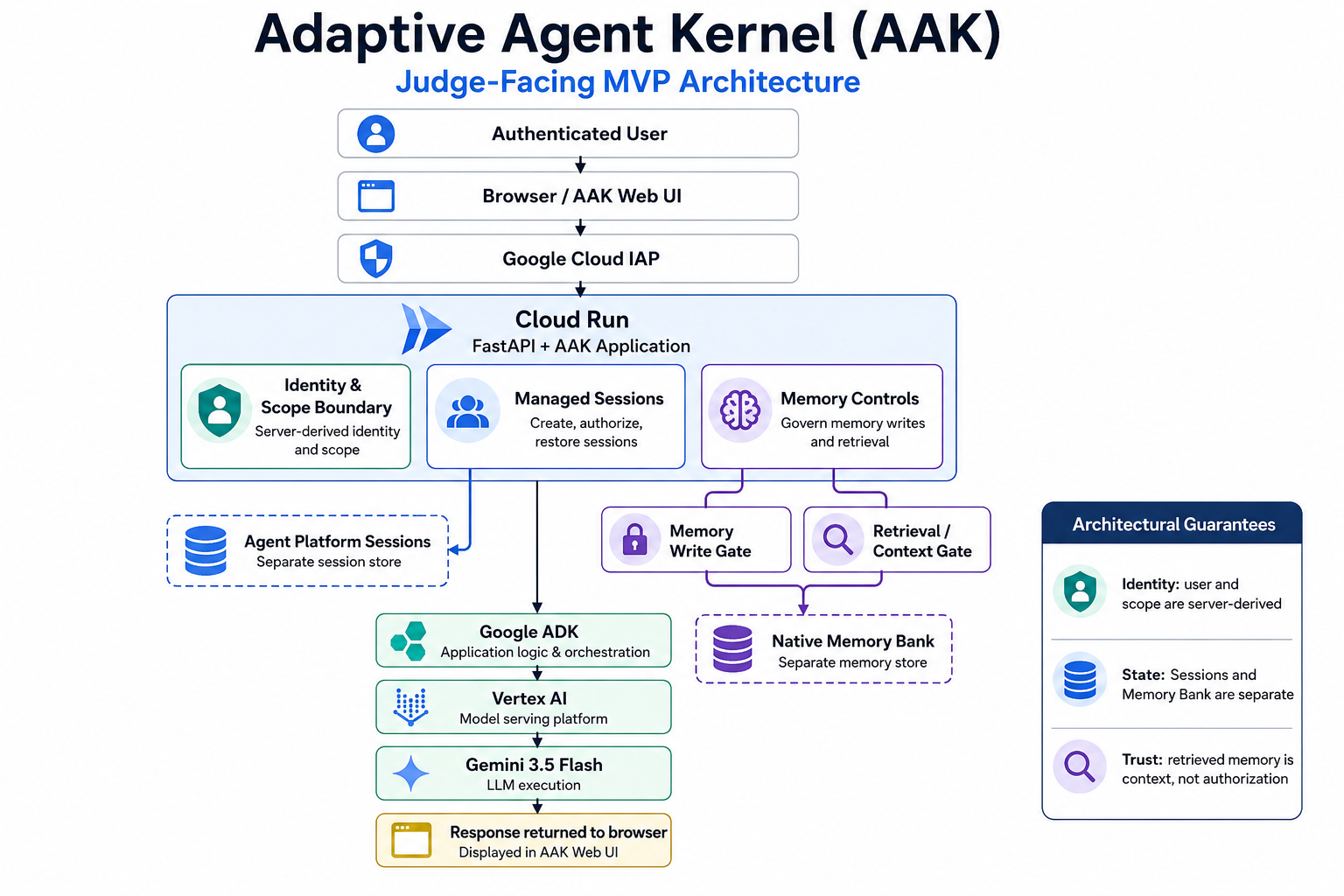
up to date Architecture map rendered by ChatGippity
Inspiration
I built Adaptive Agent Kernel because I wanted an AI collaborator that could remember useful context without losing user control. My focus was a practical question: can one agent become more helpful over time while keeping memory scoped, secure, relevant, and correctable?
What it does
Adaptive Agent Kernel (AAK) is a single-agent adaptive-memory system for the Collaborative Partner track. It demonstrates Cold Start, Recall, Relevance, Adaptation, and explicit Correction across managed sessions.
My goal was to make continuity useful without allowing stored memory to become system authority.
How we built it
I built AAK in Python using Google ADK and Gemini 3.5 Flash through Vertex AI.
The deployed system uses Google Cloud Run, Identity-Aware Proxy, managed Agent Platform Sessions, and native Memory Bank. Memory writes pass through a controlled Memory Write Gate, while retrieved memory is filtered before entering model context.
Challenges we ran into
The hardest challenge was separating useful memory from trusted authority.
As I developed AAK, I found that persistent memory introduces important questions about identity, scope, relevance, correction, and security. Moving from local tests to live Google Cloud services also required validating each boundary independently rather than assuming successful local behavior would translate directly to deployment.
Oh, and the fact I started two weeks ago was a bit of a challenge. I :heart: deadlines!
Accomplishments that we're proud of
I completed a deployed Google Cloud MVP that demonstrates security-first design with authenticated browser access, Gemini execution through Google ADK, managed session continuity, persistent Memory Bank retrieval, explicit corrections, and adaptive behavior.
The project also includes reproducible testing, security-focused trust boundaries, and documented architecture rather than relying only on a successful demo.
What we learned
I learned that useful agent memory requires more than persistence. It needs clear rules for what can be stored, who owns it, when it should be retrieved, and how the user can correct it.
Keeping AAK focused on one adaptive agent also reinforced the value of building and validating a narrow system before expanding its scope.
What's next for Adaptive Agent Kernel
I plan to improve memory and context sharing, add more integrations, and expand support for additional agent frameworks.
Built With
- add-more-integrations
- additional
- agent
- and
- expand
- for
- i-plan-to-improve-memory-and-context-sharing
- support

Log in or sign up for Devpost to join the conversation.