Inspiration
Quality education is often gated by high tutoring costs, leaving millions of K-12 students without personalized mentorship. Inspired by UN Sustainable Development Goal 4 (Quality Education), AdaptIQ was created to bridge this gap. As a 14-year-old student, I wanted to build a intelligent study companion that delivers individualized tutoring, adaptive test generation, and real-time doubt resolution to anyone with a basic smartphone.
What it does
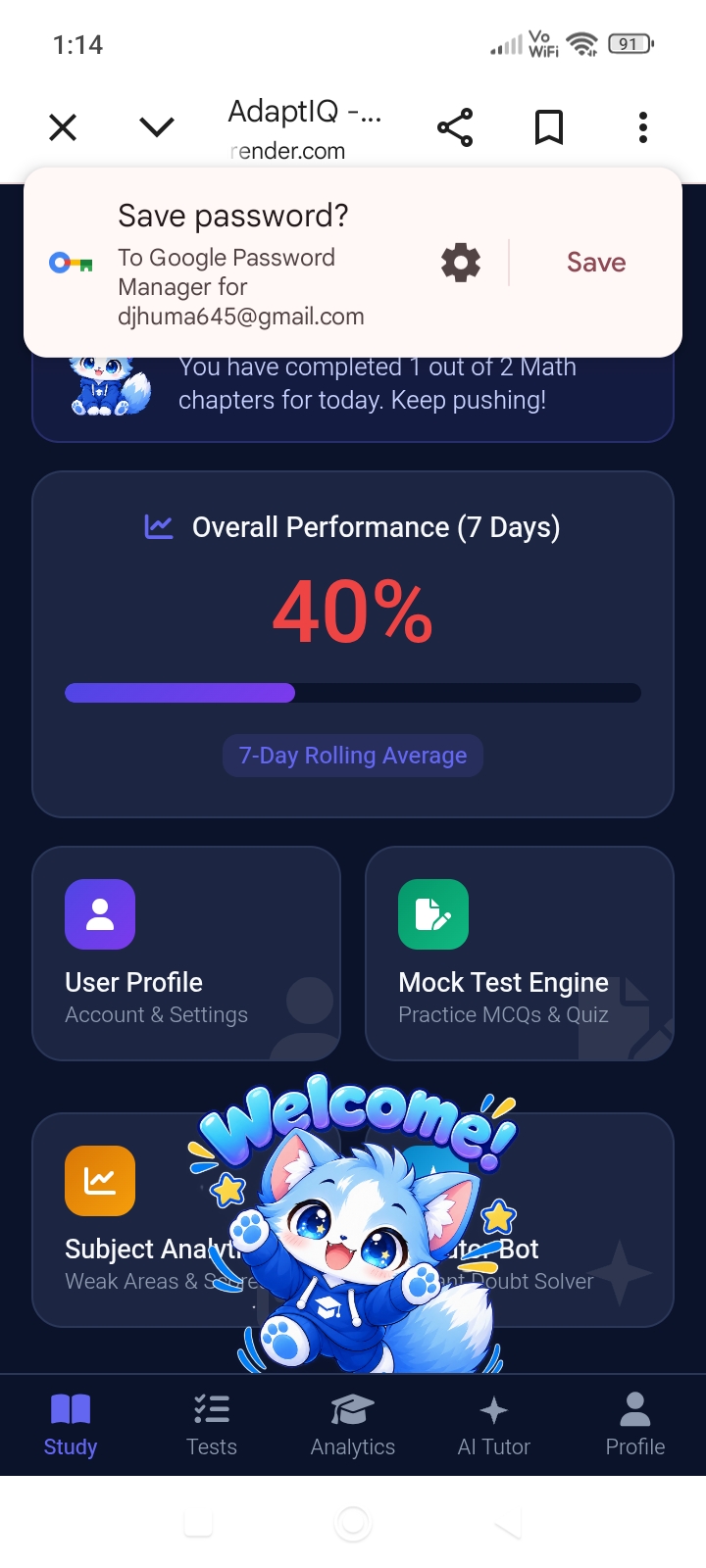
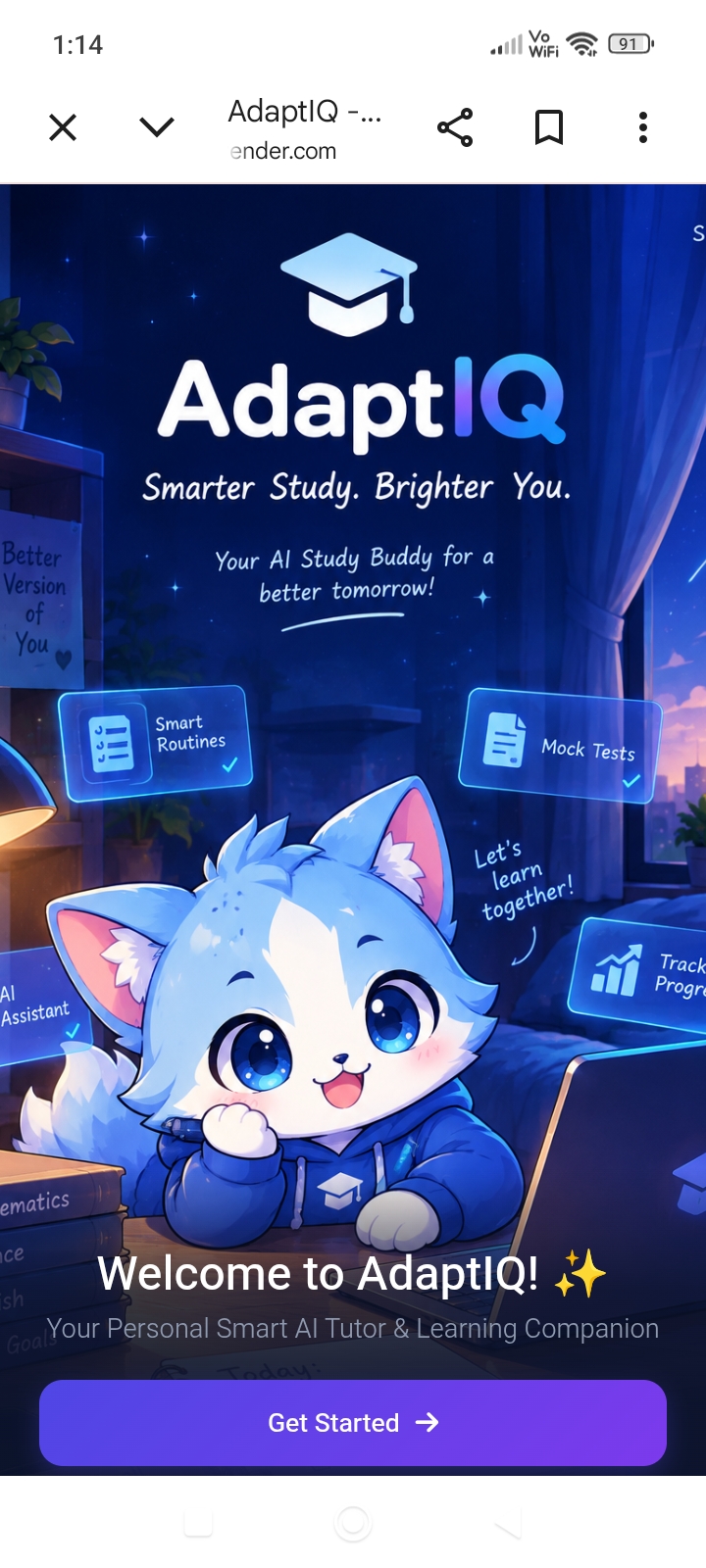
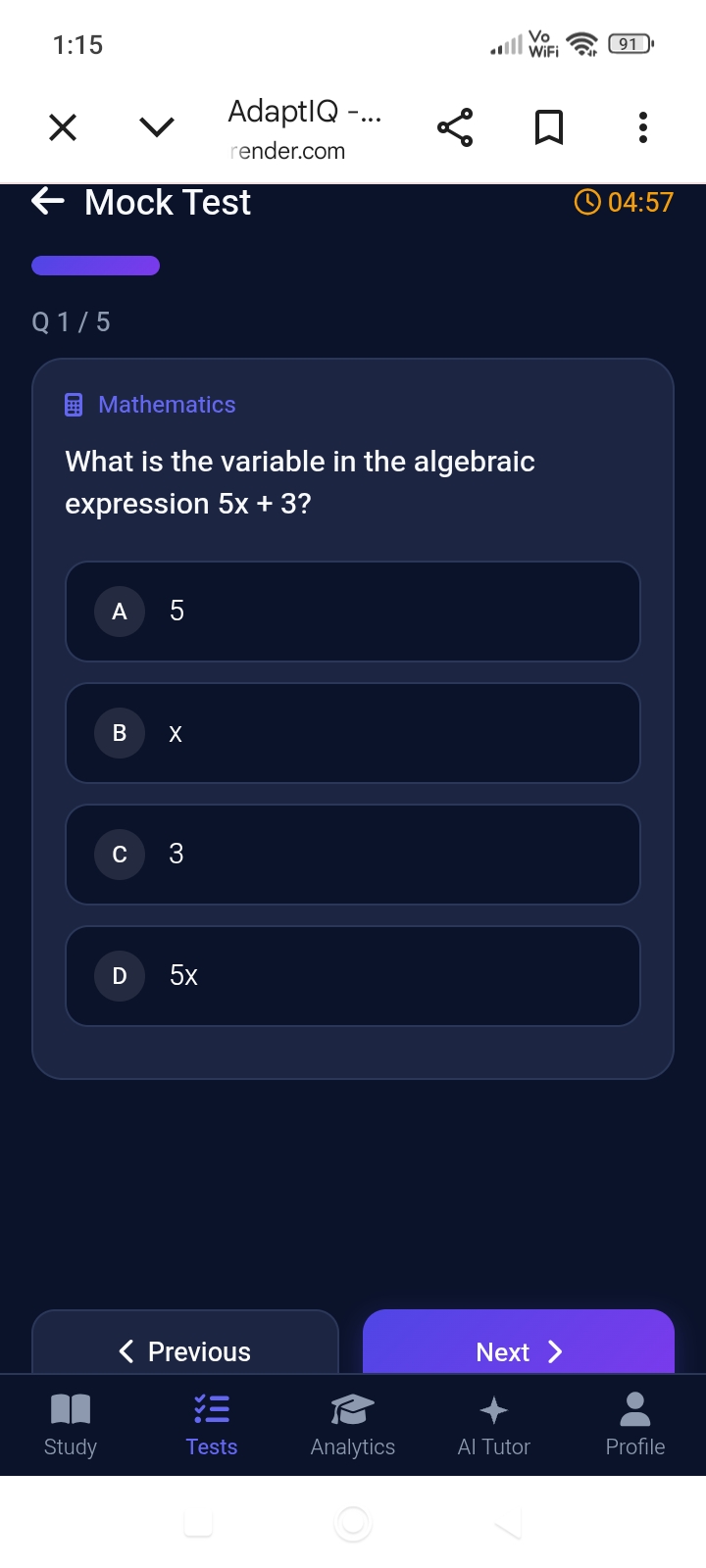
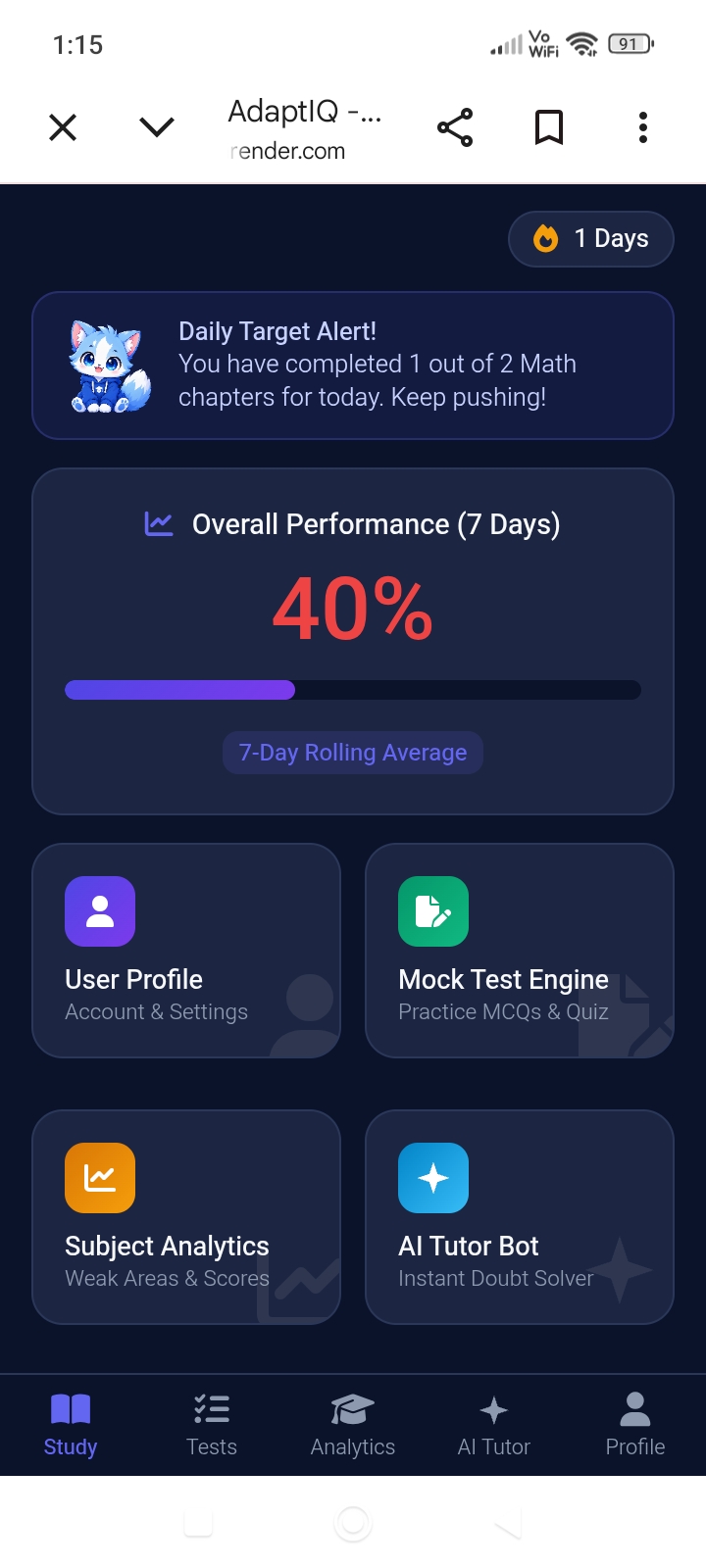
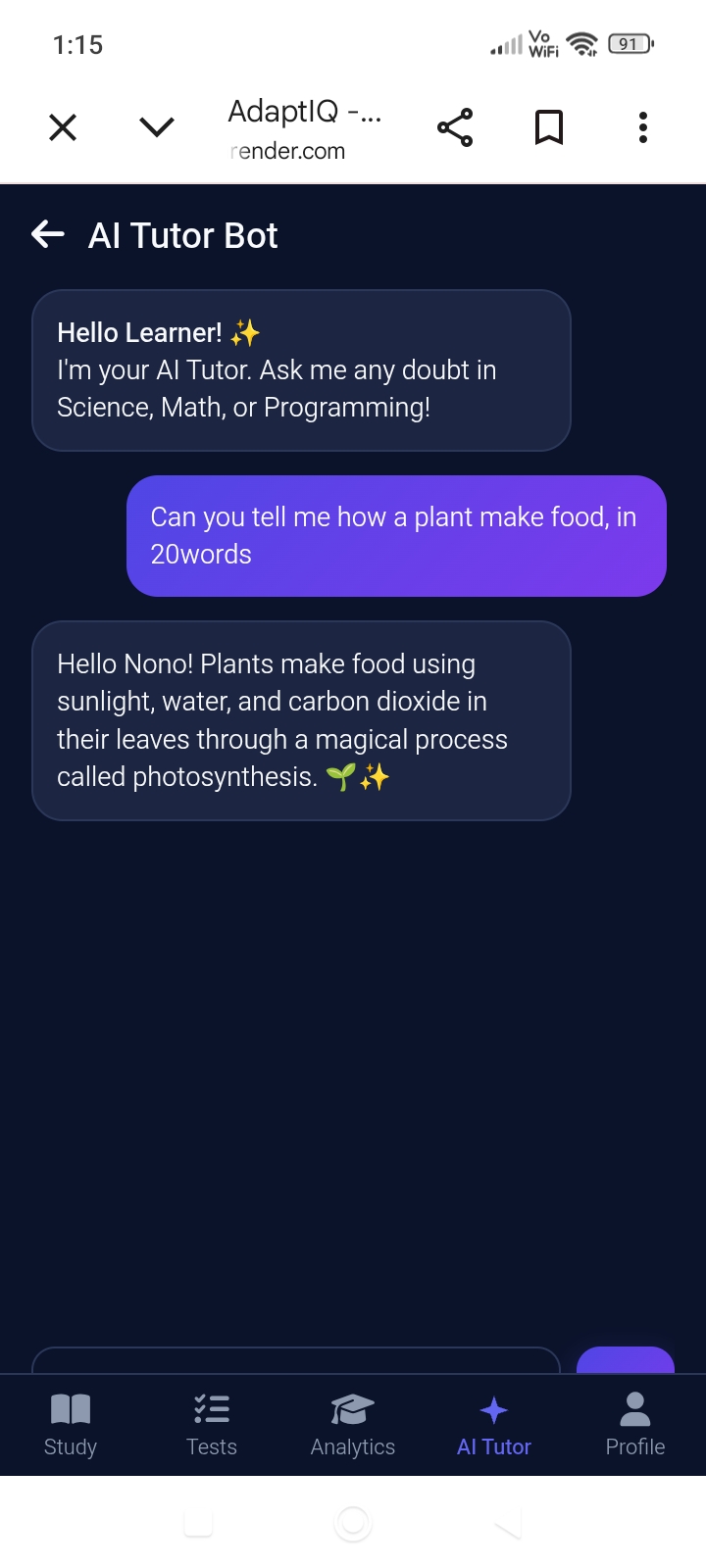
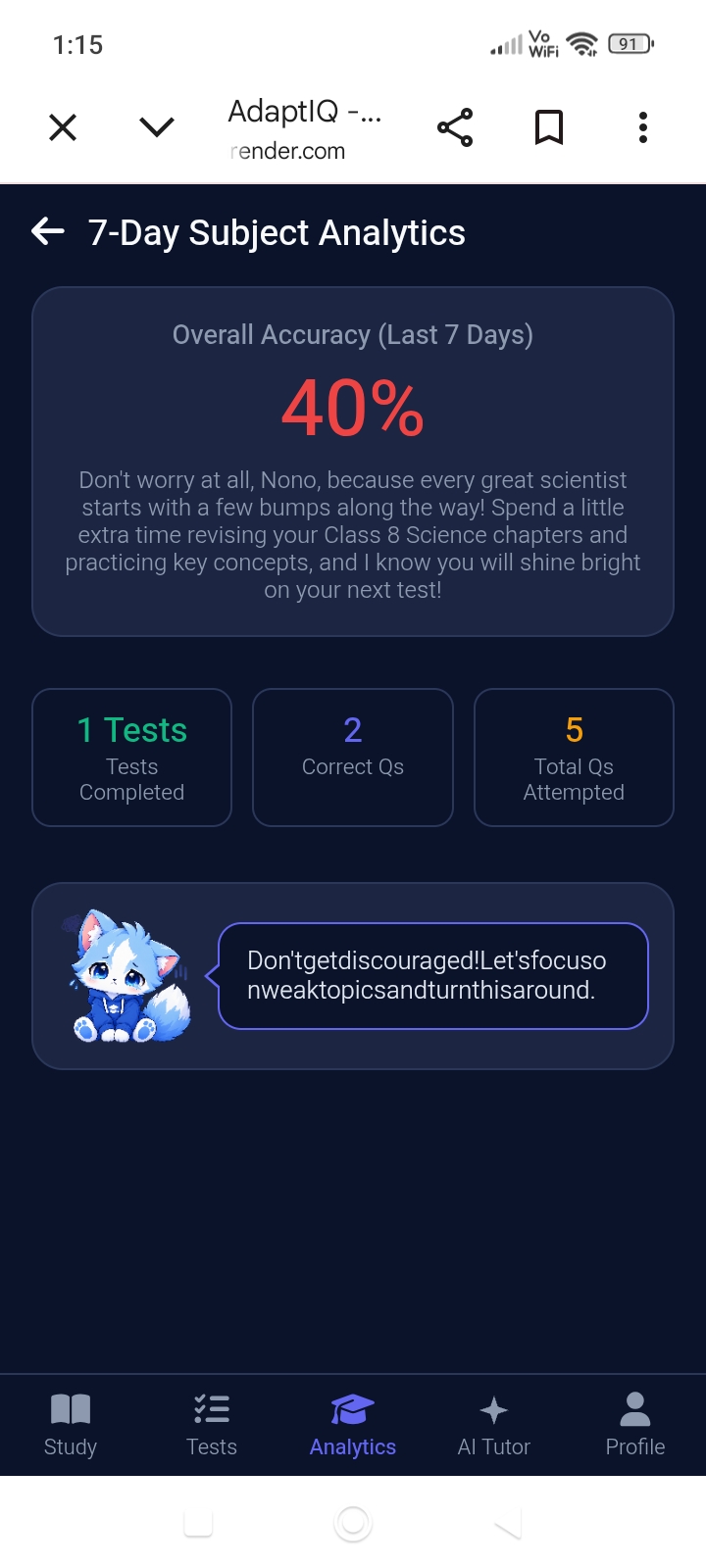
AdaptIQ is an AI-driven personalized EdTech platform. It dynamically evaluates a student's grade level, subject performance, and historical weak areas to generate targeted multiple-choice mock tests using Google Gemini AI. The application features an interactive AI Tutor Bot for instant doubt resolution, tracks 7-day performance analytics using SQLite, and maintains study consistency through a gamified streak system and PyWebPush notification triggers.
How we built it
The application was built and coded entirely on a mobile device using an Android / Termux development environment: Backend: Flask framework in Python 3, using CORS and SQLite3 for performance classification and user tracking. AI Core: Google Gemini AI API integrated for dynamic question generation, schema validation, and context-aware chat mentorship. Push Services: PyWebPush (VAPID protocol) and Service Workers to trigger re-engagement alerts based on inactivity thresholds. Frontend: Mobile-first design using HTML5, CSS3, and JavaScript (ES6) with touch gesture support and an interactive mascot interface.
Challenges we ran into
Developing a full-stack web application completely on a mobile phone presented unique constraints: Resource Limits: Managing terminal sessions, dependency installations, and local testing within Termux on Android without access to a desktop IDE. AI Response Consistency: Ensuring raw unstructured outputs from LLMs reliably matched the exact JSON schema required for front-end quiz rendering. This required building strict response parsing and fallback validation mechanisms. Push Notification Syncing: Handling Service Worker registrations and VAPID key exchange across mobile web browsers efficiently.
Accomplishments that we're proud of
Successfully engineered and deployed a functional full-stack Python application built 100% on a mobile device. Implemented an adaptive test-generation algorithm that prioritizes topics where accuracy drops below threshold metrics. Hosted the application live on cloud infrastructure (Render) with seamless environment variable integration.
What we learned
Designing robust API error-handling pipelines when working with generative AI APIs. Setting up SQLite databases and implementing 7-day rolling performance metrics programmatically. Implementing web push architectures using Service Workers and VAPID keys. Leveraging mobile development environments efficiently to build production-ready software.
What's next for AdaptIQ
Multilingual Support: Integrating regional language options (such as Hindi, Bengali, and Spanish) to remove language barriers for students in non-English speaking regions. Offline Mode & Offline Database Sync: Adding offline storage capabilities so students with unstable internet connections can attempt offline quizzes and sync progress when reconnected. AI Audio Mentor & Speech Interface: Introducing voice-guided explanations and speech-to-text interactions for younger K-12 students and visually impaired learners. Teacher & Parent Analytics Dashboard: Building a dedicated portal where educators and parents can monitor learning progress, accuracy trends, and weak topic reports. Community & Peer-to-Peer Study Rooms: Enabling gamified group study sessions, leaderboard challenges, and collaborative doubt-solving features to boost engagement.
What it does
Quality education is often gated by high tutoring costs, leaving millions of K-12 students without personalized mentorship. Inspired by UN Sustainable Development Goal 4 (Quality Education), AdaptIQ was created to bridge this gap. As a 14-year-old student, I wanted to build a intelligent study companion that delivers individualized tutoring, adaptive test generation, and real-time doubt resolution to anyone with a basic smartphone.
How we built it
The application was built and coded entirely on a mobile device using an Android / Termux development environment: Backend: Flask framework in Python 3, using CORS and SQLite3 for performance classification and user tracking. AI Core: Google Gemini AI API integrated for dynamic question generation, schema validation, and context-aware chat mentorship. Push Services: PyWebPush (VAPID protocol) and Service Workers to trigger re-engagement alerts based on inactivity thresholds. Frontend: Mobile-first design using HTML5, CSS3, and JavaScript (ES6) with touch gesture support and an interactive mascot interface.
Challenges we ran into
Developing a full-stack web application completely on a mobile phone presented unique constraints: Resource Limits: Managing terminal sessions, dependency installations, and local testing within Termux on Android without access to a desktop IDE. AI Response Consistency: Ensuring raw unstructured outputs from LLMs reliably matched the exact JSON schema required for front-end quiz rendering. This required building strict response parsing and fallback validation mechanisms. Push Notification Syncing: Handling Service Worker registrations and VAPID key exchange across mobile web browsers efficiently.
Accomplishments
Successfully engineered and deployed a functional full-stack Python application built 100% on a mobile device. Implemented an adaptive test-generation algorithm that prioritizes topics where accuracy drops below threshold metrics. Hosted the application live on cloud infrastructure (Render) with seamless environment variable integration.
What we learned
Multilingual Support: Integrating regional language options (such as Hindi, Bengali, and Spanish) to remove language barriers for students in non-English speaking regions. Offline Mode & Offline Database Sync: Adding offline storage capabilities so students with unstable internet connections can attempt offline quizzes and sync progress when reconnected. AI Audio Mentor & Speech Interface: Introducing voice-guided explanations and speech-to-text interactions for younger K-12 students and visually impaired learners. Teacher & Parent Analytics Dashboard: Building a dedicated portal where educators and parents can monitor learning progress, accuracy trends, and weak topic reports. Community & Peer-to-Peer Study Rooms: Enabling gamified group study sessions, leaderboard challenges, and collaborative doubt-solving features to boost engagement.
What's next for AdaptIQ
AdaptIQ is an AI-driven personalized EdTech platform. It dynamically evaluates a student's grade level, subject performance, and historical weak areas to generate targeted multiple-choice mock tests using Google Gemini AI. The application features an interactive AI Tutor Bot for instant doubt resolution, tracks 7-day performance analytics using SQLite, and maintains study consistency through a gamified streak system and PyWebPush notification triggers.I want to make an update version that never give pressure to student, adapt them.


Log in or sign up for Devpost to join the conversation.