🚀 Inspiration
Children with disabilities often face barriers in accessing mainstream education due to a lack of adaptive learning resources. Whether it's a blind student struggling with text-based materials, a deaf or mute child finding it hard to communicate in class, or neurodivergent learners like those with autism or ADHD needing personalized guidance — the existing systems fail to accommodate their needs effectively. Inspired by the belief that education should be universally accessible, we built AdaptIQ, an inclusive AI-powered platform designed to bridge the accessibility gap.
🧠 What it does
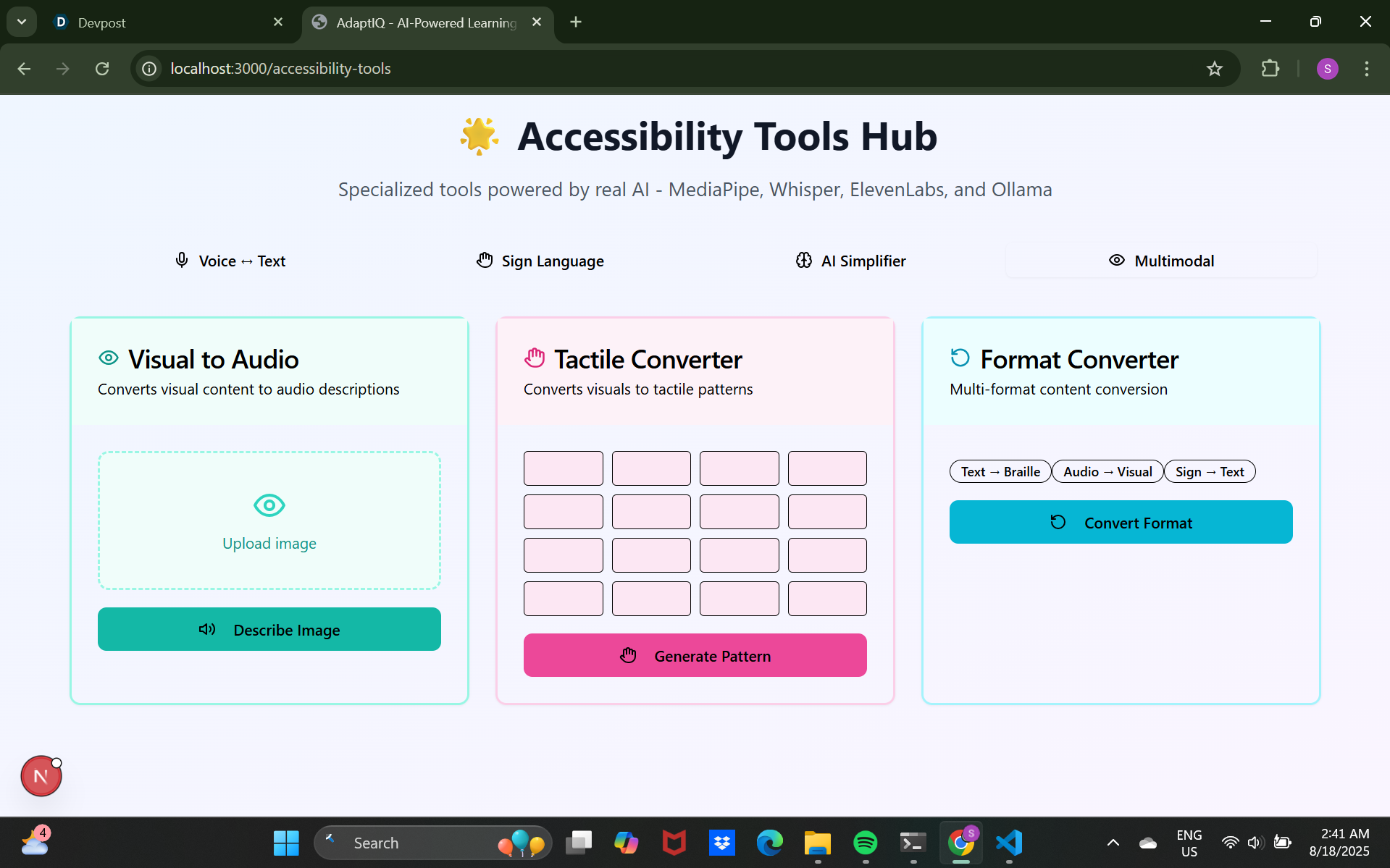
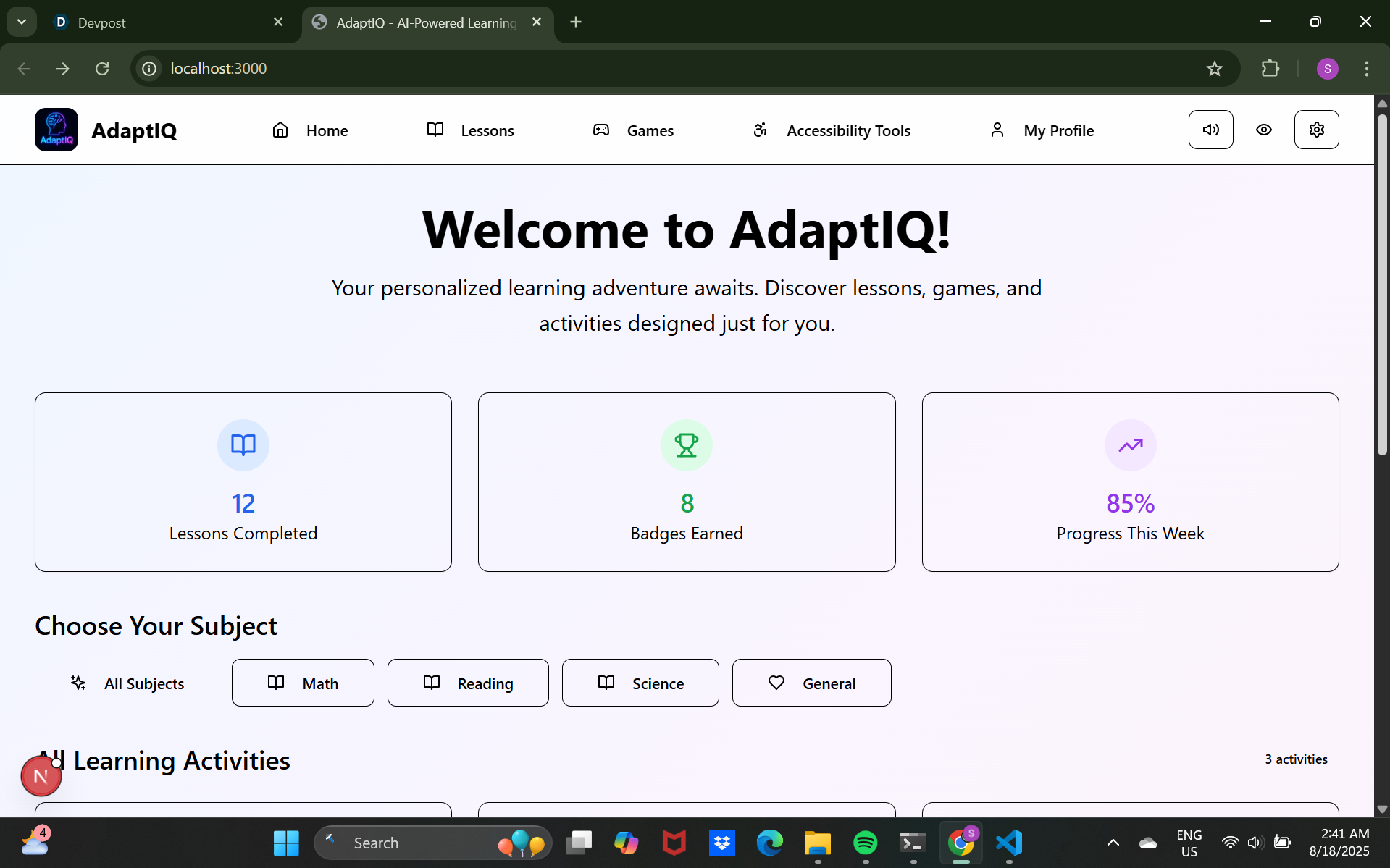
AdaptIQ is an assistive, browser-based platform for children with diverse learning and communication disabilities. It offers:
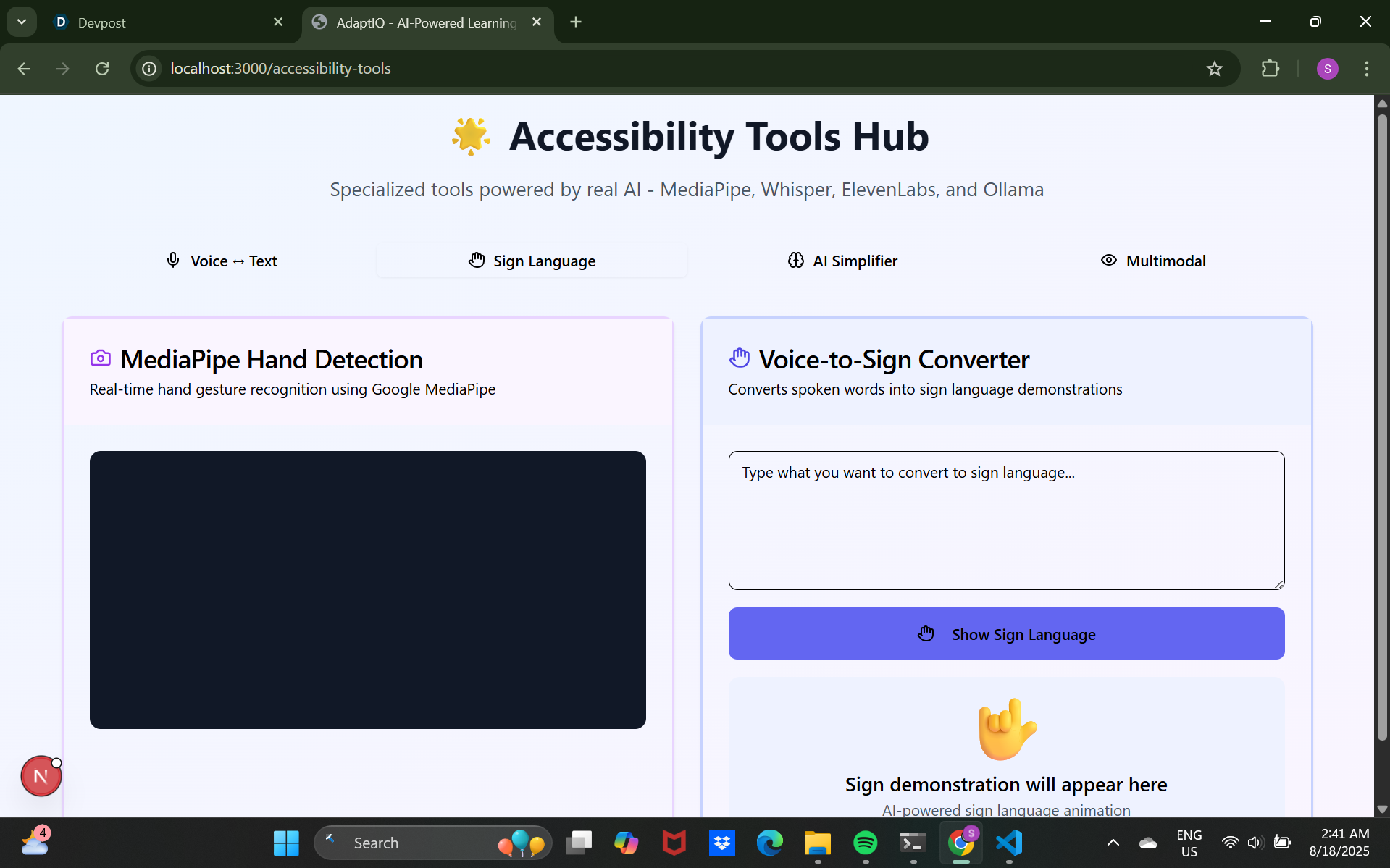
🎙️ Sign-to-Voice & Voice-to-Sign Interpreter: Converts live speech into sign language animations and vice versa using AI and video input.
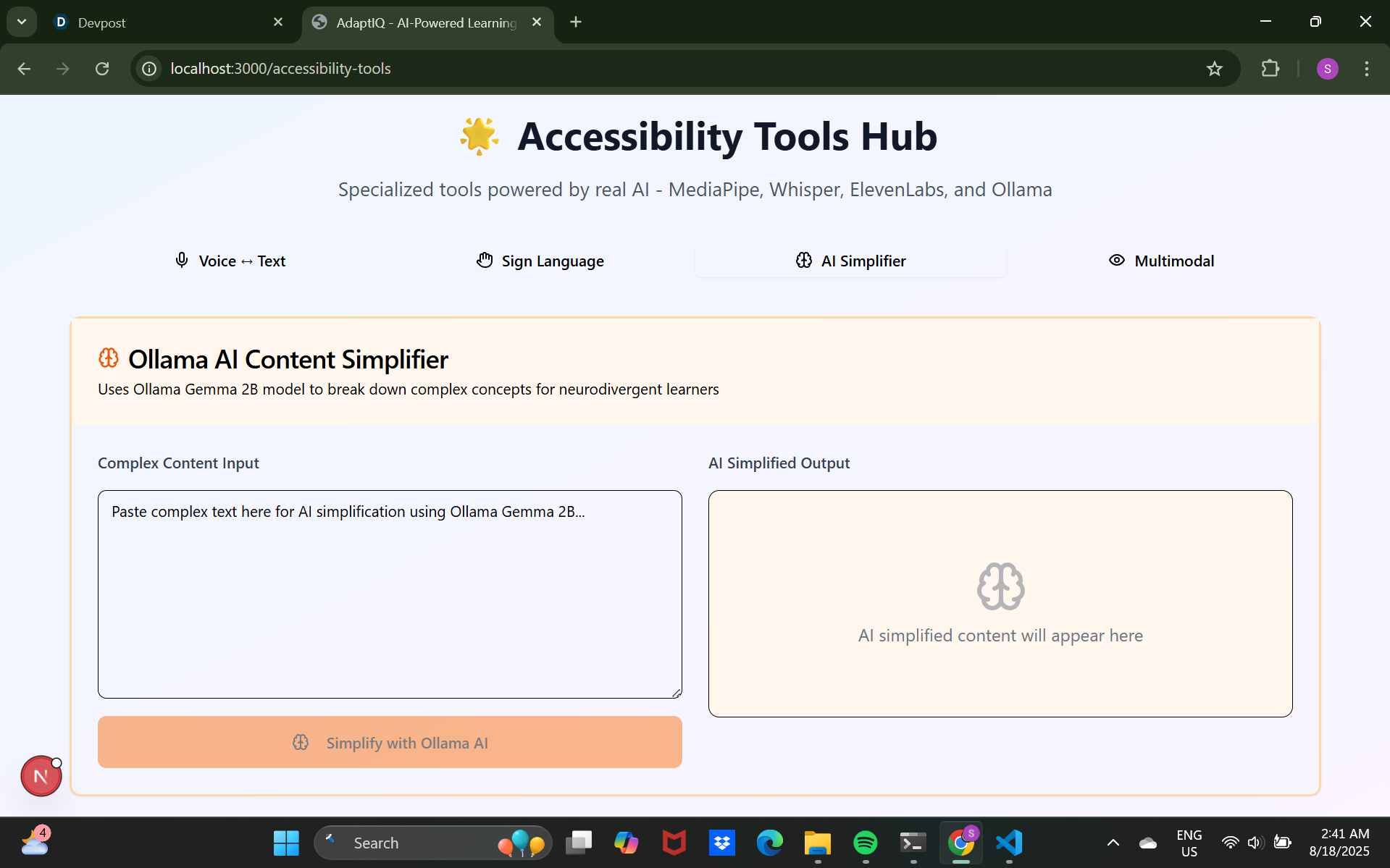
📚 Adaptive Learning Assistant: Learns from the user’s pace and behavior to deliver personalized educational content based on their disability (blind, deaf, ADHD, autistic, etc.).
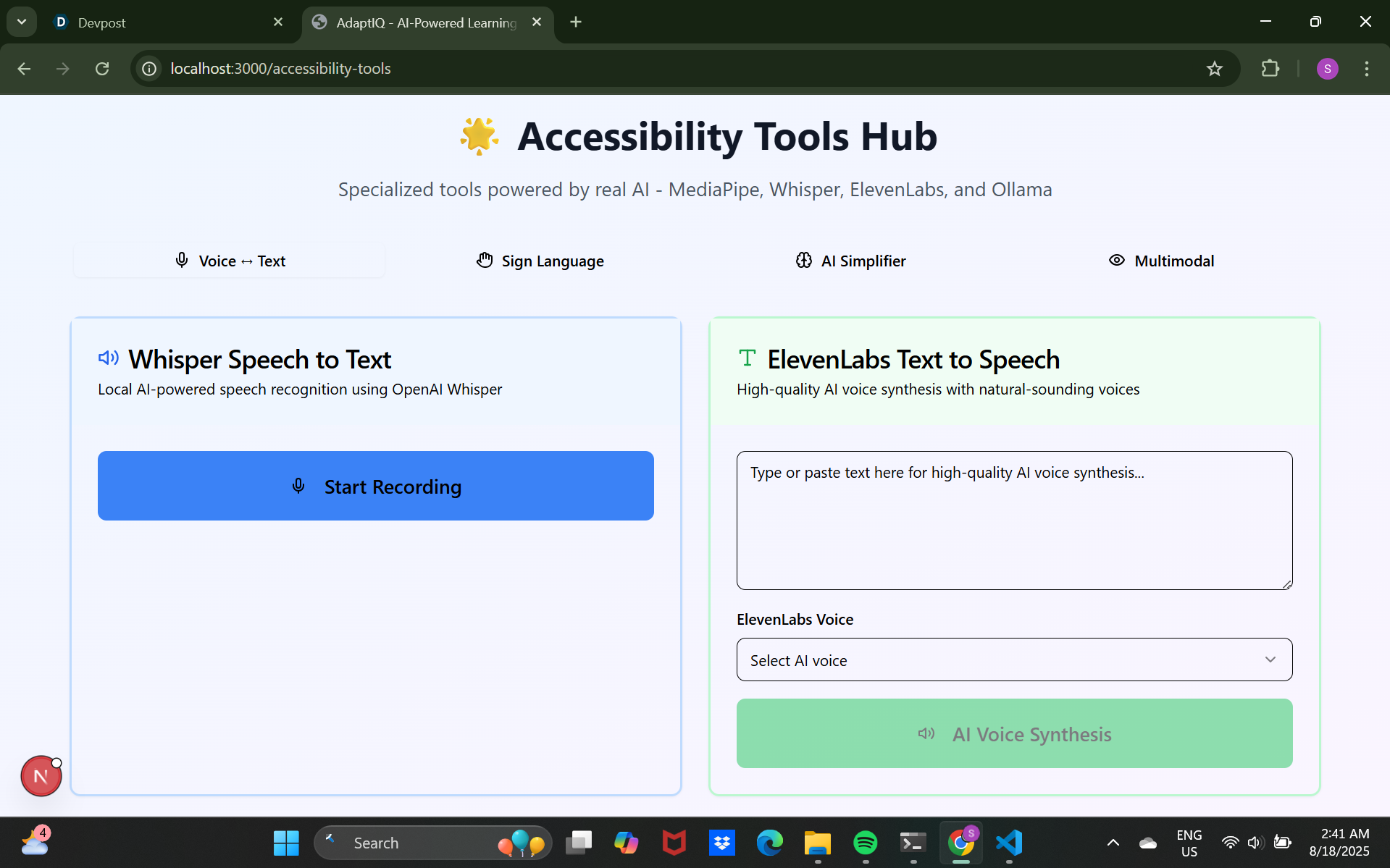
📖 Text-to-Speech & Speech-to-Text: Converts reading material into speech for blind students and transcribes speech into text or sign for the hearing impaired.
🔒 Offline + Privacy-First Mode: No sensitive data leaves the device. Everything runs locally using open-source LLMs.
🛠️ How we built it
Frontend:
TypeScript + Next.js (App Router)
Tailwind CSS with Radix UI + ShadCN UI for accessibility-friendly components
Webcam & microphone integration for sign/speech input
Backend / AI Layer:
Ollama LLM – lightweight, locally running open-source language model
Whisper.cpp (or alternates like DeepSpeech) for offline STT
TensorFlow.js for sign recognition & animation
Supabase for optional auth & session tracking
DevOps & Hosting:
Hosted on Vercel
GitHub Actions for CI/CD
🧩 Challenges we ran into
Getting reliable sign language translation required dataset tuning and real-time webcam optimization.
Whisper API was paid, so we had to experiment with open-source STT models compatible with JavaScript.
Adapting LLMs like Ollama to run locally in-browser (via WASM or edge functions) with privacy was tricky.
Accessibility testing for each disability required simulated environments and test cases.
🏆 Accomplishments that we're proud of
Successfully enabled bidirectional sign-speech translation with real-time feedback.
Integrated a customizable learning assistant that adapts based on disability profile.
Built a fully offline-compatible, privacy-first educational platform.
📚 What we learned
How to use Ollama LLMs effectively without relying on GPT APIs.
Ways to integrate accessibility-first UI principles into design using Radix + ShadCN.
The limitations and workarounds for browser-based AI models (especially for sign recognition).
The importance of inclusive design thinking when creating for underserved users.
🔮 What's next for AdaptIQ
Adding support for regional sign languages (e.g., Indian Sign Language).
Integrating emotion detection to help with autism spectrum support.
Deploying a PWA version for offline mobile use in rural/low-connectivity areas.
Collaborating with special educators and therapists to refine our modules.
Built With
- css3
- elevenlabs
- json
- next
- ollama
- react
- typescript


Log in or sign up for Devpost to join the conversation.