💡 Inspiration
The idea for AdaptiFit came from a stat we couldn't shake: according to the WHO and the Global Burden of Disease study, roughly 2.4 billion people — one in three people on Earth — live with a condition that could benefit from rehabilitation, and in many countries over half of them never receive it.
But the more we dug in, the clearer the real failure point became: it's not the prescription, it's what happens after the patient leaves the clinic. Research on home-based rehab consistently shows patients complete their prescribed exercises on well under half of their assigned days, and physiotherapy dropout rates are frequently reported at 50–60%. The missing piece isn't motivation — it's the absence of real-time, personalized, always-available guidance. A physiotherapist corrects your form in the room; nobody corrects it in your living room.
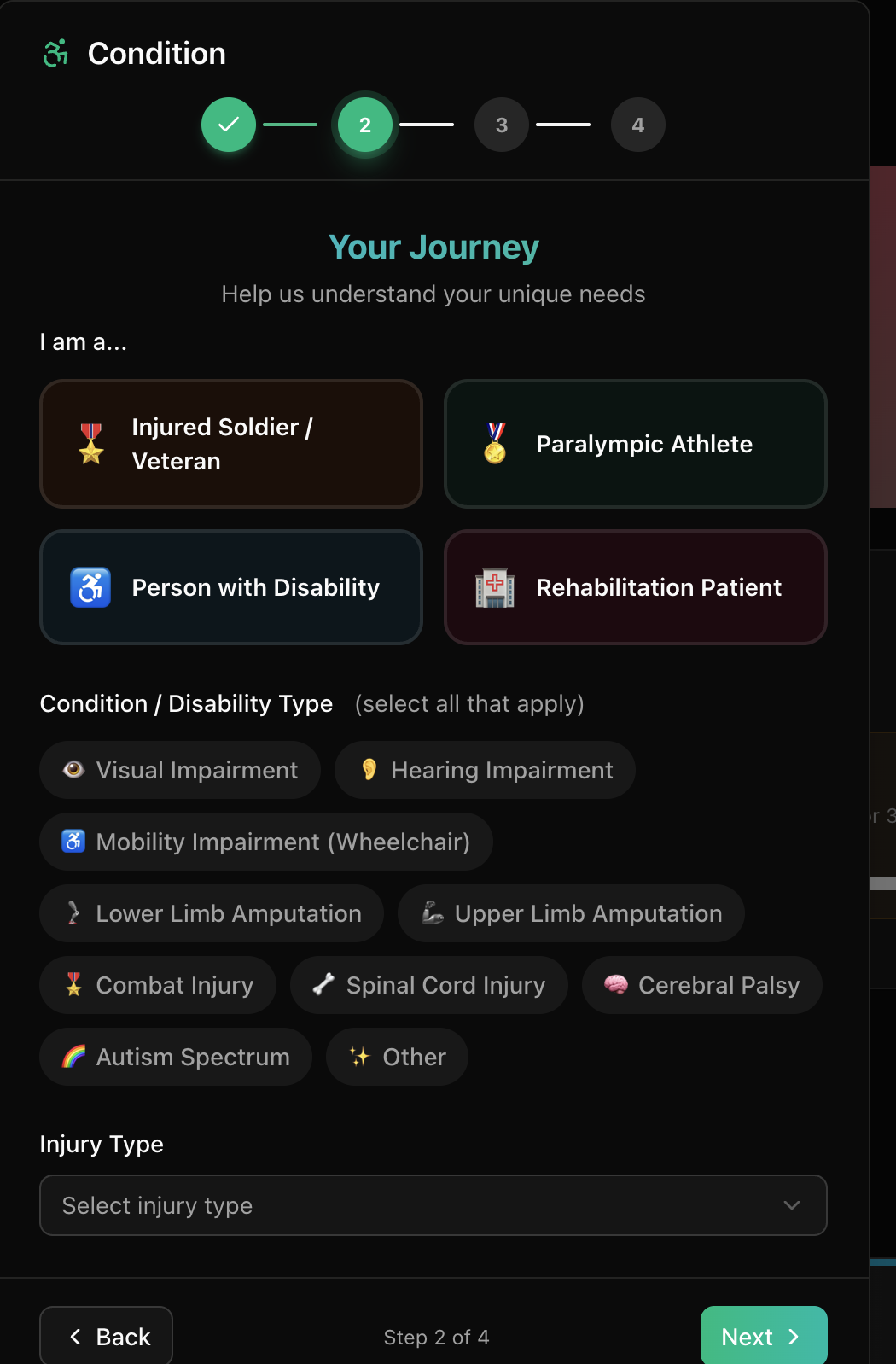
We built AdaptiFit to be that someone — for everyone, including the people generic fitness tech forgets: people with disabilities, injuries, older adults, and bodies that don't match an "average" reference model.
🩺 What it does
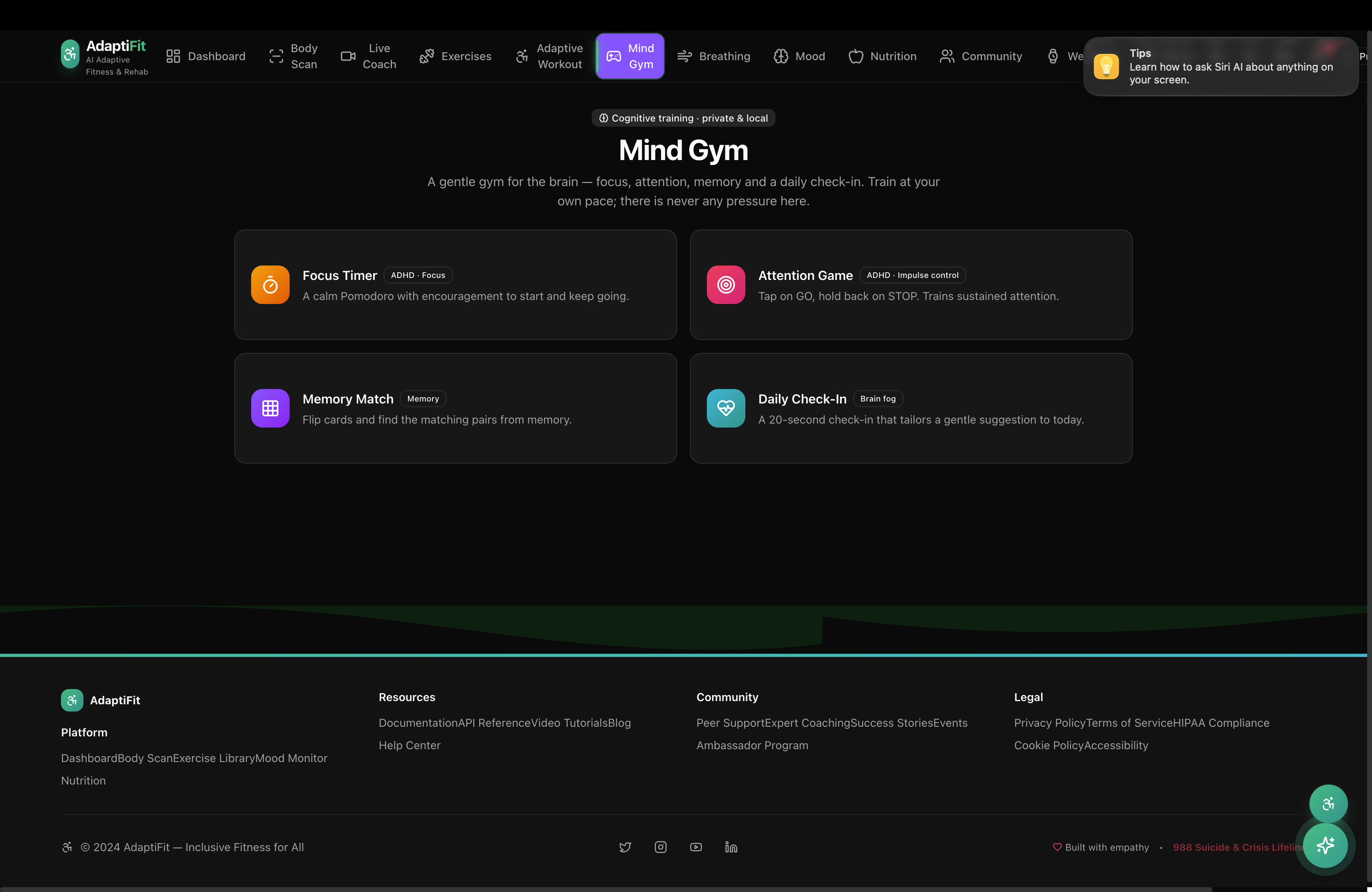
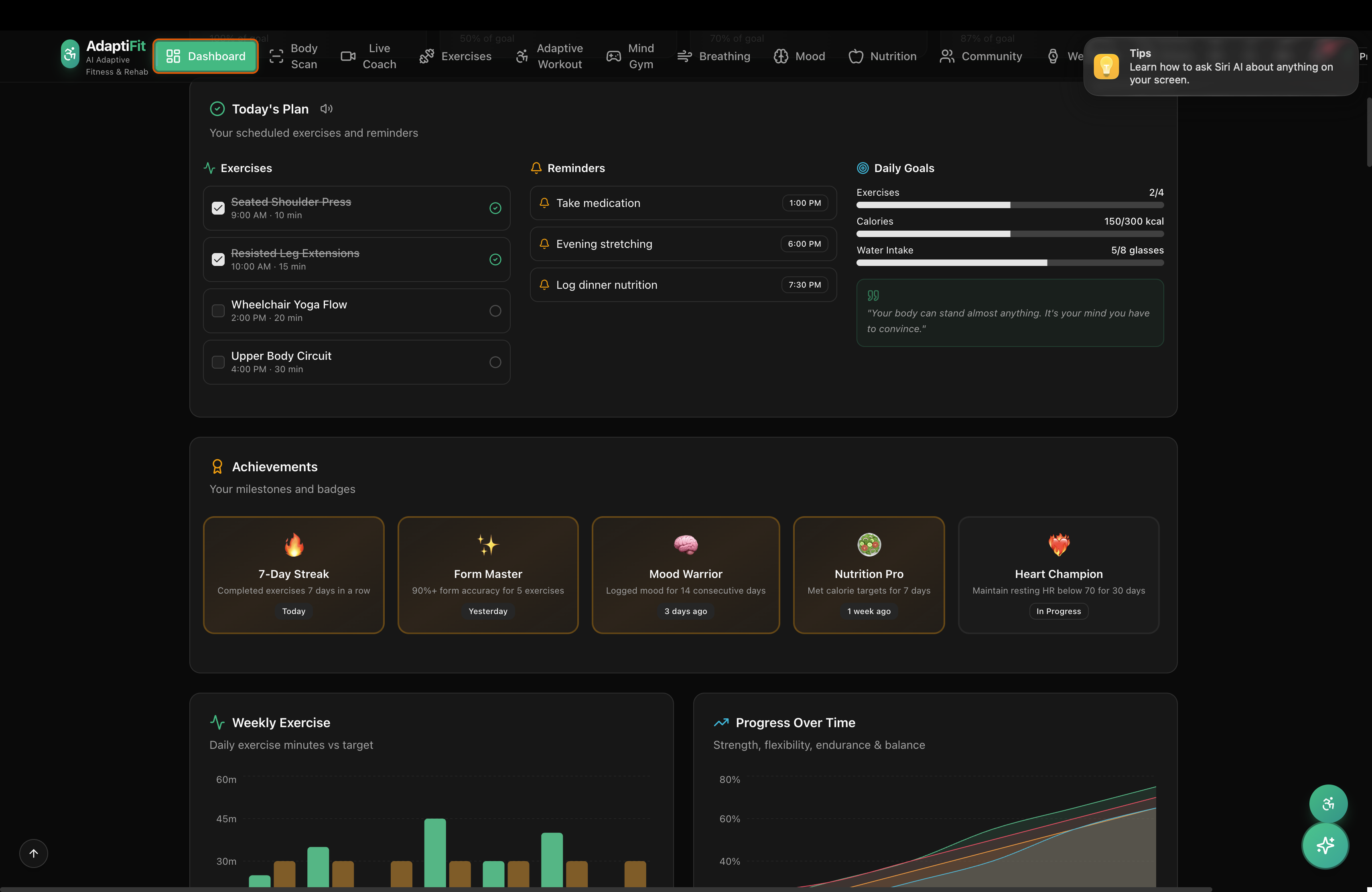
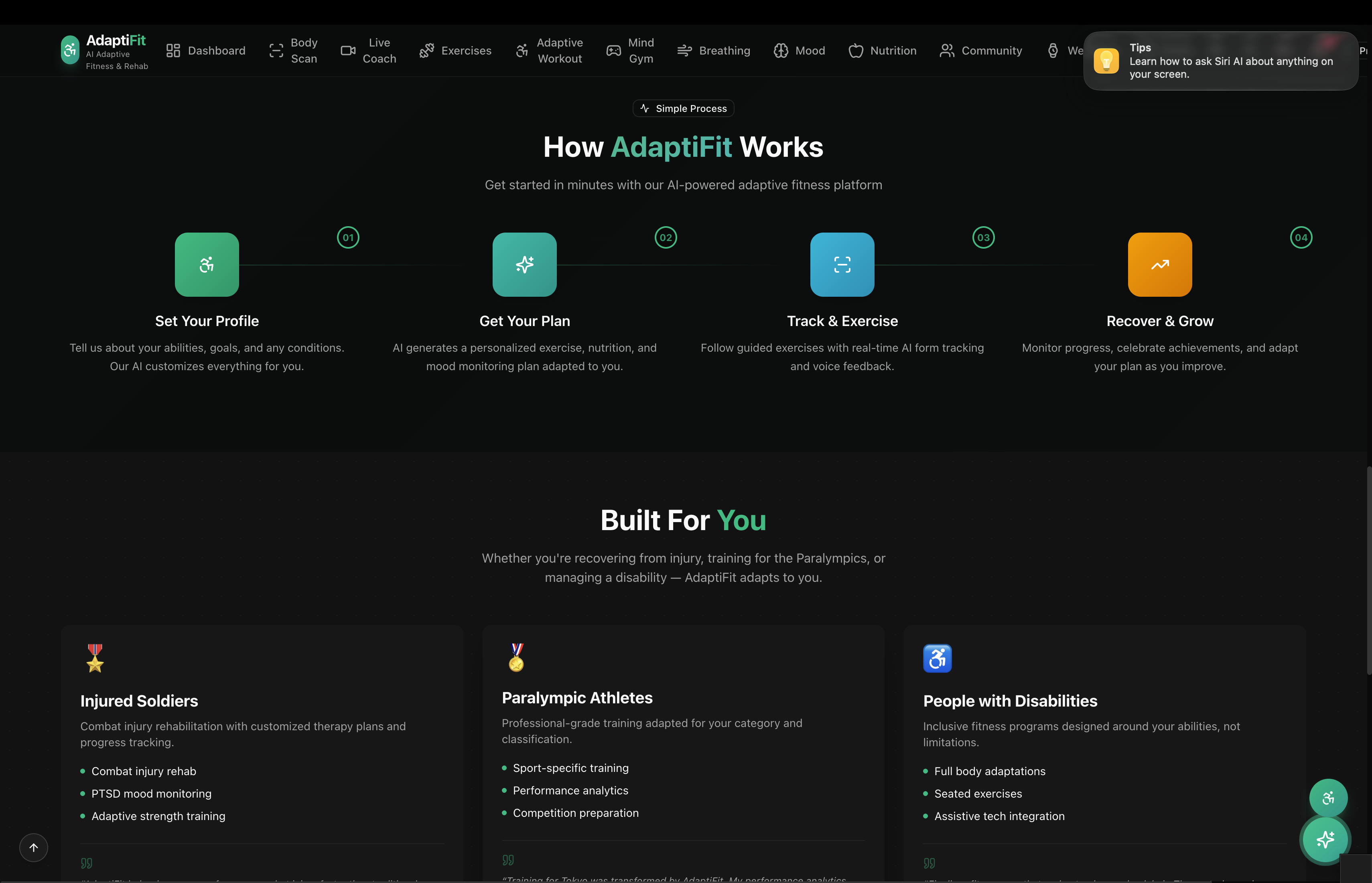
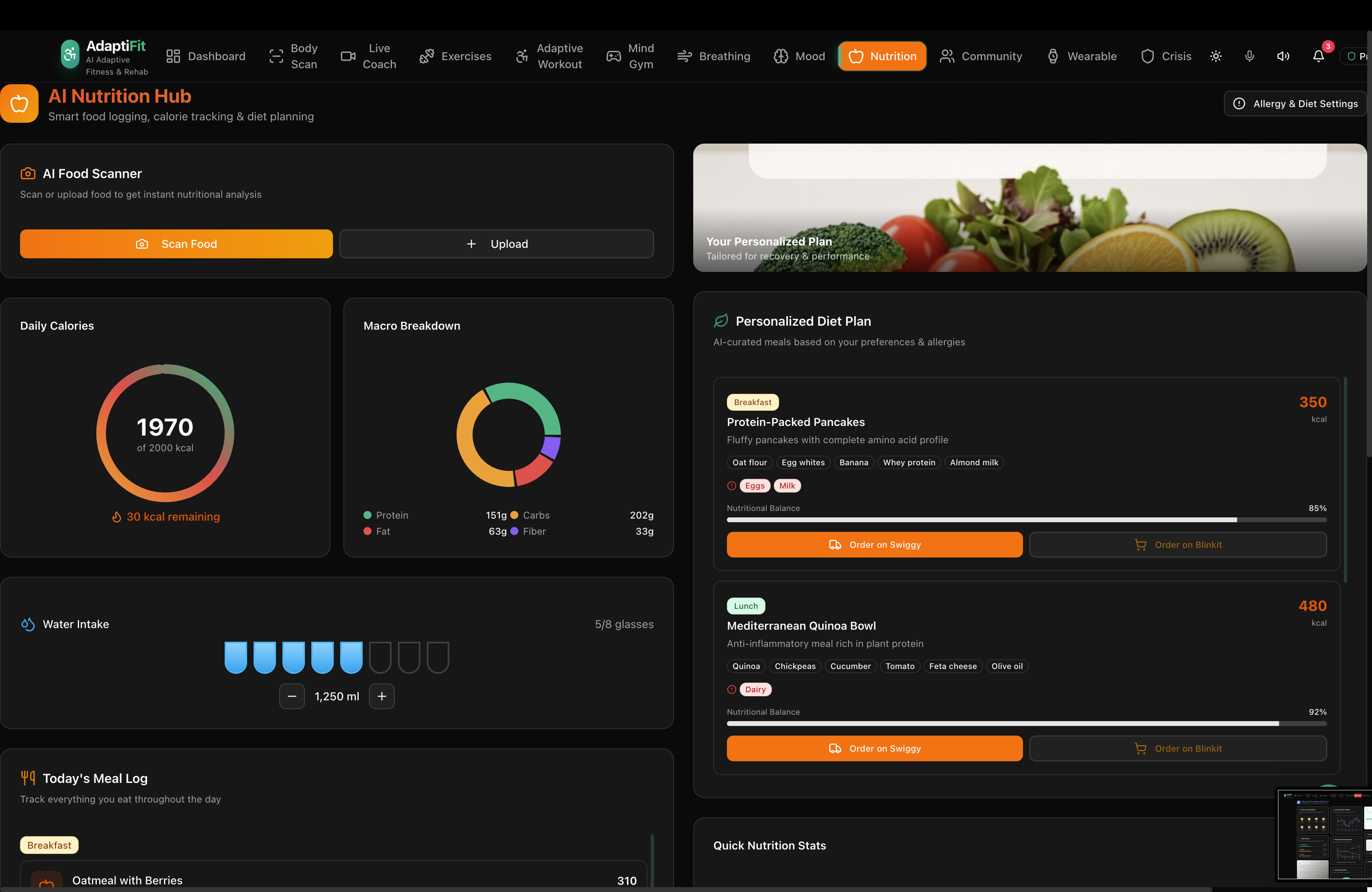
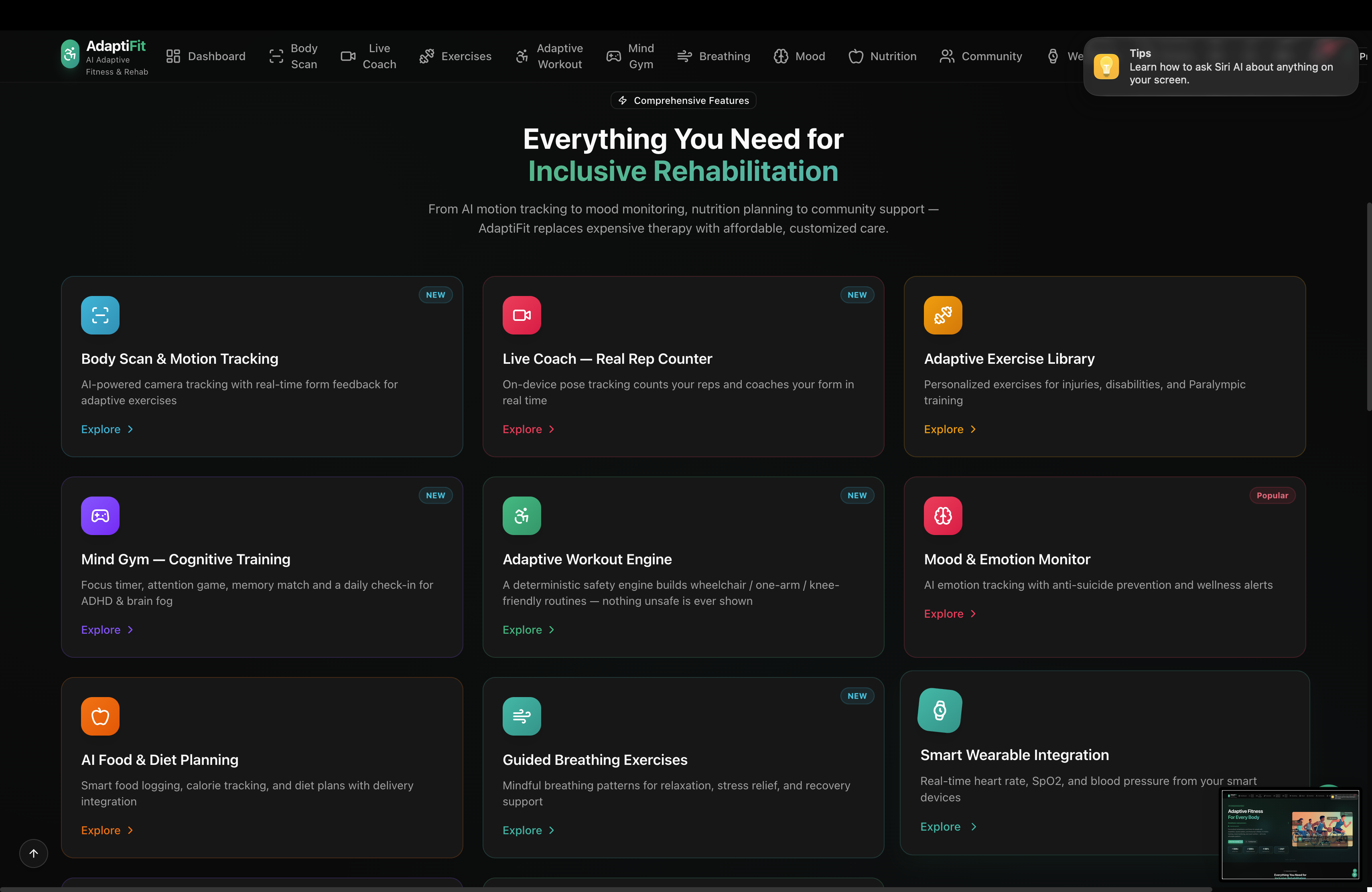
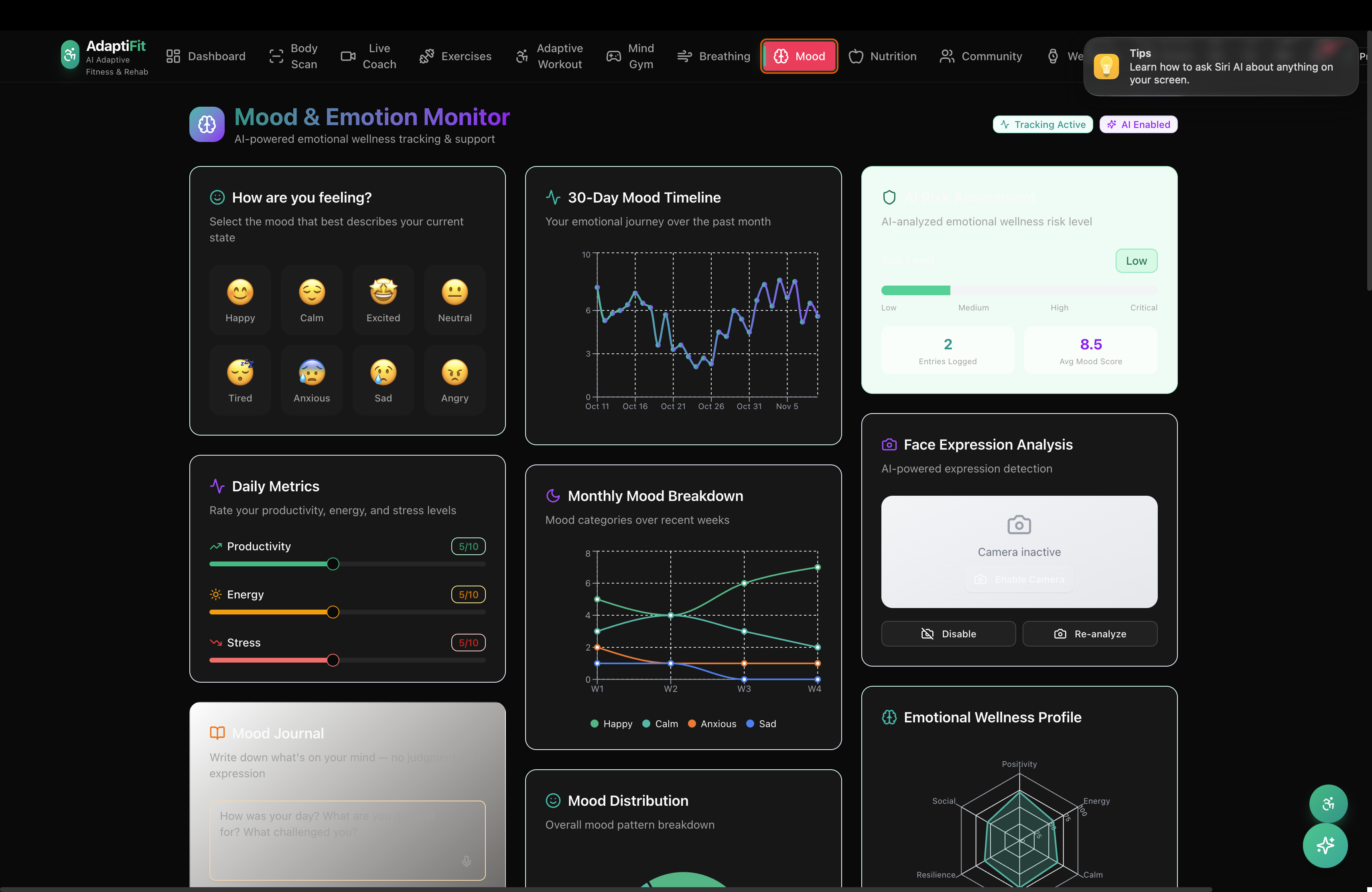
AdaptiFit is an AI-powered adaptive physiotherapy and inclusive fitness platform that replaces the one-size-fits-all exercise app with a personalized closed feedback loop:
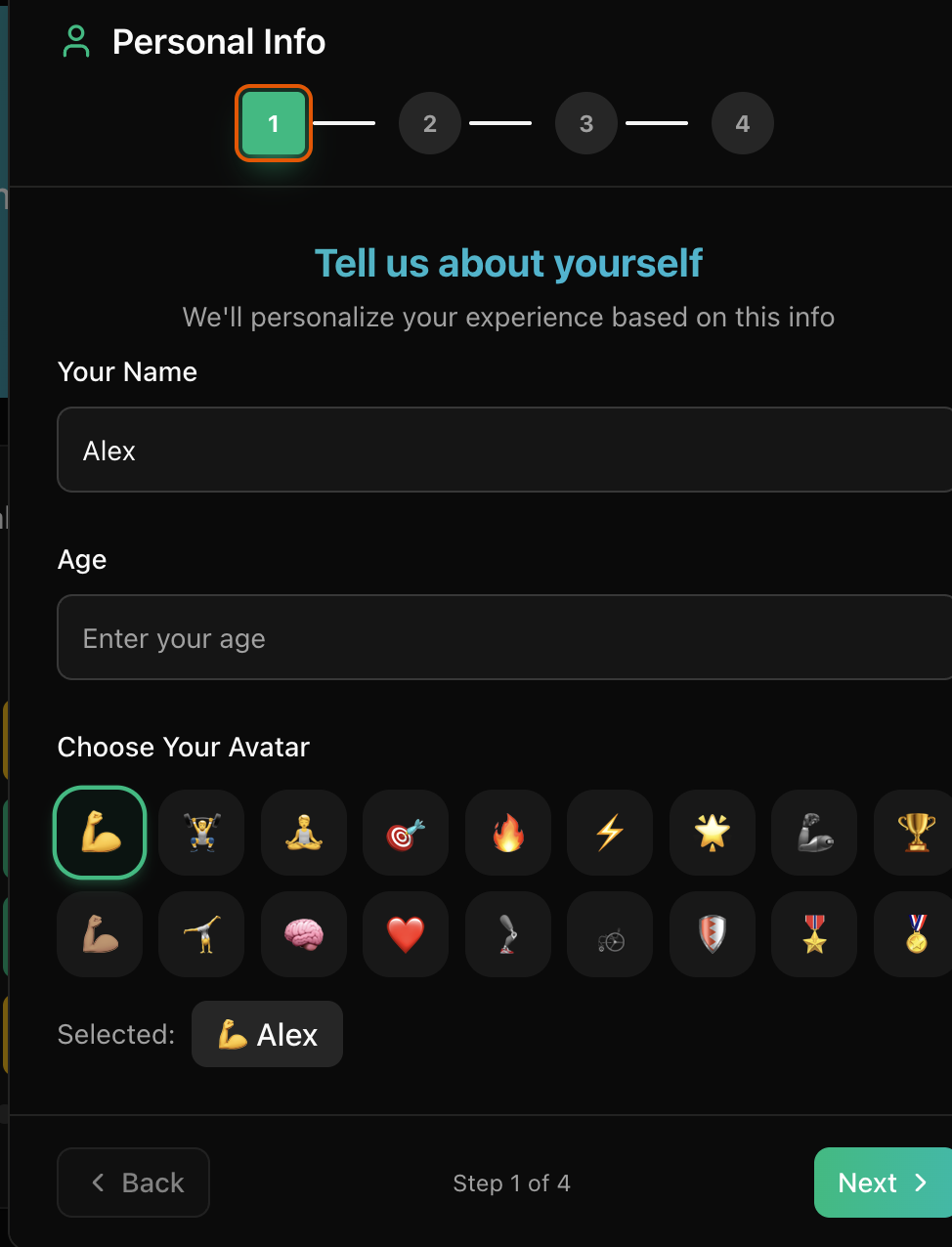
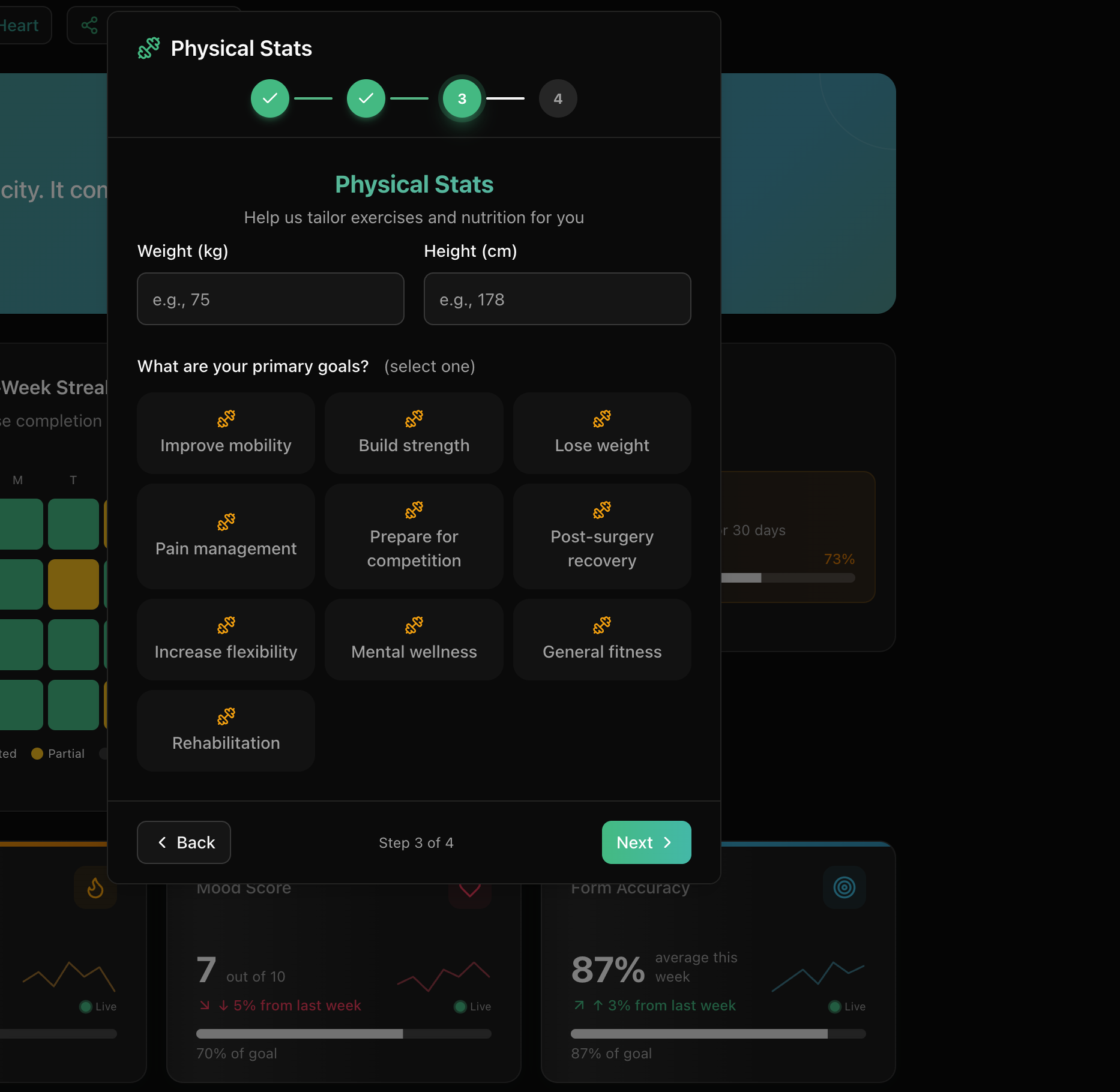
- See the body as it actually is — a 3D digital twin built from the user's own proportions, joint ranges, and physical constraints, captured with just a camera.
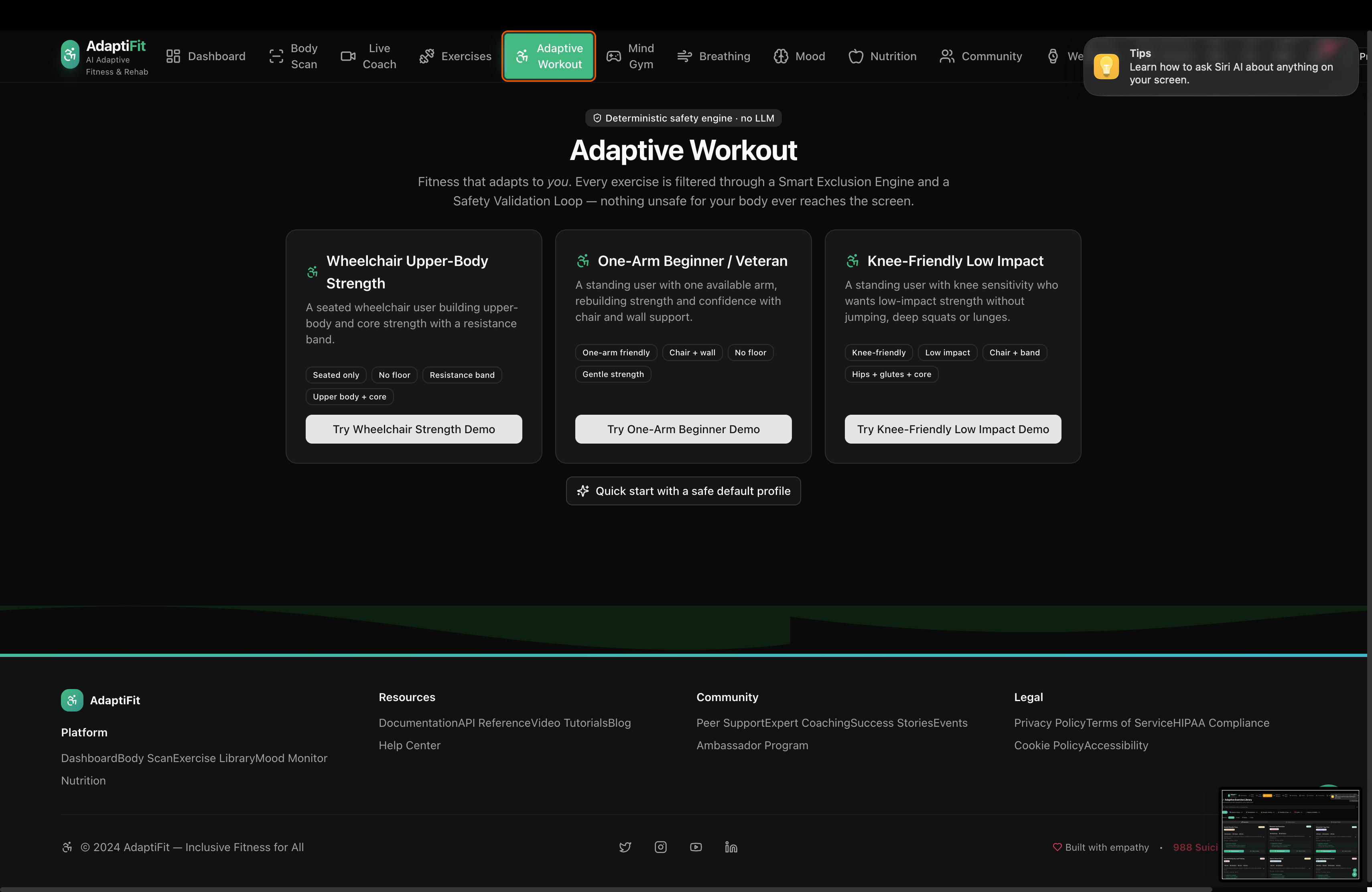
- Adapt the exercise to the person — our calibration engine sets personalized range-of-motion thresholds instead of forcing the person into a rigid pre-recorded routine.
- Watch in real time — computer-vision pose tracking monitors every rep live.
- Correct instantly — every correction is delivered simultaneously as an on-screen visual overlay and a spoken voice cue, so feedback works whether you're watching, listening, or both.
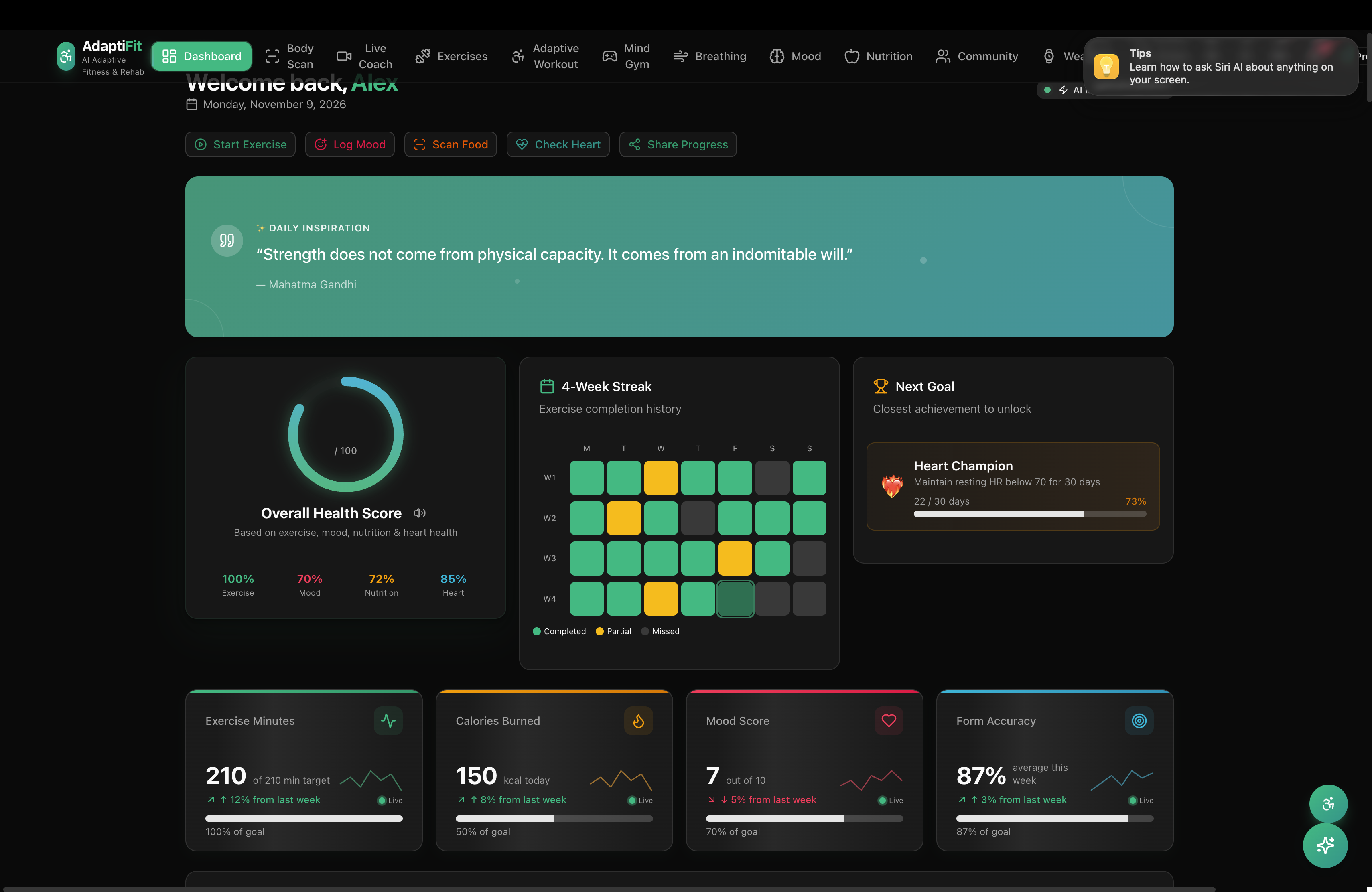
Every session refines the digital twin, so the system gets to know your body better over time — the same way a real physiotherapist does across repeat visits. All you need is a device with a camera: no wearables, no clinical equipment, no appointment.
🏗️ How we built it
The system is organized in four layers:
- Client layer — a React + TypeScript web app with camera capture and voice output.
- Perception layer — real-time pose estimation extracts joint and limb coordinates from the video stream, feeding a Three.js-rendered 3D digital twin.
- Intelligence layer — the adaptive calibration engine computes personalized ROM baselines and safe thresholds from the user's twin; a form-deviation analyzer compares live poses against that personal baseline; an AI coaching model generates the actual feedback.
- Data & services layer — user profiles, session history, and analytics persist each rep's accuracy data, with speech synthesis powering the voice coach.
The feedback loop runs continuously: camera → pose engine → digital twin → deviation analysis → coaching AI → visual + voice output → session logged back into the twin.
🧗 Challenges we ran into
- Latency vs. accuracy — real-time pose inference has to feel responsive, not laggy. We had to carefully budget frame processing so corrections arrive mid-movement, not after the rep is done.
- Defining "correct" for bodies that aren't average — generic form targets fail exactly the users we're building for. Designing calibration around each individual's measured range of motion, rather than a fixed reference posture, was both the hardest and the most important engineering decision we made.
- Dual-modality timing — synchronizing the visual overlay with spoken cues so they reinforce rather than compete with each other took real iteration.
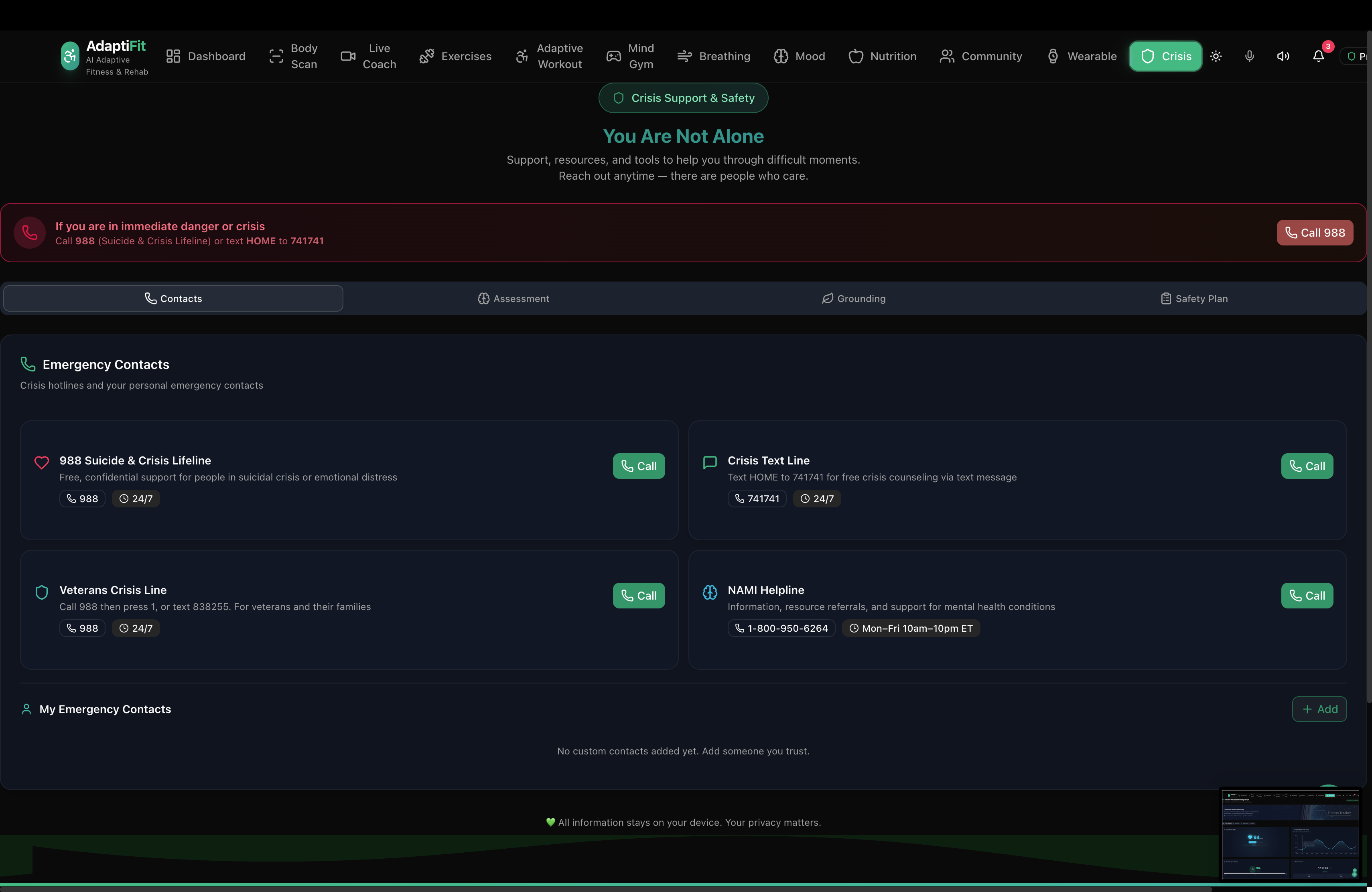
- Responsible scope — operating in a health-adjacent space meant building safety guardrails in from day one: clear "this is not medical advice" boundaries, pain-stop guidance, and human-in-the-loop positioning that complements clinicians rather than replacing them.
📚 What we learned
- Personalization is inclusivity — it's not a UI theme or a feature flag, it's an architectural choice that has to live in the model itself.
- The adherence problem in rehab is fundamentally a UX problem, not a medical one — which means software can genuinely move the needle.
- Coordinating a 5-person team across computer vision, 3D rendering, AI coaching, and frontend in a hackathon timeframe taught us more about API contracts and integration discipline than any course has.
🚀 What's next for AdaptiFit
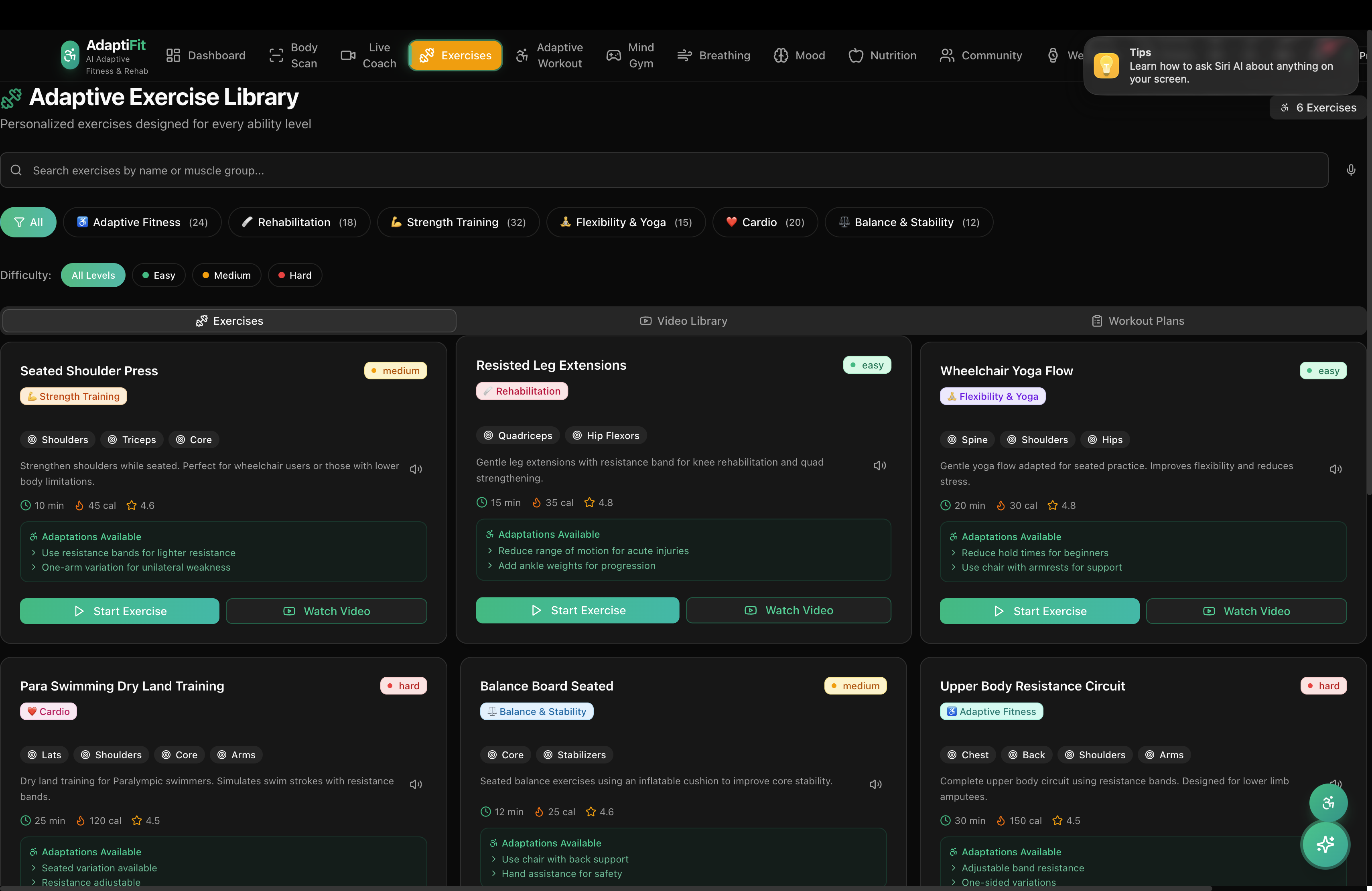
- Expanded exercise library across more rehab and mobility use cases
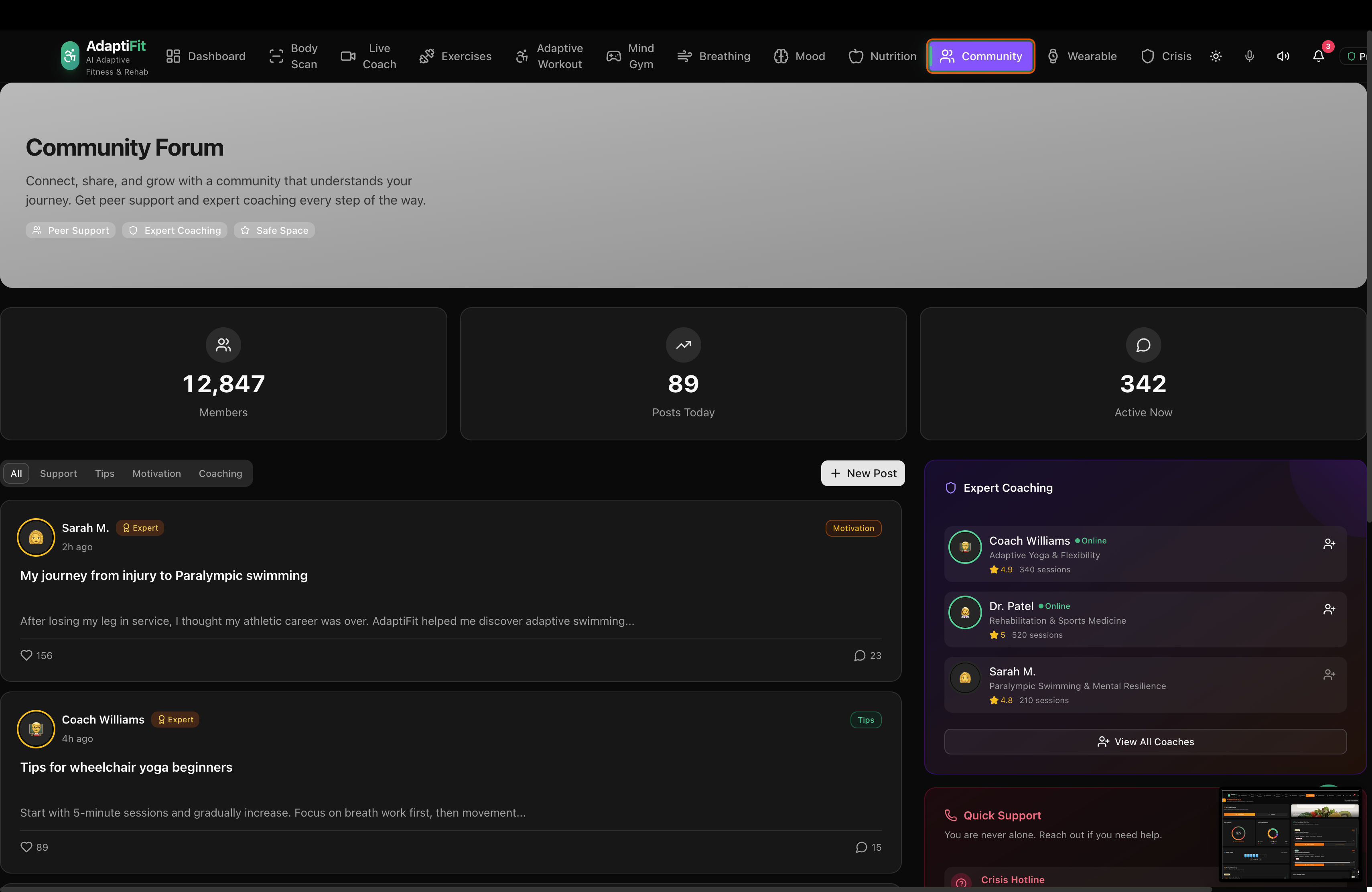
- Clinician-facing dashboard for remote monitoring of patient progress
- Multilingual voice feedback for wider linguistic accessibility
- On-device inference for low-connectivity, low-bandwidth regions
- Pilot partnerships with community health and rehab organizations
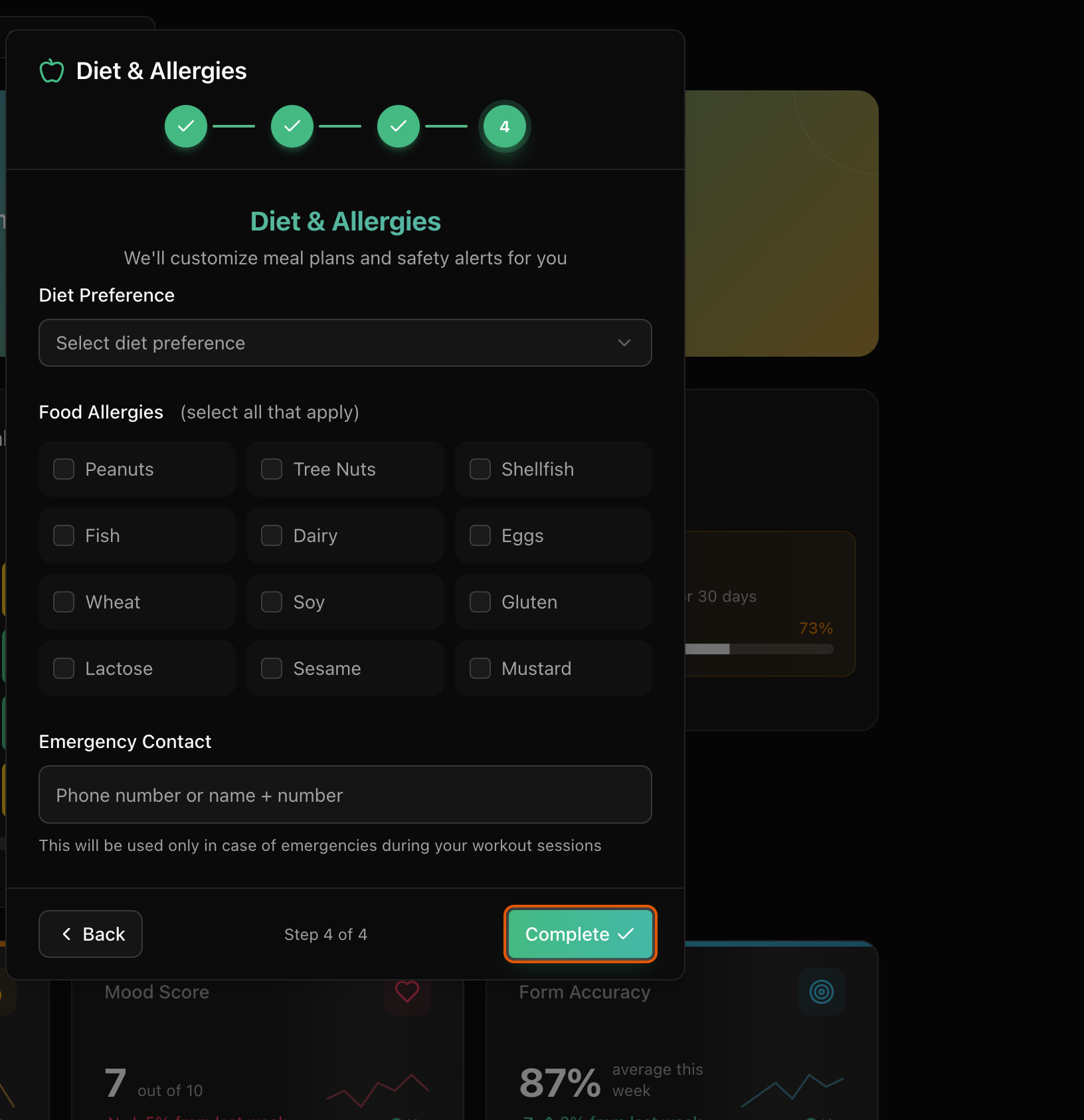
> ⚠️ Disclaimer: AdaptiFit provides general inclusive movement and wellbeing guidance only. It does not diagnose, treat, cure, or replace professional medical care. Stop immediately if you feel pain or discomfort, and consult a qualified professional.
Built with ❤️ for the Ctrl+V Hackathon — Social Good & Inclusivity
Built With
- accessibility
- ai
- azure
- computer-vision
- healthcare
- mediapipe
- node.js
- pose-estimation
- react
- tensorflow
- text-to-speech
- three.js
- typescript
- websockets
